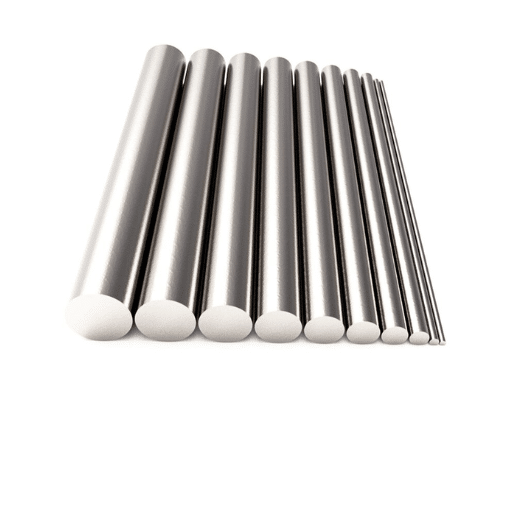
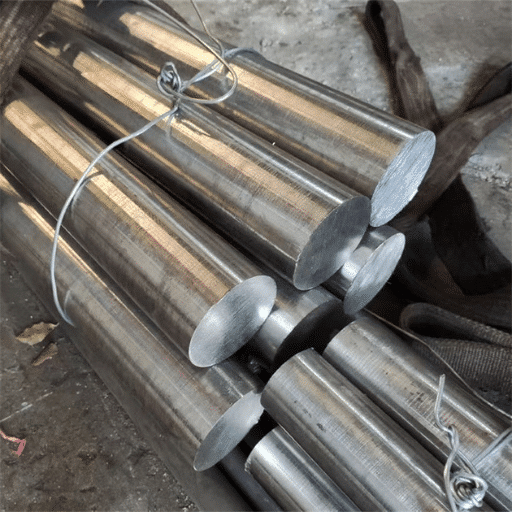
Grade 5 titanium is roughly 2.5 to 3 times stronger than Grade 2, but Grade 2 wins on corrosion resistance, formability, weldability, and cost. In a direct titanium grade 2 vs grade 5 comparison, the right grade depends on whether your part needs load-bearing strength and fatigue life (Grade 5, or Ti-6Al-4V) or corrosion resistance and fabrication ease in a moderately stressed design (Grade 2, or commercially pure titanium).
Consider what happened at a chlor-alkali plant in 2024. The maintenance team was replacing failed heat exchanger tubes and assumed the stronger grade was automatically the better grade. They quoted Grade 5 first, then realized Grade 2 met the design pressure with a slightly thicker wall, cut material cost by about 20%, and welded with a much wider process window. The exchanger has run for two years without a tube failure.
In this guide, you’ll learn how Grade 2 and Grade 5 compare in composition, mechanical properties, corrosion resistance, fabrication, and cost. You’ll also get a clear decision framework for choosing between them, plus the ASTM and EN standards you’ll need for procurement. This article is part of our broader titanium and stainless steel comparison series, so you can explore how titanium stacks up against other metals in our titanium vs stainless steel guide.
Key Takeaways
- Grade 5 titanium (Ti-6Al-4V) delivers roughly 895-1,000 MPa tensile strength, about 2.5-3x Grade 2, plus higher hardness and fatigue resistance.
- Grade 2 commercially pure titanium offers superior corrosion resistance in seawater and wet chlorine, and it welds and cold-forms far more easily.
- Both grades have nearly identical density (~4.5 g/cm³), so Grade 5 is not meaningfully lighter per volume; it wins by allowing thinner sections.
- Grade 2 costs about 30-40% less in raw material, and finished Grade 5 parts often run 30-50% higher because of machining and welding.
- Need corrosion resistance? Choose Grade 2. Need strength, fatigue, or load-bearing performance? Choose Grade 5.
Titanium Grade 2 vs Grade 5: Quick Comparison Table
Use this table to compare titanium grade 2 vs grade 5 across the properties that drive most material decisions.
| Property | Grade 2 (CP Titanium) | Grade 5 (Ti-6Al-4V) |
|---|---|---|
| UNS designation | R50400 | R56400 |
| Composition | ~99% Ti (commercially pure) | ~90% Ti, 6% Al, 4% V |
| Microstructure | Alpha (α) | Alpha-beta (α+β) |
| Density | ~4.51 g/cm³ | ~4.43 g/cm³ |
| Tensile strength | ~345-480 MPa | ~895-1,000 MPa |
| Yield strength | ~275-380 MPa | ~828-930 MPa |
| Elongation | ~20% | ~10-14% |
| Hardness | ~200 HV / HRB 65-80 | ~349 HV / HRC 30-36 |
| Elastic modulus | ~103 GPa | ~114 GPa |
| Thermal conductivity | ~15-22 W/m·K | ~6.5-7.2 W/m·K |
| Seawater corrosion rate | ~0.0005 mm/year | Slightly higher; excellent overall |
| Cold formability | Excellent | Limited (hot-form at 700-950°C) |
| Weldability | Excellent, wide window | Good, strict gas shielding required |
| Relative cost | Lower | Higher (~1.5-2x raw material) |
Need help selecting between Grade 2 and Grade 5 titanium? Contact LIANYUNGANG DAPU METAL for technical consultation.
What Is Grade 2 Titanium?

Grade 2 titanium is a commercially pure (CP) grade, meaning it contains almost no intentional alloying elements. It is roughly 99% titanium, with small amounts of oxygen (max 0.25%), iron (max 0.30%), carbon (max 0.08%), nitrogen (max 0.03%), and hydrogen (max 0.015%). These interstitials, especially oxygen, control its strength.
Its single-phase alpha microstructure gives Grade 2 moderate strength and excellent ductility. The purity is what drives two of its best behaviors: outstanding corrosion resistance and easy fabrication. If you are shopping by spec, the key titanium grade 2 properties to check are the interstitial limits (especially oxygen), because those, not any alloying elements, control the final strength.
Common specifications include ASTM B265 (sheet, plate, and strip), ASTM B348 (bars and billets), ASTM B862 (welded tube), and ASTM F67 for surgical implant applications. In European practice, Grade 2 maps to EN 3.7035 and ISO 5832-2. For more background on titanium across all grades, see our titanium properties guide.
Where is Grade 2 used? Heat exchangers, chemical processing vessels, marine piping, desalination plants, dental posts, pacemaker cases, and surgical instruments. These are applications where corrosion resistance matters more than raw strength.
What Is Grade 5 Titanium (Ti-6Al-4V)?
Grade 5 titanium is the most widely used titanium alloy in the world, accounting for over half of all titanium production. Its full designation is Ti-6Al-4V: about 90% titanium, 5.5-6.75% aluminum, and 3.5-4.5% vanadium.
The aluminum stabilizes the alpha phase and raises strength and creep resistance. The vanadium stabilizes the beta phase, which improves hot workability and enables heat treatment. The result is an alpha-beta alloy with an exceptional strength-to-weight ratio and excellent fatigue resistance. On the key properties of titanium grade 5 that matter in aerospace, the combination of tensile strength, fatigue life, and creep resistance is why Ti-6Al-4V dominates airframe and engine components.
Common specifications include ASTM B265 (sheet and plate), ASTM B348 (bars and billets), ASTM B862 (tube), AMS 4911 (aerospace sheet), AMS 4928 (aerospace bar), and ASTM F136 for surgical implant quality. European equivalents include EN 3.7165 and ISO 5832-3. If you are weighing it against stainless steel, our titanium grade 5 vs 316 stainless steel guide covers that head-to-head.
Where is Grade 5 used? Aerospace structural components, turbine blades, fasteners, hydraulic fittings, load-bearing medical implants such as hip stems and bone plates, high-performance bicycle frames, and thin-profile EDC tools.
Mechanical Properties: Strength, Fatigue, and Weight
Tensile and Yield Strength
In a straight strength comparison, Grade 5 wins decisively. Annealed Grade 5 titanium has a tensile strength of 895-1,000 MPa and a yield strength of 828-930 MPa. Grade 2 sits at 345-480 MPa tensile and 275-380 MPa yield. That makes Grade 5 roughly 2.5 to 3 times stronger.
Grade 5 can be pushed further with solution treating and aging, exceeding 1,100 MPa tensile. Grade 2 cannot be precipitation hardened at all. Its strength is fixed by its interstitial content. This difference is the core reason engineers reach for Grade 5 in structural designs.
The temperature picture follows the same trend. Grade 5 retains useful strength up to roughly 400-500°C, which is why it appears in gas turbine and high-temperature fastener service. Grade 2’s strength falls off sooner, generally limiting it to about 300°C for sustained loading. If your component runs hot, that alone can rule out the commercially pure grade.
Hardness and Ductility
Grade 5 runs about 349 HV or Rockwell C 30-36, while Grade 2 is roughly 200 HV or Rockwell B 65-80. The higher hardness of Grade 5 resists scratching and surface wear, which matters for knife handles, watch cases, and sliding parts.
The tradeoff is ductility. Grade 2 delivers about 20% elongation, so it bends and forms without cracking. Grade 5 gives you 10-14%, which is workable but far less forgiving in cold forming.
Fatigue Resistance
Fatigue is where Grade 5 separates itself. In a 2015 dental implant study published in the International Journal of Oral and Maxillofacial Implants, Grade 5 implants survived 100,000 cycles at 150 N in 98% of cases, while Grade 2 survived only 45% of cases. At 200 N, Grade 5 held 21% survival versus 0.03% for Grade 2 (Hirata et al., 2015).
For any part that sees repeated loading, such as a spring, a framelock bar, or an implant, Grade 5 is the reliable choice. For the general question of how titanium stacks up against steel, read our guide on is titanium stronger than steel.
Density and Stiffness
Here is a common misconception worth clearing up. Grade 2 and Grade 5 have nearly identical density, about 4.51 and 4.43 g/cm³ respectively. Grade 5 is not meaningfully lighter per volume.
It achieves weight savings differently: because it is much stronger, you can design thinner sections. A Grade 5 pipe can use roughly one-third the wall thickness of a Grade 2 pipe at the same design pressure, which is where the real weight reduction comes from. Our titanium vs stainless steel weight guide explains the same logic against steel.
Corrosion Resistance
Both grades form a thin, self-healing titanium dioxide (TiO2) passive film that gives titanium its legendary corrosion resistance. The practical differences show up in specific environments.
Grade 2 is generally considered the better corrosion performer, especially in seawater, wet chlorine, and oxidizing acids. Its corrosion rate in natural seawater is around 0.0005 mm/year, effectively negligible. Because it contains no aluminum or vanadium, there are no alloying elements to act as weak points for localized attack in highly aggressive oxidizing environments.
Grade 5 is also excellent in most conditions. Its aluminum and vanadium content slightly reduces its edge in the most aggressive oxidizing and high-temperature chlorine service. Grade 5 also requires galvanic isolation when it is coupled with dissimilar metals, because its nobility can drive accelerated corrosion of the less noble material.
When corrosion is your primary design constraint and stresses are moderate, Grade 2 is usually the safer, more economical pick. For a deeper look at how titanium behaves against stainless steel in corrosive service, see our titanium vs stainless steel corrosion guide.
Fabrication and Machinability

Welding
Grade 2 is a joy to weld. Standard TIG/GTAW with argon shielding produces sound joints, and the weld retains ductility close to the base metal. The welding window is wide, and post-weld treatment is minimal.
Grade 5 welds well too, but it demands discipline. Because titanium is highly reactive with oxygen and nitrogen at welding temperatures, Grade 5 needs trailing shields and backing gas to keep the weld clean. Contamination can cause embrittlement and cracking. This is one of the biggest hidden costs of Grade 5 fabrication.
Forming
Grade 2 has excellent cold formability and bends without cracking, comparable to austenitic stainless steel. Grade 5 has limited cold formability and is typically hot-formed at 700-950°C, with more springback to manage.
Machining
Both grades are harder to machine than steel because of low thermal conductivity, work hardening, and chemical reactivity. Grade 2 is generally easier on tooling and cheaper to machine, but it tends to gall and smear, which machinists call gummy behavior. Grade 5 wears tools faster and needs slower cutting speeds, but it produces better chip formation and cleaner surface finishes. Some shops prefer Grade 5 for the final appearance it delivers.
Cost Comparison: Grade 2 vs Grade 5
Cost is often the tiebreaker between these two grades.
In raw material, Grade 2 typically runs 15−50/kg depending on form and market conditions. Grade 5 runs 15−50/kg depending on form and market conditions.Grade5runs30-100/kg, roughly 1.5 to 2 times higher, and aerospace-certified Grade 5 can cost more (Chalc Titanium). The gap widens once you add fabrication. Grade 5 finished parts often cost 30-50% more than equivalent Grade 2 parts because of tool wear, slower machining, and stricter welding.
The heat exchanger case from the introduction is a good example. Choosing Grade 2 over Grade 5 delivered about 20% cost savings while meeting all performance requirements. In moderate-pressure piping, the story is the same. Grade 2’s lower yield strength is rarely a limitation because required wall thickness is already above manufacturing minimums.
But cost-per-kilogram is not cost-per-part. In aerospace and other weight-critical applications, the thinner sections made possible by Grade 5 reduce material volume, shipping weight, and fuel or payload penalties. Those savings can more than offset the premium. Our titanium vs stainless steel cost guide applies the same total-cost logic to a broader comparison.
Titanium Grade 2 vs Grade 5: When to Choose Each

Choose Grade 2 When
- Corrosion resistance is the dominant requirement, such as seawater, wet chlorine, or chemical processing.
- Service stresses are moderate and strength-to-weight is not critical.
- Formability, weldability, and ease of fabrication matter.
- Budget is a constraint and thinner walls are not needed.
Choose Grade 5 When
- High strength-to-weight ratio or load-bearing performance is required.
- Fatigue resistance under repeated loading is critical.
- Higher hardness, scratch resistance, or strength retention at elevated temperature matters.
- Thinner sections or weight savings justify the material premium.
A quick rule of thumb: need corrosion? Use Grade 2. Need strength or fatigue? Use Grade 5.
There’s also a failure-driven way to think about it. If your last part failed from corrosion, a stronger alloy usually won’t fix the problem. Grade 2 plus better design guidance is often the answer. If your part failed from yielding, bending, or fatigue cracking under load, Grade 5 may be the right upgrade.
Real-World Applications and Sourcing
Here is how this choice plays out in practice.
In marine engineering, a subsea piping system for a desalination plant specified Grade 2 tubes. The operating pressure of about 10-20 bar did not demand Grade 5 strength, and Grade 2’s weldability cut installation time and cost. The system has run for three seasons without pitting.
In aerospace, a UAV team redesigned a mounting bracket in Grade 5 to survive vibration fatigue. The part was 190 g versus 340 g in its previous material, but the stiffer, thinner design needed added ribs to control deflection. The tradeoff was worth it because fatigue life drove the decision.
In medical devices, a load-bearing bone plate is almost always Grade 5 because of fatigue strength and strength-to-weight performance. A pacemaker case, which sees minimal stress but needs corrosion resistance and biocompatibility, is more often Grade 2. The 2015 implant study cited earlier shows why the load-bearing parts cannot use the weaker grade.
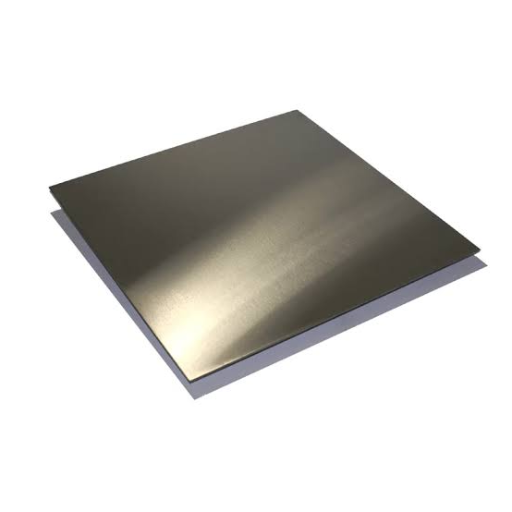
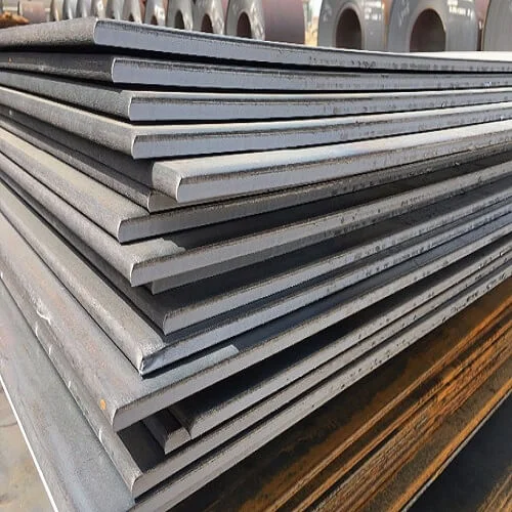
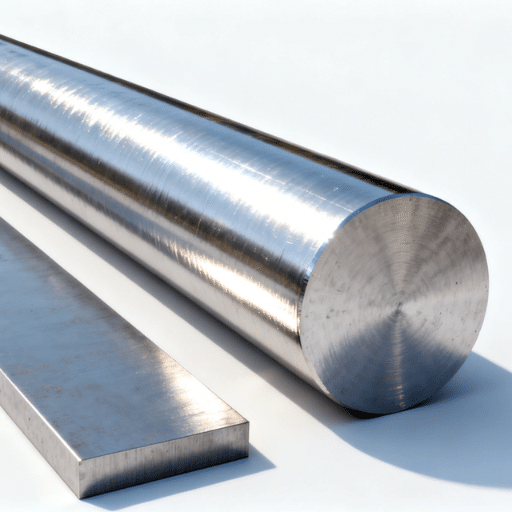
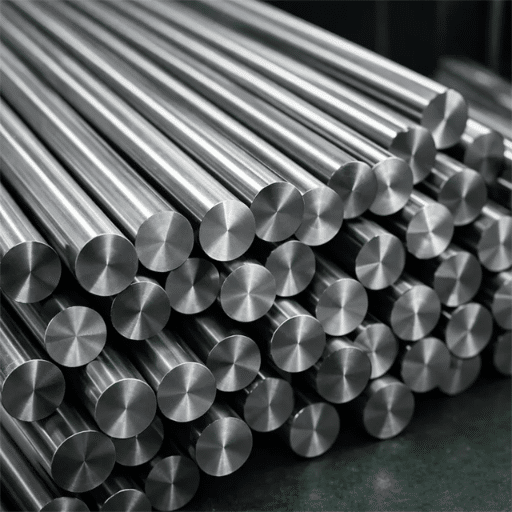
For procurement, specify the grade by standard. Confirm whether your supplier provides mill test certificates, ASTM or EN compliance, and standard product forms such as sheet, plate, bar, coil, and pipe. For a broader view of how titanium compares to other metals, start with our titanium vs stainless steel comparison.
Frequently Asked Questions
Is Grade 5 titanium stronger than Grade 2?
Yes. Grade 5 (Ti-6Al-4V) has a tensile strength of roughly 895-1,000 MPa, about 2.5 to 3 times the 345-480 MPa of Grade 2. It also has higher hardness and far better fatigue resistance.
Which is better, Grade 2 or Grade 5 titanium?
It depends on the application. Grade 2 is better when corrosion resistance, formability, weldability, and cost are the priorities. Grade 5 is better when strength, fatigue life, and load-bearing performance matter more.
Is Grade 2 titanium more corrosion resistant than Grade 5?
Generally yes. Grade 2 is preferred in seawater, wet chlorine, and oxidizing acids because it contains no aluminum or vanadium alloying elements that can act as weak points for localized corrosion.
Can you weld Grade 2 titanium?
Yes. Grade 2 welds easily with standard TIG/GTAW and argon shielding, and the weld retains ductility close to the base metal. Grade 5 also welds well but requires stricter inert-gas coverage.
Which titanium grade is used for implants?
Grade 5 (Ti-6Al-4V) is standard for load-bearing implants such as hip stems and bone plates because of fatigue strength. Grade 2 is used for non-structural implants and surgical instruments where corrosion resistance and biocompatibility are the main needs.
Is Grade 5 titanium worth the extra cost?
When weight, fatigue, or strength drives the design, yes. When corrosion resistance and moderate stress are the main factors, Grade 2 is usually the more economical choice.
Is titanium magnetic?
No. Both Grade 2 and Grade 5 are essentially non-magnetic. For more detail, see our is titanium magnetic guide.
Conclusion
The choice between titanium grade 2 vs grade 5 comes down to what your part must do. Grade 2 delivers outstanding corrosion resistance, easy welding, excellent cold formability, and lower cost. Grade 5 delivers roughly 2.5 to 3 times the strength, superior fatigue life, higher hardness, and the ability to use thinner sections.
Define the load, the environment, the temperature range, and the total cost per part before you decide. If the application is corrosion-driven with moderate stress, Grade 2 is likely your best value. If it is strength-, fatigue-, or weight-driven, Grade 5 justifies the premium.
For help choosing between Grade 2 and Grade 5 titanium, or to source either grade for your project, contact LIANYUNGANG DAPU METAL to request a quote.