Titanium and stainless steel both resist corrosion and perform well in demanding industrial applications, but they differ sharply in density, cost, and fabrication behavior. Titanium offers a higher strength-to-weight ratio and superior seawater corrosion resistance, while stainless steel provides lower cost, easier machining, and higher stiffness for most general-purpose projects.
Choosing the wrong material can add unnecessary weight, increase machining costs, or shorten service life in aggressive environments. Engineers and procurement teams need more than a simple “which is better” answer. They need a clear comparison of mechanical properties, corrosion behavior, manufacturing constraints, and total cost of ownership.
Example: The offshore heat exchanger decision
In 2023, a marine engineering team led by Marcus Chen needed to replace seawater-cooled heat exchangers on an offshore platform. The original 316L stainless steel units lasted eight years but showed pitting near the welds. The team evaluated Grade 2 titanium replacement tubes. The titanium option cost four times more upfront. However, the projected service life exceeded twenty-five years, and the reduced maintenance downtime saved an estimated $180,000 per year. For that specific heat exchanger, titanium won on total cost of ownership. For the surrounding piping and frame, 316L stainless steel remained the economical choice.This example illustrates a key principle: the right material depends on the specific component, environment, and lifecycle economics.
In this guide, you will learn how titanium and stainless steel compare across density, strength, corrosion resistance, cost, and machinability. You will also see a detailed grade comparison between Ti-6Al-4V (Grade 5) and 316L stainless steel, plus practical guidance for selecting the right material for aerospace, marine, medical, automotive, and consumer applications.
Key Takeaways
- Titanium is approximately 45% lighter than stainless steel and offers a superior strength-to-weight ratio, making it ideal for aerospace and weight-critical applications.
- Grade 5 titanium (Ti-6Al-4V) delivers roughly double the tensile strength of 316L stainless steel while weighing half as much.
- Stainless steel resists corrosion through a chromium oxide layer; titanium forms a more stable TiO₂ passive layer that performs better in seawater and chloride environments.
- Titanium typically costs 3 to 10 times more than stainless steel and is harder to machine and weld.
- For most industrial projects, stainless steel remains the practical choice; titanium is justified when weight reduction, biocompatibility, or extreme corrosion resistance are critical.
What is Titanium?

Titanium is a chemical element with the symbol Ti and atomic number 22. It sits in the transition metal group and is known for its exceptional combination of low density and high strength.
Commercially, titanium is used in two main forms. Commercially pure titanium (CP Grade 2) offers excellent corrosion resistance and good formability. Ti-6Al-4V, also called Grade 5 titanium, is an alloy containing 6% aluminum and 4% vanadium. It accounts for roughly half of all titanium used worldwide because it balances strength, heat resistance, and corrosion performance.
The density of titanium is approximately 4.43 g/cm³. This is dramatically lower than most structural metals. When engineers need strength without weight, titanium becomes a leading candidate. Its oxide layer also reforms instantly when damaged, which gives titanium outstanding resistance to saltwater, chlorine, and many acids.
For a deeper look at titanium’s mechanical and physical properties, see our dedicated guide on titanium properties.
What is Stainless Steel?
Stainless steel is an iron-based alloy containing at least 10.5% chromium. The chromium reacts with oxygen to form a thin, stable oxide layer called the passive layer. This layer protects the underlying iron from rust and corrosion.
The most common grades are 304 stainless steel and 316 stainless steel. Grade 304 contains 18% chromium and 8% nickel, giving it good general corrosion resistance and excellent formability. Grade 316 adds 2-3% molybdenum, which improves resistance to chlorides and makes it suitable for marine and chemical environments.
Austenitic stainless steels like 304 and 316 have densities around 7.9 to 8.0 g/cm³. They are non-magnetic in the annealed condition and can be welded, formed, and machined with standard industrial equipment. This makes stainless steel one of the most versatile and widely available engineering metals.
If you need a broader overview of stainless steel grades and applications, our complete stainless steel guide covers the topic in detail.
Titanium vs Stainless Steel: Key Differences at a Glance
The fastest way to understand these materials is to compare their core properties side by side. The table below uses CP Grade 2 titanium, Grade 5 titanium, and 316L stainless steel as reference points.
| Property | CP Titanium Grade 2 | Titanium Grade 5 (Ti-6Al-4V) | 316L Stainless Steel |
|---|---|---|---|
| Density | 4.51 g/cm³ | 4.43 g/cm³ | 8.00 g/cm³ |
| Tensile Strength | ~345 MPa | ~950 MPa | ~485 MPa |
| Yield Strength | ~275 MPa | ~880 MPa | ~170 MPa |
| Elastic Modulus | 105 GPa | 114 GPa | 193 GPa |
| Hardness | ~80 HRB | ~36 HRC | ~95 HRB |
| Melting Point | ~1,660°C | ~1,660°C | ~1,375°C |
| Thermal Conductivity | 16.4 W/m·K | 6.7 W/m·K | 16.3 W/m·K |
| Corrosion Resistance | Excellent | Excellent | Very Good |
| Biocompatibility | Excellent | Excellent | Good |
| Relative Cost | Moderate-High | High | Low-Moderate |
The most important takeaway is the density gap. A component made from Grade 5 titanium weighs roughly 45% less than the same component made from 316L stainless steel. At the same time, Grade 5 titanium is about twice as strong in tensile loading and more than five times as strong in yield.
However, stainless steel is roughly 1.7 times stiffer than titanium. In applications where rigidity matters more than weight, stainless steel often performs better. Stainless steel is also easier to machine, weld, and finish, which reduces production time and cost.
When should you choose titanium? Select titanium when weight reduction, extreme corrosion resistance, or biocompatibility justify the higher material and processing cost.
When should you choose stainless steel? Choose stainless steel when you need a cost-effective, corrosion-resistant metal that is easy to fabricate and widely available.
Strength, Hardness, and Stiffness Comparison
The phrase “stronger than steel” confuses because strength can mean different things. Absolute tensile strength, yield strength, hardness, and stiffness are separate properties.
Tensile strength measures the maximum stress a material can withstand before breaking. Grade 5 titanium reaches approximately 950 MPa, compared with about 485 MPa for annealed 316L stainless steel. Some high-strength stainless steels, such as 17-4 PH or cold-worked grades, can exceed these values, but standard 304 and 316 do not.
Yield strength measures the stress at which a material begins to deform permanently. Grade 5 titanium yields at roughly 880 MPa, while 316L stainless steel yields at about 170 MPa. This large difference makes titanium attractive for applications with high loads and tight deflection limits.
Stiffness, measured by elastic modulus, tells us how much a material resists bending. Stainless steel has an elastic modulus of approximately 193 GPa, while titanium grades range from 105 to 114 GPa. A stainless steel beam deflects less under the same load. For structures where rigidity is critical, stainless steel may be the better choice even if it is heavier.
Hardness affects scratch and wear resistance. Annealed 316L stainless steel is generally harder than CP Grade 2 titanium but softer than surface-hardened or Grade 5 titanium. In abrasive environments, stainless steel often outperforms commercially pure titanium.
For a focused answer to the common question, read our article: Is titanium stronger than steel?
Weight and Density Comparison

Density directly affects transportation costs, fuel efficiency, handling, and structural loads. Titanium’s density of 4.43 g/cm³ makes it one of the lightest structural metals available. Stainless steel sits at roughly 8.0 g/cm³, nearly twice as heavy.
This difference is why aerospace manufacturers use titanium extensively. The Boeing 787 Dreamliner contains approximately 15% titanium by weight, which helps reduce fuel consumption without sacrificing structural integrity.
In automotive applications, a titanium exhaust system can weigh 40-50% less than a comparable stainless steel system. In cycling, titanium frames offer a lighter ride feel while maintaining good fatigue resistance. Portable equipment, military gear, and high-performance sporting goods also benefit from the weight savings.
However, weight savings must be weighed against cost. A lighter component only makes economic sense if the weight reduction delivers measurable value. In stationary industrial equipment, building supports, or architectural panels, the extra weight of stainless steel is rarely a problem.
For a detailed weight analysis, see our guide on titanium vs stainless steel weight.
Corrosion Resistance in Different Environments
Both titanium and stainless steel resist corrosion through passive oxide layers. The difference lies in how stable those layers are under attack.
Titanium forms titanium dioxide (TiO₂). This layer is extremely stable and self-healing. It performs well in seawater, chloride solutions, oxidizing acids, and many industrial chemicals. Titanium is often the default choice for marine hardware, desalination plants, and chemical processing equipment exposed to aggressive media.
Stainless steel relies on a chromium oxide (Cr₂O₃) layer. This layer protects the metal in atmospheric, freshwater, and mild chemical environments. However, chlorides can penetrate the layer and cause pitting or crevice corrosion. Grade 316L adds molybdenum to improve chloride resistance, but it still falls short of titanium in severe marine or chemical service.
In high-temperature oxidation, stainless steel generally outperforms titanium. Grade 316L retains useful strength up to approximately 870°C in intermittent service. Titanium alloys are typically limited to around 600°C because they absorb oxygen and become brittle at higher temperatures.
For environment-specific corrosion guidance, read our article on titanium vs stainless steel corrosion resistance.
Cost, Machinability, and Manufacturing
Material selection is never purely technical. Cost and manufacturability often decide the outcome.
Raw material cost: Titanium typically costs 3 to 10 times more than stainless steel, depending on grade, form, and market conditions. Grade 5 titanium is more expensive than commercially pure grades because of alloying elements and processing requirements.
Machining cost: Titanium is more difficult to machine than stainless steel. It has lower thermal conductivity, which concentrates heat at the cutting edge. Tools wear faster, cutting speeds are slower, and specialized coolant is often required. Some estimates suggest titanium machining costs can be 5 to 10 times higher than stainless steel for complex parts.
Welding: Stainless steel welds readily using common TIG, MIG, and resistance welding processes. Titanium requires inert gas shielding, clean preparation, and controlled heat input. Contamination from oxygen or nitrogen during welding can cause embrittlement. This adds labor and equipment cost.
Total cost of ownership: Titanium can reduce lifecycle costs when weight savings cut fuel use, or when corrosion resistance eliminates maintenance and replacement. In chemical plants, titanium heat exchangers often outlast stainless steel units by years. In mass-produced consumer goods, stainless steel usually wins on upfront cost.
For a detailed cost breakdown, see our guide on titanium vs stainless steel cost.
Grade Showdown: Ti-6Al-4V (Grade 5) vs 316L Stainless Steel
When engineers compare titanium and stainless steel for critical applications, they usually compare Grade 5 titanium with 316L stainless steel. The table below shows why these two grades are the most relevant reference points.
Chemical Composition
| Element | 316L Stainless Steel | Grade 5 Titanium (Ti-6Al-4V) |
|---|---|---|
| Base | Iron (balance) | Titanium (balance, ~90%) |
| Chromium | 16.0-18.0% | — |
| Nickel | 10.0-14.0% | — |
| Molybdenum | 2.0-3.0% | — |
| Aluminum | — | 5.5-6.75% |
| Vanadium | — | 3.5-4.50% |
| Carbon (max) | 0.03% | 0.10% |
Mechanical Properties
| Property | 316L Stainless Steel | Grade 5 Titanium |
|---|---|---|
| Density | 8.0 g/cm³ | 4.43 g/cm³ |
| Yield Strength | ~170 MPa | ~880 MPa |
| Tensile Strength | ~485 MPa | ~950 MPa |
| Elastic Modulus | 193 GPa | 114 GPa |
| Hardness | ~95 HRB | ~36 HRC |
| Max Service Temp | ~870°C | ~600°C |
When to choose Grade 5 titanium: Aerospace structures, high-performance automotive parts, medical implants, marine components exposed to seawater, and any application where weight reduction justifies premium cost.
When to choose 316L stainless steel: Chemical processing equipment, food and pharmaceutical machinery, marine hardware in moderate chloride exposure, architectural features, and general industrial applications where cost and fabricability matter.
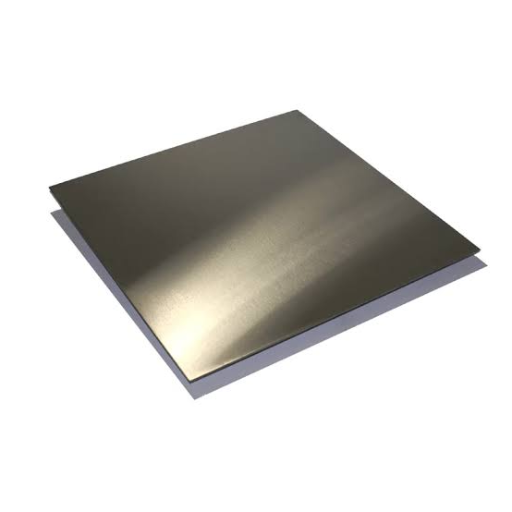
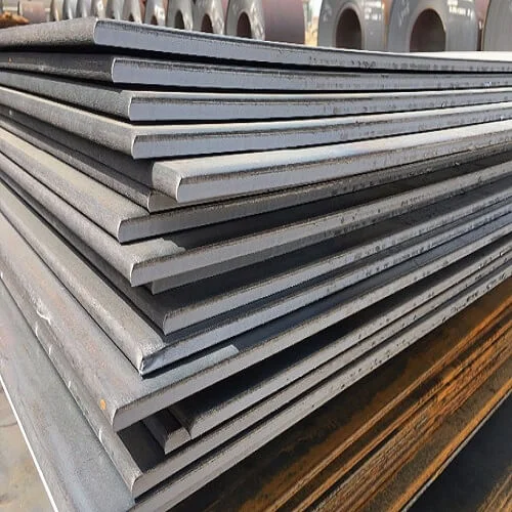
LIANYUNGANG DAPU METAL supplies 316 stainless steel products in sheets, plates, coils, and pipes for marine, chemical, and industrial projects. For a deeper grade comparison, see our article on titanium grade 5 vs 316 stainless steel.
Application-Specific Guidance

Aerospace and Automotive
Titanium dominates aerospace because every kilogram saved reduces fuel burn. Jet engine compressor blades, airframe fasteners, and landing gear components commonly use Grade 5 titanium. In high-performance automotive applications, titanium exhaust systems, valves, and connecting rods reduce weight and improve throttle response.
Stainless steel remains common in standard automotive exhausts, fuel systems, and structural brackets where cost and manufacturing speed matter more than weight.
Marine and Chemical Processing
Seawater is one of the most aggressive environments for metals. Titanium resists saltwater corrosion for decades, making it suitable for propeller shafts, heat exchangers, and offshore platform components. However, the upfront cost limits titanium to critical parts.
316L stainless steel is widely used for marine railings, pumps, valves, and chemical tanks. It performs well in mild chloride exposure but may require cathodic protection or more frequent inspection in severe marine service. Our stainless steel pipes are commonly used in fluid handling and marine piping systems.
Medical and Dental Implants
Titanium is the preferred material for long-term implants such as hip replacements, dental implants, and pacemaker cases. It is biocompatible, non-toxic, and supports osseointegration, the process by which bone bonds directly to the implant surface.
316L stainless steel is used for surgical instruments, temporary implants, and some orthodontic devices. It is cost-effective and easy to sterilize, but its nickel content can cause allergic reactions in sensitive patients.
Watches and Jewelry
Titanium watches and jewelry are lightweight, hypoallergenic, and corrosion-resistant. Grade 2 titanium scratches more easily than hardened stainless steel, while Grade 5 offers better scratch resistance.
Stainless steel, especially 316L, remains the standard for watch cases and jewelry because it holds a high polish, is easy to refinish, and costs less. Consumers with nickel allergies often prefer titanium.
Exhaust Systems
Titanium exhausts are popular in motorsports and premium motorcycles because they reduce weight and can be heat-treated to produce distinctive color finishes. However, they are thinner and can be more fragile under track abuse.
Stainless steel exhausts are more durable for daily driving and high-speed track use. They can be mandrel-bent with fewer welds and resist corrosion from road salt when properly maintained.
Bicycles and Sporting Goods
Titanium bicycle frames offer a smooth ride, excellent fatigue resistance, and low weight. They resist corrosion from sweat and road spray, making them popular for high-end road and gravel bikes.
Stainless steel is used for components where stiffness and abrasion resistance matter, such as drivetrain parts, bolts, and bearings. For most recreational cyclists, aluminum or carbon fiber frames offer lower cost than titanium.
How to Choose Between Titanium and Stainless Steel
The right material depends on which properties matter most for your project. Use the checklist below to guide your decision.
Choose titanium if:
- Weight reduction is a top priority
- The component will operate in seawater or strong chlorides
- Biocompatibility or hypoallergenic properties are required
- High strength-to-weight ratio justifies premium cost
- Fatigue resistance under cyclic loading is critical
Choose stainless steel if:
- Cost is a primary constraint
- Ease of machining, welding, and finishing matters
- High stiffness and rigidity are required
- General corrosion resistance is sufficient
- The application involves moderate temperatures below 600°C
Need help selecting the right material? Our engineering team provides technical consultation to match your application with the correct alloy grade and specification.
For projects that fall between these categories, a hybrid approach may work. Some designs use titanium for critical load-bearing or corrosion-exposed parts while using stainless steel for brackets, housings, and fasteners.
Frequently Asked Questions
Is titanium stronger than steel?
Titanium has a higher strength-to-weight ratio than most steels, meaning it delivers more strength per kilogram. Grade 5 titanium has roughly double the tensile strength of 316L stainless steel while weighing about 45% less. However, some high-strength stainless steels can exceed titanium’s absolute tensile strength, and stainless steel is generally stiffer.
Is titanium magnetic?
No. Titanium is non-magnetic. Austenitic stainless steels such as 304 and 316 are also non-magnetic in the annealed condition. This makes both materials suitable for applications near magnetic sensors or MRI equipment. For more details, see our article on whether titanium is magnetic.
Does titanium rust?
Titanium does not rust in the conventional sense. It forms a stable titanium dioxide layer that protects the base metal. This layer resists corrosion in seawater, chlorine, and many acids. In extremely reducing acids or environments with fluoride ions, titanium may corrode, but such cases are rare in normal industrial use.
Why is titanium so expensive?
Titanium costs more because extraction from ore is energy-intensive, global production volumes are lower than steel, and machining requires specialized tooling and slower speeds. The Kroll process used to produce titanium sponge is more complex than the blast furnace and electric arc furnace routes used for steel.
Can you weld titanium to stainless steel?
Direct fusion welding of titanium to stainless steel is difficult and generally not recommended. The two metals form brittle intermetallic compounds that weaken the joint. Successful joining usually requires explosion welding, friction welding, or a bimetallic transition joint. For most structures, mechanical fastening is the safer choice.
Which is better for medical implants, titanium or stainless steel?
Titanium is better for long-term implants because it is fully biocompatible, promotes bone bonding, and contains no nickel. 316L stainless steel is acceptable for temporary implants and surgical instruments but carries a small risk of nickel sensitivity.
Which is better for watches, titanium or stainless steel?
Titanium is lighter and hypoallergenic, making it comfortable for daily wear. Stainless steel holds a brighter polish and is easier to refinish. The best choice depends on whether you prioritize weight and skin sensitivity or finish durability and cost.
Conclusion
Titanium and stainless steel both serve critical roles in modern industry, but they excel in different areas. Titanium leads in strength-to-weight ratio, seawater corrosion resistance, and biocompatibility. Stainless steel leads in cost efficiency, stiffness, machinability, and availability.
When selecting between titanium vs stainless steel, start by defining your priorities. If weight reduction or extreme corrosion resistance drives the design, titanium is likely worth the investment. If cost, ease of fabrication, and general durability matter most, stainless steel remains the practical choice.
For most industrial buyers, 316L stainless steel offers an excellent balance of corrosion resistance, mechanical properties, and value. It handles marine exposure, chemical processing, food production, and architectural applications without the cost premium of titanium.