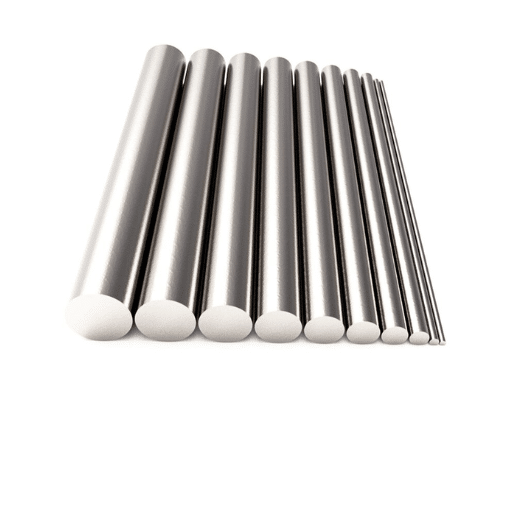
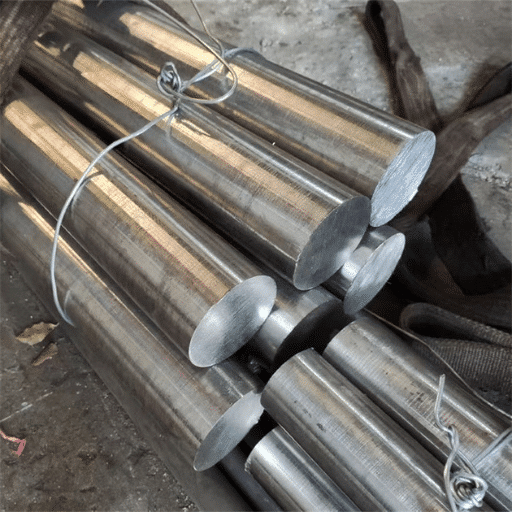
Commercially pure titanium and Ti-6Al-4V differ at the microstructure level: CP titanium is a single-phase alpha material with outstanding corrosion resistance, formability, and weldability but moderate strength, while Ti-6Al-4V is an alpha-beta alloy that delivers roughly 2.5 to 3 times the tensile strength and superior fatigue life. The right choice depends on your dominant requirement, not on which metal is “stronger” or “better.”
Marcus found this out the hard way. He is a design engineer at a chemical processing company, and his team was specifying a new heat exchanger for a wet-chlorine service. The initial instinct was to pick the premium alloy, Ti-6Al-4V, because everyone assumes the stronger option is automatically the better one.
Then the calculations came back. Grade 2 commercially pure titanium met the design pressure with a modest wall-thickness increase, cut the material cost by roughly 20%, and opened up a much wider welding window. Two years later, the exchanger is still running without a single tube failure.
This guide explains what “commercially pure” and “Ti-6Al-4V” actually mean at the atomic level, why those names predict strength, corrosion, and fabrication behavior, and how to choose between them. If you want the broader grade-vs-grade picture first, our titanium grade 2 vs grade 5 comparison covers the full matchup.
Key Takeaways
- Commercially pure titanium is unalloyed (>99% Ti) with a single-phase alpha microstructure; Ti-6Al-4V adds 6% aluminum and 4% vanadium to form an alpha-beta alloy.
- Ti-6Al-4V delivers roughly 895-1,000 MPa tensile strength versus 345 MPa for CP Grade 2, about 2.5-3x higher, plus superior fatigue resistance.
- CP titanium wins on corrosion resistance in seawater and wet chlorine, formability, weldability, and cost; it is also the only titanium family that cannot be heat treated.
- Both metals share near-identical density (~4.5 g/cm3), so Ti-6Al-4V saves weight by allowing thinner sections, not by being lighter per volume.
- Need corrosion resistance, forming, or welding? Choose CP titanium. Need strength, fatigue, or load-bearing performance? Choose Ti-6Al-4V.
What Does “Commercially Pure” Titanium Mean?

Commercially pure (CP) titanium is unalloyed titanium. It contains more than 99% titanium, with only small amounts of interstitial impurities: oxygen, iron, carbon, nitrogen, and hydrogen. The name can confuse buyers, because “commercially pure” does not mean one single product. It describes a family of four grades, 1 through 4, that differ mainly in oxygen and iron content.
Oxygen is the lever that sets the properties. Each additional amount of oxygen strengthens the metal through solid-solution strengthening but reduces ductility. That is why Grade 1 is the softest and most formable, while Grade 4 is the strongest of the CP grades.
| Grade | UNS | Max Oxygen | Tensile Strength | Yield Strength | Elongation |
|---|---|---|---|---|---|
| Grade 1 | R50250 | 0.18% | 240 MPa | 170 MPa | 24% |
| Grade 2 | R50400 | 0.25% | 345 MPa | 275 MPa | 20% |
| Grade 3 | R50550 | 0.35% | 450 MPa | 380 MPa | 18% |
| Grade 4 | R50700 | 0.40% | 550 MPa | 483 MPa | 15% |
Grade 2 is the workhorse of the group, and it is the CP grade that most engineers mean when they say “commercially pure titanium.” It balances strength, corrosion resistance, formability, and cost better than any other pure grade. Common specifications include ASTM B265 for sheet and plate, ASTM B348 for bar, and ASTM F67 for surgical implant applications. Our grade 2 titanium guide covers this workhorse grade in depth.
All CP grades share a single-phase alpha microstructure. That single phase, and the absence of alloying elements, drives most of the behavior described below.
What Is Ti-6Al-4V?
Ti-6Al-4V is the most widely used titanium alloy in the world, accounting for over half of all titanium production. The designation itself is a chemical recipe: roughly 90% titanium, 6% aluminum, and 4% vanadium. In the grade system, it is Grade 5, with UNS designation R56400.
The two alloying additions are not random. Aluminum stabilizes the alpha phase, raising strength and creep resistance. Vanadium stabilizes the beta phase, improving hot workability and enabling heat treatment. Together they create an alpha-beta alloy with an exceptional strength-to-weight ratio and excellent fatigue resistance. Aerospace components, turbine blades, high-performance fasteners, and load-bearing medical implants all rely on this combination.
Common specifications include ASTM B265 (sheet and plate), ASTM B348 (bar), AMS 4911 (aerospace sheet), AMS 4928 (aerospace bar), and ASTM F136 for the medical ELI variant. For a full treatment of the alloy, see our grade 5 titanium guide.
The Metallurgy: Alpha vs Alpha-Beta Microstructure

The single most important difference between these two materials is structural, not chemical. Titanium can exist in two crystal forms depending on temperature, and whether a material holds one form or two at room temperature changes everything downstream.
The Alpha Phase
Below its beta transus of about 882°C, titanium adopts a hexagonal close-packed (HCP) crystal structure called the alpha phase. HCP crystals have fewer active slip systems than other structures, which makes them strong but limits how easily they deform. CP titanium holds this single alpha phase at room temperature because it contains no alloying elements to change the phase balance.
This single-phase structure is why CP titanium is non-heat-treatable. With only one phase present, there is no second phase to transform or precipitate, so heat treatment cannot strengthen it. Its strength is fixed by interstitial content, chiefly oxygen.
The Beta Phase
Above the beta transus, titanium transforms to a body-centered cubic (BCC) structure called the beta phase. BCC crystals have more active slip planes, which makes them more ductile and formable at high temperature. This allotropic transformation, from alpha to beta and back, is the foundation of all titanium alloy design.
Why Alloying Transforms the Structure
Ti-6Al-4V is engineered to keep both phases at room temperature. Aluminum is an alpha stabilizer, so it expands the temperature range in which alpha is stable. Vanadium is a beta stabilizer, so it pulls beta down to room temperature. The result is a two-phase alpha-beta microstructure that combines the strength of alpha with the ductility and toughness of beta.
This is also why Ti-6Al-4V is heat treatable while CP titanium is not. Because both phases are present, solution treating and aging (STA) can tailor the microstructure and push tensile strength above 1,100 MPa. That capability is simply unavailable to a single-phase material.
The Practical Consequence
Here is the trade-off in one line: the same microstructural design that makes Ti-6Al-4V strong also makes it harder to weld, form, and machine, while the single-phase purity that makes CP titanium easy to work also caps its strength. Neither property set is universally better. They are different tools for different jobs.
How Aluminum and Vanadium Change Strength, Fatigue, and Temperature
Strength
Aluminum and vanadium atoms are smaller than titanium atoms. When they dissolve into the titanium lattice, they distort it, creating obstacles that make it much harder for atomic layers to slide past one another. This is solid-solution strengthening.
It is also the reason Ti-6Al-4V reaches roughly 895-1,000 MPa tensile strength and 828-930 MPa yield strength in the annealed condition, versus 345 MPa tensile and 275 MPa yield for CP Grade 2.
Annealed Ti-6Al-4V is about 2.5 to 3 times stronger than Grade 2, and heat treatment pushes it further. CP titanium cannot be strengthened this way at all.
Fatigue
Fatigue resistance is where Ti-6Al-4V separates itself most clearly. In a dental implant study by Hirata and colleagues published in the International Journal of Oral and Maxillofacial Implants, Grade 5 implants survived 100,000 cycles at 150 N in 98% of cases, while Grade 2 survived only 45% of cases (Hirata et al., 2015). For any part that sees repeated loading, a spring, a frame, a pump component, Ti-6Al-4V is the reliable choice.
Temperature Capability
Ti-6Al-4V retains useful strength up to roughly 400-500°C, which is why it appears in gas turbine and high-temperature fastener service. CP titanium’s strength falls off much sooner, typically limiting sustained loading to about 300°C. If your component runs hot, that alone can rule out the pure grade.
Quick Comparison Table
| Property | CP Titanium (Grade 2) | Ti-6Al-4V (Grade 5) |
|---|---|---|
| Alloy type | Commercially pure (alpha) | Alpha-beta alloy |
| UNS designation | R50400 | R56400 |
| Density | ~4.51 g/cm3 | ~4.43 g/cm3 |
| Tensile strength | 345 MPa min | 895 MPa min |
| Yield strength | 275 MPa min | 828 MPa min |
| Elongation | ~20% | ~10-14% |
| Hardness | ~200 HV | ~349 HV |
| Elastic modulus | ~103 GPa | ~114 GPa |
| Thermal conductivity | ~16-22 W/m·K | ~6.5-7.2 W/m·K |
| Heat treatable | No | Yes (STA to >1,100 MPa) |
| Seawater corrosion rate | ~0.0005 mm/year | Slightly higher |
Not sure which grade fits your operating conditions? Our technical consultation team works with engineers to match materials to real service environments.
Corrosion Resistance: When the “Pure” Grade Wins
Both materials owe their corrosion resistance to a thin, self-healing titanium dioxide (TiO2) passive film. In most environments, both perform excellently. The practical differences show up in the most aggressive conditions.
CP titanium is generally rated the better corrosion performer, especially in seawater, wet chlorine, and oxidizing acids. Its corrosion rate in natural seawater is around 0.0005 mm/year, effectively negligible, and it is fully resistant to chloride stress corrosion cracking. Because it contains no aluminum or vanadium, there are no alloying elements to act as weak points for localized attack.
Ti-6Al-4V is also excellent in most service conditions, but its alloying elements create a small disadvantage in highly aggressive oxidizing and high-temperature chlorine service, where the multiphase structure can support micro-galvanic effects and selective attack. It also requires galvanic isolation when coupled with dissimilar metals. For a deeper comparison, our titanium vs stainless steel corrosion guide explains how titanium behaves against stainless alternatives.
When corrosion resistance is the primary design constraint and stresses are moderate, CP titanium is usually the safer and more economical pick.
Fabrication, Welding, and Machining

Welding
CP titanium is straightforward to weld. Standard TIG/GTAW with argon shielding produces sound joints that retain ductility close to the base metal. The welding window is wide, and post-weld treatment is minimal. This is one reason CP grades dominate piping and tubing in corrosive service.
Ti-6Al-4V welds well too, but it demands discipline. Titanium is highly reactive with oxygen and nitrogen at welding temperature, and the alloy needs trailing shields and backing gas to keep the weld clean. Contamination causes embrittlement and cracking, which makes Grade 5 welding one of its largest hidden fabrication costs.
Forming
CP titanium has excellent cold formability and bends without cracking, comparable to austenitic stainless steel. Grade 1 bends easiest, Grade 2 forms readily for deep drawing, hydroforming, and tube bending. Ti-6Al-4V has limited cold formability and is typically hot-formed at 700-950°C, with more springback to manage.
Tom, who runs a small fabrication shop, learned this difference the expensive way. He quoted a batch of formed brackets assuming both grades would behave the same in his press brake. The Grade 2 parts came out clean on the first try. The Ti-6Al-4V parts cracked on the outer radius, and he had to rework the tooling and switch to hot forming, which added two weeks and doubled the quoted cost.
Machining
CP Grade 2 is the most machinable and economical grade in the titanium family. It cuts noticeably faster than the alloys, shortening cycle time and reducing per-part cost. Ti-6Al-4V work-hardens aggressively, wears tools faster, and conducts heat poorly, so heat concentrates at the cutting edge.
Anyone quoting Ti-6Al-4V machining should budget for slower speeds, harder tooling, and more coolant. Our custom processing capabilities cover cutting and fabrication for a wide range of materials.
How to Choose Between CP Titanium and Ti-6Al-4V
Use your dominant requirement as the deciding factor.
Choose commercially pure titanium (Grade 2) when:
- Corrosion resistance is the priority, especially seawater, wet chlorine, or oxidizing acids
- Parts require intensive forming, deep drawing, or complex bending
- Welding simplicity and a wide process window matter
- Cost is a factor, and stresses are moderate
- The component runs below roughly 300°C
Choose Ti-6Al-4V (Grade 5) when:
- Strength, fatigue life, or load-bearing performance is critical
- The component sees repeated or cyclic loading
- Service temperature exceeds about 300°C
- Weight matters and thinner sections are required
- The design is mass-sensitive, such as aerospace or high-performance equipment
A common engineering mistake is defaulting to Ti-6Al-4V for everything. That over-specifies the material and adds cost. Conversely, choosing CP titanium where structural strength is required risks premature failure. Match the grade to the dominant requirement, and you will usually land on the right answer.
There is one more angle worth checking before you commit: whether you need titanium at all. If your application is chemical processing or marine service at moderate loads, a molybdenum-bearing stainless steel such as 316 stainless steel products can deliver excellent corrosion resistance at a fraction of the cost of titanium. Our titanium vs stainless steel comparison walks through when the premium is justified and when it is not.
Frequently Asked Questions
Is Ti-6Al-4V stronger than commercially pure titanium?
Yes. Annealed Ti-6Al-4V has a tensile strength of roughly 895-1,000 MPa versus 345 MPa for CP Grade 2, about 2.5 to 3 times stronger, with correspondingly higher yield strength, hardness, and fatigue resistance.
Is commercially pure titanium more corrosion resistant than Ti-6Al-4V?
In most aggressive environments, yes. The absence of alloying elements eliminates micro-galvanic weak points, which is why CP titanium is preferred in seawater, wet chlorine, and oxidizing acids.
What does “commercially pure” titanium mean?
It means unalloyed titanium, over 99% titanium, with only trace interstitial impurities. It covers Grades 1-4, which differ in oxygen and iron content and therefore in strength and ductility.
Is Ti-6Al-4V an alloy or pure titanium?
Ti-6Al-4V is an alloy. It contains about 90% titanium plus 6% aluminum and 4% vanadium, which gives it an alpha-beta microstructure and roughly 2.5-3 times the strength of pure titanium.
Can you weld commercially pure titanium to Ti-6Al-4V?
Yes, dissimilar joints are achievable with controlled procedures. Research on laser and spark plasma welding has produced sound CP-to-Ti-6Al-4V joints, though the two materials respond differently to thermal cycles, so process control is critical (Fomin et al.).
Which is better for implants: CP titanium or Ti-6Al-4V?
For low-stress, bone-contact applications, CP titanium is the conservative choice because it contains no aluminum or vanadium. For load-bearing orthopedic implants, Ti-6Al-4V ELI (Grade 23 per ASTM F136) is the standard because strength and fatigue matter most. In practice, research has not demonstrated a clear biological superiority of one over the other when surface finish is held constant.
Getting the Right Material for Your Project
The short version: commercially pure titanium and Ti-6Al-4V are not competing versions of the same product. They are two fundamentally different materials, a single-phase pure metal and a two-phase engineered alloy, and the names encode the metallurgy that predicts their behavior.
When corrosion resistance, formability, and weldability drive your design, CP titanium is the efficient choice. When strength, fatigue, and temperature capability matter more, Ti-6Al-4V earns its premium. And when the loads are moderate and the environment is aggressive, a stainless steel alternative can often deliver the performance at lower cost.
If you are evaluating a material for a specific application, our team at LIANYUNGANG DAPU METAL can help you compare grades and standards. We supply stainless steel, nickel alloy, copper alloy, aluminum alloy, galvanized steel, and carbon steel, with international quality certifications and global logistics. Contact us to request a quote or get custom material specifications for your project.
Video embed placeholder: insert a relevant engineering explainer on titanium microstructure or Ti-6Al-4V vs CP titanium properties (search “Ti-6Al-4V vs commercially pure titanium” on YouTube), then replace this line with the embed.