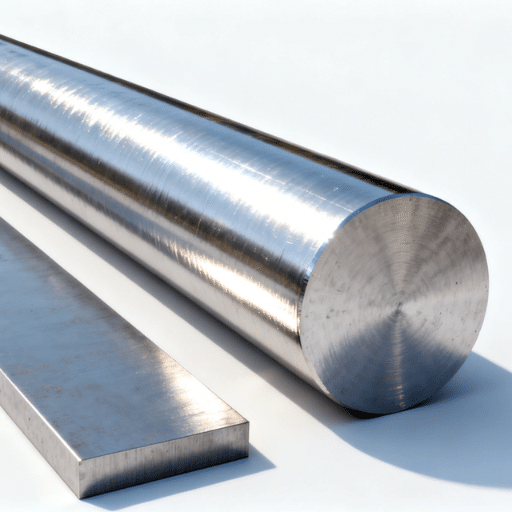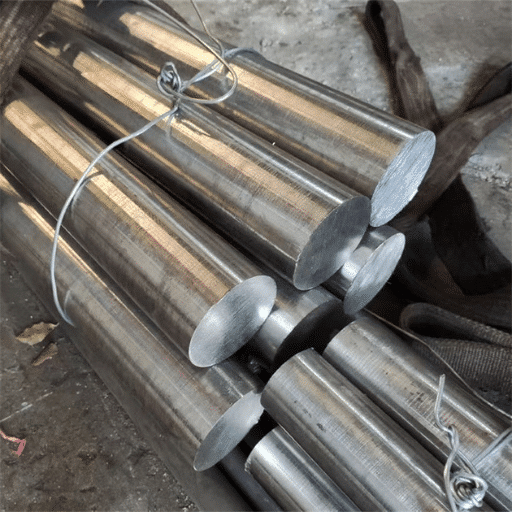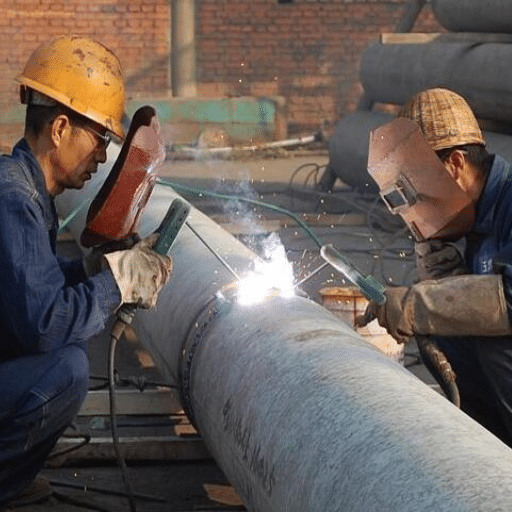
Duplex 2205 is harder to machine than 316 because its two-phase microstructure work-hardens rapidly under the cutting edge while its low thermal conductivity concentrates heat at the tool tip. Plan on 20-30% lower cutting speed, heavier feeds, sharp PVD-coated carbide, and high-pressure coolant. When forming, expect more springback and a larger bend radius.
A shop takes on a batch of 2205 flange forgings with a proven 316L program already loaded. Same alloy family, similar chromium, so the parameters should transfer. The first tool goes to the edge in a fraction of its normal life, the finish comes out torn, and the blame lands on the insert.
The insert was fine. The 316 program fed the material exactly the way 2205 punishes.
That’s the whole problem with duplex machining in one sentence. The material isn’t difficult to machine. It’s unforgiving to a parameter set borrowed from an austenitic grade, and the gap between “unforgiving” and “difficult” is the difference between a job that runs and a job that eats tooling all week.
This guide covers duplex 2205 machining parameters for turning, milling, drilling and tapping, the tooling and coolant that survive it, why work hardening is the number that matters most, how much the material springs back when bent, how much cold work you can do before a post-form anneal, and how cutting changes corrosion resistance. If you are still deciding between the two grades, start with our duplex 2205 vs 316 stainless steel comparison.
Key Takeaways
- Duplex 2205 is roughly 50/50 austenite and ferrite. The austenite work-hardens fast under the cutting edge while the softer ferrite flows around it, so the material behaves like “cutting rubber with hard inclusions.” Every parameter below is a control on that one mechanism.
- Relative machinability is quoted anywhere from 35-45% to 50-60% against 316L at ~70-80%. The source disagreement is real; the practical translation is not. Cut ~20-30% slower than 316L and never reuse a 316 program.
- Never take a light pass. A shallow cut rubs instead of shearing, work-hardening a skin 50-80 HB harder; the next pass then fights 25-40% higher cutting forces. Keep roughing cuts deep (2-5 mm) and the feed constant.
- Use PVD-coated M-grade carbide (M10-M25), never P-grade steel inserts. AlTiN/TiAlN for turning and milling; CrN or AlCrN for tapping. Cool with high-pressure flood at 40-70 bar, and never machine 2205 dry.
- Forming follows the same logic: overbend for springback, allow a larger bend radius, and solution-anneal at ≥1040°C with a water quench after heavy cold work. Stress relief is not an option for duplex at any temperature.
Why Duplex 2205 Is Harder to Machine Than 316
Start with the structure, because everything else follows from it. Duplex 2205 is an austeno-ferritic grade: roughly half austenite and half ferrite, interleaved. That two-phase structure is what gives it twice the yield strength of 316 with far better chloride resistance. It’s also why it machines differently.
Under the cutting edge, the harder austenite phase work-hardens quickly, while the softer ferrite flows around it. Operators describe the sensation as cutting rubber with hard inclusions embedded in it. Machinability studies on 2205 capture the same effect: microhardness climbs from the workpiece into the chip, the direct evidence of strain hardening at the edge.
The second half of the mechanism is thermal. Duplex 2205 has low thermal conductivity, so heat generated at the cut doesn’t move away from the tool tip. It concentrates there. That combination of strain hardening at the surface and edge heat drives built-up edge (BUE) and adhesion wear, which is why a 2205 tool fails with material welded to its edge and a torn finish rather than with clean flank wear.
Two failure modes fall out of this. Take a light pass and the tool rubs instead of shears, hardening the surface without cutting it cleanly. Run too fast and the edge overheats, which over-hardens the work surface and accelerates the wear that develops the BUE.
Neither failure is about the material being “hard” in the ordinary sense. It is about the material hardening because of how it is approached.
The Machinability Rating: Why Sources Disagree
Ask four suppliers for duplex 2205 machinability figures and you may get four numbers. Cutting-tool vendor data puts it around 35-45% relative to a reference austenitic. A machining-parameter guide published in French puts it closer to 50-60%. Against 316L at roughly 70-80%, both figures agree on the direction: 2205 is harder to machine, and the spread reflects different reference conditions, tooling assumptions and test setups.
Publishing that disagreement matters more than picking a winner. The number that survives a shop floor is simpler and more useful: reduce cutting speed by roughly 20-30% versus a 316L program, and don’t transfer the rest of the program unchanged either.
Even the duplex 2205 cutting speed figure carries a spread. Conservative shop guidance starts 2205 turning around 60-110 m/min. One tool vendor publishes 155-195 m/min under ideal rigidity and cooling. Both can be right for their conditions, which is why the range and the reason behind it matter more than a single figure.
The higher cutting force is the second signal that a 316 program won’t survive. Duplex 2205 cutting forces run 25-35% above 316L, and that’s a machine-tool and rigidity requirement before it’s a tooling one. Two grades that share a name almost everywhere else come apart here, which is also where the yield-strength gap between 2205 and 316 shows up as a machining cost rather than a design benefit.
Image suggestion: a cutting edge entering the two-phase microstructure, with the austenite work-hardening under the edge and the ferrite flowing around it, plus a heat map showing heat concentrating at the tool tip. Annotate the four levers: speed, feed, tooling, coolant.
Setting up a 2205 job and unsure which cuts to route where? That is exactly what our precision cutting and custom processing service is for.
Duplex 2205 Machining Parameters: Speeds and Feeds
Treat the table below as a starting window, not a prescription. The material, the tool class, the rigidity of the setup and the coolant all move these numbers, and one operation (drilling) punishes excess speed far harder than the others.
| Operation | Vc (m/min) | Feed | Notes |
|---|---|---|---|
| Rough turning | ~60-110 | 0.15-0.45 mm/rev | ap 1.5-5 mm; keep the cut deep |
| Finish turning | ~100-150 | 0.05-0.20 mm/rev | ap 0.1-1.5 mm; light, sharp finishing pass to control Ra |
| Milling (conventional) | ~60-125 | 0.06-0.20 mm/tooth | ae 50-70% of D; trochoidal milling reaches ~240 m/min |
| Drilling | ~15-55 (optimum reported ~13-34) | 0.1-0.3 mm/rev | 135° split point; low speed is normal here |
| Tapping | ~8-12 | n/a (see below) | Thread milling preferred; see the tapping section |
The single most important line in that table isn’t a speed. It’s the feed.
Feed dominates tool life. In one dry-turning study on 2205 (speeds 100-180 m/min, feeds 0.12-0.18 mm/rev, 0.8 mm depth of cut), an ANOVA attributed roughly 62% of the tool-life effect to feed, ahead of cutting speed at ~13% and tool grade at ~4%. That inverts the instinct many machinists carry from simpler steels, where dialing back the speed is the usual first move. On 2205, the feed is the lever that matters most, and undershooting it is worse than overshooting it.
A study optimizing 2205 turning, conventional milling and trochoidal milling points the same way. Best conventional milling came in near 120 m/min at a material-removal rate of about 17 cm³/min, while trochoidal milling reached ~240 m/min with a higher removal rate and consistent tool life. Higher speed worked where the tool engagement, the arc of contact and the cooling allowed it.
Drilling runs the other way entirely. Recommended speeds fall to 15-55 m/min, with one optimization reporting best tool life at only ~13 m/min. Drilling 2205 at a 316-like speed is the fastest way to scrap a batch.
The window is also thermally narrow for a separate reason. Above roughly 300°C in service, duplex 2205 begins forming embrittling phases, and the same heat sensitivity governs how much cutting temperature the surface can take. The temperature limits of duplex 2205 cover that ceiling in detail; for machining, the takeaway is that concentrated edge heat is not just a tool-life problem.
Work-Hardening Management: The Rule That Saves the Job
If you remember one instruction from this article, make it this one.
Never take a light pass. A shallow cut does not shear the metal. It rubs it. That rub creates a work-hardened skin 50-80 HB harder than the base material, and every pass after it then fights 25-40% higher cutting forces. What looked like a gentle clean-up cut becomes the reason the rest of the job runs hot and slow.
Anil, a CNC programmer at a pump-components shop in Gujarat, learned it early in 2025. A 2205 impeller blank came off the lathe slightly oversized, and he took “one more light skim” to bring it to print. The skim rubbed, the surface hardened, and the finishing passes that followed chattered, tore the finish, and broke two inserts.
The part still ran, but the downtime cost more than the material. The fix was structural, not a tweak: a deeper roughing pass, a minimum feed, and no dwelling at the end of a cut.
The prescription is specific. Maintain a minimum feed, roughly fz ≳ 0.03-0.04 mm/tooth in milling and fn ≳ 0.10 mm/rev in turning, and keep roughing depth of cut at 2-5 mm. Never let the tool dwell in the cut; a stationary edge sitting on the surface work-hardens it instead of removing it.
Rigidity matters as much here as parameters, because of the elevated cutting forces. Minimize tool overhang and part stick-out.
And if chatter does appear, the correction runs opposite to instinct: reduce surface speed and increase feed, never the reverse. Slowing the feed to quiet a chatter makes the rubbing worse, and the surface gets harder still. The same fabrication discipline carries into the duplex 2205 welding procedures if the part is welded after machining.
Cutting Tools, Coatings and Coolant for Duplex 2205
Tool selection for 2205 comes down to four choices that all serve one goal: keep the edge sharp, so it cuts rather than rubs.
PVD over CVD. A physical-vapor-deposited coating is thinner than a chemical-vapor-deposited one, so it preserves the sharp geometry of the cutting edge. A sharp edge shears the metal; a dull or rounded edge rubs it and work-hardens it. On work-hardening-prone duplex, that difference compounds over a batch.
Coating by operation. Use AlTiN or TiAlN for turning and milling. Switch to CrN or AlCrN for tapping and threading, where resistance to galling and adhesion matters more than hot hardness.
Substrate. Use M-grade carbide in the M10-M25 range with high toughness and a fine grain. Never reach for P-grade steel inserts, which lack the toughness 2205 demands.
Geometry. A positive rake around 9-11°, a honed edge, and an aggressive stainless-grade chipbreaker. The positive geometry lowers cutting forces, which matters when those forces already run 25-35% above 316L.
There is one documented comparison worth quoting because it isolates the coating variable. In a 2205 turning trial, HiPIMS-deposited AlTiN reached about 1.6× the tool life of DCMS-coated tools; the DCMS tools showed roughly 17% higher cutting force. In the same work, 2205’s average tool life trailed austenitic 304. The direction is clear even if the exact multiple depends on the setup: a denser, harder coating that keeps its edge outperforms one that does not, but no coating makes 2205 behave like 304.
Coolant isn’t optional. It’s a work-hardening control. High-pressure coolant at 40-70 bar, delivered as a continuous flood rather than an intermittent spray, at roughly 20 L/min in turning and 40-60 L/min in milling, with an 8-12% emulsion concentration. Coolant in 2205 is doing more than managing temperature. It flushes the chips that drive built-up edge, and by keeping the cut cool and clean it reduces the strain hardening at the surface. Never machine 2205 dry. Dry cutting removes the control that keeps the hardened skin from forming in the first place.
Not sure your tooling or coolant setup is matched to 2205? Our technical team reviews material, operation and service environment before recommending a route. Request a material selection review.
Tapping and Threading: The Real Bottleneck
Twenty parts can machine cleanly and then die at the tapping station. Tapping 2205 is where most workshop losses on the grade actually occur, and it deserves its own plan rather than a program line copied from 316.
The process ladder runs from best to worst: thread milling with a solid-carbide thread mill, then form tapping, then spiral-point or spiral-flute taps. Thread milling is preferred because it interrupts the cut, generates less heat and torque, and lets the tool clear chips instead of packing them into a deepening hole. Where a form tap is used, it cold-forms the thread rather than cutting it, which suits a ductile-enough thread geometry but raises torque and demands good lubrication.
Whatever the method, run tapping slow, around 8-12 m/min, the lowest speed of any operation in this guide. Coat the tap with CrN or AlCrN to resist the galling that turns a good thread into a seized one. And lubricate generously: tapping is where 2205 punishes a dry cut most severely, because chips that stay in the flutes work-harden the flanks of the thread and tear on withdrawal.
In a shop in Ningbo in April 2024, a batch of 2205 manifolds came off the mills to print and then lost eleven parts to snapped taps in a single shift. The taps were the right grade, but the speed was a 316 speed. The thread-milling conversion that followed ran slower, cleared chips, and finished the reorder without a single lost part.
On 2205, tapping is not the detail at the end of the process. It is where the process is won or lost.
Forming Duplex 2205: Springback, Bend Radius and Cold Work
Duplex 2205 forming follows the same logic as machining it: the higher strength that makes the grade attractive is the property that makes it harder to shape.
Why 2205 Springs Back More Than 316
2205 has a yield strength around 450 MPa, well above the 170-310 MPa range typical of 316L, while its elastic modulus is broadly similar. More yield strength with similar stiffness means a larger share of any bend recovers elastically when the load releases. The part springs back, under-forming relative to the die, which is why duplex 2205 bending springback has to be planned for rather than discovered.
The compensation is deliberate: overbend, and trial-bend a sample first rather than trusting a die setting carried over from 316L. The fabricator’s shorthand captures the whole effect in one phrase: 2205 forms like a 300-series grade at twice the thickness. Plan forming forces, tooling and springback as if the part were twice as thick, and the numbers land closer.
Bend Radii and Elongation
Lower elongation is why the minimum radius has to grow. Duplex 2205 carries a minimum elongation of 15-30%, against roughly 40% for 316L, so it tolerates less stretch before it cracks.
| Property | Duplex 2205 | 316 / 316L |
|---|---|---|
| Minimum elongation | 15-30% | ~40% |
| 90° cold bend radius | ~1.5-2 × t | ~1 × t |
| Tight 180° bend radius | ~2-3 × t | n/a (use 90° guidance) |
| Springback | Higher | Lower |
Rolled Alloys notes that 2205 plate can normally be press-brake bent over a radius of twice the plate thickness, and that a sharp male die may crack it. Complex or severe forming may need an intermediate solution anneal to restore ductility before the next forming step. The duplex 2205 stainless steel grade guide covers the anneal metallurgy in more depth.
Cold-Work Limits and the Post-Form Solution Anneal
Cold working raises 2205’s strength and consumes its ductility. Yield can climb from ~450 MPa toward 550-650 MPa, which is useful for a stressed part and dangerous for a formed one if the deformation is severe. As a working limit, annealing may be required after about 25% cold deformation (Rolled Alloys), and a common critical-service rule is to specify a post-form solution anneal beyond roughly 10-15% cold work.
The anneal is a full solution anneal at ≥1040°C (1900°F) for 2205, followed by a rapid water quench. Rapid cooling is not optional. Cooling slowly, in air or in the furnace, drags the part through the 600-1000°C sigma-phase band, where embrittling intermetallic phases form and corrosion resistance collapses. And stress relief is not an option for duplex at any temperature below the solution-anneal range: there is no safe low-temperature relief treatment, only the full anneal or nothing.
That is the lesson behind a case from a chemical-equipment fabricator, where a severely cold-formed 2205 component went into chloride service without a post-form anneal. The deformed, work-hardened zones sat at higher strength and lower corrosion resistance than the rest of the part, and they pitted first. The forming was competent. The heat treatment after it was missing.
Cutting Without Machining: Laser, Waterjet and Plasma
Not every 2205 cut is a machining operation, and the cut-edge process you choose changes what the edge will do in service.
| Process | Character | Best for |
|---|---|---|
| Abrasive / saw | Cold, mechanical | Straight cuts; requires a dedicated stainless blade, coolant, and no carbon-steel contamination |
| Laser | Fast and accurate | Sheet and thin plate; leaves a heat-affected cut edge that may need mechanical removal |
| Waterjet | Cold, no heat-affected zone | Any cut face headed into chloride service; the preferred edge where corrosion matters |
| Plasma | Fastest on thick plate | Heavy plate where speed outweighs edge quality; leaves the heaviest oxide edge |
The trade-off is heat. A thermal edge, from laser or plasma, carries a thin layer whose microstructure and oxide differ from the base metal, and that layer can be the first place corrosion starts if it is left in place on a part going into a wet or chloride environment. Waterjet avoids that entirely because it cuts cold. Where the edge will be exposed, waterjet is usually the safer choice.
Precision laser and waterjet cutting are among the custom processing services we provide on stainless and duplex material, alongside surface finishing.
Does Machining Affect the Corrosion Resistance of Duplex 2205?
Yes. A machined surface is a grooved, work-hardened surface, and both properties work against corrosion resistance. Grooved profiles are documented as not recommended for corrosive or marine service because the roughness disrupts a homogeneous passive film, breaking it into weak points where pitting can initiate. Work hardening compounds the problem by leaving residual stress in the surface layer.
The controls are practical. Finish with a light, sharp finishing pass to bring surface roughness (Ra) down; TiAlN-coated carbide milling of 2205 has been reported at Ra ~0.18-1.58 µm, within normal finishing limits. Then passivate the machined surface to rebuild the chromium-oxide film that cutting disturbed.
Where the surface faces aggressive chloride duty, shot or laser peening can add a beneficial compressive layer. Surface preparation genuinely changes how the passive film forms: a lower-roughness surface forms a more homogeneous film with fewer defects.
One honest caveat has to come with that advice. Grade selection still governs. A smooth, passivated 2205 can still fail in hot, concentrated brine, and finishing doesn’t rescue the wrong alloy. Passivation improves the surface of a correctly chosen grade; it doesn’t substitute for the choice itself. The corrosion resistance comparison of 2205 and 316 covers the underlying chloride mechanism, and general stainless steel passivation practice covers the treatment itself.
Duplex 2205 Machining vs 316 at a Glance
A shop can run both grades. What it cannot do is reuse the same program between them.
| Factor | Duplex 2205 | 316 / 316L |
|---|---|---|
| Hardness | ~250-290 HB | ~180-230 HB |
| Relative machinability | ~35-60% (sources differ) | ~70-80% |
| Cutting speed | ~20-30% lower | Baseline |
| Relative cutting force | ~25-35% higher | Baseline |
| Minimum elongation | 15-30% | ~40% |
| Springback | Higher | Lower |
| Cold-work limit before anneal | ~10-25% (service-dependent) | Higher |
| Post-form anneal | Required after heavy cold work | Rarely |
| Best tooling | PVD-coated M-grade carbide | Coated carbide |
| Coolant | High-pressure flood essential | Standard flood |
When 316 Is the Easier Material to Fabricate
Honesty cuts both ways here. If the corrosion and strength case for 2205 is marginal, 316L is easier to machine, easier to form, more forgiving of a light pass and a slow tap, and cheaper per finished part. It absorbs the parameter mistakes that 2205 punishes. The 2205 fabrication premium is a real cost input, not a rounding error, and it belongs in the same analysis as the material price; our 2205 vs 316 cost comparison puts the two side by side.
Duplex repays respect and it punishes a borrowed program. The right question is not “which is better” but “which grade’s problem am I actually trying to solve”, and only the second question tells you whether the fabrication premium is worth paying.
Workshop Rules for Duplex 2205 Machining
Print this and tape it to the machine.
- Reduce the cutting speed by 20-30% versus your 316L program. Don’t reuse the 316 program as-is.
- Never take a light pass. Keep roughing cuts deep (2-5 mm) and the feed at or above the minimum (fz ≳ 0.03-0.04 mm/tooth, fn ≳ 0.10 mm/rev).
- Use sharp PVD-coated M-grade carbide (M10-M25), never P-grade steel inserts. AlTiN/TiAlN for turning and milling; CrN or AlCrN for tapping.
- Cool hard and never cut dry. High-pressure flood at 40-70 bar, 8-12% emulsion, continuous.
- If chatter appears, slow the speed and raise the feed – never the other way round.
- Thread-mill or form-tap at 8-12 m/min; treat tapping as the last and hardest step, not an afterthought.
- Overbend for springback and allow a larger bend radius: ~1.5-2 × thickness for a 90° bend.
- Solution-anneal at ≥1040°C plus a water quench after heavy cold work. Never stress-relieve duplex.
- Finish and passivate any machined surface headed into chloride service.
Frequently Asked Questions
Is duplex 2205 hard to machine?
It is harder than 316, not categorically difficult. The two-phase structure work-hardens quickly under the cutting edge, so 2205 is unforgiving of light passes and of high speeds. With correct feed, coated tooling and high-pressure coolant, it machines predictably at roughly 20-30% lower speed than 316L.
Can you machine duplex 2205 like 316?
No. A 316 program transfers badly. Reduce cutting speed by 20-30%, keep feeds at or above the minimum, take deeper roughing passes, switch to PVD-coated M-grade carbide, and use high-pressure coolant. The 316 program will run, but it will consume tooling and finish quality.
What cutting speed should I use for duplex 2205?
Rough turning runs about 60-110 m/min and finish turning 100-150 m/min, with some vendor data reaching 155-195 m/min under ideal conditions. Conventional milling runs 60-125 m/min; trochoidal milling reaches ~240 m/min. Drilling is far slower, 15-55 m/min, with optimum tool life reported near 13 m/min.
Why does duplex 2205 work-harden when machined?
The austenite phase work-hardens rapidly under the cutting edge while the softer ferrite flows around it, so the cut surface increases in hardness as it is machined. Duplex 2205’s low thermal conductivity then concentrates heat at the tool tip, driving built-up edge and adhesion wear on top of the strain hardening.
What cutting tool is best for duplex 2205?
PVD-coated M-grade carbide in the M10-M25 range, with positive rake around 9-11° and a honed edge. Use AlTiN or TiAlN coatings for turning and milling, and CrN or AlCrN for tapping. Avoid uncoated tools and P-grade steel inserts, which lack the required toughness.
Can duplex 2205 be machined dry?
No. Never machine 2205 dry. High-pressure coolant at 40-70 bar, delivered as a continuous flood at 8-12% emulsion concentration, controls the heat that drives work hardening and flushes the chips that cause built-up edge. Dry cutting removes both controls.
How do I stop built-up edge when machining 2205?
Keep the edge sharp with PVD-coated tooling and a positive rake, never let the tool dwell or take a light rubbing pass, and cool hard with high-pressure flood coolant. Built-up edge on 2205 comes from adhesion, so it is controlled by edge sharpness, cut depth and chip clearing rather than by speed alone.
What is the best way to tap duplex 2205?
Thread-mill with a solid-carbide thread mill first, then fall back to a form tap or a spiral-point tap. Run around 8-12 m/min, coat the tool with CrN or AlCrN, and lubricate generously. Tapping is where most 2205 workshop losses happen, so it deserves its own plan.
How much does duplex 2205 spring back when bent?
More than 316. Its higher yield strength relative to a similar elastic modulus means a larger share of the bend recovers elastically. Overbend deliberately and trial-bend a sample first. As a shorthand, 2205 forms like a 300-series grade at twice the thickness.
What is the minimum bend radius for duplex 2205?
Roughly 1.5-2 × thickness for a 90° cold bend and 2-3 × thickness for a tight 180° bend, against about 1 × thickness for 316L. Rolled Alloys notes 2205 plate can normally be press-brake bent over a radius of twice the plate thickness, and a sharp die may crack it.
Can duplex 2205 be deep drawn?
Only with caution. Its lower elongation (15-30% versus ~40% for 316L) limits severe forming, so deep drawing usually needs larger radii, intermediate solution anneals, or both. Assess the severity against the cold-work limit before committing a tool.
Does duplex 2205 need a solution anneal after forming?
After heavy cold work, yes. Annealing may be required beyond about 25% cold deformation, and critical-service work often specifies it beyond 10-15%. The treatment is a full solution anneal at ≥1040°C followed by a rapid water quench. Stress relief is not an option below that range.
Can duplex 2205 be laser or waterjet cut?
Both work, with different edges. Laser is fast and accurate but leaves a heat-affected cut edge that may need mechanical removal. Waterjet cuts cold with no heat-affected zone, which is preferred where the cut face will see chloride service.
Does machining reduce the corrosion resistance of duplex 2205?
It can. Machining leaves a grooved, work-hardened surface, and grooved profiles are not recommended for corrosive or marine service because they disrupt the passive film and promote pitting. Finish with a light sharp pass to control roughness and passivate afterward.
Should machined duplex 2205 be passivated?
Yes, wherever corrosion resistance matters. Passivation rebuilds the chromium-oxide film that cutting disturbed, improving pitting resistance. It refines the surface of a correctly chosen grade, but it does not substitute for correct grade selection.
Conclusion
Duplex 2205 machining isn’t a question of whether the material can be cut. It’s a question of whether the parameters respect the two-phase structure. The austenite work-hardens under the edge and the low thermal conductivity traps heat there, so the rules follow directly: reduce the speed by 20-30%, keep the roughing cut deep and the feed constant, use sharp PVD-coated M-grade carbide with positive geometry, cool it hard with high-pressure flood, and never machine dry.
Forming applies the same logic in a different direction. Expect more springback, so overbend; allow a larger bend radius, roughly 1.5-2 × thickness for a 90° bend; and solution-anneal at ≥1040°C with a water quench after heavy cold work, because stress relief is not available to duplex at any temperature. Finish and passivate any machined surface headed into chloride service, and remember that finishing improves the right grade rather than rescuing the wrong one.
Change the speed and the feed, keep the cut deep and the edge sharp, cool it hard, overbend to compensate, anneal after heavy cold work, and passivate anything going into chloride service. Then the material runs predictably, and the tool life comes back.
Talk to our technical team about duplex 2205 (UNS S31803 / S32205) plate, sheet, bar and pipe with mill test documentation, plus precision laser and waterjet cutting, custom machining and surface finishing. Request a quote, explore our custom processing capabilities, or ask for material selection help before your next duplex job.