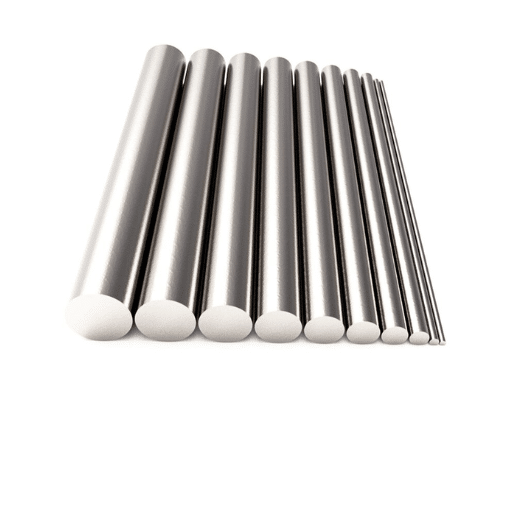
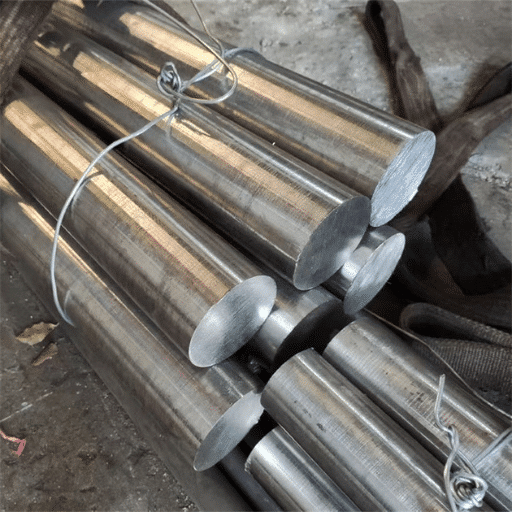
The most corrosion-resistant titanium grade is Grade 7 (UNS R52400), a palladium-alloyed version of Grade 2. For most seawater and chloride service at practical cost, Grade 2 is the standard workhorse, while Grade 5 is chosen for strength, not for corrosion resistance.
Most engineers assume the toughest, most expensive titanium alloy resists corrosion best. In titanium, that assumption fails. Corrosion resistance in this metal comes from a surface oxide film, not from alloy strength. That is why the corrosion champion is actually a “weaker” commercially pure grade with a small palladium addition, and why the alloy most buyers picture, Ti-6Al-4V (Grade 5), is only the right call when strength and fatigue drive the design.
Consider what happened to a marine systems engineer we will call Elena. Her firm specified Grade 5 titanium for a seawater piping header because “aerospace titanium is tougher.” The header was corrosion-limited, not strength-limited. Grade 2 delivered identical service at 25-35% lower total part cost.
The fix was not a stronger alloy. It was a better match between grade and environment.
This guide ranks titanium grades by corrosion resistance, explains why the passive film matters more than strength, gives environment-by-environment guidance with real thresholds, and compares titanium with 316/316L stainless steel so you can specify the right material with confidence. For the full grade-vs-grade picture, see our titanium grade 2 vs grade 5 comparison.
Key Takeaways
- Grade 7 (Ti-0.15Pd, UNS R52400) is the most corrosion-resistant titanium grade. Palladium extends the passive film so the alloy survives reducing acids and hot-chloride crevice attack that destroy unalloyed grades.
- Grade 2 is the best-value marine and chloride workhorse, effectively immune to ambient seawater with a corrosion rate near 0.0005 mm/year, but it needs upgrading above roughly 75-82°C in tight crevices.
- Grade 5 (Ti-6Al-4V) is corrosion-resistant but is specified for strength and fatigue, not corrosion. It also demands galvanic isolation when coupled to less-noble metals.
- Grade 12 offers near-Grade-7 hot-chloride performance at lower cost and is the economic upgrade when crevice temperatures exceed the CP limit.
- In moderate chloride service, certified 316L stainless steel often wins on budget and lead time; titanium earns its cost premium where pitting history, hot low-flow chlorides, or long seawater life matter.
Is Titanium Corrosion Resistant? Yes, Here’s Why

Titanium is highly corrosion resistant because it instantly forms a thin, self-healing titanium dioxide (TiO2) passive film, about 2-5 nanometers thick at room temperature, that shields the base metal. Unlike rust on carbon steel, this film does not flake away. If it is scratched or damaged, it reforms immediately in the presence of oxygen or water.
That detail explains a common confusion. Rust is iron oxide, and titanium contains negligible free iron, so titanium does not “rust” in the way steel does. Its oxide is titanium dioxide, stable across roughly pH 1 to 12.
Because its pitting potential in seawater is very high, on the order of +5 to +10 volts, spontaneous pitting essentially never starts. Sulfides, which cripple many stainless grades in sour environments, do not degrade this resistance. Our titanium properties guide covers the metal’s broader behavior.
The practical meaning for buyers is simple. When engineers ask whether a titanium part will corrode, the honest answer is that it depends on the environment and the grade. That is the subject of this ranking.
Which Titanium Grade Is Most Corrosion Resistant?
Ranked by corrosion resistance in aggressive service, the grades line up roughly like this:
- Grade 7 (Ti-0.15Pd): the most corrosion-resistant titanium grade, especially in reducing acids and hot chlorides.
- Grade 1 and Grade 2: the best practical value in seawater and oxidizing media; Grade 2 is the industry default.
- Grade 12 (Ti-0.3Mo-0.8Ni): the economic upgrade for hot chloride and crevice service.
- Grade 5 (Ti-6Al-4V): good general corrosion resistance, but specified for strength, with more crevice and galvanic care needed.
The ranking logic surprises many buyers. Corrosion resistance in titanium tracks the stability of the surface oxide film, not the alloy’s strength. Palladium, the small addition in Grade 7, catalytically supports that film in reducing and hot-chloride environments where unalloyed titanium actively dissolves. That is why the corrosion champion is a modest variant of commercially pure Grade 2, not the aerospace alloy most people assume.
This question sits inside a larger family discussion. To see every grade side by side, our titanium grade chart is the reference, and the grade 2 vs grade 5 titanium pillar digs into the most common sourcing decision.
How Titanium Grades Differ in Corrosion Resistance
Titanium comes in two families: commercially pure (CP) grades and alloys. Corrosion behavior differs more between these families than many buyers expect.
Commercially Pure Grades 1-4
The CP grades, Grade 1 through Grade 4, differ mainly in oxygen and iron content, which control strength and ductility. Their corrosion resistance to oxidizing and marine media is essentially equivalent. Grade 1, the highest-purity CP grade, holds a marginal edge because it carries the least interstitial content, but Grade 2 is the balanced default used across piping, heat exchangers, and seawater systems. See the Grade 2 titanium guide for its full profile.
Alloyed Grades and Why They Do Not Automatically Win
Grade 5, Ti-6Al-4V, is the dominant alpha-beta alloy. It resists corrosion well, but the aluminum and vanadium additions create a slightly less uniform structure, and in hot service the alloy needs more crevice-corrosion care than the purer CP grades. The grade 5 titanium guide explains its mechanical strengths and limits.
The corrosion specialists live in a different branch of the family. Grade 7 is Grade 2 plus 0.12-0.25% palladium. Grade 12 adds 0.3% molybdenum and 0.8% nickel.
Grade 23 is the low-interstitial ELI version of Grade 5 used mainly in medical devices, with corrosion behavior close to Grade 5. A full treatment of the pure-versus-alloy distinction appears in our piece on CP titanium vs Ti-6Al-4V.
Titanium Corrosion Resistance by Grade
The table below consolidates the practical data engineers need when choosing a grade for corrosive service. Crevice thresholds are environment-dependent, so treat them as design guidance rather than absolutes.
| Grade | UNS | Type | Corrosion note | Seawater crevice threshold | Best for |
|---|---|---|---|---|---|
| Grade 1 | R50250 | CP | Highest purity, marginal edge | about 70°C | Deep-drawn parts, max formability |
| Grade 2 | R50400 | CP | Marine and chloride workhorse | about 75-82°C | Piping, heat exchangers, seawater |
| Grade 4 | R50700 | CP | Strongest CP grade | Similar to Grade 2 | Hardware, moderate service |
| Grade 5 | R56400 | Alpha-beta alloy | Good, needs galvanic care | about 200°C (can drop near 80°C in aggressive systems) | Strength-critical corrosive service |
| Grade 7 | R52400 | Gr2 + palladium | Reducing acids, hot chlorides | about 250-260°C | Chemical processing, hot seawater |
| Grade 12 | R53400 | Mo-Ni alloy | Economic Grade 7 substitute | about 250-260°C | Hot chloride exchangers |
| Grade 23 | R56407 | ELI alloy | Like Grade 5, low interstitial | Similar to Grade 5 | Medical, cryogenic |
The seawater crevice threshold matters more than most datasheets admit. In a tight crevice, such as a tube-to-tubesheet joint or a gasket face, stagnant seawater becomes acidic and deoxygenated. That local chemistry attacks the passive film, and each grade tolerates it only to a specific temperature. This is exactly where the wrong grade choice causes premature field failures.
Grade 2 vs Grade 5 Titanium Corrosion Resistance

The most common sourcing question is whether to buy Grade 2 or Grade 5, so the corrosion comparison deserves its own section.
In seawater, wet chlorine, and chloride media, the higher-purity CP Grade 2 is the better corrosion choice. Grade 2 uniform corrosion in circulating seawater is effectively negligible, commonly cited below 0.0001 mm/year, with flowing-seawater tests reporting essentially immeasurable metal loss over years of service. Both grades resist chloride stress corrosion cracking. The differences show up in two places.
First, Grade 5 is more crevice-prone in hot service. Suppliers often cite a general seawater crevice threshold near 200°C for Grade 5, but corrosion studies show crevice attack can begin much lower, near 80°C, in CO2-bearing or otherwise aggressive systems. Second, Grade 5 sits noble in the galvanic series. When it is coupled to less-noble metals like carbon steel, aluminum, or copper alloys, it accelerates their corrosion unless the joint is electrically isolated.
The decision rule is clean. If corrosion is the design constraint, choose Grade 2. If strength-to-weight and fatigue are the design constraints and corrosion is secondary, choose Grade 5 with proper galvanic design.
Cost reinforces the same logic. Because Grade 2 welds and machines faster, Grade 2 vs Grade 5 titanium cost shows the finished-part gap is often larger than the raw material gap. Our grade 5 vs grade 2 strength comparison confirms when the alloy is actually necessary.
When to Step Up: Grade 7 and Grade 12 for Aggressive Service
Commercially pure titanium is not immune to every environment. Above roughly 80°C in a tight crevice, stagnant hot chlorides can break down the passive film on Grade 2. The standard fix is not a stronger alloy. It is a grade engineered for that chemistry.
Take the case of a chemical processor we will call Daniel. His plant’s 316L reactor valve manifold kept crevice-corroding in hot sulfuric acid service. CP titanium alone would have failed too, because strong reducing acids attack the unalloyed metal.
The fix was Grade 7 hardware. The small palladium addition holds the passive film in a reducing environment where both 316L and CP titanium actively dissolve. The manifold has run for three seasons without a leak.
Grade 7 works because palladium is a cathode modifier. It shifts the corrosion potential into the passive range and catalytically re-forms the oxide film if it is breached. That makes Grade 7 the material of choice for dilute reducing acids such as hydrochloric, unaerated sulfuric, and oxalic, and it pushes the crevice threshold to roughly 250-260°C in hot chloride service. Industry references such as the International Titanium Association’s corrosion overview and Harald Pihl’s Grade 7 product reference document the alloy’s applications in high-temperature desalination, chemical reactors, and heat exchangers.
Grade 12 is the economic alternative. It delivers near-Grade-7 performance in hot chloride and crevice service at lower cost, adds useful elevated-temperature strength, welds well, and is recognized in sour-service applications. Choose Grade 7 when the acid or chloride load is extreme; choose Grade 12 when cost matters and the service is hot chloride rather than strongly reducing acid.
A complete low-palladium family also exists. Grade 11 is Grade 1 plus palladium, and Grades 16 and 17 are lower-palladium variants of Grades 2 and 1. They offer crevice protection at reduced alloy cost, and they matter when a buyer wants Grade 7 behavior without the full palladium premium.
For fabrication, one point deserves emphasis. Because corrosion upgrades are usually welded into heat exchangers and vessels, the practical differences matter. Our grade 2 vs grade 5 titanium welding guide covers the fabrication trade-offs that apply across the CP and alloy families.
Titanium Corrosion Resistance by Environment
Choosing a grade becomes easier when you map it against the actual environment. The matrix below rates each family across common service conditions.
| Environment | CP (Grades 1/2) | Grade 5 | Grade 7/12 | Notes |
|---|---|---|---|---|
| Seawater (ambient) | Excellent | Excellent | Excellent | Grade 5 needs galvanic isolation |
| Hot chloride / crevice | Fair up to about 80°C | Fair to Good | Excellent | Upgrade above the threshold |
| Wet chlorine | Excellent | Excellent | Excellent | Fails in dry chlorine |
| Oxidizing acids (nitric) | Excellent | Excellent | Excellent | Passive film stays intact |
| Acetic / organic acids | Excellent | Excellent | Excellent | Broad chemical-service fit |
| Alkaline media | Excellent | Good | Excellent | Watch caustic plus oxidant limits |
| Dilute reducing acids | Poor | Poor | Good to Excellent | Grade 7 or 12 required |
| Hydrofluoric acid / fluorides | Not resistant | Not resistant | Not resistant | Attacks the TiO2 film |
| Dry chlorine gas | Not resistant | Not resistant | Not resistant | Needs moisture to stay passive |
Two rows deserve extra attention. Wet chlorine is a titanium strength, which is why chlor-alkali plants rely on it, but dry chlorine attacks the film and can even ignite titanium. And fluoride chemistry, including hydrofluoric acid, dissolves titanium dioxide, so the practical limit in fluoridated service is roughly 30 ppm free fluoride with risk rising below about pH 4-5. No grade escapes these two.
Where All Titanium Grades Need Care: Failure Modes and Galvanic Design
Titanium’s nobility is a design responsibility, not just an advantage. In seawater, titanium sits near the noble end of the galvanic series. Coupled to carbon steel, aluminum, zinc, or copper alloys, it accelerates their corrosion. Even active stainless steel can suffer when paired with a large titanium surface.
Passive 316L next to titanium shows only a small potential difference, so galvanic attack stays minimal when both metals remain passive. Insulating washers, sleeves, and compatible fasteners are the safe default in mixed-metal systems.
Hydrogen embrittlement is a second trap. Titanium absorbs hydrogen from cathodic overprotection, from galvanic coupling, or from high-temperature hydrogen service. Hydride damage becomes significant mainly above roughly 80°C and at hydrogen levels approaching 500-800 ppm, so impressed-current systems and sacrificial anodes on titanium structures need careful design.
Finally, dry chlorine, hydrofluoric acid, hot concentrated reducing acids, and molten-metal contact all defeat titanium regardless of grade. None of these limitations makes titanium fragile. They simply mean the material must be specified against the real environment, which is exactly why the environment matrix in this guide matters.
Titanium vs Stainless Steel: When to Choose 316/316L

Many “most corrosion-resistant titanium” searches actually end with a stainless steel answer, because budget and lead time decide more projects than raw corrosion data. It is worth comparing titanium against 316L, the stainless grade most buyers also consider.
In seawater and chloride service, titanium clearly wins on pitting and crevice resistance. 316L begins pitting in warm, low-flow chlorides above roughly 25°C, while titanium is effectively immune at ambient seawater temperatures. Titanium also tolerates flow velocities near 30-36 m/s with minimal metal loss, against a safe velocity of roughly 6-9 m/s for 316L. And the lifecycle story favors titanium: a Grade 2 titanium marine heat exchanger can last 25-30 years where a 316L unit lasts 6-8, even though titanium carries an initial material cost typically 3.5-4 times higher.
The balanced rule is straightforward. For moderate chloride or atmospheric service, budget-constrained projects, and fast schedules, certified 316L is often the pragmatic answer. For hot or low-flow seawater, high chloride with a pitting history, or a 25-year design life, titanium earns its premium.
A water-treatment contractor illustrates the split. He compared Grade 2 titanium with 316L for a low-flow chloride line. Titanium eliminated pitting outright, but 316L won the non-critical line on lead time and budget.
He reserved titanium for the critical exchanger. The decision was environmental and economic, not ideological.
Deeper context on the cross-material trade-off lives in our titanium vs stainless steel corrosion and titanium vs stainless steel comparison articles.
LIANYUNGANG DAPU METAL supplies stainless steel, nickel alloy, copper alloy, aluminum alloy, galvanized steel, and carbon steel in sheets, plates, coils, rods, and pipes. We do not carry titanium, but our engineers work with buyers every day on exactly this decision. If your project needs a corrosion-resistant stainless alternative to titanium, our 316 stainless steel guide explains the grade in detail, and our 316 stainless steel products and stainless steel pipes ship globally.
Which Titanium Grade Should You Choose for Corrosion Service?
When you are not sourcing titanium from DAPU, you still need a defensible specification for whoever supplies it. Use this four-question method.
- Oxidizing or reducing? Oxidizing media such as seawater, wet chlorine, and nitric acid suit CP titanium. Reducing acids demand Grade 7 or Grade 12.
- Hot and chloride-rich with crevices? If temperatures exceed roughly 80°C in tight geometries, step past Grade 2 to Grade 7 or Grade 12.
- Is strength also required? If the design is load-bearing or fatigue-critical, add Grade 5 to the list and budget for galvanic design.
- What is the budget and lead time? Compare the titanium answer against certified 316L before finalizing.
A quick decision table captures most cases.
| Scenario | Recommended grade | Why |
|---|---|---|
| Ambient seawater piping and tubing | Grade 2 | Immune to seawater, best value |
| Hot chloride with tight crevices | Grade 7 or Grade 12 | Corrosion upgrade past CP limits |
| Strong reducing acid service | Grade 7 | Palladium holds the passive film |
| Strength plus corrosive duty | Grade 5 | Alloy strength with galvanic care |
| Moderate chloride, tight budget | 316L stainless | Cost and lead-time fit |
One warning applies across all of them. Do not over-specify. Paying for Grade 5 when Grade 2 solves the corrosion problem wastes money on strength the design never uses, and buying any titanium when certified stainless handles the service wastes money on a metal the environment does not require. Our Grade 2 vs. Grade 5 titanium cost analysis shows how quickly the over-spec penalty compounds on large orders.
Frequently Asked Questions
Which titanium grade is most corrosion resistant?
Grade 7 (UNS R52400), a palladium-alloyed version of Grade 2, is the most corrosion-resistant titanium grade. The palladium addition lets it survive reducing acids and hot-chloride crevice corrosion that destroy unalloyed grades. For practical seawater and chloride service at lower cost, Grade 2 is the standard workhorse.
Is titanium more corrosion resistant than stainless steel?
In seawater and chloride service, yes. Titanium is effectively immune to pitting and crevice corrosion at ambient seawater temperatures, while 316L stainless can pit in warm low-flow chlorides above about 25°C. Titanium also tolerates far higher flow velocities. Stainless steel wins on initial cost and lead time in moderate service.
Does titanium rust in salt water?
No. Rust is iron oxide, and titanium contains no free iron to form it. Titanium resists seawater through a stable, self-healing titanium dioxide film, corroding at roughly 0.0005 mm/year in ambient seawater, a rate low enough to be called immune.
Is grade 5 titanium corrosion resistant?
Yes, but Grade 5 is specified for strength and fatigue, not for corrosion. It resists seawater and chlorides well, yet it is more crevice-prone than CP grades in hot service and sits noble in the galvanic series, so it must be electrically isolated from less-noble metals.
Is grade 2 titanium good for seawater?
Yes. Grade 2 is the standard marine workhorse. It is effectively immune to ambient seawater, resists chloride pitting and stress corrosion cracking, and welds and forms easily. Its limit is hot chloride service above roughly 75-82°C in tight crevices, where Grade 7 or Grade 12 is required.
What is titanium grade 7 used for?
Grade 7 is used in chemical processing, heat exchangers, and high-temperature desalination where reducing acids or hot chloride crevices defeat CP titanium. Its palladium addition holds the passive film, pushing the crevice threshold to roughly 250-260°C.
Can titanium be coupled with stainless steel?
Yes, with care. Titanium is noble and can accelerate corrosion of less-noble metals. Passive 316L next to titanium shows a small potential difference, so galvanic attack is minimal when both stay passive, but insulating washers, sleeves, and compatible fasteners are the safe default in mixed-metal systems.
Does titanium corrode in hydrochloric acid?
Dilute hydrochloric acid attacks CP titanium, which is why Grade 7 exists. The palladium addition in Grade 7 resists dilute reducing acids such as hydrochloric and unaerated sulfuric. Hot concentrated reducing acids remain a limitation for all titanium grades.
At what temperature does titanium crevice corrode in seawater?
Commercially pure grades begin crevice attack in tight, hot chloride geometries around 70-82°C. Grade 5 generally tolerates higher temperatures, though aggressive systems can lower its threshold toward 80°C. Grade 7 and Grade 12 extend the range to roughly 250-260°C.
Which titanium grade is best for chemical processing?
Grade 7 is the default for aggressive chemical service because palladium extends its passive range into reducing acids and hot chlorides. Grade 12 offers near-Grade-7 hot-chloride performance at lower cost. For oxidizing chemical media, Grade 2 often suffices at a fraction of the cost.
Conclusion
Titanium resists corrosion through a self-healing titanium dioxide film, not through alloy strength. That single fact drives every grade decision. Grade 7 is the most corrosion-resistant titanium grade, Grade 2 is the best-value marine and chloride workhorse, Grade 12 is the economic upgrade for hot crevice service, and Grade 5 is chosen for strength with galvanic care. Across all of them, the environment matrix matters more than brand reputation or price per kilogram.
When you ask which titanium grade is most corrosion resistant, the honest engineering answer is: it depends on the environment, and the cheapest grade that survives that environment is usually the right one. Compare Grade 2 against Grade 5 when strength enters the picture, step up to Grade 7 or Grade 12 when hot chlorides or reducing acids appear, and weigh certified 316L whenever budget and lead time decide the project.
If you are evaluating materials for a corrosive service, LIANYUNGANG DAPU METAL can help you work through the comparison. Our engineers provide technical consultation on material selection and standards, and we supply certified stainless steel alternatives including 316L in sheet, plate, coil, and pipe forms. Contact us to review your corrosion environment, request mill test certification support, or get a quote on the metals we supply.