The 2205 vs 2507 decision comes down to one number: a PREN of 40. Grade 2205 (UNS S32205) sits at about 35, super duplex 2507 (UNS S32750) at about 42. Both are two-phase stainless steels, and that gap buys roughly 30 °C more critical pitting temperature and a wider sour-service window. It doesn’t buy a higher service temperature, and it doesn’t automatically make 2507 the better answer.
Ravi is a project engineer at an EPC contractor in Singapore. In 2024 he was handed a material selection report for a desalination intake line. Under “material” it said four words: PREN 40 required, continuous immersion.
Someone had already written “super duplex 2507” in the margin. Nobody had written down where the PREN 40 requirement came from.
That single sentence will decide a large material order. It can come from a genuine continuous-immersion condition, where PREN 40 is the standard rule. It can come from creviced geometry at temperature, or from an H₂S partial pressure limit. Sometimes it comes from a spec that was copied from a previous job where none of those applied.
Which one it is determines whether Ravi’s project needs the extra 30-50% that super duplex costs, or whether standard duplex already covers the duty. That’s the question this article answers.
You’ll get the chemical and mechanical differences, what the PREN gap actually buys in service, and why the higher-alloy grade doesn’t raise your temperature ceiling. From there: where 2507 genuinely wins, what changes on the shop floor, what the premium really costs once wall thickness is priced in, and a selection framework with an honest section on when 2205 is still the right answer. If you’re still comparing duplex against austenitic grades, start with our duplex 2205 vs 316 stainless steel comparison.
Key Takeaways
- 2507 does not raise the temperature ceiling. Both grades are limited to roughly 250-300 °C for continuous service, and NORSOK M-001 gives 300 °C for both. The higher PREN buys chloride tolerance at temperature, not a higher temperature limit.
- The PREN gap of ~35 vs ~42 shows up as about 30 °C of critical pitting temperature: roughly 35 °C for 2205 against 65 °C for 2507 in 6% FeCl₃ per ASTM G48.
- 2507 is ~22% stronger (550 MPa yield against 450 MPa), which allows 20-30% thinner wall and narrows the installed per-metre cost gap to roughly 15-25% despite a 30-50% premium per kilogram.
- Sour service is where 2507 genuinely and clearly wins. Both grades are listed in NACE MR0175 / ISO 15156-3; 2507 covers a broader H₂S range at higher partial pressures.
- Super duplex is harder to weld and harder to buy. Tighter heat input, a 100 °C interpass cap, ER2594 filler instead of ER2209, and narrower mill availability with longer lead times.
Need help reading a PREN requirement back to its source condition? Our technical team reviews service data, chloride level, temperature, and crevice geometry before recommending a grade.
What Is the Difference Between Duplex 2205 and 2507 Super Duplex?

Duplex and super duplex are the same family of two-phase stainless steel, separated by a threshold rather than a name. That threshold is the PREN, the Pitting Resistance Equivalent Number, a single score for chloride resistance. Any duplex grade with a PREN of 40 or above is classified as super duplex. Grade 2205 sits below that line. Grade 2507 sits above it.
That’s the whole distinction. It’s a corrosion-resistance threshold, not a generational change or a quality tier.
Both grades carry a roughly 50/50 ferrite-austenite microstructure. That two-phase structure is what gives the family roughly double the yield strength of 316 with far better chloride resistance.

| Property | Duplex 2205 | Super Duplex 2507 |
|---|---|---|
| UNS | S32205 / S31803 | S32750 |
| EN | 1.4462 | 1.4410 |
| ASTM product specs | A240, A276, A182 F51, A790 | A240, A276, A182 F53, A789, A790 |
| Chromium | 21-23% | 24-26% |
| Nickel | 4.5-6.5% | 6-8% |
| Molybdenum | 2.5-3.5% | 3.0-5.0% |
| Nitrogen | 0.08-0.20% | 0.24-0.32% |
| PREN | ~34-38 (~35) | ~40-43 (~42) |
| Yield strength (min) | 450 MPa (65 ksi) | 550 MPa (80 ksi) |
| Tensile strength | 620 MPa (90 ksi) | 795 MPa (116 ksi) |
| Elongation | ~25% | ~15-25% |
| CPT, 6% FeCl₃ (ASTM G48) | ~35 °C | ~65 °C |
| Filler metal | ER2209 / E2209 | ER2594 / E2594 |
| Maximum interpass | 150 °C | 100 °C |
| Relative cost per kg | baseline | +30-50% |
The PREN formula is simple: PREN = Cr + 3.3Mo + 16N. Nitrogen carries a 16× multiplier, which is why 2507’s higher nitrogen range (0.24-0.32% against 0.20% maximum for 2205) does so much of the work in closing the gap.
Two practical notes on the table. First, both grades have essentially the same density at about 7.80 g/cm³, so there is no weight advantage in the material itself. Any weight saving in service comes from running a thinner wall, not from a lighter alloy.
Second, when you specify 2205, name S32205 rather than S31803. S31803 is the older, wider-range specification with a lower minimum nitrogen, so it lands at the low end of the PREN band. Our duplex 2205 stainless steel guide covers the equivalent-grade map and heat treatment in full.
The PREN Gap: What 2205 vs 2507 Corrosion Resistance Actually Buys You
The PREN numbers of 35 and 42 look abstract until you convert them into a temperature. That conversion is the critical pitting temperature, or CPT, measured in ferric chloride per ASTM G48.
| Duplex 2205 | Super Duplex 2507 | |
|---|---|---|
| PREN | ~35 | ~42 |
| CPT in 6% FeCl₃ (ASTM G48) | ~35 °C | ~65 °C |
| Continuous seawater immersion | Below the PREN 40 rule | Meets the PREN 40 rule |
| Creviced seawater service | Keep below roughly 25-30 °C | Above the 2205 crevice limit |
Expect a spread in published CPT values. Some sources give 2205 around 25 °C in 6% sodium chloride rather than 35 °C in ferric chloride, and at least one exchanger-focused source puts 2507 near 55 °C rather than 65 °C. The test medium and the specimen finish both move the number. Treat the direction and the size of the gap as the reliable information, and confirm the exact figure the governing specification calls for.
Two thresholds decide real projects. The first is the industry rule that continuous seawater immersion requires a PREN of at least 40. That single line is what pushes many designs from 2205 to 2507, and it is exactly the line on Ravi’s report. The second is the practical limit that creviced 2205 seawater service should stay below roughly 25-30 °C with continuous flow, because crevices are where 2205 fails first.
There is a third variable most summaries leave out: chlorination. A residual chlorine level above about 0.5 ppm lowers the safe service temperature for 2205, which matters in any seawater system that is dosed to control biofouling.
For the full corrosion mechanism, including the chloride-ppm-by-temperature table, crevice geometry controls, and stress corrosion cracking mechanics, our companion article on duplex 2205 vs 316 corrosion resistance goes deeper.
What the gap doesn’t do is let you leave stainless steel behind. Reducing acids, very high chloride brines, and anything above the temperature ceiling rule out both grades. That’s a material-family change, not a duplex upgrade.
Strength and Wall Thickness: What the 2205 vs 2507 Gap Buys
Super duplex is the stronger grade, and the margin is meaningful. 2507 delivers 550 MPa minimum yield against 450 MPa for 2205, about 22% higher. Tensile strength runs 795 MPa against 620 MPa, about 28% higher.
There is a trade-off on the same data sheet. Elongation drops. Grade 2205 typically shows around 25%, while 2507 lands somewhere in the 15-25% range. Lower ductility matters for cold forming and for any strain-based design case, and it is the reason 2507 is a poorer candidate for aggressive forming operations.
The useful consequence of the strength gap is wall thickness. Because 2507 carries a higher allowable stress, a designer can specify 20-30% thinner wall at the same design pressure. In pipe and pressure equipment that means less material by weight, lighter supports, and lower installed cost.
That is what closes most of the price gap. The per-kilogram premium for 2507 runs 30-50%, but the installed per-metre gap in pressure service narrows to roughly 15-25%, because you are buying fewer kilograms to do the same job.
Now the part that gets skipped. Thinner wall means less heat sink, and 2507 is already the more sigma-sensitive grade. A design optimised to the thinnest viable 2507 wall is also a design with the least thermal margin during welding. That is why some fabricators adopt a standing policy of solution annealing 2507 welds over 10 mm.
So the strength saving is real, and so is its fabrication cost. Price both before you commit.
Temperature Limits: Why 2507 Does Not Raise the Ceiling

This is the most commonly held wrong assumption about these two grades, and it is worth stating plainly.
Neither grade is suitable above roughly 300 °C for continuous service. NORSOK M-001 gives 300 °C as the upper limit, and it gives the same figure for both. Adding chromium, molybdenum, and nitrogen to reach super duplex doesn’t move that ceiling.
The reason is intermetallic phase formation. Above the service window, sigma phase precipitates in the roughly 600-1000 °C band and is fastest near 850 °C. It destroys toughness and corrosion resistance at the same time. Super duplex is more sensitive here, not less: sigma has been reported forming in as little as 30-40 seconds at peak temperature, because the higher alloy content accelerates the kinetics.
There is a second embrittlement mechanism in the 300-525 °C band. Alpha-prime (α′) embrittlement has been reported with onset in the 7-10 minute range, which is reachable during interpass cooling on a thick section. Grade 2507, with its higher chromium and molybdenum, is more susceptible to alpha-prime kinetics than 2205. More alloy isn’t more margin here.
Marco learned this on a hot acid line at a chemical plant in northern Italy. The project had specified 2507 over 2205 on the assumption that the higher-alloy grade would tolerate a higher process temperature.
It doesn’t. Both grades stop at the same ceiling, and the operating temperature on that line was the binding constraint. The upgrade addressed a corrosion risk the line didn’t have, while the actual temperature limit went unmanaged.
At the cold end, both grades hold good toughness down to about -50 °C, and both can be qualified lower with supplementary impact testing. Neither is a cryogenic material.
The rule for high-temperature duty is simple. Above roughly 300 °C, the answer isn’t a bigger duplex. It’s a different material family, and the selection should start over.
Sour Service: Where 2507 Genuinely Wins
If there is one escalation trigger where the answer is usually yes, this is it.
Both grades are listed in NACE MR0175 / ISO 15156-3 for sour service. Grade 2205 is accepted for moderate H₂S partial pressures. Grade 2507 covers a broader H₂S range at higher partial pressures, because the same alloy content that raises its PREN also raises its resistance to sulphide stress cracking.
That mechanism matters. Sour service cracking is a different failure mode from pitting under chlorides. Chloride pitting is driven by the passive film breaking down at temperature, while sulphide stress cracking is driven by hydrogen entering the steel under a combination of H₂S partial pressure, pH, and stress.
Higher chromium, molybdenum, and nitrogen buy resistance to both. That’s why the same grade ladder appears in both contexts.
The honest instruction on limits: ISO 15156-3 tabulates acceptance by temperature and H₂S partial pressure, and the limit must be read from that table for the specific service. Don’t generalise from a supplier summary, and don’t extrapolate from a neighbouring project. The difference between a compliant 2205 selection and a non-compliant one can sit within a narrow band of partial pressure.
Where the table permits 2205, take it. Where it doesn’t, 2507 is the correct step, and the premium isn’t optional.
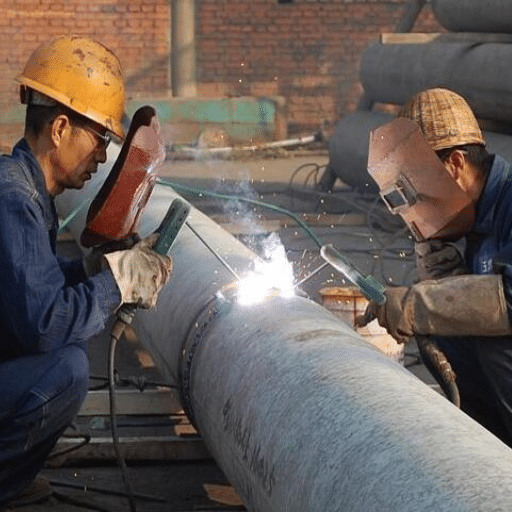
Welding and Fabrication: What Changes with 2507
Three things change, and only the first is well known.
First, the filler metal. Grade 2205 takes ER2209 / E2209. Grade 2507 requires ER2594 / E2594.
Using ER2209 on a 2507 joint under-alloys the deposit and drops the weld metal PREN below the base metal specification. That makes the weld the corrosion-limiting zone of a joint that was specified for PREN 40 or above. It’s the mirror image of the familiar error of using 316L filler on duplex, and it’s just as invisible to radiography.
Second, the thermal window narrows. Published heat input for 2205 runs 0.5-2.5 kJ/mm. For super duplex, published ranges reach as low as 0.2-1.5 kJ/mm, and sources disagree about the ceiling, with some capping it at 1.5 kJ/mm and others at 2.0 kJ/mm.
Expect that disagreement and write your specific window into the procedure rather than quoting a general rule. Interpass temperature drops to 100 °C for 2507 against 150 °C for 2205, and the root face limit tightens to 4 mm or less against about 8 mm for 2205.
Third, the consequences arrive sooner. Faster sigma kinetics mean that running outside the window on 2507 costs you more, faster, than the equivalent excursion on 2205.
Our article on duplex 2205 welding procedures carries the full parameter set, filler tables, shielding and purge gas requirements, ferrite acceptance bands, and the qualification tests.
The practical takeaway for procurement is that a 2507 specification assumes a fabricator who can hold a tighter window. Where that capability isn’t in the yard, the honest answer may be 2205 plus a design change, not 2507 plus a weld repair schedule.
Cost and Availability: The 30-50% Premium

2205 vs 2507 Price
Super duplex costs meaningfully more per kilogram. Grade 2507 runs roughly 30-50% above 2205, and published figures reach 40-70% on some fittings, with the premium often expressed as roughly 1.3-1.8× the 2205 price.
Indicative 2026 market pricing by form:
| Form | Duplex 2205 | Super Duplex 2507 |
|---|---|---|
| Plate and sheet | ~$4.80-7.20/kg | ~$9.00-12.00/kg |
| Seamless pipe | ~$5.00-7.00/kg | ~$9.00-13.00/kg |
Treat every one of those figures as indicative, not as a quotation. Both grades track volatile nickel and molybdenum surcharges, and the premium widens sharply when molybdenum moves. Grade 2507 carries more of both elements, so it is more exposed to a molybdenum spike than 2205 is. Any number has to be re-quoted at the time of purchase.
Then apply the wall-thickness offset from the strength section. Because 2507 permits a 20-30% thinner wall, the installed cost gap in pressure service narrows to roughly 15-25% rather than the headline per-kilogram premium.
Our companion article on duplex 2205 vs 316 cost works through total cost of ownership and the break-even calculation, which applies the same logic on the rung below.
Availability and Lead Time
Here is the deciding factor that appears in no comparison table.
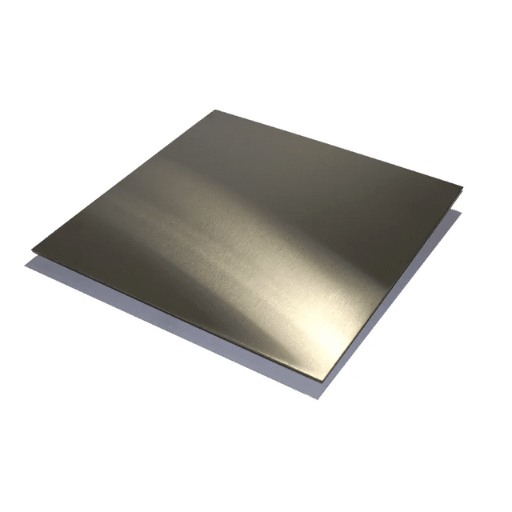
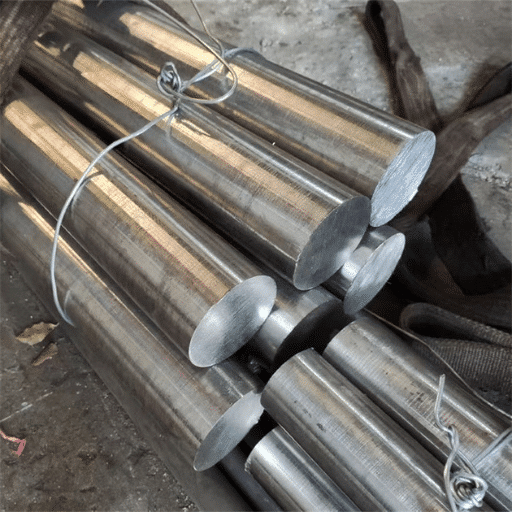
Grade 2205 is widely stocked in plate, sheet, pipe, tube, bar, and fittings. Grade 2507 has narrower mill availability, fewer stocked sizes, higher minimum quantities, and longer lead times. The forms we quote most often on this rung are stainless steel pipe and tube, alongside sheet and plate.
Product-form specification constrains this further. Super duplex pipe and tube fall under ASTM A789 / A790 and fittings under A182 F53 / F55, and not every mill runs every size in those specifications. Our article on duplex 2205 heat exchanger and seawater service covers what the same constraint means for tube selection in a desalination duty.
Chen, a procurement manager at a skid builder, hit this on an offshore module in 2025. The spec called for 2507 seamless pipe in a size the project had used before. The mill lead time came back four weeks past the fabrication window, and the recovery options were a size change, a fabrication resequence, or a re-design to 2205. The project went to 2205, not because 2205 was technically better for the duty, but because 2507 was not available when the yard needed it.
That is a genuine engineering constraint, and it belongs in the selection decision alongside PREN and CPT. An unavailable correct grade is, for that project, an incorrect grade.
Sourcing duplex grades? Request a quotation for 2205 and 2507 material with heat-specific chemistry, mill test certification, and full traceability, or ask us to review the availability position on your sizes before you freeze the specification.
Choosing Between 316, 2205, and 2507: A Selection Framework
Start from the service condition, not the alloy content. Work down this table until a row matches, then confirm the choice against the governing specification.
| Service condition | Grade | Reason |
|---|---|---|
| Clean, cool, low-chloride process | 316L | PREN ~25 covers the duty at the lowest cost |
| Ambient seawater, no crevices, moderate temperature | 2205 | PREN ~35 handles it |
| Warm chloride or seawater within the crevice limit | 2205 | Inside the CPT envelope below ~25-30 °C creviced |
| Strength-driven design inside the temperature window | 2205 | 450 MPa yield at standard duplex cost |
| Sour service at moderate H₂S partial pressure | 2205 | Listed in NACE MR0175 / ISO 15156-3 within its range |
| Continuous seawater immersion requiring PREN 40 | 2507 | The PREN 40 threshold is the trigger |
| Hot seawater, hot brine, desalination at elevated temperature | 2507 | ~65 °C CPT against ~35 °C |
| Creviced chloride service above the 2205 limit | 2507 | Crevice attack is the 2205 weak point |
| Sour service above the 2205 H₂S acceptance range | 2507 | Broader ISO 15156-3 envelope |
| High-pressure duty where weight saving dominates | 2507 | 550 MPa yield permits thinner wall |
| Above ~300 °C continuous | Neither | Sigma and alpha-prime embrittlement |
Three Signs You Actually Need 2507
- Your specification states PREN 40 minimum, or the application is continuous seawater immersion at temperature.
- Your geometry has crevices in chloride service above roughly 25-30 °C.
- Your H₂S partial pressure sits outside the 2205 acceptance range in ISO 15156-3.
If none of those three applies, super duplex is probably buying corrosion margin your service will never consume.
When 2205 Is Still the Right Answer
Grade 2205 covers a large share of chloride duty at a PREN of about 35 and a materially lower price. It’s the workhorse grade of the duplex family, and 2507 is the escalation, not the default.
Choose 2205 when:
- Service sits inside the 2205 chloride-at-temperature envelope, which is most projects that reach this decision.
- Seawater service is ambient, flowing, and free of crevices.
- The fabrication yard cannot hold the tighter 2507 welding window, so the risk of a defective 2507 weld outweighs the corrosion margin.
- The design uses the full strength saving to go thin, removing the welding heat sink that 2507 needs.
- Schedule or budget pressure makes the longer 2507 lead time the binding constraint.
- The application is above 300 °C, where neither duplex grade is correct.
Compare 2507 against the actual service condition, not against 2205. The question is never which grade is better. It’s which grade covers the duty without paying for capability the service doesn’t need.
For the rung below, our 316 stainless steel properties guide covers the austenitic context. Above 2507, the ladder continues to 6Mo alloys and titanium, where reducing chemistry rules out stainless altogether.
Frequently Asked Questions
What is the difference between duplex 2205 and super duplex 2507?
Both are two-phase duplex stainless steels, and the distinction is a PREN threshold of 40. Grade 2205 has a PREN around 35, so it’s standard duplex. Grade 2507 reaches around 42, so it qualifies as super duplex. That difference delivers higher strength and better chloride and sour-service resistance.
What is the difference between duplex and super duplex?
The duplex vs super duplex distinction is one of corrosion resistance, not structure. Both are the same two-phase family. Grades with a PREN of 40 or above are classed as super duplex; grades below are standard duplex. Both share the roughly 50/50 ferrite-austenite microstructure that gives the family its strength.
What is PREN in duplex stainless steel?
PREN stands for Pitting Resistance Equivalent Number (sometimes written PRE or PREN). It’s a single calculated score for chloride pitting resistance, and the alloying elements are weighted differently: Cr + 3.3Mo + 16N. Nitrogen carries the 16× multiplier, which is why it drives so much of the gap between 2205 and 2507.
Is 2507 better than 2205?
Only where the service demands it. Grade 2507 resists pitting to about 65 °C against 2205’s roughly 35 °C and tolerates higher H₂S partial pressures in sour service. It costs 30-50% more per kilogram, is harder to weld, and is available in fewer sizes. Where 2205 covers the duty, 2507 adds cost without adding capability.
What is the PREN of 2205 and 2507?
Grade 2205 (S32205) has a PREN of roughly 34-38, commonly quoted at 35. Grade 2507 (S32750) has a PREN of roughly 40-43, commonly quoted at 42. PREN is calculated as Cr + 3.3Mo + 16N, so nitrogen content has a large effect on both figures.
Is 2507 worth the extra cost?
It is worth it where a specific trigger applies: a PREN 40 requirement for continuous immersion, creviced chloride service above the 2205 limit, hot brine or seawater, an H₂S partial pressure outside the 2205 acceptance range, or pressure duty where the thinner wall recovers the cost. Absent one of those, the premium buys unused margin.
Which is stronger, 2205 or 2507?
Grade 2507 is stronger. It carries a 550 MPa minimum yield strength against 450 MPa for 2205, roughly 22% higher, with tensile strength at 795 MPa against 620 MPa. The trade-off is lower elongation, in the 15-25% range against around 25% for 2205, which reduces formability.
Why does 2507 cost more than 2205?
Grade 2507 carries more chromium, more nickel, more molybdenum, and more nitrogen. Nickel and molybdenum are the main cost drivers, and both trade on volatile markets. The per-kilogram premium of 30-50% narrows to roughly 15-25% installed where the higher strength allows a thinner wall.
Does 2507 have a higher temperature limit than 2205?
No. Both grades are limited to roughly 250-300 °C for continuous service, and NORSOK M-001 gives 300 °C for both. Super duplex is actually more susceptible to alpha-prime embrittlement in the 300-525 °C band because of its higher chromium and molybdenum content.
Can 2205 be used in seawater instead of 2507?
Yes, for ambient flowing seawater free of crevices, with designed-in temperature limits. Keep creviced 2205 service below roughly 25-30 °C and control chlorination. Where continuous immersion requires a PREN of 40, or creviced service runs hotter, 2507 is the correct step up.
What is the critical pitting temperature of 2205 and 2507?
In 6% ferric chloride per ASTM G48, 2205 pits at roughly 35 °C and 2507 at roughly 65 °C. Published values vary with test medium and specimen finish, with alternative sources giving around 25 °C for 2205 and 55 °C for 2507. Treat the gap as reliable and confirm the exact test condition with your specification.
Can 2507 be used in sour service? What about 2205?
Both grades are listed in NACE MR0175 / ISO 15156-3. Grade 2205 is accepted at moderate H₂S partial pressures; 2507 covers a broader range at higher partial pressures. The limits aren’t single numbers: ISO 15156-3 tabulates acceptance by temperature, H₂S partial pressure, pH, and chloride level for each grade. Read the table for your exact service conditions rather than relying on a general figure.
Can you weld 2507 with ER2209 filler?
No. Grade 2507 requires ER2594 or E2594 filler. Using ER2209 under-alloys the weld deposit and drops its PREN below the base metal specification, making the weld the first point of corrosion attack in a joint that was specified for PREN 40 or above. The defect is chemical and radiography will not detect it. Grading 2205 to 2507 uses ER2594 as well, and the joint should be run on super duplex parameters.
Is 2507 harder to weld than 2205?
Yes. Super duplex runs a tighter heat input window, a lower interpass cap of 100 °C against 150 °C, a tighter root face limit, and faster intermetallic precipitation if you run outside the window. The extra discipline is manageable with a written procedure, but it is a real fabrication cost.
Is 2507 available in the sizes I need?
Availability is narrower than for 2205. Super duplex has fewer stocked sizes, higher minimum quantities, and longer mill lead times, and pipe and tube forms are constrained by ASTM A789 / A790. Confirm the lead time against your fabrication schedule before freezing a 2507 specification.
Conclusion
Duplex 2205 vs 2507 super duplex is a decision about one number: a PREN threshold of 40. Grade 2205 sits at about 35, grade 2507 at about 42, and that gap converts into roughly 30 °C more critical pitting temperature and a wider sour-service window.
What it doesn’t convert into is a higher service temperature. Both grades stop near 300 °C, and 2507 is the more embrittlement-sensitive of the two in the alpha-prime band. That single fact disqualifies a large share of the assumptions that push projects onto the higher-alloy grade.
The decision rule is to start from the service condition. Chloride level, temperature, crevice geometry, H₂S partial pressure, design pressure, and the fabrication capability you actually have available. Let the PREN threshold make the call, then confirm the answer against the governing specification and the availability position.
Grade 2507 earns its premium in three places: a PREN 40 requirement for continuous immersion, chloride service beyond the 2205 crevice limit, and sour service above the 2205 H₂S acceptance range. Outside those, duplex 2205 delivers the same duty at a lower cost with an easier weld and a shorter lead time.
Talk to our technical team about duplex 2205 and super duplex 2507 material for chloride, seawater, and sour service, including sheet, plate, pipe, and bar with heat-specific chemistry and mill test documentation. Request a quote for your sizes, or ask us for material selection help and custom processing for cutting, forming, and surface finishing before your next duplex specification.