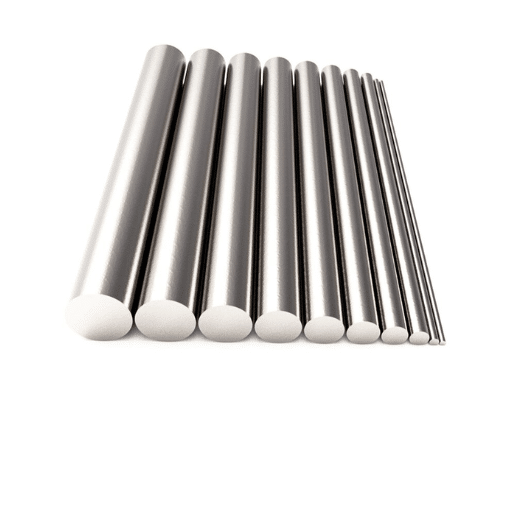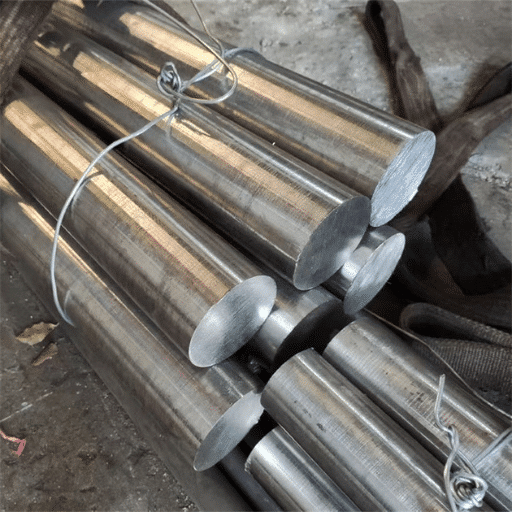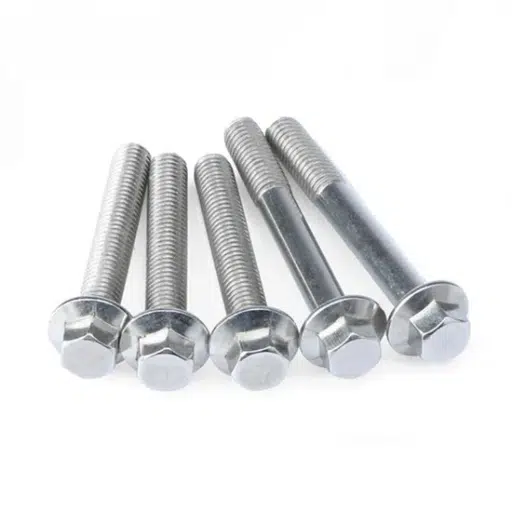
The choice between 304 vs 316 fasteners comes down to chloride exposure. Both are austenitic stainless steels, but 316 contains 2-3% molybdenum, which gives it significantly better resistance to chloride pitting and crevice corrosion. Use 316 (A4) fasteners for saltwater, coastal, chemical, and high-chloride environments. Use 304 (A2) fasteners for general indoor and mild outdoor use at lower cost. In the same property class, the two grades are mechanically equivalent, so the choice comes down to corrosion environment and budget, not strength.
When a maintenance manager on a coastal boardwalk replaced rusted 304 deck bolts with 316, they expected them to last longer. They did. The 304 fasteners showed brown tea staining and pitting within two seasons, while the 316 hardware survived with only light surface discoloration. That upgrade cost roughly 25% more per bolt, but it eliminated an annual replacement cycle. That trade-off between corrosion resistance and cost is the core decision every fastener buyer faces.
If you’ve bought stainless steel fasteners, you already know the frustration. You can’t tell 304 from 316 by looking at them, and sales listings don’t always explain what the markings mean. A2-70, A4-80, 18-8, marine grade: the labels pile up fast.
This guide explains exactly what differs between 304 and 316 fasteners, how fastener strength works through property classes, and how to choose the right grade for your environment. By the end, you’ll know when 304 is fine, when 316 is worth the premium, and how to avoid the failure modes that cost real money.
We’ll cover the quick answer, composition, corrosion resistance, strength property classes, fastener types, galvanic corrosion, galling, marine service, cost, and how to verify what you buy.
Key Takeaways
- 316 (A4) fasteners contain 2-3% molybdenum, which gives them far better resistance to chlorides, salt, and chemicals than 304 (A2).
- Fastener strength is set by property class, not grade. An A2-80 (304) bolt is stronger than an A4-70 (316) bolt, despite the 304 vs 316 difference.
- In the same property class, 304 and 316 fasteners are mechanically equivalent under ISO 3506, so environment and cost drive the choice.
- Use 316/A4 fasteners wherever chlorides are present: marine, coastal, de-icing salt, pool chemicals, and chemical plants.
- Stainless fasteners can gall (seize) and can cause galvanic corrosion on aluminum in saltwater. Mitigate both during installation.
What Is the Difference Between 304 and 316 Fasteners?

304 and 316 fasteners are both austenitic stainless steels used for bolts, screws, nuts, washers, and threaded rod. The defining difference is chemistry: 316 contains 2-3% molybdenum plus slightly more nickel, which dramatically improves resistance to chloride pitting and crevice corrosion. In practice, 316 fasteners are specified for marine, coastal, and chemical environments, while 304 fasteners handle general indoor and mild outdoor service at a lower price.
For a complete side-by-side overview of both grades, our 304 vs 316 comparison guide walks through every difference. The rest of this article focuses specifically on how those differences matter for fasteners. For the full context on how all stainless steel grades are classified, start with our complete stainless steel guide.
Chemical Composition: The Molybdenum Difference
The chemistry is the whole story for fastener grades. Here is how the two alloys compare:
| Element | 304 (A2) | 316 (A4) | Effect on Fasteners |
|---|---|---|---|
| Chromium | 17.5-19.5% | 16.5-18.5% | Forms the protective oxide layer |
| Nickel | 8-10.5% | 10-13% | Stabilizes austenite, improves ductility |
| Molybdenum | 0% | 2-3% | Resists chloride pitting and crevice corrosion |
| Carbon (max) | 0.07-0.08% | 0.08% | Affects weldability and sensitization |
The molybdenum line is what matters. Without it, 304 has a Pitting Resistance Equivalent Number (PREN) of roughly 18-20. With it, 316 reaches about 24-28. That difference is exactly why 316 fasteners are the standard for anything near salt. For detailed 304 specifications, see our 304 stainless steel guide, and for the molybdenum-enhanced marine alloy, the 316 stainless steelguide.
In European and international fastener marking, the same grades are called A2 (for 304) and A4 (for 316). The designations come from BS EN ISO 3506, the standard that governs stainless fastener mechanical properties. The UNS numbers are S30400 and S31600, with EN material numbers 1.4301 and 1.4401.
Corrosion Resistance: The Real Difference Between Fastener Grades
Fastener geometry makes corrosion worse than it is on flat sheet. Threads create crevices, bolt heads trap water, and nuts create oxygen-poor gaps where corrosion starts. That is why grade selection matters more for fasteners than for many other stainless products.
304 Fastener Performance
304 fasteners give excellent general corrosion resistance in indoor, dry, and mildly humid environments. They resist oxidizing chemicals and handle routine moisture without issue.
The problems begin with chlorides. In coastal air, near de-icing salt, or in any chloride-rich atmosphere, 304 fasteners develop tea staining (brown rust streaks) and eventually pitting. When a 304 fastener is bedded in wet wood, fiberglass, or under a nut, crevice corrosion can attack quickly.
316 Fastener Performance
The molybdenum in 316 raises resistance to pitting and crevice corrosion substantially. That is why 316 is called marine grade and why it is specified for docks, boats, coastal construction, chemical plants, and food-processing washdown areas. It is not indestructible. Even 316 can pit in severe splash zones, constant wetting, and stagnant seawater, but it tolerates far more chloride exposure than 304 before that happens.
Our 304 vs 316 corrosion resistance article digs into the chemistry and failure mechanisms behind both grades.
Choosing a Grade by Environment
Use this table as a starting point:
| Environment | Chloride Exposure | Recommended Fastener |
|---|---|---|
| Indoor, dry | None to minimal | 304 (A2-70) |
| General outdoor, inland | Low | 304 (A2-70) |
| Humid industrial | Moderate | 316 (A4-70) |
| Coastal air / salt spray | High | 316 (A4-70 or A4-80) |
| Marine, docks, boats | Severe | 316 (A4-80) or duplex |
| Chemical / pool / wastewater | Severe | 316 (A4-80) |
Want to verify the right grade for your project before you buy? Our technical team can review your service environment and recommend a grade, form, and specification. Contact our metal experts for material selection help.
Strength and Property Classes: A2 vs A4 (ISO 3506)
Here is the part most buyers get wrong. The strength of a stainless fastener is not set by whether it is 304 or 316. It is set by the property class marked on the fastener, defined under ISO 3506.
What A2-70, A4-70, and A4-80 Mean
Read a stainless fastener marking from left to right:
- The letter A means austenitic (other letters cover ferritic and martensitic grades).
- The number 2 or 4 is the corrosion-resistance level: A2 is the 304 class, A4 is the 316 class.
- The final two digits, divided into MPa, give the minimum tensile strength. So 70 means 700 MPa, and 80 means 800 MPa.
In short, A2 vs A4 stainless steel fasteners differ in corrosion resistance, not strength.
A full explanation of the designation system is available from the California Fastener ISO 3506 reference.
Fastener Property Class Table
| Property Class | Base Grade | Min. Tensile Strength | 0.2% Proof Stress | Typical Use |
|---|---|---|---|---|
| A2-70 | 304 | 700 MPa | 450 MPa | General indoor/outdoor, most common |
| A2-80 | 304 | 800 MPa | 600 MPa | Higher-strength 304 applications |
| A4-70 | 316 | 700 MPa | 450 MPa | Marine and chloride service |
| A4-80 | 316 | 800 MPa | 600 MPa | Marine + high strength, chemical plants |
Class 70 fasteners are made from cold-drawn bar. Class 80 fasteners come from severely cold-worked bar and reach mechanical properties similar to a carbon steel 8.8 bolt.
Which Is Stronger, 304 or 316 Fasteners?
The honest answer is that grade barely matters. An A2-80 (304) bolt is stronger than an A4-70 (316) bolt, because the property class, not the alloy, sets the strength. If you compare 304 and 316 fasteners of the same property class, they are mechanically equivalent under ISO 3506.
The same logic appears in inch-series specifications. Under ASTM A193, grade B8 (304) and B8M (316) list identical yield and tensile requirements, which is why engineers choose between them on corrosion resistance, not strength. Our mechanical properties comparison covers the strength question in more detail.
How the Strength Is Achieved
Austenitic stainless steels cannot be hardened by heat treatment. Fastener strength comes entirely from cold working, which work-hardens the steel. Cold drawing, cold heading, and thread rolling all raise strength by straining the crystal structure. This is why stainless fasteners can reach 800 MPa tensile while annealed stainless sheet sits near 515 MPa.
Fastener Types and How Grade Applies

Grade selection works the same across fastener forms, but each type has its own considerations.
Hex Bolts and Cap Screws
Hex bolts and hex cap screws follow dimensional standards like DIN 931, DIN 933, ISO 4014, and ISO 4017. The property class is usually stamped on the head, so you can verify the strength rating at a glance. For structural and heavy-duty marine work, A4-80 is the common choice.
Screws: Self-Tapping, Sheet Metal, and Wood Screws
Self-tapping and sheet-metal screws are cold-headed, which work-hardens the material and raises strength. Corrosion resistance, not strength, usually drives grade selection here. Coastal deck screws are a classic case where upgrading from 304 to 316 prevents rust-streaked wood and failed fasteners.
Nuts, Washers, and Threaded Rod
Match nuts to the same grade and property class as the bolt. A2-70 nuts pair with A2-70 bolts, and A4 nuts with A4 bolts. Threaded rod is supplied in A2 and A4 with the same property classes, and is commonly used for through-bolting and anchoring.
Anchor Bolts and Heavy-Duty Hardware
For anchoring in concrete, retaining walls, and marine structures, A4-80 anchors provide both the corrosion resistance and the strength needed for high-load chloride service. In critical submerged applications, consider duplex stainless steel or bronze.
Galvanic Corrosion: Mixing Fasteners and Base Metals
Galvanic corrosion happens when two dissimilar metals touch in the presence of an electrolyte, such as saltwater. Fasteners are often the small, noble metal in the pair, so it pays to understand the interaction.
304 vs 316 Fasteners Together
All stainless steels sit at nearly the same electrochemical potential, so there is no significant galvanic difference between 304 and 316. Mixing 304 and 316 fasteners and hardware in the same assembly is safe. The reason to choose 316 over 304 near salt is crevice and pitting resistance, not galvanic compatibility.
Stainless Fasteners on Aluminum
Stainless steel is more noble (cathodic) than aluminum. In dry conditions, the contact causes no problem. In saltwater, stainless fasteners can drive galvanic attack on the aluminum around the hole. Use isolating washers, nylon or PTFE barriers, or sealant under the fastener head and nut to break the electrical contact.
Stainless Fasteners on Carbon Steel
The same logic applies with carbon steel. Stainless fasteners are more noble than carbon steel, so in a wet connection the carbon steel corrodes preferentially. Where possible, isolate the joint or use a compatible coating. In atmospheric exposure the effect is often acceptable, but in wet or crevice conditions you should separate the metals.
Practical Isolation Methods
- Use nylon, PTFE, or rubber isolating washers under heads and nuts
- Apply sealant or bedding compound to exclude moisture from the joint
- Keep dissimilar-metal contact dry wherever possible
- Match fasteners to the base metal where corrosion risk is high
Galling: Why Stainless Steel Fasteners Seize
If you have ever installed stainless bolts and had one seize halfway, you met galling. It is not stripped threads. Galling is a form of cold welding, where friction and pressure cause the stainless surfaces to tear and bond together.
Why 304 and 316 Gall
Both grades are prone to galling because austenitic stainless steels work-harden under friction and resist lubrication poorly compared with carbon steel. Threads are high-pressure contacts, so a dry stainless nut on a dry stainless bolt can seize almost instantly.
How to Prevent Galling
- Apply anti-seize compound to the threads before assembly
- Use fasteners with rolled or lubricated threads
- Drive slowly and stop at the first sign of binding
- Mate different grades or hardnesses (for example, an A4 bolt with an A2 nut)
- Clean and re-lubricate before reusing a fastener
Galling is a fit-for-purpose concern, not a grade failure. Both 304 and 316 behave the same way, so do not switch grades hoping to fix a seizing problem.
Marine and Saltwater Fastening: When 316 Is Required
Marine service is where the 316 vs 304 fastener decision becomes most important. Salt spray, splash, and immersion create the toughest environment standard stainless fasteners face.
Why 316 Fasteners for Saltwater
Chlorides attack the passive oxide layer on stainless steel. 316’s molybdenum strengthens that layer and slows pitting and crevice corrosion dramatically. For boats, docks, coastal decks, and offshore structures, 316 (A4) fasteners are the baseline. Our marine grade stainless steel guide explains the performance in detail.
Where 316 Fasteners Still Fail
316 is not immune. Under a bolt head, inside a nut, or in a drilled hole, oxygen runs out and crevice corrosion can start even on 316. In the splash zone, constant wetting and evaporation concentrate chlorides. In stagnant seawater or under marine growth, 316 can pit despite its molybdenum.
Stepping Up Beyond 316
For critical submerged, subtidal, or high-velocity seawater service, step up to duplex stainless steel (2205 or 2507), bronze, or Monel. These materials resist crevice corrosion far better than 316 in oxygen-poor seawater. For most above-waterline marine hardware, 316 A4-70 or A4-80 remains the cost-effective standard.
Marine Installation Practice
Bed 316 fasteners in sealant, seal bolt holes, and avoid trapping water under heads and nuts. These installation steps prevent the very crevices where 316 would otherwise corrode. Pairing 316 bolts with 316 nuts and washers ensures corrosion compatibility and even load distribution.
Need certified 304 or 316 stainless material for your next order? We supply sheets, coils, and pipes in both grades with mill test certificates for full traceability. Explore our 316 stainless steel products or view our 304 inventory.
Cost Comparison: Is 316 Worth the Premium?

Cost is the final variable. 316 fasteners typically run 20-30% more than equivalent 304 fasteners, and the raw-material premium is steeper, with 316 scrap trading near 1.9x the price of 304 in recent years.
The Price Difference
For a single bolt, the premium is small. Across a large order of marine hardware, it adds up. The question is what a failed 304 fastener costs you in your environment. If replacement means pulling a deck apart, draining a tank, or stopping production, the cheap 304 fastener was never cheap.
Total Cost of Ownership
A chemical plant maintenance supervisor we worked with speced 304 fasteners on chlorine washdown equipment to save budget. Within months, pitting appeared and several fasteners failed. The replacement labor, downtime, and emergency ordering cost several times the premium they had saved. The plant switched to 316 A4 fasteners and the attack stopped.
When 316 Is Over-Specified
In dry indoor environments, machinery, furniture, and sheltered applications, 304 performs identically to 316. Specifying 316 there pays for corrosion resistance you never use. Match the grade to the environment, not the marketing.
304 vs 316 Fasteners: How to Choose
Work through these rules in order:
- Is the environment dry, indoor, or mild? Use 304 (A2-70).
- Are chlorides present, coastal air, salt, chemicals? Use 316 (A4-70).
- High load plus chlorides? Use 316 (A4-80).
- Submerged or critical seawater? Consider duplex, bronze, or Monel, and get expert advice.
| Requirement | Recommended Fastener |
|---|---|
| General purpose, low cost | 304 (A2-70) |
| Higher strength, no chlorides | 304 (A2-80) |
| Marine / coastal / chemical | 316 (A4-70) |
| Marine + high strength | 316 (A4-80) |
For help matching a grade to a specific project, our engineers provide technical consultation on material selection and can advise on forms, specifications, and certification.
How to Identify 304 vs 316 Fasteners
Verifying stainless steel fastener grades before installation is the last line of defense. A mislabeled batch of 304 bolts in a marine installation will fail exactly like the real thing.
Head Markings and Property-Class Stamps
Metric stainless fasteners are marked on the head with the property class, such as A2-70 or A4-80, plus a manufacturer mark. The “A4” marking confirms the 316 class. Always check the marking before installation and reject fasteners without legible identification.
Why the Magnet Test Is Unreliable
Cold-worked 304 can become slightly magnetic, while annealed 316 is not, so a magnet cannot tell the grades apart. If a magnet sticks to a fastener, it proves nothing about whether it is 304 or 316. For a full rundown of reliable identification methods, see our field identification guide.
Mill Test Certificates and Traceability
The official record is the mill test certificate. It lists the heat number, chemical composition, and molybdenum content of the material. When you buy raw stainless from a supplier, ask for the certificate and verify the molybdenum line. Traceable supply with certified base material prevents grade substitution before it reaches your site.
Frequently Asked Questions
What is the difference between 304 and 316 stainless steel fasteners?
304 fasteners contain no molybdenum; 316 fasteners contain 2-3%. Molybdenum gives 316 far better resistance to chloride pitting and crevice corrosion, which is why 316 is standard for marine, coastal, and chemical service.
Are 316 stainless steel bolts stronger than 304?
Not by grade. Strength is set by property class under ISO 3506. An A2-80 (304) bolt is stronger than an A4-70 (316) bolt. In the same property class, 304 and 316 are mechanically equivalent.
Can 304 stainless steel fasteners be used in saltwater?
Not for long-term service. 304 fasteners tea stain and pit in saltwater. Use 316 (A4) or a higher-alloy material for any chloride-rich or marine environment.
What does A2-70 mean on a stainless bolt?
A2 is the 304-class austenitic grade, and 70 means minimum tensile strength of 700 MPa. It is the most common general-purpose stainless fastener grade.
What does A4-80 mean?
A4 is the 316-class austenitic grade, and 80 means minimum tensile strength of 800 MPa. It combines high strength with chloride resistance for marine and chemical service.
Is 316 worth the extra cost for fasteners?
In chloride environments, yes. The 20-30% premium prevents tea staining, pitting, and fastener failure that cost far more in replacement and downtime. In dry indoor use, 316 is usually over-specified.
How do you stop stainless steel bolts from seizing?
Use anti-seize compound, choose rolled or lubricated threads, drive slowly, and mate different grades or hardnesses. Stainless fasteners gall by design, so lubrication is essential.
Can 304 and 316 fasteners be used together?
Yes. Both grades sit at nearly the same electrochemical potential, so mixing them creates no galvanic problem. The concern is pairing stainless fasteners with dissimilar metals like aluminum in saltwater.
Are 316 stainless steel bolts magnetic?
In the annealed condition, no. Cold-worked 304 can become slightly magnetic, so a magnet test cannot reliably identify fastener grades.
Do stainless steel bolts corrode on aluminum?
In dry conditions, no. In saltwater, stainless fasteners are cathodic to aluminum and can drive galvanic attack. Use isolating washers or dielectric barriers to prevent it.
Choose the Right Fastener Grade for Your Environment
For 304 vs 316 fasteners, the practical difference comes down to one element: molybdenum. It is the difference between tea-stained, pitting fasteners at the coast and hardware that survives season after season. Strength is decided by property class, not grade, so an A4-80 316 bolt and an A2-80 304 bolt differ in corrosion resistance, not load capacity.
Use 304 (A2) for dry, indoor, and general environments where it will never see salt. Choose 316 (A4) wherever chlorides appear: marine, coastal, chemical, pool, and washdown applications. Match the property class to the load, isolate dissimilar metals in wet conditions, lubricate to prevent galling, and verify what you buy with markings and mill test certificates.
If you are sourcing stainless steel for fasteners, fabrications, or raw material, LIANYUNGANG DAPU METAL supplies certified 304 and 316 in sheets, coils, and pipes with full traceability. Request a quote or contact our metal experts for technical guidance on grade selection.