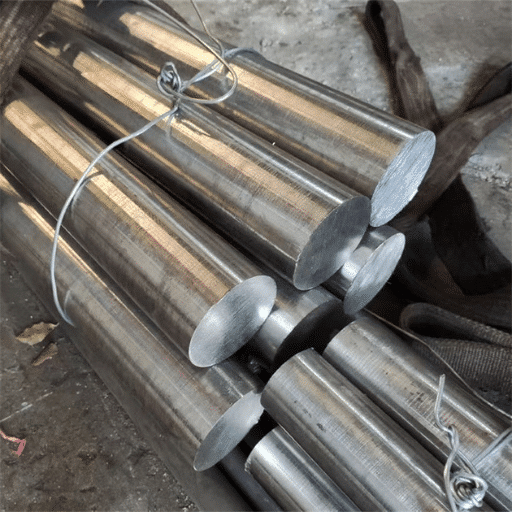
Lean duplex is not one material competing with 316. It is two grades with two different jobs. 2304 (UNS S32304) is a genuine 316/316L substitute, and LDX 2101 (UNS S32101) is an economical replacement for 304/304L, not for 316. Both roughly double the yield strength of 316 and carry far less nickel and molybdenum, but 316L still wins specific chloride duties because of its 2-3% molybdenum content.
That distinction matters because the search results for “lean duplex vs 316” rarely make it.
Picture a procurement engineer at a coastal fabrication shop. Her 316L quotation has climbed every quarter for a year, and her stockist suggests lean duplex as “the same corrosion, double the strength, less nickel.” That suggestion is half right. Which half is right depends entirely on which of the two lean duplex grades she is being offered, and on the corrosion mode that governs her application.
This guide compares lean duplex against 316 properly. It separates 2304 from LDX 2101, explains why equal pitting-resistance numbers do not mean equal corrosion, walks through the 2026 molybdenum market that changed the cost case, and closes with the situations where staying on 316L is still the right engineering decision.
Key Takeaways
- “Lean duplex” is two grades, not one. 2304 replaces 316/316L; LDX 2101 replaces 304/304L. Confusing them is the most common and most expensive mistake in substitution.
- Equal PREN does not mean equal corrosion. Lean duplex (~26) sits near 316L (~24) on the pitting-resistance equivalent, but 316L’s number comes from molybdenum, so 316L can still resist pitting better in some chlorides.
- Lean duplex roughly doubles yield strength (about 400-450 MPa versus 170-220 MPa), permitting roughly 30% thinner sections, but it is not a proportional drop-in swap.
- Molybdenum is the cost driver. 316L carries 2-3% Mo; lean duplex carries about 0.3%. As ferro-molybdenum prices climbed through 2026, mills began marketing 2304 as the “ideal 316L replacement.”
- Stay on 316L for aggressive pitting or creviced chloride service, cryogenic or hot service, magnetic-sensitive equipment, and small-quantity orders.
What Is Lean Duplex Stainless Steel?
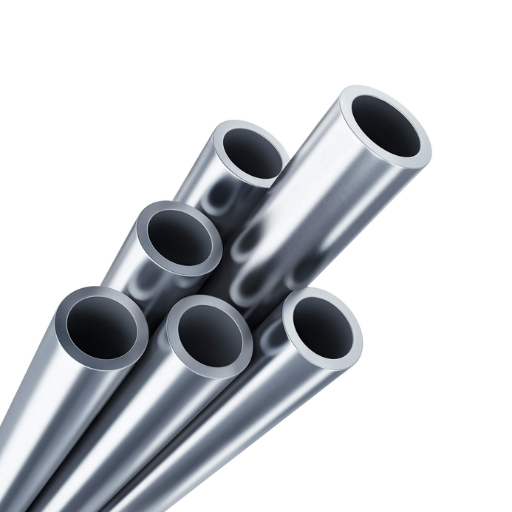
Lean duplex stainless steel is a two-phase austenitic-ferritic family with a pitting resistance equivalent (PREN) of about 30 or lower, achieved by keeping nickel and molybdenum low. The two common grades are 2304 (S32304), a 316L substitute, and LDX 2101 (S32101), an economical 304/304L substitute. Both offer roughly twice the yield strength of standard austenitic grades.
The word “lean” describes alloy content, not quality. Alloying elements are expensive, so a lean duplex grade reaches useful corrosion resistance with less of them than 2205 duplex. That trade keeps the cost down and raises the strength, but it puts a ceiling on corrosion performance that buyers need to understand.
The Two Grades and What Each One Replaces
The single most useful thing to know about lean duplex is that the label covers two materials that are not interchangeable.
- 2304 (UNS S32304 / EN 1.4362) is the true 316L alternative. It carries about 23% chromium, 3.0-5.5% nickel, 0.05-0.60% molybdenum and 0.05-0.20% nitrogen, giving a PREN of about 25-27. Its corrosion resistance sits in the 316L class.
- LDX 2101 (UNS S32101 / EN 1.4162) is the 304 alternative. It uses about 21.5% chromium, only 1.5% nickel, 0.3% molybdenum, 5% manganese and 0.22% nitrogen, for a PREN of about 26. Outokumpu publishes its corrosion resistance as better than 304L and comparable to 316L in most environments, but independent testing shows its actual pitting and crevice behaviour can land between 304 and 316.
So a suggestion to “use lean duplex instead of 316” is only sound if the grade on offer is 2304. If it is LDX 2101, the buyer is really comparing against 304.
Lean Duplex vs 316: Head-to-Head
The table below sets both lean duplex grades beside 316L, covering the 2304 vs 316 and LDX 2101 vs 316 cases side by side.
| Property | 316L (1.4404) | 2304 (S32304) | LDX 2101 (S32101) |
|---|---|---|---|
| Family | Austenitic | Lean duplex | Lean duplex |
| Replaces | baseline | 316/316L | 304/304L |
| Chromium | 16-18% | ~23% | ~21.5% |
| Nickel | 10-14% | 3.0-5.5% | ~1.5% |
| Molybdenum | 2-3% | 0.05-0.60% | ~0.3% |
| Nitrogen | ≤0.10% | 0.05-0.20% | ~0.22% |
| PREN | ~24 | ~25-27 | ~26 |
| Yield strength (min) | 170-220 MPa | ~400 MPa | 450 MPa |
| Tensile strength | ~485 MPa | ~600 MPa | ~650 MPa |
| Elongation | ~40% | ~25% | ~25-30% |
| Density | ~8.00 g/cm³ | ~7.80 g/cm³ | ~7.80 g/cm³ |
| Magnetic | No (annealed) | Yes | Yes |
| Relative cost per kg | baseline | ~1.1-1.2× | ~1.0-1.1× |
The PREN formula is widely written as PREN = Cr + 3.3Mo + 16N. Nitrogen carries a 16× multiplier, which is why LDX 2101 reaches a PREN of about 26 with almost no molybdenum. Keep that formula in mind, because it explains the trap in the next section.
Corrosion Resistance: Why Equal PREN Does Not Mean Equal 316L
Lean duplex PREN values land within a point or two of 316L, so it’s tempting to read them as corrosion-equivalent. That reading is wrong, and it’s the second most common substitution error after mixing up the two grades.
The numbers are close, but they are built from different elements. 316L earns its PREN largely from molybdenum. Lean duplex earns its from chromium and nitrogen. Because the two grades get there differently, they perform differently. The International Molybdenum Association is explicit that PREN is a ranking guide for selection, not a measured corrosion rate.
Where Lean Duplex Wins, and Where 316L Still Wins
Lean duplex clearly wins on chloride stress corrosion cracking. The two-phase microstructure interrupts the cracking path, and duplex grades resist SCC far better than austenitic grades. At around 120 °C, 316 is considered highly sensitive to chloride SCC, while lean duplex is significantly more resistant.
Lean duplex typically wins on crevice corrosion, another consequence of the duplex structure.
316L can still win on pitting in specific chloride chemistries, because of its 2-3% molybdenum. This is the point that honest sources make and marketing pages omit: it’s not accurate to say flatly that lean duplex is more corrosion resistant than 316L. They win in different corrosion modes.
For practical service, 2304 handles roughly up to 25,000 ppm chloride at 25 °C with a typical critical pitting temperature of about 30-35 °C, well above 316L in the same test. Above that chloride level, or at higher temperature, the ladder moves up to 2205 duplex. For the full corrosion mechanism behind these thresholds, see our guide to duplex 2205 vs 316 corrosion resistance.
The rule: match the grade to the corrosion mode that governs your service, not to a single PREN figure.
The Grade That Was Called a 316L Replacement
Elena, a materials engineer at a chemical plant in Jiangsu, approved LDX 2101 sheet as a lower-cost substitute for 316L on a bracket assembly near a chloride wash line. On PREN alone, the substitution looked neutral. Within a year, the brackets showed pitting in the exact zones where chloride pooled, and 316L brackets on the same line did not.
The failure was not a bad material. It was a misread grade. LDX 2101 is an alternative to 304, not 316L, and its molybdenum-free chemistry gave up the pitting resistance that particular location depended on. Had the specification called for 2304, the outcome would likely have been different.
If you are weighing a substitution on a real line, our technical consultation service reviews the corrosion mode, chloride level and temperature before you commit a purchase order.
Lean Duplex vs 316 Strength: The Wall-Thickness Trade-off
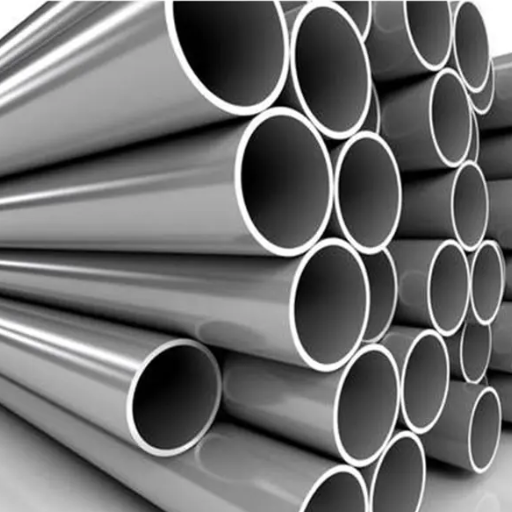
The strength difference between lean duplex and 316 is the headline most buyers already know, and it is real. The question is how much of it you can actually use.
Lean Duplex vs 316 Yield Strength
Lean duplex yields at roughly double 316L. 2304 has an ASTM A240 minimum yield of about 400 MPa and typically reaches 450 MPa, and LDX 2101 has a 450 MPa minimum, against 316L’s 170-220 MPa. Tensile strength runs about 600-650 MPa for lean duplex versus roughly 485 MPa for 316L.
The trade-off is ductility. Lean duplex elongates about 25-30% against 316L’s 40%, a difference that matters in forming and in strain-based design. Density is similar, at roughly 7.80 g/cm³ for lean duplex versus 8.00 g/cm³ for 316L, so the weight saving comes from thinner steel, not lighter steel. Our article on duplex 2205 mechanical properties covers these values in more depth.
What Double Strength Buys, and What It Does Not
Higher yield strength lets a designer reduce wall thickness by roughly 30% at equal design pressure, cutting weight by about 30% in typical sections and up to 50% in tension-dominated members. That’s genuine material and cost saving.
It isn’t, however, a proportional drop-in swap. Buckling resistance falls as sections get thinner, so compression members cannot always take the full reduction. Design codes, corrosion allowance and fabrication practice also constrain the final thickness. Engineers who simply divide the thickness by the strength ratio usually discover that buckling, not strength, governs the result.
Lean Duplex vs 316 Cost: The 2026 Molybdenum Story
For years the lean duplex cost case rested on a simple claim: less nickel and molybdenum means a lower price. That claim was never quite reliable. What changed in 2026 is that the gap became a story about one element.
Lean Duplex vs 316 Price
Molybdenum is the expensive, volatile part of 316L. The grade carries 2-3% Mo, while lean duplex carries about 0.3%. When molybdenum prices move, 316L moves with them far more than lean duplex does.
Through 2026, ferro-molybdenum prices climbed sharply. Chinese trade sources cited levels around 325,000 yuan per tonne by mid-2026, which lifted 316L production costs and added volatility. Lean duplex was largely insulated. That is why Chinese mills such as TISCO began marketing 2304 explicitly as “the ideal replacement for 316L,” framing it as a way to avoid molybdenum price swings altogether. Our duplex 2205 vs 316 cost guide works through this pricing logic in more detail.
Two honest caveats belong with that story.
First, per-kilogram lean duplex can still cost more than 316L in some markets. One knowledge base rates relative cost at 316L = 1.0, 2304 = 1.2, and 2205 = 1.3, and another comparison prices 2304 above 316 per kilogram. The lean duplex case is about lifecycle cost and price stability, not always the sticker price. A cited 25-year lifecycle study reports roughly 20-25% lower total ownership cost than 316L, assuming regular flushing and no prolonged stagnation, driven by lower alloy content, reduced wall thickness and no painting.
Second, all these figures are indicative market data, not supplier quotations. Prices track volatile nickel and molybdenum surcharges and must be re-quoted at purchase.
Availability and Lead Time
Cost is not the only commercial factor. 316L is a globally stocked commodity, while 2304 and LDX 2101 are specialty grades produced by fewer mills and held by fewer stockists. Specific forms and quantities are often available only on indent, with longer lead times.
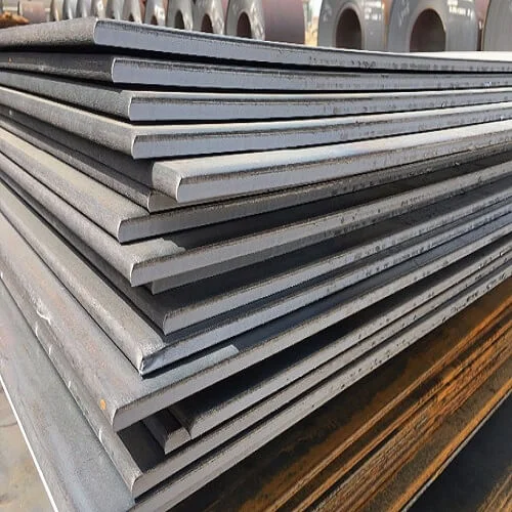
In practice, availability is frequently the reason a project stays on 316L even when lean duplex is technically suitable. Product-form constraints matter too: LDX 2101 pipe and tube fall under ASTM A789 and A790, and pressure-vessel use of LDX 2101 is covered by ASME Code Case 2418. It is worth confirming stock and lead time before the specification is frozen, and our stainless steel sheet range shows the forms we supply directly.
Welding and Fabrication: What Lean Duplex Changes
Lean duplex is easier to weld than 2205 duplex because it has lower sensitivity to sigma-phase embrittlement. It is not, however, as forgiving as 316L.
The specific risk is chromium-nitride precipitation in the high-temperature heat-affected zone when heat input runs high. That precipitation locally reduces corrosion resistance, so the weld zone can become the weakest part of an otherwise sound joint.
The essentials are straightforward. Use an ER2307 over-alloyed filler for lean duplex 2304, with ER2209 as an acceptable alternative, and never use 308L, 316L or 309L on a duplex joint. Cap heat input around 2.5 kJ/mm, control the interpass temperature, use nitrogen-bearing shielding where the specification calls for it, and hold the ferrite number at roughly 30-70 FN. Do not preheat, and do not apply conventional stress relief, which embrittles duplex grades.
Machining is generally good and sometimes better than 316, but forming is harder because of the higher strength and lower elongation. For the full procedure, including filler tables and qualification, see our guide to duplex 2205 welding.
Temperature and Magnetism: The Two Limits Buyers Forget
Two properties set hard boundaries on where lean duplex is the right answer, and both are easy to overlook.
Temperature. Lean duplex is usable from roughly -50 °C to about 300 °C. Above 300 °C the duplex structure embrittles, and 316 becomes the safer choice, since it can serve from cryogenic temperatures up to about 800 °C. Below about -50 °C, lean duplex loses toughness and 316L is again correct. Outside that window, lean duplex is simply the wrong material family, and no strength advantage compensates. Our article on duplex 2205 temperature limits explains the sigma and 475 °C embrittlement metallurgy behind that ceiling.
Magnetism. The ferrite phase makes 2304 and LDX 2101 magnetic, while annealed 316 isn’t. This matters for magnetic-sensitive instrumentation, magnetic separation equipment, and some non-destructive test methods. Our guide to whether duplex stainless steel is magnetic explains why, and it’s a real selection constraint rather than a trivia point.
Choosing Between 316L, 2304, and LDX 2101
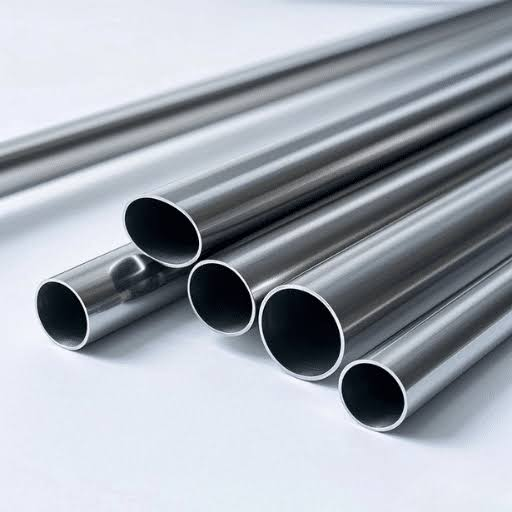
Once the corrosion mode, temperature, quantity, and fabrication capability are on the table, the choice between these grades usually resolves quickly. For the wider duplex family above them, our duplex 2205 stainless steel guide is the broader reference.
The Decision Table
| Service condition | Grade | Reason |
|---|---|---|
| Aggressive pitting or creviced chloride service | 316L | Molybdenum resists pitting; lean duplex chemistry is not a substitute here |
| Small quantity or fast turnaround | 316L | Lean duplex is indent-only in many forms |
| Cryogenic service below about -50 °C | 316L | Lean duplex loses toughness |
| Sustained service above about 300 °C | 316L | Lean duplex embrittles |
| Magnetic instrumentation or magnetic separation | 316L | Lean duplex is magnetic; annealed 316 is not |
| Cost/weight-driven 316L replacement, moderate chlorides | 2304 | 316L-class corrosion at roughly double the yield strength and lower nickel/molybdenum |
| Chloride stress corrosion cracking is the governing mode | 2304 | Duplex structure arrests SCC |
| Structural, desalination intake, low-temperature seawater | 2304 | Strength-to-weight and price stability |
| Economical 304/304L replacement with extra strength | LDX 2101 | 304-class corrosion, 450 MPa yield, low cost |
| Above the lean duplex chloride limit, or hot | 2205 | The next rung up the ladder |
Three Reasons Buyers Switch from 316L to Lean Duplex
- Molybdenum-price exposure: 316L carries 2-3% Mo against lean duplex’s roughly 0.3%.
- Roughly double the yield strength, permitting thinner, lighter sections.
- Superior chloride stress corrosion cracking resistance from the two-phase microstructure.
When 316L Is Still the Right Answer
The honest position is that lean duplex doesn’t replace 316L everywhere. Stay with 316L when:
- Pitting or crevice corrosion in aggressive chloride service governs the design, and molybdenum is doing the work.
- Quantities are small or lead times are tight, and only 316L is stocked.
- The fabrication shop cannot hold a controlled-heat-input duplex welding procedure.
- Magnetic-sensitive instrumentation or magnetic separation is involved.
- Service is above about 300 °C or cryogenic below about -50 °C.
For the wider material ladder above these grades, including the comparison that anchors this topic cluster, see our guide to duplex 2205 vs 316 stainless steel and the broader stainless steel complete guide.
The Substitution That Worked
Marcus, a structural buyer for a coastal water-treatment contractor, moved a set of moderate-chloride support sections from 316L to 2304 after an SCC-related rework on an earlier phase. The sections took a roughly 30% thickness reduction at equal load, the chloride level sat comfortably inside the 2304 envelope, and the switch resolved the cracking problem while trimming both material and lifecycle cost. The point is not that 2304 always wins. The point is that the decision came from the service condition, not from a general claim that one grade is better.
Frequently Asked Questions
What is lean duplex stainless steel?
Lean duplex is a two-phase austenitic-ferritic stainless steel family with a PREN of about 30 or lower, using low nickel and molybdenum. The two common grades are 2304 (S32304), a 316L substitute, and LDX 2101 (S32101), a 304/304L substitute.
Is lean duplex better than 316?
It’s better for chloride stress corrosion cracking and for strength-to-weight, and often cheaper over its life. It isn’t universally better. Because 316L carries 2-3% molybdenum and lean duplex carries almost none, 316L can still resist pitting better in some chlorides.
Can lean duplex replace 316L?
2304 can replace 316L in moderate-chloride service where cost or weight is the driver. LDX 2101 shouldn’t, because it’s positioned against 304/304L and its pitting behaviour can fall between 304 and 316.
What is the difference between 2304 and LDX 2101?
2304 contains about 23% chromium and 3.0-5.5% nickel and substitutes for 316L. LDX 2101 contains about 21.5% chromium, 1.5% nickel and 5% manganese and substitutes for 304/304L. They are not interchangeable.
What is the PREN of 2304 and LDX 2101?
2304 has a PREN of about 25-27, and LDX 2101 about 26, calculated as Cr + 3.3Mo + 16N. LDX 2101 reaches that figure mainly through nitrogen rather than molybdenum.
Is lean duplex stronger than 316?
Yes. Lean duplex yields at roughly 400-450 MPa against 316L’s 170-220 MPa, about double, with tensile strength around 600-650 MPa versus about 485 MPa.
Is lean duplex cheaper than 316?
Not always per kilogram. Lean duplex carries far less molybdenum, so it is less exposed to price spikes, and one cited lifecycle study reports 20-25% lower total ownership cost. Per-kilogram prices can still be higher.
Is lean duplex magnetic?
Yes. The ferrite phase in 2304 and LDX 2101 makes both grades magnetic, while annealed 316 is not. This affects magnetic-sensitive instrumentation and magnetic separation.
What is the maximum temperature for lean duplex?
About 300 °C for continuous service. Above that, the duplex structure embrittles and 316 is the safer choice. Lean duplex is also not recommended below about -50 °C.
Can lean duplex be welded to 316?
It can, using an over-alloyed duplex filler, but a dissimilar joint between a duplex grade and 316 introduces its own considerations. Confirming the procedure with a qualified welding engineer is essential.
What filler metal is used for lean duplex 2304?
ER2307 is the usual over-alloyed filler, with ER2209 acceptable as an alternative. Never use 308L, 316L or 309L on a duplex joint.
Does lean duplex rust in seawater?
Not immediately in ambient, low-temperature seawater, but 2304 has a chloride and temperature ceiling, and above roughly 25,000 ppm chloride or at elevated temperature, it should be replaced by 2205 duplex.
Conclusion
The honest answer to “lean duplex vs 316” is that lean duplex is two grades, not one, and neither is a universal upgrade. 2304 is a genuine 316L substitute with roughly double the yield strength and far less nickel and molybdenum. LDX 2101 is an economical replacement for 304/304L, not for 316L. Equal PREN values do not mean equal corrosion resistance, because 316L’s pitting resistance comes from molybdenum and lean duplex’s comes from chromium and nitrogen.
That leaves a practical decision rule: start from the corrosion mode, chloride level, temperature, quantity, and fabrication capability available to you, and let those conditions pick the grade. Where molybdenum-driven pitting resistance, easy fabrication, wide availability or extreme-temperature service govern, keep the 316L and be confident doing so.
LIANYUNGANG DAPU METAL supplies stainless steel, duplex and 316/316L material with mill test certification and full heat traceability, plus precision cutting and custom processing to your specifications. If you are evaluating a substitution, our technical team can review the grade against your service conditions and confirm the forms and documentation your project needs.