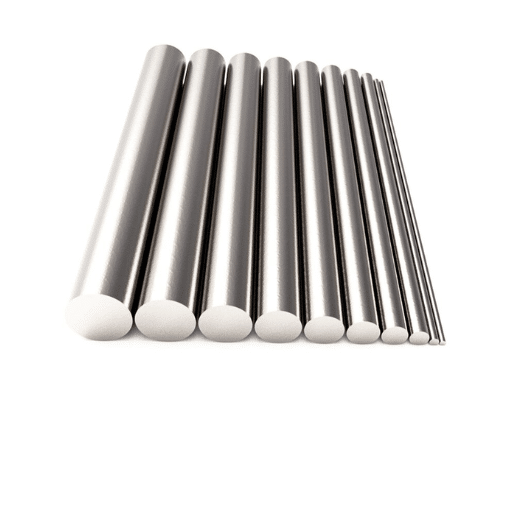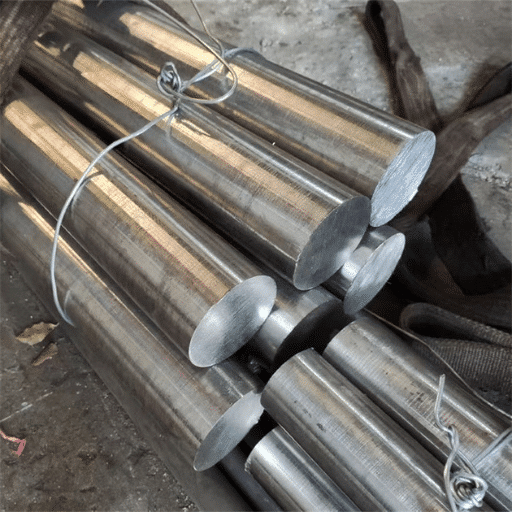
Titanium is 40-45% lighter than stainless steel at the same volume. A same-size part made from Grade 2 titanium weighs about 57% as much as one made from 304 stainless steel. That is the short answer behind the titanium vs stainless steel weight question, and it is why titanium shows up in aircraft frames, racing exhausts, and high-end watches.
But the scale only tells half the story. A part’s weight matters alongside strength, stiffness, and cost. Titanium flexes more under load than stainless steel, and it costs several times more per kilogram. Lighter is a tool, not a goal.
In this guide, you will get exact densities by grade, worked weight calculations for real parts, strength-to-weight numbers, and a simple decision framework for choosing between the two metals. For the full material comparison, see our guide to titanium vs stainless steel.
Key Takeaways
- Titanium density runs 4.43-4.51 g/cm³ vs 7.70-7.98 g/cm³ for stainless steel, making titanium 40-45% lighter at the same volume.
- A 10 lb stainless steel component weighs roughly 5.6 lb in titanium; a 1 kg part drops to about 0.57 kg.
- Grade 5 titanium delivers a specific strength around 200 MPa·cm³/g, roughly 3x 316L stainless steel, so titanium parts can be both lighter and stronger.
- Titanium’s elastic modulus (~110-116 GPa) is about 60% of stainless steel (~193-200 GPa), so titanium flexes more. Lighter can underperform where rigidity matters.
- Choose titanium when weight drives performance (aerospace, motorsport, wearables). Choose stainless steel when rigidity, budget, or volume production lead.
Is Titanium Lighter Than Stainless Steel? (Direct Answer)

Yes. Titanium is lighter than stainless steel by roughly 40-45% for the same volume. Pure titanium has a density of about 4.51 g/cm³, while common stainless steels like 304 and 316L sit near 7.9-8.0 g/cm³.
Put another way, if you machine two identical bars, one from titanium and one from 304 stainless steel, the titanium bar will weigh about 57% as much. A 100-gram stainless part becomes a 57-gram titanium part. A 10-pound bracket drops to about 5.6 pounds.
How much lighter is titanium than stainless steel in practice? The exact saving depends on the grades you compare, but the range holds steady across nearly every common alloy:
- Grade 2 titanium vs 304 stainless: ~43% lighter
- Grade 5 titanium (Ti-6Al-4V) vs 316L stainless: ~44% lighter
- Grade 2 titanium vs 430 stainless: ~41% lighter
Titanium Density vs Stainless Steel: The Numbers by Grade
Most comparison articles quote one number for “titanium” and one for “stainless steel.” That hides real variation across grades. Here is the grade-by-grade breakdown engineers actually need.
| Material | Grade | Density (g/cm³) | Density (lb/in³) | Relative Weight vs 304 SS |
|---|---|---|---|---|
| Titanium | Grade 1 (CP) | 4.51 | 0.163 | 57% |
| Titanium | Grade 2 (CP) | 4.51 | 0.163 | 57% |
| Titanium | Grade 4 (CP) | 4.51 | 0.163 | 57% |
| Titanium | Grade 5 (Ti-6Al-4V) | 4.43 | 0.160 | 56% |
| Stainless Steel | 304 / 304L | 7.93 | 0.286 | 100% |
| Stainless Steel | 316 / 316L | 7.98 | 0.288 | 101% |
| Stainless Steel | 430 | 7.70 | 0.278 | 97% |
| Stainless Steel | 904L | 8.00 | 0.289 | 101% |
Why is titanium so much lighter? It comes down to atomic structure. Titanium has an atomic mass of about 47.9, while iron is 55.8 and the nickel and chromium alloying elements in stainless steel push density higher still. Titanium’s hexagonal close-packed crystal structure also packs atoms slightly less densely than the face-centered cubic structure of austenitic stainless steel. For properties of the most common comparison grade, see our 304 stainless steel guide.
Need grade-specific weight calculations for your project? Contact LIANYUNGANG DAPU METAL to request a quote.
Weight of the Same Part: Worked Examples
Density numbers are useful, but buyers want to know what a real part weighs. To make the titanium vs stainless steel weight difference concrete, here are four worked examples using the simple formula: Weight = Volume × Density.
Round Bar (per meter, 25 mm diameter)
- Volume: π × (1.25 cm)² × 100 cm = 490.9 cm³
- Grade 2 titanium: 490.9 × 4.51 = 2.21 kg
- 304 stainless steel: 490.9 × 7.93 = 3.89 kg
- Saving: 1.68 kg per meter (43%)
Tube (per meter, 50 mm OD, 2 mm wall)
- Volume: π × [(2.5)² – (2.3)²] × 100 = 301.6 cm³
- Ti-6Al-4V: 301.6 × 4.43 = 1.34 kg
- 316L stainless: 301.6 × 7.98 = 2.41 kg
- Saving: 1.07 kg per meter (44%)
Watch Case (typical 42 mm case, ~12 cm³)
- Grade 5 titanium: 12 × 4.43 = 53 g
- 316L stainless: 12 × 7.98 = 96 g
- Saving: 43 g on the wrist (45%)
For a deeper look at wristwear trade-offs, see our titanium vs stainless steel watch comparison.
Performance Exhaust (full system, ~6,500 cm³)
- Titanium: 6,500 × 4.43 = 28.8 kg
- 304 stainless: 6,500 × 7.93 = 51.5 kg
- Saving: 22.7 kg (44%)
That last number explains why motorsport teams pay titanium prices. Pulling 22 kg off a car changes handling and lap times in ways drivers can feel. For a full exhaust-specific breakdown, see our titanium vs stainless steel exhaust guide. For the deeper cost side of this trade, read our titanium vs stainless steel cost guide.
Mini-Story: The Exhaust Builder
In 2025, Derek, a fabricator at a performance shop in Ohio, built two identical cat-back exhausts for a customer’s track car, one in 304 stainless and one in Grade 2 titanium. The titanium system came in 21.4 kg lighter. The customer picked up two-tenths per lap at his home circuit and never went back to stainless for track builds.
Titanium vs Stainless Steel Strength-to-Weight Ratio

Weight alone is a misleading metric. What engineers actually optimize is specific strength: tensile strength divided by density. A material can be heavier per cubic centimeter and still be the better choice if it carries more load per gram.
| Material | Grade | Tensile Strength (MPa) | Density (g/cm³) | Specific Strength (MPa·cm³/g) |
|---|---|---|---|---|
| Titanium | Grade 2 | 345-485 | 4.51 | 77-108 |
| Titanium | Grade 5 (Ti-6Al-4V) | 900-950 | 4.43 | 203-214 |
| Stainless Steel | 304 (annealed) | 515-620 | 7.93 | 65-78 |
| Stainless Steel | 316L (annealed) | 485-620 | 7.98 | 61-78 |
| Stainless Steel | 17-4 PH (H900) | 1,310 | 7.75 | 169 |
The pattern is clear. Grade 5 titanium delivers roughly three times the specific strength of annealed 316L. That is why a titanium part can be both lighter and stronger than the stainless part it replaces. Precipitation-hardened stainless like 17-4 PH closes some of the gap but still trails Grade 5 titanium while weighing 75% more. Ulbrich’s titanium vs steel analysis reaches the same conclusion: titanium’s real edge is weight-normalized strength, not raw tensile numbers alone.
According to AZoM’s titanium properties reference, commercially pure titanium grades offer moderate strength with exceptional corrosion resistance, while alloyed grades like Ti-6Al-4V reach strength levels that rival many steels at roughly half the weight.
The Stiffness Trade-Off: When Lighter Is Not Better
Here is the part most comparisons skip. Titanium’s elastic modulus is about 110-116 GPa. Stainless steel sits around 193-200 GPa. Under the same load, a titanium part flexes roughly 60-70% more than an identical stainless steel part.
That flexibility matters more than buyers expect:
- Precision frames and optical mounts: deflection under load ruins alignment
- Vibration-sensitive assemblies: lower stiffness shifts resonant frequencies
- Long unsupported spans: titanium beams sag more than stainless ones
- Press fits and bearing seats: elastic recovery differs between the metals
To match the stiffness of a stainless steel part, a titanium part needs a larger cross-section, which erodes some of the weight saving. Engineers often gain back 10-20% of the weight advantage when they resize titanium parts for equivalent rigidity. The saving is still real, just smaller than the raw density numbers suggest.
Mini-Story: The Robotics Engineer
Priya, a robotics engineer at an automation firm, specified Grade 5 titanium for a robot arm link to cut weight. Prototype testing showed the arm oscillated at the end of fast moves because the link flexed more than the stainless original. She kept titanium but increased the wall thickness, ending with a 28% weight saving instead of the 43% she had projected. Still a win, but an honest one.
Where the Weight Saving Pays Off

The titanium vs stainless steel weight gap pays off most in applications where every gram carries measurable value.
Aerospace
The Boeing 787 and Airbus A350 are each roughly 15% titanium by weight. Landing gear, engine pylons, fasteners, and hydraulic tubing all use titanium alloys. A titanium landing gear component typically weighs 40% less than its steel equivalent while delivering longer fatigue life. At aircraft scale, that saving compounds into fuel efficiency across thousands of flight cycles.
Medical Implants
Hip stems, bone plates, and dental fixtures benefit twice from titanium’s low density: the implant itself weighs less, and the load on surrounding bone drops. Combined with biocompatibility, weight makes titanium the default for orthopedic work. Where 316L stainless is still used for surgical instruments and temporary implants, our 316 stainless steel guide covers its properties in detail.
Exhausts and Motorsport
Titanium exhaust systems run about 40% lighter than stainless equivalents, as the worked example above shows. Racing teams, superbike builders, and supercar makers accept the cost because unsprung and high-mounted weight hurts performance twice.
Bicycles, Watches, and Wearables
A titanium road bike frame saves roughly 40-45% frame weight versus steel at the same geometry. Titanium watches and eyeglass frames trade scratch hardness for all-day comfort. Outdoor gear like tent stakes, cookware, and tools use titanium when pack weight matters.
When Stainless Steel Is the Better Choice
Lighter is not always better. Stainless steel wins in several common scenarios.
Rigidity-Critical Parts
Machine frames, precision fixtures, and structural members that must hold tight tolerances under load favor stainless steel’s higher elastic modulus. You get stiffness without upsizing sections.
Budget-Driven Programs
Stainless steel costs a fraction of titanium per kilogram and machines faster. When weight is not a performance driver, the titanium premium is hard to justify. The cost comparison linked earlier covers the numbers in detail.
Magnetic or Ferritic Requirements
Applications needing magnetic response use ferritic stainless grades like 430. Titanium is non-magnetic across all grades.
High-Volume Parts
For appliances, architectural panels, and consumer goods produced in the millions, stainless steel’s combination of cost, fabricability, and supply depth wins. Titanium’s lead times and certification overhead do not scale well at commodity volumes.
How to Choose: A Weight-First Decision Framework
Use these four questions to settle the titanium vs steel weight comparison for your project.
- Is weight a performance driver? If grams translate into fuel savings, lap times, payload, or wearer comfort, titanium deserves a serious look. If the part sits on a factory floor, weight rarely matters.
- Does stiffness matter? If the part must hold alignment or resist vibration, model the deflection. You may need a thicker titanium section, shrinking the real weight saving.
- What strength do you actually need? Check specific strength, not just tensile numbers. Grade 5 titanium often lets you downsize sections, compounding the weight saving.
- What does the lifecycle math say? Add material, machining, finishing, and downstream savings (fuel, handling, maintenance). Titanium often wins on lifecycle cost even when it loses on sticker price.
Mini-Story: The Drone Startup
A Shenzhen drone startup ran this framework on its camera gimbal bracket. Weight drove flight time, stiffness mattered for image stability, and volumes were low. The team chose Grade 5 titanium with a slightly thicker web to control flex. Flight time improved by 11%, and the per-part premium was negligible at their volumes.
Conclusion
The titanium vs stainless steel weight answer is simple: titanium is 40-45% lighter at the same volume, with densities of 4.43-4.51 g/cm³ against 7.70-7.98 g/cm³ for common stainless grades. A 10 lb stainless part weighs about 5.6 lb in titanium.
The decision behind that answer takes more thought. Grade 5 titanium’s specific strength (~200 MPa·cm³/g) lets parts be lighter and stronger at once, but titanium’s lower elastic modulus means lighter parts flex more. Weight saving pays off in aerospace, medical, motorsport, and wearables. It rarely pays off for rigid, budget-driven, or high-volume parts, where stainless steel remains the pragmatic choice.
Match the metal to what weight is worth in your application. For help selecting the right grade and form, contact LIANYUNGANG DAPU METAL for material selection guidance or request a quote with your part dimensions and volumes.
Titanium vs Stainless Steel Weight: FAQ
Is titanium lighter than stainless steel?
Yes. Titanium is about 40-45% lighter than stainless steel at the same volume. Grade 2 titanium has a density of 4.51 g/cm³, while 304 stainless steel is 7.93 g/cm³, so a same-size titanium part weighs roughly 57% as much.
How much lighter is titanium than stainless steel?
A 10 lb stainless steel component weighs about 5.6 lb in titanium, and a 1 kg part drops to roughly 0.57 kg. The exact saving ranges from 41-45% depending on the grades compared.
Is titanium stronger than stainless steel?
It depends on the grade. Grade 5 titanium (Ti-6Al-4V) has a tensile strength of 900-950 MPa, well above annealed 304 or 316L stainless (485-620 MPa). Per unit of weight, titanium is significantly stronger. Hardened stainless grades like 17-4 PH can exceed titanium’s absolute strength but weigh much more.
What is the density of titanium vs stainless steel?
Titanium density is 4.43-4.51 g/cm³ across common grades (Grade 1, 2, 4, and Grade 5). Stainless steel density is 7.70-8.00 g/cm³: 430 is about 7.70, 304 is 7.93, 316L is 7.98, and 904L is about 8.00 g/cm³.
Does titanium weigh less than steel?
Yes. Titanium weighs about 40-45% less than carbon steel and stainless steel for the same volume. Carbon steel’s density of ~7.85 g/cm³ is close to stainless steel, so titanium’s advantage is similar against both.