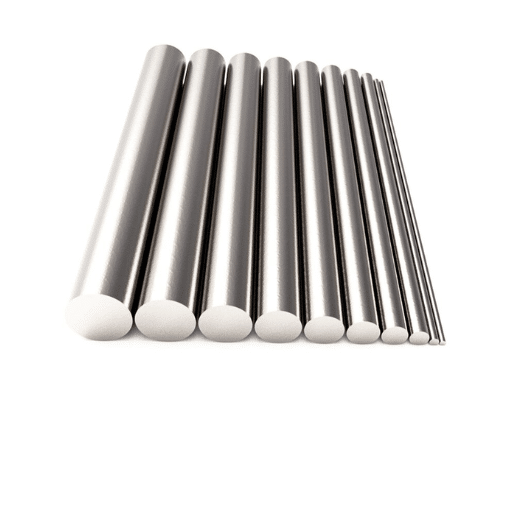
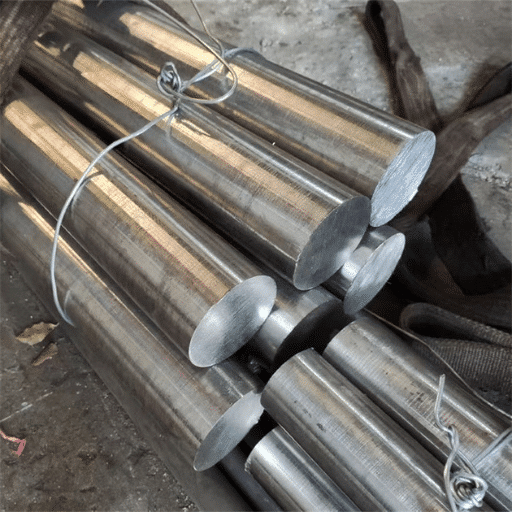
The most important titanium properties are its high strength-to-weight ratio, exceptional corrosion resistance, and biocompatibility. Titanium weighs about 45% less than steel. Yet Grade 5 titanium (Ti-6Al-4V) can match many structural steels in tensile strength.
Engineers choose titanium when weight, fatigue life, or chemical exposure drives the design. Buyers sometimes overspecify it. Titanium is not the strongest, hardest, or cheapest metal. Its value comes from the specific mix of properties it delivers.
In this guide, you will learn the physical, mechanical, thermal, and chemical properties that matter for industrial buyers. You will also see how common grades compare. You will learn how to match titanium’s properties to real applications. For the broader material-selection picture, read our titanium vs stainless steel comparison.
Key Takeaways
- Titanium has a density of roughly 4.51 g/cm³ for commercially pure grades and 4.43 g/cm³ for Grade 5 Ti-6Al-4V.
- Grade 5 titanium tensile strength reaches 895-950 MPa annealed, while CP Grade 2 is closer to 345 MPa.
- Titanium’s stable TiO₂ oxide layer gives it outstanding corrosion resistance in seawater and chloride environments.
- Titanium is biocompatible and non-magnetic, making it ideal for medical implants and sensitive electronic applications.
- Its low thermal conductivity makes titanium harder to machine but useful for thermal isolation and high-temperature parts.
What Is Titanium? Element and Alloy Basics

Titanium is a chemical element with the symbol Ti and atomic number 22. It is a silvery-gray transition metal. It is abundant in Earth’s crust. Refining it from ores such as ilmenite and rutile is energy-intensive, so titanium is expensive.
Most industrial “titanium” is not pure titanium. It is an alloy. The most common alloy is Ti-6Al-4V. It contains about 90% titanium, 6% aluminum, and 4% vanadium. Aluminum strengthens the alpha phase. It also improves oxidation resistance. Vanadium stabilizes the beta phase. It improves ductility and toughness.
Commercially pure (CP) titanium grades include Grade 1, Grade 2, Grade 3, and Grade 4. They contain only small amounts of oxygen, nitrogen, carbon, hydrogen, and iron. These elements increase strength. They also reduce ductility as their content rises.
When engineers talk about titanium properties, they usually mean either CP titanium or Ti-6Al-4V. The grade choice changes the numbers significantly.
Mini-story: The confused buyer
A procurement manager named Elena Voss once asked her supplier for “titanium sheet” without specifying a grade. She received a quote for Grade 2 CP titanium at $28/kg. Her design team actually needed Ti-6Al-4V for an aerospace bracket. By the time the mistake was caught, the project had lost three weeks. Specifying the right grade is the first step in using titanium’s properties correctly.
Physical Properties of Titanium
Titanium’s physical properties set it apart from steel and aluminum. The most immediately useful is its low density combined with good strength.
| Property | Commercially Pure Titanium | Ti-6Al-4V (Grade 5) |
|---|---|---|
| Density | ~4.51 g/cm³ | ~4.43 g/cm³ |
| Melting point | ~1,668 °C (3,034 °F) | ~1,600-1,660 °C |
| Crystal structure | HCP alpha below 883 °C | Alpha-beta mixture |
| Thermal conductivity | ~16-22 W/(m·K) | ~6.7 W/(m·K) |
| Thermal expansion | ~8.6 × 10⁻⁶ /K | ~8.7-9.1 × 10⁻⁶ /K |
| Electrical resistivity | ~0.55 µΩ·m | ~1.7 µΩ·m |
| Magnetism | Essentially non-magnetic | Essentially non-magnetic |
Data compiled from AZoM and common materials references. Exact values depend on grade, condition, and test method.
The density value is the headline. Titanium has a density of roughly 4.5 g/cm³. It sits between aluminum (~2.7 g/cm³) and steel (~7.8-8.0 g/cm³). A titanium part with the same volume as a steel part weighs about 45% less. That is why aerospace and racing engineers care about titanium.
Titanium’s melting point is high. Its maximum practical service temperature is lower. CP titanium is generally limited to about 300 °C. Ti-6Al-4V can operate continuously up to roughly 315-400 °C. Above that range, creep and oxidation become significant concerns.
Low thermal conductivity has practical consequences. Heat does not spread quickly through titanium. Cutting tools get hot during machining. Welders must use inert gas shielding carefully to avoid contamination. On the positive side, low conductivity makes titanium useful for thermal barriers and high-temperature hardware.
Mechanical Properties of Titanium
Mechanical properties are where grade selection matters most. CP grades are softer and more formable. Ti-6Al-4V is much stronger but less ductile.
| Property | Grade 1 CP Ti | Grade 2 CP Ti | Grade 5 Ti-6Al-4V |
|---|---|---|---|
| Tensile strength (MPa) | ≥240 | ~345 | 895-950 |
| Yield strength (MPa) | ≥138 | ~275 | 825-880 |
| Elongation | ≥24% | ≥20% | ≥10% |
| Hardness | ~120 HB / 70 HRB | Low | ~30-36 HRC |
| Young’s modulus (GPa) | ~105 | ~105 | 110-116 |
Typical values for annealed material. Heat treatment and product form change results.
Grade 5 titanium is the workhorse alloy for good reason. Its tensile strength is comparable to medium-strength alloy steels. Yet it weighs roughly 45% less. Its yield strength is also high. The material carries substantial load before permanent deformation begins.
Young’s modulus is where titanium differs from steel. Steel has a modulus of about 193 GPa. Titanium’s modulus is roughly half that. A titanium beam of the same shape and load will deflect about twice as much as a steel beam. Designers sometimes compensate with larger cross-sections or different geometry.
Fatigue resistance is another strength. Ti-6Al-4V maintains roughly 45-50% of its ultimate tensile strength under high-cycle fatigue conditions. That is better than many aerospace stainless steels on a strength-to-weight basis. Surface finish, notches, and environment all affect actual fatigue life. Design allowables are much lower than laboratory values.
Specific strength is strength divided by density. This is where titanium shines. For weight-critical designs, titanium often outperforms steel and aluminum. A 2024 aerospace supplier case study found that replacing a steel bracket with Ti-6Al-4V cut weight by 44% while carrying the same proof load.
Soft CTA: Want to understand how titanium compares directly to steel in load-bearing applications? Read our detailed guide on is titanium stronger than steel.
Titanium Corrosion Resistance
Titanium’s corrosion resistance comes from a thin, stable, self-healing layer of titanium dioxide (TiO₂). This passive oxide film forms almost instantly when titanium contacts oxygen or water. If scratched, it reforms in normal environments.
The oxide layer protects titanium in a wide pH range, roughly pH 1-12. It also resists chloride ion penetration. That makes titanium outstanding in seawater, brine, and many chemical environments.
| Environment | Typical Titanium Performance |
|---|---|
| Natural seawater | Corrosion rate <0.0001 mm/year for Grade 2 |
| Chloride solutions | Highly resistant; immune to stress corrosion cracking |
| Nitric acid | Excellent resistance |
| Dilute salt water | Excellent resistance |
| Hydrofluoric acid | Rapid attack; avoid |
| Dry chlorine gas | Can ignite; moisture required for passivity |
| Hot concentrated alkalis | Attack possible |
Performance depends on concentration, temperature, and grade.
Commercially pure titanium generally has better corrosion resistance than titanium alloys. Adding alloying elements such as aluminum and vanadium creates microstructural differences. These can slightly reduce corrosion performance in extreme environments. Grade 7 adds palladium (0.12-0.25%). This improves resistance to acids and crevice conditions.
Mini-story: The heat exchanger that lasted
A chemical plant on the coast used 316 stainless steel tubes in a seawater heat exchanger. After four years, the tubes showed pitting and had to be replaced. Maintenance supervisor Mike Chen switched to Grade 2 titanium tubes. The initial material cost was higher, but after ten years of continuous service the titanium tubes showed no measurable corrosion. For his plant, the lower lifecycle cost made titanium the better engineering choice.
Biocompatibility and Medical Properties
Titanium is widely used for medical implants because it is biocompatible, non-toxic, and bonds well with bone. The TiO₂ oxide layer is chemically stable in body fluids and does not trigger strong inflammatory responses.
Bone-forming cells called osteoblasts attach directly to titanium surfaces. This process, called osseointegration, creates a strong mechanical bond between implant and bone. Surface roughness and treatments can enhance osseointegration.
Titanium is also essentially non-magnetic. That makes it safe for MRI scans and useful in electronic devices where magnetic interference must be minimized. For comparison, see our article on is titanium is magnetic.
Ti-6Al-4V ELI (Grade 23) is a common implant alloy. The “ELI” stands for extra-low interstitial. Lower oxygen content improves ductility, fracture toughness, and fatigue resistance. Some newer implant alloys replace vanadium with niobium. This addresses concerns about ion release.
One limitation is stress shielding. Ti-6Al-4V has an elastic modulus of about 110 GPa. Human cortical bone is closer to 20 GPa. The stiffer implant carries more load. This can cause bone resorption near the implant. Researchers are developing lower-modulus beta-titanium alloys to reduce this effect.
Common Titanium Grades and Their Properties

Understanding the main titanium grades helps buyers match properties to applications.
| Grade | Type | Tensile Strength | Key Properties | Typical Uses |
|---|---|---|---|---|
| Grade 1 | CP Ti | ≥240 MPa | Highest ductility, excellent corrosion resistance | Chemical processing, architecture, medical implants requiring formability |
| Grade 2 | CP Ti | ~345 MPa | Workhorse grade; good balance of strength, corrosion, weldability | Marine, chemical, heat exchangers, industrial piping |
| Grade 3 | CP Ti | ~450 MPa | Higher strength than Grade 2, lower ductility | Industrial applications needing moderate strength |
| Grade 4 | CP Ti | ~600 MPa | Highest strength of CP grades | Aerospace fasteners, surgical hardware |
| Grade 5 | Ti-6Al-4V | 895-950 MPa | High strength-to-weight ratio, heat-treatable | Aerospace, automotive, medical implants, oil and gas |
| Grade 7 | Ti-0.15Pd | ~345 MPa | Like Grade 2 but with enhanced corrosion resistance | Chemical processing, reducing acids, desalination |
| Grade 23 | Ti-6Al-4V ELI | 860-960 MPa | Higher toughness and fatigue resistance than Grade 5 | Permanent medical implants, aerospace critical parts |
Values are typical annealed minima or ranges. Check ASTM B348, ASTM B265, ASTM F136, ASTM F1472, or AMS 4928 for exact specifications.
Grade 2 is the most common CP grade. It offers excellent corrosion resistance at a moderate cost and is easy to weld and form. Grade 5 dominates where strength matters. Grade 7 is the choice when reducing acids or hot chlorides are present.
Titanium Alloy Families
Titanium alloys are grouped by the phases they contain at room temperature.
Alpha (α) alloys are stable and have good creep resistance and weldability. CP grades are essentially alpha titanium. Alpha alloys are preferred for elevated-temperature applications and environments requiring excellent corrosion resistance.
Alpha-beta (α+β) alloys contain both alpha and beta phases at room temperature. Ti-6Al-4V is the most important example. These alloys offer the best balance of strength, toughness, and workability. They can be heat-treated to adjust properties.
Beta (β) alloys are rich in beta-stabilizing elements such as vanadium, molybdenum, and chromium. They are strong, formable, and hardenable by aging. Beta alloys are used for high-strength aerospace components and advanced implants.
The alloy family choice affects not only strength but also fabrication behavior. Alpha and near-alpha alloys are generally easier to weld. Beta alloys can achieve the highest strengths but may be more challenging to process.
How Titanium Properties Drive Applications
Each major titanium application exploits a specific combination of properties.
Aerospace
Aircraft and spacecraft are designed around weight. Titanium’s high strength-to-weight ratio and fatigue resistance make it ideal for airframes, landing gear, engine components, and fasteners. The Boeing 787 and Airbus A350 use up to 15% titanium by weight.
Medical Implants
Biocompatibility, corrosion resistance, and fatigue strength make titanium the standard for hip replacements, dental implants, spinal hardware, and surgical instruments. Grade 23 ELI is often specified for permanent load-bearing implants.
Marine and Chemical Processing
Titanium resists seawater corrosion far better than 316 stainless steel. It is used in heat exchangers, desalination plants, subsea equipment, and chemical reactors. Grade 2 is common for tubing; Grade 7 is used for more aggressive reducing acids.
Automotive and Motorsport
Exhaust systems, valves, springs, and fasteners use titanium to reduce weight where performance matters. The material cost is high, but the weight savings improve acceleration and handling.
Electronics and Sensitive Equipment
Titanium’s non-magnetic nature makes it suitable for MRI-compatible devices, watch cases, and electronic housings where magnetic interference is a concern.
Medium CTA: For projects where stainless steel provides the right balance of corrosion resistance, strength, and cost, LIANYUNGANG DAPU METAL supplies 316 stainless steel products and 304 stainless steel products for global industrial applications.
Machining and Fabrication Considerations

Titanium’s properties create both opportunities and challenges in manufacturing.
Low thermal conductivity means heat concentrates at the cutting tool. Machining requires rigid setups. It also requires sharp carbide or ceramic tools, slow speeds, and abundant coolant. Tool wear is faster than with steel or aluminum.
Titanium tends galling. Galling is a form of surface damage where metal surfaces rub and stick together. Threaded titanium fasteners often need anti-galling coatings or lubricants. This is especially true when fasteners are tightened repeatedly.
Welding titanium is straightforward in principle but demanding in practice. The molten metal must be protected from oxygen and nitrogen by inert gas shielding. Contamination can cause embrittlement. Welders typically use argon backing gas and clean, oxide-free joint surfaces.
Forming behavior is somewhat similar to stainless steel, but springback can be greater. Contamination from iron particles can create corrosion sites. Dedicated tooling and clean handling are important.
The cost premium is significant. Titanium is typically 4-10 times more expensive than stainless steel per kilogram. It is 20-50 times more expensive than carbon steel. That premium is justified only when the property mix genuinely solves a design problem.
Mini-story: The machined part that failed
An automotive shop tried to machine Ti-6Al-4V suspension bolts with the same carbide inserts they used for 4140 steel. The inserts lasted eight parts instead of eighty. After switching to slow speeds, high-pressure coolant, and specialized tool geometry, they achieved acceptable tool life. The lesson: titanium does not behave like steel on the shop floor.
Frequently Asked Questions About Titanium Properties
What are the main properties of titanium?
Titanium’s main properties are high strength-to-weight ratio, excellent corrosion resistance, biocompatibility, low density, and low magnetism. It is about 45% lighter than steel and forms a protective TiO₂ oxide layer that resists many corrosive environments.
What is the density of titanium?
Commercially pure titanium has a density of about 4.51 g/cm³. Ti-6Al-4V Grade 5 has a slightly lower density of about 4.43 g/cm³ because aluminum and vanadium are lighter than titanium.
What is titanium’s tensile strength?
Tensile strength depends on grade. Grade 1 CP titanium is at least 240 MPa. Grade 2 CP titanium is about 345 MPa. Grade 5 Ti-6Al-4V is typically 895-950 MPa annealed and can exceed 1,100 MPa in heat-treated condition.
Is titanium corrosion-resistant?
Yes. Titanium forms a stable, self-healing TiO₂ oxide layer that provides excellent resistance in seawater, chlorides, and many acids. It is attacked by hydrofluoric acid, dry chlorine gas, and hot concentrated alkalis.
Is titanium biocompatible?
Yes. Titanium is non-toxic, does not react strongly with body fluids, and supports osseointegration. It is widely used for dental implants, joint replacements, and surgical hardware.
What is the difference between Grade 2 and Grade 5 titanium?
Grade 2 is commercially pure titanium with excellent corrosion resistance and formability but moderate strength. Grade 5 is Ti-6Al-4V, an alloy with much higher strength, lower density, and good fatigue resistance but less ductility.
Does titanium conduct heat or electricity well?
No. Titanium is a relatively poor conductor compared to copper or aluminum. CP titanium thermal conductivity is about 16-22 W/(m·K), and Grade 5 is only about 6.7 W/(m·K). Electrical resistivity is roughly 0.55 µΩ·m for CP titanium.
Why is titanium used in aerospace?
Aerospace designs prioritize weight reduction. Titanium provides strength comparable to many steels at roughly half the weight, plus good fatigue resistance and high-temperature performance up to about 315-400 °C.
Conclusion
Titanium’s value comes from its unique combination of properties. No single metric makes it special. Its low density, high strength-to-weight ratio, corrosion resistance, and biocompatibility make it essential for aerospace, medical, marine, and chemical applications. At the same time, its lower stiffness, lower thermal conductivity, and higher cost mean it is not the right choice for every project.
For engineers and buyers, the key is matching the grade to the application. Grade 2 excels in corrosion resistance and formability. Grade 5 delivers high strength and fatigue resistance. Grade 7 handles aggressive reducing acids. Grade 23 ELI is optimized for critical medical implants.
For projects where stainless steel offers the right balance of performance and cost, LIANYUNGANG DAPU METAL supplies 316 stainless steel products and 304 stainless steel products. For help selecting the right material, contact our technical team for material selection consultation or request a quote.