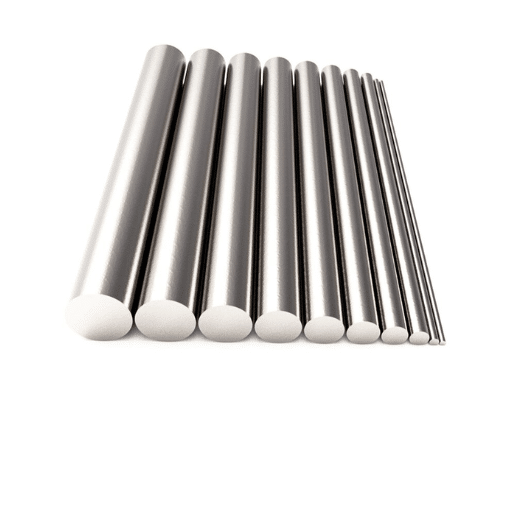
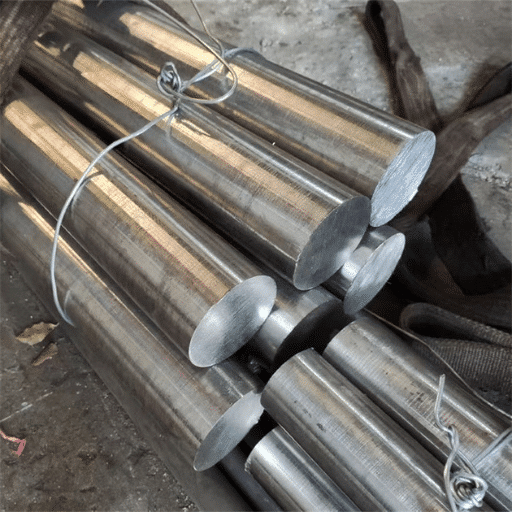
Grade 5 titanium (Ti-6Al-4V) is stronger and lighter than 316 stainless steel, but 316L is stiffer, easier to fabricate, and far less expensive. If you are comparing titanium grade 5 vs 316 stainless steel for a real project, the best alloy depends on the load, environment, and total cost per part, not just the highest tensile number on a datasheet.
In 2023, a UAV manufacturer swapped a 316L mounting bracket for Grade 5 titanium to cut weight. The part dropped from 340 g to 190 g, but vibration testing showed 40% more deflection. The team had to thicken the web and add ribs, which partly offset the weight savings.
The lesson was clear: titanium is rarely a drop-in replacement. It is a different design problem.
In this guide, you will learn how Ti-6Al-4V and 316L compare in composition, mechanical properties, corrosion resistance, fabrication, thermal behavior, and cost. You will also see when each alloy wins in production and how to source both reliably.
Key Takeaways
- Grade 5 titanium is roughly twice as strong as 316L and about 44% lighter by volume, giving it a far better strength-to-weight ratio.
- 316L is nearly twice as stiff as Grade 5 titanium, making it the better choice when rigidity and deflection control matter.
- Both alloys resist corrosion well, but Grade 5 titanium generally outperforms 316L in seawater and aggressive chlorides.
- 316L is easier to machine, weld, and finish with conventional shop equipment; Grade 5 requires specialized tooling and clean welding conditions.
- Grade 5 titanium typically costs 3-10x more than 316L in raw material, and machining can add another 2-4x premium.
- Mixing Grade 5 titanium and 316L in the same assembly can accelerate corrosion of the stainless component through galvanic coupling.
Titanium Grade 5 vs 316 Stainless Steel: Quick Comparison

Use this table to compare titanium grade 5 vs 316 stainless steel across the properties that drive most material decisions.
| Property | Grade 5 Titanium (Ti-6Al-4V) | 316 / 316L Stainless Steel |
|---|---|---|
| Density | ~4.43 g/cm³ | ~7.99 g/cm³ |
| Tensile strength | ~895-1,000 MPa | ~485-515 MPa |
| Yield strength | ~828-910 MPa | ~170-310 MPa |
| Elastic modulus | ~114 GPa | ~193 GPa |
| Elongation | ~10-18% | ~40-50% |
| Hardness | ~33-36 HRC | ~140-190 HB |
| Thermal conductivity | ~6.7 W/m·K | ~15 W/m·K |
| Thermal expansion | ~8.6 x 10⁻⁶/K | ~16 x 10⁻⁶/K |
| Corrosion in seawater | Excellent; nearly immune to pitting | Good; pitting/crevice possible in warm/stagnant chlorides |
| Max long-term service temp | ~400°C | ~870°C intermittent |
| Machinability | Difficult; specialized tooling | Excellent; conventional methods |
| Weldability | Good; requires inert atmosphere | Excellent; standard processes |
| Relative cost | High (3-10x raw material) | Moderate |
Need help selecting between Grade 5 titanium and 316L? Contact LIANYUNGANG DAPU METAL to request a quote.
Composition and Industry Standards
Grade 5 Titanium (Ti-6Al-4V)
Grade 5 titanium is an alpha-beta alloy that contains roughly 90% titanium, 6% aluminum, and 4% vanadium. Aluminum stabilizes the alpha phase and raises strength. Vanadium stabilizes the beta phase and improves formability and heat-treat response. The balance gives Grade 5 the highest strength-to-weight ratio of any commonly available titanium alloy.
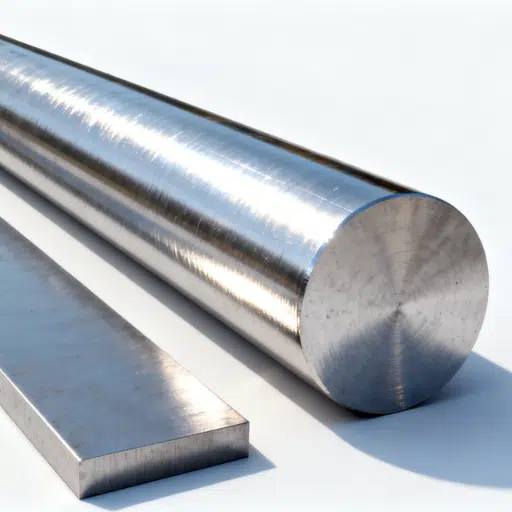
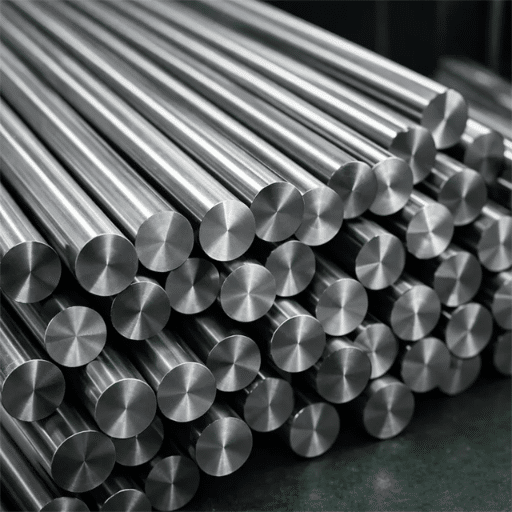
Common specifications include ASTM B348 (bars and billets), ASTM B265 (sheet and plate), AMS 4928 (aerospace bar), and ASTM F136 (surgical implant quality). ELI variants, such as Grade 23, reduce oxygen and iron for improved fracture toughness in critical applications.
316 / 316L Stainless Steel
316 stainless steel is an austenitic grade with 16-18% chromium, 10-14% nickel, and 2-3% molybdenum. The molybdenum improves pitting and crevice corrosion resistance in chloride environments. The “L” version keeps carbon below 0.03% to reduce sensitization during welding.
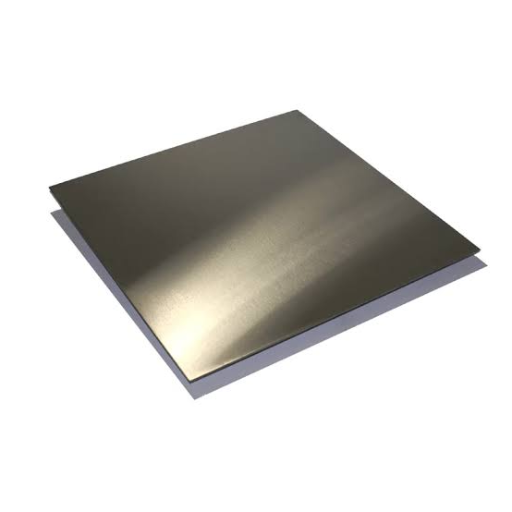
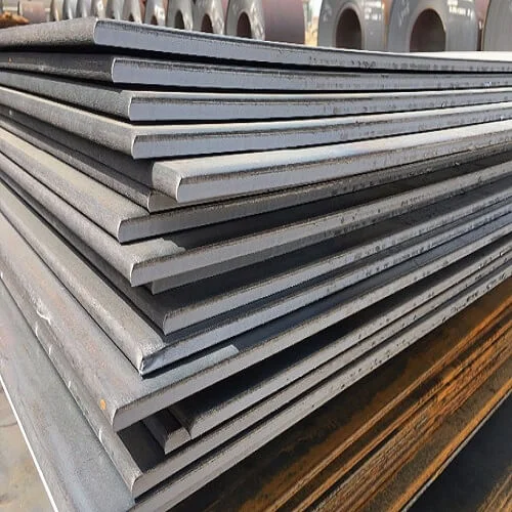
Common specifications include ASTM A240 (plate, sheet, strip), ASTM A276 (bars and shapes), ASTM A312 (seamless and welded pipe), and EN 1.4401 / 1.4404. For a deeper look at this grade, see our 316 stainless steel guide.
Mechanical Properties: Strength, Stiffness, and Weight

Tensile and Yield Strength
In a straight grade 5 titanium vs 316 stainless steel strength comparison, Grade 5 wins decisively. Typical annealed Grade 5 tensile strength is 895-1,000 MPa, with yield strength of 828-910 MPa. Annealed 316L tensile strength is 485-515 MPa, with yield strength of 170-310 MPa depending on processing.
Heat-treated Grade 5 can exceed 1,100 MPa tensile. Cold-worked 316L can reach higher strength, but it still falls short of Grade 5 and loses ductility in the process.
Density and Strength-to-Weight Ratio
Grade 5 titanium has a density of 4.43 g/cm³, while 316L sits near 7.99 g/cm³. For the same volume, Grade 5 is about 44% lighter. Because it is also roughly twice as strong, its strength-to-weight ratio is far superior. This is why aerospace, racing, and portable equipment designers favor titanium.
The high titanium vs stainless steel strength-to-weight ratio matters most when every kilogram costs money, such as in aircraft, satellites, or high-performance vehicles.
Elastic Modulus and Deflection
Strength is not the only mechanical consideration. 316L has an elastic modulus of about 193 GPa, while Grade 5 titanium is only about 114 GPa. That means a titanium part deflects roughly 70% more than an identically shaped 316L part under the same load.
Designers who switch from steel to titanium must often increase section modulus, add ribs, or change geometry. If stiffness is the limiting factor, 316L may be the better material even though it is heavier.
Hardness, Fatigue, and Toughness
Grade 5 titanium typically measures 33-36 HRC and offers excellent fatigue resistance. It performs well in cyclic loading, which is why it is used for compressor blades, landing gear components, and biomedical implants.
316L is softer, around 140-190 HB, but it is much more ductile. Its elongation can reach 40-50%, so it absorbs impact and forms easily. For applications that need energy absorption or extensive bending, 316L has the advantage.
Corrosion Resistance
Seawater and Chlorides
Grade 5 titanium forms a stable TiO₂ passive film that self-heals almost instantly. In ambient seawater, corrosion rates are typically below 0.0005 mm/year. It is nearly immune to pitting and crevice corrosion in natural seawater.
316L is often called marine grade stainless steel, and it performs well in mild chloride service. However, in warm, stagnant, or high-chloride environments, it can suffer pitting and crevice corrosion. The risk rises sharply above 50-60°C in seawater. For more on this topic, read our titanium vs stainless steel corrosion guide.
Acids and Chemicals
Grade 5 titanium resists oxidizing acids, chlorides, and wet chlorine gas. It is not suitable for hydrofluoric acid or hot, concentrated hydrochloric acid, which attack the TiO₂ film.
316L handles mild acids, food chemicals, and many neutral process streams. It struggles in strongly reducing acids and in chloride concentrations above roughly 2,000 ppm at elevated temperature.
Biocompatibility and Medical Use
Ti-6Al-4V is widely used for orthopedic implants, dental fixtures, and surgical hardware because it is biocompatible and contains no nickel. The ELI variant is preferred when fracture toughness is critical. 316L is used for surgical instruments and some temporary implants, but nickel ion release can be a concern for sensitive patients.
Fabrication and Machinability
Machining
316L machines with conventional carbide tooling and standard speeds. Chip control is predictable, and most shops can produce complex parts without special procedures.
Grade 5 titanium is more challenging. Its low thermal conductivity concentrates heat at the cutting edge, causing rapid tool wear. Shops typically use lower speeds, sharp carbide or coated tools, rigid setups, and non-chlorinated coolant. Machining costs are often 2-4x higher than for 316L.
Welding
316L welds beautifully with TIG, MIG, and stick processes. Preheat is rarely needed, and post-weld passivation restores corrosion resistance.
Grade 5 titanium requires an inert atmosphere. The weld pool and heat-affected zone must be shielded with argon to prevent oxygen and nitrogen contamination. Welding Grade 5 directly to 316L is generally avoided because brittle titanium-iron intermetallics form and the joint has poor fatigue life.
Surface Finish and Galling
316L polishes, passivates, and electropolishes easily. It is the standard choice when a bright, hygienic, or low-roughness finish is needed.
Titanium has a tendency to gall, especially against itself or stainless steel under load. Designers must consider coatings, dissimilar bushings, or lubrication. Surface finishes are achievable, but they require process control.
Thermal, Magnetic, and Electrical Properties
Grade 5 titanium has a coefficient of thermal expansion of about 8.6 x 10⁻⁶/K, roughly half that of 316L at 16 x 10⁻⁶/K. Thermal expansion mismatch can cause distortion or stress when the two alloys are joined across temperature cycles.
Thermal conductivity of Grade 5 is about 6.7 W/m·K, compared with 15 W/m·K for 316L. Both materials are essentially non-magnetic in standard conditions, which matters for MRI equipment, instrumentation, and mine-clearance tools.
For high-temperature service, 316L has the advantage. It can tolerate intermittent exposure up to roughly 870°C. Grade 5 titanium is usually limited to about 400°C for long-term service because of oxidation and microstructural changes.
316L vs Titanium Cost
Raw Grade 5 titanium typically costs 3-10x more than 316L on a per-kilogram basis, depending on form, order size, and market conditions. Machining, welding, and inspection add further premium. A simple comparison by weight can be misleading.
A better approach is cost per finished part. If a titanium component eliminates an assembly, reduces fuel burn, or extends service life enough to avoid overhauls, the higher material cost can be justified. For many industrial, food, and chemical applications, 316L remains the economical default.
For a broader cost discussion, see our titanium vs stainless steel cost guide.
When to Choose Grade 5 Titanium vs 316L

Choose Grade 5 Titanium When
- Weight reduction is critical, such as aerospace, racing, robotics, or portable equipment.
- High strength-to-weight ratio is required.
- The part will operate in seawater, chlorides, or aggressive chemicals for long periods.
- Fatigue resistance is important.
- Biocompatibility or nickel-free contact is required.
- The project budget allows for premium material and processing.
Choose 316 / 316L Stainless Steel When
- Cost and ease of fabrication are priorities.
- High stiffness and low deflection are required.
- The environment is moderate industrial, marine, food, pharmaceutical, or architectural.
- The part must be welded, formed, or machined with conventional methods.
- Large quantities of sheet, plate, pipe, or bar are needed quickly.
- Operating temperatures exceed 400°C.
For the full comparison of these metals across all properties, see our titanium vs stainless steel guide.
Real-World Applications
Aerospace and Defense
Grade 5 titanium is used for airframe brackets, compressor blades, fasteners, and landing gear components. Its strength-to-weight ratio helps meet strict mass budgets without sacrificing fatigue life.
Marine Hardware
Both alloys appear in marine equipment, but for different reasons. Grade 5 is chosen for high-performance fasteners, propeller shafts, and valves where corrosion immunity matters. 316L is the workhorse for railings, fittings, tanks, and structures where cost and fabrication dominate.
Mini-Story: The Mixed-Metal Platform
Li Wei, a procurement manager for an offshore equipment supplier, specified Grade 5 bolts for a saltwater platform to save weight. The bolts performed perfectly, but after 18 months the 316L plates they fastened began pitting around the holes. Because titanium is more noble than stainless steel, the 316L became the sacrificial anode. The fix was to install insulating washers or upgrade the plates to a more corrosion-resistant grade.
Chemical and Food Processing
316L dominates food, pharmaceutical, and moderate chemical equipment because it is easy to clean, weld, and passivate. Grade 5 titanium is reserved for the most aggressive chloride streams and high-value reactors where downtime is expensive.
Medical Implants
Mini-Story: The Trauma Plate Decision
Dr. Chen’s orthopedic team chose Ti-6Al-4V for a trauma plate because of its strength-to-weight ratio and nickel-free composition. A 316L plate would have cost less, but the long-term biocompatibility record and lower risk of nickel sensitivity made titanium the safer choice for this patient population.
Automotive and Motorsport
Grade 5 titanium is used for exhaust valves, connecting rods, and fasteners where reducing rotating mass improves performance. 316L is used for exhaust systems, fuel lines, and hardware where heat resistance and cost matter more than weight.
Video: Understanding Titanium Grades
The video below explains how titanium grades differ in strength, weight, and practical use. It helps clarify why Grade 5 is the most widely specified titanium alloy for demanding applications.
Titanium Grade 5 vs 316 Stainless Steel: FAQ
Is Grade 5 titanium stronger than 316 stainless steel?
Yes. Grade 5 titanium has roughly twice the tensile strength and three to four times the yield strength of annealed 316L stainless steel. However, 316L is stiffer, so strength must be weighed against deflection and design constraints.
Is Grade 5 titanium more corrosion resistant than 316L?
In most seawater and chloride environments, yes. Grade 5 titanium’s TiO₂ passive film is more stable than the Cr₂O₃ film on 316L. The exception is hot, reducing acids such as hydrofluoric acid, where titanium performs poorly.
Can you weld Grade 5 titanium to 316 stainless steel?
It is generally not recommended. Dissimilar welding produces brittle intermetallic compounds and poor fatigue performance. If the two metals must be joined, mechanical fastening with insulation or a compatible transition joint is preferred.
Why is Grade 5 titanium more expensive than 316L?
Titanium extraction, alloying, and processing are more costly than steelmaking. Grade 5 also requires specialized machining, welding, and inspection, which raise the total part cost. Raw material alone can be 3-10x the price of 316L.
Which is better for saltwater, Grade 5 titanium or 316L?
Grade 5 titanium is the better choice for long-term saltwater immersion and high-chloride service. 316L works well for splash zones, atmospheric marine exposure, and moderate chloride contact, but it can pit in warm, stagnant seawater.
Is Grade 5 titanium magnetic?
No. Grade 5 titanium is essentially non-magnetic, as is austenitic 316L stainless steel. This makes both suitable for MRI equipment, instrumentation, and applications where magnetic interference must be avoided.
Which is better for medical implants, Ti-6Al-4V or 316L?
Ti-6Al-4V is preferred for long-term implants because of its strength-to-weight ratio, fatigue resistance, and lack of nickel. 316L is still widely used for surgical instruments and some temporary implants.
Conclusion
The titanium grade 5 vs 316 stainless steel choice is not about declaring a single winner. It is about matching the alloy to the application. Grade 5 titanium excels when weight, strength-to-weight ratio, fatigue life, and chloride corrosion resistance justify the cost. 316L stainless steel wins when stiffness, ease of fabrication, weldability, and cost are the deciding factors.
For engineers and procurement teams, the best approach is to define the load case, environment, temperature range, and total cost per part. Then select the alloy that delivers reliable performance at the lowest total ownership cost. For help choosing between Grade 5 titanium and 316L, or to source either alloy for your project, contact LIANYUNGANG DAPU METAL to request a quote.