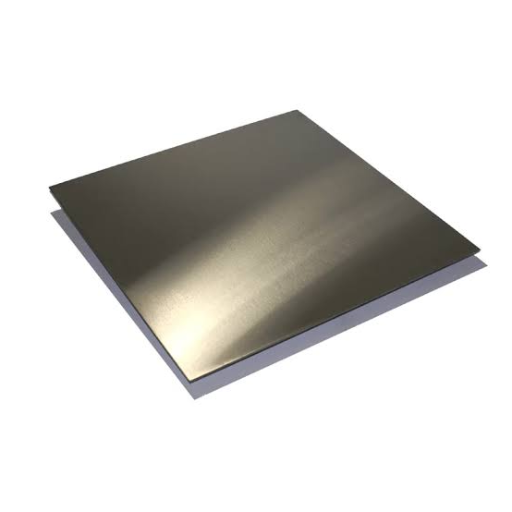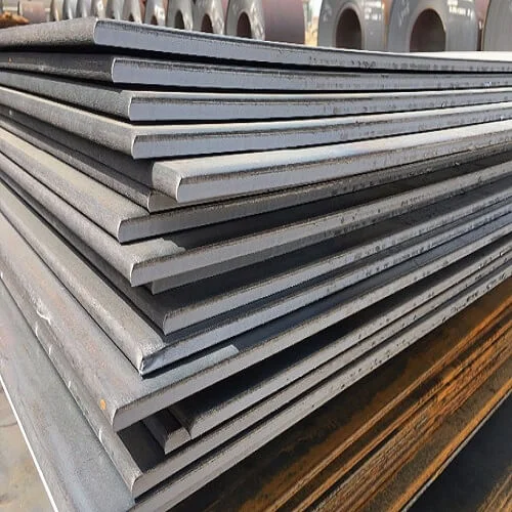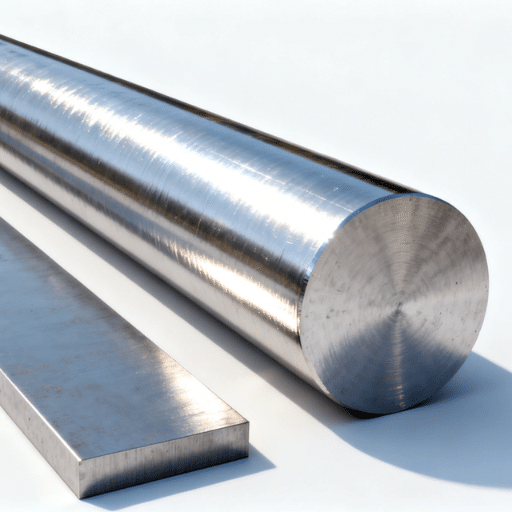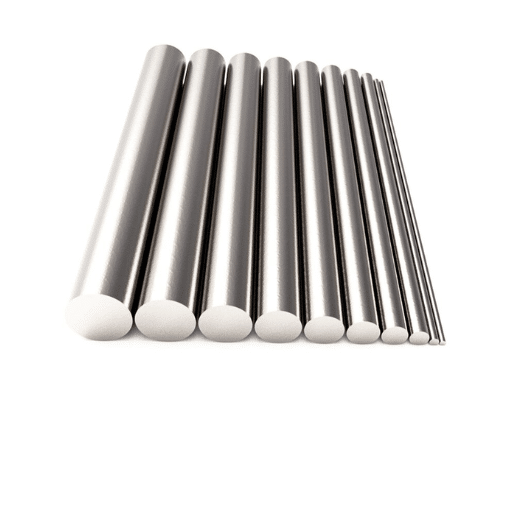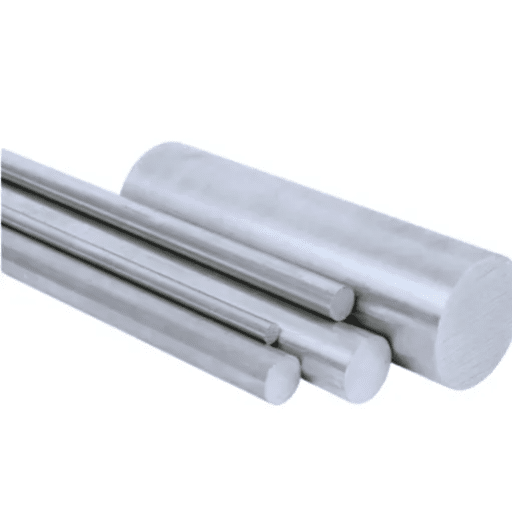
No, a magnet will not stick to titanium in everyday conditions. Scientifically, pure titanium is paramagnetic, which means it responds to a magnetic field only in a very weak and temporary way. In practical terms, titanium behaves like a non-magnetic metal, which is why it is trusted for MRI equipment, medical implants, and sensitive aerospace instruments.
That simple answer hides a real source of confusion. Search online and you will find reputable sites calling titanium “paramagnetic” while others call it “diamagnetic.” Some articles claim titanium has no unpaired electrons; others describe electron configurations that suggest the opposite. For engineers and buyers who need to know whether a material is safe near magnets or detectors, the mixed messaging is frustrating.
In this article, you will learn the science behind titanium’s magnetic behavior, how to test it with a simple magnet, how titanium compares to stainless steel, and why its non-magnetic nature matters in medical, aerospace, and industrial applications.
Key Takeaways
- Titanium is paramagnetic, but the effect is so weak that a magnet will not stick to it.
- Pure titanium and common alloys such as Ti-6Al-4V (Grade 5) are effectively non-magnetic in real-world use.
- If a magnet sticks to “titanium,” the material is usually contaminated with iron or is not titanium at all.
- Titanium is MRI-safe because it produces no ferromagnetic force and very little heating in strong magnetic fields.
- Compared with 304 stainless steel, titanium is far less magnetic; 316 stainless steel is closer but still more responsive than titanium.
What Does “Magnetic” Actually Mean?

Before deciding whether titanium is magnetic, it helps to clarify what “magnetic” means in materials science. Metals fall into three main categories based on how they interact with magnetic fields.
Ferromagnetic materials strongly attract magnets and can become permanently magnetized. Iron, nickel, and cobalt are the most common examples. Some stainless steels, particularly martensitic and ferritic grades, also show ferromagnetic behavior.
Paramagnetic materials are weakly attracted to magnetic fields but do not retain magnetism once the field is removed. Aluminum and titanium fall into this category. The attraction is so weak that ordinary magnets cannot overcome friction or gravity.
Diamagnetic materials are weakly repelled by magnetic fields. Copper and gold are diamagnetic. Some measurements of very pure titanium have produced small negative susceptibility values, which is why a minority of sources classify titanium as diamagnetic.
The practical distinction is what matters most. Whether titanium is technically paramagnetic or diamagnetic, it will not stick to a refrigerator magnet, move in an MRI field, or trigger a standard metal detector.
Is Titanium Attracted to Magnets?
No. In normal conditions, titanium is not attracted to magnets in any way you can feel or measure without specialized instruments.
Example: The MRI implant check
In 2022, a medical device procurement team at a hospital in Singapore needed to confirm that a batch of titanium bone screws was safe for patients with future MRI scans. The quality engineer, Lin Wei, placed a strong neodymium magnet against each screw. None moved. A stainless steel control sample jumped toward the magnet immediately. The titanium screws were cleared for surgical use.
This test is the same one anyone can perform. Hold a strong neodymium magnet against a piece of pure titanium. You will feel no pull. The magnet will slide off under its own weight if the surface is angled.
The reason lies in titanium’s electron structure. A single titanium atom has the electron configuration [Ar] 3d² 4s², meaning it has two unpaired electrons in its 3d orbital. In the solid metal, these electrons do not form the aligned magnetic domains needed for ferromagnetism. The result is a very weak response to external magnetic fields.
Titanium Magnetic Susceptibility in Numbers
Magnetic susceptibility (χ) measures how strongly a material responds to a magnetic field. Positive values indicate paramagnetism; negative values indicate diamagnetism. The larger the absolute value, the stronger the response.
| Material | Magnetic Susceptibility χ (SI) | Classification | Magnet Test Result |
|---|---|---|---|
| Iron | ~200,000 × 10⁻⁶ | Ferromagnetic | Strong attraction |
| Nickel | ~600 × 10⁻⁶ | Ferromagnetic | Moderate attraction |
| 304 Stainless Steel | ~3,500 × 10⁻⁶ | Weakly ferromagnetic | Noticeable attraction |
| 316 Stainless Steel | ~1,000 × 10⁻⁶ | Paramagnetic | Weak or no attraction |
| Titanium | ~+1.8 × 10⁻⁴ | Paramagnetic | No attraction |
| Aluminum | +2.2 × 10⁻⁵ | Paramagnetic | No attraction |
| Copper | −9.6 × 10⁻⁶ | Diamagnetic | No attraction |
Titanium susceptibility value from common engineering references. Exact values depend on purity, crystal structure, and measurement method.
The table shows why titanium behaves so differently from iron or even stainless steel. Its susceptibility is orders of magnitude lower than 304 stainless steel. That is why a magnet test is a quick way to separate titanium from many steels.
Why Some Sources Call Titanium Diamagnetic
You may find articles stating that titanium is diamagnetic, with a susceptibility around −1.8 × 10⁻⁶. This creates confusion, but there are reasonable explanations.
First, unit systems differ. Some values are reported in cgs units, others in SI units. Converting between mass susceptibility, molar susceptibility, and volume susceptibility changes the number and sometimes the sign if a reference standard is misapplied.
Second, purity matters. Commercially pure titanium contains small amounts of iron, oxygen, nitrogen, and hydrogen. These interstitial elements can shift measured susceptibility in either direction. Very high-purity titanium samples sometimes show weak diamagnetic behavior, while typical engineering grades show weak paramagnetic behavior.
Third, temperature and measurement conditions affect results. Magnetic susceptibility changes with temperature, and different laboratories use different field strengths.
For engineering and purchasing decisions, the label is less important than the behavior. Whether you call titanium paramagnetic or diamagnetic, it does not attract magnets, it does not become magnetized, and it is considered non-magnetic for practical purposes.
Are Titanium Alloys Magnetic?
Most titanium alloys used in industry are also non-magnetic. The most common alloy, Ti-6Al-4V (Grade 5), remains effectively non-magnetic because aluminum and vanadium do not introduce ferromagnetic phases.
| Alloy | Common Name | Magnetic Behavior |
|---|---|---|
| CP Grade 1 | Commercially pure titanium | Non-magnetic/paramagnetic |
| CP Grade 2 | Commercially pure titanium | Non-magnetic/paramagnetic |
| CP Grade 4 | Commercially pure titanium | Non-magnetic/paramagnetic |
| Ti-6Al-4V | Grade 5 titanium | Non-magnetic/paramagnetic |
| Ti-6Al-4V ELI | Grade 23 titanium | Non-magnetic/paramagnetic |
| Ti-5Al-2.5Sn | Grade 6 titanium | Non-magnetic/paramagnetic |
The non-magnetic property is one reason titanium alloys are specified for aerospace components near compasses, sensors, and communication equipment. It is also why titanium is preferred over some stainless steels for medical implants that must be MRI-compatible.
However, contamination during manufacturing can change behavior. If titanium is machined with steel tools and not properly cleaned, tiny iron particles can remain on the surface. Those particles are ferromagnetic and may make the titanium appear magnetic in a simple test.
How to Test if Titanium Is Magnetic

A magnet test is the fastest way to screen a metal sample. It will not identify titanium with 100% certainty, but it will rule out many ferromagnetic impostors.
What you need:
- A strong neodymium magnet
- The metal sample to test
- A clean, flat surface
Procedure:
- Clean the sample surface to remove oils, coatings, or loose debris.
- Hold the magnet close to the sample without touching it.
- Observe whether the sample moves toward the magnet or sticks.
- Try the test on multiple spots, especially edges or machined areas where iron contamination is more likely.
Interpreting results:
- No movement: The sample is consistent with titanium, aluminum, copper, or other non-magnetic metals.
- Weak attraction: Could be 316 stainless steel, some contaminated titanium, or a slightly magnetic alloy.
- Strong attraction: The sample contains iron, nickel, or cobalt. It is not pure titanium.
Example: The counterfeit watch case
A distributor in Germany received a shipment of watch cases labeled “Grade 2 titanium.” One customer complained that the cases felt heavier than expected. The quality manager, Klaus Brandt, ran a magnet test. Several cases showed a slight pull. Chemical analysis revealed a titanium-coated steel substrate. The magnet test saved the distributor from selling mislabeled products.
For critical applications, a magnet test should be followed by chemical analysis or X-ray fluorescence (XRF) testing. Magnetic behavior alone cannot distinguish titanium from aluminum or from some austenitic stainless steels.
Titanium vs Stainless Steel: Magnetic Comparison
Stainless steel is not a single material. Its magnetic behavior depends on the crystal structure and alloying elements.
Austenitic stainless steels such as 304 and 316 are generally non-magnetic in the annealed condition. However, cold working can cause some austenite to transform into martensite, making 304 slightly magnetic. 316 is more stable and usually remains non-magnetic even after forming.
Ferritic and martensitic stainless steels such as 430 and 410 are magnetic because of their body-centered cubic crystal structure.
| Material | Magnetic Behavior | Typical Magnet Response |
|---|---|---|
| 304 Stainless Steel | Weakly ferromagnetic when cold-worked | Slight to moderate attraction |
| 316 Stainless Steel | Paramagnetic / mostly non-magnetic | Little to no attraction |
| 430 Stainless Steel | Ferromagnetic | Strong attraction |
| CP Grade 2 Titanium | Paramagnetic | No attraction |
| Grade 5 Titanium (Ti-6Al-4V) | Paramagnetic | No attraction |
If your application requires the lowest possible magnetic response, titanium is the safer choice. 316 stainless steel is acceptable for many non-magnetic applications and is far more economical. For large structural parts where some magnetic response is acceptable, 316 stainless steel offers an excellent balance of corrosion resistance, strength, and cost.
LIANYUNGANG DAPU METAL supplies 316 stainless steel products for projects where corrosion resistance and moderate cost matter more than absolute magnetic neutrality.
Why Titanium’s Non-Magnetic Nature Matters

The fact that titanium does not interact with magnets is not just a curiosity. It determines whether the metal can be used in critical environments.
Medical Implants and MRI Safety
Titanium is widely used for hip replacements, dental implants, bone plates, and pacemaker cases. Its non-magnetic behavior means these implants are generally MRI-safe or MRI-conditional. Patients with titanium implants can often undergo MRI scans without the implant becoming a projectile or overheating.
The U.S. Food and Drug Administration (FDA) and ASTM International publish standards for implant materials. Titanium alloys such as Ti-6Al-4V ELI (ASTM F136) and commercially pure titanium (ASTM F67) are explicitly listed for surgical implant applications.
Aerospace and Defense
Aircraft and spacecraft contain sensitive navigation, communication, and sensor systems. Ferromagnetic materials can interfere with compass readings and electronic signals. Titanium’s non-magnetic nature makes it ideal for fasteners, brackets, and structural components near these instruments.
Electronics and Scientific Instruments
Particle accelerators, electron microscopes, and precision measurement equipment require materials that do not distort magnetic fields. Titanium fixtures and chambers are commonly used in these environments.
Jewelry and Consumer Goods
People with metal allergies or those who work in environments with metal detectors often prefer titanium rings, watches, and eyeglass frames. Titanium is lightweight, hypoallergenic, and unlikely to trigger standard walk-through metal detectors.
Example: The airport security bracelet
A pilot based in Dubai wore a titanium bracelet daily because repeated passage through airport metal detectors irritated his skin where a steel watch had previously caused contact dermatitis. The titanium bracelet never triggered the detector, allowing him to move through security without removing it. For him, the non-magnetic property was a practical quality-of-life benefit.
Does Titanium Set Off Metal Detectors?
Standard metal detectors work by generating an electromagnetic field and measuring the response from conductive materials. They are tuned to detect ferromagnetic metals such as iron, nickel, and cobalt because these produce the strongest signal.
Titanium is a poor conductor compared with copper or aluminum, and it is not ferromagnetic. As a result, small titanium items such as rings, screws, or dental implants usually do not set off standard metal detectors. Large titanium components or implants may be detected by advanced security scanners, but ordinary walk-through detectors are unlikely to react.
This is different from stainless steel. Even small 304 stainless steel implants can sometimes trigger metal detectors, especially if the device is sensitive or the steel has been cold-worked into a slightly magnetic state.
What If a Magnet Sticks to “Titanium”?
If a magnet sticks to a sample labeled as titanium, one of three things is usually true.
Iron contamination is the most common cause. Machining, grinding, or handling with steel tools can leave ferrous particles embedded in the titanium surface. Acid pickling, passivation, or ultrasonic cleaning can usually remove this contamination.
Incorrect material is the second possibility. The sample may be steel with a titanium coating, a titanium alloy with iron-rich inclusions, or a completely different metal mislabeled as titanium.
Cold working or defects can occasionally create localized magnetic regions in some alloys, though this is rare in standard titanium grades.
For buyers, the lesson is simple: a magnet test is a useful screening tool, but it is not a substitute for material certification. Always request a Mill Test Certificate or third-party analysis when magnetic properties are critical.
Frequently Asked Questions
Is titanium magnetic, yes or no?
No, titanium is not magnetic in any practical sense. Scientifically, it is classified as paramagnetic, but the effect is too weak to attract a magnet or stick to metal surfaces.
Does a magnet stick to titanium?
No. A strong neodymium magnet will not stick to pure titanium or common titanium alloys such as Ti-6Al-4V. If a magnet sticks, the material likely contains iron or is not titanium.
Is Grade 5 titanium magnetic?
No. Grade 5 titanium (Ti-6Al-4V) is non-magnetic. The aluminum and vanadium in the alloy do not create ferromagnetic behavior.
Is titanium MRI safe?
Yes, titanium is generally MRI-safe or MRI-conditional. It does not become a projectile in strong magnetic fields and produces minimal heating compared with ferromagnetic metals. Always follow the implant manufacturer’s specific MRI guidelines.
Is titanium more magnetic than stainless steel?
No. Titanium is less magnetic than most stainless steels. Austenitic grades such as 304 and 316 can become slightly magnetic after cold working, while titanium remains non-magnetic.
Will titanium set off a metal detector?
Usually not. Small titanium items such as rings, screws, and dental implants typically do not trigger standard metal detectors. Large implants may be detected by advanced scanners.
Why do some websites say titanium is diamagnetic?
Different measurement methods, purity levels, and unit conversions can produce small positive or negative susceptibility values for titanium. Very pure samples may measure as weakly diamagnetic, while engineering grades usually measure as weakly paramagnetic. In either case, titanium behaves as non-magnetic in real use.
Conclusion
Is titanium magnetic? The practical answer is no. Scientifically, titanium is paramagnetic, but its response to magnetic fields is so weak that it behaves like a non-magnetic metal. A magnet will not stick to it, it will not become magnetized, and it is considered safe for MRI environments.
For engineers and buyers, the important takeaway is that titanium offers reliable non-magnetic performance. When contamination is controlled, pure titanium and standard alloys such as Ti-6Al-4V meet the requirements of aerospace, medical, and electronic applications where magnetic neutrality is critical.
If your project needs corrosion resistance and low cost, 316 stainless steel is often the better choice. If absolute non-magnetic behavior, light weight, or biocompatibility are priorities, titanium is worth the premium. For help selecting the right material, contact the LIANYUNGANG DAPU METAL technical team for material selection consultation or request a quote.