Duplex 2205 has a minimum 0.2% proof (yield) strength of 450 MPa (65 ksi) at room temperature, roughly 2.2 times the 205 MPa of 316 and 2.6 times the 170 MPa of 316L. Typical measured values run higher, between 510 and 570 MPa. That single number is why engineers reach for duplex when a 316 component turns out too heavy or too thick.
The hard part isn’t finding the number. It’s knowing whether the number survives at your service temperature, and whether it actually shrinks your wall thickness.
Daniel, a pressure-vessel engineer in Rotterdam, learned this the expensive way. He specified duplex 2205 for a brine exchanger expecting a dramatic weight saving, then discovered his design was governed by deflection, not stress. The higher yield strength bought him nothing, and he paid the duplex premium for no benefit. Understanding duplex 2205 yield strength means understanding both what it delivers and where it stops helping.
This guide covers the specified and typical yield values, how 2205 compares to 316 and 316L, why the duplex microstructure is so much stronger, how yield behaves from 20°C to 300°C, and how to convert 450 MPa into allowable stress and thinner walls. Explore the full duplex 2205 vs 316 comparison for the complete grade picture.
Key Takeaways
- Duplex 2205 carries a minimum 0.2% proof strength of 450 MPa, about 2.2x 316 and 2.6x 316L, with typical measured values of 510 to 570 MPa.
- The strength comes from a 40 to 60% ferrite duplex microstructure plus nitrogen interstitial strengthening, not from extra nickel.
- Yield falls to roughly 290 to 310 MPa at 300°C, about 69% retention, and embrittlement rather than strength loss sets the real ~300°C ceiling.
- ASME Section VIII allows 25.7 ksi (about 177 MPa) for 2205 versus 16.7 ksi (about 115 MPa) for 316L at room temperature, enabling roughly 33% thinner walls.
- Modulus of elasticity is about 200 GPa for both grades, so higher yield strength does not reduce deflection. The saving is real only in stress- or buckling-controlled designs.
What Is the Yield Strength of Duplex 2205?

Duplex 2205 has a minimum yield strength (0.2% proof, Rp0.2) of 450 MPa (65 ksi) at room temperature, specified identically for UNS S31803 and UNS S32205 under ASTM A240. Typical measured values from production testing run 510 to 570 MPa, and cold-drawn product forms reach far higher.
That gap between 450 and 550 explains a lot of the confusion online. Both numbers are correct, they just answer different questions.
Minimum Specified vs Typical Value
The 450 MPa figure is a floor. It is the value a mill must guarantee on a mill test certificate. The 510 to 570 MPa range is what the material usually tests at, because manufacturers aim above the minimum to leave process margin. When you design to a code, you use the minimum. When you compare datasheets, you see the typical.
S31803 vs S32205
Both designations share the same 450 MPa minimum yield strength. Where they differ is tensile strength. S31803 carries a 620 MPa minimum, while the tighter-composition S32205 carries 655 MPa. The nitrogen range in S32205 is controlled more tightly, which also guarantees a minimum PREN of 35. For demanding chloride service, specify S32205. Read the complete duplex 2205 grade guide for the full specification breakdown.
Duplex 2205 Mechanical Properties at a Glance
The table below consolidates the room-temperature properties engineers need most. Every value is a specified minimum or maximum unless noted.
| Property | Duplex 2205 | Notes |
|---|---|---|
| Yield strength, 0.2% proof (min) | 450 MPa (65 ksi) | S31803 and S32205, ASTM A240 |
| Tensile strength (min) | 620 MPa (S31803) / 655 MPa (S32205) | Typical 700 to 800 MPa |
| Elongation (min, 50 mm) | 25% | Typical around 30% |
| Hardness (max) | 293 HBW / 31 HRC | |
| Modulus of elasticity | ~200 GPa | Essentially equal to 316 |
| Density | 7.80 g/cm³ | About 2.5% lighter than 316 |
| PREN | 34 to 36 | S32205 guarantees a minimum of 35 |
| Ferrite content | 40 to 60% | After solution annealing |
| Impact toughness | Good to about -50°C | Limited by ferritic ductile-to-brittle transition |
How to Read Duplex Minimums
Every number in that first column is a floor, not a target. A mill test certificate will typically report values above these minimums, and a certificate reporting exactly 450 MPa is compliant but leaves no margin. When you review a certificate, compare the actual tested yield against the specification minimum, not against a competitor’s marketing figure.
Why Modulus Is in This Table
Modulus of elasticity appears in this table for a reason that many spec sheets ignore. It is nearly identical for duplex 2205 and 316. We return to that point in the design section, because it decides whether the 450 MPa yield strength actually helps your project. If deflection calculations drive your design, see how steel density and stiffness comparisons factor into weight and section choices.
Duplex 2205 Yield Strength vs 316 and 316L
Before comparing, note that 316 and 316L differ. Plain 316 has a 205 MPa minimum yield and 515 MPa minimum tensile. The low-carbon 316L drops to 170 MPa yield and 485 MPa tensile because lower carbon slightly reduces strength. Duplex 2205 beats both by a wide margin.
| Property (min) | Duplex 2205 | 316 | 316L |
|---|---|---|---|
| Yield strength, 0.2% proof | 450 MPa | 205 MPa | 170 MPa |
| Tensile strength | 620 to 655 MPa | 515 MPa | 485 MPa |
| Elongation | 25% | 40% | 40% |
| Hardness (max) | 293 HBW | 217 HB | 217 HB |
| Modulus of elasticity | ~200 GPa | ~193 to 200 GPa | ~193 to 200 GPa |
| Density | 7.80 g/cm³ | 8.00 g/cm³ | 8.00 g/cm³ |
| PREN | 34 to 36 | ~25 | ~25 |
Why the Ratio Is 2.2x to 2.6x
Against plain 316, duplex 2205 delivers about 2.2 times the yield strength. Against 316L it is roughly 2.6 times. Tensile strength gains are smaller, about 1.3 times, because the duplex advantage is concentrated in the yield point rather than the ultimate strength. That distinction matters: yield strength controls when a component deforms permanently, which is what most pressure and structural codes govern.
Strength-to-Weight, Correctly Stated
Duplex 2205 is also slightly less dense than 316, so its strength-to-weight ratio improves on two counts. Engineers often describe this as a weight advantage. Be precise about it though. The weight saving comes from using thinner walls, not from the density difference alone. If you keep the same wall thickness, 2205 is only about 2.5% lighter per unit volume.
Why Is Duplex 2205 Stronger Than 316?
This is the question most datasheets skip. The answer sits in two places: the microstructure and the chemistry.
The Two-Phase Microstructure
Grade 316 is fully austenitic. Its grains are all one phase, and they deform relatively easily.
Duplex 2205 is a two-phase material with roughly equal proportions of austenite and ferrite, typically 40 to 60% ferrite after solution annealing. The ferritic phase has a higher yield point, and the boundaries between the two phases obstruct the movement of dislocations. Those obstructions raise the stress required to cause permanent deformation.
The ferrite also blocks chloride stress corrosion cracks from propagating, while the austenite supplies toughness. The two phases work together.
Nitrogen Does the Heavy Lifting
Duplex 2205 contains 0.14 to 0.20% nitrogen, far more than any austenitic grade. Nitrogen is a powerful interstitial strengthener. Its atoms sit in the gaps of the crystal lattice and interact with dislocations, pinning them in place. That nitrogen-dislocation interaction is a large part of why duplex reaches 450 MPa with less nickel than 316. Nickel is expensive and price-volatile, so achieving strength through nitrogen instead is both a metallurgical and a commercial advantage.
The Trade-Off You Pay
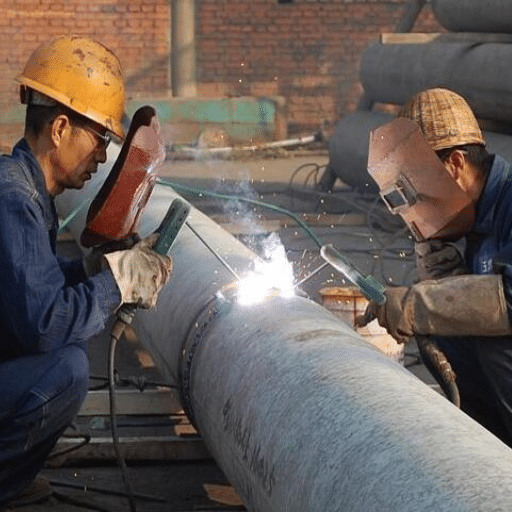
The strength doesn’t come free. Elongation drops from about 40% in 316 to a 25% minimum in 2205, so duplex is less forgiving in severe forming. Hardness rises, which slows machining and increases tool wear. The ferritic phase introduces a ductile-to-brittle transition, limiting low-temperature service. And the phase balance must be protected during welding, which requires controlled heat input and the correct filler metal. Our guide to duplex 2205 welding covers those procedure requirements in detail.
Priya, a procurement manager at a chemical plant in Gujarat, ran into the trade-off directly. Her team switched a tank nozzle from 316L to duplex 2205 to cut wall thickness. The strength worked exactly as promised, but a downstream fabricator had to re-qualify its welding procedure because the wrong filler metal had been specified. The material was right; the fabrication planning was not. “We saved on steel and spent it on rework,” she said.
Duplex 2205 Yield Strength at High Temperature
Yield strength in duplex 2205 falls as temperature rises. The table below shows minimum 0.2% proof and tensile values across the useful service range.
| Temperature | Yield strength, Rp0.2 (min) | Tensile strength (min) | Yield retention |
|---|---|---|---|
| 20°C | 450 to 460 MPa | 620 to 680 MPa | 100% |
| 100°C | 360 MPa | 630 MPa | ~80% |
| 150°C | 340 MPa | 605 MPa | ~76% |
| 200°C | 320 to 330 MPa | 590 MPa | ~71% |
| 250°C | 305 MPa | 590 MPa | ~68% |
| 300°C | 290 to 310 MPa | 560 to 590 MPa | ~69% |
Retaining About Two-Thirds of Yield at 300°C
Even after derating, 2205 at 300°C keeps roughly 290 to 310 MPa of yield strength. That still comfortably exceeds 316L’s room-temperature value of 170 MPa. Tensile strength retains about 87% of its room-temperature value at the same temperature. From a pure strength standpoint, duplex remains the stronger material across its entire service window.
Why 300°C Is the Real Limit, Not Strength
Here is the catch. The practical ceiling on duplex 2205 is not set by strength loss. It is set by embrittlement.
Above roughly 300°C, intermetallic phases form. Sigma and chi phases precipitate in the 600 to 1000°C band, and 475°C embrittlement affects the 300 to 550°C range. These phases attack toughness and corrosion resistance even though the yield strength still looks adequate on paper.
ASME permits 2205 for pressure service up to 600°F (about 315°C), and the practical window is about -50°C to +300°C. See the duplex 2205 temperature limits for the full embrittlement discussion.
Turning 450 MPa into Design Allowable Stress

A yield strength of 450 MPa only becomes useful when a design code converts it into an allowable stress. This is the step most comparison articles never take.
Allowable Stress Values (ASME Section VIII Div. 1)
ASME applies a 3.5 safety factor to the minimum tensile strength. The resulting allowable stresses show a large, usable gap between the two grades.
| Temperature | Duplex 2205 | 316L |
|---|---|---|
| -20 to 100°F (up to 38°C) | 25.7 ksi (~177 MPa) | 16.7 ksi (~115 MPa) |
| 300°F (149°C) | 24.8 ksi (~171 MPa) | 15.7 ksi (~108 MPa) |
| 400°F (204°C) | 23.9 ksi (~165 MPa) | 14.8 ksi (~102 MPa) |
| 500°F (260°C) | 23.3 ksi (~161 MPa) | 14.0 ksi (~97 MPa) |
| 600°F (315°C) | 23.1 ksi (~159 MPa) | Not typically listed |
At room temperature, 2205 permits about 54% more allowable stress than 316L. The advantage barely erodes with temperature, because the allowable value is tied to tensile strength, which derates more slowly than yield. Structural design follows a similar pattern under EN 1993-1-4, which publishes design strength values for stainless steels.
The Stiffness Trap: Strength Does Not Reduce Deflection
This is the insight most buyers miss. Modulus of elasticity is about 200 GPa for duplex 2205 and about 193 to 200 GPa for 316. The two materials are equally stiff.
Deflection, vibration response, and buckling behavior depend on stiffness, not strength. If you swap 316 for duplex 2205 and thin the wall, deflection increases because you removed material. The higher yield strength doesn’t compensate.
The strength saving is real only where the design is governed by stress or by buckling, not by deflection. Daniel’s brine exchanger in Rotterdam was deflection-governed, so the premium he paid bought nothing. Run this check before you specify duplex.
Worked Example: Thinner Walls, Lower Weight
Take a strength-controlled design where 316 wall thickness is set by allowable stress. Because 2205 permits about 54% more stress, the required wall can shrink by roughly 33% for equivalent load. On a 10 mm 316L wall, that means about 6.7 mm in 2205. The weight saving is substantial, and it often offsets the higher price per kilogram. Request a quote for duplex 2205 sheet and plate and we will confirm thickness options for your section.
Yield Strength by Product Form and Condition
“Duplex 2205 yield strength” is not one fixed number. It depends on which product you buy and what condition it is in.
Annealed Plate, Sheet, and Bar
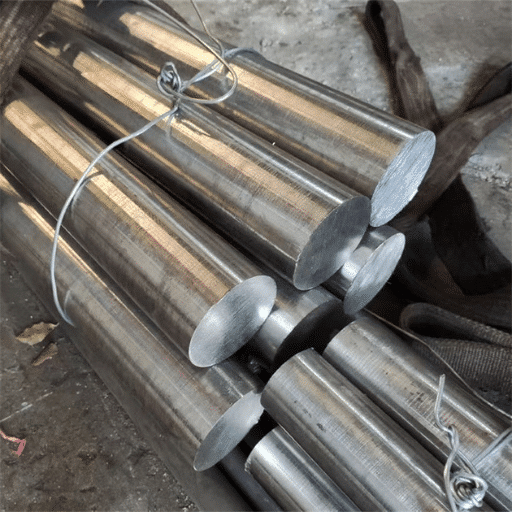
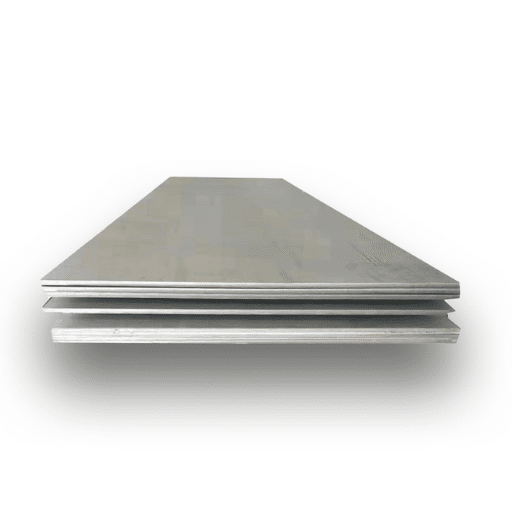
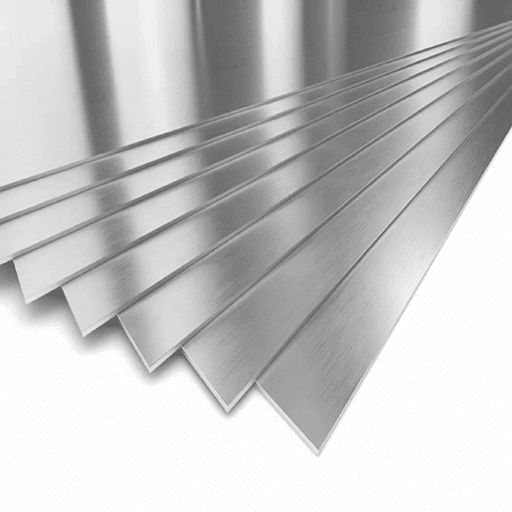
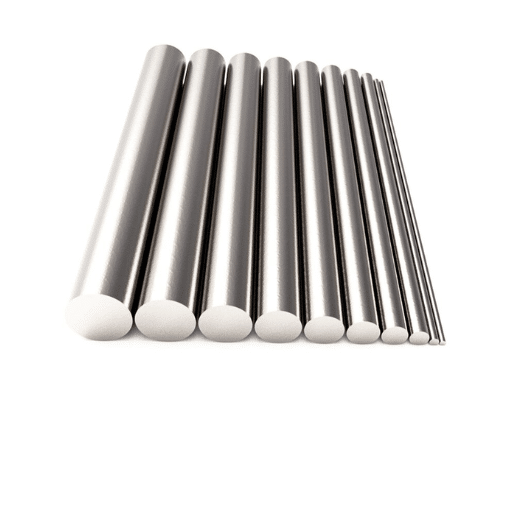
The 450 MPa baseline applies to annealed product under ASTM A240 for flat product and ASTM A276 or A479 for bar. This is the condition most engineers mean when they quote the grade.
Pipe, Tube, and Fittings
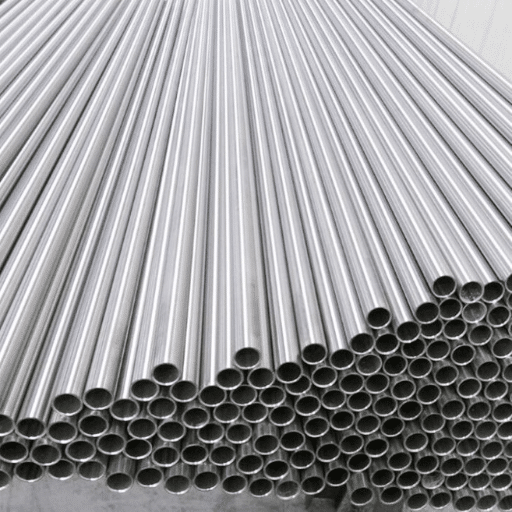
Pipe and tube follow ASTM A790 and A789, with fittings under A815 and forged flanges under A182 F51 or F60. Minimum yield remains 450 MPa, though wall-thickness tolerances and forming methods shift the as-supplied values slightly.
Cold-Worked Product: Where Yield Jumps
Cold work multiplies yield strength. Cold-drawn duplex 2205 spring wire reaches 1,235 MPa at 5.00 to 8.00 mm diameter, and up to 1,915 MPa at 0.15 to 0.20 mm. The trade-off is severe: elongation collapses as strength climbs, so cold-drawn forms are brittle by comparison. If your component is a spring, a fastener, or a tensioned member, the cold-worked number is the one that matters.
Why the Datasheet Value Varies
So when someone asks why one datasheet says 450 and another says 550, the answer is usually condition or typical-versus-minimum, not a disagreement. Ask which standard, which form, and which condition before comparing numbers. For heat-exchanger tube and seawater duty in particular, the relevant figures appear in our article on duplex 2205 heat exchanger applications.
Standards, Certificates, and Verifying Yield Strength
The Standards Map
| Product form | Standard |
|---|---|
| Sheet, plate, strip | ASTM A240 / ASME SA240 |
| Bar | ASTM A276, ASTM A479 |
| Forgings and flanges | ASTM A182 F51 / F60 |
| Seamless and welded pipe | ASTM A790 |
| Tube | ASTM A789 |
| Fittings | ASTM A815 |
| European designation | EN 1.4462 |
Reading a Mill Test Certificate
A mill test certificate (MTC) reports the actual measured yield strength for the heat you receive. This is the document that matters for traceability and code compliance. Compare the tested value against the 450 MPa minimum, and confirm the heat number traces to the standard you specified. A certificate that reports only the minimum tells you nothing about the material’s real margin.
Quality Checks for Phase Balance
Since strength depends on the ferrite-austenite balance, verify that balance directly. ASTM A923 provides test methods for detecting detrimental intermetallic phases in duplex steels, and NACE MR0175 / ISO 15156 governs sour service suitability. For offshore and oil and gas work, those certifications are often mandatory.
When 316 Is Still the Better Choice

Duplex 2205 isn’t automatically the right upgrade. There are clear cases where 316 or 316L remains correct.
- Elevated temperature. Above about 300°C, embrittlement takes 2205 out of contention while 316, 316H, 321, or 347 keep working.
- Cryogenic service. The ferritic phase limits 2205 near and below -50°C. Austenitic 316 handles service down to -196°C.
- Stiffness-driven design. If deflection governs, the strength premium buys nothing, as Daniel found.
- Lowest cost and simplest fabrication. Tight budgets and complex forming favor 316.
- Availability and lead time. 316 is stocked almost everywhere; duplex often is not.
- Galvanic and magnetic sensitivity. Coupling 2205 to austenitic assemblies raises galvanic considerations, and the ferrite phase makes 2205 magnetic, which can disturb instrumentation.
If your application sits above 2205 on the strength ladder, compare it against the next grade up. Our article on 2205 vs 2507 super duplex explains when the jump is worth it.
Frequently Asked Questions
What is the yield strength of duplex 2205?
Duplex 2205 has a minimum 0.2% proof (yield) strength of 450 MPa (65 ksi) at room temperature for both UNS S31803 and UNS S32205. Typical measured values run 510 to 570 MPa, and cold-drawn product forms reach up to 1,915 MPa.
Is duplex 2205 stronger than 316?
Yes, substantially. Duplex 2205 has a 450 MPa minimum yield versus 205 MPa for 316 and 170 MPa for 316L. That is about 2.2 times 316 and 2.6 times 316L, driven by the duplex microstructure and high nitrogen content.
How much does duplex 2205 yield strength drop at 300°C?
Yield strength falls to roughly 290 to 310 MPa at 300°C, about 69% of the room-temperature minimum. Tensile strength retains about 87%. The practical limit is set by embrittlement, not by this strength loss.
Does duplex 2205 have the same stiffness as 316?
Effectively yes. Modulus of elasticity is about 200 GPa for 2205 and 193 to 200 GPa for 316. Because stiffness is equal, higher yield strength does not reduce deflection. Strength savings apply only to stress- or buckling-controlled designs.
Can I substitute duplex 2205 for 316?
Often, but not always. Duplex 2205 works well for strength- or buckling-controlled, chloride-bearing, moderate-temperature service. It’s the wrong choice above about 300°C, in cryogenic duty, or where deflection governs. Verify with the relevant code before substituting.
Why do some datasheets list 550 MPa for duplex 2205?
Those figures are typical or measured values, not the specified minimum. Production material usually tests at 510 to 570 MPa because mills target above the 450 MPa floor to leave process margin. Both numbers are correct but answer different questions.
Conclusion
Duplex 2205 yield strength sits at a minimum of 450 MPa at room temperature, with typical values of 510 to 570 MPa. That is about 2.2 times 316 and 2.6 times 316L, produced by a 40 to 60% ferrite duplex microstructure and nitrogen interstitial strengthening rather than extra nickel. Yield derates to roughly 290 to 310 MPa at 300°C, where embrittlement, not strength, becomes the real limit. Converted to ASME allowable stress, the gain allows roughly 33% thinner walls. But modulus stays at about 200 GPa, so deflection does not improve, and the saving is real only in stress- or buckling-controlled designs.
Choose duplex 2205 when your design is strength- or buckling-controlled, the environment is chloride-bearing, and service stays within about -50°C to +300°C. Stay with 316 when temperature is high or cryogenic, when deflection governs, or when budget and fabrication simplicity lead.
Ready to verify the numbers for your project? Contact our materials team for certified duplex 2205 (S31803/S32205) in sheet, plate, pipe, and bar, supplied with mill test certificates that report actual yield strength. Request a quote or set up a technical consultation on your grade substitution.