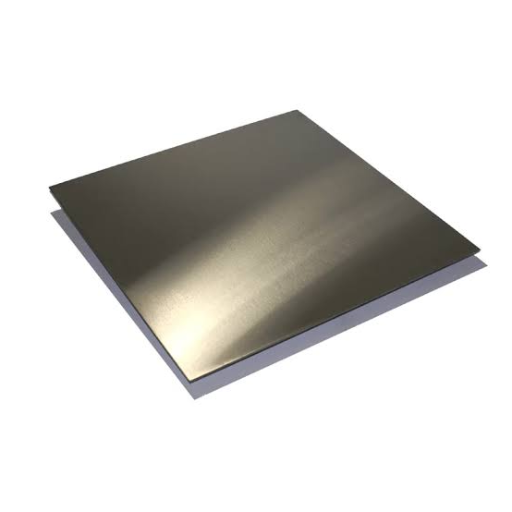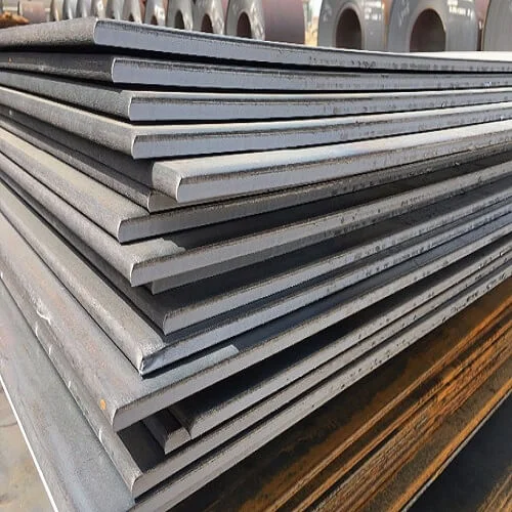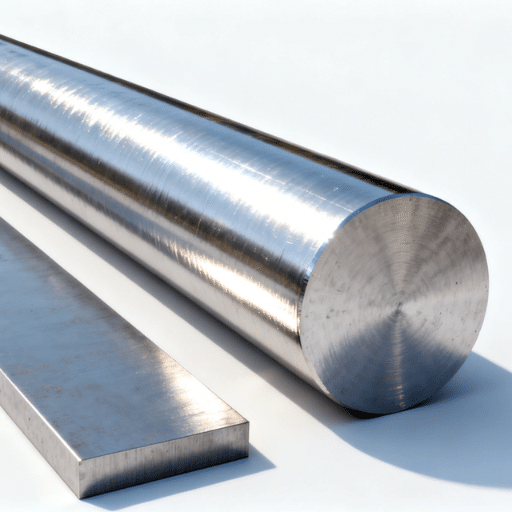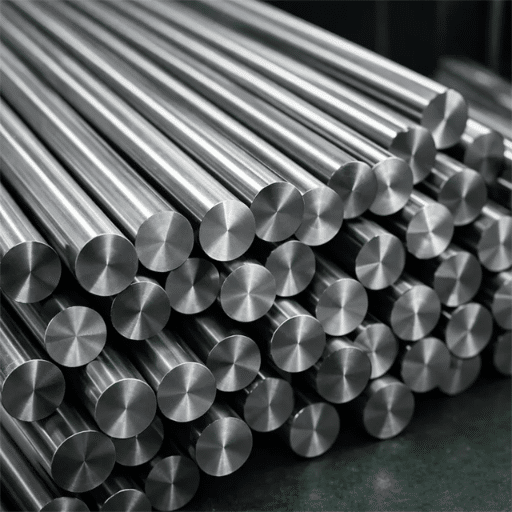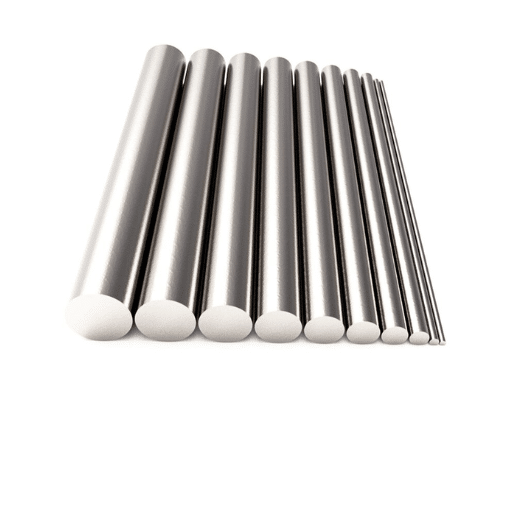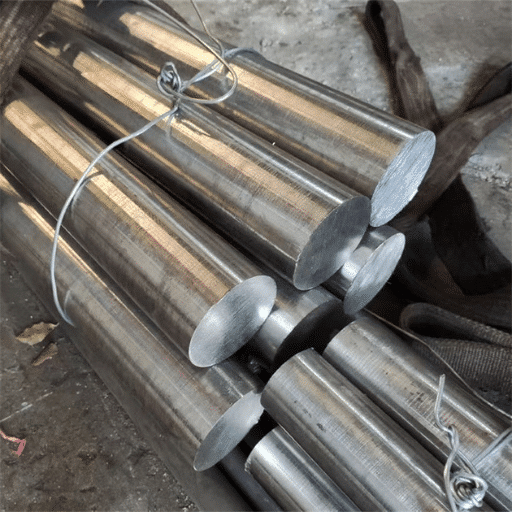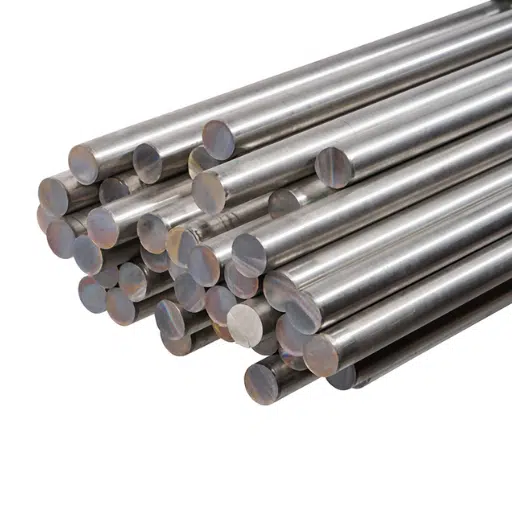
A titanium grade chart is a standardized reference that groups titanium into commercially pure grades (1-4) and titanium alloys (5 and above), with each grade defining its chemical composition and mechanical properties. Engineers and buyers use this chart to match a grade to the specific demands of corrosion, strength, formability, and cost.
If you have ever searched for titanium bar, sheet, or tubing, you have likely seen grades like GR2, CP-3, Ti-6Al-4V, and ELI and wondered what they mean. That’s the problem this guide solves. Every titanium grade is built around a small number of controlled variables, mainly oxygen, iron, and alloying elements, that trade strength against ductility and corrosion performance. Understand those trade-offs, and you can read any titanium grade chart with confidence.
By the end of this guide you’ll be able to compare titanium grades side by side, explain the difference between CP grades and alloys, and choose the right grade for your project. We will cover the master comparison table, chemical composition, strength and corrosion data, 2026 cost context, and the standards you need for procurement. For a deeper look at the two most important grades, see our titanium grade 2 vs grade 5 comparison.
Key Takeaways
- Titanium grades 1-4 are commercially pure (CP) titanium that differ mainly in oxygen and iron content; higher oxygen means higher strength but lower ductility, while corrosion resistance stays equivalent.
- Grade 2 is the workhorse CP grade: the best balance of strength, formability, weldability, and cost for seawater, chemical, and heat-transfer service.
- Grade 5 (Ti-6Al-4V) is the most widely used titanium alloy worldwide, delivering roughly 2.5 times the strength of Grade 2 and covering about half of global titanium production.
- Grade 7 adds palladium to Grade 2 for the best corrosion resistance in reducing acids; Grade 12 is the economical alternative for hot chloride service.
- Grade 23 (Ti-6Al-4V ELI) is the low-interstitial medical variant specified for load-bearing implants under ASTM F136.
- A practical shortcut: Grade 2, Grade 5, and Grade 23 cover more than 95% of titanium applications.
What Is a Titanium Grade Chart?

A titanium grade chart is a reference table that organizes titanium materials under a standardized designation system, most commonly ASTM, with equivalent ISO, EN, and UNS designations. Each grade specifies a chemical composition and a set of minimum mechanical properties so that a Grade 2 bar from one mill performs like a Grade 2 bar from any other mill.
The system divides titanium into two broad families.
Commercially Pure Grades 1-4
Commercially pure (CP) titanium contains at least 98-99.5% titanium with only trace amounts of iron, oxygen, carbon, nitrogen, and hydrogen. Because there are no intentional alloying additions, the CP grades differ almost entirely by their oxygen and iron content. This is the “strength dial”: higher oxygen and iron raise strength but reduce ductility.
This is why Grade 1 is soft and easy to form while Grade 4 is strong enough for surgical hardware. Crucially, corrosion resistance is essentially identical across all four CP grades, because it comes from the self-healing titanium dioxide (TiO2) passive layer, not from the alloying additions.
Titanium Alloys Grade 5 and Above
Titanium alloys add intentional elements to shift properties. Grade 5 (Ti-6Al-4V) adds 6% aluminum and 4% vanadium to create an alpha-beta alloy with roughly 2.5 times the strength of CP grades. Grade 7 adds palladium to a Grade 2 base to dramatically improve corrosion resistance in reducing acids. Grade 9 balances strength and formability for tubing, and Grade 12 adds molybdenum and nickel for hot chloride service.
For an overview of the physical and mechanical properties that drive these differences, see our guide to titanium properties.
Titanium Grade Chart: Master Comparison Table
The table below is the core reference. It compares the most important titanium grades across composition, density, strength, elongation, corrosion behavior, and typical use. Values are minimum mechanical properties in the annealed condition unless noted. For a machining-shop view of the same grades, RivCut’s titanium grades chart is a useful cross-check.
| Grade | Type | UNS | Key Composition | Density (g/cm3) | Tensile (MPa, min) | Yield (MPa, min) | Elongation (min) | Corrosion | Best For |
|---|---|---|---|---|---|---|---|---|---|
| 1 | CP | R50250 | 99.5% Ti, O 0.18% | 4.51 | 240 | 170 | 24% | Excellent | Deep drawing, thin-wall, chemical liners |
| 2 | CP | R50400 | 99.2% Ti, O 0.25% | 4.51 | 345 | 275 | 20% | Excellent | Heat exchangers, piping, marine, pressure vessels |
| 3 | CP | R50550 | 99.0% Ti, O 0.30-0.35% | 4.51 | 450 | 380 | 18% | Excellent | Pressure vessels, heat-exchanger plates |
| 4 | CP | R50700 | High O/Fe | 4.51 | 550 | 480 | 15% | Excellent | Surgical hardware, airframe skin, chemical parts |
| 5 | Alpha-beta alloy | R56400 | Ti-6Al-4V | 4.43 | 895 | 828 | 10% | Excellent (galvanic care) | Aerospace, medical, load-bearing, high-strength |
| 7 | Alpha alloy | R52400 | Gr2 + 0.12-0.25% Pd | 4.51 | 345 | 275 | 20% | Superior (reducing acids) | Chemical processing, acid service |
| 9 | Alpha-beta alloy | R56320 | Ti-3Al-2.5V | 4.48 | 620 | 483 | 15% | Good | Hydraulic tubing, bicycle frames, sports gear |
| 12 | Alpha alloy | R53400 | Ti-0.3Mo-0.8Ni | 4.51 | 483 | 345 | 18% | Excellent (hot chloride) | Heat exchangers, geothermal, petrochemical |
| 23 | Alpha-beta alloy | R56407 | Ti-6Al-4V ELI (low O/Fe) | 4.43 | 860 | 795 | 10% | Excellent | Medical implants (ASTM F136), fracture-critical |
All titanium grades share a density of about 4.4-4.5 g/cm3, roughly 45% lighter than steel, and a melting point near 1,668°C. Elastic modulus sits around 100-114 GPa, about half that of steel, which matters for stiffness calculations and for reducing stress shielding in medical implants. AZoM’s physical property data confirms these figures across the grade family.
Not sure which titanium grade fits your application? Our technical team helps engineers and buyers work through corrosion, strength, and cost trade-offs every day. Get material-selection guidance for your project.
Grade-by-Grade Breakdown
Grade 1 is the softest and most ductile CP grade. Its low oxygen content (0.18% max) gives it the best formability of any titanium grade, making it ideal for deep drawing, chemical liners, anodes, and thin-wall components.
Grade 2 is the workhorse of the titanium family. It combines strong corrosion resistance, good formability, excellent weldability, and moderate strength at the most attractive cost point. If you specify only one titanium grade, this is usually it. Read the full Grade 2 titanium guide for details.
Grade 3 steps up strength beyond Grade 2 with only a small loss of ductility. It suits pressure vessels, structural components, and the matrix plates inside shell-and-tube heat exchangers.
Grade 4 is the strongest CP grade, reaching about 550 MPa tensile without alloying. It’s used for surgical implants, chemical and industrial components, airframe skin, and marine fasteners where CP corrosion resistance plus higher strength is required.
Grade 5 (Ti-6Al-4V) is the most widely used titanium alloy in the world, accounting for about half of global titanium production. Its alpha-beta microstructure delivers 895 MPa minimum tensile strength, excellent fatigue resistance, and good behavior up to roughly 400°C. It dominates aerospace structures, high-performance automotive parts, and load-bearing medical implants. Our grade 5 titanium guide covers it in depth.
Grade 7 is essentially Grade 2 with 0.12-0.25% palladium added. Palladium is a precious metal, and it pays for itself in the right service: Grade 7 resists reducing acids such as hot sulfuric and hydrochloric acid, plus crevice corrosion, better than any other titanium grade. Chemical processors specify it for reactor valves, fluid manifolds, and chlorine gas scrubbers.
Grade 9 (Ti-3Al-2.5V) sits between the CP grades and Grade 5. It offers roughly 620 MPa tensile strength with excellent cold formability and weldability, which is why it dominates aerospace hydraulic tubing and is popular for bicycle frames and sporting goods.
Grade 12 (Ti-0.3Mo-0.8Ni) adds molybdenum and nickel to improve hot chloride crevice resistance up to about 300°C and high-temperature strength. It’s a more economical alternative to Grade 7 for heat exchangers, geothermal piping, and petrochemical agitators.
Grade 23 (Ti-6Al-4V ELI) is the Extra Low Interstitial version of Grade 5, with reduced oxygen and iron. The cleaner chemistry improves fracture toughness, ductility, and fatigue strength, which is why ASTM F136 specifies it for load-bearing surgical implants. It is also preferred for cryogenic aerospace service.
Titanium Grade Composition: What Sets Each Grade Apart
Chemistry is the root of every difference between titanium grades. The table below shows the maximum allowable element content (weight percent) for the main grades, per ASTM practice.
| Element | Gr 1 | Gr 2 | Gr 3 | Gr 4 | Gr 5 |
|---|---|---|---|---|---|
| Titanium | 99.5% min | 99.2% min | 99.0% min | ~99% | Balance |
| Oxygen (O) | 0.18 | 0.25 | 0.30-0.35 | 0.40 | 0.20 |
| Iron (Fe) | 0.20 | 0.30 | 0.25-0.30 | 0.50 | 0.40 |
| Carbon (C) | 0.08-0.10 | 0.08-0.10 | 0.08-0.10 | 0.08-0.10 | 0.08-0.10 |
| Nitrogen (N) | 0.03 | 0.03 | 0.05 | 0.05 | 0.05 |
| Hydrogen (H) | 0.015 | 0.015 | 0.015 | 0.015 | 0.0125-0.015 |
| Aluminum (Al) | – | – | – | – | 5.5-6.75 |
| Vanadium (V) | – | – | – | – | 3.5-4.5 |
The oxygen row tells the CP story in one glance. As oxygen rises from 0.18% in Grade 1 to 0.40% in Grade 4, tensile strength climbs from 240 MPa to 550 MPa while elongation drops from 24% to 15%. Corrosion resistance does not follow the same curve; it stays high across all four CP grades because the TiO2 passive layer forms regardless.
Aluminum and vanadium are what transform CP titanium into Grade 5. Aluminum stabilizes the alpha phase and adds strength without excessive brittleness; vanadium stabilizes the beta phase and improves workability and response to heat treatment. Together they create the alpha-beta structure that gives Grade 5 its combination of strength, fatigue resistance, and thermal capability.
Which Titanium Grade Is Best?

There is no single best titanium grade, only the best grade for a specific constraint. Work through the dominant constraint in your application first. ASM Aerospace Specifications Metals publishes a step-by-step guide to choosing the right titanium grade that follows the same logic for aerospace buyers.
Ask one question before anything else: is this part strength-limited, corrosion-limited, or fabrication-limited? If failures in the past came from pitting or corrosion, a stronger alloy rarely helps; a corrosion-focused CP grade plus good design usually wins. If failures came from yielding or cracking under load, strength is the driver and Grade 5 is the answer. If the problem was manufacturing, process control matters more than a grade change.
The 95% Rule: Three Grades Cover Most Applications
Across aerospace, medical, marine, chemical, and consumer industries, three grades handle the vast majority of titanium applications.
- Grade 2 for corrosion resistance, formability, and cost. This is the default for seawater systems, chemical processing, and heat exchangers.
- Grade 5 (Ti-6Al-4V) for the best strength-to-weight ratio. This is the standard for aerospace, high-performance mechanical parts, and load-bearing service.
- Grade 23 (Ti-6Al-4V ELI) for load-bearing implantable medical devices. ASTM F136 requires the low-interstitial chemistry for fracture toughness and biocompatibility.
Decision Guide by Priority
| Priority | Recommended Grade | Why |
|---|---|---|
| Maximum formability, deep drawing | Grade 1 | Lowest oxygen, highest ductility |
| General-purpose corrosion service | Grade 2 | Best balance of strength, formability, weldability, cost |
| Higher strength without alloying | Grade 4 | Strongest CP grade |
| High strength-to-weight, load-bearing | Grade 5 | The industry workhorse alloy |
| Severe reducing acid/crevice corrosion | Grade 7 | Palladium addition, best corrosion resistance |
| Strength + formability for tubing | Grade 9 | Near-CP formability with alloy strength |
| Hot chloride service, economical | Grade 12 | Mo-Ni addition, weldable, high-temp capable |
| Load-bearing medical implants | Grade 23 | ELI chemistry, ASTM F136 |
One caution we see often: engineers over-specify Grade 5 out of habit. When corrosion, not strength, is the real constraint, Grade 2 can deliver the same service life at a total part cost roughly 25-35% lower. Compare the strength of these grades in detail in our article on whether titanium is stronger than steel.
Titanium Grade Strength and Corrosion by Family
Strength Tiers
The CP grades span 240-550 MPa tensile. Grade 9 reaches about 620 MPa. Grade 5 and Grade 23 sit at 860-895 MPa minimum, and heat-treated Grade 5 can exceed 1,100 MPa.
That’s a wide operating envelope, and it’s exactly why selecting the right grade matters. Paying for Grade 5 strength you don’t need is a costly mistake, while under-specifying a load-bearing part is a safety risk.
Corrosion Resistance
Every titanium grade is immune to seawater corrosion and chloride stress-corrosion cracking, thanks to the self-healing TiO2 passive layer. This is why titanium replaces 316L stainless steel in chloride service where pitting occurs. See how the two materials compare in our titanium vs stainless steel corrosion coverage.
Two grades go further. Grade 7, with its palladium addition, resists reducing acids that attack standard titanium. Grade 12 resists hot chloride crevice corrosion and adds high-temperature strength. For galvanic considerations, Grade 5 and other alloys should be isolated from dissimilar metals in some assemblies because their noble potential can accelerate corrosion of the connected metal.
Titanium Grade Standards and Specifications
When you order titanium, the grade is only part of the specification. The product form determines which ASTM standard applies, and the same chemistry can appear under different designations depending on whether it is sheet, bar, pipe, or implant stock.
| Standard | Product Form | Typical Grades |
|---|---|---|
| ASTM B265 | Sheet, strip, plate | 1-4, 5, 7, 9, 12, 23 |
| ASTM B348 | Bar and billet | 1-4, 5, 7, 9, 12, 23 |
| ASTM B861 | Seamless pipe | 1-4, 7, 9, 12 |
| ASTM B862 | Welded pipe | 1-4, 7, 9, 12 |
| ASTM B338 | Seamless and welded heat-exchanger tubing | 1, 2, 7, 9, 12 |
| ASTM F67 | Commercially pure implant material | 1-4 |
| ASTM F136 | Wrought Ti-6Al-4V ELI implant | 23 |
| ASTM F1472 | Wrought Ti-6Al-4V implant | 5 |
| ISO 5832-2 / 5832-3 | Implant material | 1-4 / 5, 23 |
For procurement, these standards appear on a mill test certificate (MTC). A correct MTC ties the chemical analysis and mechanical test results to the specific heat of material, which is what gives you traceability if anything goes wrong downstream. If you are sourcing any metal with a defined standard, ask for the MTC and verify that the grade, standard, and dimensions match your order.
Titanium Grade Cost Comparison (2026)

Titanium pricing moves with demand from aerospace, marine, desalination, and chemical processing, so treat these figures as a snapshot for 2026.
- CP grades (1-4): Grade 2 ingot runs roughly 11.50−12.50/kg CIF; China export of GR1/GR2 is about 11.50- 12.50/kg CIF; China export of GR1/GR2isabout7.80-8.50/kg FOB. Regional averages land near 15/kg in Asia and 15/kg in Asia and 22/kg in the United States for certified material.
- Grade 5: The alloy premium is roughly 30-50% over Grade 2 in raw material, and machining and processing add more because Grade 5 work-hardens and wears tools faster.
- Grade 23: The most expensive common grade, typically $20-40/lb, with longer lead times for large billets due to the tighter chemistry.
The cost comparison that matters is cost per part, not cost per kilogram. Grade 2 forms and welds easily, which shortens fabrication time and cuts tooling wear. Grade 5 needs more process control. When Grade 2’s corrosion and formability satisfy the design, the total part cost advantage is often 25-35%. For a full treatment of titanium vs stainless steel pricing, see our titanium vs stainless steel cost guide.
Titanium Grades vs Stainless Steel: When to Choose Which
Titanium and stainless steel compete in the same corrosion-critical applications, and the decision is not always in favor of titanium.
Titanium wins when the environment contains chlorides or seawater where 316/316L stainless steel pits. The passive TiO2 layer is stable in these conditions, so titanium grades handle marine and chemical service that would slowly attack stainless. Titanium also wins on weight: at roughly 4.5 g/cm3 versus about 8.0 g/cm3 for austenitic stainless, a titanium part is about 45% lighter.
Stainless steel wins on cost, availability, and absolute stiffness. 316/316L is dramatically cheaper per kilogram, available from stock, and stiffer (higher elastic modulus). For moderate corrosion service with budget or lead-time constraints, 316L stainless steel is often the practical choice.
The balanced approach: for severe chloride or chemical service, evaluate Grade 2 titanium; for moderate service, evaluate 316/316L stainless steel and its lower cost. LIANYUNGANG DAPU METAL supplies 316 stainless steel products and stainless steel pipes, so we can support whichever material your application requires. If you are weighing titanium against stainless, our titanium vs stainless steel comparison walks through the full trade-off.
Frequently Asked Questions
What are the titanium grades?
The main titanium grades are 1, 2, 3, and 4 (commercially pure) and 5, 7, 9, 12, and 23 (alloys). Grades 1-4 differ by oxygen and iron content; grades 5 and above add intentional alloying elements for strength, corrosion, or medical use.
Which titanium grade is strongest?
Grade 5 (Ti-6Al-4V) has the highest strength of the common grades, with a minimum tensile strength of 895 MPa. Among commercially pure grades, Grade 4 is strongest at about 550 MPa.
Which titanium grade is best for corrosion?
Grade 7 offers the best overall corrosion resistance because its palladium addition protects against reducing acids and crevice corrosion. For seawater and general chloride service, Grade 2 is the standard choice.
What is the difference between Grade 1 and Grade 2 titanium?
Grade 1 has lower oxygen (0.18% max), making it softer and more formable with tensile strength of 240 MPa. Grade 2 has 0.25% max oxygen, giving it higher strength (345 MPa) while retaining good formability. Grade 2 is the more widely used of the two.
What titanium grade is used for medical implants?
Grade 23 (Ti-6Al-4V ELI) is the standard for load-bearing implants per ASTM F136. CP Grade 4 is used for some surgical hardware, and CP Grade 2 for non-load-bearing implants and reusable instruments.
Is Grade 9 titanium stronger than Grade 5?
No. Grade 9 (Ti-3Al-2.5V) has a tensile strength of about 620 MPa, well below Grade 5’s 895 MPa minimum. Grade 9’s advantage is better cold formability and weldability, not higher strength.
Which titanium grade is best for machining?
Grade 2 is generally easiest to machine and least expensive to process, though it tends to gall and smear. Grade 5 machines with more tool wear and work-hardening. Grade 23 is the most expensive to machine due to its higher cost and process control requirements.
Conclusion
Reading a titanium grade chart comes down to one idea: grades 1-4 are corrosion-driven CP materials that differ by oxygen and iron, and grades 5 and above are strength-driven alloys that add controlled elements. Grade 2 is the default CP workhorse, Grade 5 is the high-strength alloy, and Grade 23 serves load-bearing medical implants. When in doubt, match the grade to your dominant constraint rather than to a name that sounds stronger.
The next step is to confirm your service environment and check the applicable ASTM standard for your product form. If you’re still weighing titanium against a stainless steel alternative for corrosion service, our engineers can help you compare materials, standards, and total cost for your specific project.
Contact LIANYUNGANG DAPU METAL to request a quote or get technical consultation on material selection for your application.