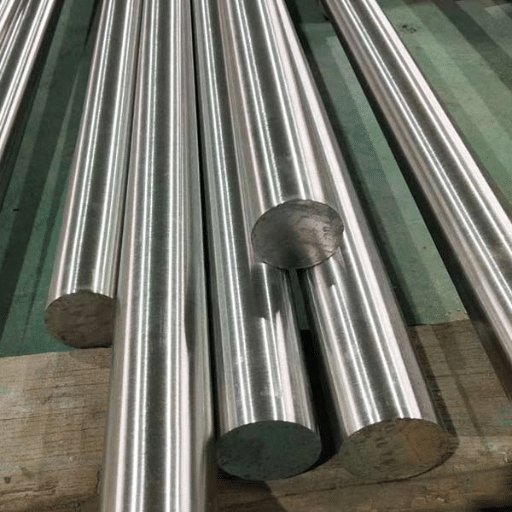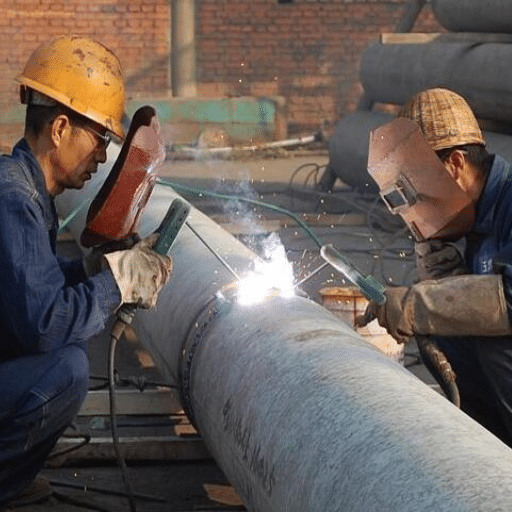
Duplex stainless steel welding differs from welding 304 or 316 because the weld metal solidifies as almost pure ferrite, and austenite only re-forms as it cools. The filler metal, the heat input, the interpass temperature, and the nitrogen in the shielding and purge gas all act on that single outcome: getting the cooled weld back into a 30-70% ferrite balance.
Two weld coupons come off the same procedure. Both pass visual inspection. Both pass radiography.
One will outlast the pipe it joins. The other will pit at the weld within a year. Nothing on either inspection report can tell them apart, because the difference is a phase balance nobody measured.
That is the whole problem with duplex welding in one sentence. The material isn’t difficult to weld. It’s unforgiving outside a window, and the window is narrow.
This guide covers what that window is and how to hit it. You will get the filler metal for every duplex grade, the parameter ranges and the mechanics behind them, the ferrite band your specification should name, how to join 2205 to 316 and to carbon steel, and the tests that prove the weld is sound before it leaves the shop. If you are still choosing the material, start with our duplex 2205 vs 316 stainless steel comparison.
Key Takeaways
- Duplex weld metal solidifies as nearly 100% ferrite and re-forms austenite on cooling. Every parameter in a duplex WPS is a lever on that one phase balance.
- Use an over-alloyed filler with 2-4% extra nickel: ER2209 / E2209 for 2205, ER2594 / E2594 for 2507, ER2307 for lean duplex. Never 308L, 316L, or 309L on a duplex-to-duplex joint.
- Control heat input to 0.5-2.5 kJ/mm for 2205, which corresponds to a cooling time through 1200-800°C of roughly 4-15 seconds. Cap interpass at 150°C for 2205 and 100°C for 2507. Preheat is unnecessary and generally harmful.
- Cool too fast and you get excess ferrite, chromium nitrides, and poor toughness. Cool too slow and you get sigma phase, which embrittles the weld and destroys its corrosion resistance. Both edges of the window are failures.
- Write a ferrite band into the specification (30-70% is typical) and measure it. Note the blind spot: sigma phase is non-magnetic, so a ferritescope reads a perfect number on a weld that is already embrittled.
Why Duplex Stainless Steel Welding Is Different

Duplex base metal is roughly half austenite and half ferrite, and that balance is what gives it twice the yield strength of 316 with far better chloride resistance.
Welding destroys that balance locally. The weld pool solidifies almost entirely as ferrite because ferrite is the stable phase at high temperature. Austenite only returns during cooling, and it returns slowly, at a rate set by the chemistry of the pool and how fast it cools.
So the goal of every duplex welding procedure is to give the austenite enough time and enough alloying elements to re-form. Miss on the fast side and the weld stays ferritic. Miss on the slow side and you grow intermetallic phases instead. The IMOA overview of duplex stainless steels covers the same solidification sequence if you want the metallurgy behind the numbers.
| Cooling is too fast | Cooling is too slow |
|---|---|
| Excess ferrite above 70% | Sigma and chi phase in the 600-1000°C band |
| Chromium nitrides (Cr₂N) precipitate | Chromium and molybdenum drawn out of the matrix |
| Toughness drops | Toughness collapses |
| Pitting resistance falls | Pitting resistance falls |
| Hydrogen cracking risk rises | Cracking can appear during hydrotest |
The four controls available to you are the filler metal, the heat input, the interpass temperature, and the nitrogen content of the shielding and purge gas. Two of them change the chemistry of the pool. Two of them change the cooling rate.
This is also why a procedure borrowed from a 316 job will fail. Austenitic welding’s classic risk is sensitization, a chromium carbide problem at grain boundaries. Duplex welding’s risks are phase balance and intermetallic precipitation. Different problem, different levers.
Filler Metal Selection for 2205 and Other Duplex Grades
Filler metals for duplex are deliberately over-alloyed in nickel. ER2209 deposits roughly 22-23% chromium and 8-10.5% nickel, against a 2205 base metal nickel range of 4.5-6.5%. That extra nickel is the austenite former that does the work during cooling.
Use the wrong filler and the chemistry is wrong before the arc even moves.
| Base grade | UNS | Filler (wire / electrode) | Notes |
|---|---|---|---|
| Lean duplex 2304 | S32304 | ER2307 (ER2209 acceptable) | Over-alloyed for a lean base |
| LDX 2101 | S32101 | ER2307 (ER2209 second choice) | Higher nitrogen than 2304 |
| Standard duplex 2205 | S32205 / S31803 | ER2209 / E2209 | The workhorse filler |
| Super duplex 2507 | S32750 | ER2594 / E2594 | PREN ~42, higher Cr, Mo, and N |
| Hyper duplex | S32707 | Ni-based (alloy 59 / C-22 class) | Project-specific |
Three rules matter more than the table.
First, never use 308L, 316L, or 309L filler on a duplex-to-duplex joint. The phase balance comes out wrong and the pitting resistance is well below the base metal. A duplex weld made with 316L filler fails at the weld, in chloride service, every time.
Second, autogenous welding requires a following solution anneal. An autogenous weld cools too fast and lands ferrite-rich. If you can’t solution anneal at 1020-1100°C with a rapid quench, you must use filler.
Third, climbing the alloy ladder is legitimate when the service demands it. Lean duplex can be welded with 2209 filler, and 2205 can be welded with a super duplex filler where extra corrosion margin is wanted. Note that super duplex is more sensitive to slow cooling, so a higher-alloy filler doesn’t buy you a wider thermal window.
That was Daniel’s mistake at a fabricator in Zhejiang in March 2023. The shop ran out of ER2209 halfway through a batch of 2205 spools and finished the run with 316L wire from a 316 job in the next bay. The reasoning was reasonable on its face: both are stainless fillers.
Radiography passed. The spools went into a brine transfer line and were pitting at the weld within fourteen months. The base metal was untouched.
Need a second opinion on filler selection? Our technical team reviews base grade, service environment, and welding process before recommending a consumable.
Welding 2205 to 316 Stainless Steel
You have two acceptable fillers: ER2209 / E2209, or ER309LMo / E309LMo. You don’t use ER316L.
The published research disagrees about which of the two acceptable options is better, and it’s worth knowing that before someone tells you the question is settled. In shielded metal arc welding comparisons, E2209 has been reported stronger mechanically and better in pitting resistance, solidifying in primary ferrite mode. At least one gas tungsten arc study found 309L gave the better combined mechanical and pitting result and recommended it for industrial practice. A further study reported greater sensitization in E2209 welds and less in E309L.
Practical tiebreaker: if the joint is in chloride service, use ER2209. The 309L deposit carries a much lower PREN, which makes the weld the corrosion-limiting zone in the system. Where the joint is dry and the duplex side is simply there for strength, either filler works.
One caution specific to dissimilar joints: the austenitic side has no ferrite buffer, so dilution and cooling rate deserve more attention here, not less.
Welding 2205 to Carbon Steel
Use ER309L or ER309LMo for the over-alloyed austenitic route, or a nickel-base filler such as ERNiCrMo-3 (alloy 625) where dilution control and thermal fatigue resistance matter more than consumable cost.
The variable you are managing is carbon steel dilution into the weld pool. The duplex side still needs its nitrogen and its cooling rate. Unlike duplex-to-duplex work, this joint brings preheat and dilution back into the conversation.
Heat Input, Interpass Temperature & Nitrogen Control

Heat input is the parameter everyone quotes and the one most often misunderstood. It isn’t the target. It’s a proxy for cooling rate.
| Grade | Heat input | Δt₁₂/₈ target | Notes |
|---|---|---|---|
| 2205 (standard duplex) | 0.5-2.5 kJ/mm (0.8-1.5 preferred) | ~4-15 s (~20-50°C/s) | Thick-section SAW legitimately higher, 2.5-4 kJ/mm |
| 2507 (super duplex) | 0.5-2.0 kJ/mm (some sources cap at 1.5) | Same window, less margin | Sigma forms faster |
The useful number is Δt₁₂/₈, the cooling time from 1200°C to 800°C. Target roughly 4-15 seconds, which corresponds to a cooling rate near 20-50°C/s. Publishing that alongside the heat input lets a fabricator reason about a job that falls outside the table, which is what the table alone can’t do. Outokumpu’s duplex fabrication guidance treats cooling rate as the governing variable for the same reason.
Interpass Temperature
Cap interpass at 150°C for 2205 and 100°C for 2507. Thicker sections warrant tighter control, not looser:
| Section thickness | Maximum interpass |
|---|---|
| Under 3 mm | 50°C |
| Under 6 mm | 70°C |
| Under 10 mm | 100°C |
| 10 mm and above | 150°C |
Preheat isn’t required for duplex and is generally harmful. A study of thicker-section submerged arc welding at 290°C interpass against 150°C found degraded impact toughness and higher corrosion susceptibility at the higher temperature, with more precipitates in the weld and heat-affected zone.
Both edges of this window fail. Run hot and the cooling slows into sigma territory. Run cold and the cooling accelerates into excess ferrite.
Why Nitrogen Matters in Duplex Welding
Nitrogen is both an austenite former and a contributor to pitting resistance. It also boils out of the molten pool while you weld. Reported losses reach roughly 30% in some processes.
One study of super duplex gas tungsten arc welding recorded nitrogen falling from 0.28 wt% in the base metal to 0.17 wt% in the weld at low heat input, with the ferrite fraction climbing well above the base metal as a result.
Losing nitrogen costs you strength and corrosion resistance at the same time. That is why it goes back in through the gas.
Shielding and Purge Gas Settings
Use Ar + 1-2% N₂ for shielding. Additions up to about 5% are used in practice, above which the arc becomes unstable. Don’t use hydrogen-bearing mixes for duplex.
For the root, use a nitrogen-bearing purge (100% N₂, or Ar + 2% N₂), because the root pass is where the highest dilution and the greatest nitrogen loss occur. Keep purge oxygen low.
One comparison is worth carrying: a study reported roughly 63% ferrite with pure argon against about 54% with Ar + 1% N₂. The direction of the effect is the point. Adding nitrogen moves the weld back toward balance.
Post-Weld Heat Treatment: What Never to Do
Never stress-relieve duplex in the 600-650°C band. That band sits squarely inside the sigma formation range, which runs from roughly 600-1000°C and is fastest near 850°C. Stress relief is never required for duplex and always harmful.
The only heat treatment that repairs a bad weld microstructure is a full solution anneal at 1020-1100°C followed by rapid cooling or a water quench. It dissolves sigma and restores the phase balance.
Super duplex is less forgiving still. Sigma has been reported forming in as little as 30-40 seconds at peak temperature, because higher alloy content accelerates the kinetics. The fabrication window narrows as alloy content rises. It never widens.
The full metallurgy behind sigma phase and solution annealing is covered in our duplex 2205 stainless steel grade guide.
Ferrite Content: The Acceptance Criterion for a Duplex Weld
Ferrite content is the property that makes duplex duplex, and it’s the requirement most often left out of a specification. Publish the band and require it to be measured.
| Governing specification | Ferrite band |
|---|---|
| NORSOK M-630 | 35-55% base material, 30-70% HAZ |
| API RP 582 | 30-65% for base metal, HAZ, and weld metal |
| EN ISO 17781 | 30-70% for weld metal |
| Field shorthand | 30-70 FN standard duplex, 35-50 FN super duplex |
Two thresholds explain why the band has edges. Below roughly 25 FN, stress corrosion cracking resistance drops. Above roughly 70 FN, toughness falls and hydrogen cracking risk rises.
For measurement, a ferritescope calibrated to AWS A4.2 / ISO 8249 gives fast shop-floor readings. ASTM E562 point counting or ASTM E1245 automated image analysis gives the metallographic answer.
Now the caveat almost nobody publishes: sigma and chi phase are non-magnetic. A ferritescope can’t detect them. A weld can read a perfect 45 FN and still be embrittled, because the instrument is measuring ferrite content, not phase health.
Readings also vary with method, magnification, and operator. One study measured a spread of up to roughly 12 points between operators using grid counting against image analysis on the same material. Agree the method before the job starts, not after the first disputed reading.
Priya, a QA inspector on a Norwegian offshore project, hit this exact wall. A 2205 spool measured 45 FN on the ferritescope, comfortably inside the 30-70 band, and passed radiography without a note. A supplementary Charpy test from the same qualification coupon came back at 22 J against an acceptance floor of 54 J. Sigma had formed during a slow cooling cycle on a heavy section, and no instrument on site was capable of seeing it.
Ready to specify duplex material with documentation you can verify? Request a quote for 2205 and 316L in sheet, plate, pipe, and bar, with heat-specific chemistry and mill test certification.
Welding Processes, Joint Preparation & Technique
Every conventional arc process works on duplex. What differs is the trade-off.
| Process | Best use | Cautions |
|---|---|---|
| GTAW | Roots, thin wall, best weld-metal toughness | Slow; nitrogen-bearing shielding and purge essential |
| SMAW | Fill, repair, all-position, thick sections | Short arcs; re-dry electrodes ~2 h at 250-350°C |
| GMAW | Productivity on fill | Gas mix affects toughness |
| FCAW | Productivity and site work | Basic consumables beat rutile for low-temperature toughness |
| SAW | Thick plate | Duplex SAW consumables are more hot-crack sensitive; avoid narrow gap and high current |
| PAW | Where applicable | Same thermal rules apply |
| Electroslag | Unsuitable | Excessive heat input, very slow cooling |
Joint preparation follows one principle: duplex wants more room than austenitic stainless.
Use wider joint angles and larger root openings. The root gap should be at least the electrode diameter. Tack welds should run 10-15 mm for sections up to 6 mm, and 20-25 mm above that, spaced 150-200 mm apart. Single-sided welds require the tacks ground out completely; double-sided welds require tack starts and ends ground back.
For technique, run stringer beads with no weaving in the flat position, though vertical-up weaving up to about 20 mm can be beneficial. Remove slag and oxides between passes so each bead starts clean.
Joint geometry guidelines sit at X-joints above roughly 16 mm and U-joints above 20 mm. Root face can run up to about 8 mm for 2205 and 2304, but must stay at 4 mm or less for 2507 and LDX 2101.
For the root pass specifically, the purge gas decision matters more than the welding parameters. Protect the root or the root corrodes first.
Post-Weld Cleaning: Pickling, Passivation & Heat Tint
Welding leaves an oxide layer that is chromium-depleted at the surface, because the chromium that forms the passive film has been consumed building the oxide. The weld zone therefore corrodes before the base metal does.
Wire brushing removes light tint only. It doesn’t restore the depleted layer. Pickling or electropolishing does.
Use stainless-only brushes and keep carbon steel tooling away from duplex and austenitic work. Embedded iron particles start their own corrosion sites, and they will be blamed on the material.
Treat pickling as a corrosion-resistance measure, not a cosmetic finishing choice. A weld that passes radiography and pressure testing can still fail in service on heat tint alone.
Our custom processing services cover cutting, forming, and surface finishing for duplex and stainless material.
Qualification and Testing: ASME IX, NORSOK and ASTM A923

Qualifying a duplex weld means proving the phase balance, not just the tensile strength.
ASME IX governs procedure and performance qualification, with a duplex-specific note: above roughly 9.5 mm (⅜ in.) section, ASME requires Charpy impact testing at the minimum design metal temperature, using lateral-expansion acceptance with three specimens and both minimum and average criteria. EN ISO 15614-1 is the European route; NORSOK M-630 applies where the project specifies it.
Then the duplex-specific tests:
- ASTM A923 Method A: metallographic screening. Usable for acceptance, not for rejection, and useful for finding centreline intermetallic phase.
- ASTM A923 Method B: Charpy at −40°C, where a result below 54 J (40 ft·lbf) indicates defective 2205 material.
- ASTM A923 Method C: ferric chloride corrosion test with uniform weight-loss acceptance, suited to procedure qualification and production spot-checking.
- ASTM G48 Method A: ferric chloride pitting, commonly about 24 h at 20-25°C for 2205, with higher test temperatures around 35-40°C applied to super duplex. The governing specification sets the exact condition.
- Ferrite measurement on the qualification coupon, by the method named in the specification.
Corrosion testing is generally preferred over metallography alone because it’s geometry-independent and cost-effective.
Worth noting: A923’s pass/fail criteria are explicitly written for 2205 weld material. Requirements for other grades have to be agreed with the purchaser. The 54 J figure at −40°C is a standard 2205 requirement and appears in most mill and distributor data for the grade, including Rolled Alloys’ 2205 page.
What to Put in Your WPS
A duplex welding procedure should name, at minimum:
- Filler classification and standard (AWS A5.9 for wire, A5.4 for electrodes)
- Heat input window in kJ/mm
- Interpass temperature cap
- Preheat: none
- Shielding gas and purge gas composition
- Stringer versus weave, and cleaning between passes
- Ferrite acceptance band and measurement method
- Post-weld heat treatment: none
- Acceptance tests required, including whether A923 or G48 applies
Common Duplex Stainless Steel Welding Defects and How to Avoid Them
| Defect | Mechanism | Prevention and detection |
|---|---|---|
| Excess ferrite above 70% | Heat input too low, wrong or missing filler, autogenous weld | Filler selection, heat input floor, ferrite measurement |
| Nitrogen loss | High heat input, unprotected root, hydrogen-bearing gas | Ar + N₂ shielding, nitrogen purge, long-arc GTAW |
| Sigma and chi phase | Slow cooling through 600-1000°C, high interpass, stress-relief PWHT | Interpass cap, heat-input ceiling, no PWHT, A923 testing |
| Chromium nitrides (Cr₂N) | Low heat input, high-ferrite welds, reheated passes | Heat input floor, ferrite control, correct filler |
| Solidification cracking | Narrow joint angle, high travel speed, high restraint | Wider grooves, controlled travel speed |
| Hydrogen cracking | Excess ferrite plus a moisture or hydrogen source | Dry electrodes, moisture control, ferrite control |
| HAZ toughness loss | Grain coarsening and phase change from rapid thermal cycling | Heat input and interpass control, qualification testing |
| Heat tint and chromium depletion | Oxide formation at temperature | Pickling or electropolishing after welding |
| 475°C embrittlement (α′) | 300-525°C hold, reachable in thick-section interpass cooling | Interpass control on heavy sections |
Read that table with the measurement caveat in mind. A magnetic ferrite reading can’t detect sigma. The most common defect and the most common measurement can’t see each other.
The same crystalline structure that makes the material strong is what makes it sensitive, and it’s also why the erosion and pitting behaviour in chloride service concentrates at the weld rather than the plate.
Duplex Welding vs 304/316 Welding: What Changes
Austenitic stainless welding is a well-understood exercise. The classic risk is sensitization, where chromium carbides precipitate at the grain boundaries in the 425-815°C range and leave a chromium-depleted band that corrodes as weld decay. Low-carbon grades and stabilised grades manage it.
Duplex welding is a different problem entirely. Sensitization isn’t the primary duplex risk. Phase balance and intermetallic precipitation are. A procedure inherited from a 316 job will get duplex wrong on all three counts that matter: the filler, the shielding gas, and the interpass temperature.
The reversible good news is that duplex welds aren’t harder to produce. They just require the parameters to be written down and held. Our 304 vs 316 stainless steel welding guide covers the austenitic side in full.
Frequently Asked Questions
Can duplex stainless steel be welded?
Yes. Duplex welds with all conventional arc processes, including GTAW, GMAW, SMAW, FCAW, SAW, and PAW. It isn’t inherently harder to weld than austenitic stainless. It is less tolerant of parameters falling outside the specified window, which is why the WPS matters more.
What filler metal is used for duplex stainless steel?
Use an over-alloyed duplex filler with 2-4% extra nickel. ER2209 or E2209 for 2205, ER2594 or E2594 for super duplex 2507, and ER2307 for lean duplex 2304. Never use 308L, 316L, or 309L on a duplex-to-duplex joint.
Can I use 316L filler to weld duplex 2205?
No. The phase balance comes out wrong and the weld’s pitting resistance falls well below the base metal, which makes the weld the first place to fail in chloride service. Radiography won’t detect the problem, because the defect is chemical rather than geometric.
Can you weld duplex 2205 to 316 stainless steel?
Yes, using ER2209 or ER309LMo. Do not use ER316L, which is under-alloyed for the duplex side. If the joint sees chloride service, use ER2209 because the 309L deposit has a lower PREN and becomes the corrosion-limiting zone.
Can you weld duplex 2205 to carbon steel?
Yes. Use ER309L or ER309LMo for the over-alloyed austenitic route, or a nickel-base filler such as ERNiCrMo-3 where dilution control and thermal fatigue resistance matter. Manage carbon steel dilution into the pool and keep the duplex side’s nitrogen and cooling-rate controls in place.
Can duplex be welded without filler metal?
Only if a full solution anneal at 1020-1100°C with rapid cooling follows the weld. An autogenous weld cools too fast and lands ferrite-rich, with chromium nitrides and poor toughness as the typical outcome.
What heat input should I use for duplex 2205?
Target 0.5-2.5 kJ/mm, with 0.8-1.5 kJ/mm preferred in practice. What matters more is the resulting cooling time from 1200°C to 800°C, which should land near 4-15 seconds. Thick-section submerged arc welding legitimately runs higher, around 2.5-4 kJ/mm.
What is the maximum interpass temperature for duplex welding?
150°C for standard duplex 2205 and 100°C for super duplex 2507. Tighter caps apply to thinner sections: 50°C below 3 mm, 70°C below 6 mm, and 100°C below 10 mm. Preheat isn’t required and is generally harmful.
Why does duplex welding need nitrogen in the shielding gas?
Nitrogen is an austenite former and raises pitting resistance, and it escapes from the molten pool during welding with reported losses up to about 30%. Ar + 1-2% N₂ shielding and a nitrogen-bearing purge for the root put it back, moving the weld toward a balanced phase ratio.
What ferrite content should a duplex weld have?
Typically 30-70% (30-70 FN) for standard duplex and 35-50 FN for super duplex, measured by ferritescope calibrated to AWS A4.2 / ISO 8249 or by metallography per ASTM E562. NORSOK M-630 specifies 35-55% for base material and 30-70% for the HAZ.
Does duplex welding need post-weld heat treatment?
No, and stress relief is actively harmful. The 600-650°C band sits inside the sigma formation range, which runs from roughly 600-1000°C. The only corrective treatment is a full solution anneal at 1020-1100°C with rapid cooling.
Do duplex welds need pickling after welding?
Yes, where corrosion resistance matters. Welding leaves a chromium-depleted oxide layer that corrodes before the base metal. Wire brushing removes light tint only. Pickling or electropolishing restores the depleted surface layer.
Conclusion
Duplex stainless steel welding is a controlled-cooling problem. The weld metal solidifies as nearly pure ferrite, and austenite only re-forms as the joint cools. Everything else in the procedure exists to make sure that re-formation lands in the right place.
Four controls do the work. Use an over-alloyed filler such as ER2209, hold heat input to 0.5-2.5 kJ/mm with a cooling time near 4-15 seconds, cap interpass at 150°C, and put nitrogen into both the shielding gas and the root purge. Never stress-relieve, and never accept a duplex weld that hasn’t had its ferrite content measured.
Then write it into the specification, because none of it happens by default. Name the filler class, the heat input window, the interpass cap, the ferrite band, and the acceptance tests. Where the service warrants it, add ASTM A923 and a G48A corrosion test and require the results on the qualification coupon.
Duplex isn’t a difficult material to weld. It is a material that punishes a procedure nobody checked.
Talk to our technical team about duplex 2205 and 316L material for welded fabrication, including sheet, plate, pipe, and bar with heat-specific chemistry and mill test documentation. Request a quote or ask for material selection help before your next duplex job.