The duplex 2205 vs 316 cost gap is smaller than most buyers expect in 2026. Budget roughly 20 to 50 percent more per kilogram for 2205, not the twofold premium still widely quoted. The reason is composition: 2205 contains about half the nickel of 316L, and nickel softened through 2025 and 2026 while molybdenum rose. Per metre of pipe at equal pressure rating, the gap narrows to about 20 percent, and in warm chloride service 2205 usually costs less over its working life.
Two procurement teams bought duplex 2205 in the same year. The first replaced a 316L brine line that had pitted through at 18 months and recovered the premium within two years. The second specified 2205 for a clean, cool cooling loop where 316L would have served its full design life. Same material, same price. One decision made money, and the other wasted it.
The difference was not the price. It was knowing what the price is made of.
This guide breaks down 2026 pricing by product form, the nickel and molybdenum drivers behind it, the wall-thickness offset that changes the real numbers, and a lifecycle break-even you can recompute with your own quotes. If you need the full grade comparison first, start with our duplex 2205 vs 316 stainless steel comparison.
Key Takeaways
- Duplex 2205 runs roughly 20 to 50 percent more than 316L per kilogram in 2026, and can approach parity in high-volume Asian bulk markets.
- The premium compressed because 2205 carries about half the nickel of 316L (4.5 to 6.5 percent against 10 to 14 percent). Nickel fell to around 15,400pertonnebymid−2026whilemolybdenumrosetoroughly15,400pertonnebymid−2026whilemolybdenumrosetoroughly25 to $33 per pound.
- Molybdenum contributed about 70 percent of 2205’s combined nickel-plus-molybdenum contained-metal cost, making it the grade’s dominant cost driver.
- Price per kilogram is not price per metre. A 30 to 50 percent thinner wall at equal pressure rating cuts the per-metre premium to roughly 20 percent, or near parity at the upper end.
- Fabrication adds a premium above the material premium. ER2209 filler, nitrogen purging, and slower machining all cost more than 316L work.
Duplex 2205 vs 316 Cost: 2026 Price per kg by Product Form

The duplex 2205 vs 316 price difference depends heavily on the form you buy. Pipe and fittings carry the widest gap. Plate is the tightest. If you are comparing the 2205 duplex price per kg against 316, expect the spread to widen as the product moves from flat to tubular.
The table below sets out indicative FOB ranges. Treat them as budgetary figures with a date, not mill quotations.
| Product form | 316 / 316L | Duplex 2205 | Typical premium |
|---|---|---|---|
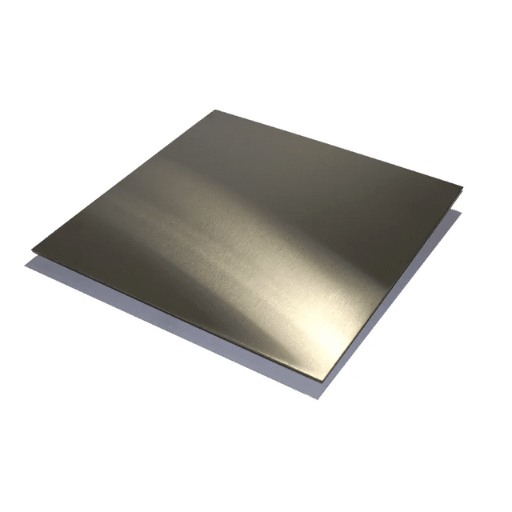
| Plate and sheet | 2.90to2.90to4.30/kg | 4.80to4.80to7.20/kg | 40 to 65% |
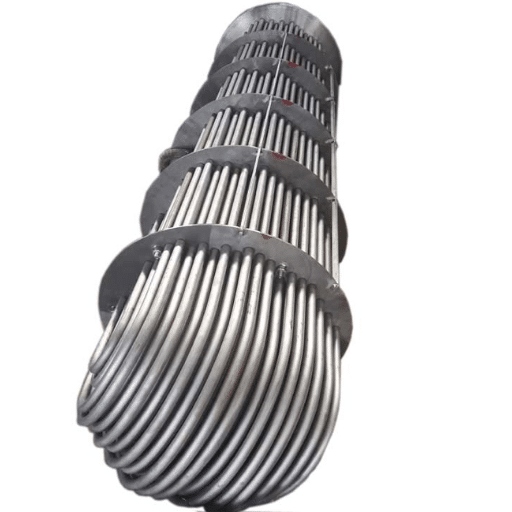
| Pipe, welded | 2.31to2.31to3.80/kg | 4.20to4.20to7.80/kg | 60 to 100% |
| Pipe, seamless | 2.20to2.20to4.30/kg | 4.80to4.80to9.00/kg | 70 to 110% |
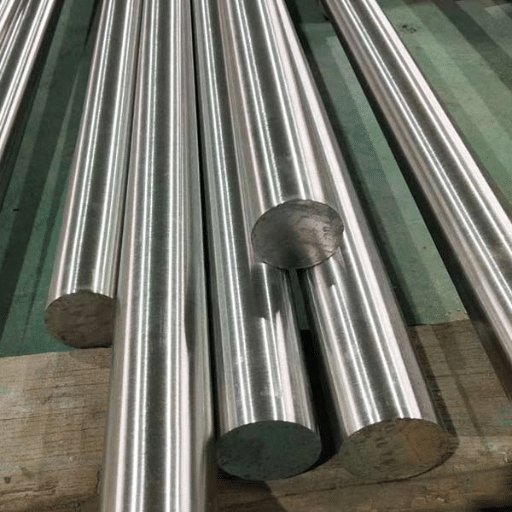
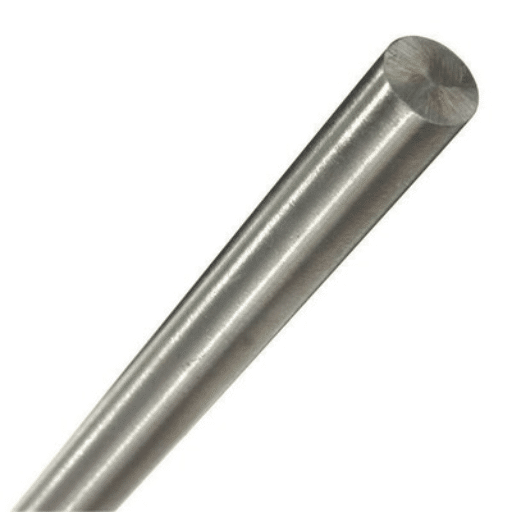
| Round bar | 3.20to3.20to5.00/kg | 5.20to5.20to8.00/kg | 50 to 75% |
| Flange and fittings | 3.50to3.50to5.20/kg | 5.50to5.50to8.50/kg | 50 to 70% |
Two caveats matter more than the numbers themselves.
First, thin gauge and precision tolerance add another 10 to 20 percent. A 2 mm duplex sheet with a tight thickness tolerance sits at the top of every range above.
Second, these ranges describe small and mid-volume orders with certification. Buyers moving full coils in Asia report much narrower gaps.
In May 2026, Chinese hot-rolled coil for 2205 traded at roughly CNY 28,100 to 28,300 per tonne against CNY 28,500 to 30,100 for 316L. That isn’t a premium. That is parity.
Need pricing against your own specification? Send us your sizes, schedules, and pressure ratings and we will work through the duplex stainless steel price comparison with you. Request a quote.
Why the Duplex 2205 vs 316 Cost Gap Moves: Nickel and Molybdenum
Ask a supplier why duplex costs more and you will hear one word: alloying. That answer is true but incomplete, and it explains nothing about why the premium swings.
Start with composition, because it sets the exposure.
| Element | 316L | Duplex 2205 |
|---|---|---|
| Chromium | 16.0 to 18.0% | 22.0 to 23.0% |
| Nickel | 10.0 to 14.0% | 4.5 to 6.5% |
| Molybdenum | 2.00 to 3.00% | 3.00 to 3.50% |
| Nitrogen | 0.10% max | 0.14 to 0.20% |
Duplex 2205 carries more chromium, more molybdenum, and more nitrogen. It also carries roughly half the nickel. For years that hardly mattered, because nickel dominated stainless steel economics and the extra molybdenum was noise.
In 2026 the relationship inverted.
Nickel softened for most of the period. LME three-month nickel closed near 15,420 per tonne in mid-June 2026, down from a first−quart eraverage around 15,420 per tonne in mid−June2026, down from afirst−quart eraverage around 16,800 and from above $18,500 at the turn of the year. A flood of Indonesian Class 2 nickel pushed the market down.
Meanwhile, molybdenum went the other way. Moly oxide traded near 24.80 per pound in June, up from about 24.80 per pound in June, up from about 22.50 in the first quarter, and climbed to 31 to 31 to 33 per pound through the summer. Published monthly alloy adjusters from Special Metals track the same movement in nickel and molybdenum averages.
That combination hits 316L harder than it hits 2205.
The evidence is visible in the wider market. Molybdenum is only 2 to 3 percent of 316’s composition, yet at 2026 prices it added roughly 180to180to220 per tonne to finished sheet. A June 2026 316L plate order ran about 32 percent above 304, against a spread of 24 to 26 percent in 2024.
SteelMint reported Chinese 316L cold-rolled coil rising nearly 20 percent between January and mid-2026, with production cost climbing past CNY 28,500 per tonne. The International Molybdenum Association explains why molybdenum carries so much weight in duplex grades.
The Contained-Metal Math
Here is the calculation that explains the compression. Using mid-range compositions and metal prices around 17,000pertonnefornickeland17,000pertonnefornickeland73,000 per tonne for molybdenum:
- Duplex 2205, per tonne: nickel at 5.5% adds about 935.Molybdenumat3.25935.Molybdenumat3.252,373. Combined contained cost is roughly $3,308, and molybdenum accounts for about 72 percent of it.
- 316L, per tonne: nickel at 12.0% adds about 2,040.Molybdenumat2.52,040.Molybdenumat2.51,825. Combined contained cost is roughly $3,865.
At those prices, 316L carries more contained nickel-plus-molybdenum cost than 2205 does. Chromium moves the picture only slightly, because 2205’s extra 5 percent adds roughly $190 per tonne against a much cheaper metal.
This is a model, not a mill quote, and prices move constantly. But the mechanism is real, and it is why 2205 has become a partial hedge against nickel volatility rather than a pure premium grade. Our 316 vs 304 pricing breakdown shows the same nickel mechanism working one grade lower.
One practical consequence: mill surcharges lag index prices by roughly 30 to 90 days and are set independently by each mill. Two quotes for an identical specification can differ purely because of when each was struck. Always date your price basis.
Cost per Kilogram Is Not Cost per Metre: The Wall-Thickness Offset

This is the section most cost comparisons skip, and it changes the answer.
Duplex 2205 has a minimum yield strength of 450 MPa. 316L has 170 MPa. Because allowable stress derives from yield, the same design pressure permits a substantially thinner wall in 2205, typically 30 to 50 percent thinner once minimum thickness and corrosion allowance are applied. The figures come from the ASTM A240 minimums for flat-rolled product.
Consider one metre of NPS 6 pipe, 168.3 mm outside diameter.
- 316L with a 7.11 mm wall weighs about 28.8 kg per metre. At 3.50/kg,that is roughly∗∗3.50/kg,thatisroughly∗∗101 per metre**.
- 2205 with a 5.00 mm wall, 30 percent thinner, weighs about 20.0 kg per metre. At 6.00/kg, that is roughly∗∗6.00/kg, that is roughly∗∗120 per metre**, a premium of about 19 percent.
- 2205 with a 4.27 mm wall, 40 percent thinner, weighs about 17.2 kg per metre. At 6.00/kg, that is roughly∗∗6.00/kg, that is roughly∗∗103 per metre**, essentially at parity.
The per-kilogram premium was 71 percent in that example. The per-metre premium is 19 percent, or nothing at all. Density helps slightly too: 2205 sits at about 7.80 g/cm³ against 8.00 for 316, so weight falls a little faster than thickness.
When Elena quoted a seawater cooling header for a desalination plant, her first pass used kilograms and rejected duplex outright. Her second pass used wall thickness at the specified pressure rating and came back with a per-metre difference smaller than the spread between two competing 316L quotes. The weight saving also let the structural team drop a support, which never appeared in either material price.
Pipe racks, offshore topsides, and transport all amplify the same effect. Lighter line means less support steel and lower freight.
The honest limit: minimum practical wall thickness, standard schedules, and corrosion allowance cap how much you can remove. Parity is a best case, not a default. For the underlying mechanical data, see our article on duplex 2205 vs 316 mechanical properties.
Fabrication Cost: The Premium Above the Premium
Material cost is only part of the invoice. Duplex 2205 is more expensive to fabricate than 316L, and any serious cost comparison has to say so.
Welding drives most of the difference. 2205 requires ER2209 filler, never ER308L, ER316L, or ER309L. Heat input must stay within 0.5 to 2.5 kJ/mm, interpass temperature below 150°C, and shielding or back-purge gas needs argon with 1 to 2 percent nitrogen. Post-weld heat treatment is prohibited.
Procedures are verified against ASTM A923 to screen for detrimental intermetallic phases. Every one of those requirements costs labour hours that a 316L job doesn’t.
Machining is slower as well. Cutting speeds run roughly 20 to 30 percent below 316L, tool wear is higher, and work hardening demands more attention. Forming is tighter still, because elongation is about 25 percent against 40 percent for 316L, so springback increases and deep drawing becomes difficult or impossible.
Tomás runs a fabrication shop that quoted a duplex spool at 316L rates to win the job. The welding sequence cost him the margin: nitrogen purging, tighter interpass control, and an ASTM A923 test batch he had not priced. The lesson travels in one direction. Budget an installed-cost premium on top of the material premium for anything welded or machined.
The fabrication discipline isn’t optional, and it’s where a lower-priced duplex quote can turn out to be the expensive one. Our duplex 2205 welding guide covers the procedure requirements in full.
Lifecycle Cost: When the Duplex Premium Pays Back
Per-kilogram and per-metre pricing still miss the largest term in the equation: the cost of failure.
Consider 100 metres of NPS 6 line in warm chloride brine, the duty where 316L and 2205 genuinely diverge. A 316L line pits through at around 18 months.
The replacement cost is not the pipe. It is the pipe, the re-fabrication, the re-installation, and the lost production during shutdown. Then the clock restarts.
- 316L route: roughly $10,100 for the initial line, then a full replacement inside two years, and another if the service continues. Cumulative cost climbs in steps.
- 2205 route: roughly $12,000 installed, with no replacement inside the same window.
Break-even lands at approximately month 18. Every month after that, 2205 is the cheaper line.
Two conditions must hold for that arithmetic to work. The service has to actually attack 316L, meaning chlorides at temperature, and downtime has to cost real money. Where both are true, the material premium is a rounding error against one avoided shutdown. Where 316L doesn’t fail early, the premium never pays back at all.
The break-even month is a worked example with stated assumptions, not a guarantee. Chloride level, temperature, inspection interval, and the cost of a lost production day all move it. Our duplex 2205 corrosion resistance comparison covers the thresholds that decide whether your service is in the first category or the second.
Want the lifecycle numbers run against your duty? Send us the chloride level, operating temperature, and downtime cost, and our engineers will work through the material selection with you.
Is Duplex 2205 Over-Specified?

The most expensive mistake in this comparison is not choosing 2205. It is choosing it where 316L would have finished the job.
Stay with 316L when:
- Service is clean and low in chloride
- Temperatures run above 300°C or below -50°C
- The part needs complex forming or tight bends
- Budget and schedule are tight
- Magnetic sensitivity rules duplex out
- You need a size or finish that 316L stocks and duplex does not
Upgrade to 2205 when:
- Chlorides plus temperature drive pitting, crevice corrosion, or SCC risk
- Seawater or brine is involved
- The wall can be cut 30 to 50 percent
- Weight and support steel matter
- Downtime is expensive
Specifying duplex where it earns nothing is a cost, not a safety margin. Our 316 stainless steel guide covers the austenitic side in full.
Where 2205 Sits on the Alternative Ladder
It helps to see the full price ladder, because duplex 2205 is not the expensive option. It is usually the value option at its corrosion level.
| Grade | PREN | Relative cost | When it earns the step |
|---|---|---|---|
| 316L | ~25 | Baseline | Clean, cool, low-chloride duty |
| Duplex 2205 | ~35 | 1.2 to 1.5× 316L | Warm chloride, seawater, brine, high strength |
| Super duplex 2507 | ~43 | 30 to 50% above 2205 | Hot seawater, sour service |
| 6Mo / 254 SMO | ~43 | Above 2507 | Severe chloride where duplex fabrication is impractical |
| Titanium Grade 2 | Not applicable | 22to22to66/kg | Extreme corrosion, weight-critical duty |
At a PREN of about 35, 2205 displaces 6Mo, super duplex, and titanium on cost for a large share of chloride service. For a full cross-material view, see our article on titanium vs stainless steel cost.
Frequently Asked Questions
Is duplex 2205 more expensive than 316?
Yes, but by less than commonly quoted. In 2026, the duplex 2205 vs 316L cost difference runs roughly 20 to 50 percent per kilogram depending on form and volume, and can approach parity in Asian bulk markets. Because 2205 contains about half the nickel of 316L, it is far less exposed to nickel price movements.
What is the duplex 2205 price per kg in 2026?
Indicative FOB ranges run about 4.80to4.80to7.20 per kg for plate and sheet, 4.20to4.20to7.80 for welded pipe, 4.80to4.80to9.00 for seamless pipe, and 5.20to5.20to8.00 for round bar. Thin gauge, precision tolerance, and certification push an order toward the top of each range.
Why is duplex 2205 more expensive than 316?
Duplex 2205 carries more chromium, molybdenum, and nitrogen. Molybdenum contributed about 70 percent of its combined nickel-plus-molybdenum contained-metal cost in 2026, and molybdenum prices rose sharply while nickel fell. The premium reflects alloy content and the tighter processing controls duplex requires.
How much thinner can duplex 2205 pipe be than 316?
Because 2205 has a minimum yield strength of 450 MPa against 170 MPa for 316L, the same pressure rating commonly permits a 30 to 50 percent thinner wall. Standard schedules, minimum wall thickness, and corrosion allowance set the practical limit in each case.
Is duplex 2205 worth the extra cost?
In warm chloride, seawater, or brine service where 316L would pit or crack early, yes. Break-even often lands around month 18 once avoided replacement and downtime are counted. In clean, cool, low-chloride duty, 316L costs less and works just as well.
When is duplex 2205 over-specified?
Whenever the service is clean and low in chloride, above 300°C, below -50°C, or requires complex forming. Paying the duplex premium in those conditions buys nothing, and the extra cost is a planning error rather than a safety margin.
Why do duplex 2205 price quotes vary so much between suppliers?
Beyond grade and form, mill alloy surcharges lag index prices by 30 to 90 days and are set independently. Quantity, certification level, inspection requirements, finish, and gauge tolerance all move the number. Always compare quotes on the same dated price basis.
Is duplex 2205 cheaper than 254 SMO or titanium?
Usually, yes. At a PREN of about 35, duplex 2205 sits below super duplex 2507, 6Mo alloys, and titanium Grade 2 on cost while covering much of the same chloride duty. It is the value grade at this corrosion level, not the premium one.
Conclusion
The duplex 2205 vs 316 cost question has a shorter answer than most buyers expect. In 2026, expect roughly 20 to 50 percent more per kilogram, driven by molybdenum rather than nickel, and often less than that per metre once the wall-thickness offset is applied. Add the fabrication premium honestly, and the case for duplex stops resting on unit price and starts resting on lifetime cost.
That reframing changes the decision. Duplex isn’t the expensive grade. It’s the grade that costs more up front and less in total, wherever chlorides and temperature make 316L fail early. Where they don’t, 316L remains the correct and cheaper answer.