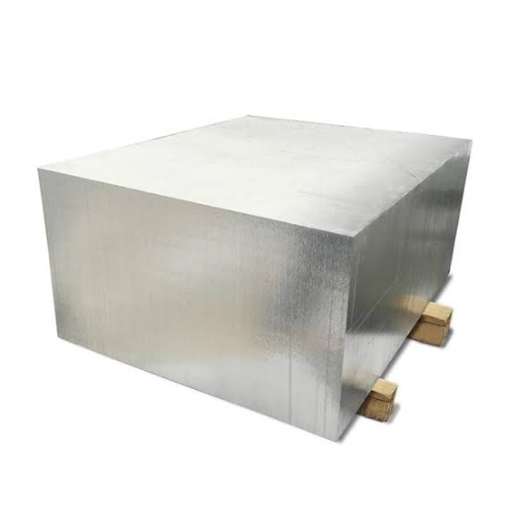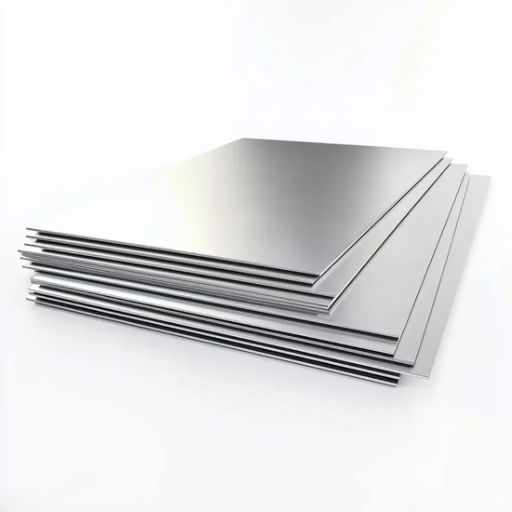
6061 aluminum sheet is flat-rolled Al-Mg-Si supplied from 0.006 to 0.249 in (0.15 to 6.32 mm) thick, most often in T6. At 0.250 in (6.35 mm) and above, the same alloy is plate, usually in T651.
Mark runs the machine shop at a fixture builder outside Rockford, Illinois. In March, he ordered 1/4 in 6061-T651 plate, faced both sides, and sent the parts to assembly.
The finished fixture measured 0.238 in at the pads. The plate met the mill standard. The drawing never named a tolerance, so nobody could reject it.
You already know 6061 as the general-purpose alloy that machines well and anodizes predictably. The alloy number is the easy part. What decides whether the order works is five numbers that are not 6061: thickness, tolerance, temper, flatness and the standard the mill certifies to.
This guide takes them in the order they appear on a purchase order. It covers where sheet ends and plate begins, what the tolerance tables allow, how flatness is measured, and what a mill certificate has to show. Send us the thickness and temper and we will confirm what the mill can supply before you write the PO.
Key Takeaways
- Sheet runs from 0.006 to 0.249 in and plate starts at 0.250 in (6.35 mm). A 6 mm product is sheet under ASTM B209, even when a supplier calls it plate.
- T6 sheet and T651 plate are the market defaults. T651 is stretched 1.5% to 3% before aging to relieve residual stress and hold flatness during machining.
- Standard thickness tolerance depends on thickness and width. A 0.250 in plate at 48 in wide is allowed ±0.014 in, so it can arrive at 0.236 in and still conform.
- AMS 4027P minimums are 42/35 ksi through 4.000 in and 40/35 ksi from 4.000 to 6.000 in. The familiar 45/40 ksi is typical, not guaranteed.
- A complete PO names alloy, temper, thickness with tolerance, width and length, flatness, edge, finish, standard, certificate and marking.
What Counts as 6061 Aluminum Sheet?
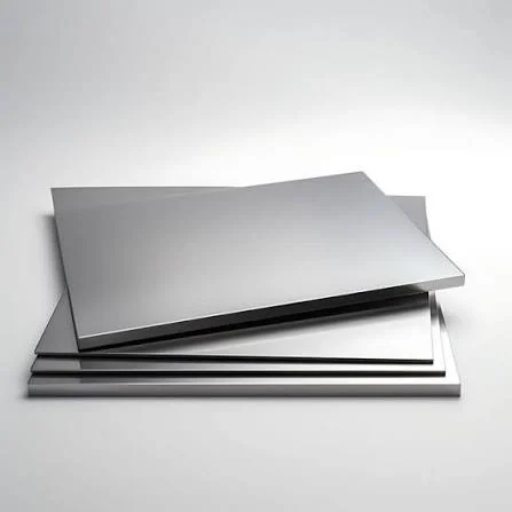
6061 is an aluminum-magnesium-silicon alloy with a small chromium addition. Magnesium and silicon form the strengthening precipitate, and the alloy responds to solution treatment and artificial aging.
That is why one chemistry can be supplied as soft O, naturally aged T4 or fully aged T6. The composition and property data is a useful cross-check.
The product form is set by thickness, not by what the sales desk calls it. ASTM B209/B209M and the Aluminum Association split flat-rolled aluminum at fixed boundaries.
| Product | Thickness (in) | Thickness (mm) | Typical temper | Typical use |
|---|---|---|---|---|
| Foil | under 0.006 | under 0.15 | O | Packaging, insulation, fins |
| Sheet | 0.006 to 0.249 | 0.15 to 6.32 | T6 | Panels, brackets, covers, general fabrication |
| Plate | 0.250 and over | 6.35 and over | T651 | Molds, fixtures, machined parts, structural plate |
The 0.249/0.250 Line
The line is one thousandth of an inch wide. Sheet stops at 0.249 in (6.32 mm); plate starts at 0.250 in (6.35 mm). Three things change at that boundary. Plate is normally stocked in T651, follows a different thickness tolerance row, and carries a flatness allowance written for sawed or sheared plate.
The 6 mm Problem
Elena buys flat-rolled stock for a conveyor manufacturer in Monterrey. Last year she ordered 6 mm 6061 plate for a guard panel. The mill shipped 6061-T6 sheet, and the certificate said sheet. Her PO said plate.
Both descriptions were defensible, because 6 mm equals 0.2362 in, inside the sheet band. Ask which definition the quote uses. If you need plate properties, specify 6.35 mm or 0.250 in.
Ordering a 6 mm sheet or a 1/4 in plate? Send the thickness, temper and size, and we will confirm the form, tolerance and certificate before the order is placed.
What Is Stocked
US service centers commonly carry 6061 sheet in 0.032, 0.040, 0.050, 0.063, 0.080, 0.090, 0.100, 0.125, 0.160 and 0.190 in. Plate is common in 0.250, 0.3125, 0.375, 0.500, 0.625, 0.750 and 1.000 in. Standard sizes include 48 x 96, 48 x 120, 48 x 144 and 60 x 144 in. Stock varies by location and month, so confirm availability.
Temper by Form
A 6061 aluminum sheet order is normally T6, and a plate order is normally T651. The difference is a stretch: T651 is solution heat treated, stretched 1.5% to 3%, then precipitation heat treated. That stretch relieves much of the residual stress that would move a plate when a machinist cuts one face.
T6 plate exists, but it isn’t the default for machined work. The 6061 aluminum alloy guide covers the full temper ladder.
Which Temper Should You Buy?
The temper on a 6061 aluminum sheet sets both strength and formability. The values below are typical mill and distributor data, for comparison, not design. The guaranteed floor is lower.
| Temper | Form | Typical tensile (ksi) | Typical yield (ksi) | Notes |
|---|---|---|---|---|
| O | Sheet, plate | 18 | 8 | Annealed, maximum formability; heat treat after forming |
| T4 | Sheet | 35 | 21 | Solution heat treated, naturally aged; forming temper |
| T451 | Plate | 35 | 21 | T4 plus stretch; stress-relieved plate |
| T6 | Sheet | 45 | 40 | Solution and precipitation heat treated; standard sheet temper |
| T651 | Plate | 45 | 40 | T6 plus 1.5% to 3% stretch; standard machined-plate temper |
The short version: T6 and T651 sit in the same strength family. T651 is the one to buy when the part will be machined from plate, because the stretch keeps it flatter after the first cut. Buy O for maximum formability before heat treatment. Buy T4 or T451 when you need to form and then age, and accept that both are made to order at most service centers.
Bend radius belongs in the same conversation. AMS 4027P Table 3 gives a minimum bend factor by thickness: 3 at 0.032 in, 4 at 0.063 in, 5 at 0.125 in and 7 at 0.250 in. Multiply by thickness to get the diameter.
A 0.125 in sheet needs 0.625 in; a 0.250 in plate needs 1.75 in. Keep the bend line parallel to the rolling direction. Our guide to bending aluminum covers springback.
Have the drawing but not the temper? Send it over and we will confirm the condition and the bend line.
6061 Aluminum Sheet Thickness, Tolerance and Flatness
Thickness is the number buyers think they specified. Tolerance is the number they usually leave out. For a 6061 aluminum sheet order, the applicable table is ANSI H35.2 Table 7.7a, unless the product is ordered for aerospace or to an aerospace specification. Values are plus/minus, in inches.
| Thickness (in) | Thickness (mm) | Up to 39.37 in wide | 39.37 to 59.06 in | 59.06 to 78.74 in |
|---|---|---|---|---|
| 0.032 to 0.039 | 0.81 to 0.99 | ±0.0020 | ±0.0030 | ±0.0035 |
| 0.047 to 0.063 | 1.19 to 1.60 | ±0.0030 | ±0.0035 | ±0.0050 |
| 0.079 to 0.098 | 2.01 to 2.49 | ±0.0035 | ±0.0045 | ±0.006 |
| 0.098 to 0.126 | 2.49 to 3.20 | ±0.0045 | ±0.006 | ±0.007 |
| 0.126 to 0.158 | 3.20 to 4.01 | ±0.006 | ±0.007 | ±0.009 |
| 0.158 to 0.197 | 4.01 to 5.00 | ±0.007 | ±0.009 | ±0.011 |
| 0.197 to 0.248 | 5.00 to 6.30 | ±0.009 | ±0.011 | ±0.013 |
| 0.248 to 0.315 | 6.30 to 8.00 | ±0.012 | ±0.014 | ±0.015 |
| 0.315 to 0.394 | 8.00 to 10.01 | ±0.015 | ±0.017 | ±0.020 |
| 0.394 to 0.630 | 10.01 to 16.00 | ±0.023 | ±0.023 | ±0.027 |
| 0.984 to 1.575 | 24.99 to 40.01 | ±0.039 | ±0.039 | ±0.047 |
The table is trimmed to the common sheet and plate rows. The standard continues to 8.000 in and to wider widths.
Width Changes the Number
Read across the row before you assume a tolerance. A 0.250 in plate at 48 in wide is ±0.014 in. At 60 in wide it becomes ±0.015 in.
A 0.125 in sheet at 48 in wide is ±0.006 in. A 1.000 in plate at 48 in wide is ±0.039 in, nearly a millimetre. None of those is a defect. They are what the standard permits.
When the Drawing Is Tighter
If the drawing says 0.250 ±0.005 in, standard mill plate won’t satisfy it. The options are precision plate, ground plate, or a machining allowance that lets the shop face the part after delivery. Each one changes price and lead time. Put the requirement on the inquiry and let the supplier quote the process that meets it.
How to Write It on a Purchase Order
“0.250 in ±0.014 in, 48 x 96 in, ASTM B209” is a complete thickness line. “1/4 in plate” is not, because it leaves the tolerance and the standard to the supplier.
One warning: gauge is not a thickness. Aluminum gauge follows a different table from steel, and 12 gauge aluminum is 0.0808 in, not 0.125 in. Convert it and put the decimal on the PO. The aluminum sheet gauge chart gives the full table.
Flatness Is a Separate Number
Flatness isn’t a consequence of thickness tolerance. “Flat” isn’t a value a mill can accept or reject against. ANSI H35.2 Table 7.18 gives separate longitudinal and transverse allowances for sawed or sheared plate.
| Thickness (in) | Longitudinal, any 6 ft | Transverse, 2 to 4 ft wide | Transverse, over 4 to 6 ft |
|---|---|---|---|
| 0.250 to 0.624 | 3/16 in | 5/16 in | 3/8 in |
| 0.625 to 1.500 | 3/16 in | 3/16 in | 5/16 in |
| 1.501 to 3.000 | 3/16 in | 3/16 in | 3/16 in |
| 3.001 to 8.000 | 1/8 in | 1/8 in | 1/8 in |
Priya is a quality engineer at a semiconductor tool builder in Singapore. She rejected a 0.500 in 6061-T651 plate for 5/16 in of bow across the width. The mill sent the flatness table. The plate was inside it.
Her drawing had said “flat,” which gave the inspector nothing to measure against. If the part is a visible panel or a seal face, specify a tighter value or plan to machine the surface. If it is a support plate, the standard allowance is usually enough.
Mill Finish and Edge
Rolling marks, handling scratches and light oxidation are normal on mill finish. PVC film protects the surface during transport; it isn’t a finish. Brushed, polished and anodized surfaces are separate purchases, and anodizing adds a thin oxide layer that changes dimensions slightly.
Sheared sheet carries a burr and a rolled edge. Saw-cut plate carries blade marks. A standard saw cut is often +1/8 in and minus nothing, while a precision cut can hold ±0.005 in.
Specify deburring when the edge will be handled or coated. “Cut to size” without a tolerance is a description, not a specification.
6061 Aluminum Sheet Weight, Sizes and Cut-to-Size
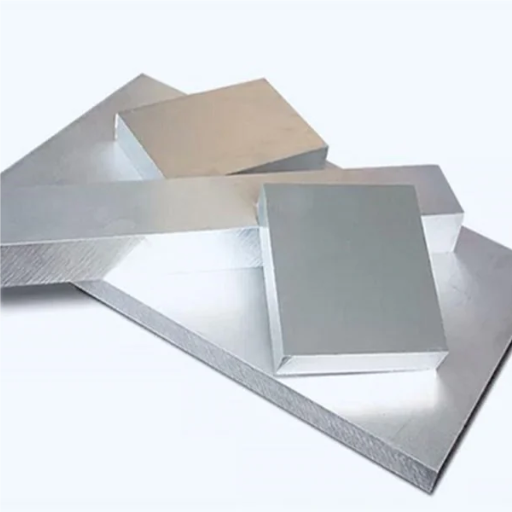
On a 6061 aluminum sheet order, weight decides freight, crane capacity and whether a two-person lift is legal. Estimate with nominal thickness and a density of 2.70 g/cm³, then use the packing list for the shipment.
| Thickness (mm) | Thickness (in) | kg/m² | lb/ft² | 4 x 8 sheet (kg) | 4 x 8 sheet (lb) |
|---|---|---|---|---|---|
| 0.5 | 0.0197 | 1.35 | 0.28 | 4.01 | 8.85 |
| 1.0 | 0.0394 | 2.70 | 0.55 | 8.03 | 17.70 |
| 1.5 | 0.0591 | 4.05 | 0.83 | 12.04 | 26.54 |
| 2.0 | 0.0787 | 5.40 | 1.11 | 16.05 | 35.39 |
| 3.0 | 0.1181 | 8.10 | 1.66 | 24.08 | 53.09 |
| 4.0 | 0.1575 | 10.80 | 2.21 | 32.11 | 70.78 |
| 6.0 | 0.2362 | 16.20 | 3.32 | 48.16 | 106.18 |
| 6.35 | 0.2500 | 17.15 | 3.51 | 50.98 | 112.37 |
| 12.7 | 0.5000 | 34.29 | 7.02 | 101.94 | 224.74 |
| 25.4 | 1.0000 | 68.58 | 14.05 | 203.88 | 449.48 |
A 4 x 8 ft sheet is 2.97297 m². The metal weight calculator handles other sizes.
A 4 x 8 sheet is usually the cheapest form per pound. Cut-to-size reduces bench scrap but adds a cutting charge, so nest the parts on a full sheet before assuming it saves money. Thickness, width, temper, quantity, cut tolerance, certificate, finish and freight all move the price. The aluminum price archive covers market direction, not a quote.
ASTM B209, AMS 4027P and the Certificate
The standard is the fifth number in a 6061 aluminum sheet order. It decides which tolerance table, test schedule and certificate apply. The names aren’t interchangeable.
| Standard | What it covers | When to use it | Notes |
|---|---|---|---|
| ASTM B209/B209M | Aluminum sheet and plate, general commercial | Most general engineering and fabrication | Composition, mechanical limits, tolerances, testing |
| ASME SB209 | ASME adoption of B209 | Pressure equipment and code work | Technical requirements track B209 |
| AMS 4027P | 6061-T6 sheet and T651 plate, aerospace | Aerospace and defense, or when the drawing calls it out | 0.006 to 6.000 in; AMS2355 sampling; AMS2772 heat treatment |
| AMS-QQ-A-250/11 | Legacy 6061 sheet and plate, aerospace | Old drawings that still cite it | Check the drawing revision; AMS 4027P is the current AMS document |
| EN 485-2 | European aluminum sheet and plate | European drawings and CE-marked work | EN AW-6061; limits and tolerances differ from B209 |
| GB/T 3880 | Chinese aluminum sheet and plate | Chinese domestic or export quotes | If the drawing cites ASTM, put ASTM on the PO |
Typical vs Minimum
The 45/40 ksi figures in the temper table are typical. AMS 4027P sets the floor at 42.0/35.0 ksi through 4.000 in, then 40.0/35.0 ksi from 4.000 to 6.000 in. In SI, that is 290/241 MPa through 101.60 mm and 276/241 MPa from 101.60 to 152.40 mm.
ASTM B209’s 6061-T6 limits are also 42/35 ksi in the common sheet range. A certificate reporting 44 or 46 ksi is normal. The 6061-T6 data by thickness shows how the guaranteed values step down with section size.
The 7.7a/7.7b Trap
ANSI H35.2 has two thickness tables. Table 7.7a is general; Table 7.7b applies to aerospace applications or purchases to an aerospace specification. The Aluminum Association confirmed that reading in a 2024 letter.
The tables differ, and 7.7b is not uniformly tighter. At 0.250 in and 48 in wide, 7.7a allows ±0.014 in and 7.7b allows ±0.015 in. At 0.125 in and 48 in wide, 7.7a allows ±0.006 in and 7.7b allows ±0.0035 in. The standard you cite selects the table.
What the Certificate Must Show
A mill test report should show the heat number, alloy and temper, chemistry, tensile, yield, elongation, nominal dimensions, the standard and revision, and the test date with the mill’s signatory. A certificate of conformance that says only “conforms to ASTM B209” doesn’t give you test values. If the drawing or auditor requires traceability, ask for the mill test report.
“Aircraft grade” is not a specification. It is a marketing phrase. AMS 4027P is a specification, and it comes with a revision letter, a thickness range and a test schedule. Put the standard on the PO.
Need the certificate with the quote? Ask for a sample mill test report for the thickness and temper you are buying, and confirm the standard it will cite. Contact our technical team.
6061 vs 5052 and 7075: When Another Alloy Fits
6061-T6 is the default for structural sheet and plate because it combines decent strength, good machining, predictable anodizing and acceptable welding. The heat-affected zone loses temper after welding, so a welded assembly is usually designed around the annealed zone or heat treated afterward.
5052-H32 is the better choice when the job is forming rather than strength. It bends more easily, keeps more of its strength in the heat-affected zone, and resists marine atmospheres well. It is not heat treatable. For tanks, panels, ducting and coastal work, 5052 aluminum sheet often beats 6061 on total cost.
7075-T6 gives roughly 1.8 times the yield strength of 6061-T6, but it is not a structural fusion-welding alloy and it is less corrosion resistant. Choose it when strength is the binding constraint and the part can be machined or bolted rather than welded. The 7075 aluminum guide and the 6061 vs 7075 comparison cover the trade.
Approved Sheet Metal compares 6061-T6 and 5052-H32, the two alloys most often substituted for each other in sheet work.
How to Specify 6061 Aluminum Sheet on a Purchase Order
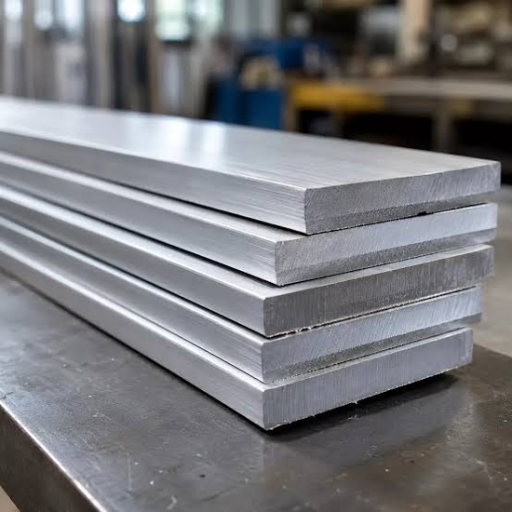
Every 6061 aluminum sheet PO needs nine lines. Leave one out and the supplier fills it with a default.
- Alloy and temper: 6061-T6 sheet or 6061-T651 plate.
- Standard and revision: ASTM B209/B209M, AMS 4027P, or ASME SB209.
- Thickness: decimal inch and millimetre, with the tolerance.
- Width and length: decimal inch, with the cut tolerance.
- Flatness: standard allowance or a stated tighter value.
- Edge: sheared, saw-cut, deburred or machined.
- Finish: mill, PVC film, paper interleave, brushed, polished or anodized.
- Certificate: mill test report with actual chemistry and mechanical results.
- Marking and packing: heat number, alloy and temper, size, piece count and edge protection.
One complete line looks like this: 6061-T651 plate, ASTM B209/B209M, 0.500 in ±0.023 in, 48 x 96 in, flatness 3/16 in in any 6 ft, saw cut +1/8 in and minus nothing, deburred, mill finish with PVC on one face, mill test report with actual results, heat number marked on each piece.
If you do not know a requirement, ask for the mill’s standard tolerance and write “conform to ASTM B209” rather than inventing a number. The 6061 alloy guide covers alloy and temper selection. For supply, DAPU offers AA 6061 aluminum plate and sheet from 0.5 to 50 mm with cutting, bending and machining available; confirm temper, tolerance and certificate type at quotation.
Frequently Asked Questions
How thick is a 6061 aluminum sheet?
6061 aluminum sheet runs from 0.006 to 0.249 in (0.15 to 6.32 mm). At 0.250 in (6.35 mm) it becomes plate. A 6 mm product is 0.2362 in, so it is sheet under ASTM B209.
What is the difference between 6061 aluminum and 6061-T6 aluminum?
6061 is the alloy. T6 is the temper. 6061-T6 is solution heat treated and artificially aged to about 45 ksi tensile and 40 ksi yield typical, with a guaranteed floor of 42/35 ksi in the common sheet range.
Is 6061-T6 the same as 6061-T651?
No. They sit in the same strength family, but T651 is stretched 1.5% to 3% before aging. The stretch relieves residual stress and keeps plate flatter during machining. T651 is the default for machined plate; T6 is the default for sheet.
What is 6061 aluminum sheet good for?
Panels, brackets, covers, frames, fixtures, truck bodies, mold bases, jigs and general fabrication. It machines well, anodizes predictably and welds acceptably, though the heat-affected zone loses temper.
Where can I buy 6061 aluminum sheet?
Metal service centers, distributors and mills sell it in standard sizes and cut-to-size. For export orders, DAPU supplies AA 6061 sheet and plate from 0.5 to 50 mm. Send the specification and we will confirm temper, tolerance and certificate.
Conclusion: The Five Numbers That Decide the Order
A 6061 aluminum sheet order is decided by thickness, tolerance, temper, flatness and the standard the mill certifies to. Get those five right and the alloy does what the drawing expects. Leave one out and the mill fills it with a default that may not fit the part.
The decision rule is short. Buy T6 sheet for general fabrication and formed parts. Buy T651 plate for anything that will be machined, because the stretch keeps it flat. Put the tolerance, the flatness allowance and the standard on the PO, and ask for the mill test report with the quote.
If you are sourcing 6061 aluminum sheet or plate, send us the drawing or the PO line with the five numbers. We will confirm what the mill can supply, what the certificate will say, and where a tighter requirement needs a different process.