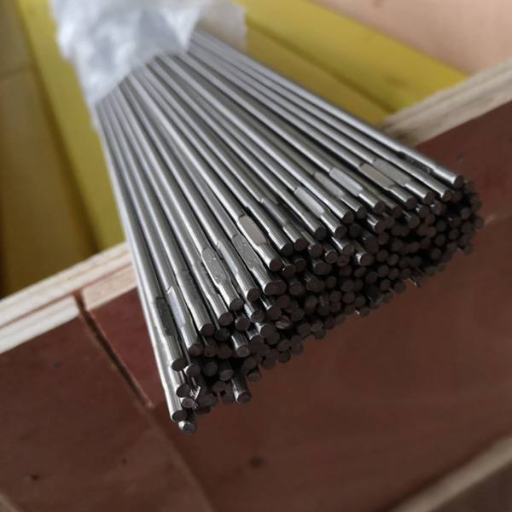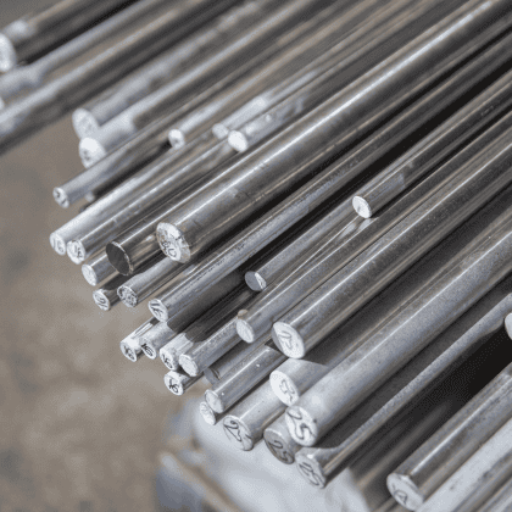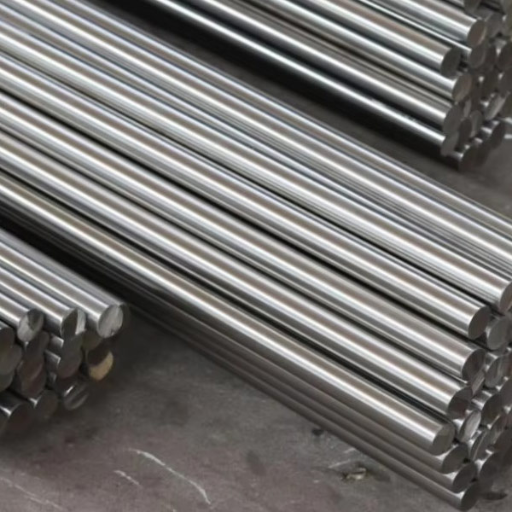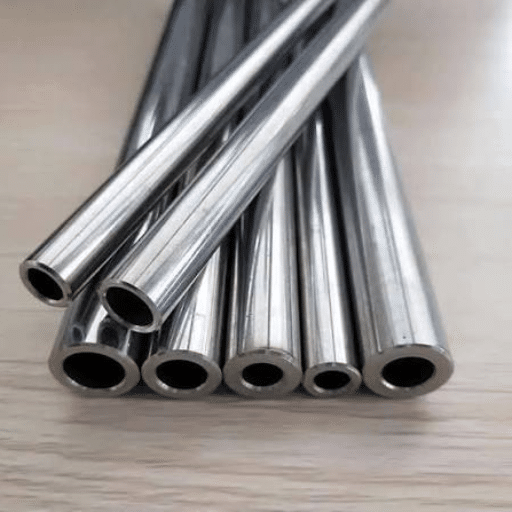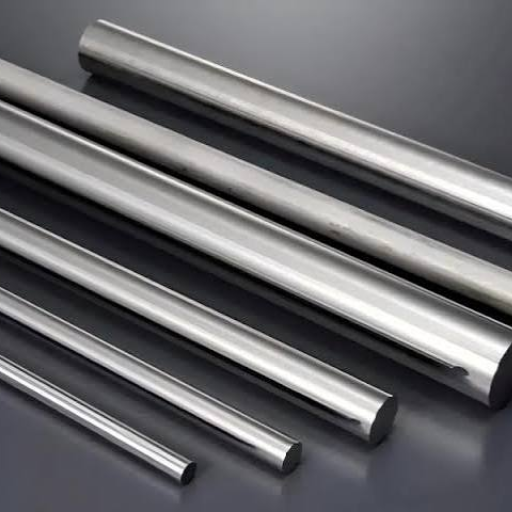
The 17-4 PH vs 17-7 PH decision comes down to one question, and it isn’t about strength. 17-4 PH is martensitic as supplied and gets machined from bar. 17-7 PH is semi-austenitic and gets formed from strip before it’s hardened. The grade follows from how the part is made.
Marta runs a spring shop outside Valencia. In 2023 she quoted a retaining clip both ways: form it in 17-7 PH Condition A and harden it in place, or machine it from 17-4 PH bar. The strip cost more per kilo. The clip cost about 40% less.
That’s the decision most comparison pages bury under two property tables. The real comparison is between two manufacturing routes.
Below: the family split, the three-step heat treatment, the strength comparison done properly, the magnetic tell, and the grade to name when neither fits. For the wider family, see our complete 17-4 PH stainless steel guide. For a grade call against your process, use our technical consultation service.
Key Takeaways
- 17-4 PH is martensitic and hardens in one aging step; 17-7 PH is semi-austenitic and needs conditioning, a sub-zero hold and aging.
- 17-7 PH reaches higher peak strength only in CH 900, which is cold-reduced strip and not available in bar.
- Skip the sub-zero step and 17-7 PH doesn’t harden. The certificate can still look correct.
- A magnet separates them: 17-7 PH is non-magnetic in Condition A and magnetic after hardening; 17-4 PH is always magnetic.
- Neither grade is molybdenum-bearing, so neither solves chloride pitting. PH 15-7 Mo is the third option.
17-4 PH vs 17-7 PH: The Short Answer
17-4 PH (UNS S17400) is martensitic and hardens in a single aging step. 17-7 PH (UNS S17700) is semi-austenitic and needs austenite conditioning, a sub-zero hold and then aging. Choose 17-4 PH when the part is machined from bar, and 17-7 PH when it’s formed from strip and hardened afterwards.
The Family Split: Martensitic vs Semi-Austenitic
17-4 PH arrives martensitic. Copper-rich precipitates form during the age and do the strengthening, and niobium keeps the martensite from over-tempering. One furnace cycle takes it from annealed to final.
17-7 PH arrives austenitic. Its hardening phase is a nickel-aluminide precipitate, and that only forms in martensite. So the steel has to be converted first, and the conversion is the whole complication. The mechanism is set out in ASM Handbook Volume 1.
Semi-austenitic stainless steel is a deliberate compromise. The alloy stays soft and ductile long enough to deep draw, spin, roll-form or wind into a spring. Only after the shape exists does the metallurgy switch on.
That’s why a 17-7 PH spring can be wound to finished size and hardened with almost no distortion. A martensitic grade at 33 HRC doesn’t wind into a spring.
The trade: three process steps instead of one, and a narrower supplier base.
Why 17-7 PH Needs a Sub-Zero Step
Austenite conditioning holds the steel near 760 °C, which destabilises the austenite so it wants to transform on cooling. It doesn’t all transform at room temperature, because the finish temperature sits below ambient.
The sub-zero hold, near -73 °C, drives the rest. What’s left is martensite plus a little retained austenite, and aging hardens the martensite.
Timing matters. Conditioning has to be followed promptly by the sub-zero hold, so this isn’t a job you split across two suppliers and a week of shipping.
Skip it and you age austenite, which doesn’t harden. The part comes back soft, the furnace chart shows the temperatures were reached, and everyone looks at the wrong thing for a week.
17-4 PH vs 17-7 PH Composition and Properties
The chemistry explains the behaviour. Search results for 17-7 PH vs 17-4 PH usually show these two columns and stop, which is a shame. Both grades appear in ASTM A693, the specification for PH flat product.
| Element (%) | 17-4 PH (S17400) | 17-7 PH (S17700) |
|---|---|---|
| Carbon | 0.07 max | 0.09 max |
| Chromium | 15.0-17.5 | 16.0-18.0 |
| Nickel | 3.0-5.0 | 6.50-7.75 |
| Copper | 3.0-5.0 | n/a |
| Aluminium | n/a | 0.75-1.50 |
| Niobium + Tantalum | 0.15-0.45 | n/a |
| Molybdenum | 0.50 max | n/a |
| Manganese | 1.00 max | 1.00 max |
| Silicon | 1.00 max | 1.00 max |
Two things stand out. 17-7 PH carries roughly twice the nickel, which keeps it austenitic as supplied. And the hardening elements differ: copper and niobium in 17-4 PH, aluminium in 17-7 PH.
Neither contains deliberate molybdenum, which decides the corrosion question later. For the third branch of the family, see 17-4 PH vs 15-5 PH.
Heat Treatment: One Step Against Three
17-7 PH heat treatment is where parts get lost. 17-4 PH takes a solution anneal at 1,038-1,040 °C and one age; the 17-4 PH heat treatment guide has the full ladder.
17-7 PH takes four operations: solution anneal to Condition A, conditioning near 760 °C, sub-zero near -73 °C, then age. The two hardened routes, 17-7 PH RH950 and TH1050, differ only in aging temperature, 510 °C and 565 °C. AMS 5528 defines the conditions.
| Grade | Condition | Route | Typical UTS | Typical hardness | Product form |
|---|---|---|---|---|---|
| 17-4 PH | H900 | Age 482 °C, ~1 h | 1,310 MPa min | 40-47 HRC | Bar, plate, forgings |
| 17-4 PH | H1025 | Age 552 °C, ~4 h | 1,070-1,170 MPa | 34-42 HRC | Bar, plate, forgings |
| 17-4 PH | H1150 | Age 621 °C, ~4 h | 930-1,000 MPa | 28-37 HRC | Bar, plate, forgings |
| 17-7 PH | Condition A | Solution anneal ~1,065 °C | ~900 MPa | ~20 HRC max | Strip, sheet, wire, bar |
| 17-7 PH | TH 1050 | Condition, sub-zero, age 565 °C | 1,140-1,240 MPa | 40-44 HRC | Strip, sheet, bar |
| 17-7 PH | RH 950 | Condition, sub-zero, age 510 °C | 1,230-1,450 MPa | 44-48 HRC | Strip, sheet, bar |
| 17-7 PH | CH 900 | Cold reduce, age ~480 °C | to ~1,650 MPa | Highest of the four | Strip only |
Yusuf runs heat treatment for an aerospace bracket shop in Bursa. In early 2024 a batch of 17-7 PH brackets came back at 36 HRC against a 42 HRC callout. Conditioning and aging were both correct. The sub-zero hold had been dropped from the route sheet two revisions earlier by someone who read it as optional.
Forty-one parts were scrapped. The mill certificate was perfect throughout. Name all four steps on the route sheet, and check hardness at receiving.
Formability: Why 17-7 PH Exists
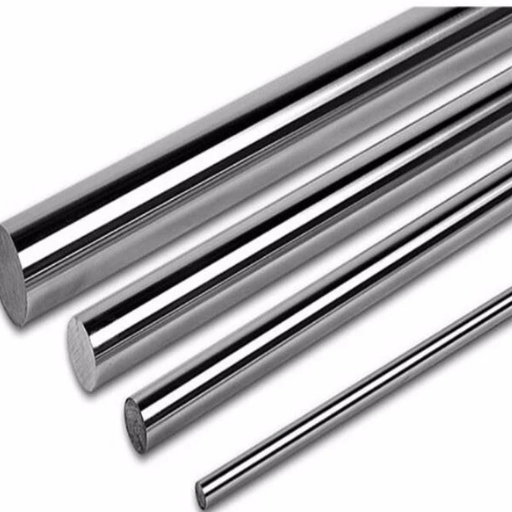
In Condition A, 17-7 PH is austenitic, soft and ductile. Forming behaviour and springback sit close to 301, which is familiar ground for anyone working spring-tempered strip.
That’s the point of the grade. Deep drawn diaphragms, rolled and wound springs, bellows, formed clips and spun housings all depend on shaping the metal while it’s austenitic and hardening it afterwards.
17-4 PH in Condition A is already martensitic at roughly 33 HRC. You can bend it and machine it, but you can’t deep draw it or wind it into a spring. Ask for a 17-4 PH spring and you usually mean a 17-7 PH spring or a 302.
Form in Condition A, then harden. Forming after hardening cracks the part, and no heat treatment puts it back.
Forming Limits in Condition A
Condition A work-hardens, so multi-stage forming needs an interstage anneal rather than more press tonnage, and tooling should be built for the springback rather than corrected after the first article.
Cold work done in Condition A also raises the hardness you get after aging. That’s the mechanism CH 900 uses deliberately.
Strength, Toughness and the Peak That Isn’t the Point
The headline number on most comparison pages is 17-7 PH at roughly 1,650 MPa against 17-4 PH at roughly 1,380 MPa. That’s misleading.
The 1,650 MPa figure belongs to CH 900, which requires cold reduction before aging. CH 900 exists in strip only. You can’t buy CH 900 bar, because there’s no way to cold-reduce a bar to that level uniformly.
The fair comparison is TH 1050 at 1,140-1,240 MPa against 17-4 PH at H1025 or H1075, and there 17-4 PH holds its own. At equal strength it’s also the more forgiving of the two on elongation and toughness.
So the honest statement is narrower than the marketing: 17-7 PH reaches the highest strength in the family, in one product form, in one condition.
What it offers at peak is near-zero distortion, because the part is formed before it hardens. For a diaphragm that must stay flat to a few microns, that’s worth more than 200 MPa.
17-4 PH vs 17-7 PH Corrosion Resistance
Both grades are molybdenum-free, so neither has meaningful pitting or crevice resistance in chlorides. That’s the ceiling for both.
Within it, 17-4 PH has the better general corrosion resistance of the two. 17-7 PH corrosion resistance is close to 304 in Condition A and drops as the material hardens, with RH 950 the least resistant hardened condition.
The mechanism is in our 17-4 PH corrosion resistance guide: chromium availability at the surface, not the alloy name.
Neither grade belongs in a marine atmosphere, a chloride wash-down or sour service without someone checking the hardness limit as well as the grade. If the environment is the deciding factor, 316 or duplex 2205 is the honest answer.
When the Answer Is PH 15-7 Mo
PH 15-7 Mo (UNS S15700) is 17-7 PH with roughly 2.25% molybdenum added. Same semi-austenitic family, same conditioning sequence, better chloride resistance and a higher strength ceiling.
It’s the grade to name when someone needs 17-7 PH’s formability and can’t live with its corrosion limits. Almost no comparison page mentions it, which is how buyers specify 17-7 PH into the wrong environment.
Priya’s team in Pune specified 17-7 PH for a formed bellows in a plant with regular chloride wash-down. Formability was the hard requirement, and the corrosion question got answered with “it’s stainless.” Eighteen months in, the bellows pitted at the convolution roots. The fix wasn’t a heat treatment. It was PH 15-7 Mo, which formed the same way.
Magnetic Behavior: The Diagnostic That Settles It
17-4 PH is ferromagnetic in every condition, because it’s martensitic from the day it ships.
17-7 PH magnetic behaviour depends on condition. In Condition A it’s essentially non-magnetic, with permeability near 1.0. After conditioning and aging it’s ferromagnetic, and permeability rises into the tens and beyond.
That’s a free inspection tool. A magnet tells you which grade you’re holding, and on a 17-7 PH part it tells you whether hardening happened. A “hardened” part that won’t attract a magnet never saw the sub-zero step.
For sensor housings and instrument parts this becomes a design constraint rather than a diagnostic. Our guide to whether 17-4 PH is magnetic has the permeability numbers.
Welding and Machining: Where Each Grade Fails
Machining splits cleanly. 17-4 PH in Condition A machines well at about 33 HRC, and better in the overaged conditions. 17-7 PH in Condition A is gummy austenitic material that work-hardens under the tool, and after hardening it sits at 44-48 HRC. It is not a machine-from-bar grade.
Welding splits the same way. 17-4 PH welds readily and responds to post-weld treatment, which our 17-4 PH welding guide covers. 17-7 PH welds, but the weld zone doesn’t transform and harden to parent properties, so the joint stays weaker than the base metal whatever you do afterwards.
If the assembly has to be welded and used as-welded, that alone rules out 17-7 PH.
17-4 PH vs 17-7 PH Cost, Availability and Product Form
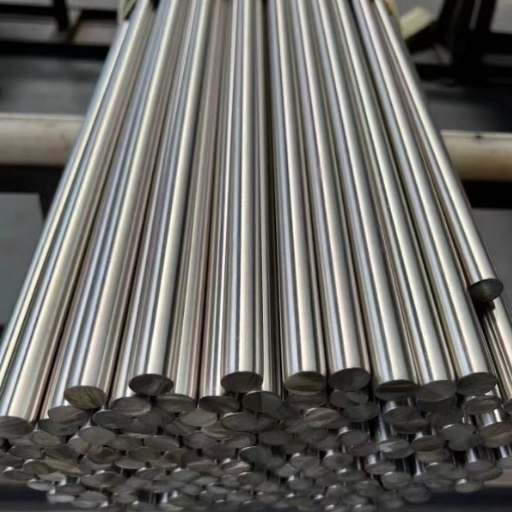
17-7 PH stainless steel is stocked mainly as strip, sheet, wire and bar. 17-4 PH is stocked as bar, plate and forgings almost everywhere, in every condition, from a long list of suppliers.
That gap is the cost that doesn’t show up in a price per kilo. A specific 17-7 PH condition is more often a mill order than a stock item, and mill orders carry minimums.
The cost that decides the comparison is process cost: machining hours against forming hours, times quantity. A part with a long machining cycle and a simple formed shape usually wins on 17-7 PH even at a higher material price.
We supply both grades in the condition and product form the drawing calls for, and we’ll say when the form you’ve specified isn’t the one the process needs. Custom processing covers cutting and slitting; the 17-4 PH price guide breaks down what each condition adds.
Frequently Asked Questions
What is the difference between 17-4 PH and 17-7 PH?
17-4 PH is martensitic and hardens in one aging step. 17-7 PH is semi-austenitic, stays formable in Condition A, and needs conditioning, a sub-zero hold and aging.
Is 17-7 PH stronger than 17-4 PH?
Only at CH 900, roughly 1,650 MPa, which is cold-reduced strip and not available in bar. At TH 1050 it sits in the same band as 17-4 PH at H1025.
Is 17-7 PH magnetic?
Not in Condition A, where it’s essentially non-magnetic. It becomes ferromagnetic once conditioned and aged. 17-4 PH is magnetic in every condition.
Can you weld 17-7 PH?
Yes, but the weld zone won’t harden to parent properties. Use 17-4 PH if the joint is structural.
What is 17-7 PH used for?
Springs, diaphragms, bellows, retaining rings, clips and formed aerospace sheet. Anything formed first and hardened second.
Is 17-7 PH corrosion resistant?
Moderately. It’s close to 304 in Condition A and drops as it hardens, and it’s molybdenum-free, so it isn’t a chloride answer.
What is Condition A in 17-7 PH?
The solution-annealed state, around 1,065 °C, cooled to room temperature. Austenitic, soft, about 20 HRC maximum, and formable.
Why does 17-7 PH need a sub-zero treatment?
Not all the austenite transforms at room temperature. The roughly -73 °C hold drives the rest, and without it aging hardens very little.
Can you machine 17-7 PH?
You can, but it’s the wrong process. Condition A is gummy and work-hardens, and the hardened conditions run 44-48 HRC.
Is 17-7 PH the same as 631?
Yes. 17-7 PH is AISI 631, UNS S17700 and EN 1.4568. The Chinese designation is 07Cr17Ni7Al.
Conclusion: 17-4 PH vs 17-7 PH in One Decision
| If the part is… | Use | Because |
|---|---|---|
| Machined from bar, high strength needed | 17-4 PH at H900 to H1075 | One aging step, bar stocked everywhere |
| Deep drawn, spun or wound, then hardened | 17-7 PH in Condition A, then TH 1050 | Austenitic and ductile as supplied |
| A spring needing maximum strength | 17-7 PH at CH 900 | Cold-reduced strip only |
| Required to be non-magnetic in service | 17-7 PH in Condition A | Permeability near 1.0 |
| Formed and exposed to chlorides | PH 15-7 Mo | Same formability, molybdenum added |
| Welded and used as-welded | 17-4 PH | 17-7 PH weld zone won’t match the parent |
The 17-4 PH vs 17-7 PH question isn’t which grade is better. It’s which process the part needs.
Get the process right and the grade follows. Get it wrong and no heat treatment rescues the part.
The complete 17-4 PH stainless steel guide puts this comparison back in the context of the whole family. If you’re holding a drawing and a process route, send both and we’ll confirm the grade, the condition and the product form before anything is cut. Request a quote with the condition you need.