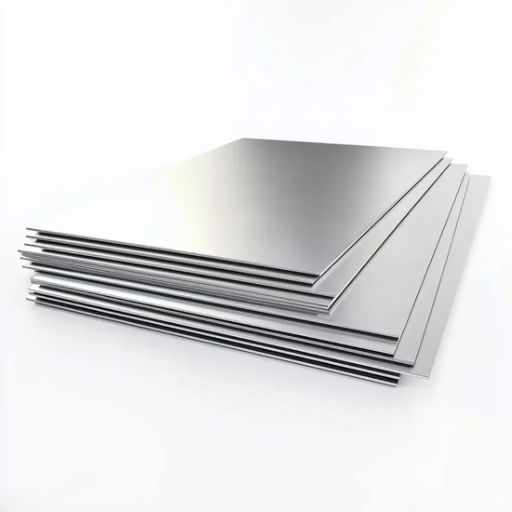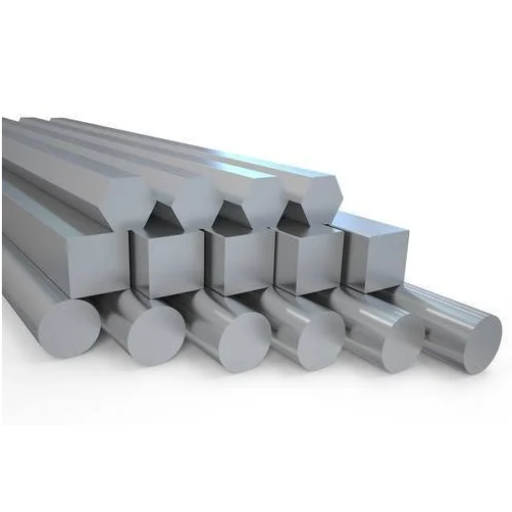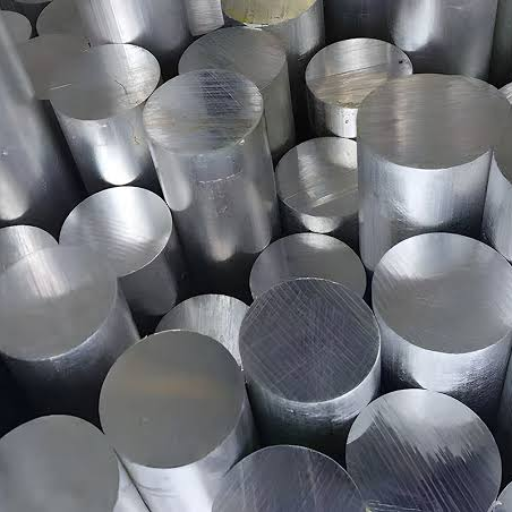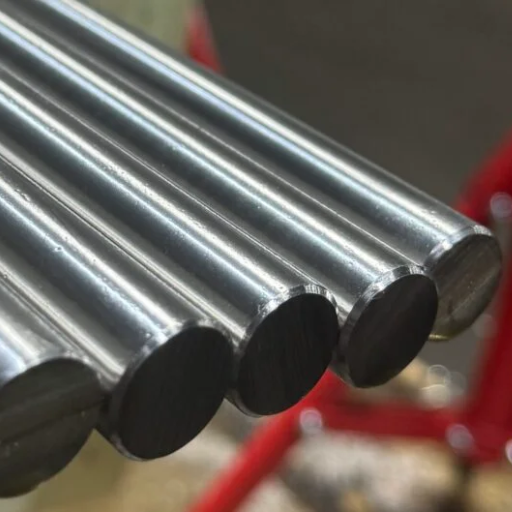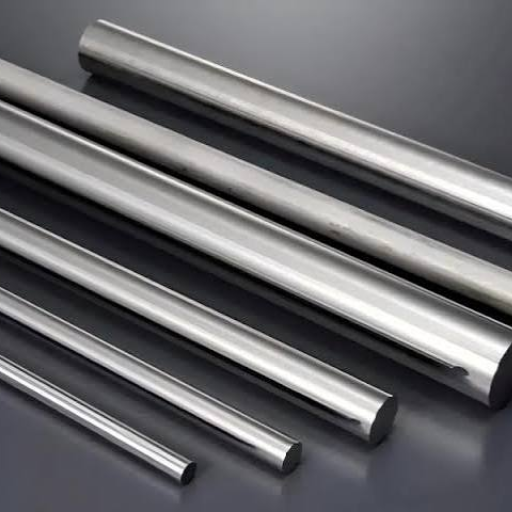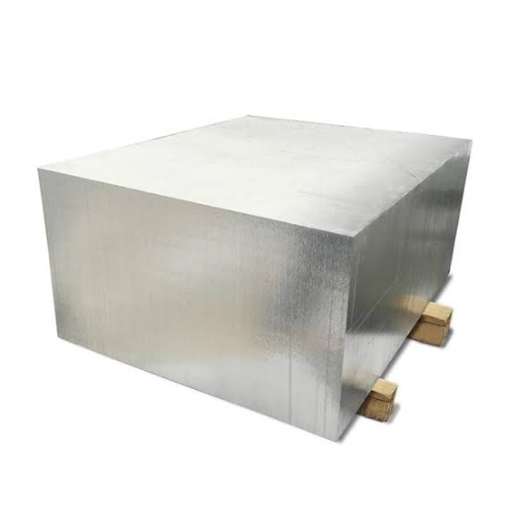
7075 aluminum is a heat-treatable zinc-magnesium-copper alloy and the strongest aluminum most buyers can source in plate and bar. In T6 it typically reaches 572 MPa tensile and 503 MPa yield, roughly 1.8 times the yield of 6061-T6. It is also the alloy that punishes a careless specification harder than any other in common industrial use.
A tooling plate is ordered from a drawing that says “7075-T6, 500 MPa yield.” The buyer checked a datasheet, saw 503 MPa, and signed. At 75 mm thick, the guaranteed minimum is 421 MPa. The material is not defective; the datasheet number was never a promise.
This guide covers the alloy, the temper each drawing needs, and how to write a purchase order that survives a mill. Send us the drawing and we will confirm the temper and thickness band it needs. Still choosing between grades? The 6061 vs 7075 aluminum comparison starts one level up.
Key Takeaways
- 7075-T6 typicals are 572 MPa tensile and 503 MPa yield. AMS 4045 minimums for sheet and plate run from 538 / 469 MPa at 1 to 3 mm down to 462 / 372 MPa at 89 to 102 mm.
- Temper sets strength and corrosion together. T6 is the strongest common condition; T73 and T7351 give up about 13 percent of yield for resistance to stress-corrosion cracking.
- T651 is T6 plus a 1.5 to 3 percent stretch before aging. Typical strength is unchanged, but the plate stays flat after machining.
- 7075 aluminum is not a structural fusion-welding alloy. Resistance spot welding and friction stir welding are qualified processes, not workshop options.
- It anodizes to a gray-bronze cast and dyes unevenly because of its copper and zinc. For a bright finish, use 6061 or 6063.
What Is 7075 Aluminum?
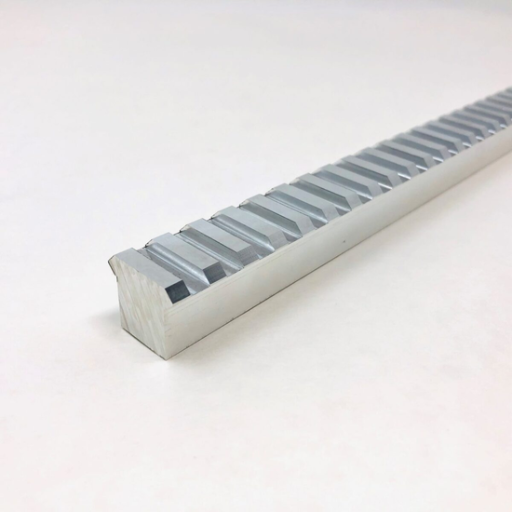
7075 aluminum belongs to the 7xxx series, where zinc is the principal alloying element and magnesium and copper do the rest. Solution treatment dissolves the elements into the matrix; aging precipitates them as fine particles that block dislocation movement. That is where the strength comes from.
Sumitomo developed the alloy in the mid-1930s for airframe use, and Alcoa reverse-engineered a captured Japanese aircraft in 1943. It is still the reference high-strength aluminum.
Its limits follow from its chemistry. Copper raises strength and lowers corrosion resistance, zinc leaves the alloy sensitive to stress corrosion under sustained tension, and the high alloy content makes it hard to weld and awkward to anodize. That is the price of 572 MPa.
7075 Aluminum Composition
| Element | Content (wt%) |
|---|---|
| Zinc | 5.1–6.1 |
| Magnesium | 2.1–2.9 |
| Copper | 1.2–2.0 |
| Chromium | 0.18–0.28 |
| Silicon | 0.40 max |
| Iron | 0.50 max |
| Manganese | 0.30 max |
| Titanium | 0.20 max |
| Other, each / total | 0.05 / 0.15 max |
| Aluminum | Balance |
Zinc and magnesium form the strengthening precipitate; copper raises attainable strength and shifts the corrosion behavior; chromium controls grain structure and resists stress-corrosion cracking. The alloy is registered as UNS A97075, EN AW-7075 (AlZn5.5MgCu) and JIS A7075, against ASTM B209 for sheet and plate, ASTM B211 for bar and ASTM B221 for extrusions. Aerospace release adds AMS 4045 for T6 sheet and T651 plate, AMS 4078 for T73 and T7351 plate, and AMS 4122 and 4123 for bar.
7075 Aluminum Alloy Properties
Typical Versus Minimum: The Number That Decides the Design
The 572 and 503 MPa figures are typical values from Aluminum Association data on small bar: what a good mill produces, not what it guarantees. AMS 4045 writes the guarantee in thickness bands; these are the verified minimums for 7075-T6 sheet and T651 plate.
| Nominal thickness | Min tensile | Min yield | Min elongation |
|---|---|---|---|
| 0.99–3.18 mm | 538 MPa | 469 MPa | 9% |
| 3.18–4.75 mm | 545 MPa | 476 MPa | 9% |
| 6.32–12.67 mm | 538 MPa | 462 MPa | 9% |
| 25.40–50.80 mm | 531 MPa | 462 MPa | 6% |
| 50.80–63.50 mm | 524 MPa | 441 MPa | 5% |
| 63.50–76.20 mm | 496 MPa | 421 MPa | 5% |
| 88.90–101.60 mm | 462 MPa | 372 MPa | 3% |
The minimum peaks in thin sheet at 476 MPa yield and collapses at the top: at 89 to 102 mm the guaranteed yield is 372 MPa, 26 percent below the typical figure people quote. Thick sections cool more slowly, so the aging response is less complete and the plate center carries more residual stress. Above 102 mm the alloy falls outside AMS 4045, and bar minimums live in AMS 4122 and 4123, so do not carry this table across forms.
Yield Strength and Mechanical Properties by Temper
| Property (typical) | 7075-O | 7075-T6 / T651 | 7075-T73 / T7351 |
|---|---|---|---|
| Tensile strength | 228 MPa | 572 MPa | 505 MPa |
| Yield strength | 103 MPa | 503 MPa | 435 MPa |
| Elongation | 16–17% | 11% | 13% |
| Hardness | 60 HB | 150 HB | 135 HB |
| Shear strength | 152 MPa | 331 MPa | n/a |
| Fatigue strength | n/a | 159 MPa | n/a |
These are handbook typicals of the kind in the Aircraft Materials 7075 datasheet. Treat the 7075 aluminum yield strength figures as a starting point, not an allowable; fatigue is rotating-beam data at 5×10⁸ cycles.
Physical Properties
| Property | Value |
|---|---|
| Density | 2.81 g/cm³ |
| Modulus of elasticity | 71.7 GPa |
| Shear modulus | 26.9 GPa |
| Poisson’s ratio | 0.33 |
| Thermal conductivity (25 °C) | About 130 W/m·K (T6), 173 (O) |
| Thermal expansion (20–100 °C) | 23.6 µm/m·°C |
| Electrical conductivity (T6) | About 33% IACS |
| Melting range | 477–635 °C |
| Solution treatment | 466–482 °C |
Strength, Stiffness and Weight
Temper changes strength, not stiffness. The modulus sits at 71.7 GPa in every condition, so a part that deflects too much won’t deflect less after a temper upgrade.
Density gives a shortcut: 1 mm sheet weighs about 2.81 kg/m², so multiply by thickness in millimetres, or use a metal weight calculator. Yield divided by density explains why the alloy exists: 7075-T6 reaches about 179 kN·m/kg, against 102 for 6061-T6 and 32 for mild steel. Check the thickness band before trusting a typical value.
7075 Tempers: The Part That Decides Strength and Corrosion
What Each Temper Means
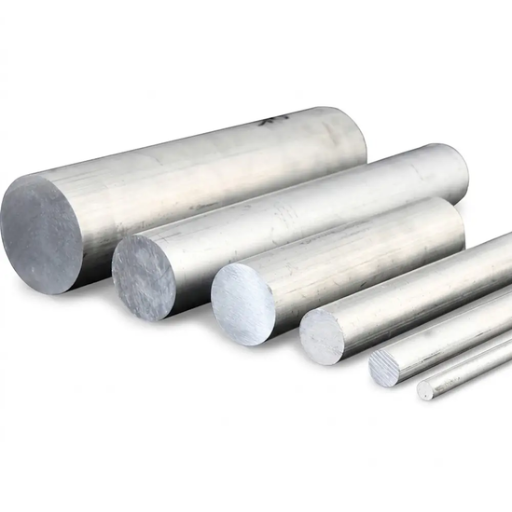
Most orders name 7075 T6 aluminum, 7075 T651 or 7075 T7351, and the difference between them is not cosmetic.
- O is annealed, the softest condition, at about 103 MPa yield.
- T6 is solution heat-treated and artificially aged, the peak-strength condition.
- T651 is T6 with stress relief by stretching, applied to plate.
- T6511 is T651 with straightening, applied to extruded bar and shapes.
- T73 is solution heat-treated and overaged, trading strength for corrosion resistance.
- T7351 is T73 with stress relief by stretching, applied to plate.
- T74 and T76 are other overaged families for a different strength and exfoliation balance.
Solution treatment runs 466 to 482 °C, followed by a quench, then T6 aging at about 120 °C for 24 hours. That is also a service warning: sustained exposure near the aging temperature will overage 7075 aluminum and drop its strength.
Why T73 Exists
Heat treatment leaves grain boundaries electrochemically different from the grain interiors. Put a sustained tensile stress across them in the short-transverse direction, add moisture and chloride, and a crack can start and keep going with little warning. That is stress-corrosion cracking, and 7075-T6 is more susceptible to it than most aluminum alloys.
T73 solves it by overaging: the precipitate coarsens, the electrochemical difference shrinks, and the alloy tolerates sustained stress in a corrosive environment. The cost is strength, with yield falling from about 503 MPa to about 435 MPa. A wing spar or bulkhead loaded for years in humid air is normally T7351; a coated bracket loaded intermittently stays T6.
T6 vs T651: Why Machined Plate Moves
Quenching a thick plate leaves residual stress locked into it. Machine away one face and the plate bows or loses flatness, and the effect gets worse as more material comes off.
T651 addresses this directly. The plate is stretched after quenching to a nominal permanent set of 2 percent, permitted between 1.5 and 3 percent, then aged. AMS 4045 bars any straightening after the stretch, because straightening would put the stress back.
Typical strength is identical to T6. The difference appears only after machining, which is when it is expensive to discover. A shop buys a fixture plate as 7075-T6, faces one side, and watches it curl off the table. The alloy was right; the temper was wrong.
How to Write the Temper on a Drawing
A complete callout names alloy, temper, standard, form and thickness together:
7075-T651, AMS 4045, plate, 50 mm, 600 × 400 mm, ultrasonic inspection per ASTM B594, mill certificate with heat number.
“7075” alone tells the mill the chemistry and leaves the condition open. It could ship T6, T651, T73 or T7351, conditions that differ by 13 percent in yield and far more in stress-corrosion behavior.
Corrosion, Stress-Corrosion Cracking and Anodizing
General Corrosion Versus SCC
General corrosion is surface attack. 7075 aluminum resists atmosphere and fresh water reasonably well, better than the 2000-series alloys, and poorly in continuous chloride, which is why it is not a marine alloy.
Stress-corrosion cracking is a different failure mode: it propagates under sustained tensile stress in a corrosive environment, usually along grain boundaries in the short-transverse direction, and needs no visible surface damage. Thick sections, sustained load and moisture together are the risk combination; overaging to T73 is the metallurgical answer.
Anodizing 7075
7075 accepts an anodic coating, including hard anodizing, but the result isn’t what a 6061 part looks like. Copper and zinc produce a gray-to-bronze cast in a clear bath, and dye uptake is uneven across a lot: black works, bright colors come back muddy. Hard coatings are also brittle and cut fatigue strength, so on a fatigue part the coating belongs in the design.
For bright, uniform finishes, the 6061 aluminum alloy guide explains why 6061 and 6063 are better substrates.
Cladding, Conversion Coating and Paint
Aerospace practice rarely relies on bare 7075 aluminum. Sheet products are often Alclad, with a thin layer of more corrosion-resistant alloy rolled onto the core, while machined surfaces, holes and cut edges get a chemical conversion coating and primer.
If your part will see moisture and sustained stress, the coating system is part of the material specification, not a finishing afterthought. The guide to aluminum corrosion covers the mechanisms.
Machining, Forming and Joining 7075 Aluminum
Welding: Why 7075 Is Not a Weldment Alloy
7075 aluminum welding is not a structural option. The alloy is crack-sensitive during solidification, and the thermal cycle destroys the precipitation hardening in the heat-affected zone. A sound-looking bead proves neither joint strength nor corrosion resistance.
Qualified exceptions exist. Resistance spot welding works for some sheet assemblies, and friction stir welding avoids bulk melting and has real industrial history with high-strength aluminum, though tool path, thickness and post-weld properties need qualification. Neither is a workshop default. Design around welding with sealed fastening or adhesive bonding; if the part must be welded, use 6061.
Machining
7075 machines well. Chips break cleanly, finish is good, and it holds tight tolerances in the T6 family, which is why it dominates high-load machined components. Three issues come up. Tool wear is higher than with 6061, thin walls chatter, and residual stress releases as metal is removed. For heavy stock removal, start with T651 plate, rough machine, stress-relieve, then finish.
Forming and Bending
O temper forms like a much softer alloy. T6 does not: bend radii in the T6 family are large, springback is significant, and tight bends crack.
If a part needs both T6 strength and a formed shape, form it in O or T4 and heat treat afterward, accepting the quench distortion. Warm and hot forming are process development work. The guide to bending aluminum sheet and plate gives bend radii and springback by temper.
7075 vs Other Aluminum Alloys
| Alloy and temper | Typical tensile / yield | Best at | Trade-off against 7075 |
|---|---|---|---|
| 7075-T6 | 572 / 503 MPa | Maximum strength at minimum weight | Baseline |
| 7050-T7451 | 510 / 441 MPa (plate under 50 mm) | Strength retention in thick plate, SCC | Slightly lower strength in thin sections |
| 2024-T3 | 483 / 345 MPa | Fatigue in sheet | Lower strength, poorer corrosion resistance |
| 6061-T6 | 310 / 276 MPa | Welding, forming, anodizing, availability | About 45 percent less yield strength |
| 6082-T6 | 295 / 240–270 MPa by form | European structural extrusions | Lower strength, less available in North America |
| 5083-H116 | About 305 / 230 MPa | Marine plate, welded structures | Not heat-treatable, much lower strength |
7050 and Thick Plate
7050 takes over where 7075 gets thin on guaranteed strength. It replaces chromium with zirconium at 0.08 to 0.15 percent and tightens iron and silicon to 0.15 and 0.12 percent maximum. The zirconium forms fine dispersoids that pin the grain structure, suppress recrystallization and lower quench sensitivity.
In thick sections the difference shows. 7050-T7451 plate under 50 mm typically reaches 510 MPa tensile and 441 MPa yield. At 100 to 125 mm it still holds 490 and 421 MPa, against 462 and 372 MPa guaranteed for 7075-T651 at the same thickness under AMS 4050. Above roughly 75 mm, the 7050 vs 7075 aluminum question is worth asking before the order goes out.
When 7075 Is the Right Answer, and When It Is Not
Choose 7075 aluminum when the part is highly loaded, weight-critical, machined rather than welded and protected from sustained corrosive attack. Choose 6061 for welded, tightly formed or bright-anodized parts; 5083 or 5052 for marine plate; 2024 where fatigue in thin sheet dominates; 7050 for thick plate under sustained load.
Applications: Where 7075 Earns Its Premium
7075 aluminum shows up where strength-to-weight decides the design: aircraft spars, stringers, frames and bulkheads; structural fittings and brackets; ordnance and defense components; gears, shafts and worm wheels; molds, tooling plates and jigs; bicycle drivetrain parts.
Note what is not on that list. Boat hulls are not, because the alloy is not a marine one. Welded bicycle frames are not, because it is not a fusion-welding alloy. Architectural trim belongs to 6063.
A prototype group designs a welded frame in 7075 to save weight. The first article is TIG welded, and it cracks at the weld toe during proof loading. The redesign uses 6061-T6 extrusions and bolted 7075 gussets, and it passes. The alloy was right for the gussets and wrong for the frame.
DAPU supplies aluminum alloy plate, including AA 7075 (EN AW-7075) plate in T6 and T651; confirm temper and thickness at quotation, particularly above 100 mm.
How to Specify 7075 Aluminum on a Purchase Order
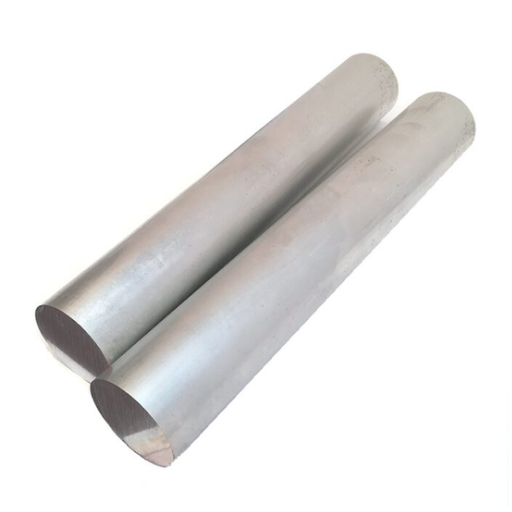
A purchase order that prevents most disputes contains eight lines:
- Alloy and temper: 7075-T651, 7075-T6 or 7075-T7351, not “7075.”
- Standard and revision: AMS 4045, AMS 4078 or ASTM B209, with the revision where the program requires it.
- Form and thickness: plate, sheet or bar, with nominal thickness and tolerance class.
- Dimensions and quantity: cut size, quantity and saw tolerance.
- Flatness and straightness: especially for machined plate.
- Inspection: ultrasonic per ASTM B594 when the plate is 12.7 mm or thicker and the application warrants it.
- Certificate: mill test report with heat number, chemistry and mechanical results, marked typical or minimum.
- Packaging: bare or clad, protective film, edge condition and face protection.
If the drawing is still open, send us the specification and we will confirm which temper, thickness band and inspection level fit the part.
Frequently Asked Questions
Is 7075 aluminum strong?
Yes. In T6 it typically reaches 572 MPa tensile and 503 MPa yield, about 1.8 times the yield of 6061-T6 and comparable to some alloy steels per unit weight. Steel still wins on absolute strength: a 355 MPa structural steel out-yields it at 2.8 times the density.
Can you weld 7075 aluminum?
Not with conventional fusion welding for structural joints. The alloy is crack-sensitive and the heat-affected zone loses temper. Resistance spot welding and friction stir welding are qualified processes with specific procedures and inspection. For a welded assembly, specify 6061.
What is the difference between 7075-T6 and 7075-T651?
Both have the same typical strength. T651 is stretched after quenching to a permanent set of 1.5 to 3 percent and then aged, which relieves residual stress and keeps the plate flat after machining.
Is 7075 aluminum good for marine use?
No. It resists atmosphere and fresh water but performs poorly in continuous chloride exposure. For marine plate and welded hull structures, 5083 or 5052 is the correct specification.
Is 7050 better than 7075 for thick plate?
Usually, above about 75 mm. 7050 holds guaranteed strength better in thick sections because zirconium lowers quench sensitivity.
Conclusion
7075 aluminum is the strongest aluminum in everyday industrial supply, and the easiest to specify badly. The brochure number, 572 MPa, is typical data from small bar; what a design can rely on sits in a thickness band in AMS 4045, and it falls as the section grows.
Write the full string on the drawing: alloy, temper, standard, form and thickness. Choose T651 when the plate will be machined flat, and T73 or T7351 when it carries sustained load in a corrosive environment. Do not plan to weld 7075 aluminum or expect it to anodize like 6061. Above 75 mm, compare it against 7050 before you commit.
If you are sourcing 7075 aluminum or 7050 plate, send the drawing with the temper, thickness and inspection level you need. Request a quote and we will confirm what the certificate will state for that band.