17-4 PH machines at roughly 45-50% of a free-machining baseline in Condition A, about 76% in the overaged H1150-M condition, and only about 60% of the Condition A rate once the part has been aged to H900. The condition the bar arrived in decides the job, not the grade name on the certificate.
Most 17-4 PH pages leave that out, publishing a hardness column, an SFM band and a work-hardening warning without asking which condition the reader is holding.
Ana runs a small turning shop near Leiria, in Portugal. In 2024 she quoted a batch of pump shafts off a 304 job sheet: same cycle time, same insert, same program. The first four parts came off with a finish she could not hold and an edge that was gone in eleven minutes. The bar was H900. Nobody had checked the condition line on the mill certificate.
The difference between a 45% material and a 25% material is not a footnote. It is the quote. Below: why the published ratings disagree, the ladder that resolves them, and the chatter trap that decides whether the job runs. For the wider family, see our complete 17-4 PH stainless steel guide.
Key Takeaways
- 17-4 PH machinability runs from about 45-50% of baseline in Condition A to roughly 76% in H1150-M; H900 cuts at about 60% of the Condition A rate.
- The 45%, 48%, 50% and 19% ratings online use different baselines (B1112 against C1212) and are not interchangeable.
- The 60-80 SFM in mill bulletins is an HSS-era automatic rate. Coated carbide runs 300-500 SFM in the same material.
- Aging contracts the part 0.04-0.06% at H900 and 0.09-0.12% at H1150, so rough, age, then finish.
- Low speed with a light feed rubs instead of cutting. Raise the feed and the depth of cut, never the speed.
What Is 17-4 PH Machinability?
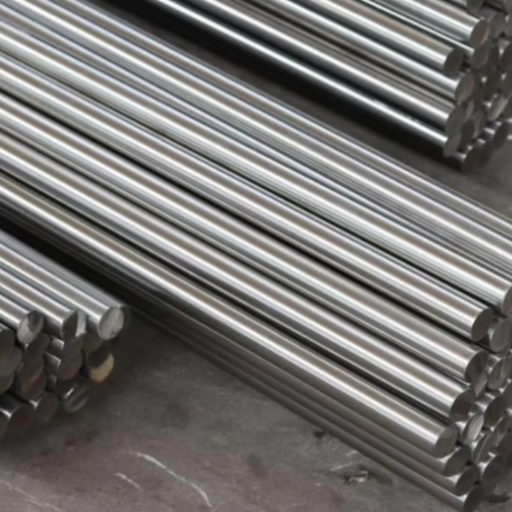
17-4 PH machinability is about 45-50% of a free-machining baseline in the solution-annealed Condition A, roughly 75-76% in the overaged H1150 and H1150-M conditions, and about 60% of the Condition A rate after aging to H900. The rating belongs to the condition, not the grade.
Why the Machinability Numbers Disagree
Search the phrase and you get four numbers: 45%, 48%, about 50%, and one chart that says 19%.
- 45% comes from distributor listings and machining datasheets such as OnlineMetals and Canton Drop Forge.
- 48% in Condition A at around 80 ft/min, and 76% in H1150-M at around 125 ft/min is Ryerson’s pair. Our 17-4 PH vs 304 comparison uses the same two figures.
- About 50% in Condition A and about 75% overaged is the Smiths Metal AMS 5643 datasheet, which corroborates Ryerson without matching it exactly.
- 19% is not credible for Condition A at roughly 34 HRC. It describes a hardened condition.
The percentages differ partly because the tests differ and partly because the baselines differ: some tables normalise to B1112 free-cutting steel, others to C1212.
The cutting-speed numbers disagree far more violently. The AK Steel/Armco bulletin, Table 22, gives Condition A an automatic cutting rate of 60-80 SFM at about 34 HRC. Coated-carbide guidance for the same material gives 300-500 SFM, roughly 90-150 m/min.
Both are correct. The bulletin number belongs to high-speed steel on automatic screw machines. The 300-500 SFM band belongs to coated carbide with through-tool coolant. Conservative shop tables sit between them at 150-250 SFM, which is what happens when a 1990s insert is asked to do a 2020s job.
For a quote: plan on 40-50% of baseline in Condition A, and expect a cycle time around 1.5-2x the same part in 304.
Machinability by Condition: The Table That Decides the Job
Condition is chosen for what the part does in service. The machining plan follows from that choice.
| Condition | Typical hardness | Relative machinability | Starting speed, coated carbide | At the machine |
|---|---|---|---|---|
| Condition A | 30-36 HRC (363 HB max, ASTM A564) | 45-50% of baseline | 90-150 m/min turning | Softest and gummiest; the roughing state |
| H900 | 40-47 HRC | ~60% of the Condition A rate | 30-60 m/min | Finish or grind only; 2-3x the cycle time |
| H925 | 38-42 HRC | Slightly better than H900 | Between H900 and H1150 | Still a finishing state |
| H1025 | 34-42 HRC | Workable, not free-cutting | 60-100 m/min | The common strength/cost middle |
| H1075 | 31-39 HRC | Better than H1025 | Between H1025 and H1150 | Chips start to break |
| H1100 | 29-36 HRC | Close to H1150 | Between H1025 and H1150 | Rarely specified; pleasant to cut |
| H1150 | 28-35 HRC | About 75% (Smiths Metal) | 90-150 m/min | Best general machining condition |
| H1150-M | 24-29 HRC | About 76% at ~125 ft/min (Ryerson) | 100-130 SFM, per Armco | Best chip break; see the drilling caveat |
Full property data by condition is in our 17-4 PH properties guide. Two rows carry most of the commercial value.
Why H1150-M Machines Best
H1150-M is the double-overaged condition: H1150 followed by a second aging step at a lower temperature. The extra cycle coarsens the structure and overages the precipitate, so chips break and clear instead of smearing onto the edge.
It also carries a caveat almost nobody reproduces: the Armco bulletin does not recommend H1150-M for drilling or boring. The condition that turns and mills best is the one to avoid for a deep hole. If the drawing allows H1150-M and the part is mostly turned, the shop gets a job that behaves far better at the spindle.
What H900 Costs You at the Spindle
H900 is the highest-strength standard condition at 40-47 HRC, cutting at roughly 60% of the Condition A rate: two to three times the cycle time, faster edge wear, and a surface that work-hardens if the tool dwells. The rule that follows is a routing rule. Rough in Condition A, leave stock on every critical feature, age it, then finish-machine or grind. Machining H900 from solid at volume is a way to lose money slowly. The cycles are in our 17-4 PH heat treatment guide.
What Makes 17-4 PH Hard to Machine
Two mechanisms do the damage.
The first is work hardening. 17-4 PH is martensitic, and martensite strain-hardens under an edge that rubs instead of shears. The skin under a light pass can come out 25-40% harder than the bulk, and the next pass cuts through that layer. That is why a “gentle” finishing pass often produces a worse surface than a heavier one.
The second is low thermal conductivity. Heat does not leave through the chip or the workpiece quickly, so it concentrates at the edge. The result is built-up edge, adhesion wear, notch wear at the depth-of-cut line and, eventually, chipping. The symptom is what machinists call gummy: long stringy chips weld to the edge instead of clearing, and the finish goes from acceptable to torn within a few parts.
Wen runs a CNC lathe in Ningbo and hit this on a run of Condition A fittings in 2023. Chatter started on a slender bore, so he did the obvious thing and dropped the spindle speed by 20%. The chatter got worse. His tool rep suggested the opposite: hold the speed and raise the feed and the depth of cut so the edge stayed under the hardened skin instead of skating across it. The chatter cleared on the second part.
When 17-4 PH complains, most machinists slow down. Slowing down is what created the problem.
Cutting Parameters by Operation
One speed for the grade is the advice that breaks tools. In a hole the edge dwells, the coolant struggles to reach the tip, and the chip has one way out.
| Operation | Condition A | H1150 / H1150-M | H900 | Feed floor |
|---|---|---|---|---|
| Turning | 90-150 m/min | 90-150 m/min | 30-60 m/min | 0.08-0.10 mm/rev |
| Milling | 60-125 m/min conventional; higher in trochoidal paths | 60-125 m/min | 30-50 m/min | 0.05 mm/tooth |
| Drilling | 20-35 m/min | 30-50 m/min (BTA) | Not recommended | 0.05-0.15 mm/rev by diameter |
| Tapping | Single-digit m/min | Low | Avoid | Form tap or thread mill |
Those feeds are floors, not midpoints. A pass below the floor rubs, and rubbing is what work-hardens the surface you are about to finish.
Turning and milling. Use positive rake, a sharp edge and a constant chip load. Depth of cut should clear the work-hardened layer from the previous pass, which means not sneaking up on the final dimension in a series of 0.1 mm passes. Trochoidal paths raise the ceiling because they control radial engagement and spread the heat. On a documented correction, raising a 0.05 mm finish pass to 0.15 mm and the feed to 0.010 IPR roughly doubled tool life and moved Ra from 1.6 µm to 0.6 µm.
Drilling. Condition A runs at 20-35 m/min, a fraction of the turning speed, and this is where built-up edge does the most damage. Above roughly 50 m/min, thermal failure at the tip is rapid. Through-tool coolant is the enabler, and pecking that re-cuts chips work-hardens the bottom of the hole. In H1150, BTA drilling runs 30-50 m/min, which is the argument for specifying the overaged condition on a drilled part.
Tooling, Coolant and the Five Shop Rules
Use an M-grade substrate, M30-M40, not a P-grade steel insert. The M class is built for stainless and PH work: tougher substrate, sharper edge, better adhesion-wear resistance. Prefer PVD over CVD, because a thinner coating keeps the edge sharp, and a sharp edge is a work-hardening control.
For H900 finishing, cermet and CBN earn their price. A motor manufacturer cutting 17-4 PH at about 450 HB moved from an uncoated carbide edge at 170 SFM and 0.0040 ipr, which gave 30 parts per finishing edge, to a titanium-based cermet at 320 SFM and 0.006 ipr, which gave 540 pieces across four edges, with cut time falling from 4.5 minutes to 1.4. The Modern Machine Shop case study has the full numbers.
Coolant. Continuous flood is the floor. Drilling and deep holes need through-tool or high-pressure coolant, because the alternative is a galled hole or a snapped drill. Shops disagree about turning, some running high-pressure air to avoid thermal shock and others insisting on flood. The rule that survives the disagreement is simple: never dry, never intermittent.
The five shop rules.
- Never take a light spring pass over a work-hardened skin. It rubs, hardens the surface further and ruins the finish.
- When chatter starts, raise the feed and the depth of cut, not the speed. Keep the edge loaded.
- Do not let the tool dwell. Any pause in feed is a rubbing operation.
- Retire the edge on a schedule, not at failure. 17-4 PH fails by chipping, which arrives without warning.
- Check the condition on the certificate before the first cut. The most expensive 17-4 PH machining error is machining H900 that was ordered as Condition A.
Threading and Tapping: The Real Bottleneck
Threads are where 17-4 PH jobs go wrong most often, and small blind holes are the worst case.
The ranked order is thread milling, then form tapping, then spiral-flute cut tapping. Thread milling wins because it cuts intermittently, clears chips and does not depend on a tap surviving a blind hole. Form tapping wins in Condition A because it cold-forms the thread, and formed flanks gall less on assembly. Jarvis Cutting Tools documents the flank-quality difference against 316.
Goran runs a toolroom in Slovenia and spent most of a week in 2022 on an M1.6 blind hole in Condition A. Six cut taps broke in six parts. The fix was a form tap, a pilot hole drilled to the top of its tolerance and a dedicated tapping fluid, and the seventh part passed.
Cut threads before aging, because tapping H900 at 44 HRC is a losing proposition. Drill the pilot at the top of tolerance, because a formed thread needs the displaced material to have somewhere to go.
The Aging Allowance: Machining Is Also a Tolerance Plan
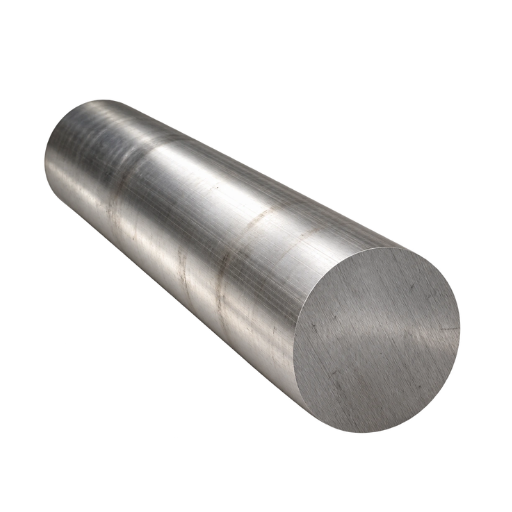
Aging is a heat treatment, and heat treatment moves dimensions. From the PMPA Craftsman’s Cribsheet No. 67 on dimensional contraction of 17-4 PH, the typical figures are 0.0004-0.0006 in/in for H900 (0.04-0.06%) and 0.0009-0.0012 in/in for H1150 (0.09-0.12%).
The overaged cycles move the part roughly twice as much, which is the opposite of what most people assume. Leave 0.25-0.5 mm (0.010-0.020 in) per side on critical bores, datums and fits, and 0.13-0.25 mm on thin sections, then follow the routing: rough and semi-finish, age, finish-machine or grind.
Three failure modes are worth naming, because they are not the same problem.
- Uniform contraction is predictable. Allow for it and it never bites.
- Residual-stress bow appears when one side of rolled plate is machined away and the plate relieves.
- Thin-wall distortion combines contraction with the stress of removing support, and calls for finishing after aging with light radial engagement and a lot of coolant.
The drawing should state the allowance and the condition. If it states neither, ask before quoting.
After Machining: Surface Finish and Passivation
A machined 17-4 PH face is grooved and work-hardened. Grooves hold chloride and promote pit initiation, which matters because this is a 17% chromium grade with 3-5% copper and no molybdenum. Finish with a controlled pass for Ra, then passivate to ASTM A967 or AMS 2700. Where heat tint is present, pickle to ASTM A380 first.
17-4 PH is the grade that blooms. Its copper content can redeposit as a reddish stain in an over-strong or over-hot nitric bath, and that stain accelerates corrosion rather than preventing it. The remedy is a controlled nitric Type II bath with a dichromate buffer, or citric passivation. Citric also lowers the hydrogen-embrittlement risk on high-strength parts.
Passivation removes free iron and restores the chromium-oxide film. It does not improve Ra, and it does not rescue the wrong alloy.
17-4 PH vs 304 vs 316 at the Machine
| 17-4 PH (Condition A) | 304 | 316 | |
|---|---|---|---|
| Typical hardness | 30-36 HRC | ~80 HRB | ~80 HRB |
| Machinability | 45-50% of baseline | ~45% of B1112 | ~36% of B1112 |
| Relative cycle time | 1.5-2x the 304 part | Baseline | Slower than 304 |
| Work hardening | Severe, martensitic matrix | Moderate | Moderate |
| Chip form | Long, stringy, welds to the edge | Stringy, easier to break | Stringy, gummier than 304 |
| Threads | Form tap in Condition A | Cut tap fine | Galls more than 304 |
| Post-machining | Age, then passivate | Passivate if specified | Passivate if specified |
Cycle time decides the quote, and it is why a 17-4 PH part typically prices at roughly 1.5-2x the same part in 304. The driver is the sequence, not the shop rate: soft machine, age, finish, plus the oversize stock and the scrap risk of a second operation. Our 17-4 PH price guide breaks down what each condition adds per kilo.
When 17-4 PH Is the Wrong Machining Choice
If the part needs 40 HRC or more in service and can be aged after machining, 17-4 PH is a reasonable route and the sequence above works. If it must be machined in the hardened state at volume, the answer is a different grade or process.
For heavy sections, 17-4 PH vs 15-5 PH explains why 15-5 PH holds transverse toughness better in thick bar. 17-7 PH is a form-from-strip grade, not a machine-from-bar grade. Where the strength case is marginal, 316 avoids the aging step entirely.
Frequently Asked Questions
What is the machinability rating of 17-4 PH?
About 45-50% of a free-machining baseline in Condition A, and roughly 75-76% in H1150 and H1150-M. Aged to H900, it cuts at about 60% of the Condition A rate.
Is 17-4 PH hard to machine?
Harder than 304 and much harder than free-machining stainless, but manageable if the feed stays high and the condition is known.
Should I machine 17-4 PH before or after aging?
Rough and semi-finish before, then finish-machine or grind after, leaving 0.25-0.5 mm per side on critical features.
Is H1150 easier to machine than Condition A?
Yes, by a wide margin. H1150-M is the fastest condition in the family at roughly 76% of baseline, though the mill bulletin advises against drilling or boring in it.
Why is 17-4 PH gummy when turning?
Low thermal conductivity keeps heat at the edge, and the martensitic matrix work-hardens under a rubbing tool. The chip welds to the insert and the edge starts to drag.
Can you tap 17-4 PH in Condition A?
Yes, and it is far easier than tapping after aging. Use a form tap where the hole allows, drill the pilot to the top of tolerance, and run slow with a dedicated fluid.
17-4 PH Machinability Is a Sequence, Not a Number
17-4 PH machinability is not a number you look up. It is a range from about 45% to about 76% of baseline depending on the condition the bar arrived in, and a shop that never checks the certificate is guessing which end it is quoting.
Rough in Condition A, leave stock for the age, finish after aging or specify H1150-M where the part allows it, feed hard enough to cut under the hardened skin, thread before you harden, and passivate the copper-bearing surface before it goes into chloride service. That sequence, not the spindle speed, separates a job that runs from a job that eats inserts.
We supply 17-4 PH bar and plate in Condition A, H1150 and H1150-M, with the condition and hardness named on the mill certificate. If you are sourcing machined parts rather than material, send us the drawing and the condition and we will quote the sequence with the material.