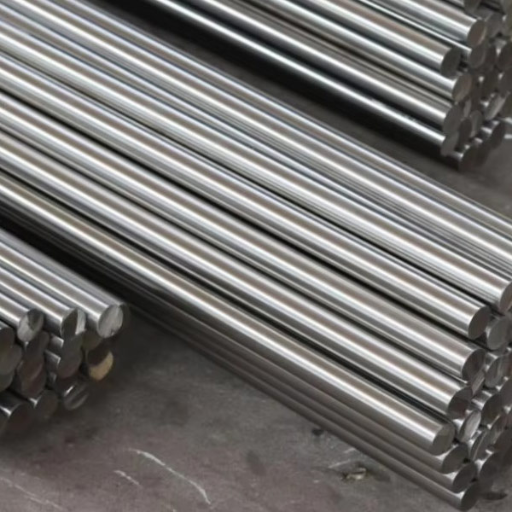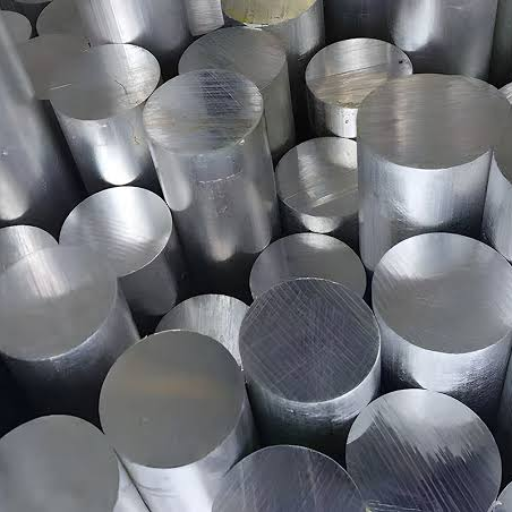
In the 6061 vs 7075 aluminum comparison, 7075-T6 is about 1.8 times stronger, with roughly 503 MPa yield strength against 276 MPa. 6061 is easier to weld, form, anodize, buy and repair, and it costs less. Specify 7075 only when strength or fatigue at minimum weight decides the design.
A common scenario runs like this. A bracket on a moving fixture flexes more than the drawing allows, so someone changes the callout from 6061-T6 to 7075-T6. The new part arrives, tests far stronger in tension, and deflects almost the same amount. The alloy was never the variable that controlled deflection.
That is the gap in most 6061 vs 7075 aluminum comparisons. They stop at the strength table, where 7075 wins by a wide margin, and never reach the decision the buyer actually faces. This article goes further: temper by temper, fabrication by fabrication, and down to what belongs on the purchase order.
If you are holding a drawing and need the alloy and temper confirmed before metal is cut, send the specification to our technical team and we will review it against the form and condition you need.
Last updated: November 2026
Key Takeaways
- 7075-T6 has about 1.8 times the yield strength of 6061-T6, but both alloys have essentially the same stiffness-to-weight ratio. A deflection-limited part gains nothing from the upgrade.
- Temper matters as much as alloy. T651 is stretched to relieve residual stress and hold tolerance after machining. T73 and T7351 trade roughly 10 to 15 percent of yield strength for resistance to stress-corrosion cracking.
- 6061 welds readily with 4043 or 5356 filler, but the heat-affected zone loses temper and strength. 7075 is not recommended for conventional fusion welding.
- 6061 anodizes clear and dyes predictably. 7075, because of its copper and zinc content, produces darker and less uniform coatings.
- Specify the alloy, the temper, ASTM B209 and the applicable AMS number, and require a mill certificate with the shipment. “7075” on its own is an incomplete specification.
6061 vs 7075 Aluminum: The Short Answer
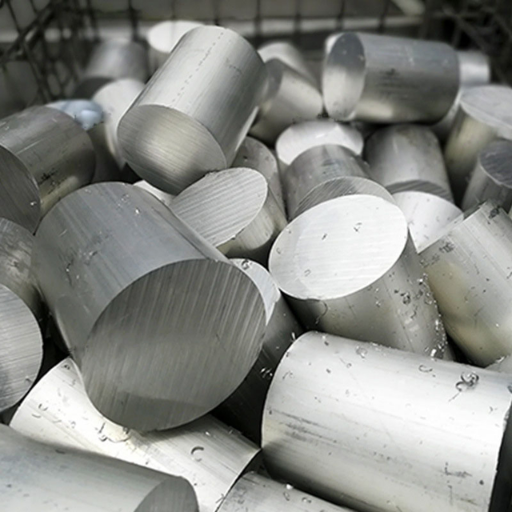
The difference between 6061 and 7075 aluminum comes down to what the part is limited by. 6061 is the general-purpose alloy: weldable, formable, corrosion-tolerant, consistently anodized, and available in sheet, plate and coil from most distributors. 7075 is the high-strength alloy: roughly 1.8 times the yield strength, better fatigue performance, and a much narrower set of fabrication options.
| Property | 6061-T6 | 7075-T6 |
|---|---|---|
| Alloy series | 6xxx (Al-Mg-Si) | 7xxx (Al-Zn-Mg-Cu) |
| Principal alloying elements | Mg 0.8-1.2%, Si 0.4-0.8%, Cu 0.15-0.4%, Cr 0.04-0.35% | Zn 5.1-6.1%, Mg 2.1-2.9%, Cu 1.2-2.0%, Cr 0.18-0.28% |
| Common tempers | T6, T651 | T6, T651, T73, T7351 |
| Typical tensile strength | 310 MPa | 572 MPa |
| Typical yield strength | 276 MPa | 503 MPa |
| Typical elongation | 12% | 11% |
| Typical hardness | 95 HB | 150 HB |
| Density | 2.70 g/cm³ | 2.81 g/cm³ |
| Modulus of elasticity | 68.9 GPa | 71.7 GPa |
| Thermal conductivity (25 °C) | 167 W/m·K | 130 W/m·K |
| Electrical conductivity | about 40% IACS | about 33% IACS |
| Corrosion resistance | Good in general service | Lower; usually needs coating or anodizing outdoors |
| Weldability | Good with 4043 or 5356 filler | Not recommended for fusion welding |
| Machinability | Good; can be gummy with dull tooling | Good; better finish and chip control, higher tool wear |
| Anodizing response | Clear, uniform, dyes predictably | Darker and less uniform |
| Relative cost | Base | Typically 30-50% more per kilogram |
| Typical forms | Sheet, plate, coil, extrusion | Plate-led; sheet available but less common |
Choose 6061 if:
- The part will be welded, formed or bent after purchase.
- Appearance matters and the finish will be anodized.
- The environment is marine, coastal or chemically aggressive.
- You need fast availability across sheet, plate and coil, or an economical repair path.
Choose 7075 if:
- Strength or fatigue at minimum weight governs the design.
- The part is machined, not welded.
- You can specify and inspect the temper, and the application justifies the cost.
What the 6061 and 7075 Designations Mean
6xxx vs 7xxx series
The 6061 aluminum alloy belongs to the 6xxx series, where magnesium and silicon are the main alloying additions. 7075 belongs to the 7xxx series, where zinc dominates, with magnesium and copper supporting it. The series number tells you which precipitation system will do the strengthening work.
That difference explains almost everything downstream. A 6xxx alloy strengthens through magnesium silicide, and a 7xxx alloy strengthens through zinc- and copper-bearing precipitates. The second system reaches much higher strength and behaves very differently at a weld pool and in an anodizing bath.
Chemistry that drives behavior
In 6061, the magnesium and silicon combine as Mg₂Si during artificial aging. Copper and chromium are present in small amounts: copper adds a little strength, chromium controls grain structure and improves resistance to stress corrosion. The low copper content is also why 6061 anodizes to a clear, consistent film.
In 7075, zinc and magnesium form the strengthening precipitates, and copper raises strength further. That copper is expensive, and it changes the alloy’s surface behavior. Copper reduces general corrosion resistance and produces darker, less uniform anodic coatings.
The tempers buyers actually see
Temper is a two-character code, and it changes the properties as much as the alloy does.
- O is annealed, the softest condition, used when a part must be formed before strengthening.
- T4 is solution heat-treated and naturally aged.
- T6 is solution heat-treated and artificially aged. This is the temper behind almost every headline strength figure on the web.
- T651 is T6 with stress relief by stretching, usually 1.5 to 3 percent for plate. It keeps the strength of T6 and improves dimensional stability after machining.
- T73 is solution heat-treated and given a two-stage overaging treatment designed to resist stress-corrosion cracking.
- T7351 is T73 with the same stretching step as T651.
- T73511 is the extruded and stretched equivalent.
Why “7075” alone is an incomplete specification
A purchase order that says only “7075” leaves the temper undefined. The supplier can ship T6, T651, T73 or T7351, and those four conditions differ by 15 percent in yield strength and by far more in stress-corrosion behavior.
The same applies to 6061. “6061” without a temper can arrive as O, T4 or T6, and a shop expecting T6 will find the material too soft to hold tolerance.
Mechanical Properties: 6061-T6 vs 7075-T6
The headline numbers
Most published comparisons mix typical mill values with specification minima in the same column. That’s the most common technical error on this topic, and it matters because a design allowable has to come from the minimum, not the typical.
| Property | 6061-T6 typical | 6061-T6 ASTM B209 minimum | 7075-T6 typical |
|---|---|---|---|
| Tensile strength | 310 MPa | 290 MPa (42 ksi) | 572 MPa |
| Yield strength | 276 MPa | 241 MPa (35 ksi) | 503 MPa |
| Elongation | 12% | Thickness-dependent; confirm in the standard | 11% |
| Hardness | 95 HB | Not specified | 150 HB |
The 6061 aluminum yield strength figure that matters for design is the 241 MPa minimum, not the 276 MPa typical value. Read the table carefully. The typical values describe what a mill routinely delivers.
The ASTM B209 minimum is what the material is guaranteed to meet. The 7075 minimum varies by product form and thickness and should be read from ASTM B209 and confirmed on the mill certificate rather than carried over from a summary table. The typical values here match the 6061 datasheet published by Aircraft Materials.
Note also that some supplier pages label 310 and 276 MPa as minimum values for 6061-T6. They are typical handbook figures. The specification minimum is 290 and 241 MPa.
Strength-to-weight
6061 aluminum density is 2.70 g/cm³ against 2.81 for 7075-T6, so the stronger alloy carries about 4 percent more weight per unit volume. Dividing yield strength by density gives a comparable figure across alloys.
- 6061-T6: 276 MPa ÷ 2.70 g/cm³ ≈ 102 kN·m/kg
- 7075-T6: 503 MPa ÷ 2.81 g/cm³ ≈ 179 kN·m/kg
7075 delivers about 1.75 times the load capacity per kilogram. That’s a real advantage in a weight-critical structure, and it is the reason the alloy exists.
Strength is not stiffness
Here is the point almost no comparison page makes. Stiffness, meaning resistance to deflection, is governed by the modulus of elasticity, and the two alloys have almost the same modulus: 68.9 GPa for 6061-T6 and 71.7 GPa for 7075-T6.
Divide modulus by density and the difference disappears:
- 6061-T6: 68.9 ÷ 2.70 ≈ 25.5 GPa·cm³/g
- 7075-T6: 71.7 ÷ 2.81 ≈ 25.5 GPa·cm³/g
Specific stiffness is identical to within half a percent. So a bracket that deflects too much under load will deflect about the same amount in 7075.
The upgrade buys load capacity before yield, and it buys fatigue life. It doesn’t buy rigidity. If deflection is the problem, the fix is geometry: a deeper section, a rib, or a change of material family.
Fatigue
Typical rotating-beam fatigue strength is about 96.5 MPa for 6061-T6 and 159 MPa for 7075-T6. Those are datasheet values on a rotating-beam basis, not design allowables, and they say nothing about your part’s notches, surface finish or residual stress.
7075 is the better fatigue choice for a machined, unwelded part. It’s the worse choice when the part carries sustained tensile stress in a corrosive environment, because the same microstructure that raises strength also makes the alloy sensitive to stress-corrosion cracking.
T651 and T73: what changes
T651 keeps the strength of T6 and adds stress relief. A plate that is stretched during processing holds flatness better after material is removed, which is why mold plates and thin, asymmetric machined parts are usually ordered as T651.
T73 deliberately gives up strength. On bar stock, the 7075 datasheet shows 7075-T651 at about 66 ksi (455 MPa) yield and 7075-T7351 at about 56 ksi (386 MPa). That’s a 15 percent reduction in exchange for a large improvement in stress-corrosion resistance. A design that needs T73 has to be checked at the lower allowable.
| Temper | Treatment | Strength | Dimensional stability | SCC resistance | Typical form |
|---|---|---|---|---|---|
| 7075-O | Annealed | Lowest | High formability | Not relevant | Sheet, plate for forming |
| 7075-T6 | Solution-treated and aged | Highest | Moderate; residual stress can move the part | Lowest of the four | Plate, sheet, extrusion |
| 7075-T651 | T6 plus stretch | Same as T6 | Good; holds tolerance after machining | Low | Plate |
| 7075-T73 | Solution-treated and two-stage overaged | About 10-15% below T6 | Good | Highest | Plate, extrusion |
| 7075-T7351 | T73 plus stretch | About 10-15% below T651 | Good | Highest | Plate |
6061 vs 7075 Aluminum Corrosion and Stress-Corrosion Cracking
Atmospheric and marine behavior
6061 is the more tolerant alloy in general service. Its low copper content and magnesium-silicide strengthening leave it reasonably resistant to the atmosphere, fresh water and many industrial environments. It isn’t immune to chloride, and marine work often favors 5052 or 5083 sheet, or a stainless grade where the duty calls for it. The does aluminum rust article covers the oxide mechanism.
7075 is less forgiving. Copper in the alloy lowers general corrosion resistance, and unprotected 7075 outdoors usually needs an anodized, painted or plated finish.
What stress-corrosion cracking is
Stress-corrosion cracking, or SCC, needs three things at once: a sustained tensile stress, a corrosive environment, and a susceptible microstructure. Chloride, humid or industrial atmospheres supply the second. A bolted or press-fit assembly supplies the first, because the stress stays in the part for years rather than cycling on and off.
7075-T6 in thick plate is the classic case. Cracks run along grain boundaries, often in the short-transverse direction, and they appear with little visible deformation. A part can look sound and fail without warning.
Why T73 and T7351 exist
The T73 treatment overages the alloy on purpose. Strength drops by roughly 10 to 15 percent, and the grain-boundary microstructure changes enough that SCC resistance improves dramatically. It is a designed trade, not a compromise.
Specify T73 or T7351 when the part sees sustained tensile load, sits in a chloride or industrial atmosphere, is cut from thick plate, or is safety-critical. Specify T6 or T651 only when the stress is primarily cyclic or when the environment is benign and the part is protected.
Coating and anodizing as mitigation
Anodizing helps with general corrosion. It isn’t a substitute for choosing the right temper when sustained tensile stress is present. A coating protects the surface; SCC starts at the surface and propagates through the section. Protection lowers the risk, and it doesn’t remove it.
Welding, Machining, Forming, and Anodizing
Welding 6061
The welding half of the 6061 vs 7075 aluminum question has a short answer: 6061 welds readily by GTAW and GMAW with 4043 or 5356 filler. Use 5356 where joint strength and color match after anodizing matter, and 4043 where crack resistance and feedability matter more. The 4043 deposit contains silicon and anodizes to a dark gray, which is a common surprise on welded assemblies that are finished after fabrication.
The heat-affected zone is the real story. Welding takes the T6 temper out of a band beside the weld, and the as-welded HAZ sits materially below base-metal strength. A welded 6061-T6 assembly is not a 276 MPa structure at the weld. Full properties can be restored by re-solution treating and aging the whole assembly, but the distortion and furnace time usually make that impractical.
Design allowables for a welded joint should come from a qualified welding procedure, not from the base-metal table. For bending and forming ahead of welding, see bending aluminum sheet and plate.
Why 7075 is not welded
7075 is generally not fusion-welded. The alloy is hot-short at welding temperatures, the zinc-rich grain boundaries are prone to cracking, and the properties in and around the weld collapse. Mechanical fastening, adhesive bonding and riveting are the normal routes. Friction stir welding exists as a specialized process, and it isn’t a general procurement option.
A common scenario: a fabricator receives a welded frame drawing specified in 7075-T6. It can’t be built as drawn. The practical fixes are a redesign in 6061-T6 with a qualified weld procedure, or a bolted or bonded joint in 7075.
Machining
6061 is softer and cuts easily, though it can turn gummy with a dull tool and produce built-up edge. 7075 machines to a better finish with better chip control, and its lower thermal conductivity keeps heat in the cutting zone, which raises tool wear and can slow cycle times.
For thin or asymmetric parts, T651 matters more than the alloy. Stress-relieved plate stays flat after the stock is removed; T6 plate may not.
Forming
6061-T6 bends and forms far more readily. Generous radii and a bend line away from the extrusion direction will get most parts through. 7075-T6 has limited formability and tends to crack at tight radii. If a part has to be formed in 7075, the usual route is to form in the annealed O temper and age afterward, which adds a heat-treatment step and its own distortion risk.
Anodizing
6061 anodizes to a clear, uniform film and takes dye predictably. It’s the alloy most anodizing shops prefer when color consistency is specified.
7075’s copper content, with a smaller contribution from zinc, produces darker olive, gray and brown tones and less uniform color from lot to lot. Hard anodizing is possible and is often used for wear resistance, but color matching across batches is difficult. If the part is cosmetic, this difference alone can decide the alloy.
Cost: Why 7075 Costs More Per Part
What drives the price gap
A straight 7075 vs 6061 aluminum cost comparison by weight will always favor 6061, and that comparison is only half the decision.
Zinc and copper are more expensive additions than magnesium and silicon. 7075 also involves tighter mill processing, lower production volume, a plate-heavy product mix, and less tolerance for scrap. Market commentary commonly puts 7075 at roughly 30 to 50 percent more per kilogram than 6061. Treat that as a range, not a quotation. Market indices track the direction rather than a fixed number.
Price per kilogram vs cost per part
The two numbers aren’t the same. A 7075 part may allow a thinner section, remove a steel insert, or eliminate a fastener, and those changes can narrow or even reverse the gap. In the other direction, higher tool wear, slower cycles and more conservative machining parameters widen it.
The honest way to compare is cost per finished, inspected part: material, machining time, tooling, finishing, scrap rate and inspection.
Total cost of ownership
Corrosion protection, anodizing difficulty, repair and replaceability, and lead time all belong in the comparison. A 6061 part that can be welded and repaired in a local shop may cost less over a ten-year service life than a cheaper-to-machine 7075 part that has to be replaced whole.
We do not publish per-kilogram prices. Request a quote with the form, temper and quantity, and the commercial side can be worked out against your actual requirement.
Availability: Sheet, Plate, Coil, and Temper
6061 availability
6061 is the broadest aluminum alloy in general distribution. 6061 aluminum sheet, plate and coil are all standard, and the temper range runs from O through T6 and T651. Our aluminum alloy sheet and aluminum plate range pages list the forms and thicknesses we handle, and the AA 6061 aluminum plate page carries the grade-specific detail.
7075 availability
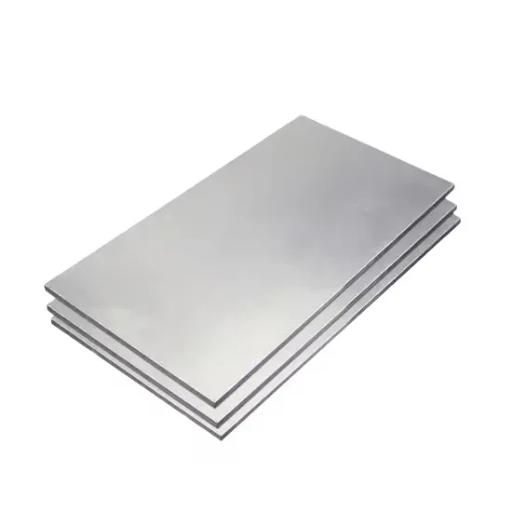
7075 is plate-led. Sheet exists but is less common, and coil is not a standard 7075 product. Our AA 7075 aluminum plate page covers the grade. Don’t assume 7075 sheet or coil is stocked; confirm the form and thickness before quoting a job around it.
Tempers to confirm
6061-T6 and 6061-T651 are routine. 7075-T6 and 7075-T651 are common in plate. T73 and T7351 are usually mill-order items rather than stock, so lead time is part of the decision. Ask before you promise a delivery date.
Questions to ask a supplier
- What thickness range is available in the temper I specified?
- What thickness tolerance and flatness does the mill guarantee?
- Is a mill certificate included, and does it state the temper?
- What is the minimum order quantity for this form?
- Can you cut to size, and what is the lead time?
If you are still shortlisting, our guide to choosing an aluminum supplier covers the questions that separate a mill-backed supplier from a reseller.
6061 vs 7075 Aluminum: How to Choose by Application
Most 7075 vs 6061 aluminum questions are settled by the application before the stress calculation is finished. Use the table as a first pass, then confirm the temper and the fabrication route.
| Application | Usual choice | Reason |
|---|---|---|
| Welded frames, brackets and guards | 6061-T6 or T651 | Weldable with a qualified procedure; HAZ allowance still applies |
| Machined mold and tooling plate | 7075-T651 | High strength with stress relief for dimensional stability |
| Aerospace structure, unwelded | 7075-T6 or T7351 | Strength and fatigue at minimum weight |
| Aircraft skin or weldable structure | 6061-T6 | Formability plus weldability |
| Marine hatch, deck fitting, coastal bracket | 6061-T6; 5052/5083 for sheet | Corrosion tolerance; 7075 needs T73 plus protection |
| Automation fixture under high load | 7075-T651 | Strength in a machined part |
| Cosmetic anodized enclosure | 6061-T6 | Clear, uniform, dyeable finish |
| Prototype or low-volume build | 6061-T6 | Availability, machinability, repair |
| High-cycle fatigue component | 7075-T6 or T73 | Fatigue strength, with notch and SCC control |
Choose 6061 if
The part must be welded, formed, anodized to a color, kept corrosion-tolerant, or built fast from stock. 6061 is the alloy that lets a design change late in the project without a new mill order.
Choose 7075 if
Strength or fatigue at minimum weight governs, the part is machined rather than welded, and you’re prepared to specify and inspect the temper. T651 for stability, T73 or T7351 for sustained load in a corrosive environment.
When to look at another alloy
- 2024 for fatigue-critical aerospace structure where its damage tolerance fits.
- 7050 for thick plate where higher strength and better SCC resistance than 7075-T6 are needed.
- 5052 or 5083 for marine sheet, formability and weldability.
- 6063 for extrusion and architectural finish.
- 6082 for European structural extrusion work.
How to tell 6061 from 7075
Start with the markings and the mill certificate. The alloy and temper should be printed on the plate edge or the bundle tag, and the certificate should repeat them. If the paperwork is missing, these checks work:
| Check | 6061 | 7075 |
|---|---|---|
| Density | 2.70 g/cm³ | 2.81 g/cm³ (about 4% heavier) |
| Hardness | about 95 HB | about 150 HB |
| Electrical conductivity | about 40% IACS | about 33% IACS |
| Handheld XRF | Zinc under 0.25% | Zinc 5-6% |
| Anodizing response | Clear and uniform | Darker and less uniform |
Density needs a careful measurement to be useful, because 4 percent is inside the error of a rough volume estimate. Hardness testers and eddy-current conductivity meters give a faster answer, and XRF is conclusive on zinc content. A spark test isn’t a reliable identification method for aluminum alloys.
What to Put on Your Purchase Order
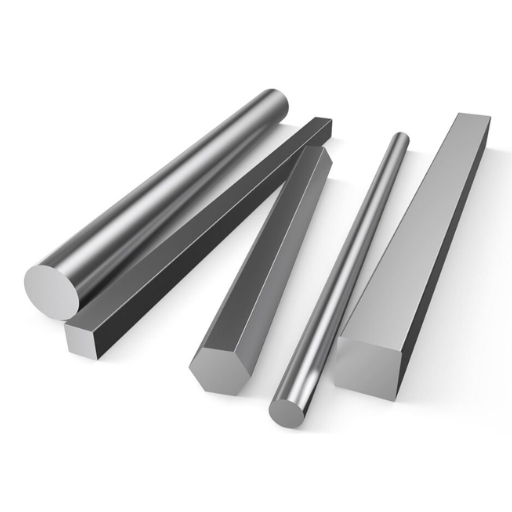
Most 6061 vs 7075 aluminum disputes start with a purchase order that names only the alloy and not the temper. Include:
- Alloy and temper, written together: 6061-T651, 7075-T651 or 7075-T7351.
- Standard: ASTM B209 for sheet and plate. Add AMS 4027 for 6061-T6 sheet and T651 plate, or AMS 4045 for 7075-T6 sheet and T651 plate, where aerospace or comparable requirements apply. Confirm the current revision, and confirm against the mill certificate.
- Form, thickness, width and length, in the units the mill uses.
- Thickness tolerance and flatness, by reference to the standard or a tighter agreed value.
- Surface finish and edge condition, including whether edges are sheared, sawn or machined.
- Mill certificate or inspection report, with EN 10204 3.1 where the quality plan requires it.
- Marking, packaging and heat or lot traceability.
- Quantity, lead time, destination and cut-to-size instructions.
Two lines on that list prevent most disputes: the temper and the certificate. The temper decides the properties, and the certificate is how you prove what you received.
Frequently Asked Questions
Why is 7075 not weldable?
7075 is generally not fusion-welded because it is hot-short at welding temperature and its zinc-rich grain boundaries crack under the thermal cycle. Welding also destroys the temper in and around the joint. Mechanical fastening and adhesive bonding are the normal alternatives, and friction stir welding is a specialized option rather than a general route.
Is 6061 or 7075 easier to machine?
6061 is easier on tooling because it is softer and more forgiving of cutting parameters. 7075 produces a better finish and better chip control, at the cost of higher tool wear and more attention to heat in the cut. For thin parts, stress-relieved T651 stock matters more than the alloy choice.
Is 7075 more expensive than 6061?
Usually yes. Market pricing commonly puts 7075 about 30 to 50 percent higher per kilogram, and the gap per finished part can be wider once tool wear and slower cycles are counted. It can also narrow, because a stronger alloy sometimes allows a thinner section or removes an insert.
How to tell if aluminum is 6061 or 7075?
Read the markings and the mill certificate first. Without paperwork, check hardness, electrical conductivity or zinc content by XRF. Density differs by about 4 percent, which is real but harder to measure reliably in a workshop. A spark test does not identify aluminum alloys.
Is 6061 or 7075 aluminum lighter?
6061 is lighter per unit volume: 2.70 g/cm³ against 2.81 g/cm³, about 4 percent. Per unit of load carried, 7075 is the lighter choice, because its yield strength is about 1.75 times higher for that 4 percent weight penalty.
Can 7075 aluminum be anodized?
Yes, but the result differs from 6061. Copper and zinc in the alloy produce darker, less uniform coatings, and color matching across lots is harder. Hard anodizing is used for wear resistance. If color consistency is a specification, 6061 is the safer alloy.
Is 7075 aluminum stronger than 6061?
Yes. 7075-T6 has about 503 MPa typical yield strength against 276 MPa for 6061-T6, roughly 1.8 times. The advantage is in load capacity and fatigue, not in stiffness: the two alloys deflect almost identically for the same geometry.
Conclusion
The 6061 vs 7075 aluminum decision is not a strength contest. 7075 wins that contest by a wide margin and always will. The question is whether strength is the property your part is actually limited by.
Three things decide it. First, strength and stiffness are different, and 7075 improves only one of them. Second, the temper is part of the specification: T6, T651, T73, and T7351 are four different materials with one alloy number. Third, fabrication and finish often settle the decision before the stress calculation does, because a welded or cosmetic part usually belongs in 6061.
If you are sourcing 6061 or 7075 plate, send the drawing with the alloy, temper, and form you need. Send us your drawing, and we will confirm what we can supply, which temper it comes in, and what the certificate will state.