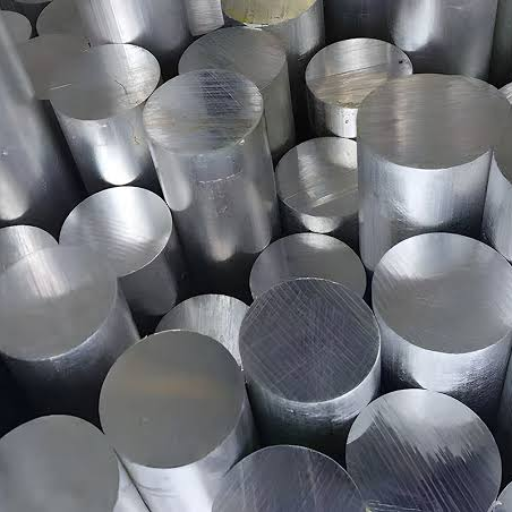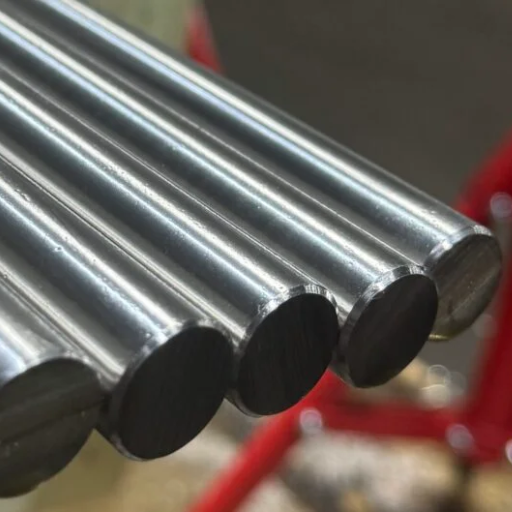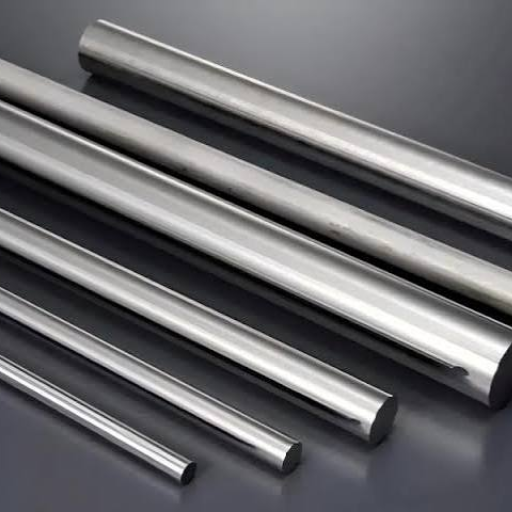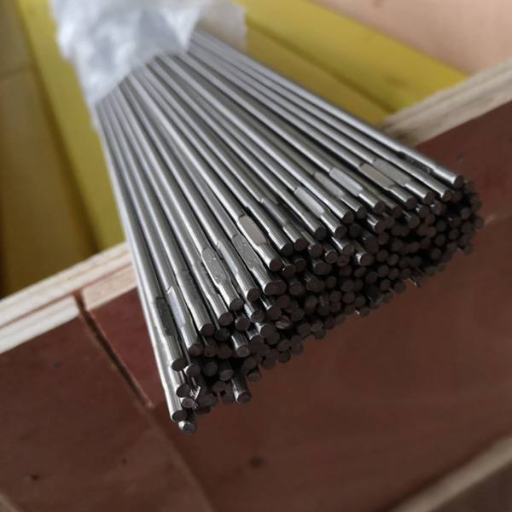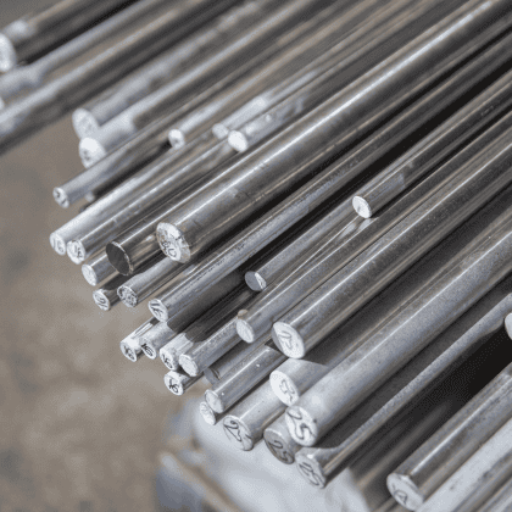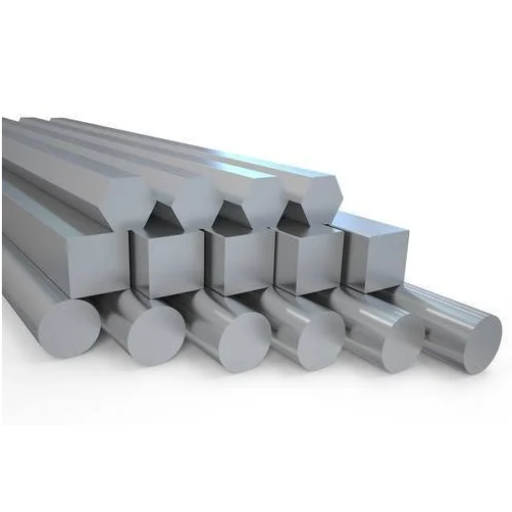
6061 aluminum alloy is a heat-treatable aluminum-magnesium-silicon alloy. In the T6 temper it typically delivers 310 MPa tensile strength, 276 MPa yield strength, a modulus of 68.9 GPa and a density of 2.70 g/cm³. It is the default structural aluminum for parts that need moderate strength, good corrosion resistance, weldability, machinability and a predictable anodized finish.
Most drawings that call out 6061 get what they expect. The ones that go wrong usually share the same omission.
A fabricator quotes a bracket from a drawing that says only “6061.” The material arrives as T4 because it forms easily and that is what the distributor had in stock. The bracket bends cleanly, ships, and yields in service at roughly half the load the designer calculated. Nothing was defective. The drawing was incomplete.
This guide covers what 6061 is, what its numbers actually mean, how the tempers differ, and how to write a specification that survives the trip from drawing to mill. If you are choosing between grades, the 6061 vs 7075 aluminum comparison covers the high-strength alternative in detail.
Key Takeaways
- 6061 is an Al-Mg-Si alloy. In T6 it typically reaches 310 MPa tensile and 276 MPa yield; the ASTM B209 minimum for common sheet and plate is 290 MPa tensile and 241 MPa yield.
- The temper, not the alloy number, sets the properties. 6061-O yields at about 55 MPa; 6061-T6 at about 276 MPa.
- T651 is stretched after quenching to relieve residual stress. Specify it for machined plate that has to stay flat.
- 6061 welds readily, but the heat-affected zone loses temper. Design the joint for the welded condition, not the base plate.
- 6061 anodizes well but not as brightly as 6063. Use 6063 for decorative extrusion, 6061 for structure and hard anodizing.
What Is 6061 Aluminum Alloy?
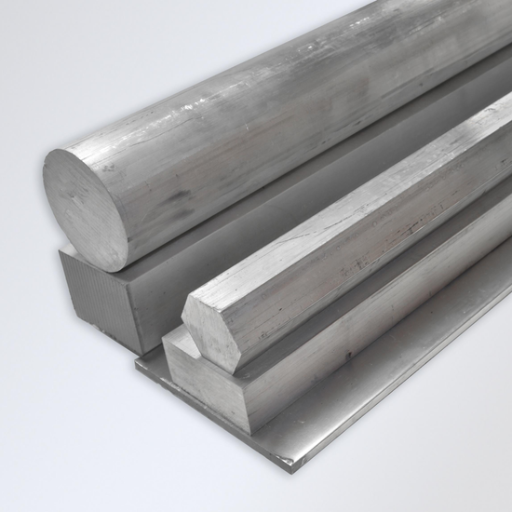
6061 belongs to the 6xxx series, the aluminum-magnesium-silicon family. It was developed in 1935 and remains the most widely available heat-treatable aluminum. The alloy combines moderate strength with corrosion resistance, joining characteristics and machinability that are good enough for a very long list of parts.
Its balance is the point. Stronger alloys such as 7075 sacrifice weldability and corrosion resistance. More formable alloys such as 5052 cannot be heat treated. 6061 sits in the middle and does every job reasonably well.
Chemistry That Drives Behavior
| Element | Content (wt%) |
|---|---|
| Aluminum | Balance |
| Silicon | 0.40–0.80 |
| Iron | 0.70 max |
| Copper | 0.15–0.40 |
| Manganese | 0.15 max |
| Magnesium | 0.80–1.20 |
| Chromium | 0.04–0.35 |
| Zinc | 0.25 max |
| Titanium | 0.15 max |
| Other, each | 0.05 max |
| Other, total | 0.15 max |
Magnesium and silicon are the strengthening pair. During solution treatment they dissolve into the aluminum, and during aging they precipitate as fine magnesium silicide particles that resist deformation.
Copper adds strength and helps the aging response. Chromium controls grain structure and improves resistance to stress-corrosion cracking. Iron and zinc are impurities held to limits; they are not there to help.
The 6061 aluminum composition limits matter more than the nominal figures. A mill certificate reports actual chemistry against these ranges, and that is what a specification should reference.
Designations and Equivalents
- UNS: A96061.
- EN: AW-6061, AlMg1SiCu.
- DIN: 3.3211.
- JIS: A6061.
- BS: H20.
- Common product standards: ASTM B209 for sheet and plate, ASTM B221 for extrusions, ASTM B211 for bar, rod and wire, ASTM B241 for pipe and tube.
- Aerospace standards: AMS 4027 for 6061-T6 sheet and T651 plate; AMS 4117 for T6 and T651 cold-finished bar, rod and wire.
The alloy is sold as sheet, plate, coil, bar, rod, tube, extrusions and forgings. Properties and minimums change with form, so the form belongs in the specification alongside the alloy and temper.
6061 Aluminum Alloy Properties
Mechanical Properties by Temper
| Temper | Typical tensile strength | Typical yield strength | Elongation | Hardness |
|---|---|---|---|---|
| O (annealed) | 124 MPa | 55 MPa | 25–30% | 30 HB |
| T4 / T451 | 241 MPa | 145 MPa | 22–25% | 65 HB |
| T6 / T651 / T6511 | 310 MPa | 276 MPa | 8–12% | 95 HB |
Elongation in T6 depends on thickness and form: thin sheet reaches about 12%, while thick plate can fall to 8% or lower. Shear strength in T6 is about 207 MPa, and typical rotating-beam fatigue strength is 96.5 MPa at 5×10⁸ cycles.
Typical Versus Minimum: The Number That Matters
The 310 MPa and 276 MPa figures are typical values published by the Aluminum Association and reproduced in distributor datasheets such as the Aircraft Materials 6061 datasheet. They are what a well-run mill usually produces. They are not a guarantee.
| Property (6061-T6 sheet and plate) | Typical | ASTM B209 minimum |
|---|---|---|
| Tensile strength | 310 MPa | 290 MPa (42 ksi) |
| Yield strength | 276 MPa | 241 MPa (35 ksi) |
| Elongation | 8–12% | Varies by thickness and form |
ASTM B209, the sheet and plate standard, sets those minimums. In practice, they step down in thick plate, and elongation requirements change with thickness.
A drawing that calls out “6061-T6, 310 MPa minimum” is asking for a typical value as a guaranteed floor. Most mills will not certify to it. If the design genuinely needs 310 MPa minimum, the honest options are a thicker section, a different alloy, or a written agreement with the supplier before the order is placed.
Two 6061-T6 certificates can also show different numbers and both be correct: one reports typical test results, the other reports the standard minimum. Read the column heading.
Physical Properties
| Property | Value |
|---|---|
| Density | 2.70 g/cm³ |
| Modulus of elasticity | 68.9 GPa |
| Poisson’s ratio | 0.33 |
| Thermal conductivity (T6, 25 °C) | 167 W/m·K |
| Coefficient of thermal expansion (20–100 °C) | 23.6 µm/m·°C |
| Specific heat | 0.896 J/g·°C (896 J/kg·K) |
| Melting range | 582–652 °C |
| Electrical conductivity (T6) | About 40% IACS |
Values are for the T6 temper at room temperature unless noted; the thermal figures are from the [AZoM 6061 datasheet].
Strength, Stiffness and Weight
Temper changes strength. It does not change stiffness. The modulus stays at 68.9 GPa in O, T4 and T6, so a part that deflects too much will deflect the same amount after a temper upgrade. If deflection is the problem, change the geometry or the alloy family, not the temper.
Density gives a useful shortcut for estimating weight: one square metre of 1 mm 6061 sheet weighs about 2.70 kg. For other thicknesses, multiply by the thickness in millimetres. A metal weight calculator handles mixed forms and units.
For its weight, 6061 is competitive with structural steel. Its specific yield strength in T6 is roughly 102 kN·m/kg, about three times that of mild steel, which is why it dominates weight-sensitive frames and transport structures.
6061 Aluminum Alloy Tempers: What T6 and T651 Decide
What Each Temper Means
- O is annealed. It is the softest, most formable condition, with yield strength around 55 MPa.
- T4 is solution heat treated and naturally aged at room temperature. Yield strength is about 145 MPa.
- T451 is T4 plus stress relief by stretching, used for plate.
- T6 is solution heat treated and artificially aged. Yield strength is about 276 MPa.
- T651 is T6 plus stress relief by stretching. It is the standard temper for machined plate.
- T6511 is T651 plus straightening, used for extruded bar, rod and shapes.
Solution treatment for 6061 runs at about 529–533 °C, followed by a water quench. Artificial aging is typically 160 °C for 18 hours on rolled or drawn products, or 177 °C for 8 hours on extrusions and forgings. Those temperatures are also a warning: sustained service near them will overage the alloy and reduce strength. 6061 is not a high-temperature material.
T6 vs T651: Why Machined Plate Moves
Quenching leaves residual stress in plate. Machine away one face and the balance changes; the plate bows, twists or loses flatness. The effect is worst when a lot of material is removed from one side.
T651 is stretched after quenching and before aging. The permanent stretch relieves most of the residual stress, so the plate stays flatter after machining. Typical strength is the same as T6. The difference is dimensional stability, and it only shows up after metal is cut.
A shop quotes a fixture plate from a drawing that says 6061-T6. The plate is machined on one face and comes off the table with a bow. The alloy was right; the temper was incomplete. A T651 callout would have cost a little more per kilogram and saved the part.
How to Specify a Temper
For example, a complete callout reads: alloy, temper, standard, form and thickness.
6061-T651, ASTM B209, plate, 25 mm, 500 × 500 mm, flatness 1 mm per metre, mill certificate with heat number.
“6061” alone is not a specification. It tells the mill the chemistry and leaves the condition open.
Corrosion, Anodizing and Surface Finish
Atmospheric, Fresh Water and Marine Behavior
6061 has good resistance to atmosphere, fresh water and many industrial environments. The copper addition makes it slightly less resistant than low-copper 6xxx grades such as 6063, and it is not the best choice for continuous chloride exposure. For marine hardware that spends its life wet, 5052 or 5083 resists chloride better and forms more easily. For a deck fitting that is washed and dried, 6061 is usually adequate, particularly with an anodized or painted finish.
6061 is not one of the grades normally associated with stress-corrosion cracking in structural service, provided it is used in a standard temper and not under an unusual sustained load in a corrosive environment.
Anodizing 6061 vs 6063
Both alloys anodize, but they do not look the same. Clear anodize on 6061 has a gray-to-tan cast because of its silicon, iron and copper content. 6063, with much lower alloying content, produces a brighter and more consistent silver finish. For decorative extrusion, visible trim and color-matched architectural work, 6063 is the better substrate.
In contrast, hard anodizing reverses that ranking. 6061 takes a denser, more uniform Type III coating and is the usual choice for wear parts, machined housings and fixtures. Black is the most consistent dye color on 6061; bright colors are harder to match across lots.
A product team changes an enclosure from 6063 extrusion to 6061 plate to gain strength. The clear anodized parts come back with a visible gray cast, and two lots do not match. Nothing is out of specification. The alloy simply anodizes to a different color.
Welding, Machining and Forming 6061 Aluminum Alloy
Welding and the Heat-Affected Zone
6061 aluminum welding is straightforward. Thin sections are usually gas tungsten arc welded; heavier sections are gas metal arc welded. 4043 filler is the common general-purpose choice, and 5356 is used where higher joint strength is needed.
However, the weld is not the problem. The heat-affected zone is.
Welding heats the surrounding metal above the aging temperature, so the HAZ is effectively annealed. A welded 6061-T6 assembly does not carry 276 MPa yield strength through the joint. Design allowables are set by the HAZ, not by the plate certificate.
Post-weld artificial aging recovers some strength. Full T6 requires re-solution treatment and quench, which is rarely practical on a finished fabrication. If the part is welded and the drawing still says T6, treat the weld as the weak link and design accordingly.
Machining
6061 machines well in T4 and T6. It is softer and gummier than 7075, so sharp, high-rake tooling and generous chip clearance matter more than brute force. Chips are long and stringy; peck drilling and chip breakers help. For thin, flat parts, T651 plate reduces movement after machining.
Forming and Bending
Annealed O and T4 form easily by bending, stamping, drawing and spinning. T6 is much less forgiving: tight bends crack, and the minimum bend radius is large. If a part needs both T6 strength and a tight bend, form it in O or T4 and heat treat afterward. The guide to bending aluminum sheet and plate covers bend radii and springback by temper.
6061 vs Other Aluminum Alloys
| Alloy and temper | Strength basis | Best at | Trade-off |
|---|---|---|---|
| 6061-T6 | 310 / 276 MPa typical; 290 / 241 MPa minimum | Balance of strength, welding, machining and finishing | Not the strongest 6xxx alloy |
| 6063-T6 | 207 / 172 MPa minimum | Extrusion, smooth finish, bright anodize | Lower strength |
| 6082-T6 | 295 MPa tensile; 240–270 MPa yield by form | Higher-strength extrusions and plate, common in Europe | Less available in North America |
| 5052-H32 | 214–262 / 159 MPa typical | Marine corrosion, formability | Not heat-treatable |
| 7075-T6 | 572 / 503 MPa typical | Maximum strength and fatigue resistance | Not for fusion welding; lower corrosion resistance |
| 2024-T351 | Higher strength than 6061 | Fatigue-critical aerospace parts | Lower corrosion resistance; usually supplied clad |
When 6061 Is the Right Default
Choose 6061 when the part has to be welded, machined, anodized or bought quickly, and the load is moderate. It is the alloy that keeps a project moving because every distributor stocks it and every fabricator knows it.
When Another Alloy Wins
Choose 6063 when the part is an extrusion and the finish is visible. Choose 6082 when a European drawing calls for it or when a little more strength is needed in an extrusion. Choose 5052 or 5083 for immersed marine service. Choose 7075 or 2024 when strength or fatigue at minimum weight decides the design, and the part will not be welded.
Applications: Where 6061 Earns Its Place
6061 shows up wherever a part needs moderate strength, good corrosion resistance and reasonable fabrication cost:
- Structural brackets, frames and machine bases.
- Truck bodies, trailers and rail components.
- Marine hardware, fittings and deck equipment.
- Hydraulic manifolds, pistons and valve bodies.
- Electronic enclosures, heat sinks and instrument housings.
- Bicycle frames, sporting goods and general hardware.
- Aircraft fittings and non-primary structures.
- Jigs, fixtures and tooling plate.
DAPU supplies aluminum alloy sheet, plate and coil, including AA 6061 (EN AW-6061) plate. The AA 6061 page lists custom thicknesses from 0.5 mm to 50 mm, cut-to-size plate, and finishes including mill, polished, brushed and anodized. Temper availability should be confirmed at quotation, particularly for T651.
How to Specify 6061 on a Purchase Order
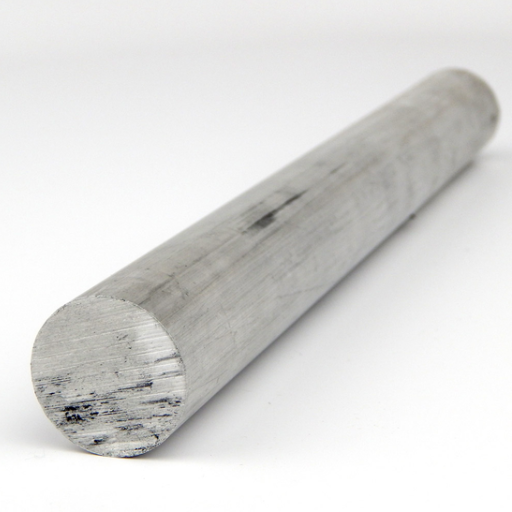
A purchase order that prevents most material disputes contains nine lines:
- Alloy and temper: 6061-T6, 6061-T651 or 6061-T6511, not “6061.”
- Standard: ASTM B209 for sheet and plate; ASTM B221 for extrusions; AMS 4027 or AMS 4117 where aerospace release is required.
- Form and thickness: sheet, plate, coil, bar, rod or tube, with nominal thickness.
- Dimensions and quantity: cut size, quantity and tolerances.
- Flatness and straightness: especially for machined plate.
- Surface finish and edge condition: mill finish, anodized, painted, deburred or sawn.
- Certificate: mill test certificate with heat number, chemistry and mechanical results.
- Verification: whether the certificate must show typical or minimum values.
- Packaging and marking: heat number on the bundle, protection for finished surfaces.
If the drawing is still open, send us the specification and we will confirm which temper and form fit the part before the order is released.
Frequently Asked Questions
Is 6061 aluminum strong?
It is moderately strong. 6061-T6 typically reaches 310 MPa tensile and 276 MPa yield, about three times the specific yield strength of mild steel. It is roughly 1.5 times the strength of 6063-T6 and about half the yield strength of 7075-T6. For most structural brackets, frames and housings, that is enough.
Can 6061 aluminum be welded?
Yes. 6061 is one of the more weldable high-strength aluminum alloys. Use gas tungsten arc welding for thin sections and gas metal arc welding for heavier sections, with 4043 or 5356 filler. The heat-affected zone loses temper, so design the joint for the welded condition rather than the base-metal properties.
What is the difference between 6061-T6 and 6061-T651?
Both have the same typical strength. T651 is stretched after quenching to relieve residual stress, then artificially aged. The difference appears after machining: T651 plate stays flatter when material is removed from one face. Specify T651 for machined plate and T6 for general structural work.
Is 6061 aluminum good for marine use?
It is adequate for hardware that is washed and dried, and for many above-deck fittings. It is not the best choice for continuous immersion or splash-zone structures. 5052 and 5083 resist chloride better and form more easily. Anodizing or painting improves 6061’s performance in coastal environments.
What is the specific heat of 6061 aluminum?
About 0.896 J/g·°C, or 896 J/kg·K, at room temperature. That value is essentially the same across tempers because the alloying additions are small.
Is 6061 or 6063 better for anodizing?
It depends on the finish. 6063 gives a brighter, cleaner and more consistent clear anodize, which is why it dominates architectural and decorative extrusion. 6061 takes a denser hard anodized coating and is the better choice for wear parts and machined components. For cosmetic color matching, 6063 is safer.
Conclusion
6061 aluminum alloy earns its place by being good at everything a structural part usually needs: moderate strength, corrosion resistance, weldability, machinability and anodizing. It is rarely the strongest or the most formable choice, and that is why it is so widely stocked.
The specification is where projects succeed or fail. Write the alloy, the temper, the standard, the form and the thickness. Expect 310 MPa and 276 MPa as typical values, and use the ASTM minimums when the design needs a guaranteed floor. Specify T651 when a machined plate has to stay flat, and design welded joints for the heat-affected zone.
If you are sourcing 6061 aluminum alloy sheet, plate or coil, send the drawing with the temper and form you need. Request a quote and we will confirm what is available, which temper it comes in, and what the mill certificate will state.