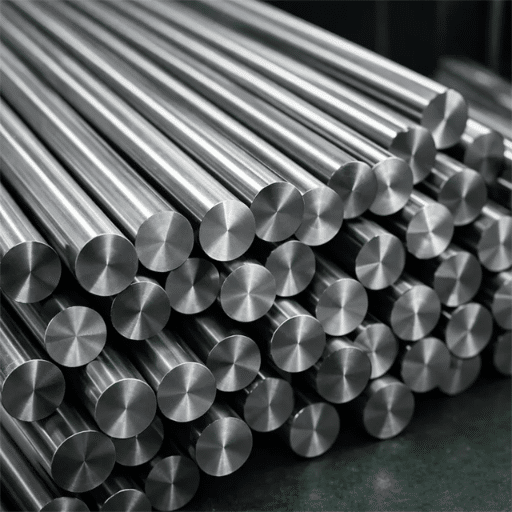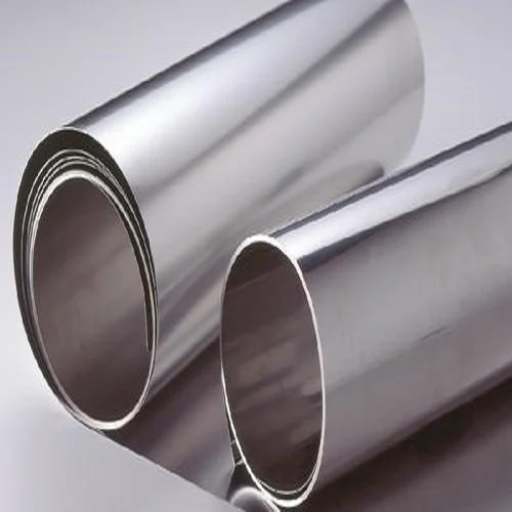
17-4 PH stainless steel is a martensitic precipitation-hardening grade (Type 630, UNS S17400, EN 1.4542) that is hardened by copper-rich precipitates during a low-temperature aging treatment. It reaches up to about 1,380 MPa tensile strength while keeping corrosion resistance roughly comparable to 304, and it is magnetic in every condition.
That’s the short answer. The longer answer is why 17-4 PH confuses so many buyers: it isn’t one material with one strength. It’s a family of seven heat-treatment conditions, and the same alloy can arrive soft enough to machine like mild steel or hard enough to fight your tooling. Two purchasing teams can order “17-4 PH” on the same day, receive chemically identical material, and end up with parts that behave nothing alike.
If you already know 304 and 316 stainless steel and you’re now specifying a grade that has to be strong as well as corrosion resistant, this guide is for you. We’ll walk through what the grade is and how its properties change by condition. Then we’ll cover where it beats the austenitic grades, where it doesn’t, and exactly what to put on a purchase order so the material you receive matches the part you designed.
Key Takeaways
- 17-4 PH (Type 630 / UNS S17400) is a martensitic precipitation-hardening stainless steel that ships soft in Condition A and is hardened after machining by a single aging treatment.
- Strength swings by roughly 35% depending on the condition: Condition A yields around 760 MPa, while H900 reaches 1,170 to 1,280 MPa.
- Higher aging temperature means lower strength but better ductility and stress corrosion cracking (SCC) resistance. H900 is not “better” than H1150; it is a different engineering choice.
- General corrosion resistance is roughly comparable to 304, but the grade is prone to pitting and crevice corrosion in warm chloride, and sour service requires a double-aged condition.
- Always specify the condition, the product standard, and the documentation. Chemistry on a certificate proves the heat, not the heat treatment.
What Is 17-4 PH Stainless Steel?
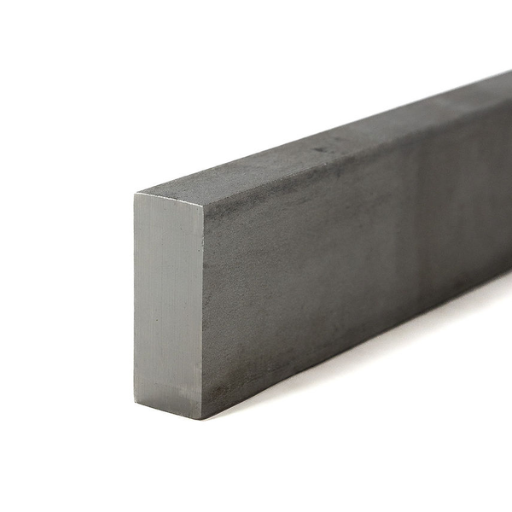
17-4 PH is a chromium-nickel-copper stainless steel that hardens not by quenching to martensite alone, but by a controlled precipitation reaction during aging. The family sits between the fully austenitic grades (304, 316) and the hardenable 400-series martensitic grades. It combines the corrosion resistance of the 300 series with strength that the 300 series cannot reach.
The name tells you the chemistry: roughly 17% chromium and 4% nickel, with “PH” standing for precipitation hardening. The grade is sold under many names depending on where you are and which standard governs the order, which is the first thing to untangle.
| System | Designation |
|---|---|
| AISI / Type | 630 / Type 630 |
| UNS | S17400 |
| EN / DIN (W.-Nr.) | 1.4542 (and 1.4548), X5CrNiCuNb16-4 |
| JIS | SUS 630 |
| GB (China) | 0Cr17Ni4Cu4Nb |
| Common trade names | 17-4 PH, Alloy 630, Z6CNU17-4 |
The grade was developed by Armco and has become a workhorse across aerospace, oil and gas, medical instruments, and precision machining. The reason is simple: it lets an engineer machine a complex part in a soft, forgiving condition, then harden it in place with minimal distortion. That sequence, shape first and harden second, is the single most useful thing about 17-4 PH, and it is the thread running through everything below.
For the wider grade landscape, our guide to stainless steel grades puts the PH family in context with the austenitic, ferritic, and duplex groups.
17-4 PH Composition and Equivalent Grades
The chemistry of 17-4 PH grade 630 is short, but every element earns its place. The two that matter most for the grade’s defining behavior are copper and niobium.
| Element | Range (wt.%) | Role |
|---|---|---|
| Chromium (Cr) | 15.0-17.5 | Forms the passive chromium-oxide film that resists corrosion |
| Nickel (Ni) | 3.0-5.0 | Supports toughness and controls the structure |
| Copper (Cu) | 3.0-5.0 | The precipitation-hardening mechanism |
| Niobium + Tantalum (Nb+Ta) | 0.15-0.45 | Stabilizer; ties up carbon |
| Carbon (C), max | 0.07 | Kept low for toughness and corrosion |
| Manganese (Mn), max | 1.00 | Residual |
| Silicon (Si), max | 1.00 | Residual |
| Molybdenum (Mo), max | 0.50 | Residual |
| Iron (Fe) | Balance | Martensitic matrix |
Here’s what that composition does. During solution annealing, the copper and niobium go into solution in a soft martensitic matrix. During aging, fine copper-rich precipitates form and pin the structure, so the strength climbs.
Niobium helps stabilize the matrix and keeps carbon out of harm’s way. And chromium provides the passive film, which is why the grade can harden without giving up the corrosion resistance the 300 series is known for.
It’s worth comparing this to the composition of common stainless grades to see how much leaner 17-4 PH is on nickel than 304 or 316. That lower nickel is exactly what lets it be martensitic and magnetic.
Heat Treatment & Conditions: The Key to the Grade
You can’t understand 17-4 PH without understanding its heat treatment, and this is where most datasheets let buyers down. They publish one property table as if the grade had one strength. It doesn’t.
Solution Annealing (Condition A)
The material is first heated to roughly 1,038 to 1,040 °C (1,900 °F) and then air- or oil-cooled. This produces Condition A: a soft, machinable martensitic structure. Condition A is a processing state, not a service condition.
Never put Condition A into service. It’s under-hardened, and parts are routinely returned to the aging furnace precisely so they can leave Condition A behind.
The Aging (“H”) Conditions
A single low-temperature aging treatment at 480 to 620 °C produces the final strength. The condition name is the aging temperature in degrees Fahrenheit: H900 ages at 900 °F (about 482 °C), H1150 ages at 1,150 °F (about 621 °C).
There is one rule that matters more than any table: as aging temperature rises, strength and hardness fall, while ductility, toughness, and SCC resistance rise. That single relationship explains every property difference in the sections that follow.
Two practical details deserve mention. First, the part shrinks slightly during aging, roughly 0.05% for H900 and 0.10% for H1150, so precision parts need a machining allowance for that step. Second, time and temperature are both variables, and the exact cycle belongs to the specification, which is the focus of our dedicated guide to 17-4 PH heat treatment.
17-4 PH Stainless Steel Properties by Condition
This is the table that should live at the top of every 17-4 PH properties specification. It shows typical, longitudinal values, and it makes the condition trade-off concrete.
| Condition | Age Temp | UTS (MPa) | 0.2% Yield (MPa) | Elongation | Hardness |
|---|---|---|---|---|---|
| A (solution annealed) | n/a | ~1,030 | ~760 | 8-10% | ~33 HRC |
| H900 | 482 °C / 900 °F | 1,310-1,380 | 1,170-1,280 | 10-14% | 40-47 HRC |
| H925 | 496 °C / 925 °F | ~1,310 | ~1,210 | 14% | 40-44 HRC |
| H1025 | 552 °C / 1,025 °F | 1,070-1,170 | 1,000-1,140 | 12-15% | 34-42 HRC |
| H1075 | 579 °C / 1,075 °F | 1,000-1,140 | 860-1,030 | 13-16% | 31-38 HRC |
| H1150 | 621 °C / 1,150 °F | 930-1,000 | 725-860 | 16-19% | 28-37 HRC |
| H1150D (double aged) | 621 °C ×2 | ~965 | ~825 | ~22% | ~31 HRC |
A few notes on reading this table, because they’ll save you arguments with your supplier.
These are typical longitudinal values, not guaranteed minimums. Transverse values and values taken from large sections run lower. The applicable minimum is set by the product standard and stated on the mill certificate. When a datasheet shows a single H900 number, it’s usually a typical value, not a floor.
The spread tells the whole story. The yield strength roughly doubles between Condition A and H900, then gives back much of that gain as you move toward H1150. You’re trading strength for toughness and cracking resistance, and the right balance depends entirely on the application. Our full properties reference expands this into a complete data hub with section-size and orientation effects.
17-4 PH Physical Properties
Alongside its mechanical strength, 17-4 PH has a set of physical properties that matter for design.
| Property | Value |
|---|---|
| Density | ~7.75-7.80 g/cm³ |
| Elastic modulus | ~196-200 GPa |
| Thermal conductivity | ~16-18 W/m·K |
| Mean CTE (20-100 °C) | ~10.8 ×10⁻⁶/K |
| Electrical resistivity (20 °C) | ~0.80 Ω·mm²/m |
| Melting range | ~1,404-1,440 °C |
| Magnetic response | Ferromagnetic in all conditions |
The density value, around 7.80 g/cm³, sits in the same band as other stainless grades, which you can check against our steel density reference when calculating part weight. The low coefficient of thermal expansion is a quiet advantage: parts hold their dimensions better across a temperature range than many steels do. The magnetic row gets its own section below, because it is one of the most common questions buyers ask.
17-4 PH Stainless Steel Corrosion Resistance
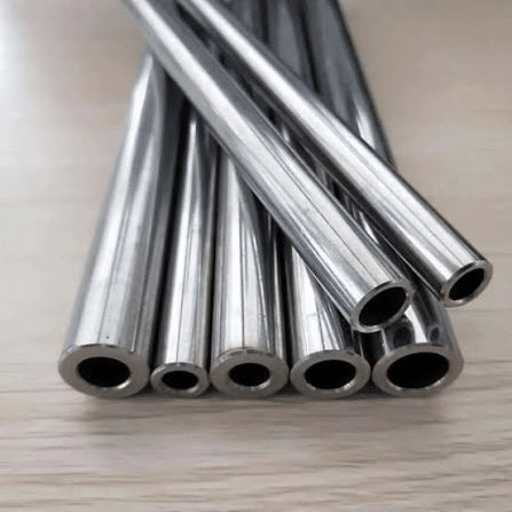
The honest headline is this: 17-4 PH has general corrosion resistance roughly comparable to 304, and better than the 400-series martensitic grades. For many mildly corrosive environments, that is plenty. But the grade has limits, and understanding them is what separates a good specification from an expensive lesson.
The first limit is chloride pitting and crevice corrosion. In warm, stagnant chloride environments, 17-4 PH is vulnerable, and it isn’t a substitute for 316. If your application involves seawater, chlorinated water, or chloride-bearing process chemistry, evaluate 316 or a duplex grade before defaulting to 17-4 PH.
The second is stress corrosion cracking, and here the condition you choose matters enormously. SCC resistance improves as aging temperature rises. A part aged at 550 °C or higher is far more resistant to SCC than one aged at H900. For bolting and any application where SCC is a risk, this is often the deciding factor in condition selection.
The third is the sour service rule. Under NACE MR0175 / ISO 15156, 17-4 PH is permitted in sour service only in a double-aged condition such as H1150D, which is why H1150D appears in the table above even though it gets less attention than H900. And as noted earlier, the grade should not go into service in Condition A.
Passivation after machining helps restore the passive film and is good practice for the finished part. For a deeper treatment of thresholds and test methods, see our full article on 17-4 PH corrosion resistance and the broader stainless steel corrosion resistance guide.
Is 17-4 PH Stainless Steel Magnetic?
Yes. 17-4 PH is ferromagnetic in every condition because its structure is martensitic. The low nickel content (3 to 5%) isn’t enough to hold the non-magnetic austenitic structure that keeps annealed 304 and 316 non-magnetic. A shop magnet grabs 17-4 PH firmly, much like a 400-series grade.
This cuts both ways, and both sides are useful to know.
Because it is magnetic, 17-4 PH works well where magnetism is an advantage: magnetic chucks and fixtures on mills and grinders, magnetic separation equipment, and parts that need to be magnetically detectable, such as components in food-processing lines.
Because it’s magnetic, it’s a poor choice where magnetism is a problem: near MRI equipment, around sensitive sensors and precision instruments, and in EMI-sensitive assemblies. In those cases, use a fully annealed austenitic grade and confirm the acceptance criteria.
One caution for buyers: a magnet is a quick sorting test, not an authenticity test. Cold-worked 304 can also become slightly magnetic, as the BSSA explains in its work on austenitic permeability, so don’t reject a shipment on a magnet alone. For the full explanation, including demagnetizing and NDT implications, see whether 17-4 PH is magnetic.
Fabricating 17-4 PH: Welding & Machining
For most plate and bar products, fabrication is where the grade’s behavior becomes a shop-floor reality. Two operations dominate.
Welding
17-4 PH has the best weldability among the precipitation-hardening grades, and unlike 400-series martensitic grades it doesn’t require preheat. It can be welded by common processes including GTAW, GMAW, and SMAW.
For matching strength, use an ER630 / 17-4 PH filler metal. For joints that aren’t strength-critical, a 308 filler is sometimes used. The important step is post-weld aging, which restores properties in the weld and heat-affected zone that welding disrupts.
Specify clearly whether the part is supplied as-welded, solution treated, or aged after welding, because the weld thermal history changes the final result. Our 17-4 PH welding guide covers procedure detail, filler selection, and heat input.
Machining
The rule here is short: machine in Condition A (about 48% machinability) or in an overaged H1150-M condition (about 76%), and never in H900. Hardened H900 is tough on tooling and slow to cut. The whole point of the grade’s processing sequence is that you machine it soft and then harden it.
Expect long, gummy chips, watch for work hardening at the surface, and, as noted earlier, leave an allowance for the dimensional change during aging. The machining and machinability guide goes deeper on cutting speeds, tooling, and shop practice, and our custom processing services can supply material cut and prepared for your process.
17-4 PH vs Other Stainless Grades
Where does 17-4 PH actually fit? The clearest way to answer is a decision table against the grades you are most likely to be weighing.
| Grade | Family | Strength | Corrosion | Magnetic | Relative Cost |
|---|---|---|---|---|---|
| 17-4 PH | Martensitic PH | Very high (to ~1,380 MPa) | ~304 level | Yes (always) | Highest |
| 304 | Austenitic | Moderate | Good | No (annealed) | Lowest |
| 316 | Austenitic | Moderate | Best of the three | No (annealed) | Mid |
| 15-5 PH | Martensitic PH | High | ~304 level | Yes | Higher than 17-4 |
| 17-7 PH | Semi-austenitic PH | High | Lower than 17-4 | Yes (hardened) | High |
| Duplex 2205 | Austenitic-ferritic | High | Very good | Yes (ferrite) | Higher than 316 |
The decision logic follows from that table:
- Mild environment plus high strength: 17-4 PH.
- Aggressive chloride corrosion: 316, or duplex 2205 if you also need strength.
- Budget, mild service: 304.
- Large sections needing transverse ductility: 15-5 PH.
- Formability before hardening: 17-7 PH.
The full comparisons live in their own articles. See 17-4 PH vs 304 vs 316, 17-4 PH vs 15-5 PH, 17-4 PH vs 17-7 PH, and the existing duplex 2205 vs 316 comparison.
A quick note before you spec a grade: our team helps engineers weigh these trade-offs against specific service conditions. If you’re torn between 17-4 PH, 316, and duplex, talk to our material specialists, and we’ll work through the decision with you.
17-4 PH Stainless Steel Applications & Where It Excels
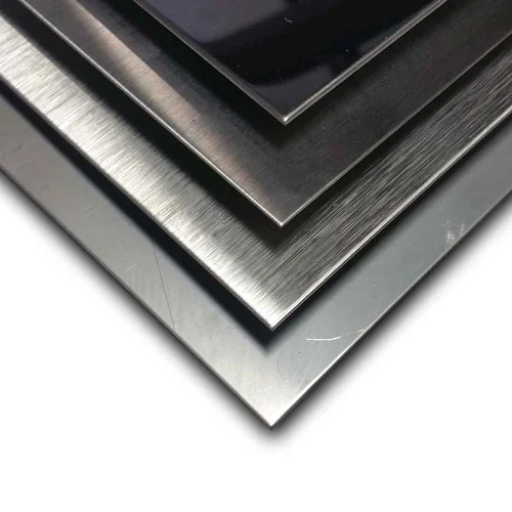
17-4 PH shows up wherever high strength and moderate corrosion resistance have to coexist. A segment-by-segment view makes the pattern clear.
- Aerospace fasteners and structural parts: high strength at low weight, with the toughness to survive vibration.
- Valve stems and pump shafts: hardenable surfaces that resist wear in mildly corrosive fluids.
- Oil and gas downhole tools and subsea connectors: strength for deep service, with NACE-compliant conditions where sour service applies.
- Surgical and dental instruments: the grade is covered by ASTM F899, combining hardness with hygienic corrosion resistance.
- Marine propeller and ship shafts: strength with reasonable corrosion performance in marine duty, though not in aggressive, stagnant chloride.
- Chemical and food processing machinery: wear resistance plus cleanability in the right conditions.
- Plastic molds and precision-engineering parts: dimensional stability through the aging step suits tight tolerances.
One limit spans all of these: the maximum service temperature is roughly 300 to 316 °C (600 °F), and the grade is not recommended for cryogenic service. Above the ceiling, thermal aging can embrittle the material. Our applications deep dive covers the segment detail, and the wider applications guide places these in the broader stainless picture.
Cost, Availability & What to Order
17-4 PH is a premium grade, and it’s worth understanding why before you budget for it.
It typically runs 1.5 to 3 times the price of 304, and roughly 15 to 25% above 316, driven by the copper and niobium additions and by the aging heat treatment that 304 never requires. Those are relative guideposts, not quotations; market pricing moves and depends heavily on form, condition, and quantity.
The offsetting factor is that you’re buying a part, not a kilogram. Because the grade is so much stronger, a 17-4 PH component can often use a thinner section than the equivalent 304 part, which recovers part of the premium. The full cost math, including total cost of ownership and availability by form, is in our 17-4 PH cost guide.
There’s also a warning worth stating plainly: do not over-specify. If a mild environment and moderate load are all your application requires, 304 or a standard alloy steel will do the job for less. Specifying 17-4 PH “to be safe” is an expensive habit.
When you are ready to order, this is the checklist that prevents the wrong material from arriving.
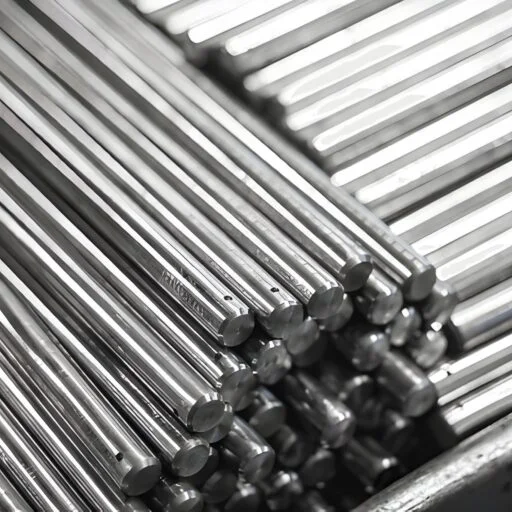
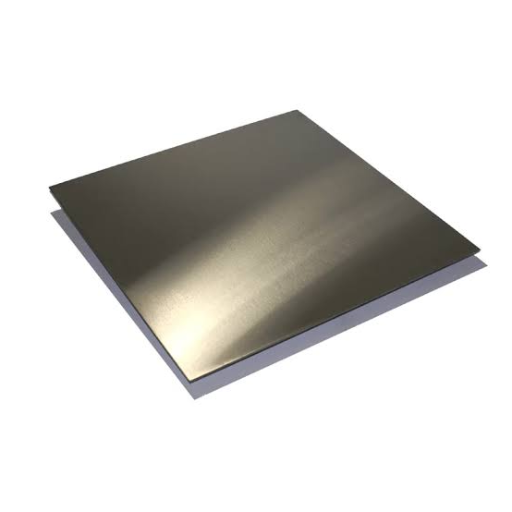
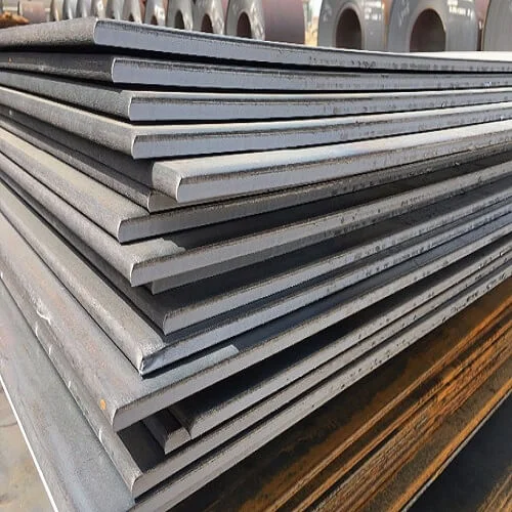
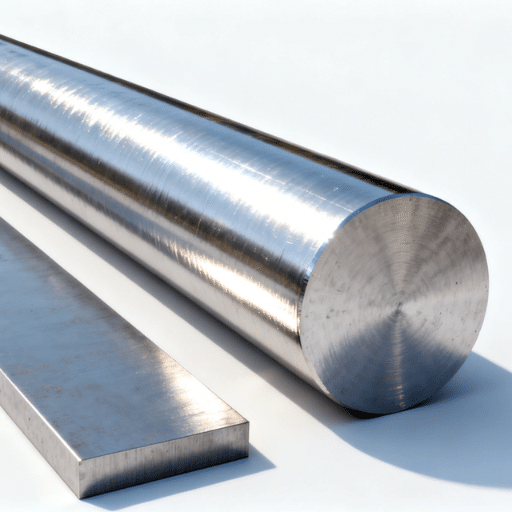
- Product form. Plate, sheet, round bar, pipe, or a forging, matched to the applicable product standard.
- Condition. Condition A for machining, or the specific H condition the service requires (H900, H1025, H1150, or H1150D for NACE service).
- Product standard. ASTM A564 or AMS 5643 for bar and forgings, ASTM A693 or AMS 5604 for plate and sheet, ASTM A705 for strip, ASTM F899 for surgical instruments.
- Documentation. An EN 10204 3.1 mill test certificate with heat-specific chemistry and mechanical results.
Notice that chemistry alone proves none of this. It proves the heat, not the heat treatment. Require the certificate, and confirm the condition and standard are stated on it.
If you supply the form, condition, and standard you need, our team can quote against it. Request a quote, and we’ll confirm availability, documentation, and lead time for 17-4 PH and the stainless grades that surround it in your specification.
Frequently Asked Questions
What is 17-4 PH stainless steel made of?
It is an iron-based alloy with 15.0 to 17.5% chromium, 3.0 to 5.0% nickel, and 3.0 to 5.0% copper, plus niobium. The copper drives the precipitation-hardening reaction and the chromium provides corrosion resistance, giving the grade high strength with roughly 304-level corrosion performance.
Is 17-4 PH the same as grade 630 and UNS S17400?
Yes. 17-4 PH, Type 630, and UNS S17400 all refer to the same grade, which is also known as EN 1.4542 and JIS SUS 630. The different names come from different standards systems, not from different materials.
Is 17-4 PH stainless steel magnetic?
Yes, in every condition. Because it is martensitic, 17-4 PH is ferromagnetic whether supplied as Condition A, H900, or H1150. This differs from fully annealed 304 and 316, which are essentially non-magnetic.
Can 17-4 PH stainless steel be welded?
Yes. It has the best weldability of the precipitation-hardening grades and needs no preheat. Use ER630 / 17-4 PH filler for strength-matched joints and apply a post-weld aging treatment to restore properties in the weld zone.
Is 17-4 PH better than 316 stainless steel?
Not universally. 17-4 PH is far stronger and can be heat-treated to high hardness, but 316 has better resistance to chloride pitting and crevice corrosion. Choose 17-4 PH for strength, and 316 for aggressive chloride environments.
What is the difference between H900 and H1150?
They are aging conditions. H900 is aged at 900 °F (about 482 °C) and gives the highest strength and hardness. H1150 is aged at 1,150 °F (about 621 °C) and gives lower strength but better ductility, toughness, and SCC resistance.
What condition should I order 17-4 PH in?
Order Condition A when you still need to machine the part, then harden it. For service, choose H900 for peak strength, a mid condition such as H1025 for balance, or H1150 and H1150D for toughness and sour-service compliance.
What is the maximum service temperature of 17-4 PH?
About 300 to 316 °C (600 °F). Above that range, thermal aging can reduce toughness and impact resistance. The grade is also not recommended for cryogenic service.
What is the density of 17-4 PH stainless steel?
About 7.75 to 7.80 g/cm³, close to other stainless grades. The exact figure depends on the source and the product form.
Does 17-4 PH shrink during aging?
Yes, slightly. Aging produces roughly 0.05% shrinkage in H900 and about 0.10% in H1150. Precision parts need a machining allowance so the finished dimension lands on target after hardening.
What is the corrosion resistance of 17-4 PH compared with 304?
General corrosion resistance is roughly comparable to 304 and better than the 400-series grades. The main weaknesses are pitting and crevice corrosion in warm chloride, where 316 performs better.
Can 17-4 PH be used in sour (NACE) service?
Yes, but only in a double-aged condition such as H1150D, following NACE MR0175 / ISO 15156. Single-aged, high-hardness conditions are not acceptable for sour service.
Conclusion
17-4 PH stainless steel is best understood as a family defined by its heat treatment, not a single material with a single set of numbers. The condition you choose sets the strength, the hardness, the ductility, and the SCC resistance, and it moves all four together. Condition A yields around 760 MPa; H900 pushes past 1,280 MPa; H1150 trades strength back for toughness and cracking resistance.
The grade earns its place where 304 and 316 are simply not strong enough, and its corrosion resistance is good enough for a wide swath of mildly corrosive service. It isn’t a universal upgrade over 316, and it has a real temperature ceiling, so the decision still comes down to your environment and your loads.
Three actions carry most of the value: choose the condition first, name the correct product standard for the form, and require heat-specific documentation on the mill certificate. Do those three things and the material you receive will match the part you designed.
Ready to specify 17-4 PH or compare it against the stainless grades already in your design? Contact LIANYUNGANG DAPU METAL for availability, mill test documentation, custom processing, and a quote on the forms and conditions you need.