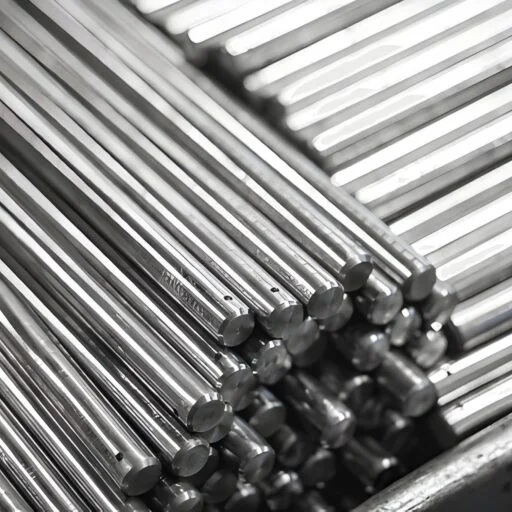
17-4 PH and 15-5 PH have the same minimum strength and hardness at every aging condition. The real difference is transverse toughness in heavy sections, because 15-5 PH has a lower chromium range which suppresses the delta ferrite 17-4 PH can retain.
Ilse buys material for a valve manufacturer in Rotterdam. Last month she put two mill certificates side by side on her desk: one 17-4 PH, one 15-5 PH, both at H900, both from reputable mills.
Every mechanical value matched. Tensile, yield, elongation, reduction of area, hardness. Line for line, the two pages were the same document with a different grade name at the top.
The 15-5 PH quote was 28% higher.
She spent an afternoon trying to find the difference on paper, and there wasn’t one to find. That is not a coincidence and it is not a paperwork error. It’s the reason this comparison is hard, and it is where most published comparisons go wrong.
Key Takeaways
- 17-4 PH and 15-5 PH share an identical ASTM A564 minimum property table at every aging condition, so a mill certificate can’t tell them apart.
- 15-5 PH is the premium grade and carries less chromium, 14.0 to 15.5% against 15.0 to 17.5%. Lower chromium is what suppresses delta ferrite, so the “downgrade” in chemistry is the upgrade in toughness.
- The difference shows up in the transverse direction, in heavy sections, and in the heat-affected zone after weld repair. Those are the three things the certificate doesn’t measure.
- The claim that 15-5 PH resists corrosion better than 17-4 PH doesn’t survive a chromium comparison. The two are essentially equivalent in practice, and neither is a chloride grade.
- Choose on geometry and process, not grade prestige: thin, simple and unwelded is 17-4 PH; heavy, welded and transversely loaded is 15-5 PH. Availability often decides before metallurgy does.
That is the shape of the question. Anyone weighing 17-4 PH vs 15-5 PH is usually holding a drawing, a quote, or a rejected lot, and needs to know what the premium actually buys. What follows is what the two grades share, where they genuinely diverge, why the cheaper grade has more chromium, when the premium pays for itself, and when neither grade is the right answer.
If this decision is sitting on a live project, our technical consultation service exists for exactly this conversation. The complete 17-4 PH stainless steel guide covers the base grade in full.
17-4 PH vs 15-5 PH: The Short Answer
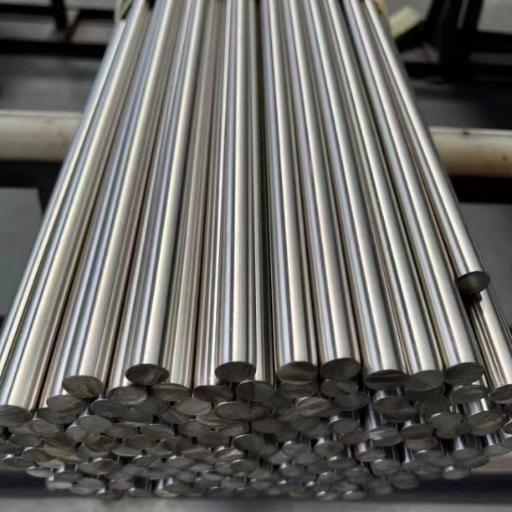
17-4 PH and 15-5 PH are both martensitic, copper-hardened precipitation-hardening grades with identical minimum mechanical properties at every aging condition. 15-5 PH carries a lower chromium range, which suppresses delta ferrite and gives it better transverse toughness in heavy sections and after weld repair. It costs more, and for thin, simple parts it often buys nothing.
What the Two Grades Have in Common
Start with the list of similarities, because it is longer than most comparisons admit.
Both are martensitic. Both harden through copper-rich precipitates rather than through carbon. Both use niobium to pin grain growth during the solution anneal.
Both are ferromagnetic. Both lose strength above roughly 300 to 315 °C as the precipitates coarsen. Both sit near 304-level general corrosion resistance and well below 316L.
The heat treatment isn’t similar. It’s the same.
Both solution anneal near 1,040 °C and quench, and both age on the same schedule at the same temperatures with the same H-codes. A procedure written for 17-4 PH runs on 15-5 PH without a single change. The cycle table lives in our 17-4 PH heat treatment guide, so it isn’t repeated here.
That shared schedule matters commercially. It means a shop qualified on one grade is already qualified on the other, and it removes heat treatment as a selection criterion entirely.
The Composition Difference in One Table
The chemistry is where the two grades part, and one line in the table is counter-intuitive enough to read twice.
| Element | 17-4 PH (UNS S17400 / 630) | 15-5 PH (UNS S15500 / XM-12) |
|---|---|---|
| Carbon | 0.07 max | 0.07 max |
| Chromium | 15.00 – 17.50 | 14.00 – 15.50 |
| Nickel | 3.00 – 5.00 | 3.50 – 5.50 |
| Copper | 3.00 – 5.00 | 2.50 – 4.50 |
| Niobium + tantalum | 0.15 – 0.45 | 0.15 – 0.45 |
| Manganese | 1.00 max | 1.00 max |
| Silicon | 1.00 max | 1.00 max |
| Iron | Balance | Balance |
The premium grade carries less chromium. It also carries less copper and a slightly tighter nickel range. The table reads the same whether you frame the question as 17-4 PH vs 15-5 PH or as 15-5 PH vs 17-4 PH.
A buyer scanning that table reasonably concludes that 15-5 PH is the cheaper composition being sold at a higher price. That reading is wrong, and understanding why is the whole article.
The chromium reduction isn’t a cost cut. It’s the mechanism, and the next section explains it. For the broader picture of how these lean compositions compare with the austenitic grades, see our stainless steel composition guide.
The Same Certificate: Why the Property Tables Match
Ilse had been comparing published 15-5 PH stainless steel properties against the 17-4 PH sheet and finding no difference anywhere. Here is the table that makes her afternoon make sense.
These are the minimum mechanical properties in ASTM A564, the product specification covering both grades, and both appear on the same page with the same numbers.
| Condition | Tensile strength | Yield strength | Elongation | Reduction of area |
|---|---|---|---|---|
| H900 | 1,310 MPa | 1,170 MPa | 10% | 40% |
| H925 | 1,170 MPa | 1,070 MPa | 10% | 44% |
| H1025 | 1,070 MPa | 1,000 MPa | 12% | 45% |
| H1075 | 1,000 MPa | 860 MPa | 13% | 45% |
| H1150 | 930 MPa | 725 MPa | 16% | 50% |
Every row applies to both 17-4 PH and 15-5 PH. Not approximately. Identically.
A mill certificate reports measured values against these minimums, so two conforming certificates at the same condition will show the same numbers whether the part is 17-4 PH or 15-5 PH. Nothing on that page is capable of revealing which grade you are holding.
So the 17-4 PH vs 15-5 PH question is really a question about what a certificate can’t show. That single fact explains a lot of behaviour in the market.
It explains why buyers default to whichever grade is cheaper or in stock. It explains why substitution between the two is hard to detect. And it explains why so many published comparisons list composition and then assert a toughness difference without ever showing where it comes from.
The difference is real. It lives in three places the certificate doesn’t measure: the transverse direction, the section thickness, and the heat-affected zone after welding. The full property set by condition sits in our 17-4 PH properties guide.
Why 15-5 PH Exists: Delta Ferrite
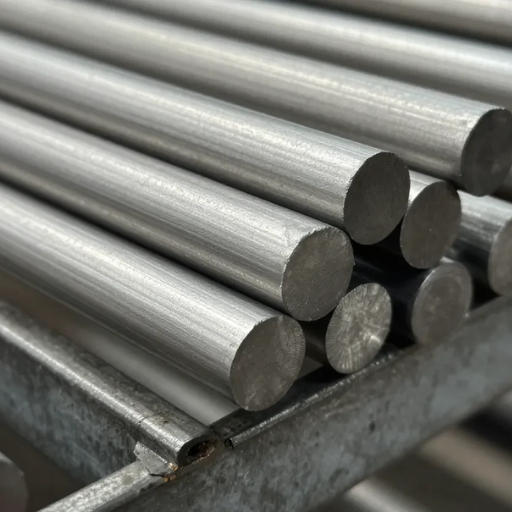
15-5 PH wasn’t developed to be stronger. It was developed to be more consistent through a heavy section, and the reason is a phase that forms while the steel is still liquid.
This is the root of the 17-4 PH vs 15-5 PH difference, and it starts before either grade has been heat-treated.
What Delta Ferrite Is and Where It Comes From
Delta ferrite is a body-centred phase that is rich in chromium and stable at high temperature. It forms during solidification and, in some compositions, survives the solution anneal instead of transforming fully to austenite and then to martensite.
It doesn’t disappear. It persists as stringers, elongated bands aligned with the direction the material was rolled or forged. Under a microscope, the structure looks like a bundle of parallel threads running through the martensite.
This is worth stating plainly, because “ferrite” gets described as contamination in some write-ups. It isn’t contamination. It’s a legitimate phase that forms because the chemistry allows it, and it behaves differently from the martensite around it.
Why It Costs Transverse Ductility
The stringers are weaker and less ductile than the surrounding martensite, and they lie in planes perpendicular to the working direction.
Load the part along the rolling direction and the test passes through the stringers lengthwise. The material behaves well. Load it across that direction, the short-transverse direction, and the test crosses the planes of weakness one after another.
That is the whole mechanism. It’s also why the published longitudinal numbers match while real parts behave differently. A tensile test machined along the bar sees a different material from a flange loaded through its thickness.
This is why 15-5 PH transverse toughness is the phrase that keeps appearing in supplier literature. It is naming the right property, even when the number attached to it isn’t sourced.
How Lower Chromium Suppresses It
Delta ferrite is chromium-rich, so chromium is the lever. Reduce the chromium range and the phase becomes less stable, and a fully martensitic structure becomes achievable in sections where 17-4 PH would retain ferrite.
15-5 PH sits at 14.0 to 15.5% chromium, against 15.0 to 17.5% for 17-4 PH. Combined with a tighter nickel range and slightly lower copper, that shift is enough to keep the structure clean through heavy sections.
So the premium grade carries less chromium because less chromium is the fix. That is the sentence to remember from this article.
Supplier technical pages commonly report a 50 to 100% improvement in transverse toughness. The direction of that claim is well established across sources and matches the metallurgy. The magnitude is a vendor figure without an independent source, so treat it as indicative rather than as a design value. The structural argument doesn’t depend on the percentage.
For how the martensitic structure drives other properties, including why both grades respond to a magnet, see 17-4 PH magnetic.
17-4 PH vs 15-5 PH: Where the Grades Actually Differ
Three conditions separate the grades in practice. If none of them apply to your part, the grades are interchangeable, and the cheaper one is correct.
Transverse Loading
Any component stressed across the working direction belongs here. Rings, flanges, hubs, thick plate loaded through its thickness, and forged bodies where the grain flow runs one way, and the service load runs another.
Lars runs a forge shop outside Gothenburg. His team supplied a 320 mm hub in 17-4 PH at H1150, tested longitudinally, and every value passed with margin. Eight months later, a customer reported cracking at the bore.
The longitudinal certificate had been honest. The failure was in the short-transverse direction, where nobody had tested, and the delta ferrite stringers had been there since the ingot was cast. Lars now specifies 15-5 PH for anything over 200 mm with a transverse load path.
Section Size
Ferrite content and segregation both scale with thickness. A 25 mm bar cools fast and stays clean in either grade. A 300 mm forging cools slowly, segregates more, and gives delta ferrite far more opportunity to persist. That is also why the forgings specification, ASTM A705, carries its own testing requirements rather than relying on the bar standard.
Therefore the same question deserves different answers at different sizes. A buyer at 40 mm and a buyer at 400 mm aren’t making the same decision, even though they are typing the same search.
As a working frame: below roughly 100 mm in a simple shape, the grades behave closely enough that price should decide. Above roughly 200 mm, or in any complex forging, the transverse argument starts to carry weight. Between those, look at the load path and the weld history.
Weld repair
Repeated weld repair in the heat-affected zone is a documented strength for 15-5 PH and a documented weak point for 17-4 PH. Each repair cycle exposes the HAZ to another thermal excursion, and the ferrite stringers make that zone less tolerant of it.
If a part will be repaired twice in its service life, that belongs in the grade decision and not in a footnote. It’s also the most common way a part that passed every incoming test fails in year three.
Welding practice itself is a separate subject and is covered in our 17-4 PH vs 304 vs 316 comparison alongside the wider grade-selection question.
The Selection Matrix in One Table
| Your part | 17-4 PH | 15-5 PH | Why |
|---|---|---|---|
| Thin section under 100 mm, simple shape | ✅ Correct | Over-specified | The ferrite problem needs section size to bite |
| Heavy section over 200 mm | ⚠️ Check | ✅ Correct | Ferrite and segregation both scale with thickness |
| Load across the working direction | ⚠️ Check | ✅ Correct | This is what transverse toughness means |
| Repeated weld repair in service | ⚠️ Check | ✅ Correct | HAZ toughness after multiple cycles |
| Sheet, strip, wire or small bar from stock | ✅ Correct | Often mill order | Availability decides |
| Cost-sensitive, high volume, mild duty | ✅ Correct | Over-specified | The premium is a straight cost here |
| Chloride or seawater service | ❌ Neither | ❌ Neither | Move to duplex or a nickel alloy |
| Non-magnetic assembly required | ❌ Neither | ❌ Neither | Both are ferromagnetic; use 316L |
Read the ✅ column as “the default,” and the ⚠️ as “check the load path and the weld history before deciding.”
Corrosion: The Claim Most Pages Get Backwards
Several supplier pages state that 15-5 PH resists corrosion better than 17-4 PH. On chromium alone, that can’t be true.
17-4 PH carries 15.0 to 17.5% chromium. 15-5 PH carries 14.0 to 15.5%. Chromium is the element that builds the passive layer, and the grade with more of it doesn’t have weaker corrosion resistance.
The sources that get this right say the two are essentially equivalent in practice. A one to two-point chromium difference is small next to the variables that actually decide corrosion performance. Those are surface finish, whether heat tint and scale were properly removed, and whether the part was passivated after machining.
The practical answer for a buyer is that neither grade is a corrosion upgrade over the other. If a specification is moving from 17-4 PH to 15-5 PH on corrosion grounds, it is moving for the wrong reason and paying a premium for nothing.
Neither grade is a chloride grade either. Both sit near 304-level general corrosion resistance and well below 316L. For continuous chloride or seawater service the answer is duplex or a nickel alloy, not the other PH grade. Our 316 stainless steel guide and the duplex 2205 vs 316 comparison cover what real chloride resistance looks like.
Sour service is the one place the grades do part on corrosion grounds, and the advantage runs the other way. 17-4 PH has the longer oil and gas record, and the double aging cycles H1150M and H1150D exist specifically to meet NACE MR0175 / ISO 15156 hardness and cracking requirements. A buyer moving to 15-5 PH for a sour well should confirm the material is qualified for that standard rather than assuming the premium covers it.
Melt Practice: What VAR Actually Buys
The most common shorthand on this SERP is that 15-5 PH is the VAR version of 17-4 PH. That is imprecise in a way that matters when you are writing a purchase order.
15-5 PH is usually supplied vacuum arc remelted, because its application set demands it. Landing gear, airframe structure and nuclear components carry specifications that require the cleanliness VAR provides.
17-4 PH is usually supplied argon oxygen decarburized (AOD) or electroslag remelted (ESR), with VAR available at a premium when a specification calls for it. Both practices are entirely capable of meeting ASTM A564. The difference is inclusion content and segregation, not minimum properties.
The precise statement is this: a VAR 17-4 PH and a VAR 15-5 PH are closer to each other than an AOD 17-4 PH is to a VAR 15-5 PH. Grade and melt practice are two separate decisions, and buyers routinely conflate them.
What VAR buys is lower inclusion content, less segregation, and better transverse and fatigue behaviour. What it doesn’t buy is a different minimum mechanical property table. That table is the same regardless of how the steel was melted, which is another reason the certificate stays silent.
17-4 PH vs 15-5 PH Cost: Per Kilogram and Per Part
On indicative supplier pricing, 17-4 PH bar runs roughly ¥60 to ¥100 per kilogram and 15-5 PH runs roughly ¥80 to ¥140. The ranges overlap, and the premium works out to somewhere between 25 and 40% depending on form and size.
Treat those figures as directional and dated. They move with nickel and chromium, and they differ by mill, form and quantity. The method for building a real number is in our 17-4 PH price guide.
The number that decides the 17-4 PH vs 15-5 PH cost question isn’t cost per kilogram. It’s cost per part.
On a small, simple component, the material premium is a straight cost with nothing to offset it. Paying 30% more for transverse toughness nobody loads is over-specification, and it is a real line item across a production run.
On a large forging, the arithmetic reverses. One scrapped part can cost more than the entire material difference across the order. Add the schedule cost of a replacement, and the premium is repaid by a single avoided reject. For example, a 320 mm hub that fails at the bore in year one costs far more than the 30% material uplift on the whole batch.
Three questions settle it:
- What does a rejected or failed part cost, in material, labour and schedule?
- How likely is a reject in this geometry, at this section size, with this load path?
- Will the part be weld repaired during its life?
If the answer to all three is small, buy 17-4 PH. If any answer is large, the premium is cheap insurance.
Availability: The Factor That Usually Decides
However, metallurgy isn’t always the deciding variable, and pretending otherwise wastes buyers’ time.
17-4 PH is stocked in bar, sheet, plate, strip, wire and forgings by distributors worldwide. It’s one of the most widely available PH grades in existence.
15-5 PH is a mill-order item in many forms and sizes. Availability has improved considerably, but it is not a shelf item the way 17-4 PH is.
Mei schedules fabrication at a shop in Ningbo. Her project needed 15-5 PH plate in a thickness that turned out to be mill-order only, with a site date four weeks out. The metallurgically correct answer and the deliverable answer were not the same answer.
She ran the transverse load check on the actual part, found the stress path ran along the working direction, and specified 17-4 PH from stock. The part shipped on time and has been in service for two years.
That isn’t a compromise. It’s a correct engineering decision made with the full picture in view, which is what a supplier should help a buyer do rather than simply quoting the more expensive grade.
17-4 PH vs 15-5 PH: Can You Substitute One for the Other?
The two directions aren’t symmetric, and one of them is much safer than the other.
15-5 PH in place of 17-4 PH is usually safe on metallurgy. It is stronger in the transverse direction, equivalent in corrosion, and identical in heat treatment. It costs more and may not be stocked. Check the governing document as well, because AMS 5643 and AMS 5659 aren’t interchangeable paperwork even when the properties match.
17-4 PH in place of 15-5 PH is the risky direction. It gives away precisely the transverse toughness the original specification was buying. If the requirement was written because someone had a transverse failure, this substitution reintroduces the failure mode.
The substitution that actually happens in the market is 17-4 PH supplied against a 15-5 PH requirement, and it is close to undetectable by ordinary means. Both grades are magnetic, so a magnet is useless. Both reach the same hardness at the same conditions, so a hardness test is useless.
Only positive material identification (PMI) separates them, and the discriminator is the chromium range: 15.0 to 17.5% points to 17-4 PH, 14.0 to 15.5% points to 15-5 PH. Those ranges overlap between 15.0 and 15.5%, so a single-element reading in that band proves nothing. Ask for full chemistry.
That is the practical case for buying on certification rather than on appearance. Our guide to 17-4 PH magnetic properties covers the identification limits in more detail.
When Neither Grade Is the Right Answer
Every comparison on this topic ends with a recommendation between the two grades. Some buyers should leave the family.
- Chloride or seawater service. Duplex 2205 or a nickel alloy. Moving from 17-4 PH to 15-5 PH changes nothing that matters here.
- Better corrosion resistance at comparable strength. 13-8 Mo resists corrosion better than either grade at similar strength levels, at a higher cost again.
- Non-magnetic assemblies. 316L. Both PH grades are ferromagnetic and can’t be used, regardless of condition.
- Service above roughly 300 °C. Neither grade. Overaging coarsens the copper precipitates and the strength falls away quickly.
- Mild service where the strength is unused. 304 or 316. The PH premium buys hardness and strength that the application never calls on.
The pattern is that over-specification is as expensive as under-specification, and it is harder to notice because nothing fails.
Frequently Asked Questions
What is the difference between 17-4 PH and 15-5 PH?
Both are martensitic, copper-hardened PH grades with identical minimum mechanical properties at every aging condition. The difference is chemistry. 15-5 PH carries 14.0 to 15.5% chromium against 15.0 to 17.5% in 17-4 PH, which suppresses delta ferrite and improves transverse toughness in heavy sections and after weld repair. It costs roughly 25 to 40% more.
Is 15-5 PH better than 17-4 PH?
Only where the part is thick, transversely loaded, or repeatedly weld repaired. In thin, simple, unwelded parts the two perform the same, so the 17-4 PH vs 15-5 PH premium buys nothing. “Better” depends on the drawing, not on the grade name.
Which is stronger, 17-4 PH or 15-5 PH?
They are the same at every condition. H900 gives 1,310 MPa tensile and 1,170 MPa yield for both. H1150 gives 930 and 725 for both. Any claim that one is stronger in the longitudinal direction is wrong.
Is 15-5 PH more corrosion resistant than 17-4 PH?
No. 15-5 PH carries less chromium, so it can’t be. The two are essentially equivalent in practice, because one to two points of chromium is small next to surface finish and passivation. Neither is suitable for continuous chloride service.
Why does 15-5 PH have better transverse toughness?
Delta ferrite is chromium-rich and forms stringers aligned with the working direction, which are planes of weakness under transverse load. 15-5 PH’s lower chromium range makes that phase less stable, so the structure stays martensitic through heavy sections and stringers are far less likely to form.
What is delta ferrite and why does it matter?
It is a chromium-rich body-centred phase that forms during solidification and can survive the solution anneal as elongated stringers. It isn’t contamination. It behaves differently from the surrounding martensite and degrades short-transverse ductility and toughness.
Can 15-5 PH replace 17-4 PH?
Usually yes, on metallurgy. It is equal or better in every property and identical in heat treatment. Check that the governing specification permits it, because AMS 5643 and AMS 5659 are different documents, and confirm availability before committing to a date.
Can 17-4 PH replace 15-5 PH?
Only after confirming the original requirement was not written for transverse toughness. If it was, the substitution reintroduces the exact failure mode the specification was designed to prevent.
Which is cheaper, 17-4 PH or 15-5 PH?
17-4 PH, by roughly 25 to 40% on indicative bar pricing. On a large forging the gap can be repaid by one avoided reject, so cost per part is the number that matters rather than cost per kilogram.
Do 17-4 PH and 15-5 PH use the same heat treatment?
Yes, identically. Same solution anneal near 1,040 °C, same aging temperatures from 482 to 621 °C, same H-codes. A procedure qualified on one grade runs on the other without change.
Is 15-5 PH magnetic?
Yes, in every condition. It is martensitic like 17-4 PH, so a magnet responds identically. That is why a magnet can’t be used to tell the two grades apart.
What is the difference between AMS 5643 and AMS 5659?
AMS 5643 covers 17-4 PH bar, forgings and wire. AMS 5659 covers 15-5 PH bar and forgings. They are separate specifications for separate grades, and a drawing that cites one doesn’t automatically accept the other even though the minimum properties match.
Which grade is better for large forgings?
15-5 PH, above roughly 200 mm or wherever the load path runs transverse to the grain flow. Delta ferrite and segregation both scale with section size, and that is where the grades separate.
Can a magnet tell 15-5 PH from 17-4 PH?
No. Both are ferromagnetic in every condition. Neither can a hardness test, because both reach the same hardness at the same aging temperature. Only full chemical analysis separates them.
Conclusion
The 17-4 PH vs 15-5 PH decision comes down to a single reframing. The certificates match, the heat treatment matches, and the hardness matches, so the choice can’t be made from paperwork. It has to be made from the drawing.
Three questions do most of the work. How thick is the section? Does the load run across the working direction? Will the part be weld repaired?
If the answers are thin, no, and no, then 17-4 PH is correct, and the premium buys nothing. If any answer goes the other way, 15-5 PH is earning its price.
And if the schedule is tight, availability is a legitimate engineering input rather than an excuse. A correct grade that arrives in twelve weeks isn’t a solution to a four-week problem.
LIANYUNGANG DAPU METAL supplies 17-4 PH material with mill test certificates and full traceability. Our technical team also works through grade selection questions like this one with buyers before a purchase order is written. If you are weighing the two grades on a live project, request a quote or start with a technical consultation. We also handle custom processing and can walk you through the full product range.