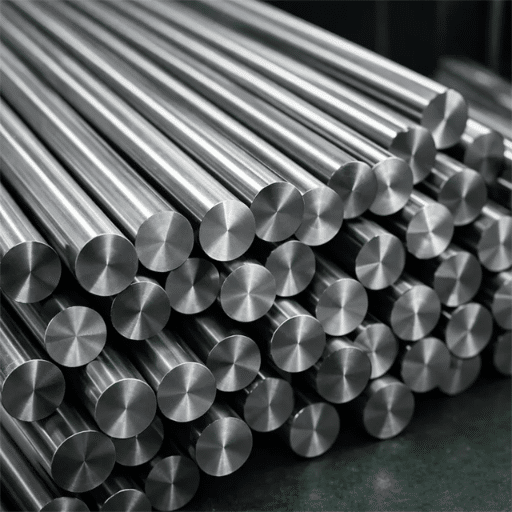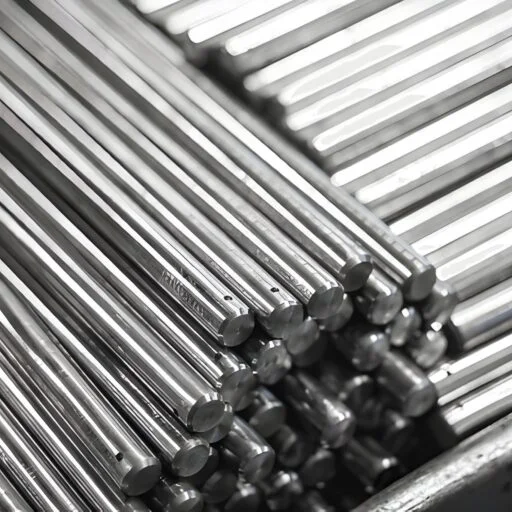
17-4 PH heat treatment is a two-step process. The steel is first solution annealed at about 1,038-1,040 °C (1,900 °F) and cooled to the soft, machinable Condition A, then age-hardened at 480-620 °C. The aging temperature, named by the “H” condition (H900 through H1150), is the single variable that sets the final strength, hardness, and ductility.
That is the whole method in three sentences. The rest is the part most datasheets skip: what the temperatures and hold times actually are, how much the part shrinks, how to reach sour-service compliance, and how to avoid the furnace mistakes that scrap a batch.
Consider a shop we worked with last spring. Two brackets arrived on the same purchase order, both certified 17-4 PH, both with identical chemistry. One machined cleanly and yielded at about 760 MPa. The other ate two carbide inserts and refused to move past the first pass. Same alloy, same certificate. The only difference was the condition the mill shipped, and neither bracket was specified with a condition at all. That single omission turned a straightforward job into a rework.
This guide covers 17-4 PH heat treatment from the furnace side. You will learn the two-step cycle, the full condition-to-property relationship, how to select the right condition for your service, the shrinkage you must allow for, and the requirements behind NACE sour service.
Key Takeaways
- 17-4 PH heat treatment is two steps: solution anneal at roughly 1,038-1,040 °C, then age harden at 480-620 °C. The “H” number is the aging temperature in degrees Fahrenheit.
- Higher aging temperature always means lower strength and hardness but better ductility, toughness, and stress corrosion cracking (SCC) resistance. H900 is peak strength; H1150 is maximum toughness.
- Aging causes predictable shrinkage of roughly 0.05% at H900 and 0.10% at H1150, so precision parts need a machining allowance and a finish pass after hardening.
- Sour service under NACE MR0175 / ISO 15156 requires a double-aged condition (H1150D) held to 33 HRC or less. H900, H1025, and H1075 are not acceptable.
- Never put Condition A into service, and never quench 17-4 PH like carbon steel. It is air-hardenable, and the strength comes from aging, not from the quench.
How 17-4 PH Heat Treatment Works
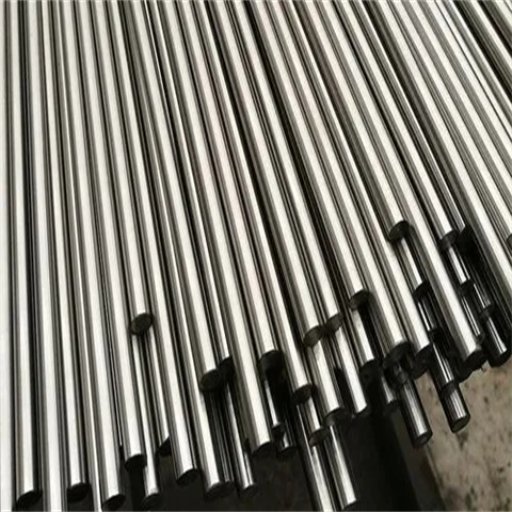
To understand the cycle, it helps to understand why the grade hardens at all. 17-4 PH is a precipitation-hardening martensitic stainless steel. It is not quenched and tempered the way a carbon or low-alloy steel is. Quenching plays a role, but the strength comes from a later, much lower-temperature step.
The mechanism is straightforward. Copper, present at 3.0 to 5.0%, sits in solution after the high-temperature anneal. When the steel is reheated to the aging temperature, that copper precipitates as fine particles that pin the martensitic matrix in place. The finer and denser the precipitates, the higher the strength. Aging temperature controls how those precipitates form, which is why it controls everything.
This is the idea that makes 17-4 PH stainless steel different from every austenitic grade you may already specify. It is a material you shape first and harden second, and the hardening step is low-temperature enough to leave that shape almost exactly as you machined it.
Solution Annealing: Creating Condition A
The first step sets the stage. The steel is heated to about 1,038-1,040 °C (1,900 °F), held for roughly 30 to 60 minutes depending on section size, then cooled. Cooling is normally in air. An oil quench is sometimes used for small, non-intricate heavy sections, but air cooling is the default and is easier to control.
The result is Condition A, also called the solution-annealed condition. It is soft (about 33 HRC), machinable, and dimensionally stable. It is also the state in which you do most of your cutting.
One point deserves bold text: Condition A is a processing state, not a service condition. The structure is untempered martensite, which has low fracture toughness and low ductility, and it is more susceptible to stress corrosion cracking. Parts that ship in Condition A are meant to be aged before use. If a component ever goes into service straight from Condition A, that is a specification error waiting to fail.
Aging: The Step That Sets the Strength
The second step delivers the properties. The part is reheated to a temperature between 480 and 620 °C (900 to 1,150 °F), held, and air cooled. This is called aging (sometimes loosely called tempering, though for a PH grade the correct term is aging).
The condition name is simply the aging temperature in degrees Fahrenheit. H900 ages at 900 °F, which is about 482 °C. H1150 ages at 1,150 °F, which is about 621 °C. Once you know that naming rule, the whole family becomes readable at a glance.
There is one relationship worth committing to memory, because it explains every number in the tables that follow:
As aging temperature rises, strength and hardness fall, while ductility, toughness, and SCC resistance rise.
H900 is not “better” than H1150. It is a different engineering choice. One gives you a part that resists load; the other gives you a part that resists cracking.
17-4 PH Heat Treatment Conditions and Properties
The table below is the heart of 17-4 PH heat treatment. It lists each standard condition with its aging temperature, hold time, cooling method, and the mechanical properties that result.
| Condition | Aging Temperature | Hold | Cooling | UTS (MPa) | 0.2% Yield (MPa) | Elongation | Hardness |
|---|---|---|---|---|---|---|---|
| A (solution annealed) | none | none | Air/oil | ~1,030 | ~760 | 8-10% | ~33 HRC |
| H900 | 482 °C / 900 °F | ~1 h | Air | 1,310-1,380 | 1,170-1,280 | 10-14% | 40-47 HRC |
| H925 | 496 °C / 925 °F | ~4 h | Air | ~1,310 | ~1,210 | 14% | 40-44 HRC |
| H1025 | 552 °C / 1,025 °F | ~4 h | Air | 1,070-1,170 | 1,000-1,140 | 12-15% | 34-42 HRC |
| H1075 | 579 °C / 1,075 °F | ~4 h | Air | 1,000-1,140 | 860-1,030 | 13-16% | 31-38 HRC |
| H1150 | 621 °C / 1,150 °F | ~4 h | Air | 930-1,000 | 725-860 | 16-19% | 28-37 HRC |
| H1150-M | 760 °C then 621 °C | 2 h + 4 h | Air | ~860 | ~655 | ~20% | 24-33 HRC |
| H1150D (double aged) | 621 °C ×2 | 4 h + 4 h | Air | 930-1,000 | 724-860 | 16-19% | ≤33 HRC |
Read the table top to bottom and the trend is unmistakable. Yield strength nearly doubles from Condition A to H900, then gives back most of that gain by H1150. Elongation moves the other way, climbing as the part gets softer.
Two caveats matter for real orders. First, these are typical longitudinal values, not guaranteed minimums. Transverse properties and values taken from large sections run lower, and the applicable minimum is set by the product standard and stated on the mill certificate. Second, hold times vary by specification. H900 is often cited at about one hour, and some aerospace specs call it at roughly 90 minutes, while H925 and above are commonly aged for about four hours. The controlling document for your order wins over any general guide, including this one.
The full data hub, including section-size and orientation effects, lives in our dedicated guide to 17-4 PH properties by condition.
If you are specifying a condition for a real part and want a second opinion on the trade-off, our engineers can help. Explore material and condition selection support, and we will match the condition to your load and environment.
The 17-4 PH Heat Treatment Temperature Chart
A single chart captures the grade better than any paragraph. Picture aging temperature along the bottom axis, running from Condition A through H900, H1025, and on to H1150. Two curves rise as you move right: elongation and SCC resistance. Two curves fall: tensile strength and hardness.
[IMAGE PLACEHOLDER: 17-4 PH aging temperature vs properties chart, with strength/hardness falling and ductility/SCC resistance rising across Condition A → H900 → H1025 → H1150.]
The chart is a trade-off dial, not a quality ranking. Turn it toward H900 and you buy strength at the cost of toughness and cracking resistance. Turn it toward H1150 and you buy the reverse. Every condition selection is a point on this line, and there is no setting that maximizes both ends.
For context on the physical properties that accompany these mechanical values, including density and the thermal data that matter to a heat-treat furnace, see our reference on steel density and the wider set of stainless steel properties.
Here is how the H900 vs H1150 decision looks in practice. H900 is the peak-strength condition, aged at 900 °F for about an hour, and it reaches 40 to 47 HRC. It suits parts where load capacity and wear resistance dominate and where the environment will not promote SCC. H1150 is aged at 1,150 °F for about four hours and lands at 28 to 37 HRC. It gives up strength for a marked gain in ductility and cracking resistance. If you are torn between the two, the deciding question is usually not “how strong does this need to be,” but “how likely is this part to crack in service.”
How to Choose the Right 17-4 PH Condition
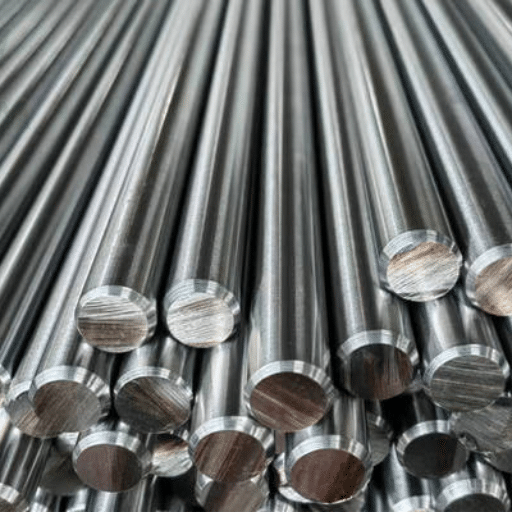
Condition selection is the question most heat-treatment pages answer with a lookup table and no reasoning. It deserves a framework.
Start from the service condition, not from the strongest available number. Work through these questions in order:
- Does the part see a corrosive environment with chlorides and stress? If yes, cracking resistance leads, and you move toward the higher aging temperatures.
- Is the part governed by a NACE specification? If yes, you are in the double-aged H1150D territory described below, and the decision is made for you.
- Is dimensional stability after hardening critical? Higher aging temperatures shrink the part slightly more, so tighter tolerances may push you toward H900 while looser ones tolerate H1150.
- Is wear or load capacity the dominant requirement, with no cracking risk? Then H900 is the natural home.
- Do you need a balance? H1025 and H1075 sit in the middle and are common defaults when no single factor dominates.
A short selection table makes it concrete:
| Service Need | Recommended Condition |
|---|---|
| Peak strength and wear resistance, benign environment | H900 |
| Balanced strength and toughness | H1025 / H1075 |
| Maximum toughness, cold working, heavy sections | H1150 |
| Sour service under NACE MR0175 / ISO 15156 | H1150D |
| Part that still has to be machined | Condition A (then age) |
One practical rule sits above all of these. If the part is not finished, order Condition A and plan the final hardening as a step in your process, not as something the mill does before you cut. You cannot easily machine H900 into a tight tolerance, and you should not try.
Dimensional Change (Shrinkage) During Aging
Aging is a low-temperature treatment, so distortion is negligible and any surface discoloration is superficial. The one-dimensional effect that catches people out is contraction. As the copper precipitates form, the structure densifies, and the part gets very slightly smaller.
The working numbers are small but real:
- Condition A to H900: about 0.05% contraction (roughly 0.0004-0.0006 in/in).
- Condition A to H1150: about 0.10% contraction (roughly 0.0009-0.0012 in/in).
A half-percent of a millimeter sounds trivial until you are holding a tolerance of a few hundredths. On a 100 mm dimension, 0.10% is 0.1 mm, which is the whole tolerance on many parts.
The practical shop routine is well established: rough-machine and semi-finish in Condition A, age the part to its final condition, then finish-machine or grind only the dimensions that carry tight tolerance. Thin-section parts benefit from leaving roughly 0.005 to 0.010 in (0.13 to 0.25 mm) of finish stock for cleanup after aging. Thicker, less precise parts are often fine-machined to final size in Condition A.
Do not treat any single shrinkage percentage as a universal correction factor. Sources quote slightly different figures, and the right allowance depends on part geometry, condition, and your own production history. A trial piece settles the question faster than a table. Our custom processing services can prepare material cut and finished for your process, with the final aging step accounted for in the plan.
Double Aging and NACE MR0175 / ISO 15156 (H1150D for Sour Service)
Everything above describes single-step aging, which covers the large majority of 17-4 PH applications. Sour service is the important exception, and it is this grade’s single most specified compliance rule.
Hydrogen sulfide environments, common in oil and gas production and refining, are governed by NACE MR0175 / ISO 15156. Under that standard, 17-4 PH is permitted only in a double-aged condition. In practice, that means H1150D.
The double-aging procedure builds on the single age. The part is solution annealed, then aged at about 621 °C (1,150 °F) for 4 hours, air cooled, and then aged a second time at the same temperature for another 4 hours. The second cycle does several things at once: it completes the transformation, relieves residual stress, and forms a small amount of reverted austenite that improves resistance to sulfide stress cracking.
The reason H1150D is the sour-service default is its hardness. NACE caps 17-4 PH at 33 HRC for sour service, and the double-aged condition reliably lands at or below that line. Single-aged H1150 can drift above 33 HRC, so it is not the safe choice. H900, H1025, and H1075 are not acceptable at all for NACE sour service, for the simple reason that their hardness puts them well above the cap.
One more caution sits on top of the hardness rule. NACE acceptance is not blanket. The standard also restricts which components may use the grade, the environments it may see, and the applied stress it may carry. A part that passes the hardness check can still fall outside the standard’s scope. Confirm part-specific acceptance against the current revision, and verify the achieved condition and hardness on the mill certificate rather than on a generic datasheet.
The corrosion side of this story, including the pitting and crevice behavior that drives many of these rules, is covered in our guide to 17-4 PH corrosion resistance and the broader treatment of stainless steel corrosion resistance.
17-4 PH Heat Treatment Problems and How to Avoid Them
Most heat-treatment failures in 17-4 PH trace back to a small set of avoidable mistakes. These are the ones worth a line in your work instructions.
Never put Condition A into service
This is the most common and most serious error. Condition A is untempered martensite, and untempered martensite has low fracture toughness, low ductility, and elevated SCC susceptibility. A part that passes a dimensional check in Condition A can still be a service risk, because the properties that keep it from cracking were never developed. Age it before it goes to work.
Cracking during aging
Even a correctly specified part can crack, and the cause is usually residual stress rather than the aging cycle itself. Cracks tend to appear on bar ends and at stress concentrations, which points back to the upstream operations: bar straightening, machining stresses, and quench severity during the anneal. In one documented case, solution-annealed 630 dam-gate rollers cracked during H1025 aging, with the failure traced to residual stress at the bar ends. The fix is procedural. Avoid sharp stress raisers, control the cooling rate during solution annealing, and relieve stress where the design allows.
Over-aging and how to recover
If a part is aged to a lower strength than intended, the instinct is to run the aging cycle again at a lower temperature. That does not work. Once the precipitates have coarsened, a simple re-age will not restore peak properties. The part must go back to the start: re-solution anneal at about 1,900 °F, then age again to the correct condition. This is a full thermal reset, so the earlier warning about getting the condition right the first time carries real cost.
Consider the batch we referenced earlier from a different angle. A furnace run drifted above its setpoint and delivered H1150 strength to a lot specified for H900. The shop’s first instinct was to re-run the parts at 900 °F. That would have achieved nothing, because the precipitates were already overgrown. The correct response was a complete re-anneal and re-age, which recovered the lot at the price of an extra cycle.
Scale, discoloration, and atmosphere
Aging runs at low temperature, so you should expect negligible distortion and only superficial discoloration. Any light oxide from the furnace cleans up with a light machining pass or a passivation treatment. Passivation is worth specifying after machining in any case, because it restores the chromium-oxide passive film that cutting can disturb. Our guide to cleaning stainless steel covers the practical cleaning and passivation methods.
Do not quench like carbon steel
17-4 PH is air-hardenable. It is not a quench-and-temper steel, and treating it as one leads to distortion, cracking, and a misunderstanding of where the strength comes from. The martensite forms on cooling from the solution anneal; the strength forms later, in the aging furnace. Keep those two steps separate in your process plan.
Verify the condition on the certificate
Chemistry proves the heat. It does not prove the heat treatment. Two lots with identical chemistry can carry very different properties depending on the condition they were aged to, so the certificate must state the achieved condition and the mechanical results that confirm it. This is a documentation discipline as much as a metallurgical one, and it is the single easiest protection against the problem described at the top of this article.
Ready to specify 17-4 PH with the condition, standard, and documentation confirmed up front? Request a quote, and we will confirm availability, mill test documentation, and lead time for the forms and conditions you need.
How 17-4 PH Heat Treatment Differs from 15-5 PH and 17-7 PH
If you work across the precipitation-hardening family, it helps to know that the schedules are not interchangeable.
17-4 PH and 15-5 PH share the same heat-treatment schedule. Both are martensitic, both are solution annealed in the same range, and both use the same single aging step with identical H900 through H1150 conditions drawn from the same temperature ladder. The two grades differ in composition and cleanliness, chiefly the near-elimination of delta ferrite in 15-5 PH, which improves transverse ductility in large sections. But from the furnace’s point of view, they run the same recipe. The full comparison is in our guide to 17-4 PH vs 15-5 PH.
17-7 PH is a different animal. It is semi-austenitic, and its matrix is austenitic rather than martensitic in the annealed state. That means it cannot simply be aged like 17-4 PH. It requires a higher solution anneal, followed by an austenite conditioning step (a controlled reheat, sometimes paired with a sub-zero or cryogenic cool in the RH950 route) to transform the austenite to martensite, and only then an aging treatment. You can form 17-7 PH before hardening, which is its main advantage, but the heat-treatment sequence is longer and more complex. Our guide to 17-4 PH vs 17-7 PH walks through the family split in detail.
The practical takeaway is simple. A schedule written for 17-4 PH runs on 15-5 PH unchanged, but it will not produce the intended properties on 17-7 PH.
Specifications and Standards for 17-4 PH Heat Treatment
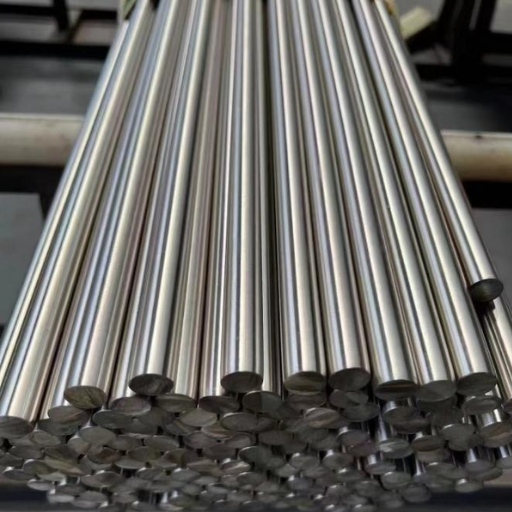
The heat-treatment requirement for 17-4 PH does not live in one document. It depends on the product form, which is why buyers who cross-specify from a datasheet often get it wrong.
| Product Form | Governing Standard |
|---|---|
| Bar, wire, forgings, rings | AMS 5643 / AMS 5622 |
| Bar and shapes (general) | ASTM A564 / A564M |
| Plate, sheet, and strip | ASTM A693 / A693M |
| Strip and wire (forging stock) | ASTM A705 / A705M |
| Surgical instruments | ASTM F899 |
| Aging parameters | AMS 5355 |
| European general | EN 10088-3 |
| Sour service | NACE MR0175 / ISO 15156 |
Two documents do most of the work in practice. The product standard sets the grade, the condition options, and the mechanical minimums. The aging parameter specification, such as AMS 5355, sets the hold time and temperature that the furnace must run. Name both on the purchase order, and the heat treater has everything needed to hit the target.
Then require the proof. An EN 10204 3.1 mill test certificate with heat-specific chemistry and mechanical results confirms that the condition you specified was actually achieved. For a grade whose entire value lives in its heat treatment, that certificate is the difference between a specification and a promise. If you need help matching your application to the right form, standard, and condition, our team is set up to advise on it. Contact us with your specification, and we will quote against it.
Frequently Asked Questions
What temperature is 17-4 PH heat treated at?
17-4 PH is solution annealed at about 1,038-1,040 °C (1,900 °F) and then age hardened at 480-620 °C (900-1,150 °F). The aging temperature is set by the condition you specify, from H900 (482 °C) up to H1150 (621 °C).
How long do you age 17-4 PH?
H900 is typically held for about one hour, while H925 and the higher conditions are commonly held for about four hours. Exact hold times are set by the applicable specification, such as AMS 5355, which should govern the furnace cycle.
What is the difference between H900 and H1150?
They are aging conditions. H900 is aged at 900 °F (about 482 °C) and gives peak strength and hardness, about 40 to 47 HRC. H1150 is aged at 1,150 °F (about 621 °C) and gives lower strength but markedly better ductility, toughness, and resistance to stress corrosion cracking.
Can you re-heat-treat 17-4 PH if it is over-aged?
Not by a simple re-age. Once the precipitates have overgrown, a lower-temperature aging cycle will not restore strength. The part must be re-solution annealed at about 1,900 °F and then aged again to the correct condition.
Can 17-4 PH be heat treated after machining?
Yes, and that is the normal process. Most parts are rough and semi-finished in soft Condition A, aged to their final condition, then finish-machined or ground on the dimensions that need tight tolerance. Account for aging shrinkage in the allowance.
Does 17-4 PH shrink during heat treatment?
Yes, slightly, during the aging step. Typical contraction is about 0.05% for H900 and about 0.10% for H1150. Precision parts need a machining allowance so the finished size lands on target after hardening.
What is the hardness of 17-4 PH in H900?
H900 typically reaches 40 to 47 HRC, making it the hardest of the standard conditions. By comparison, Condition A sits near 33 HRC and H1150 falls to roughly 28 to 37 HRC.
Can 17-4 PH be used in Condition A?
No. Condition A is untempered martensite with low fracture toughness and ductility and elevated stress corrosion cracking susceptibility. It is a processing state for machining, not a service condition, and parts must be aged before use.
What condition is acceptable for NACE sour service?
Only a double-aged condition, in practice H1150D. NACE MR0175 / ISO 15156 caps 17-4 PH at 33 HRC, and H1150D is the condition that reliably meets that limit. H900, H1025, and H1075 are not acceptable.
Why is 17-4 PH not quenched like carbon steel?
Because it is air-hardenable and gains its strength through precipitation hardening, not through a quench-and-temper cycle. Martensite forms on cooling from the solution anneal, and the strength develops later during aging. Quenching it as if it were carbon steel causes distortion and cracking without improving the properties.
Can 17-4 PH be welded and then aged?
Yes. It has the best weldability in the precipitation-hardening family and needs no preheat. Post-weld aging is recommended to restore properties in the weld and heat-affected zone. The procedure detail is covered in our guide to 17-4 PH welding.
What is the maximum service temperature of 17-4 PH?
About 300 to 316 °C (600 °F). Prolonged exposure above that range over-ages the precipitates and reduces toughness, so the grade has a real temperature ceiling for continuous service.
Conclusion
17-4 PH heat treatment comes down to two steps and one variable. Solution anneal at about 1,900 °F to reach Condition A, then age at the temperature your condition calls for. From there, every property moves together with the aging temperature: strength and hardness fall as ductility, toughness, and SCC resistance rise. Pick H900 for load and wear, choose a mid condition for balance, and reach for H1150 or H1150D when toughness or sour-service compliance leads.
Three habits separate a clean heat-treatment job from a costly one. Choose the condition before you buy the material, allow for the 0.05% to 0.10% of aging shrinkage on any tight dimension, and require the achieved condition and mechanical results on the certificate. Do those three things and you avoid the untempered-martensite trap, the undersize part, and the over-aged batch in a single stroke.
If you are specifying 17-4 PH and want the condition, standard, and documentation settled before the material ships, contact LIANYUNGANG DAPU METAL for availability, mill test documentation, custom processing, and a quote on the forms and conditions you need.