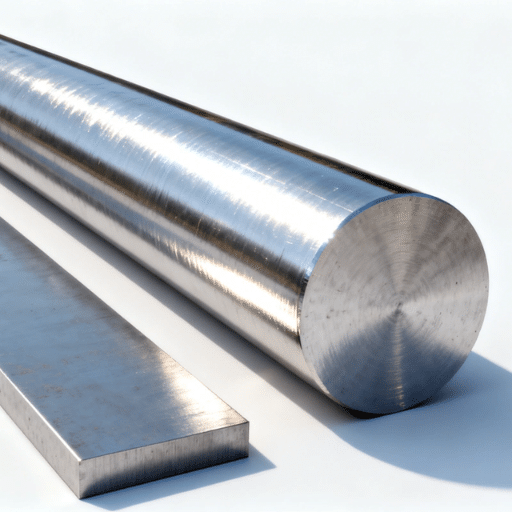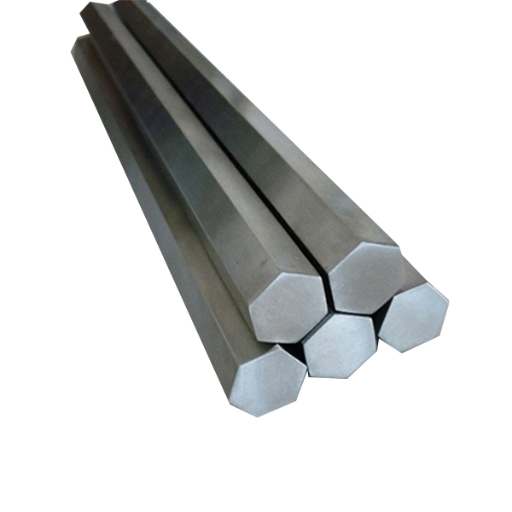
In the 17-4 PH vs 304 comparison, the two grades are built for different jobs. 17-4 PH is a martensitic precipitation-hardening grade that reaches roughly 1,000-1,380 MPa tensile strength after aging, while 304 is a non-hardenable austenitic grade at roughly 515-750 MPa.
17-4 PH is magnetic, heat-treatable, and about 1.5-3 times the price. 304 is cheaper, more formable and weldable, non-magnetic, and generally more corrosion-resistant in chlorides. When corrosion is the deciding factor, 316 is a better upgrade than 17-4 PH.
A pump shaft made from 304 tells the story well. The machinist fought galling on every pass, then the shaft yielded under a load it was supposed to carry. The replacement, machined in soft Condition A and aged to H900, held without complaint.
But put that same 17-4 PH shaft into a warm chloride line and it can pit like 304, because strength and corrosion resistance are separate properties. That’s the trap in the 17-4 PH vs 304 decision: the stronger grade isn’t automatically the better one.
If you already know 304, the question usually arrives with a failed part or a new load requirement. This guide compares chemistry, strength by condition, corrosion, temperature limits, fabrication, magnetism, and cost. It ends with a three-way decision table for 304, 17-4 PH, and 316, plus the cases where 304 remains the smarter choice. For the full grade overview, see our 17-4 PH stainless steel guide.
Key Takeaways
- 17-4 PH reaches roughly 4-6× the yield strength of 304 in H900, but only after aging. Condition A is a machining state, not a service condition.
- 17-4 PH is not a corrosion upgrade over 304. Nominal PREn is lower, and 316 is the right escalation for chloride service.
- 304 serves from about -196 °C to 800 °C. 17-4 PH is limited to roughly -40 °C to 300-316 °C.
- 304 is non-magnetic, easy to weld, and easy to form. 17-4 PH is magnetic, needs post-weld aging, and should be machined soft before hardening.
- 17-4 PH costs about 1.5-3× 304 per kilogram. Compare cost per part, not price per kilogram.
Need a grade recommendation before you finish reading? Talk to our materials team about the duty, the load, and the environment.
17-4 PH vs 304 at a Glance
The fastest way to see the difference is a side-by-side table. Values are typical for the stated condition and vary with product form, section size, and standard.
| Property | 304 (annealed) | 17-4 PH (H900) | 316 (annealed) |
|---|---|---|---|
| Family | Austenitic | Martensitic, precipitation-hardening | Austenitic |
| UNS / EN | S30400 / 1.4301 | S17400 / 1.4542 | S31600 / 1.4401 |
| 0.2% yield strength | 205-310 MPa | 1,170-1,280 MPa | 205-310 MPa |
| Tensile strength | 515-750 MPa | 1,310-1,380 MPa | 515-690 MPa |
| Hardness | 70-90 HRB | 40-47 HRC | 70-90 HRB |
| PREn | ~18 | ~15-17 | ~25 |
| Magnetism | Non-magnetic when annealed | Magnetic in all conditions | Non-magnetic when annealed |
| Maximum service temperature | ~800 °C | ~300-316 °C | ~800 °C |
| Weldability | Excellent | Good, with post-weld aging | Excellent |
| Relative cost | 1.0 | 1.5-3× | ~1.3-1.5× |
The one-line verdict: 304 is the corrosion, fabrication, and cost grade. 17-4 PH is the strength and hardness grade. 316 is the chloride-corrosion upgrade. None of them is universally better, and the rest of this guide shows how to choose.
What Separates 17-4 PH from 304
The three grades look similar on a warehouse shelf. The differences start in the chemistry and show up in how each one behaves under load, in corrosion, and on the shop floor.
Composition and Grade Families
304 and 316 are austenitic stainless steels. Their high nickel content holds the structure in an austenitic phase, which is ductile, formable, and non-magnetic. 17-4 PH (UNS S17400, also called Type 630) is a martensitic precipitation-hardening grade. It uses much less nickel and adds copper and niobium, which allows the steel to form martensite and then age-harden.
| Element | 304 | 17-4 PH | 316 |
|---|---|---|---|
| Chromium | 18.0-20.0% | 15.0-17.5% | 16.0-18.0% |
| Nickel | 8.0-10.5% | 3.0-5.0% | 10.0-14.0% |
| Copper | None | 3.0-5.0% | None |
| Niobium + tantalum | None | 0.15-0.45% | None |
| Molybdenum | None | ≤0.50% | 2.00-3.00% |
| Carbon | ≤0.08% | ≤0.07% | ≤0.08% |
The practical translation is simple. 304 gets its corrosion resistance from chromium and nickel, and it can’t be strengthened by heat treatment. 316 adds molybdenum for better chloride resistance. 17-4 PH trades some chromium and most of its nickel for copper and niobium, which gives it a hardenable martensitic structure and a lower corrosion reserve.
For a deeper look at the grade, see our 304 stainless steel guide.
Strength and Hardness: 17-4 PH by Condition vs 304
The 17-4 PH vs 304 hardness gap is where most comparisons go wrong. They compare 304 to one 17-4 PH number and call it a day. But 17-4 PH is supplied in several conditions, and its strength range is wider than the difference between most stainless grades.
| Condition | UTS (MPa) | 0.2% yield (MPa) | Elongation | Hardness |
|---|---|---|---|---|
| 304, annealed | 515-750 | 205-310 | 40-60% | 70-90 HRB |
| 17-4 PH, Condition A | ~1,030 | ~760 | 8-10% | ~33 HRC |
| 17-4 PH, H900 | 1,310-1,380 | 1,170-1,280 | 10-14% | 40-47 HRC |
| 17-4 PH, H1025 | 1,070-1,170 | 1,000-1,140 | 12-15% | 34-42 HRC |
| 17-4 PH, H1150 | 930-1,000 | 725-860 | 16-19% | 28-37 HRC |
The pattern is the point. H900 gives the highest strength and hardness. H1150 gives more ductility and toughness at lower strength. Condition A is soft enough to machine but is not a service condition.
304 gains strength only through cold work, and it can’t approach the aged 17-4 PH numbers. In H900, 17-4 PH yields at roughly 4-6× the yield of annealed 304. Even Condition A, the softest 17-4 PH state, yields at about 2.5-3.7× 304. That’s the real reason buyers ask about the grade.
The rule that follows is non-negotiable: specify the condition, not just the grade. A purchase order that says “17-4 PH” without H900, H1025, or H1150 leaves the heat treatment undefined. For the full condition-to-property relationship, see our guide to 17-4 PH heat treatment.
Corrosion Resistance: 17-4 PH vs 304 vs 316
The 17-4 PH vs 304 stainless steel corrosion question is often answered with “about the same.” That’s a fair summary for mild environments, and it’s also where the useful comparison ends.
The numbers tell a more careful story. The pitting resistance equivalent number (PREn) is calculated as %Cr + 3.3 × %Mo + 16 × %N. Using typical compositions:
- 304: about 18
- 17-4 PH: about 15-17
- 316: about 25
304 has more chromium and a small nitrogen addition. 17-4 PH has less chromium and no deliberate molybdenum or nitrogen. Nominal PREn therefore favors 304 for pitting resistance. In the 17-4 PH vs 316 comparison, the gap is wider still: 316 is clearly ahead of both.
That leads to the most important sentence in this section: 17-4 PH isn’t a corrosion upgrade over 304. If a part is failing from chloride pitting, switching from 304 to 17-4 PH doesn’t solve the problem. The correct escalation is 316, or a duplex grade when strength and chloride resistance are both required.
Consider a plant that replaced a 304 filter housing with 17-4 PH after a pitting failure. The assumption was that the higher-strength grade would also last longer. Six months later, the new housing showed pitting in the same stagnant chloride pocket.
The material had more strength and no more corrosion margin. The fix was 316, not a stronger PH grade.
Condition adds another variable. Within 17-4 PH, H900 gives peak strength but the lowest resistance to stress corrosion cracking. Overaging to H1025 or H1150 improves SCC resistance. For sour service under NACE MR0175 / ISO 15156, 17-4 PH is permitted only in a double-aged condition such as H1150D, and H900 is not acceptable. That’s a compliance rule, not a preference.
Passivation after machining helps restore the chromium oxide layer, but it doesn’t raise the alloy’s inherent PREn.
Neither 304 nor 17-4 PH is a seawater grade. If the application involves continuous chloride exposure, start with 316 stainless steel before moving to a duplex alloy.
Temperature Limits: Where Each Grade Works
Temperature is another place where 304 wins both extremes.
| Service range | 304 | 17-4 PH |
|---|---|---|
| Cryogenic | ~-196 °C | Not recommended for standard cryogenic service |
| Ambient to 300 °C | Good | Good, and much stronger |
| 300-316 °C | Good | Upper limit for continuous service |
| Above 316 °C | Good to ~800 °C | Over-aging and embrittlement risk |
304 serves from roughly -196 °C to 800 °C continuous, with intermittent service to about 870 °C. 17-4 PH is limited to roughly -40 °C to 300-316 °C. Prolonged exposure above that range over-ages the precipitates and reduces toughness.
The selection rule is clean. Cold service goes to 304. Hot service goes to 304. The ambient-to-300 °C window, where the part needs much higher strength, is where 17-4 PH earns its place.
Fabrication: Welding, Machining, and Forming
The fabrication route matters as much as the datasheet. A grade that looks superior on paper can be the wrong choice if the shop cannot weld, machine, or form it economically.
Welding
304 is one of the easiest stainless steels to weld. It needs no preheat and no post-weld heat treatment, and 304L is the usual choice for welded assemblies because the lower carbon reduces sensitization risk.
17-4 PH is weldable, but the weld doesn’t come out in the parent condition. Welding changes the microstructure in the weld and heat-affected zone, and the joint generally needs post-weld aging to restore properties. Critical joints may need a full solution anneal followed by aging. ER630 filler matches the base metal strength. ER308L can join 17-4 PH to 304, but the 308L deposit will not match the strength of an aged 17-4 PH base metal.
For a welded assembly that must carry high load, plan the post-weld heat treatment before you release the drawing. The procedure detail lives in our guide to 17-4 PH welding.
Machining
Machinists tend to have strong opinions about both grades, and both opinions are usually earned.
304 is ductile, but it work-hardens and galls. A light finishing pass that rubs instead of cuts creates a hard skin, and the next pass wears the tool quickly. Sharp tooling, positive feeds, and enough chip load are the standard countermeasures.
17-4 PH behaves differently. Machine it in Condition A, where machinability is roughly 48% and many shops find it comparable to 304. Then age the part to H900 or another condition. Aged H900 is much harder and slower to machine, so leave only the final finishing or grinding for after aging. Allow for the small dimensional change that occurs during aging.
That’s the practical answer to the 17-4 PH vs 304 machining question. Neither grade is unconditionally easier. Condition A 17-4 PH machines well. H900 doesn’t. 304 machines reasonably but punishes poor technique with work hardening, so the condition and the process plan decide the outcome.
If your part needs cutting, machining, or finishing before it ships, our custom processing team can quote the operation alongside the material.
Forming
304 forms and deep-draws well. That is one of the reasons it dominates food equipment, sinks, kitchen hardware, and architectural trim.
17-4 PH has limited formability, especially in the aged condition. Complex shapes should be formed in the solution-treated condition and then aged. Springback is higher, and the permitted bend radii are tighter than a fabricator used to 304 would expect. If the part requires deep drawing or severe forming, 304 is usually the more economical route.
Magnetic Properties and Cost
Two practical criteria decide a surprising number of real projects: whether the part can be magnetic, and what the finished part costs rather than what the material costs per kilogram.
Magnetism: Non-Magnetic 304 vs Magnetic 17-4 PH
Annealed 304 is essentially non-magnetic. Cold working or welding can induce slight magnetism from deformation martensite, but the base condition is non-magnetic.
17-4 PH is magnetic in every condition because its structure is martensitic. That can be an advantage or a disqualifier. It is useful for magnetic workholding, magnetic separation, and some sensor designs. It is a problem for magnetically sensitive assemblies, MRI environments, and any application that assumes a stainless part will not respond to a magnet.
Magnetic-particle inspection is another practical difference. The magnetic response of 17-4 PH makes the method viable. On 304 it is unreliable. If the inspection method is fixed by a quality plan, magnetism belongs in the material decision.
Cost: Price per kg vs Cost per Part
The 17-4 PH vs 304 cost gap starts at roughly 1.5-3× per kilogram, and 17-4 PH also runs about 15-25% more than 316. The premium comes from the copper and niobium additions and from the aging step. A simple turned shaft at 25 pieces has been estimated at 40−65in304versus40−65in304versus55-90 in 17-4 PH, including material and machining.
That per-part gap is the number that matters, but it is not the end of the analysis. Higher strength can allow a smaller section, a thinner wall, or a shorter part. It can also extend service life or avoid a failure. When the strength requirement is real, the per-part premium often shrinks or disappears. When the requirement is imaginary, the premium is pure waste.
Consider a bracket specified in 17-4 PH for a clean, indoor machine guard. The load was modest, the environment was mild, and 304 would have served the full design life. The buyer paid 1.5-3× for strength the part never used, plus the aging step and the longer lead time. That is the over-specification trap, and it is more common than the opposite mistake.
Cost belongs in the decision as cost per part and cost per year of service, not as price per kilogram.
17-4 PH vs 304 vs 316: Which Grade Should You Choose?
The query is usually “17-4 PH vs 304,” but the real decision often includes 316. Use this table as the starting point.
| Duty or requirement | Recommended grade | Why |
|---|---|---|
| Mild environment, food equipment, architecture, general fabrication | 304 | Lowest cost, excellent formability and weldability, non-magnetic |
| High strength, hardness, wear, or fatigue; valve stems, pump shafts, fasteners, aerospace, oil and gas | 17-4 PH | Aged strength far above 304; hardenable and magnetic |
| Chloride, marine, chemical, food, or pharmaceutical corrosion | 316 | Molybdenum raises PREn to about 25; better pitting resistance |
| Both high strength and aggressive chloride service | Duplex 2205 or a higher alloy | Austenitic-ferritic structure combines strength and chloride resistance |
| Non-magnetic part with moderate strength | 304 or 316 | Austenitic grades are non-magnetic when annealed |
The escalation logic is straightforward. If 304 is failing from corrosion, move to 316, not to 17-4 PH. If 304 is failing from strength, move to 17-4 PH. If both are failing, move to a duplex grade such as 2205, which combines high strength with chloride resistance. For that comparison, see duplex 2205 vs 316.
When 304 Is Still the Right Choice
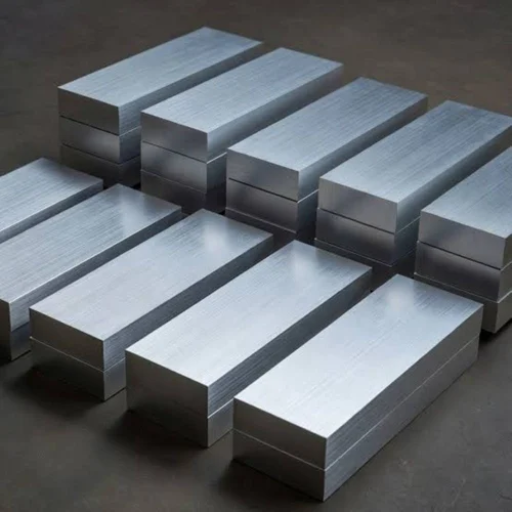
304 remains the correct answer in more projects than the premium-grade content on the internet suggests. It wins when:
- Cost is the dominant constraint and the environment is mild.
- The part needs deep drawing, severe forming, or easy welding.
- The assembly must be non-magnetic.
- Service is cryogenic or above 300 °C.
- The required strength is modest and a standard section works.
- Availability and short lead time matter more than maximum performance.
Choosing 304 in those cases isn’t a compromise. It’s the engineering decision that matches the duty. Paying 1.5-3× for unused strength is a cost, not a safety margin.
Specifications, Conditions, and What to Order
The grade name is only the start of a purchase specification. Name the product standard, the condition, and the documentation.
304 and 316: ASTM A240 for plate, sheet, and strip; A276 for bar; A479 for bar used in pressure vessels; A182 for forgings; A312, A269, and A249 for pipe and tube; A554 for welded tube. EN 10088 covers the European equivalents.
17-4 PH: ASTM A564 for bar and forgings; A693 for plate, sheet, and strip; A705 for strip and wire. Aerospace buyers may specify AMS 5643, AMS 5622, or AMS 5604. Surgical applications may reference ASTM F899. For sour service, NACE MR0175 / ISO 15156 applies, and only a double-aged condition is acceptable.
For any 17-4 PH order, write the condition on the purchase order and require the achieved condition on the mill certificate. An EN 10204 3.1 certificate with heat-specific chemistry and mechanical results is the proof that the heat treatment was actually performed. Chemistry alone proves the heat, not the condition.
DAPU supplies 304 stainless steel products with mill test documentation and custom processing. If you are specifying 17-4 PH, confirm availability and condition with our team before you finalize the drawing.
Frequently Asked Questions
Is 17-4 PH stronger than 304?
Yes, by a wide margin, but only after aging. In H900, 17-4 PH reaches about 1,310-1,380 MPa tensile and 1,170-1,280 MPa yield, versus roughly 515-750 MPa tensile and 205-310 MPa yield for annealed 304. Condition A is softer and is not a service condition.
Is 17-4 PH better than 304 stainless steel?
Neither grade is universally better. 17-4 PH wins when strength, hardness, wear resistance, or fatigue life drives the design. 304 wins on cost, formability, weldability, non-magnetic behavior, and general corrosion resistance in mild environments. For chloride service, 316 is the better upgrade than 17-4 PH.
Is 17-4 PH more corrosion resistant than 304?
No. In mild environments the two are often described as comparable, but 17-4 PH has a lower nominal PREn, about 15-17 versus about 18 for 304. It is not a corrosion upgrade. Use 316 or a duplex grade when chloride resistance is the problem.
What is the difference between 17-4 PH and 304?
17-4 PH is a martensitic precipitation-hardening stainless steel that is hardened by aging and is magnetic. 304 is an austenitic stainless steel that cannot be hardened by heat treatment, is non-magnetic when annealed, and is more formable and weldable.
Is 17-4 PH magnetic? Is 304 magnetic?
17-4 PH is magnetic in all conditions because of its martensitic structure. Annealed 304 is essentially non-magnetic, though cold work or welding can induce slight magnetism. If the part must be non-magnetic, choose 304 or 316.
Can 17-4 PH be welded to 304?
Yes. Use ER630 filler for the 17-4 PH side when strength matters, or a 308L filler when a matched-strength joint is not required. Post-weld aging is needed to restore properties in the 17-4 PH weld and heat-affected zone. Qualify the procedure for the actual joint.
Which is easier to machine, 17-4 PH or 304?
There is no unconditional answer. 304 is ductile but work-hardens and galls. 17-4 PH machines well in Condition A, at roughly 48% machinability, but aged H900 is much harder. Machine 17-4 PH soft, then age it.
Is 17-4 PH more expensive than 304?
Yes. 17-4 PH typically costs about 1.5-3× 304 per kilogram, plus the aging step, and about 15-25% more than 316. Compare cost per part and per year of service, not just price per kilogram.
What condition of 17-4 PH should I order?
Order Condition A only if the part will be machined and aged later. For service, specify H900 for peak strength, H1025 for a balance, or H1150 for toughness and SCC resistance. For sour service, use the double-aged H1150D condition.
Can 17-4 PH replace 304?
It can replace 304 when the limiting problem is strength, hardness, or wear. It should not replace 304 when the limiting problem is corrosion, formability, weldability, non-magnetic behavior, or cost. Match the replacement to the failure mode.
Which is better for food equipment, 304 or 17-4 PH?
304 is the standard choice for most food-contact equipment because of its corrosion resistance, formability, cleanability, and cost. 17-4 PH is used for high-load food-processing components such as shafts and valves, but it is not a general food-contact upgrade.
What is the maximum service temperature of 17-4 PH vs 304?
17-4 PH is limited to roughly 300-316 °C (600 °F) for continuous service. 304 serves to about 800 °C continuously, with intermittent service to about 870 °C. For hot service, 304 is the better choice.
Is 17-4 PH good in saltwater?
No. Neither 17-4 PH nor 304 is a seawater grade. Both can pit and crevice in chloride service. For seawater or continuous chloride exposure, use 316 as a starting point and review duplex grades for higher durability.
Conclusion
The 17-4 PH vs 304 question is not a contest with one winner. It is a material-selection decision with three separate answers. 304 is the corrosion, fabrication, non-magnetic, and cost grade. 17-4 PH is the strength, hardness, and wear grade, provided the condition is specified and the environment is manageable. 316 is the chloride-corrosion upgrade when 304 is not enough.
Three habits keep the decision clean. Define the failure mode before choosing a grade, specify the 17-4 PH condition rather than the grade name alone, and compare cost per part instead of price per kilogram. Those three steps prevent the two expensive mistakes: paying for strength the part does not need, and expecting corrosion protection from a grade that was never designed to provide it.
Still weighing 17-4 PH vs 304 for a live project? Contact LIANYUNGANG DAPU METAL with the duty, the fabrication route, and the documentation you need. Our technical team can review the grade, condition, and availability, and quote the forms and processing you require.