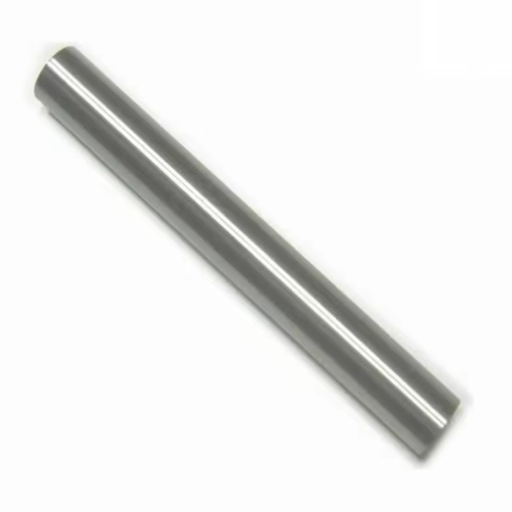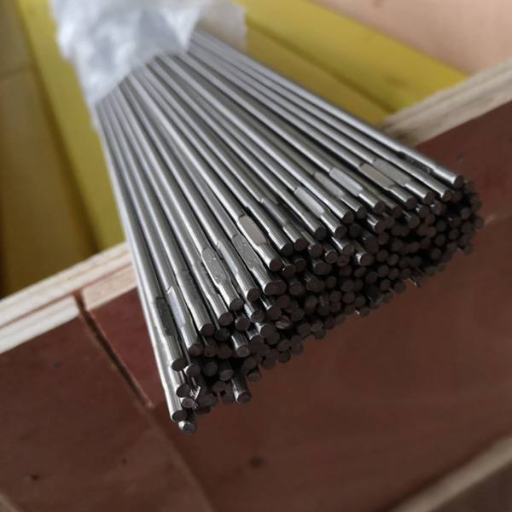
Yes, 17-4 PH welding is routine, and the grade doesn’t need preheat the way 410 or 420 does. What it does need is a matching filler and a post-weld heat treatment, and the treatment decides more about the finished joint than the filler does.
Rui supervises welding at a pump manufacturer outside Porto. In 2023 his shop built a 17-4 PH mounting bracket with ER630 filler, ran a clean radiograph, and shipped it. Fourteen months later the bracket cracked, not in the weld but in the narrow band of base metal beside it.
The filler was correct. The procedure wasn’t, because nothing was done to the heat-affected zone after the arc went out.
You’ve probably been told to use ER630 and heat treat. That advice is right, and it’s the first line of a procedure rather than the whole of one. This article covers the four decisions that govern a 17-4 PH weld: condition, filler, post-weld route and finish. It also covers arc blow, which almost nobody warns you about.
The complete 17-4 PH stainless steel guide covers the grade itself. If you’re writing a procedure for a real joint, our technical consultation service will review the condition and heat treatment before the first pass.
Key Takeaways
- 17-4 PH welding needs a matching filler and a post-weld heat treatment, and the treatment decides the joint. A correct filler with no PWHT gives a worse joint than an austenitic filler with a full re-solution anneal.
- ER630 and E630 are the matching fillers under AWS A5.9 and A5.4. The weld metal is fully martensitic with no delta ferrite, so it is crack-prone in high restraint and needs PWHT to reach its properties.
- Weld in Condition A. Welding an H900 part re-austenitizes the HAZ and leaves untempered martensite beside the weld, and the assembly no longer matches its certificate.
- Three PWHT routes exist: solution anneal plus age, age only, or nothing with austenitic filler. Only the first restores base-metal properties across the joint.
- Pickle before you passivate. Heat tint is a chromium-depleted oxide, and passivating over it seals the depletion in place.
What Is 17-4 PH Welding? The Short Answer
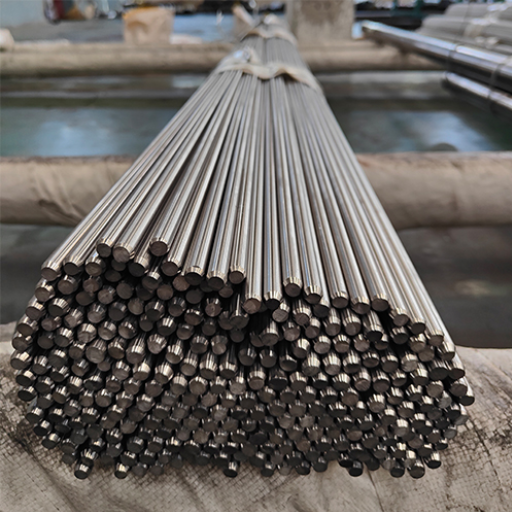
17-4 PH welding is the joining of UNS S17400 by GTAW, GMAW, SMAW or SAW with a matching ER630 filler, followed by a post-weld heat treatment. The grade is weldable in Condition A, and thin sections need no preheat. Full joint properties require a solution anneal and age, or at minimum an aging pass.
| Process | Filler form | Typical use | Notes |
|---|---|---|---|
| GTAW (TIG) | ER630 bare wire | Root passes, thin sections, critical joints | Best control; arc blow on DC |
| GMAW (MIG) | ER630 bare wire | Production fillets and thicker sections | Higher deposition; same arc blow risk |
| SMAW (stick) | E630 covered electrode | Field work, repairs, poor access | Low-hydrogen storage matters |
| SAW | ER630 wire plus flux | Long straight seams, heavy sections | High heat input; check HAZ hardness |
So can you weld 17-4 PH? Yes. 17-4 PH TIG welding and MIG welding use the same equipment any stainless shop already runs, and the grade is routine work in aerospace, flow control and pump manufacture.
Is 17-4 PH weldable in the sense that matters commercially? Also yes, but the qualification is the point. A welded joint left alone isn’t the same product as one that’s welded and treated. The filler decides the weld metal. The heat treatment decides the joint.
Why 17-4 PH Welds Differently From 304 and 316
The difference is what happens on cooling. Austenitic grades stay austenitic, and a few percent delta ferrite is deliberately left in the weld to resist solidification cracking. 17-4 PH transforms to martensite as it cools, with no ferrite to buffer shrinkage and no austenite to absorb strain.
That breaks three habits a 304 or 316 welder brings to the bench. Ferrite counts mean nothing here, low heat input for sensitization control isn’t the binding constraint, and “no post-weld treatment needed” is simply wrong.
The larger difference is the starting condition. A 304 plate arrives in the condition it will serve in. A 17-4 PH plate arrives solution annealed or aged, and the arc destroys that in a band a few millimetres wide. Everything else follows from that.
Our 304 vs 316 welding guide covers the austenitic side, where none of this applies.
Filler Metal for 17-4 PH Welding: ER630, Austenitic, or Nickel-Base
There are three answers to the 17-4 PH filler metal question, and they trade strength against furnace time.
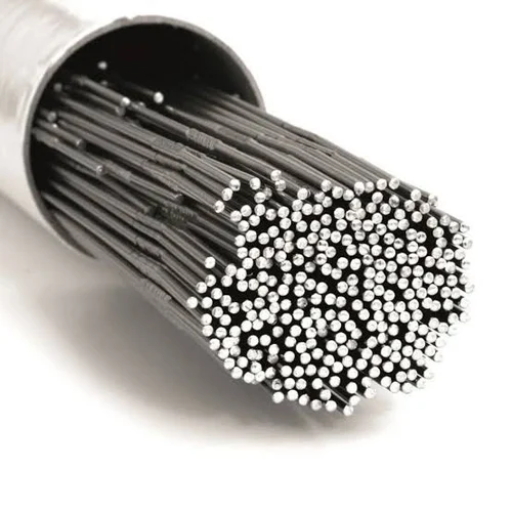
ER630 is the matching bare wire under AWS A5.9, and E630 is the covered electrode under AWS A5.4. The ER630 filler metal deposits roughly 17Cr-4Ni-4Cu-Nb, matching UNS S17400. It’s the only filler that reaches base-metal strength, and it needs PWHT to get there.
Austenitic ER308L or ER309L is tough, forgiving and needs no furnace. The joint lands below base-metal strength, and the HAZ is still martensitic, so you’ve traded the grade’s main property for convenience. That’s a trade, not a shortcut.
Nickel-base filler of the ERNiCr-3 class is for 17-4 PH to carbon steel joints and for cases where dilution control or thermal cycling dominates.
17-4 PH vs 15-5 PH is the comparison to run before specifying heavy-section weldments, because 15-5 PH is more forgiving in thick work.
Filler Metal by Joint Type
| Joint | Filler | PWHT | Realistic joint strength |
|---|---|---|---|
| 17-4 PH to 17-4 PH, strength-critical | ER630 | Required | Approaches base metal after solution anneal plus age |
| 17-4 PH to 17-4 PH, non-critical | ER308L or ER309L | Can be omitted | Below base metal; HAZ still martensitic |
| 17-4 PH to 304 or 316 | ER309L, or ER630 where strength governs | Follows the strength decision | Set entirely by filler choice |
| 17-4 PH to carbon steel | ER309L or nickel-base | Preheat follows the carbon steel | Limited by the carbon steel HAZ |
| 17-4 PH to 15-5 PH | ER630 | Required | Covers both grades |
Welding 17-4 PH to carbon steel is the joint that catches people out. Preheat and interpass rules come from the carbon steel, not the stainless, and dilution into a martensitic deposit sets the risk.
Why ER630 Weld Metal Is Crack-Prone
ER630 weld metal is fully martensitic with no delta ferrite, the opposite of the austenitic filler every welder trained on, where retained ferrite prevents solidification cracking.
The consequence is higher cracking susceptibility in high-restraint joints and thick sections. Mitigate it with better joint design, a balanced weld sequence, preheat on thick sections, and prompt heat treatment.
Weld in Condition A, Not H900
Condition A is the solution-annealed condition, around 33 HRC, and it’s the one to weld in. It’s soft, ductile and tolerant of the thermal cycling a weld puts through it.
Welding an H900 part is a different job. The arc takes a band of hardened base metal above the transformation temperature and returns it as untempered martensite. The part still carries an H900 certificate and no longer behaves like one.
If an assembly has to be welded after aging, the honest route is to re-solution treat and re-age the whole part. A local touch-up isn’t a repair, it’s a second defect.
The sequencing rule that saves the most scrap: weld first, heat treat second, machine third. The 17-4 PH heat treatment guide covers the full condition ladder.
Post-Weld Heat Treatment for 17-4 PH Welding: Three Routes
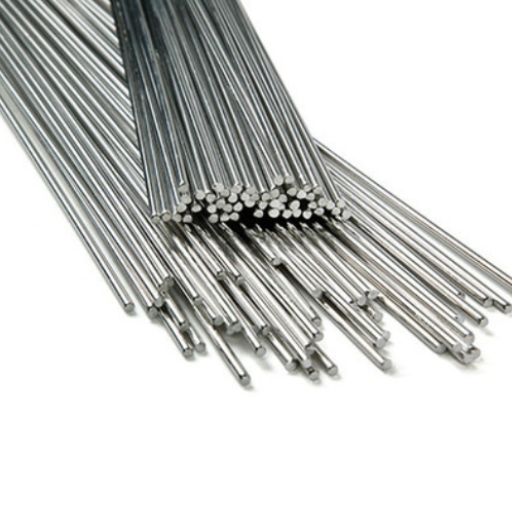
17-4 PH post-weld heat treatment is not one treatment. It’s a choice among three, and they produce three different joints.
Route 1: solution anneal, then age. Hold at 1,038 to 1,040 °C, cool, then age at the condition temperature. This restores base-metal properties across weld metal, HAZ and parent, and it’s what critical weldments get. The costs are real: distortion, scale, furnace capacity, and a finish pass afterward.
Route 2: age only, no re-solution. The weld metal and HAZ are aged in place at, say, 482 or 621 °C. Most field repairs do this. Karim’s team welded a pump housing in Rotterdam and aged it on site rather than pulling the assembly out of the line. It ran, but the HAZ never fully recovered, so the joint sat below base-metal properties from day one. That’s acceptable where the joint isn’t fatigue-critical or chloride-exposed.
Route 3: no PWHT. Legitimate only with austenitic filler, in non-strength-critical, non-chloride service.
| Route | What it restores | Typical joint outcome | When to use | Principal risk |
|---|---|---|---|---|
| Solution anneal + age | Base-metal properties in all three zones | Close to parent metal | Pressure, fatigue and chloride service | Distortion and scale; machining afterward |
| Age only | Weld metal strength; partial HAZ tempering | Below parent in the HAZ | Field repairs, non-critical joints | HAZ hardness stays high |
| None | Nothing in the HAZ | Strength set by the filler alone | Austenitic filler, dry non-critical service | Untempered martensite left in place |
Sour service tightens this further. NACE MR0175 / ISO 15156 caps hardness at 33 HRC, which rules out H900 and usually forces an overaged Route 2 or a full Route 1. The 17-4 PH properties by condition guide gives the numbers.
If you’re weighing furnace time against joint properties, our custom processing team can quote the treatment with the material.
The HAZ Is Where the Joint Fails
The heat-affected zone is the band of base metal that got hot enough to transform but didn’t melt. On cooling, it becomes untempered martensite. It’s harder than both the weld metal and the parent, and nothing short of a re-solution anneal removes it.
In chloride service, the 17-4 PH heat-affected zone is the stress corrosion cracking initiation site, because it combines peak hardness with peak residual stress. Under cyclic load it’s the fatigue initiation site for the same reason. The 17-4 PH corrosion resistance article covers the SCC mechanism.
The Hardness Spike at the Fusion Line
17-4 PH weld hardness peaks just outside the fusion line, not in the deposit. A hardness survey that only tests weld metal will miss the highest reading in the assembly, and that’s the one NACE cares about.
Age-only treatment tempers the spike partially. Only re-solution removes it, which is why the survey is how you find out what you actually built.
Preheat, Interpass and Heat Input
The pillar’s claim that 17-4 PH welding needs no preheat is correct for thin sections. Martensite forms on air cooling and Condition A is tough, so there’s no transformation reason to preheat the way 410 or 420 needs it.
Above roughly 25 mm, or wherever restraint is high, practice changes. Preheat of about 95 to 150 °C is common, for hydrogen control and cracking resistance rather than transformation control. It’s a fabrication measure, not a metallurgical requirement of the grade.
Keep the 17-4 PH interpass temperature below about 150 °C. Higher interpass coarsens the HAZ and widens the softened zone without buying anything.
Heat input is moderate and far less critical than on duplex. There’s no ferrite balance to protect, so the window is wide; the constraints are HAZ hardness and distortion. Low-hydrogen discipline still applies: dry consumables, clean joint faces, no condensation.
Arc Blow: The Problem Austenitic Welders Never See
17-4 PH is ferromagnetic in every condition. Austenitic welders never think about it, because 304 and 316 aren’t magnetic. On this grade the arc deflects toward the ground or toward the nearest mass of steel.
Dmitri spent two days on a 17-4 PH spool chasing what he was certain was a gas coverage problem. The porosity was on one side only. The cause was a ground clamp at the far end of a six metre spool, pulling the arc off line.
The fixes are unglamorous: move the ground closer, split it to two points, shorten the arc, reduce current, or switch to AC where the process allows. Parts that have just been magnetic particle inspected are magnetized and will do it too, so demagnetize first.
The same property is an inspection advantage: magnetic particle inspection works on a finished 17-4 PH weld, which an austenitic joint can’t offer. The is 17-4 PH magnetic article covers the property itself.
17-4 PH Welding and Corrosion: Pickling and Passivation
A welded 17-4 PH assembly usually corrodes at the weld first, and heat tint is why. Heat tint isn’t a stain. It’s a chromium-depleted oxide that forms when the surface got hot enough to oxidize chromium and not put it back.
Passivating over heat tint is worse than doing nothing. Passivation removes free iron and can’t restore chromium that’s already tied up in the oxide. A passivated tinted weld is a chromium-depleted layer sealed under a thin passive film, and it pits.
The sequence is pickle first, then passivate. Pickling per ASTM A380 removes the tinted layer and exposes fresh metal. Passivation per ASTM A967 or AMS 2700 then restores the passive film.
No finish fixes a bad profile. Weld undercuts and unfused root passes are geometric crevices, and the remedy is technique, not chemistry.
Dissimilar Joints, Qualification and Inspection
A 17-4 PH welding procedure is a WPS with a supporting PQR, qualified under ASME BPVC Section IX for pressure work or AWS D17.1 for aerospace. Post-weld heat treatment is an essential variable, so changing the route invalidates it.
AWS D1.6 is the structural stainless code, and it doesn’t list 17-4 PH as a prequalified base metal. Treat that as requiring engineer approval before you quote D1.6 compliance.
For sour service, the check that matters is a hardness survey across the HAZ, not a tensile test. For everything else, penetrant for surface and radiography or ultrasonic for fusion.
Our 17-4 PH applications article covers where these joints end up in service.
Frequently Asked Questions
Can you weld 17-4 PH stainless steel?
Yes. It’s welded routinely by GTAW, GMAW, SMAW and SAW. Use ER630 where strength matters, and plan the post-weld heat treatment first.
What filler metal do you use for 17-4 PH?
ER630 bare wire or E630 covered electrode, both matching UNS S17400. Austenitic ER308L or ER309L is used where joint strength isn’t required.
Does 17-4 PH need preheat?
Not on thin sections. Above roughly 25 mm, or in high restraint, preheat of about 95 to 150 °C is common for hydrogen and cracking control.
Does 17-4 PH need post-weld heat treatment?
For full joint properties, yes. A solution anneal at 1,038 to 1,040 °C followed by aging restores base-metal properties. Age-only leaves the HAZ below parent metal.
Can you weld 17-4 PH in the H900 condition?
You can, but you shouldn’t. The arc returns a band of hardened base metal to untempered martensite, and the assembly no longer matches its certificate.
Why does a 17-4 PH weld crack?
ER630 weld metal is fully martensitic with no delta ferrite, so it’s crack-prone in high restraint. An untempered HAZ is the other starting point.
What is the maximum interpass temperature?
About 150 °C. Higher interpass coarsens the HAZ and widens the softened zone without improving anything.
Can you weld 17-4 PH to carbon steel?
Yes. ER309L or a nickel-base filler of the ERNiCr-3 class, with preheat and interpass following the carbon steel side.
How do you remove heat tint from a 17-4 PH weld?
Pickle per ASTM A380, then passivate per ASTM A967 or AMS 2700. Passivating without pickling seals the chromium-depleted layer in place.
Is 17-4 PH still magnetic after welding?
Yes. The grade is ferromagnetic in every condition, and welding doesn’t change that. It’s why arc blow happens and why MPI works.
Conclusion: What 17-4 PH Welding Actually Requires
17-4 PH welding comes down to four decisions in order. The condition decides your starting point, so weld in Condition A. The filler decides the weld metal, so use ER630 unless you’re deliberately trading strength for furnace time.
Then the heat treatment decides the joint, and only a solution anneal plus age restores base-metal properties across all three zones. The finish decides whether it corrodes, so pickle before you passivate.
“Use ER630 and heat treat” isn’t a procedure. It’s the first line of one. The rest is the condition, the restraint, the HAZ, the survey and the finish.
If you are sourcing 17-4 PH for a welded assembly, order it in the condition the procedure calls for and ask for the certificate that proves it. Request a quote with the condition, the product form and the joint detail, and we will confirm what we can supply and what the treatment route should be.