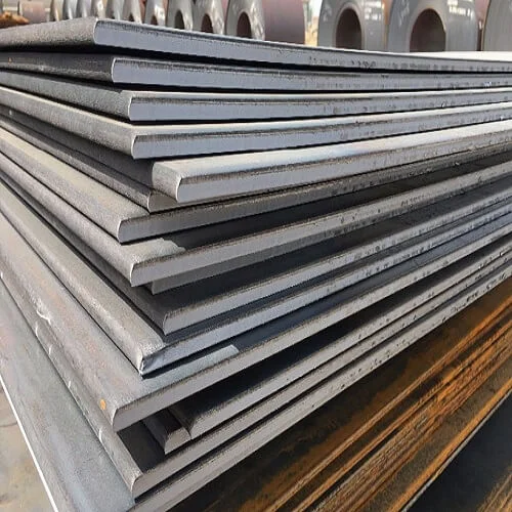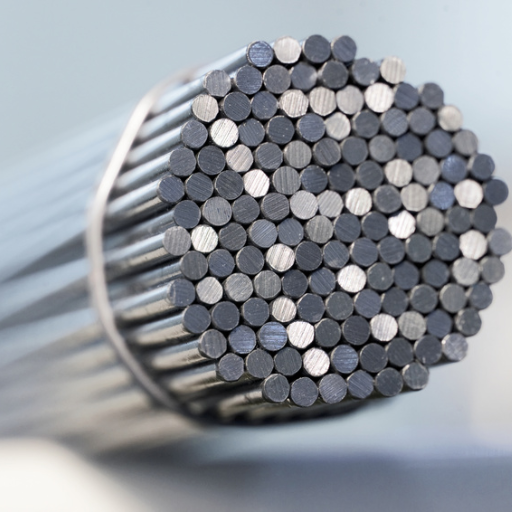
17-4 PH properties depend on its aging condition. In H900, the grade reaches about 1,310-1,380 MPa tensile strength, 1,170-1,280 MPa yield strength, and 40-47 HRC. In H1150, those figures fall to roughly 930-1,000 MPa, 725-860 MPa, and 28-37 HRC. Density stays near 7.8 g/cm³, and elastic modulus stays near 196-200 GPa, regardless of condition.
Last quarter, a design engineer named Elena sent our technical team three supplier datasheets for the same grade.
One listed H900 tensile strength at 1,310 MPa. The second said 1,380 MPa. The third said 1,450 MPa. Was her question direct: which one is wrong?
None of them. Each number came from a different basis: a specification minimum, a typical bar value, and a typical sheet value. That is the problem with most property pages. They publish a number without the context that makes it usable.
This guide gives you the complete 17-4 PH stainless steel properties data set by condition, then teaches you how to read it. You will see minimum versus typical, bar versus sheet, and longitudinal versus transverse. You will also get the physical and thermal data, the temperature limits, and the purchase order details that keep a certified lot from failing inspection. For the broader grade overview, start with our complete 17-4 PH stainless steel guide.
Key Takeaways
- 17-4 PH mechanical properties are condition-dependent. H900 gives peak strength and hardness; H1150 gives lower strength with better ductility and toughness.
- Conflicting datasheet values usually reflect different bases: ASTM specification minimums, typical bar values, or typical sheet and strip values. All can be correct.
- Density runs about 7.75-7.82 g/cm³ and rises slightly with aging. Elastic modulus is about 196-200 GPa in every condition, so aging changes strength, not stiffness.
- Sustained service is generally limited to about 300-316 °C. Low-temperature limits depend on condition and need verification for the application.
- Transverse properties are not guaranteed unless VAR quality is ordered. Specify the form, condition, standard, and test orientation on the purchase order.
What Are 17-4 PH Properties? (And Why the Condition Comes First)
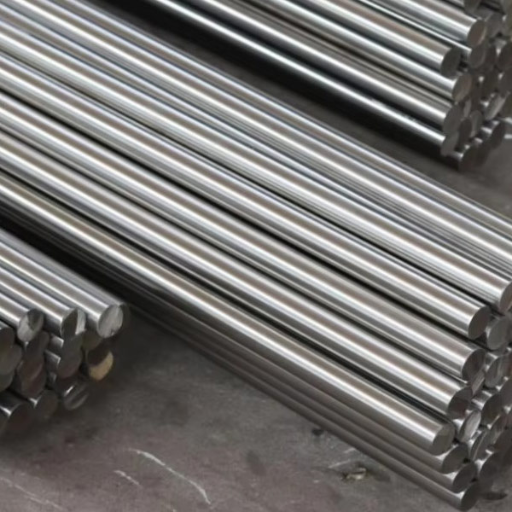
17-4 PH is a martensitic precipitation-hardening stainless steel, designated Type 630, UNS S17400, and EN 1.4542. Its roughly 15-17.5% chromium and 3-5% nickel form a martensitic matrix. Copper at 3-5% and niobium at 0.15-0.45% provide the precipitation hardening.
Unlike 304, the grade does not have one set of mechanical properties. It has a family of them. The heat treater solution anneals the steel to Condition A, then ages it at a temperature that sets the final balance of strength and toughness. The condition name is that aging temperature in Fahrenheit.
Condition A is a processing state, not a service condition. It is soft enough to machine, but its untempered martensite has low toughness. Parts are shaped in Condition A and aged before use. If a drawing specifies “17-4 PH” with no condition, the specification is incomplete.
The condition is the first thing to check on any property sheet. It changes yield strength by more than 500 MPa across the standard range. For general stainless property definitions, see our guide to stainless steel properties.
If you are matching a supplier’s table to an existing drawing, our materials team can confirm the condition and test basis before you commit to an order. Request a technical review.
17-4 PH Mechanical Properties by Condition
The table below is the core of the data set. Values are typical longitudinal properties for wrought material. They are not guaranteed minimums.
| Condition | Aging | UTS (MPa) | 0.2% Yield (MPa) | Elongation | Hardness |
|---|---|---|---|---|---|
| A (solution annealed) | none | ~1,030 | ~760 | 8-10% | ~33 HRC |
| H900 | 482 °C / 900 °F | 1,310-1,380 | 1,170-1,280 | 10-14% | 40-47 HRC |
| H925 | 496 °C / 925 °F | ~1,310 | ~1,210 | ~14% | 40-44 HRC |
| H1025 | 552 °C / 1,025 °F | 1,070-1,170 | 1,000-1,140 | 12-15% | 34-42 HRC |
| H1075 | 579 °C / 1,075 °F | 1,000-1,140 | 860-1,030 | 13-16% | 31-38 HRC |
| H1150 | 621 °C / 1,150 °F | 930-1,000 | 725-860 | 16-19% | 28-37 HRC |
| H1150-M | 760 °C + 621 °C | ~860 | ~655 | ~20% | 24-33 HRC |
| H1150D (double aged) | 621 °C, twice | 930-1,000 | 724-860 | 16-19% | ≤33 HRC |
The pattern is consistent. As the aging temperature rises, tensile strength, yield strength, and hardness fall, while elongation and toughness rise.
H900 is the peak-strength condition. H1150 is the overaged, high-toughness condition.
H1025 and H1075 sit between them for a balanced combination. H1150-M is used when improved machinability or formability matters. H1150D, the double-aged condition, is the version specified for sour service.
Those are typical values. The applicable floor is set by the product standard, and the two most-cited floors for bar are the ASTM A564 minimums. H900 requires 1,310 MPa tensile, 1,170 MPa yield, 10% elongation, and 40 HRC. H1150 requires 930 MPa, 725 MPa, 16%, and 28 HRC.
For the aging temperatures, hold times, cooling, and shrinkage behind these numbers, see our guide to 17-4 PH heat treatment.
How to Read 17-4 PH Property Data
A property table is only useful when you know what kind of number you are reading. Three questions settle most of the confusion.
Typical Values Versus Specification Minimums
A specification minimum is a floor. Every lot must meet it, and it is the number a designer should use for allowable stress. A typical value is what the producer usually achieves. It is useful for estimating, but it is not a design allowable and not a guarantee.
The table below shows why three suppliers can publish three different H900 numbers and all be right.
| Source basis | H900 UTS | H900 yield | H1150 UTS | H1150 yield |
|---|---|---|---|---|
| ASTM A564 bar minimum | 1,310 MPa | 1,170 MPa | 930 MPa | 725 MPa |
| Typical bar | 1,310-1,380 MPa | 1,170-1,280 MPa | 930-1,000 MPa | 725-860 MPa |
| Typical sheet/strip (NASA data) | ~1,450 MPa | ~1,380 MPa | ~1,100 MPa | ~1,030 MPa |
The sheet and strip values run higher partly because of product form and test location. That does not make them wrong. It makes them specific. Quote the form with the number, or the number means little.
Product Form, Orientation, and Section Size
Bar, plate, sheet, strip, forging, and additively manufactured parts do not report identical properties. Sheet and strip often test higher than bar under the same conditions. Castings and AM parts depend on their process and may retain austenite or delta ferrite.
Orientation matters too. Most published values are longitudinal. Transverse values run lower.
For large or highly stressed parts, that difference can decide whether a design passes. US Nuclear Regulatory Commission guidance states that transverse mechanical properties are not guaranteed on 17-4 PH unless the material is ordered as VAR quality.
Section size adds another variable. Large sections cool more slowly and develop lower properties than small ones. A datasheet number without a form, orientation, and section size attached is a starting point, not a specification.
Do not mix wrought, metal injection molded, and additively manufactured data. They are different process routes, and their numbers are not interchangeable.
What the Mill Certificate Should Show
A 3.1 certificate should state the heat number, the chemistry, the product standard, the achieved condition, the test orientation, and the measured mechanical results. If the certificate says “17-4 PH” and nothing about condition, ask for the heat treatment record. Chemistry proves the heat, not the aging treatment.
A forging buyer named Daniel learned this the hard way. His team designed a large shaft from longitudinal datasheet values and ordered 17-4 PH bar without a VAR requirement.
The transverse tests on the first article came back below the design assumption. The chemistry was correct, the condition was correct, and the part still missed the number the drawing relied on. The fix was a revised purchase order, not a new alloy.
17-4 PH Physical Properties
| Property | Typical value |
|---|---|
| Density | 7.75-7.82 g/cm³ (7,750-7,820 kg/m³) |
| Elastic modulus | 196-200 GPa |
| Shear modulus | ~77 GPa |
| Poisson’s ratio | ~0.27 |
| Thermal conductivity (20 °C) | 15-18.3 W/m·K |
| Thermal conductivity (480-500 °C) | ~22-23 W/m·K |
| Mean CTE (20-100 °C) | ~10.8 ×10⁻⁶/K |
| Electrical resistivity (20 °C) | ~0.80 Ω·mm²/m |
| Melting range | ~1,404-1,440 °C |
| Magnetic response | Ferromagnetic in all conditions |
Three of these values deserve more than a glance.
Density changes with condition. It runs about 7.78 g/cm³ in Condition A and about 7.82 g/cm³ after overaging to H1150. That small rise is the physical reason a part shrinks during aging. Use the density that matches the condition you receive, especially for tight weight or balance calculations.
Elastic modulus does not change with condition. Every condition sits around 196-200 GPa. Aging makes the steel stronger, not stiffer.
A design lead named Priya ran into that assumption when her team switched a bracket from H1150 to H900 to reduce deflection. The bracket got stronger. It did not get stiffer, because the modulus was unchanged. The deflection problem needed a thicker section, not a harder condition.
Thermal conductivity is modest, about 15-18.3 W/m·K at room temperature, and rises with temperature. The coefficient of thermal expansion, about 10.8 ×10⁻⁶/K, is lower than 304. That matters in assemblies where dissimilar metals see temperature swings. For density formulas and weight tables across grades, see our steel density guide.
17-4 PH Properties at Temperature
Elevated Temperature
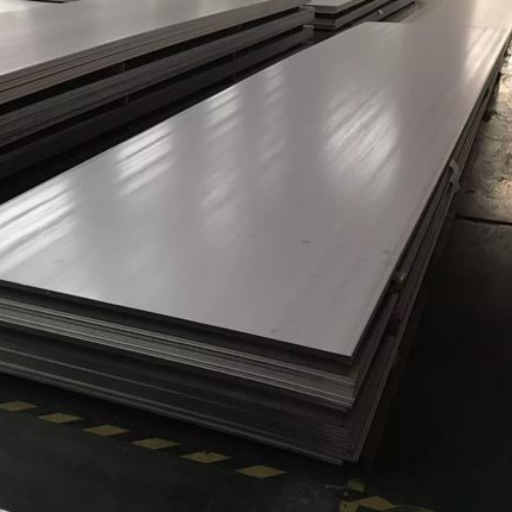
Short-term tensile strength is largely retained to about 480 °C (900 °F). Long-term service is a different question. Above about 316 °C (600 °F), creep and stress-rupture can govern the design, and copper-rich precipitates coarsen above roughly 400 °C. The practical sustained-service ceiling is about 300-316 °C.
The modulus also falls with temperature. One dataset shows about 197 GPa at 20 °C dropping to about 170 GPa near 500 °C. A hot part loses stiffness even before it loses strength.
Low Temperature
The limits depend on condition. Published guidance suggests H925 for general use down to about 0 °F, and to about -320 °F for non-impact applications. H1150 is cited to about -110 °F. H900 should be used with caution where toughness is a design criterion.
Standard guidance does not recommend 17-4 PH for cryogenic service. The double-aged H1150D condition is cited in some specifications for service near -196 °C. Treat any low-temperature application as one that needs verification against the applicable standard.
17-4 PH Hardness, Toughness and Fatigue
Hardness is the fastest field check and the easiest number to misread. H900 runs 40-47 HRC. H1150 runs 28-37 HRC. Condition A sits near 33 HRC.
Conversions between HRC, HBW, and HV are approximate. Use the ASTM E140 tables and treat the result as a band, not an exact equivalence.
Hardness also has a corrosion consequence. Susceptibility to sulfide stress cracking rises above roughly 380 HV, which is about 38-40 HRC. That is why NACE MR0175 / ISO 15156 permits 17-4 PH in sour service only in a double-aged condition held to 33 HRC or less. H900, at 40-47 HRC, falls outside that window.
Toughness moves in the opposite direction from strength. Overaging raises elongation and impact resistance. H900 gives the highest strength and the lowest toughness. H1150 and H1150D give the best ductility.
Charpy values vary with condition, orientation, and product form, so use qualified test data rather than one generic number.
Fatigue has no universal limit for the grade. Surface finish, notch geometry, condition, and microstructure dominate the result. Aerospace fasteners often use shot peening and controlled surface preparation. Qualify the fatigue behavior for the actual part and loading, not from a datasheet headline.
Density, Weight and Design Calculations
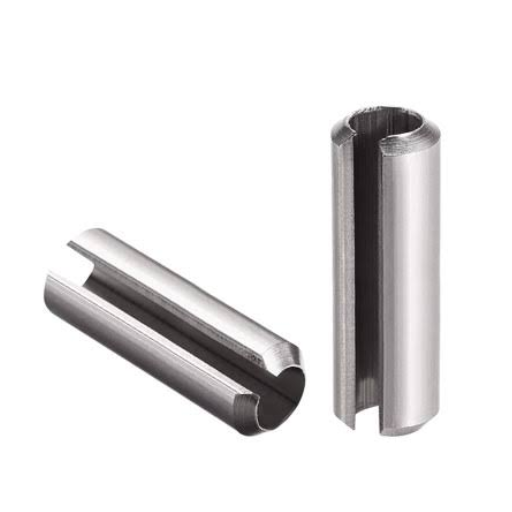
17-4 PH density is about 7,750-7,820 kg/m³, or roughly 7.8 g/cm³. Use the value from the mill certificate when a tight weight or centrifugal load calculation depends on it.
A worked example makes the number practical. A 50 mm diameter round bar, 1 m long, has a volume of about 0.00196 m³. At 7,800 kg/m³, it weighs about 15.3 kg. A 1,000 × 1,000 × 10 mm plate has a volume of 0.01 m³ and weighs about 78 kg.
The formula is mass = volume × density. For a round bar, volume is π/4 × diameter² × length. Keep units consistent, and the arithmetic is simple.
How 17-4 PH Properties Compare with Other Grades
| Property | 17-4 PH H900 | 17-4 PH H1150 | 304 | 316 | Duplex 2205 |
|---|---|---|---|---|---|
| UTS (MPa) | 1,310-1,380 | 930-1,000 | 515-750 | 515-750 | 620-880 |
| Yield (MPa) | 1,170-1,280 | 725-860 | 205-310 | 205-310 | 450-550 |
| Hardness | 40-47 HRC | 28-37 HRC | 70-90 HRB | 70-90 HRB | ~25-30 HRC |
| Modulus (GPa) | ~196-200 | ~196-200 | ~193-200 | ~193-200 | ~200 |
| Magnetic (annealed) | Yes | Yes | No | No | Yes |
| Relative cost | High | High | Low | Medium | Medium-high |
The useful takeaway is not that 17-4 PH is strongest. It is that the grades answer different questions.
17-4 PH supplies strength and hardness. 304 supplies corrosion resistance, formability, and lower cost. 316 adds molybdenum for chloride service. Duplex 2205 combines higher strength with chloride resistance, but it is not a precipitation-hardening grade.
Stiffness is similar across all of them, roughly 193-200 GPa. If a design needs rigidity, changing stainless grades rarely solves it. Geometry does. For the full head-to-head, see 17-4 PH vs 304 vs 316.
What to Specify on the Purchase Order
The property table only protects you if the order matches it. Put five items on the purchase order and the certificate.
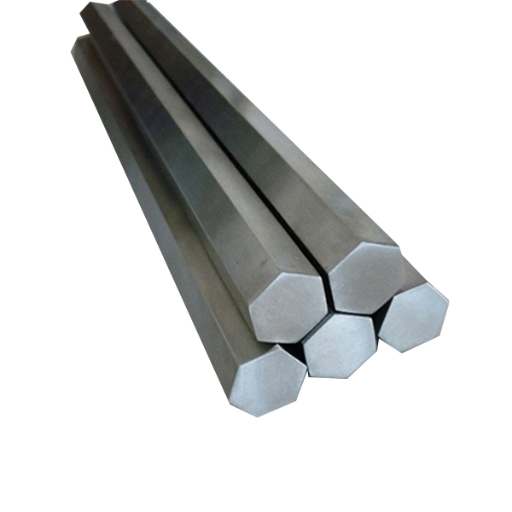
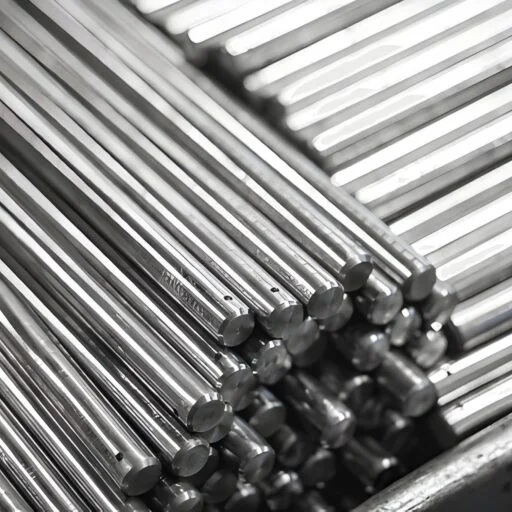
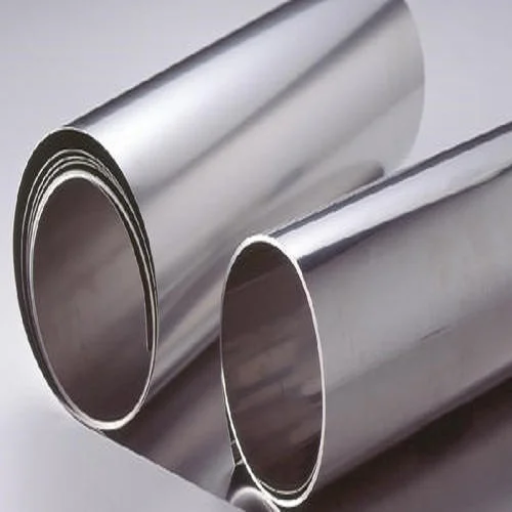
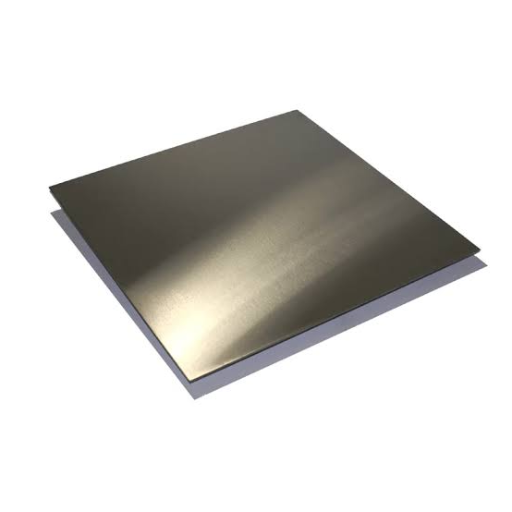
- Product form: bar, plate, sheet, strip, forging, or pipe.
- Condition: A for machining, or the service condition such as H900, H1025, or H1150D.
- Product standard: ASTM A564 for bar, A693 for plate and sheet, A705 for strip, or the applicable AMS specification.
- Test orientation: longitudinal or transverse. Add VAR quality if transverse properties are required.
- Documentation: EN 10204 3.1 with chemistry, condition, orientation, and mechanical results stated.
If the condition is applied after you receive the material, the aging record belongs with the certificate. A lot that meets the chemistry and misses the condition is still the wrong lot.
Ready to check a specification? Send our technical team the drawing and condition, and we will review the requirements before quoting.
Frequently Asked Questions
What is the tensile strength of 17-4 PH?
It depends on condition. Typical values run about 1,030 MPa in Condition A, 1,310-1,380 MPa in H900, and 930-1,000 MPa in H1150. The ASTM A564 minimum for H900 bar is 1,310 MPa.
What is the yield strength of 17-4 PH in H900?
The 17-4 PH yield strength in H900 runs about 1,170-1,280 MPa typical, with an ASTM A564 minimum of 1,170 MPa for bar. That is roughly four to six times the yield strength of annealed 304.
What is the hardness of 17-4 PH?
H900 runs 40-47 HRC. H1150 runs 28-37 HRC. Condition A is about 33 HRC. The double-aged H1150D condition is held to 33 HRC or less for sour service.
What is the density of 17-4 PH?
About 7.75-7.82 g/cm³, or 7,750-7,820 kg/m³. Condition A is near the low end, and overaged conditions are near the high end. A working value of 7.8 g/cm³ is common for design estimates.
What is the modulus of elasticity of 17-4 PH?
The 17-4 PH modulus of elasticity is about 196-200 GPa in every condition. Aging changes strength and hardness, not stiffness. Shear modulus is about 77 GPa and Poisson’s ratio is about 0.27.
Does 17-4 PH get stronger when heat-treated?
Yes. Solution-treated Condition A is soft, and aging precipitates copper-rich particles that raise strength and hardness. H900 is the peak-strength condition. Higher aging temperatures reduce strength but improve ductility and toughness.
Why do different datasheets show different 17-4 PH properties?
They may be quoting a specification minimum, a typical bar value, or a typical sheet or strip value. Product form, orientation, section size, and process route also change the result. Compare the basis before comparing the numbers.
Are 17-4 PH properties the same in bar and sheet?
No. Sheet and strip often test higher than bar at the same condition. Use data for the form you are buying, and confirm the test location.
What does “transverse properties not guaranteed” mean?
It means the specification may guarantee only longitudinal properties unless transverse testing is ordered. NRC guidance says transverse properties are not guaranteed on 17-4 PH unless VAR quality is specified. Add the requirement to the purchase order if the design depends on it.
What is the maximum service temperature of 17-4 PH?
Sustained service is generally limited to about 300-316 °C (600 °F). Short-term tensile strength is retained to about 480 °C, but creep and overaging govern above the sustained limit.
Is 17-4 PH magnetic?
Yes. The martensitic structure is ferromagnetic in every condition, including Condition A. That differs from annealed 304, which is essentially non-magnetic.
Conclusion
17-4 PH properties are not one set of numbers. They are a set of choices.
The condition sets strength and toughness. The product form and test orientation set what the certificate can guarantee. The standard sets the floor. Read all three before you compare a datasheet to a drawing.
The practical sequence is short. Define the strength and toughness requirement, pick the condition, name the form and standard, and require the test orientation and documentation you need. Then check the certificate against the order. That process prevents most of the expensive surprises, including the one that started this article.
For help matching 17-4 PH properties to a specific application, contact our technical team. We can review the condition, the specification, and the documentation requirements, and quote the stainless forms you need. You can also browse our stainless steel products or request a material selection consultation.