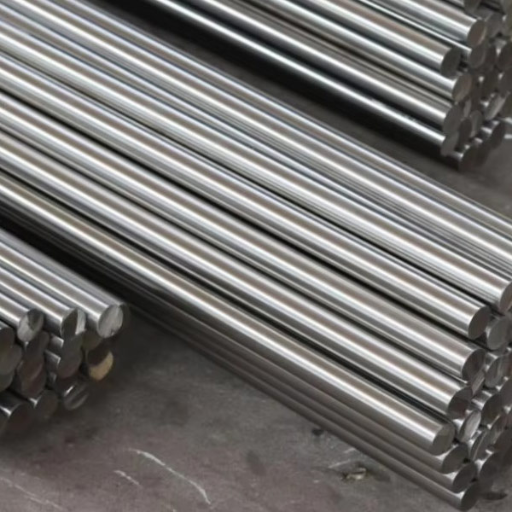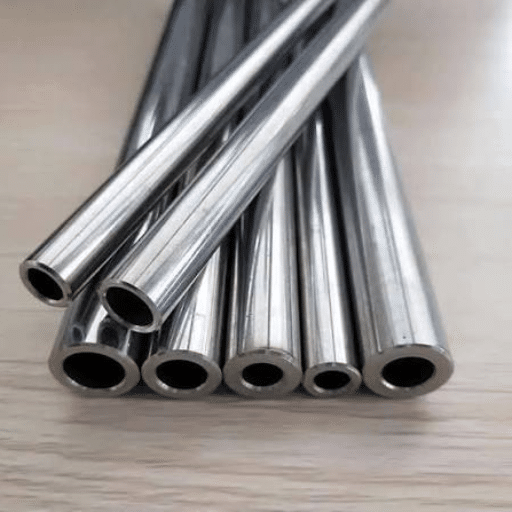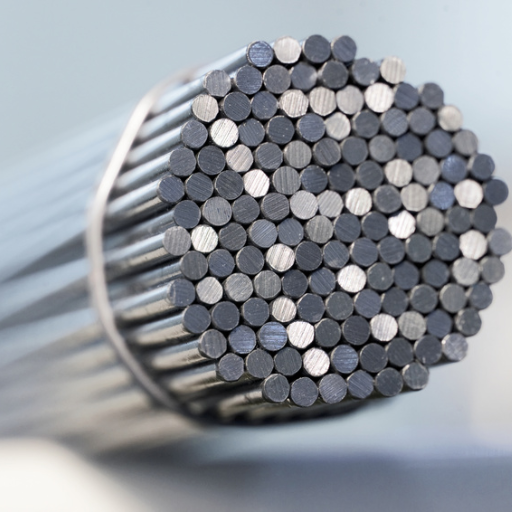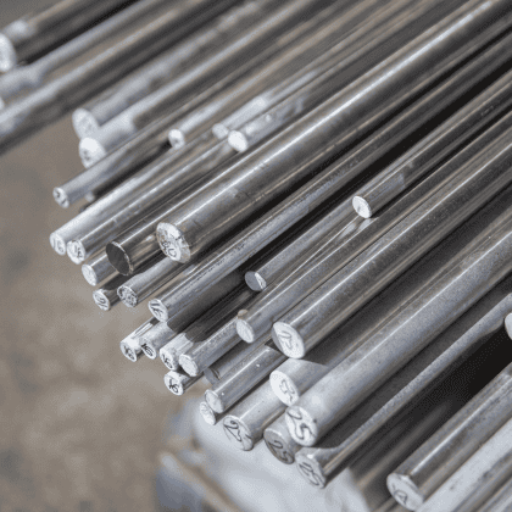
17-4 PH applications cluster wherever a part needs high strength and hardness in a mildly corrosive environment. Aerospace fasteners, valve stems, pump shafts, downhole tools, surgical instruments and marine shafting all depend on the same three properties, and each segment leans on a different one.
Last spring, Tomasz, a procurement engineer at a valve manufacturer outside Wrocław, put two quotes for the same stem side by side. One was 17-4 PH at H900. The other was 316. The 316 quote came in 30% cheaper and looked like the obvious buy.
It wasn’t. The stem ran in a clean, warm, mildly alkaline process line where wear set the service life. 316 would have galled at the packing and worn out inside a year. Neither quote named the environment, and neither supplier asked.
You probably know the grade belongs in demanding hardware. The harder question is which property is doing the work in your part, because that decides the condition, and the condition is what goes on the purchase order. This article walks eight segments, names the property that binds in each, and says where 17-4 PH is the wrong answer.
The complete 17-4 PH stainless steel guide covers the grade itself. If you’re already comparing quotes, our technical consultation service will review the service environment with you before anything is ordered.
Key Takeaways
- 17-4 PH applications are chosen for strength and hardness first, corrosion resistance second. Every segment using the grade is buying one of those two.
- Which property binds changes by segment: fatigue in aerospace, edge retention in instruments, wear and galling in valves, NACE compliance downhole, cleanability in food.
- Medical means surgical instruments, covered by ASTM F899 grade 630. Implants are ASTM F138 and 316LVM, and 17-4 PH is not the implant material.
- Sour service requires H1150 DBL or H1150M at 33 HRC maximum. H900 is not acceptable, however good the strength looks on the certificate.
- Sustained service stops around 300-316 °C (600 °F). Above that the part keeps aging, and it stops matching the certificate that shipped with it.
What Are 17-4 PH Applications? The Short Answer
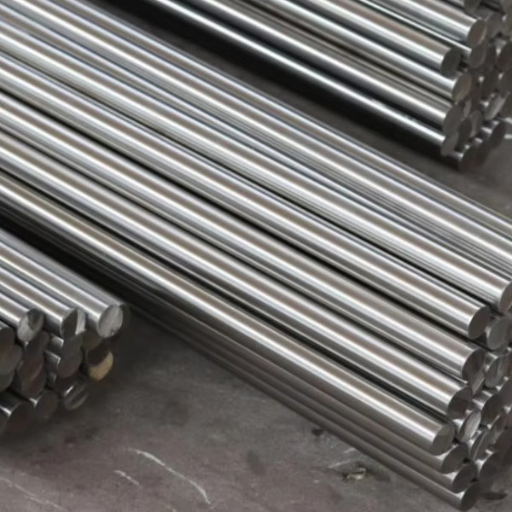
17-4 PH applications are parts that need high strength and hardness in a mildly corrosive environment. That covers aerospace fasteners and fittings, valve stems and trim, pump shafts and impellers, downhole tools and subsea connectors, surgical instruments, marine shafting, food machinery and, increasingly, additively manufactured components. The grade is specified for mechanical performance, and the corrosion resistance is what makes that performance usable.
The Three Properties, and Why Only One Binds at a Time
Everything 17-4 PH offers comes from three properties, and you get all three from a single low-temperature age rather than a quench and temper. Copper-rich precipitates form in a martensitic matrix, and the aging temperature sets the balance between them.
- Strength. About 1,310 MPa minimum tensile at H900, falling to 930 MPa at H1150. That’s a spread of nearly 30%, and it’s yours to choose.
- Hardness and wear resistance. Roughly 40-47 HRC at H900, enough to hold a sealing surface or a cutting edge through repeated use.
- Corrosion resistance. Close to 304 in general service, because the chromium is there and the molybdenum is not.
Only one of those binds in any given part, and the segment tells you which.
| Segment | What binds | Typical condition |
|---|---|---|
| Aerospace fasteners and fittings | Fatigue strength plus specification compliance | H900 to H1025 |
| Surgical and dental instruments | Hardness and edge retention | H900 to H1025 |
| Valve stems and trim | Wear and galling resistance | H900 to H1075 |
| Pump shafts and impellers | Strength plus wear at the seal | H1025 to H1075 |
| Downhole tools and subsea hardware | Strength plus NACE compliance | H1150 DBL or H1150M |
| Marine shafting | Strength plus pitting resistance | Overaged, often H1150 |
| Chemical and food machinery | Cleanability plus corrosion resistance | H1025 to H1150 |
| Additive manufacturing | As-built strength plus post-processing response | Aged after print, H900 to H1075 |
Where the Grade Gets Specified Wrong
A pattern shows up in every failure file: the grade was chosen for the property that mattered least. A sour-service mandrel ordered at H900 because someone wanted the highest number on the certificate. A marine shaft left at peak strength when the environment was the real problem. An instrument alloy proposed for an implant because both get called medical.
The sections that follow name the binding property for each of these 17-4 PH applications, then say where the grade should have been something else.
Aerospace: Fasteners, Fittings and Actuator Hardware
This is the segment where 17-4 PH aerospace applications are most codified. AMS 5643 covers bar in flat, hex, round and square form, plus wire, forgings, tubing and rings. Plate, sheet and strip fall under AMS 5622, and general bar and shapes under ASTM A564.
The grade delivers high strength at low weight, fatigue performance under cyclic loading, and traceability to a specification an auditor will accept. Fasteners, fittings, actuator hardware and small structural parts are the routine work.
The section-size line matters, and most application lists blur it. 17-4 PH is the small-part grade. Large-section landing gear forgings and heavy airframe structure go to 17-4 PH vs 15-5 PH territory, because 15-5 PH holds transverse toughness in heavy sections where 17-4 PH loses it. Putting 17-4 PH in a large forging is a real and recurring error.
The failure mode to watch is hydrogen embrittlement. At H900 the part is hard enough that absorbed hydrogen, from electroplating or cathodic protection, can crack it. The 17-4 PH corrosion resistance article covers the bake and overage options in detail.
Medical and Dental: Instruments, Not Implants
17-4 PH medical applications are instrument applications. ASTM F899 lists the grade as grade 630 in the wrought stainless specification for surgical instruments, and that’s the scope.
In an instrument, the grade holds an edge and resists wear through repeated cleaning and sterilization. Scalpel handles, forceps, needle holders and dental elevators benefit from hardness around 40 HRC with corrosion resistance good enough for an autoclave.
The correction worth stating plainly: implants are not 17-4 PH. ASTM F138 governs wrought implant materials and specifies 316LVM, the vacuum arc remelted low-carbon 316. Titanium covers the rest. Proposing 17-4 PH for an implant is a specification error, not a judgment call, and it’s common enough in supplier marketing that buyers should check.
The failure mode in instruments is pitting and crevice attack under deposits and at poorly passivated joints. Passivation per ASTM A967 is a requirement here, not a finishing nicety. The food-grade stainless steel requirements cover the cleanability side of the same problem.
Valves and Pumps: Where Most of the Tonnage Goes
More 17-4 PH tonnage goes into flow control than into any other segment. A 17-4 PH valve stem or trim set, balls, seats, and discs; a 17-4 PH pump shaft, impeller, mechanical seal, bushing or plunger. The parts are small, they move against something, and they wear.
The binding property is wear resistance combined with galling resistance and enough hardness to keep a sealing surface flat. That’s a different requirement from strength, and it’s why H900 and H1075 dominate here rather than the highest number available.
The conditions split cleanly. Wear parts run at H900 or H1075. Where corrosion or sour service dominates, the specification moves to H1150 and accepts the strength loss.
A 17-4 PH pump shaft at H1025 in a clean process stream is a sensible default. The same shaft at H900 in warm chloride is a cracking candidate.
Two failure modes recur: stress corrosion cracking in warm chloride at H900, and crevice attack under gaskets and at packing where the environment stagnates. Both are environment problems no condition solves, which is why the 17-4 PH vs 304 comparison matters when the fluid is aggressive and the strength requirement is modest.
Sourcing these parts? We supply 17-4 PH bar, rod and forgings in the conditions above, with mill test certificates matched to the condition you specify. See the product forms we stock.
Oil and Gas: Downhole Tools and Subsea Connectors
17-4 PH oil and gas applications are strength-at-section problems with a compliance rule attached. Downhole tool bodies, mandrels, subsea connector hardware and valve components all use the grade because it delivers high strength in a modest cross-section without a quench and temper.
The rule is not negotiable. Sour service, meaning exposure to wet H2S, requires H1150 DBL or H1150M at 33 HRC maximum under NACE MR0175 / ISO 15156. H900 is not acceptable, and neither is H1025 or H1075, no matter how the strength comparison reads.
That single requirement explains most of the segment’s specification behaviour. Designers who want the highest strength get told no, and the answer is a heavier section at a softer condition or a different alloy.
Daniela, a design engineer in Monterrey, learned it the expensive way. Her team specified a mandrel at H900 for a sour gas well in 2022 because the strength margin was comfortable. It cracked in nine months.
The replacement went in at H1150 DBL, lost about 29% of its tensile strength, and has run four years without an issue. The section was redesigned to carry the load.
17-4 PH Applications in Marine: Propeller Shafts and Their Limits
The classic 17-4 PH propeller shaft and marine shafting application makes sense on paper. A rotating shaft in moving, well-aerated seawater sees strength demand and a continuously refreshed oxygen supply, which is close to the best case for a grade with no molybdenum.
It also fails in a documented way. Arisoy, Başman and Şeşen published a failure analysis of a 17-4 PH sailboat propeller shaft in Engineering Failure Analysis in 2003. The mechanism was corrosion-assisted rather than simple overload: pitting started where the seawater wasn’t moving.
That’s the whole lesson of 17-4 PH marine applications. The grade tolerates flowing seawater and struggles in stagnant seawater. Bearing areas, coupling faces and shaft sleeves create exactly the crevices and stagnant zones that defeat it, and there’s no molybdenum in the composition to resist pitting.
Typical practice is to overage the shaft, often to H1150, and to apply cathodic protection where the design allows. Where the shaft sits in stagnant seawater, duplex 2205 vs 316 is the more honest starting point, with super duplex 2507 or a nickel alloy as the upgrade.
Chemical, Food and Process Machinery
Chemical and food applications are grouped because the binding property is the same in both, and it isn’t strength. It’s cleanability combined with corrosion resistance in cleaning chemicals. A pump impeller, mixer shaft, filling machine or compressor impeller has to survive caustic and acid washdown and be cleanable to a hygienic standard.
That pushes conditions softer than the wear segments. H1025 to H1150 is typical, because the last 200 MPa of tensile strength buys nothing and costs corrosion resistance and toughness. Food and process work is where over-specifying strength does the most quiet damage.
The failure mode is crevice attack under gaskets, in unpassivated welds and under heat tint left from fabrication. Weld heat tint is a chromium-depleted oxide layer, and passivating over it seals the depletion in place rather than removing it. Pickling has to come first.
Where sanitation chemistry is aggressive, with high-chloride or high-temperature caustic cycles, 316 or duplex is the right answer and 17-4 PH is the compromise.
Additive Manufacturing: The Newest 17-4 PH Application
17-4 PH 3D printing is the segment no application page covers, and it’s the one changing fastest. The grade is a standard DMLS and SLM alloy, available from most service bureaus alongside 316L, Ti-6Al-4V and Inconel 718.
The finding is stronger than most people expect. Burns, Kudzal and McWilliams published a U.S. Army Research Laboratory study in the Journal of Materials Engineering and Performance in 2019.
They found that as-printed SLM 17-4 PH with no aging already meets many existing structural component requirements. The printed part arrives strong before you age it.
The qualifier belongs in the same breath. That finding is about static structural capability, not fatigue life or corrosion duty. The authors name porosity, defects and post-processing response as the remaining limitations. A printed part with a fatigue or chloride duty still gets aged, still often gets hot isostatic pressing, and still gets passivated.
NIST-led work with the University of Wisconsin-Madison and Argonne used in situ high-energy X-ray diffraction during laser powder-bed printing. Composition and processing conditions decide whether you get the martensite you wanted at all.
There’s a residual-stress point that catches designers. The martensitic transformation expands on cooling from around 350 °C, so the phase change generates stress independently of the thermal gradient. Distortion in a printed 17-4 PH part isn’t only a cooling-rate story.
For a buyer, none of this changes the grade question. More parts now arrive as AM designs, and the 17-4 PH properties by condition are the same ones you’d specify for wrought.
The 300 °C Ceiling That Bounds Every Application
Every one of these 17-4 PH applications shares a single limit. Sustained service temperature tops out around 300-316 °C (600 °F).
Above that, thermal aging continues past the condition you specified. Strength and toughness drift, the microstructure coarsens, and the part gradually stops matching its certificate. That’s not a sudden failure. It’s a slow departure from the specification, which is worse, because nothing announces it.
Below the ceiling, the low end has its own caveat. Cryogenic service isn’t recommended without verification, because the ductile-to-brittle behaviour of the martensitic matrix needs testing rather than assumption.
The 17-4 PH properties and temperature limits article carries the full treatment. Treat the ceiling here as a constraint on every application in this article rather than a subject of its own.
17-4 PH Applications by Condition: What Each Segment Specifies
This is the table to bring to a specification meeting. Hardness figures are typical ranges from supplier datasheets; the specification minima live in ASTM A564.
| Segment | Typical condition | Approx. hardness | Sour service? |
|---|---|---|---|
| Aerospace fasteners | H900 to H1025 | 35-47 HRC | No |
| Surgical instruments | H900 to H1025 | 35-47 HRC | No |
| Valve stems and trim | H900 to H1075 | 33-47 HRC | No |
| Pump shafts | H1025 to H1075 | 33-40 HRC | No |
| Downhole and subsea | H1150 DBL or H1150M | 33 HRC max | Yes, required |
| Marine shafting | H1150 (overaged) | 28-34 HRC | No |
| Food and chemical | H1025 to H1150 | 28-40 HRC | No |
| Additive manufacturing | Aged after print | Depends on age | No |
Note the H1150 row. Single-aged H1150 can land at 34 HRC, just above the NACE ceiling, which is exactly why H1150 DBL exists. Double aging pulls the hardness down and stabilizes it. If a supplier offers you “H1150” for sour service without the DBL or M suffix, ask again.
The trade-off in one sentence: as the aging temperature rises, strength comes down, and toughness and stress corrosion resistance go up. No condition gives you both ends.
When the Condition Can’t Fix the Environment
Condition selection solves a lot. It doesn’t solve everything, and the honest answer in some segments is a different alloy.
| Segment | Specify instead | Why |
|---|---|---|
| Warm chloride above about 60 °C | Duplex 2205 or super duplex 2507 | 17-4 PH has essentially no molybdenum, so pitting resistance is low |
| Sour service needing high strength | Nickel alloy or heavier section at H1150 DBL | The 33 HRC ceiling caps what 17-4 PH can deliver |
| Implants | 316LVM per ASTM F138, or titanium | 17-4 PH isn’t an implant material |
| Large-section airframe forgings | 15-5 PH | Transverse toughness holds up in heavy sections |
| Aggressive sanitation chemistry | 316 or duplex | Cleanability and chloride resistance outrank hardness |
Frequently Asked Questions
What is 17-4 PH used for?
17-4 PH is used for parts needing high strength and hardness with moderate corrosion resistance: aerospace fasteners, valve stems, pump shafts, downhole tools, surgical instruments, marine shafting and food machinery. It’s chosen for mechanical performance first.
What industries use 17-4 PH?
Aerospace, medical instruments, oil and gas, valve and pump manufacturing, marine, chemical processing, food processing and additive manufacturing. Aerospace and flow control account for most of the tonnage.
Is 17-4 PH used in aerospace?
Yes. AMS 5643 and AMS 5622 cover the product forms, and the grade is routine for fasteners, fittings, actuator hardware and small structural parts. Large-section forgings go to 15-5 PH instead.
Is 17-4 PH used for surgical instruments?
Yes. ASTM F899 lists it as grade 630 for wrought surgical instruments. Its hardness and edge retention suit forceps, needle holders, scalpel handles and dental instruments.
Can 17-4 PH be used for implants?
No. ASTM F138 governs implants and specifies 316LVM, a vacuum arc remelted low-carbon 316. Titanium covers the rest. 17-4 PH is an instrument material, not an implant material.
Is 17-4 PH good for valve stems and pump shafts?
Yes, and it’s the largest single use. H900 to H1075 gives the wear and galling resistance these parts need. In warm chloride, move to H1150 or to duplex.
Can 17-4 PH be used in seawater?
In flowing, well-aerated seawater with an overaged condition, yes. In stagnant seawater, at bearing and coupling crevices, it pits. Duplex 2205 is the better default there.
Can 17-4 PH be 3D printed?
Yes. It’s a standard DMLS and SLM alloy. Printed parts still need aging, often hot isostatic pressing, and passivation, and porosity remains the limitation to control.
What is the maximum service temperature of 17-4 PH?
About 300-316 °C (600 °F) for sustained service. Above that, thermal aging continues past the specified condition and the part drifts from its certificate. Cryogenic service needs verification.
Which condition should I specify?
Match it to the binding property. Wear parts run H900 to H1075. Sour service requires H1150 DBL or H1150M at 33 HRC max. Food and chemical work usually lands H1025 to H1150.
Is 17-4 PH food safe?
It’s used in food machinery and passes cleanability requirements when properly passivated. For aggressive sanitation chemistry, 316 or duplex is the safer specification.
Is 17-4 PH used for plastic molds?
Yes, for mold components needing wear resistance and polishability, typically at higher hardness conditions. Large molds often go to a different grade on cost grounds.
Conclusion: Where 17-4 PH Applications Earn Their Cost
17-4 PH applications come down to one sequence. Strength and hardness first, corrosion resistance second, and then the condition that balances them for the environment in front of you.
The eight segments differ in which property binds, not in what the grade is. Aerospace buys fatigue, instruments buy edge retention, valves and pumps buy wear and galling resistance. Downhole buys NACE compliance, which means accepting less strength than the grade can deliver. Marine and food buy a compromise the grade only partly honors.
Aisha, a process engineer at a surgical instrument maker in Sialkot, put the whole problem in one sentence at the end of a supplier meeting last year. “We stopped asking whether 17-4 PH is the right grade,” she said, “and started asking which property we’re actually buying.” That reframe is the entire article.
The grade gets specified wrongly when the environment is the harder problem than the strength. If that’s where you are, request a quote and tell us the service environment, not just the grade. We’ll confirm the condition, supply the mill test certificate and traceability that prove it, and handle custom processing if the part needs it. For the cost side of the same decision, see 17-4 PH price.