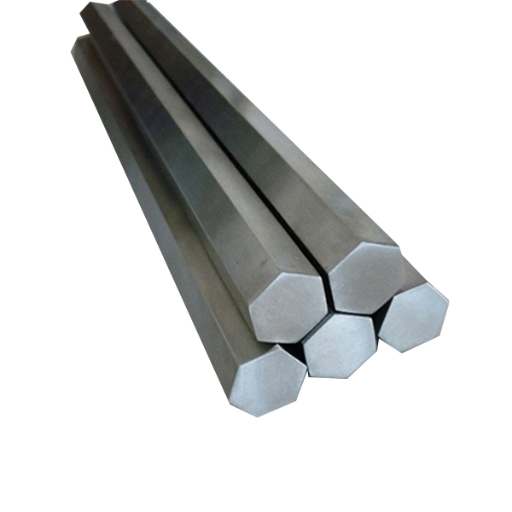
17-4 PH corrosion resistance is roughly comparable to 304 in general service, and clearly better than the 400-series martensitic grades. It is not a chloride grade. Pitting, crevice attack and stress corrosion cracking are real limits, and the aging condition you choose changes the cracking risk more than most buyers expect.
Rafael maintains the pumps at a citrus processing plant outside Valencia. In 2023 he replaced a worn shaft with 17-4 PH, aged to H900, because the drawing called for it. Fourteen months later the shaft was leaking at the gasket face.
Every mechanical test on the replacement part had passed. The certificate was honest. The grade was correct. The environment was the variable nobody wrote down.
If you’ve read our complete 17-4 PH stainless steel guide, you’ve seen the summary. This is the full treatment: what the grade genuinely resists, the six ways it fails, and what passivation does and doesn’t fix.
Key Takeaways
- 17-4 PH resists general corrosion at roughly 304 level because it carries 15.0-17.5% chromium. It resists pitting and crevice attack poorly because it carries essentially no molybdenum, and molybdenum governs those modes.
- 17-4 PH corrosion resistance computes to a PREN of around 15-17, against about 18 for 304 and about 25 for 316. The formula was built for austenitic and duplex grades, so for a martensitic PH steel it’s a screening index, not a prediction.
- Aging condition is a corrosion decision. H900 is the strongest condition and the most susceptible to stress corrosion cracking. Overaging to H1025 and above trades strength for crack resistance.
- Sour service is permitted only in the double-aged H1150 DBL or H1150M condition at 33 HRC maximum. H900 is not acceptable.
- Passivation removes free iron. It does not remove heat tint. Pickling per ASTM A380 has to come first, or the passivation seals a chromium-depleted surface in place.
Is 17-4 PH Corrosion Resistant? The Short Answer
Yes, within a defined envelope. The grade handles atmospheric exposure, fresh water, mild acids, food and beverage contact, most organic media and mild alkaline service. It outperforms 410, 420 and 440C across that range, because it has more chromium and far less carbon than any of them.
Outside that envelope the answer changes fast. Warm chloride service, stagnant solutions, tight crevices and sustained tensile stress are where the grade stops behaving like a stainless steel. It starts behaving like a high-strength martensitic steel that happens to be stainless.
Where “Comparable to 304” Comes From, and Where It Breaks
The claim isn’t marketing. Chromium forms and maintains the passive film, and 17-4 PH carries 15.0-17.5% of it. That’s enough to rebuild the film in oxygenated, near-neutral conditions, and in a general corrosion test the grade performs close to 304.
However, the claim breaks when the mechanism changes from general to localized. Pitting and crevice resistance are governed by molybdenum, not chromium, and 17-4 PH is capped at 0.5% Mo with typical values near zero. 304 carries none either, which is why 304 also struggles in chlorides. 316 carries 2.0-3.0%, which is why it doesn’t.
So the honest version is this: 17-4 PH matches 304 in general corrosion and matches 304 in its chloride weakness, because both grades are missing the same element. A buyer who reads “comparable to 304” and specifies the grade for a warm chloride line has read the first half of a two-part sentence.
Against the 400-series, the advantage is real. 440C carries 16-18% chromium with around 1.0% carbon, and that carbon ties chromium up in carbides, removing it from the film. 17-4 PH’s 0.07% carbon cap keeps nearly all its chromium available, which is why it beats the 400-series in general service.
The PREN Number, and Why It Is Only Half a Tool
Pitting resistance equivalent number gives you one figure to compare grades: PREN = Cr + 3.3 Mo + 16 N. Run the nominal compositions and you get a clean ranking.
| Grade | Approximate PREN | What it means in practice |
|---|---|---|
| 410 | 11.5-12 | Lowest of the martensitic family; rusts readily outdoors |
| 440C | 13-14 | High chromium, but carbon consumes much of it |
| 17-4 PH | 15-17 | Better than the 400-series, short of 304 |
| 304 | ~18 | General-purpose baseline; still pitting-prone in chlorides |
| 316 | ~25 | The molybdenum step; genuinely chloride-capable |
| Duplex 2205 | ~35 | Austenitic-ferritic; a different class entirely |
That table is useful, and it’s where most pages stop. Here’s the part they leave out.
PREN was developed and calibrated on austenitic and duplex stainless steels. 17-4 PH is a martensitic precipitation-hardening steel. Its microstructure, its copper-rich precipitates and its tempering response all change surface behavior in ways the formula has no term for.
Applied to this grade, PREN is a screening index. It tells you 17-4 PH sits below 304 and well below 316, and that ranking holds. It doesn’t tell you whether a specific part will pit in a specific environment. And it says nothing about stress corrosion cracking, which is the mode that actually destroys 17-4 PH components.
Where PREN earns its keep is the austenitic and duplex comparison, which our duplex 2205 vs 316 corrosion analysis works through properly. For 17-4 PH corrosion resistance specifically, treat the number as a starting filter and let the service environment make the call. If you’re working through a specific environment, our technical consultation service exists for that conversation.
The Six Ways 17-4 PH Corrosion Resistance Fails
Corrosion resistance isn’t one property. It’s six, and this grade is strong at some and weak at others. Treating them as a single rating is why buyers get surprised. 17-4 PH pitting corrosion is the mode buyers ask about most, but it’s only one of the six.
| Failure mode | Where it occurs | What drives it | Mitigation |
|---|---|---|---|
| General | Any wetted surface in an aggressive medium | Chromium below the medium’s demand; heat accelerates it | Upgrade the grade; surface treatment can’t save it |
| Pitting | Stagnant chloride, under deposits, beneath scale or heat tint | Chloride plus oxygen plus no molybdenum; warmth accelerates initiation | Remove deposits, improve drainage, or move to 316 or duplex |
| Crevice | Gasket faces, thread roots, lap joints, weld undercuts | Oxygen depletion in a confined gap; the film can’t repassivate | Design the crevice out, seal it, or change grade |
| Stress corrosion cracking | Loaded parts in warm chloride; residual stress counts | Sustained tensile stress plus chloride plus temperature | Overage, relieve stress, or change grade |
| Galvanic | Coupling to carbon steel, aluminium, zinc or magnesium | Dissimilar metals in an electrolyte; the less noble metal becomes the anode | Insulate, coat, or choose a closer couple |
| Hydrogen embrittlement | High-hardness parts under cathodic protection or after plating | Absorbed hydrogen plus sustained stress in a martensitic steel | Bake, avoid cathodic protection, or overage |
The first two are what datasheets mean by “corrosion resistance.” The last four are what actually takes 17-4 PH parts out of service. A buyer who evaluates only the first two has covered a third of the risk.
Why Stagnant Warm Chloride Defeats 17-4 PH Corrosion Resistance
General corrosion is forgiving. It attacks everywhere at once, thins the section evenly, and announces itself before anything fails. Localized attack is not forgiving. It drills through a gasket face in a year while the rest of the component looks new.
The mechanism is a micro-environment with three ingredients. Oxygen depletion comes first: inside a crevice, oxygen is consumed faster than it diffuses back in, and the passive film needs oxygen to repair itself. Chloride concentration follows, because chloride migrates into the gap to balance the charge of dissolving metal ions, so a harmless bulk level can multiply inside a joint. Temperature then accelerates everything; a line at 45 °C is worse than one at 25 °C.
Once pitting starts, the pit becomes its own crevice. The chemistry inside acidifies and the attack accelerates.
That’s why 17-4 PH corrosion resistance fails in predictable places:
- Under gaskets and O-rings, especially on flanges that see thermal cycling
- In thread roots, where the geometry creates a permanent gap
- At weld undercuts and unfused root passes
- In dead legs and low-flow branches that never fully drain
- Under insulation, where water sits against the metal for months
- Beneath heat tint left on after aging
Rafael’s shaft failed at the gasket face for exactly this reason. The bulk fluid was a warm chloride-bearing wash solution at a concentration nobody considered aggressive. The crevice concentrated it, starved it of oxygen, and held it at temperature. The shaft’s strength had nothing to do with the failure.
17-4 PH Corrosion Resistance by Aging Condition
Here’s the part that changes engineering decisions, and the part the search results handle in a single sentence. 17-4 PH stress corrosion cracking resistance rises as aging temperature rises. Therefore the strongest condition is also the most crack-prone one.
| Condition | Aging temp. | Min. tensile (ASTM A564) | Typical hardness | SCC resistance | Sour service |
|---|---|---|---|---|---|
| H900 | 482 °C | 1,310 MPa | ~40-47 HRC | Lowest | Not acceptable |
| H925 | 496 °C | 1,170 MPa | ~38-42 HRC | Low | Not acceptable |
| H1025 | 552 °C | 1,070 MPa | ~35-40 HRC | Moderate | Not acceptable |
| H1075 | 580 °C | 1,000 MPa | ~33-38 HRC | Good | Check the edition |
| H1150 | 621 °C | 930 MPa | ~28-34 HRC | Best single age | H1150 DBL / M only |
The mechanism is precipitate coarsening. Aging at 482 °C produces fine copper-rich precipitates that block dislocation motion very effectively, which is where the 1,310 MPa comes from. Aging at 621 °C produces coarser precipitates, so strength falls to 930 MPa. But that coarser microstructure also redistributes stress at the crack tip and slows the hydrogen-assisted growth that drives SCC.
So a buyer specifying H900 for a chloride-exposed part has optimised the wrong variable. They bought 41% more tensile strength and gave up most of the crack resistance, on a component whose real failure mode is cracking, not yielding.
The strength figures are ASTM A564 minimums. The hardness values are typical ranges rather than specification minimums, and the SCC ranking is a trend rather than a threshold. Our 17-4 PH properties by condition article carries the full property set, and the 17-4 PH heat treatment guide covers the cycles themselves.
Sour Service: The NACE MR0175 Rule
Sour service, meaning wet H₂S in oil and gas production, has its own rule and the rule is blunt. 17-4 PH is acceptable only in a double-aged condition, H1150 DBL or H1150M, at 33 HRC maximum. H900 is not acceptable, regardless of the strength advantage it offers.
The reasoning connects straight to the table above. Sulfide stress cracking is a hydrogen-assisted mode: H₂S poisons the surface reaction that would otherwise let hydrogen leave the steel, so hydrogen accumulates and embrittles the crack tip. Hardness is the industry’s proxy for susceptibility, because it tracks the strength and microstructure that make a steel vulnerable. Capping at 33 HRC is a way of saying “stay in the overaged regime.”
One caution worth stating plainly. The treatment of 17-4 PH in NACE MR0175 / ISO 15156 has changed across editions, and published commentary has documented that variation. The 33 HRC and double-aging requirement is consistent across current sources, but the governing edition matters, and so do any pH₂S and temperature limits attached to the grade.
Verify against the edition your project cites before writing it into a specification. Our 17-4 PH vs 15-5 PH comparison covers the sour-service angle for both grades.
Passivation: What It Fixes and What It Does Not
Passivation Removes Free Iron, Not Heat Tint
17-4 PH passivation is a chemical treatment, usually nitric or citric acid, that dissolves free iron and contamination from a stainless surface and encourages the chromium oxide film to reform. It’s genuinely useful on this grade, because machining smears iron into the surface and that iron becomes a pitting initiation site.
What passivation does not do is remove heat tint. Heat tint is the coloured oxide left after aging. It looks cosmetic. It isn’t.
The tinted layer is chromium-depleted relative to the bulk metal, because the chromium was consumed forming the oxide. That depleted layer sits directly under the tint, and it’s exactly where pitting begins. Passivate a tinted part and you seal the problem in. The acid cleans what it can reach, the tint stays, and the part pits under the tint within a year or two.
The sequence is pickle first, passivate second. Descaling and pickling per ASTM A380 remove the tint and the depleted layer beneath it. Passivation per ASTM A967 or AMS 2700 then restores the film on clean metal.
ASTM A967 vs AMS 2700
The two standards differ in philosophy, and it matters for procurement. ASTM A967 is the general-industry standard, covering nitric and citric routes, and it’s largely outcome-based: pass the test and you’ve complied. Typical immersion is 30 to 60 minutes for nitric and 20 to 40 minutes for citric at pH 2.5-3.5.
AMS 2700 is the aerospace standard, and it’s prescriptive rather than outcome-based. It controls bath chemistry, requires surface testing, mandates a chromate inhibitor in certain classes, and limits chloride in cleaning solutions to 50 ppm. If your drawing cites AMS 2700, an A967 process isn’t an equivalent substitute.
Surface finish matters more here than on an austenitic grade. 17-4 PH is machined far more often than formed, so free iron contamination is the norm, and it’s aged after machining, so heat tint is present on most finished parts.
Galvanic Corrosion and Hydrogen Embrittlement
The Aluminium Fastener Problem
17-4 PH sits high on the galvanic series relative to carbon steel, aluminium, zinc and magnesium. In a mixed assembly the less noble metal becomes the anode and corrodes to protect the 17-4 PH part.
The practical consequence: a 17-4 PH fastener in an aluminium structure makes the aluminium the anode. The aluminium corrodes around the fastener, the joint loosens, and the investigation starts by asking why the aluminium was defective.
It wasn’t. The material selection created a battery. Insulating washers, a coating on the cathodic part, sealant in the joint, or a fastener closer to the structure’s potential all fix it.
Hydrogen at High Strength
At H900, 17-4 PH sits around 40-47 HRC. That’s high-strength martensitic territory, and high-strength martensitic steel under sustained load is the classic hydrogen embrittlement configuration.
Two hydrogen sources show up in real projects. Cathodic protection generates hydrogen at the protected surface, and a 17-4 PH component sharing that protection absorbs it. Electroplating, particularly cadmium and zinc, generates hydrogen during plating and can trap it in the substrate.
The standard response is a post-process bake, typically 190-230 °C for several hours. That range sits safely below the 482 °C aging temperature, so it relieves hydrogen without altering the H900 condition. ASTM F1940 covers process control, ASTM F519 the mechanical test, and ASTM B850 the post-coating bake.
The honest caveat is that bake effectiveness for this grade is contested. Many specifications sidestep the question by overaging to H1150 or by choosing a non-electrolytic coating. If your part is H900 and will be plated or cathodically protected, that decision deserves more scrutiny than it usually gets.
When 17-4 PH Is the Wrong Grade
The most useful thing a supplier can tell a buyer is when to stop using the grade they asked about.
316 or 316L when the environment carries chlorides and the design doesn’t need high strength. The molybdenum is the whole point, and our 316 stainless steel guide covers where that stops being enough.
Duplex 2205 when you need chloride resistance and strength together. PREN around 35, yield strength roughly double 316’s, and it holds up in conditions that destroy 17-4 PH. The duplex 2205 vs 316 comparison covers the trade-offs.
Super duplex 2507 when the chloride is hot and the pressure is high. A nickel alloy when nothing in the stainless family works.
The underlying rule is worth stating directly. If the design driver is corrosion, 17-4 PH is the wrong starting point. It’s a strength grade with adequate corrosion resistance, not a corrosion grade with high strength. Choosing it for corrosion is a category error, and a common one, because the grade is so widely available.
Priya, a valve engineer in Pune, learned that the expensive way. Her team specified H900 bolting on a sour-service manifold because the torque calculation demanded the strength. The bolting cracked within nine months.
The replacement, aged to H1150 DBL, carried 29% less tensile strength and has been in service for four years. The torque calculation was correct. The material selection underneath it wasn’t.
Frequently Asked Questions
Is 17-4 PH corrosion resistant?
Yes, within limits. Roughly 304 level in general corrosion and clearly better than the 400-series, but not resistant to warm chloride.
Is 17-4 PH as corrosion resistant as 304?
In general corrosion, close. In pitting and crevice resistance, comparable, and both are weak because neither carries molybdenum. In stress corrosion cracking, worse.
Can 17-4 PH be used in seawater?
Not without protection. Published failure analysis of 17-4 PH corrosion in saltwater is direct: the grade is not seawater resistant, and subsea service requires cathodic protection.
What is the PREN of 17-4 PH?
Around 15-17, against about 18 for 304 and about 25 for 316. The formula was built for austenitic and duplex grades, so here it’s a screening index.
Does 17-4 PH suffer from stress corrosion cracking?
Yes, and it’s the grade’s most consequential failure mode. Susceptibility is highest at H900 and falls as aging temperature rises.
How do you passivate 17-4 PH?
Pickle or descale first per ASTM A380 if the part carries heat tint, then passivate per ASTM A967 or AMS 2700. Passivating a tinted part traps the problem.
Can 17-4 PH be used in sour service?
Only in a double-aged condition, H1150 DBL or H1150M, at 33 HRC maximum. H900 is not acceptable.
Why does 17-4 PH corrode under gaskets?
A gasket creates a crevice where oxygen is consumed faster than it diffuses in and chloride concentrates. The film can’t repassivate, so attack begins in a gap that looks protected.
Is 17-4 PH prone to hydrogen embrittlement?
At H900, yes. Cathodic protection and electroplating are the common sources, and bake effectiveness is contested for this grade.
Can 17-4 PH be used for food contact?
It’s common in food-processing equipment, and general corrosion performance is adequate for most duties. Check the application against food-grade stainless steel requirements where chloride-based cleaners are used.
Conclusion: What 17-4 PH Corrosion Resistance Actually Promises
The grade promises more than one sentence can carry, and less than “comparable to 304” implies. 17-4 PH corrosion resistance comes down to four things.
General corrosion performance is genuinely near 304, because the chromium is there. Chloride performance isn’t, because the molybdenum isn’t. The aging condition sets the cracking risk, and choosing the strongest condition means choosing the most crack-prone one. And surface finish decides outcomes more often than buyers expect, because heat tint under a passivation layer is a pitting site waiting for service.
Henrik, who runs a hydraulics shop in Aarhus, has a one-line version. “We stopped asking whether 17-4 PH is corrosion resistant and started asking which of the six ways it’s going to fail.” That reframing is the whole article.
For a material supply question, our team can provide 17-4 PH with mill test certificates and full traceability, and we’ll work through the environment and condition questions before anything is ordered. Request a quote or browse the full product range. If your part needs cutting, machining or a specific finish before it ships, our custom processing team handles that as part of the order.