17-4 PH price runs roughly 1.7 to 2.2 times the price of 304 per kilogram in bulk, and 1.4 to 1.8 times the price of 316. The premium comes from three things: copper and niobium alloying, a separate aging heat treatment that 304 never needs, and lower mill volume. In small quantities the multiple against 304 widens toward 3 times.
Rachel, a procurement engineer at a valve manufacturer, had two quotes on her desk for the same line item. Twenty millimetre round bar, 17-4 PH, 2,000 kilograms. One supplier quoted 40% more than the other.
Both quotes were honest. One was Condition A with a 3.1 certificate and no aging. The other was H900, tested to AMS 5643, with transverse properties verified. Those are not the same product, and they should not cost the same.
That is the thing almost every price page on the internet gets wrong. A 17-4 PH price is not one number. It is six numbers added together, and buyers routinely pay for three of them without knowing it.
This guide breaks the price down, gives you a ladder by form and condition, and then walks through the two calculations that actually decide the purchase: cost per part and cost per year of service. For the grade itself, start with our complete 17-4 PH stainless steel guide.
Key Takeaways
- 17-4 PH costs about 1.7 to 2.2 times 304 per kilogram in bulk and 1.4 to 1.8 times 316, widening toward 3 times 304 in small quantities.
- A 17-4 PH price is six components: base steel, alloy surcharge, product form, condition, certification, and quantity. Two quotes can differ by 60% and both be correct.
- Condition is a priced line item. H900, H1025, H1150 and H1150D each carry a separate furnace cycle, and double aging for NACE adds a second one.
- 17-4 PH carries only 3 to 5% nickel, less than 316, so its cost drivers are copper and niobium rather than the nickel story buyers expect.
- On a strength-limited part, 17-4 PH can cost less per finished piece than 316 despite costing twice as much per kilogram.
What a 17-4 PH Price Is Actually Made Of
Ask a supplier why 17-4 PH costs what it does and you will hear one word: alloying. True, but it explains almost nothing about why two quotes for the same grade land 60% apart.
Six components go into the number. Only the first two are visible on a mill price list.
Base steel and alloy surcharge. Stainless pricing is base price plus alloy surcharge. The surcharge passes through the cost of the alloying elements, and it resets monthly against a reference period, so it lags the spot market rather than tracking it.
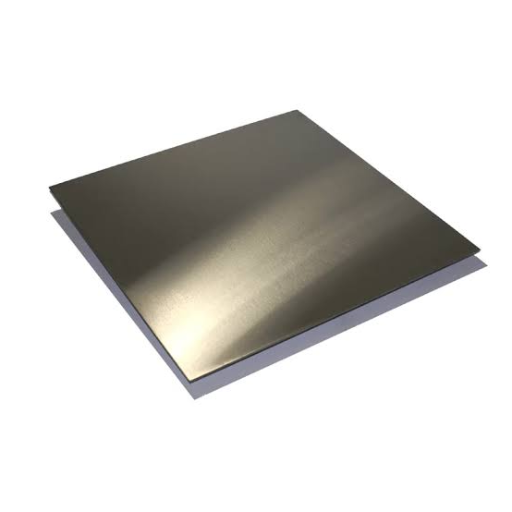
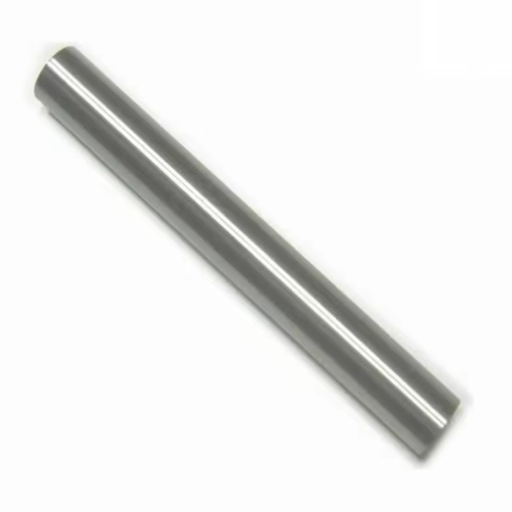
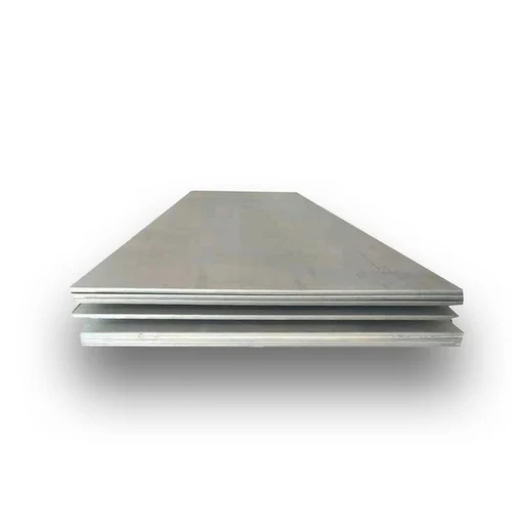
Product form. Plate, bar, seamless pipe, strip and forgings are different manufacturing routes with different yields and different mill populations. Bar is the most competitive. Seamless pipe and forgings are not.
Condition. This is the one buyers miss. Condition A ships soft. Every H condition is a separate solution-anneal-plus-age cycle, and that cycle is a cost.
Certification and testing. A 3.1 certificate is baseline. ASTM A564 sets the minimum properties for bar and shapes, and testing to it is routine. AMS 5643, transverse testing, VAR quality, or NACE MR0175 double aging each add work on top.
Quantity. Bulk heats spread setup and testing over more kilograms. A single cut length does not.
The table below shows the same nominal grade priced six different ways.
| Basis | What changed | Effect on price |
|---|---|---|
| Condition A, 3.1 cert, 5 t | Reference point | Baseline |
| H900, 3.1 cert, 5 t | One aging cycle added | Up |
| H900, AMS 5643, 5 t | Aerospace cert plus testing | Up further |
| H1150D, NACE, 5 t | Double aging plus hardness verification | Up again |
| H900, VAR, transverse tested | Remelt plus extra test orientation | Highest material tier |
| Condition A, 50 kg cut length | Setup spread over 1% of the volume | Highest per-kg of all |
Two suppliers quoting “17-4 PH” can be three rows apart on that table. Neither is overcharging.
Need a like-for-like number? Send us the form, condition, standard, and quantity, and our team will price the same basis you are comparing against. Request a technical review.
17-4 PH Price by Product Form
Prices move with the manufacturing route, not just the alloy. The ladder below gives the relative position. Treat it as structure, not as a quotation.
| Grade or condition | Bulk FOB, 1,000+ kg | Small-quantity distribution | Multiple of 304 |
|---|---|---|---|
| 304 | $2.00-2.90/kg | $6-9/kg | 1.0 |
| 316 / 316L | $2.80-3.90/kg | $8-12/kg | 1.3-1.4x |
| 17-4 PH, Condition A | $4.50-5.50/kg | $14-22/kg | 1.7-2.2x |
| 17-4 PH, aged (H900 to H1150) | add the aging premium | add the aging premium | 1.8-2.4x |
Within 17-4 PH, the form itself carries a premium over bar.
| Product form | Premium over round bar | Why |
|---|---|---|
| Round bar | Baseline | Highest volume, most mills competing |
| Plate and sheet | +5-15% | Rolling, flatness, thickness tolerance |
| Strip and wire | +20-40% | Precision rolling, narrow width |
| Seamless pipe | +25-60% | Piercing, lower volume, higher scrap |
| Forging or near-net shape | +40-100% | Tooling, low volume, extra testing |
Three caveats matter more than the numbers.
- These are indicative ranges dated October 2026, drawn from asking prices on supplier and marketplace listings. They are not transaction prices, and there is no published index for this grade the way there is for nickel or for 304 and 316 mill surcharges.
- The bulk and small-quantity columns are different markets, not a discount schedule. That gap is the single largest source of confusion in published 17-4 PH pricing.
- Thin gauge and tight tolerance sit at the top of every range. A 2 mm sheet held to a close thickness tolerance is not priced like a 20 mm plate.
When you see a 17-4 PH stainless steel price quoted without a form and a condition attached, treat it as a category label rather than a number.
The Condition Premium: Why H900 Costs More Than Condition A
This is the part no competitor prices, and it is the reason to read this page rather than a marketplace listing.
Condition A is a processing state. The steel has been solution annealed at roughly 1,038 °C and cooled. It is soft, machinable, and not meant for service. Every H condition adds a second thermal cycle that precipitates copper-rich particles and sets the final strength.
| Condition | Aging cycle | Relative processing premium | What drives it |
|---|---|---|---|
| A | None | Baseline | Solution anneal only |
| H900 | 482 °C, about 1 h | +4-8% | Short cycle, highest distortion risk |
| H925 | 496 °C, about 4 h | +5-9% | Longer hold |
| H1025 | 552 °C, about 4 h | +5-9% | Longer hold |
| H1075 | 579 °C, about 4 h | +5-9% | Longer hold |
| H1150 | 621 °C, about 4 h | +5-10% | Longer hold, best ductility |
| H1150-M | 760 °C then 621 °C | +10-18% | Two cycles |
| H1150D | 621 °C, twice | +12-20% | Two cycles plus NACE verification |
The percentages are illustrative of the structure, not market rates. No source publishes furnace cost per tonne for this grade. What is certain is that the premium exists, that it varies with cycle time, furnace load, fixturing and distortion risk, and that it appears on a quotation whether or not it is itemised.
In practice, 17-4 PH heat treatment cost is the line buyers forget to ask about. Ask whether it is included before comparing two totals.
That gives you a real make-or-buy decision.
Buy pre-aged: the mill carries the furnace, the distortion, and the re-test. You receive certified properties. You pay the premium and you wait.
Age in house: you buy Condition A at the lower price and run the cycle yourself. That works if you already have a qualified furnace, if your parts tolerate the roughly 0.05 to 0.10% shrinkage, and if you can test to the required standard afterwards.
Marcus, a toolroom manager at a pump repair shop, chose the second route to save the aging premium on a batch of 400 shafts. His furnace was not qualified for the hold tolerance, and 61 shafts came out of the first cycle outside the hardness window. Re-aging, re-testing, and scrapping the out-of-spec pieces cost more than the premium would have. The purchase order was the cheap part of the decision.
The aging procedure itself, including temperatures, hold times and cooling, belongs to our guide on 17-4 PH heat treatment.
What Moves a 17-4 PH Price: Copper, Niobium and the Aging Step
Most stainless pricing advice tells you to watch nickel. For 17-4 PH that advice is half wrong, and the reason is in the composition.
| Element | 304 | 316 | 17-4 PH |
|---|---|---|---|
| Chromium | 18-20% | 16-18% | 15.0-17.5% |
| Nickel | 8-10.5% | 10-14% | 3.0-5.0% |
| Molybdenum | None | 2.0-3.0% | 0.50% max |
| Copper | None | None | 3.0-5.0% |
| Niobium | None | None | 0.15-0.45% |
Read the nickel row again. 17-4 PH carries 3 to 5% nickel, less than half of what 304 carries and roughly a third of 316. Despite being the most expensive grade in this comparison, it is the least nickel-exposed.
Its distinctive exposure sits in two rows the austenitics do not have at all: copper at 3 to 5% and niobium at 0.15 to 0.45%. Copper is a large, liquid exchange-traded market. Niobium is a small, concentrated ferro-alloy market with thin public pricing, tracked by the USGS mineral commodity summaries.
The practical consequence is simple. When nickel spikes, 304 and 316 move first and hardest. A 17-4 PH price responds more to copper and ferro-niobium, and it does not track the 304 nickel story in lockstep. Buyers who benchmark 17-4 PH against a nickel index get surprised.
Nickel reference prices are published daily by the London Metal Exchange. Copper and niobium are not quoted on the same board, which is part of why this grade’s price is harder to forecast than an austenitic’s.
The second driver is processing. Aging is a real cost, and it is a larger share of a 17-4 PH price than any comparable step in 304 or 316. The third is volume. Fewer mills produce this grade than produce 304, so there is less competition to compress the margin.
For the nickel-and-molybdenum mechanics on the austenitic side, see our 316 vs 304 price comparison. For a duplex comparison that uses the same base-plus-surcharge logic, see duplex 2205 vs 316 cost.
17-4 PH Cost: Price per kg vs Cost per Part
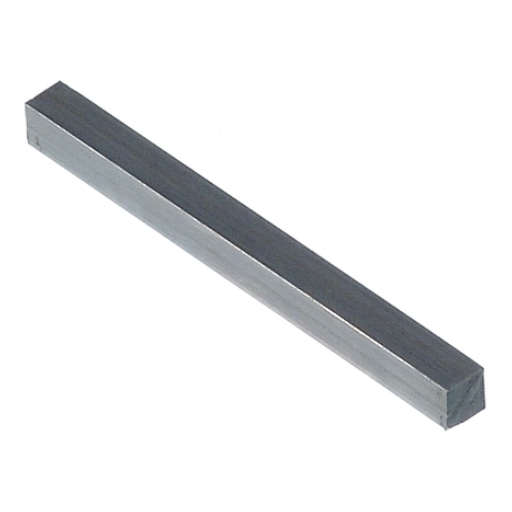
Price per kilogram is the wrong number to decide on. Cost per finished part is the right one, and on a strength-limited design the two point in opposite directions.
The arithmetic is straightforward. Take a tension member carrying 150 kN, designed to a safety factor of 1.5 on yield.
| 316 | 17-4 PH H1150 | 17-4 PH H900 | |
|---|---|---|---|
| Minimum yield | 205 MPa | 725 MPa | 1,170 MPa |
| Allowable stress | 137 MPa | 483 MPa | 780 MPa |
| Required area | 1,095 mm² | 310 mm² | 192 mm² |
| Equivalent bar diameter | 37.3 mm | 19.9 mm | 15.6 mm |
| Mass per metre | 8.74 kg | 2.43 kg | 1.49 kg |
| Material cost per metre | $27.09 | $13.12 | $8.05 |
The 17-4 PH member costs less than half as much per metre as the 316 member, even at twice the price per kilogram. The reason is that you are not buying kilograms. You are buying load capacity, and 17-4 PH delivers roughly four to six times more of it per kilogram.
Tomas, a design engineer at a conveyor manufacturer, ran this calculation on a 316 tie rod after a price increase. Redesigning in 17-4 PH H1150 at 20 mm instead of 37 mm cut the material cost by more than half and removed 6 kg from every unit.
But here is the part the marketing pages leave out. The thinner bar is not stiffer. Elastic modulus is about 196 to 200 GPa for 17-4 PH and about 193 to 200 GPa for 316, essentially identical. Axial deflection under the same 150 kN load goes from about 0.7 mm in the 316 rod to about 4 mm in the H900 rod, because the area shrank by a factor of nearly six.
If the member is deflection-limited rather than strength-limited, the thin 17-4 PH section fails on stiffness, not on strength. Buckling, minimum section rules, corrosion allowance, and machining stock can override the calculation the same way. The cost-per-part case holds when strength governs. It does not hold when stiffness, geometry, or corrosion governs.
Cost per Year of Service
The purchase is not one transaction. It is a service life, and the material line is usually the smallest number in it.
A 17-4 PH valve stem that avoids one unplanned shutdown in a chemical plant pays for its premium many times over. A 316 part that never needed the upgrade returns nothing on the extra spend. Both outcomes are decided at the specification stage, not at the quotation stage.
For the corrosion side of that calculation, see our guide to 17-4 PH corrosion resistance. For the strength data behind the table above, see 17-4 PH properties by condition.
Five Questions Before You Pay the 17-4 PH Premium
Run these before the purchase order goes out. Each one can change the answer.
1. Is the design strength-limited? If the part fails on strength, 17-4 PH is usually the cheaper answer per part. If it fails on stiffness, the modulus is unchanged and the premium buys nothing.
2. Is the duty within the temperature ceiling? Sustained service is generally limited to about 300 to 316 °C. Above that, over-aging and creep govern, and this is the wrong grade at any price.
3. Would 316 solve the problem instead? If the failure is corrosion rather than strength, the escalation is to 316 or duplex, not to 17-4 PH. See 17-4 PH vs 304 vs 316.
4. Does the part need to be non-magnetic? 17-4 PH is ferromagnetic in every condition. That disqualifies it from some assemblies regardless of cost.
5. Is the specified condition actually required? If H900 was chosen by habit rather than by calculation, H1150 or Condition A plus in-house aging may meet the duty for less.
Five questions, five ways to avoid paying for strength the part never uses.
How to Compare Two 17-4 PH Quotes
Two quotes are only comparable when eight fields match. Put all eight in the enquiry.
| Field | Why it changes the price |
|---|---|
| Product form | Bar, plate, sheet, strip, pipe, forging |
| Condition | A, H900, H1025, H1150, H1150D |
| Product standard | ASTM A564, A693, A705, AMS 5643, AMS 5622 |
| Test orientation | Longitudinal or transverse; VAR if transverse is required |
| Certification | EN 10204 3.1, or a fuller test package |
| Quantity | Heat size, cut length, or full mill quantity |
| Incoterm | FOB, CIF, or delivered |
| Scope | Is aging included? Is testing included? Is machining included? |
Then check the unit basis before you compare. The SERP for this query mixes dollars per kilogram, yuan per kilogram, dollars per pound, dollars per tonne, and dollars per piece. One Chinese marketplace results page lists 17-4 PH anywhere from ¥9 to ¥4,000 “per kg,” because forms, conditions and quantities are all mixed together. Convert everything to one unit and one basis first.
A forum answer quoted at roughly nine times the 304 price, and a bulk export quote at roughly twice it, can both be true. They describe different products sold to different buyers.
This is also where documentation earns its place in the comparison. A factory-direct structure removes distribution layers, and a 3.1 certificate with full traceability removes the risk of receiving a lot that meets the chemistry but not the condition. Those are the two things worth confirming before price becomes the deciding factor.
Send us the drawing, the condition, and the quantity and we will return a dated quotation on a stated basis, so you can compare it line for line. Request a quote, or browse our stainless steel products.
Frequently Asked Questions
How much does 17-4 PH stainless steel cost per kg?
In bulk, roughly 4.50to4.50to5.50/kg FOB for Condition A, against about 2.00to2.00to2.90/kg for 304. In small quantities from distribution, expect 14to14to22/kg. Aging, certification, and form all add to the base.
Is 17-4 PH expensive compared to 304 and 316?
Yes. The 17-4 PH vs 304 price gap runs about 1.7 to 2.2 times per kilogram in bulk, and 1.4 to 1.8 times against 316. In small quantities the multiple against 304 widens toward 3 times.
Why is 17-4 PH more expensive than 304?
Three reasons. Copper at 3 to 5% and niobium at 0.15 to 0.45% are alloying additions 304 does not carry. The grade needs a separate aging heat treatment. And fewer mills produce it, so there is less competition.
Does the heat-treatment condition change the price?
Yes, and this is the most overlooked cost item. Condition A ships soft. H900, H1025, H1150 and H1150D each add a furnace cycle, and NACE double aging adds a second one plus hardness verification.
Is it cheaper to buy 17-4 PH pre-aged or age it in-house?
Only if you have a qualified furnace, tolerance for the 0.05 to 0.10% shrinkage, and the ability to re-test. Unqualified in-house aging frequently costs more in distortion, rework, and scrap than the premium it avoided.
What is the price of 17-4 PH round bar?
Round bar is the most competitive form. The 17-4 PH price per kg for bulk FOB asks clusters around 4.50to4.50to5.50 for Condition A, with the aging premium added for H conditions. Small-quantity distribution runs far higher.
Why did two suppliers quote very different prices?
Almost always a different basis: condition, certification, test orientation, quantity, or Incoterm. Normalise all eight fields before treating the difference as a price gap.
How much does 17-4 PH cost per pound?
Divide the per-kilogram figure by 2.205. At 5.00/kgthatisabout5.00/kgthatisabout2.27/lb. Convert before comparing against any US distributor quote, which will usually be per pound.
Is 17-4 PH worth the extra cost over 316?
On a strength-limited part, often yes, because the higher yield allows a smaller section and the cost per part can fall below 316. On a stiffness-limited or corrosion-limited part, usually no. Run the calculation before assuming either way.
What is the minimum order quantity for 17-4 PH?
It varies by mill and form. Small cut lengths are available from distribution at a significant per-kilogram premium. Mill-direct quantities start at heat size, which is typically several tonnes.
Does the nickel price drive 17-4 PH pricing?
Less than buyers expect. At 3 to 5% nickel, the grade carries less than half of 304 and roughly a third of 316. Copper and ferro-niobium matter more here, alongside the aging step.
What is the scrap value of 17-4 PH?
Scrap is priced on contained alloy content, so it recovers more than 304 scrap and typically less than high-nickel grades. Treat any scrap credit as a secondary factor in the purchase decision.
Conclusion
A 17-4 PH price is six components, not one number. Base steel and surcharge, form, condition, certification, and quantity all move it, and two quotes 60% apart can both be honest.
The condition is the component most buyers miss. H900 and H1150 are different products from Condition A, produced by a furnace cycle that costs money and carries distortion risk.
Then run the arithmetic that actually decides the purchase. Cost per part, not price per kilogram, because 17-4 PH delivers four to six times the yield strength and a strength-limited part can get cheaper as the material gets dearer. And cost per year of service, because the material line is rarely the expensive part of a wrong decision.
Check stiffness before you commit. The modulus does not change with condition or with grade, and a thinner section deflects more.
Send us the drawing, the condition, and the quantity. We will price a stated basis so you can compare it against the quote already in front of you. Contact our technical team.