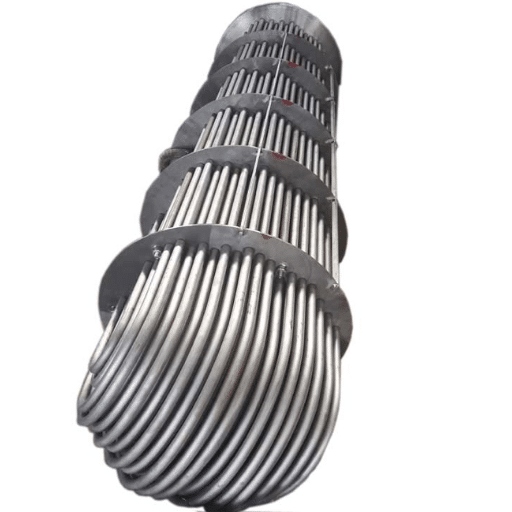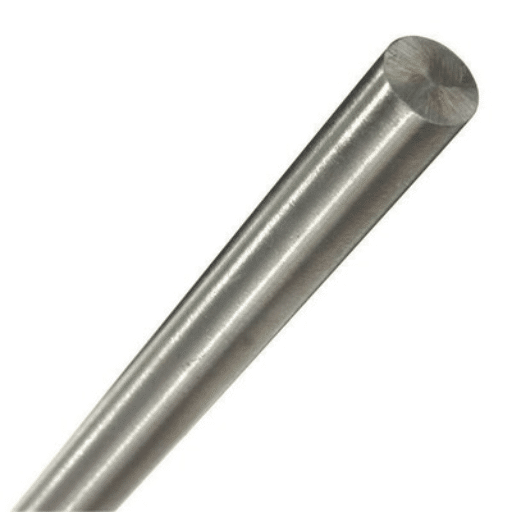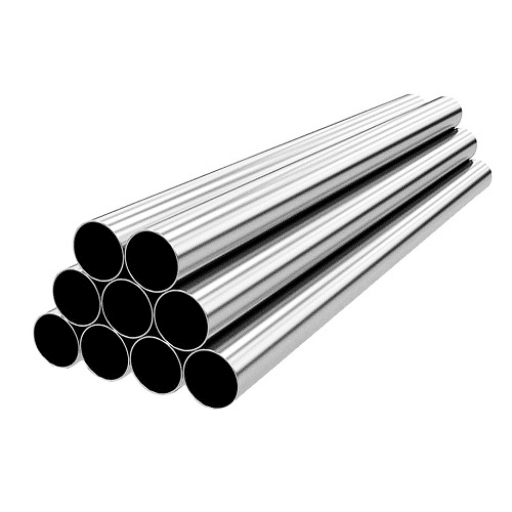
Steel pipe is a hollow cylindrical section manufactured from steel and used to transport fluids, gases, and solids across virtually every industrial sector. The global steel pipe market exceeds $178 billion annually, yet buyers still lose contracts because they ordered the wrong type, grade, or schedule for their application.
In 2024, a project manager in Lagos ordered ten kilometers of API 5L Grade B line pipe for a medium-pressure fuel distribution network. His purchase order specified the grade and the nominal size. It did not specify the manufacturing method. The supplier delivered ERW pipe. The engineering specification required seamless. When the discrepancy surfaced during third-party inspection, the contractor had to reject the entire shipment. The delay cost three weeks and forced a re-tender.
That mistake was avoidable. This guide will show you how to read steel pipe specifications, choose the right type and grade for your application, understand pipe schedules and pressure ratings, and verify delivered material against your requirements.
Key Takeaways
- Steel pipe is manufactured as seamless or welded, and the method determines pressure rating, cost, and suitable applications.
- Nominal Pipe Size (NPS) does not equal actual diameter. NPS 2 inch has an outside diameter of 60.3 mm, not 50.8 mm.
- Pipe schedule defines wall thickness. SCH 40 is standard for general service. SCH 80 handles higher pressure.
- Carbon steel pipe grades include API 5L, ASTM A53, and ASTM A106. Stainless steel pipe grades include 304, 316, and duplex 2205.
- Always specify the manufacturing method, standard, grade, schedule, and end type on your purchase order.
Browse our stainless steel pipe products or contact our technical team for project-specific guidance.
What Is Steel Pipe?

Steel pipe is a tubular product with a hollow cross-section used to convey fluids, gases, and granular solids. It is also used as a structural element in buildings, bridges, and offshore platforms. Pipe is distinguished from tube primarily by how it’s dimensioned and specified.
Nominal Pipe Size (NPS) and Diameter Nominal (DN)
Nominal Pipe Size is the North American standard for identifying pipe size. It is expressed in inches. Diameter Nominal is the European and international equivalent, expressed in millimeters.
A critical fact: NPS doesn’t equal the actual outside or inside diameter of the pipe. For example, NPS 2 inch has an outside diameter of 60.3 mm, not 50.8 mm. For NPS 14 inch and above, the NPS number does equal the outside diameter in inches. Below NPS 14, you must refer to a dimension table.
Pipe Schedule Explained
Pipe schedule is a standardized wall thickness designation. For a given NPS, the outside diameter remains constant while the wall thickness increases with the schedule number. A higher schedule means a thicker wall, which supports a higher pressure rating.
Common schedules include SCH 10, 40, 80, 120, 160, and XXS. SCH 40 is the most commonly specified schedule for general industrial service. SCH 80 is used for high-pressure applications. SCH 160 and XXS are reserved for extreme pressure and boiler service.
Types of Steel Pipe by Manufacturing Method
Steel pipe falls into two broad categories: seamless and welded. Within welded pipe, four manufacturing methods dominate the market.
Seamless Steel Pipe
Seamless pipe has no longitudinal weld seam. It is produced by piercing a solid billet to create a hollow shell, then rolling and sizing it to final dimensions. The three main processes are hot-rolled piercing, extrusion, and cold drawing.
Because seamless pipe has no weld seam, it offers uniform mechanical properties around the entire circumference. This makes it the preferred choice for high-pressure, high-temperature, and critical service applications.
Common standards for seamless pipe include ASTM A106 for high-temperature service and API 5L PSL2 for oil and gas transmission. For a detailed comparison of seamless steel pipe and welded steel pipe manufacturing methods, see our guide on seamless vs welded pipe.
ERW Steel Pipe
Electric Resistance Welded pipe is made by uncoiling flat steel strip, forming it into a cylinder, and fusing the edges using electric current and pressure. ERW is the most cost-effective method for small-to medium-diameter pipe.
ERW welded steel pipe dominates the market for diameters from 3 mm to 620 mm. It is suitable for low-to-medium pressure applications such as water lines, structural supports, and general process piping. Common standards include ASTM A53 Grade A and B, and API 5L Grade B.
LSAW Steel Pipe
Longitudinal Submerged Arc Welded pipe is produced from steel plate that is bent into shape and welded along the longitudinal seam using submerged arc welding. Two primary forming processes exist: UOE and JCOE.
UOE stands for U-forming, O-forming, and Expanding. JCOE stands for J-forming, C-forming, O-forming, and Expanding. LSAW pipe is used for large-diameter, heavy-wall applications typically from 400 mm to over 1,600 mm. Standards include API 5L and EN 10217.
SSAW Steel Pipe
Spiral Submerged Arc Welded pipe is manufactured from steel coil fed at an angle to form a spiral tube. The continuous helical weld is applied by submerged arc welding. SSAW can produce very large diameters, up to 3,660 mm.
SSAW is commonly used for water transmission lines, oil and gas gathering systems, and piling applications. Standards include API 5L and the Chinese standard SY/T5037.
DSAW Steel Pipe
Double Submerged Arc Welded pipe uses submerged arc welding on both the inside and outside of the seam. This produces a heavy-wall pipe with high structural integrity. DSAW is specified when both thick walls and large diameters are required.
When the Lagos project manager wrote his purchase order, he specified API 5L Grade B and NPS 6 inch. He assumed the supplier would know he needed seamless pipe for a fuel line. The supplier quoted ERW because it was cheaper and faster to produce. Both parties were technically correct about the grade. Both were wrong about the application fit. Seamless pipe would have handled the pressure surge during pump startup. ERW pipe carried a lower safety margin that the engineering consultant rejected.
Steel Pipe Sizes and Dimensions
Understanding pipe dimensions is essential for procurement, fabrication, and installation. The three key dimensions are outside diameter, wall thickness, and weight per unit length.
Common Pipe Sizes
| NPS | DN | OD (mm) | SCH 40 Wall (mm) | SCH 80 Wall (mm) | SCH 40 Weight (kg/m) |
|---|---|---|---|---|---|
| 1/2″ | 15 | 21.3 | 2.77 | 3.73 | 1.27 |
| 3/4″ | 20 | 26.7 | 2.87 | 3.91 | 1.69 |
| 1″ | 25 | 33.4 | 3.38 | 4.55 | 2.50 |
| 2″ | 50 | 60.3 | 3.91 | 5.54 | 5.44 |
| 3″ | 80 | 88.9 | 5.49 | 7.62 | 11.29 |
| 4″ | 100 | 114.3 | 6.02 | 8.56 | 16.07 |
| 6″ | 150 | 168.3 | 7.11 | 10.97 | 28.26 |
| 8″ | 200 | 219.1 | 8.18 | 12.70 | 42.55 |
| 10″ | 250 | 273.1 | 9.27 | 15.09 | 60.31 |
| 12″ | 300 | 323.9 | 10.31 | 17.48 | 79.73 |
How to Read a Pipe Specification
A complete pipe specification reads like this: “NPS 6 inch, SCH 40, ASTM A53 Grade B, ERW, plain ends, beveled for welding.” This single line tells the supplier the size, wall thickness, material grade, manufacturing method, and end preparation.
For detailed weight tables covering additional schedules, see our steel pipe weight chart.
Steel Pipe Grades and Standards

Steel pipe standards govern chemical composition, mechanical properties, dimensional tolerances, and testing requirements. Using the wrong standard can result in material that fails inspection or performs poorly in service.
Carbon Steel Pipe Grades
Carbon steel pipe is the most widely used type in industrial applications. API 5L is the dominant standard for line pipe used in oil and gas transmission. Grades range from A and B for general service to X42, X52, X56, X60, X65, X70, and X80 for high-strength transmission pipelines. The X-number indicates the minimum yield strength in thousands of psi. API 5L also specifies two product specification levels: PSL1 and PSL2. PSL2 includes mandatory Charpy impact testing, maximum carbon equivalent limits, and stricter inspection requirements.
ASTM A53 covers seamless and welded black and hot-dipped galvanized pipe. Grade A has lower tensile strength than Grade B. ASTM A53 is widely used for low-pressure steam, water, and gas lines.
ASTM A106 covers seamless carbon steel pipe for high-temperature service. Grades A, B, and C increase in tensile strength and carbon content. ASTM A106 Grade B is the most commonly specified grade for boiler and power plant applications.
ASTM A252 covers welded and seamless steel pipe piles. Grades 1, 2, and 3 increase in minimum yield strength. This standard is used for foundation piling and structural supports.
Stainless Steel Pipe Grades
Stainless steel pipe is specified when corrosion resistance is required. 304 and 304L are the most widely used grades. They offer good general corrosion resistance and are suitable for chemical plants, food processing, and water treatment. The L designation indicates lower carbon content for improved weldability.
316 and 316L add 2 to 3 percent molybdenum, which significantly improves resistance to pitting and crevice corrosion in chloride environments. For marine, chemical, and pharmaceutical applications, see our 316 stainless steel guide.
Duplex 2205 combines austenitic and ferritic microstructures to deliver roughly twice the yield strength of standard austenitic grades with superior resistance to stress corrosion cracking. It is specified for offshore platforms and aggressive chemical service.
For a broader overview of stainless grades, see our complete stainless steel guide.
Structural and Mechanical Grades
ASTM A500 covers cold-formed welded and seamless carbon steel structural tubing in round, square, and rectangular shapes. Grades A, B, C, and D increase in minimum yield strength.
EN 10219 covers cold-formed welded structural hollow sections of non-alloy and fine grain steels. Common grades include S235, S275, and S355, where the number indicates the minimum yield strength in megapascals.
Standards Compared: API, ASTM, EN, JIS, and GB/T
A German engineering firm ordered carbon steel pipe from a Chinese mill for a water treatment plant in Southeast Asia. The purchase order specified ASTM A53 Grade B, SCH 40, NPS 4 inch. The Chinese mill produced to GB/T 3091, which is the Chinese standard for welded steel pipe. GB/T 3091 permits a slightly wider tolerance on wall thickness and does not require the same hydrostatic test pressure as ASTM A53. When the pipe arrived, the wall thickness at several points measured below the ASTM A53 minimum. The pipe was technically within GB/T 3091 tolerance but outside the project specification. The argument delayed the project by two weeks.
| Standard | Region | Scope | Typical Grades |
|---|---|---|---|
| API 5L | International | Oil and gas line pipe | A, B, X42-X80 |
| ASTM A53 | USA | General-purpose welded and seamless | Grade A, Grade B |
| ASTM A106 | USA | High-temperature seamless | Grade A, B, C |
| ASTM A252 | USA | Pipe piles | Gr. 1, 2, 3 |
| EN 10217 | Europe | Pressure-bearing welded | P235, P265, P355 |
| EN 10255 | Europe | Non-alloy steel tubes | S195T, S235T |
| EN 10219 | Europe | Structural hollow sections | S235, S275, S355 |
| JIS G3454 | Japan | Pressure service carbon steel | STPG 370, STPG 410 |
| JIS G3455 | Japan | High-pressure service | STS 370, STS 410 |
| GB/T 8163 | China | Seamless steel pipe for fluid | 10, 20, Q345 |
| GB/T 3091 | China | Welded steel pipe for low pressure | Q195, Q215, Q235 |
| SY/T5037 | China | Spiral submerged arc welded | Q235B, Q345B |
Pipe Schedule and Pressure Rating
Pipe schedule is not a pressure rating itself. It is a standardized wall thickness designation. However, for a given NPS and material grade, a higher schedule directly translates to a higher allowable working pressure.
Schedule Selection Guide
Steel pipe schedules range from thin-wall to extra-heavy. SCH 10 and SCH 10S are thin-wall schedules used for low-pressure applications where weight savings matter. SCH 10S is the stainless steel variant.
SCH 40, also called standard weight, is the default schedule for most industrial piping. It balances cost, weight, and pressure capacity. A NPS 6 inch SCH 40 carbon steel pipe has a wall thickness of 7.11 mm.
SCH 80, also called extra strong, is used for high-pressure service. The same NPS 6 inch pipe in SCH 80 has a wall thickness of 10.97 mm. That is a 54 percent increase in wall thickness and a significantly higher pressure rating.
SCH 120, SCH 160, and XXS are heavy-wall schedules for extreme pressure, boiler service, and high-temperature applications.
For a detailed comparison of schedules and pressure ratings, see our schedule 40 vs schedule 80 pipe guide.
Steel Pipe Applications by Industry

Steel pipe serves virtually every industrial sector. The application determines the material grade, manufacturing method, and required standard.
Oil and Gas
Transmission pipelines use API 5L X52 through X70 seamless or LSAW pipe. Gathering lines and flowlines use API 5L Grade B ERW pipe. Drill pipe and casing use API 5DP and API 5CT specifications.
Water and Sewage
Water distribution systems use ASTM A53 or EN 10255 carbon steel pipe, often hot-dip galvanized for corrosion protection. Large-diameter transmission mains use LSAW or SSAW pipe.
Construction and Infrastructure
Structural hollow sections use ASTM A500 or EN 10219 grades. Foundation piling uses ASTM A252 pipe piles. Scaffolding uses BS 1139 or EN 39 tubulars.
Power Generation
Boiler tubes and steam lines use ASTM A106 Grade B or C seamless pipe. Heat exchangers use ASTM A179 or A192 for carbon steel, or ASTM A213 for alloy and stainless grades.
Marine and Offshore
Subsea pipelines use API 5L X65 or X70 PSL2 seamless pipe with sour service compliance. Platform structures use duplex 2205 or super duplex stainless steel pipe for resistance to seawater corrosion.
Steel Pipe Selection: A Procurement Framework
Selecting the right steel pipe requires matching service conditions to material properties, manufacturing methods, and dimensional requirements. Use this six-step framework for every procurement decision.
Step 1: Define Service Conditions
Start with the fluid, temperature, pressure, and environmental exposure. A water line at ambient temperature and 150 psi requires a different pipe than a steam line at 400 degrees Celsius and 1,000 psi.
Step 2: Select the Manufacturing Method
Choose seamless pipe for high-pressure, high-temperature, or critical service where weld integrity cannot be risked. Choose ERW pipe for general-purpose, low-to-medium pressure applications where cost is a primary concern. Choose LSAW or SSAW for large-diameter infrastructure pipelines.
Step 3: Specify the Grade and Standard
Match the grade to the application. API 5L Grade B for general oil and gas lines. ASTM A106 Grade B for boiler service. ASTM A53 Grade B for water and air lines. Name the standard explicitly on the purchase order.
Step 4: Choose the Schedule and Wall Thickness
Calculate the required wall thickness from the design pressure, or select a standard schedule that meets or exceeds it. Add a corrosion allowance for systems handling corrosive fluids or for buried pipe.
Step 5: Specify End Type and Length
Plain ends are standard and require welding or flanging. Beveled ends are prepared for butt welding. Threaded ends connect to fittings. Grooved ends connect with mechanical couplings.
Standard pipe lengths are single random (4.8 to 6.7 meters), double random (6.7 to 13.4 meters), or cut-to-length. Longer lengths reduce the number of field welds but may increase shipping costs.
Step 6: Verify on Delivery
Check the outside diameter, wall thickness, and hydrostatic test results on the Mill Test Certificate. Measure wall thickness with an ultrasonic gauge at multiple points. Confirm the grade and heat number match the MTC.
When an Australian importer received a shipment of NPS 8 inch ASTM A53 Grade B pipe for a mine water supply, he checked the wall thickness at five random points with a digital ultrasonic thickness gauge. One pipe measured 7.8 mm against the SCH 40 specification of 8.18 mm. He checked the MTC and found the heat number did not match the marking on the pipe. The supplier had mixed two heats during bundling. Catching the error before installation saved a costly shutdown and re-order.
Request a quote for steel pipe with full certification, custom dimensions, and standard-compliant tolerances.
Coatings, Linings, and Corrosion Protection
Bare carbon steel pipe corrodes in most environments. Specifying the right protective coating for your steel pipe extends service life and reduces lifecycle cost. Specifying the right protective coating extends service life and reduces lifecycle cost.
Hot-Dip Galvanizing
Zinc coating applied by dipping the pipe in molten zinc. Provides sacrificial corrosion protection for atmospheric and mild soil exposure. Common for water lines, fence posts, and structural applications.
Fusion Bonded Epoxy
A thermosetting powder coating applied electrostatically and cured with heat. FBE provides excellent adhesion and corrosion resistance for buried and submerged pipelines.
Three-Layer Polyethylene
A multi-layer coating system consisting of an FBE primer, a copolymer adhesive, and a polyethylene topcoat. 3LPE is the standard for buried oil and gas transmission pipelines.
Cement Mortar Lining
A internal lining of cement mortar used for water transmission pipe. It prevents tuberculation and maintains flow capacity over decades of service.
Common Steel Pipe Procurement Mistakes
Even experienced buyers make these errors. Avoiding them will save time, money, and contractual disputes.
1. Confusing NPS with Actual Diameter
NPS 2 inch does not mean 50.8 mm outside diameter. It means 60.3 mm OD. Always verify the actual OD and wall thickness from a dimension table.
2. Ordering by Nominal Size Without Specifying Schedule
A NPS 6 inch pipe can be SCH 10, SCH 40, SCH 80, or SCH 160. The schedule determines pressure rating and weight. Specify the schedule on every order.
3. Ignoring Manufacturing Method
API 5L Grade B can be produced as seamless or ERW. The pressure rating, safety margin, and cost differ significantly. Name the manufacturing method on the purchase order.
4. Assuming All Suppliers Use the Same Tolerance Standard
A Chinese mill may follow GB/T tolerances. A European mill may follow EN tolerances. An American mill follows ASTM tolerances. Always name the standard and tolerance table.
5. Neglecting Coating Specifications for Buried or Marine Pipe
Bare carbon steel in soil or seawater will corrode within years. Specify FBE, 3LPE, galvanizing, or cement mortar lining based on the environment.
6. Failing to Verify Hydrostatic Test Certificates
Every pipe should be hydrostatically tested during manufacturing. The test pressure and result should appear on the MTC. Verify this before accepting delivery.
For more on material selection, see our stainless steel vs carbon steel comparison.
Frequently Asked Questions
What is the difference between pipe and tube?
Pipe is dimensioned by Nominal Pipe Size and schedule. Tube is dimensioned by exact outside diameter and wall thickness. Pipe is used for fluid transport and pressure service. Tube is used for structural and mechanical applications.
What does NPS mean in pipe sizing?
NPS stands for Nominal Pipe Size. It is a North American standard designation. NPS does not equal the actual outside diameter for sizes below NPS 14. For example, NPS 2 inch has an OD of 60.3 mm.
Which is stronger, seamless or welded pipe?
Seamless pipe has no weld seam, so it offers uniform strength around the entire circumference. This makes it stronger and more reliable for high-pressure and high-temperature service. Welded pipe is adequate for most general-purpose applications at lower cost.
What grade of steel pipe is used for oil and gas?
API 5L is the standard grade system for oil and gas line pipe. Grades include B, X42, X52, X56, X60, X65, X70, and X80. The X-number indicates minimum yield strength in thousands of psi.
How do I calculate pipe weight?
Pipe weight per meter can be calculated using the formula: Weight (kg/m) = (OD – Wall Thickness) x Wall Thickness x 0.02466 for carbon steel. For stainless steel, use a density factor of 0.025. For exact values, see our steel pipe weight chart.
What is the difference between ASTM A53 and A106?
ASTM A53 covers seamless and welded pipe for general service. ASTM A106 covers seamless pipe only for high-temperature service. A106 has stricter chemical composition and mechanical property requirements.
What does API 5L PSL1 vs PSL2 mean?
PSL stands for Product Specification Level. PSL1 is the standard quality level with basic chemical and mechanical requirements. PSL2 adds mandatory impact testing, maximum carbon equivalent limits, and stricter non-destructive inspection.
How long is a standard steel pipe?
Standard lengths are single random (4.8 to 6.7 meters) and double random (6.7 to 13.4 meters). Cut-to-length pipe can be supplied to specific project requirements. Longer lengths reduce field welding but may increase shipping costs.
What is the most common pipe schedule?
SCH 40, also called standard weight, is the most commonly specified pipe schedule. It is used for general industrial water, air, and process lines. SCH 40 offers a practical balance of pressure capacity, weight, and cost.
How do I specify steel pipe in an international RFQ?
Write the specification like this: “NPS 6 inch, SCH 40, ASTM A53 Grade B, ERW, plain ends, single random length, beveled for welding, quantity 500 meters.” Include the standard, grade, manufacturing method, schedule, end type, length, and any coating requirements.
Conclusion
Steel pipe is one of the most important industrial products in the world. The global market exceeds $178 billion because pipe is essential for oil and gas, water, construction, power generation, and marine infrastructure. Yet the same ubiquity creates risk. A buyer who specifies only the grade and nominal size risks receiving material that is technically correct but functionally wrong.
The safest approach is to specify completely. Name the standard. Name the grade. Name the manufacturing method. Name the schedule. Name the end type. Verify the Mill Test Certificate. Measure the delivered dimensions. These steps take minutes. They save weeks.
If you need carbon steel pipe, stainless steel pipe, or alloy pipe for your next project, contact LIANYUNGANG DAPU METAL CO., LTD. We supply seamless, ERW, LSAW, and SSAW pipe in standard and custom specifications with full Mill Test Certificates, API and ASTM compliance, and global delivery from our facility near Shanghai Port.