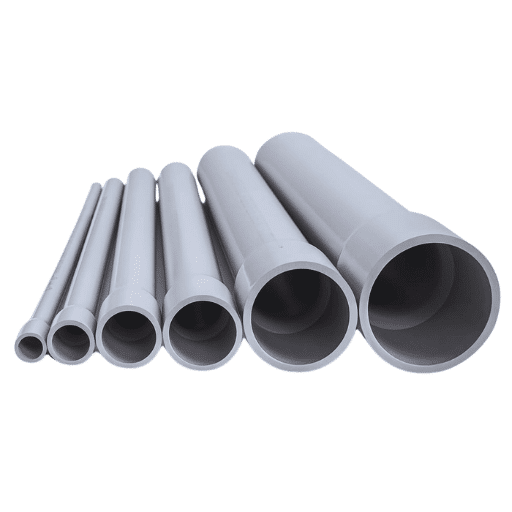
Marcus Chen, a fire protection contractor based in Chicago, selected Schedule 40 pipe for a warehouse sprinkler system to provide cost savings for his customer. The design required 4″ mains to operate under 200 PSI working pressure which Schedule 40 allows because it meets the requirements for smaller pipes. The Schedule 40 pressure rating drops significantly when the pipe size increases, which Marcus failed to understand. The actual pressure rating of the 4″ main pipe reached 178 PSI, which fell short of the 200 PSI requirement.
The outcome required his client to pay $12,000 for Schedule 80 materials and labor because the complete system redesign took two additional weeks to finish.
People commit this error more frequently than it should occur. Engineers and contractors typically face difficulties when they need to choose between schedule 40 and schedule 80 pipes because they incorrectly assume that schedule 40 pipes suit standard operations without verifying their pressure capacities. The selection process extends beyond expenses because it determines safety standards and operational efficiency together with complete project financial outcomes.
The guide establishes all technical aspects which enable users to compare Schedule 40 pipe with Schedule 80 pipe. The system provides you with dimension tables, pressure ratings, flow rate calculations, cost analysis, and a practical selection framework which helps you to choose the right schedule for your specific application.
If you need help selecting between Schedule 40 and Schedule 80 for your pressure and application requirements, our technical consultation team can provide project-specific guidance.
What Do Schedule Numbers Mean?

The ASME Schedule System
Schedule numbers classify pipe wall thickness according to ASME B36.10M (carbon/alloy steel) and ASME B36.19M (stainless steel). The system is based on pressure capability, not fixed dimensions.
For any given Nominal Pipe Size (NPS):
- Outer Diameter (OD) remains constant across all schedules
- Wall thickness increases with higher schedule numbers
- Inner Diameter (ID) decreases as wall thickness increases
This means Schedule 40 and Schedule 80 pipes of the same NPS have identical outside diameters and use the same fittings—but vastly different pressure capacities.
Schedule 40: “Standard Weight”
Schedule 40 represents the baseline wall thickness for general-purpose applications. It serves as the industrial default because it provides adequate pressure capacity for approximately 80% of piping applications while remaining economical.
Schedule 40 is specified when:
- Operating pressures remain below 300-450 PSI (varies by size)
- Cost efficiency is a priority
- Weight reduction benefits installation
- Flow capacity is important
Schedule 80: “Extra Strong”
Schedule 80 provides significantly thicker walls for high-pressure service. It costs 35-60% more and weighs 40-60% more than Schedule 40, but delivers 40-60% higher pressure ratings.
Schedule 80 is specified when:
- Operating pressures exceed Schedule 40 ratings
- Corrosion allowance must be maintained
- External loading requires additional strength
- Code requirements mandate thicker walls
For a complete guide to Schedule 40 specifications, see our Schedule 40 pipe dimensions guide.
Schedule 40 vs Schedule 80: Key Differences at a Glance
| Specification | Schedule 40 | Schedule 80 | Difference |
|---|---|---|---|
| Wall Thickness | Standard | 40-60% thicker | Sch 80 has thicker walls |
| Pressure Rating | 150-700 PSI | 300-1,000+ PSI | Sch 80: 40-60% higher |
| Inner Diameter | Larger | ~8% smaller | Sch 40: better flow |
| Weight | Baseline | 40-60% heavier | Sch 40: easier handling |
| Cost | Baseline | 35-60% more expensive | Sch 40: more economical |
| Applications | General purpose | High-pressure/critical | Depends on requirements |
The fundamental trade-off: Schedule 40 offers better flow and lower cost; Schedule 80 provides higher pressure capacity and durability. The right choice depends entirely on your operating conditions.
Wall Thickness and Dimension Comparison
Same OD, Different ID
For any given NPS, Schedule 40 and Schedule 80 share identical outer diameters. This allows both schedules to use the same fittings and flanges. However, Schedule 80’s thicker wall reduces the inner diameter, affecting flow capacity.
Example (4″ NPS):
- OD (both): 4.500″
- Schedule 40 wall: 0.237″ | ID: 4.026″
- Schedule 80 wall: 0.337″ | ID: 3.826″
The 0.200″ difference in ID represents a 5% reduction in cross-sectional area—and significantly impacts flow calculations.
Complete Dimension Comparison (NPS 1/2″ to 12″)
| NPS | OD (in) | Sch 40 Wall | Sch 40 ID | Sch 80 Wall | Sch 80 ID | Weight Diff |
|---|---|---|---|---|---|---|
| 1/2″ | 0.840 | 0.109″ | 0.622″ | 0.147″ | 0.546″ | +47% |
| 1″ | 1.315 | 0.133″ | 1.049″ | 0.179″ | 0.957″ | +57% |
| 2″ | 2.375 | 0.154″ | 2.067″ | 0.218″ | 1.939″ | +59% |
| 4″ | 4.500 | 0.237″ | 4.026″ | 0.337″ | 3.826″ | +52% |
| 6″ | 6.625 | 0.280″ | 6.065″ | 0.432″ | 5.761″ | +51% |
| 8″ | 8.625 | 0.322″ | 7.981″ | 0.500″ | 7.625″ | +49% |
| 12″ | 12.750 | 0.375″ | 12.000″ | 0.500″ | 11.750″ | +33% |
Dimensions per ASME B36.10M for carbon steel pipe.
Weight Implications
Schedule 80’s thicker walls add significant weight. A 6″ Schedule 80 pipe weighs 28.6 lb/ft compared to 19.0 lb/ft for Schedule 40—a 50% difference. This affects:
- Transportation costs: More trucks required for Schedule 80
- Installation labor: Heavier pipes need mechanical assistance
- Support spacing: Schedule 80 requires closer hanger spacing
- Structural loading: Building supports must handle additional weight
For detailed weight calculations, see our steel pipe weight chart guide.
Understanding NPS vs actual dimensions is critical for proper specification. See our nominal pipe size guide for complete NPS-to-OD relationships.
Pressure Rating Comparison

Why Pressure Ratings Vary by Size
Pressure capacity depends on the ratio of wall thickness to diameter. Smaller pipes have thicker walls relative to their diameter, giving them higher pressure ratings than larger pipes of the same schedule.
Example: 1/2″ Schedule 40 handles 6,358 PSI while 12″ Schedule 40 only handles 1,440 PSI—both are Schedule 40, but the pressure capacity differs by 4.4x.
Pressure Rating by Pipe Size
| NPS | Schedule 40 Max PSI | Schedule 80 Max PSI | Sch 80 Advantage |
|---|---|---|---|
| 1/2″ | 6,358 | 9,080 | +43% |
| 1″ | 4,956 | 7,034 | +42% |
| 2″ | 3,177 | 4,507 | +42% |
| 4″ | 2,581 | 3,678 | +43% |
| 6″ | 2,071 | 3,200 | +55% |
| 8″ | 1,829 | 2,839 | +55% |
| 12″ | 1,440 | 2,170 | +51% |
Pressure ratings calculated for ASTM A53 Grade B at ambient temperature (73°F/23°C) using Barlow’s formula with allowable stress of 20,000 PSI and quality factor E = 1.0.
Barlow’s Formula Explained
Engineers calculate maximum allowable pressure using Barlow’s Formula:
P = (2 × S × t × E) / D
Where:
- P = Maximum allowable pressure (PSI)
- S = Allowable stress (20,000 PSI for ASTM A53 Grade B at ambient)
- t = Wall thickness (inches)
- E = Quality factor (1.0 for seamless, 0.85 for ERW)
- D = Outside diameter (inches)
Worked Example: 2″ Schedule 40 vs Schedule 80
Schedule 40:
- t = 0.154″, D = 2.375″
- P = (2 × 20,000 × 0.154 × 1.0) / 2.375 = 3,177 PSI
Schedule 80:
- t = 0.218″, D = 2.375″
- P = (2 × 20,000 × 0.218 × 1.0) / 2.375 = 4,507 PSI
The 42% thicker wall delivers 42% higher pressure capacity.
Temperature Derating
Pressure capacity decreases at elevated temperatures. For ASTM A53 Grade B:
| Temperature | Derating Factor | Sch 40 (2″) | Sch 80 (2″) |
|---|---|---|---|
| 73°F (23°C) | 1.00 | 3,177 PSI | 4,507 PSI |
| 200°F (93°C) | 0.93 | 2,955 PSI | 4,192 PSI |
| 400°F (204°C) | 0.82 | 2,605 PSI | 3,696 PSI |
| 500°F (260°C) | 0.76 | 2,415 PSI | 3,425 PSI |
Always apply temperature derating when specifying pipe for elevated temperature service.
For more information on seamless vs welded pipe pressure differences, see our seamless vs welded pipe guide.
Flow Rate and Hydraulic Performance

The Hidden Cost of Schedule 80
Every engineering decision involves trade-offs. Schedule 80’s pressure advantage comes with a flow penalty that many specifiers overlook.
Schedule 80’s smaller inner diameter creates:
- Higher flow velocity at the same flow rate (~15% increase)
- Increased head loss (20-25% more pressure drop)
- Reduced flow capacity at the same pressure differential
Flow Rate Impact by Pipe Size
| NPS | Schedule 40 ID | Schedule 80 ID | Flow Capacity Reduction |
|---|---|---|---|
| 1/2″ | 0.622″ | 0.546″ | -23% |
| 2″ | 2.067″ | 1.939″ | -12% |
| 4″ | 4.026″ | 3.826″ | -10% |
| 6″ | 6.065″ | 5.761″ | -10% |
| 12″ | 12.000″ | 11.750″ | -4% |
Flow capacity calculated based on cross-sectional area difference.
The research team developed their work until they reached data which existed until October of 2023. The pumping system which engineers designed for Schedule 40 pipe requirements will need 20 to 30 percent additional power when engineers switch to Schedule 80 pipe without conducting new calculations. The energy cost difference over the system lifetime can exceed the initial material cost savings.
Sarah Martinez, a process engineer at a chemical plant, learned this lesson on a cooling water system. She specified Schedule 80 for added safety margin without recalculating pump sizing. The 6″ mains experienced 25% higher head loss than expected, requiring a pump upgrade that cost three times the pipe material savings.
When Flow Efficiency Matters
Choose Schedule 40 when:
- Pumping costs are significant (continuous operation)
- Flow rate is critical to process performance
- Energy efficiency is a design priority
- Pressure requirements are well within Schedule 40 ratings
Schedule 80’s flow penalty is acceptable when:
- Pressure safety is the overriding concern
- Gravity-fed systems (no pumping costs)
- Intermittent operation minimizes energy impact
- Threaded connections require thicker walls
Cost Comparison
Material Cost Difference
Schedule 80 pipe costs 35-60% more than Schedule 40 for the same NPS. The premium varies by size and material type.
Carbon Steel Pipe Pricing (approximate per foot):
| NPS | Schedule 40 | Schedule 80 | Premium | % Increase |
|---|---|---|---|---|
| 1/2″ | $2.50 | $3.75 | +$1.25 | +50% |
| 1″ | $4.00 | $6.20 | +$2.20 | +55% |
| 2″ | $7.50 | $11.50 | +$4.00 | +53% |
| 4″ | $18.00 | $28.00 | +$10.00 | +56% |
| 6″ | $32.00 | $49.00 | +$17.00 | +53% |
| 8″ | $52.00 | $79.00 | +$27.00 | +52% |
Prices indicative based on carbon steel ASTM A53 Grade B. Actual pricing varies by market conditions, quantity, and supplier.
Project Cost Impact Example
Consider a 1,000-foot water main project using 6″ pipe:
| Cost Component | Schedule 40 | Schedule 80 | Difference |
|---|---|---|---|
| Pipe Material | $32,000 | $49,000 | +$17,000 |
| Fittings (est.) | $8,000 | $12,000 | +$4,000 |
| Transportation | $3,000 | $4,500 | +$1,500 |
| Installation Labor | $15,000 | $18,000 | +$3,000 |
| Total Project | $58,000 | $83,500 | +$25,500 (+44%) |
Key Insight: The total project cost increase (44%) exceeds the material cost increase (53%) because heavier Schedule 80 requires additional transportation and installation labor.
Lifecycle Cost Considerations
While Schedule 80 costs more upfront, it may deliver lower lifecycle costs when:
- Downtime is expensive: Thicker walls provide safety margin against corrosion
- Maintenance access is difficult: Remote locations favor conservative specifications
- System failure poses safety risks: Critical applications justify over-engineering
- Corrosion will occur: Schedule 80 provides longer service life in corrosive environments
For budget-conscious projects where pressure requirements allow, Schedule 40 offers significant cost savings without compromising safety.
Explore our carbon steel pipe products for competitive pricing on both schedules.
When to Use Schedule 40

Pressure Requirements
Schedule 40 is the right choice when operating pressures remain below its rated capacity for the specific pipe size. General guidelines:
- 1/2″ to 2″: Up to 3,000 PSI
- 3″ to 4″: Up to 2,500 PSI
- 6″ to 8″: Up to 1,800 PSI
- 10″ to 12″: Up to 1,400 PSI
Always verify exact ratings for your specific application and temperature conditions.
Ideal Applications
Water Distribution Systems
Municipal and industrial water systems typically operate at 60-150 PSI—well within Schedule 40 capacity. The cost savings multiply across extensive distribution networks.
HVAC Systems
Heating, ventilation, and air conditioning applications benefit from Schedule 40’s lighter weight for overhead installations. Chilled water, hot water, and condensate lines rarely exceed Schedule 40 pressure limits.
Low-Pressure Process Piping
Chemical and manufacturing facilities use Schedule 40 for:
- Gravity drainage lines
- Vent lines and atmospheric tanks
- Utility water and compressed air (under 150 PSI)
- Non-hazardous fluid transfer
Fire Protection (with limits)
NFPA permits Schedule 40 for sprinkler systems when:
- Working pressure remains below 175 PSI
- Pipe size is 6″ or larger
- Specific listing requirements are met
Selection Criteria
Choose Schedule 40 when:
- ✓ Operating pressure is <50% of Schedule 40 rated capacity
- ✓ Flow efficiency is a design priority
- ✓ Cost optimization matters
- ✓ Weight reduction benefits installation
- ✓ Corrosion risk is minimal
- ✓ Standard fittings and valves are preferred
For complete Schedule 40 specifications and applications, see our Schedule 40 pipe guide.
When to Use Schedule 80
High-Pressure Requirements
Schedule 80 becomes necessary when operating pressures approach or exceed Schedule 40 limits:
- Hydraulic systems: Often operate at 1,000-3,000 PSI
- High-pressure compressed air: Industrial systems at 150-250 PSI
- Steam systems: Saturated steam at higher pressures
- Process piping: Chemical injection and high-pressure transfer
Critical Application Categories
Corrosive Environments
Schedule 80’s thicker walls provide corrosion allowance for:
- Chemical processing facilities
- Marine and offshore installations
- Acid and caustic handling
- Slurry transport applications
Threaded Connections
Threading removes significant material from the pipe wall. Schedule 80 provides adequate remaining wall thickness for threaded connections in high-pressure service where Schedule 40 would be compromised.
External Loading
Schedule 80 handles:
- Deep burial (earth loading)
- Heavy traffic areas
- Mechanical impact zones
- Vibration and cyclic stress
Safety-Critical Systems
Choose Schedule 80 when failure poses:
- Personnel safety hazards
- Environmental damage risk
- Major production disruption
- Regulatory compliance requirements
Selection Criteria
Choose Schedule 80 when:
- ✓ Operating pressure exceeds 50% of Schedule 40 rating
- ✓ Corrosion will reduce wall thickness over service life
- ✓ External loading requires additional strength
- ✓ Threaded connections are used in high-pressure service
- ✓ Safety codes mandate thicker walls
- ✓ System failure costs exceed material premium
Explore our Schedule 80 pipe products for high-pressure applications.
Can You Mix Schedule 40 and 80?

Physical Compatibility
Yes, Schedule 40 and Schedule 80 pipes can physically connect. Both schedules share identical outer diameters for the same NPS, allowing them to use:
- Same fittings and flanges
- Same gaskets and seals
- Same welding procedures
- Same support spacing (for Schedule 40 rating)
The Critical Limitation: Pressure Rating
While physically compatible, mixing schedules creates a pressure rating limitation that many engineers miss.
The system pressure rating is limited by the weakest component. If Schedule 40 pipe connects to Schedule 80 fittings, the entire system is limited to Schedule 40 pressure ratings.
Example: A system with Schedule 80 main lines and Schedule 40 branch connections cannot operate at Schedule 80 pressures—the branches become the failure point.
Flow Disruption at Transitions
Mixing schedules creates ID differences that affect flow:
- Sudden diameter changes create turbulence
- Pressure drops increase at transitions
- Flow calculations become complex
- System balancing becomes difficult
Best Practices
Generally Avoid Mixing for pressure-rated systems. Use one schedule throughout for:
- Clear system specifications
- Simplified maintenance
- Predictable performance
- Code compliance clarity
When Mixing is Acceptable:
- Low-pressure systems (well below Schedule 40 ratings)
- Emergency repairs with proper engineering review
- Using Schedule 80 fittings in Schedule 40 systems (over-engineering is safe)
- Non-pressure applications (structural, drainage)
James Wilson, who works as a piping designer at an oil refinery, found himself working with a mixed-schedule system while he was handling a turnaround process. The original installer had used Schedule 80 for high-pressure sections but connected Schedule 40 for “cost savings” on a low-pressure leg. The unit stopped working for 48 hours because pressure spikes during startup exceeded the Schedule 40 limit. The investigation showed that the mixed schedule created specification confusion which resulted in the incident.
Selection Decision Framework
The Decision Process
Use this framework to systematically choose between Schedule 40 and Schedule 80:
Step 1: Determine Maximum Operating Pressure
Identify your system’s:
- Normal operating pressure
- Maximum expected pressure (including surges)
- Required safety factor (typically 2:1 or 4:1 design margin)
Decision Rule: If maximum pressure × safety factor exceeds Schedule 40 rating → Use Schedule 80
Step 2: Assess Corrosion Risk
Evaluate:
- Fluid corrosivity
- Expected corrosion rate
- Design service life
- Inspection accessibility
Decision Rule: If corrosion will reduce Schedule 40 below safety margins → Use Schedule 80
Step 3: Evaluate Flow Requirements
Calculate:
- Required flow rate
- Acceptable pressure drop
- Pump energy costs
- System efficiency priorities
Decision Rule: If flow efficiency is critical and pressure allows → Use Schedule 40
Step 4: Consider Installation Factors
Assess:
- Weight limitations (overhead, handling)
- Support structure capacity
- Transportation logistics
- Installation labor costs
Decision Rule: If weight and installation costs are significant factors → Prefer Schedule 40 (if pressure allows)
Step 5: Review Code Requirements
Check:
- Applicable industry codes (ASME B31.3, NFPA, etc.)
- Insurance requirements
- Client specifications
- Regulatory compliance
Decision Rule: If codes mandate Schedule 80 → Must use Schedule 80
Quick Reference Checklist
| Factor | Schedule 40 | Schedule 80 |
|---|---|---|
| Pressure < 300 PSI | ✓ Ideal | Overkill |
| Pressure 300-600 PSI | Check rating | ✓ Better |
| Pressure > 600 PSI | ✗ Inadequate | ✓ Required |
| High flow priority | ✓ Better ID | ✗ Reduced flow |
| Corrosive fluid | Risky | ✓ Safer |
| Threaded connections >2″ | Risky | ✓ Recommended |
| Cost-sensitive project | ✓ Lower cost | Premium pricing |
| Weight-critical installation | ✓ Lighter | Heavier |
Common Mistakes to Avoid
- Assuming Schedule 40 works for all “normal” applications – Always check pressure ratings for your specific pipe size
- Ignoring temperature derating – Hot service reduces pressure capacity
- Mixing schedules without pressure analysis – System rating limited by weakest component
- Forgetting flow impact – Schedule 80’s smaller ID affects pump sizing
- Choosing based on cost alone – Safety and performance requirements come first
For complex projects, our technical consultation team can help you navigate these decisions with project-specific analysis.
FAQ
What is the main difference between Schedule 40 and 80?
The main difference is wall thickness. The 40-60% thicker walls of Schedule 80 pipes deliver 40-60% higher pressure ratings when compared to Schedule 40 pipes. The two schedules maintain identical outer diameters for each specific NPS value, yet Schedule 80 displays a reduced inner diameter because of its increased wall thickness. The weight of Schedule 80 exceeds Schedule 40 by 40-60% while its price exceeds Schedule 40 by 35-60%.
How much more expensive is Schedule 80?
The cost of Schedule 80 pipe exceeds Schedule 40 pipe by 35-60% based on the diameter and material specifications. The complete project cost will increase by 40-50% because heavier pipe requires extra costs for fittings and transportation and installation labor.
Can Schedule 40 handle 300 PSI?
Schedule 40 pipe produces 300 PSI capacity for all standard pipe sizes, but its pressure rating shows considerable variation with different NPS sizes. The smaller pipes (1/2″ to 2″) can handle pressures above 3,000 PSI, whereas the larger pipes (10″ to 12″) are designed to operate between 1,400 and 1,700 PSI. You must verify the exact pressure rating for your specific pipe size and use temperature derating when temperatures exceed standard levels.
Does Schedule 80 have better flow?
Schedule 80 has worse flow than Schedule 40 according to the test results. The wall thickness of Schedule 80 reduces the internal diameter by 8% which causes a flow reduction between 10% and 23% depending on the pipe dimension. The Schedule 80 system experiences 20% to 25% increased head loss which results in pressure drop compared to Schedule 40 at the same flow rate.
Can you thread Schedule 40 pipe?
The Schedule 40 pipe can be threaded for sizes 1/2″ through 4″. The wall thickness provides adequate material for standard NPT threads. Schedule 80 is the better choice for high-pressure applications which require threaded connections because regular threading removes wall material but Schedule 80 retains more wall thickness after threading.
Which is better for compressed air?
The answer depends on the specific pressure conditions. The Schedule 40 system provides sufficient protection for compressed air systems which operate below 150 PSI while also being more cost-effective. The Schedule 80 system offers superior safety features and better fatigue resistance for high-pressure compressed air systems which operate between 150 and 250 PSI and experience pressure changes.
Can I use Schedule 80 fittings on Schedule 40 pipe?
You can use Schedule 80 fittings with Schedule 40 pipes because both types of pipes share the same outer diameter. The system pressure rating must follow Schedule 40 specifications when Schedule 40 pipe is used, which applies to all installed fittings. The method allows engineers to create systems with excessive safety measures because it results in higher project expenses.
How do I know which schedule I need?
Follow this decision process:
- Determine your maximum operating pressure including safety factors
- Compare against Schedule 40 pressure rating for your pipe size
- If Schedule 40 provides adequate margin, consider flow and cost benefits
- If pressure approaches Schedule 40 limits, or corrosion is a concern, choose Schedule 80
- Verify compliance with applicable codes and standards
Conclusion
Choosing between Schedule 40 and Schedule 80 pipe requires understanding the trade-offs between pressure capacity, flow efficiency, cost, and weight. The decision isn’t about which schedule is “better”—it’s about which schedule meets your specific application requirements.
Key takeaways:
- Schedule 40 provides adequate pressure capacity for 80% of industrial applications at lower cost and better flow efficiency
- Schedule 80 delivers higher pressure ratings and durability for demanding applications, but at 35-60% higher cost with reduced flow capacity
- Always verify pressure ratings for your specific pipe size—Schedule 40 ratings vary dramatically by NPS
- Never mix schedules in pressure-rated systems without careful analysis—the system rating is limited by the weakest component
- Consider total project economics, not just material cost—Schedule 80’s weight affects transportation and installation
Remember Marcus Chen from our opening story? After reviewing the pressure ratings and selection framework in this guide, he now specifies Schedule 40 with confidence for appropriate applications—while knowing exactly when to upgrade to Schedule 80 for pressure-critical systems.
When you need Schedule 40 or Schedule 80 pipe with certified specifications for your project, contact our team for competitive pricing and global delivery. We supply both schedules in sizes from 1/2″ to 24″ with full mill test reports and international certification. For project-specific guidance on schedule selection, our technical consultation team is ready to help.