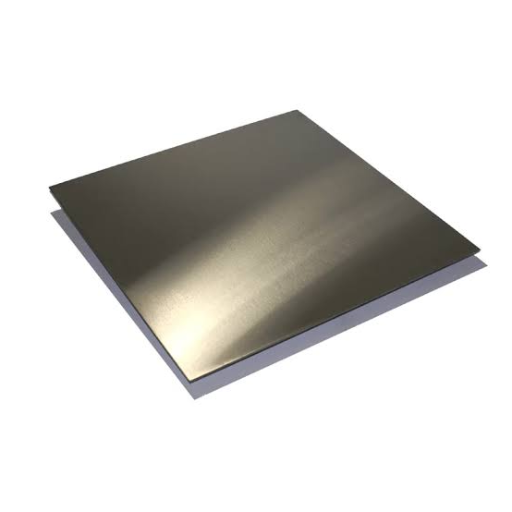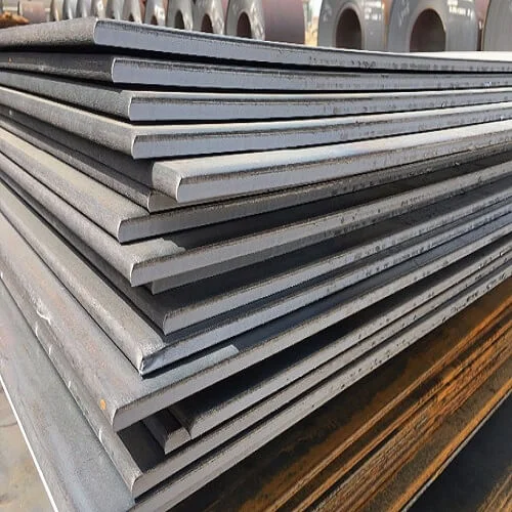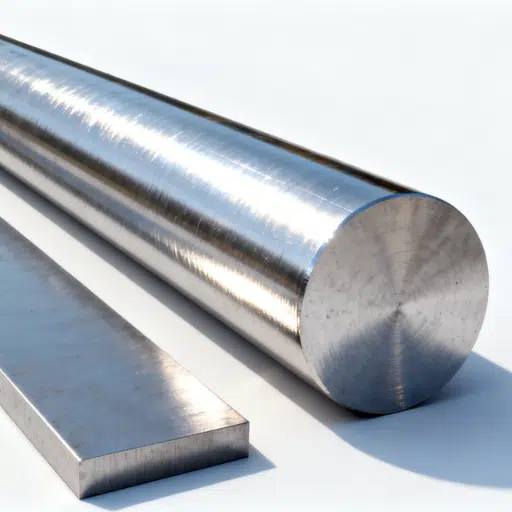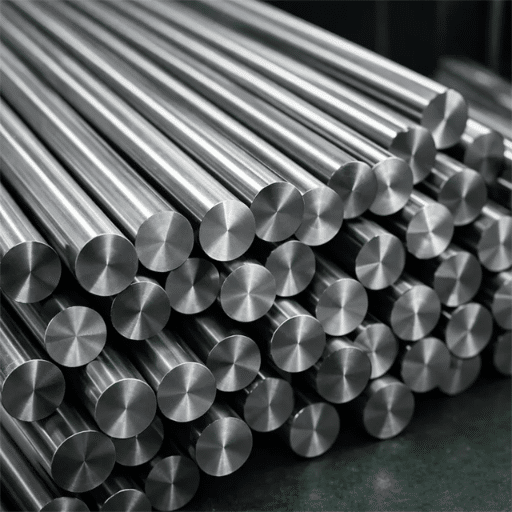
A sheet metal gauge chart is a reference table that maps gauge numbers to actual thickness in inches and millimeters for different metal types. Because gauge is an inverse numbering system, lower gauge numbers mean thicker material, and the same gauge number produces different thicknesses for steel, stainless steel, aluminum, and other metals.
Last year, a procurement manager in Dubai ordered 16-gauge 304 stainless steel sheet from a new overseas supplier. The Mill Test Certificate showed 1.45 mm. He expected 1.59 mm.
The discrepancy cost him three weeks of production delay while he negotiated a replacement. The root cause was simple: he specified gauge but never named the standard. His engineering drawing referenced ASTM A480. The Chinese mill produced to GB/T 3280 tolerances. Same gauge number. Different actual thickness.
If you buy, specify, or fabricate sheet metal, this guide will show you how to read any gauge chart, specify thickness correctly in RFQs, verify delivered material, and avoid the costly mistakes that even experienced buyers make.
Key Takeaways
- Lower gauge numbers mean thicker material: 16 GA is thicker than 20 GA.
- A 16-gauge carbon steel sheet (1.52 mm) is not the same thickness as 16-gauge aluminum (1.29 mm).
- Always specify the material type, standard (ASTM, JIS, EN, or GB/T), and decimal thickness in millimeters or inches.
- ASTM A480 permits thickness tolerances of ±0.13 mm for 16-gauge 304 stainless steel, so verification with calipers is essential.
- Moving from 16 GA to 18 GA in 304 stainless can reduce material cost by 20 to 25% while maintaining adequate strength for many applications.
What Is Sheet Metal Gauge?

Sheet metal gauge is a numbering system that identifies the thickness of metal sheet or plate. Unlike millimeters or inches, which express thickness directly, gauge uses an arbitrary number that maps to a specific decimal thickness through standardized tables.
The Inverse Number System
The most important rule to remember is that gauge works in reverse. A 10-gauge sheet is thicker than a 20-gauge sheet. A 4-gauge sheet is thicker than a 14-gauge sheet. This confuses many first-time buyers because our intuition expects higher numbers to mean more material.
The inverse system originated in wire-drawing practices. As wire was drawn through progressively smaller dies, the number of passes through the dies became the gauge number. More dies meant thinner wire. That convention carried over into sheet metal manufacturing.
Why Gauge Is Not Universal
This is where most mistakes happen. The gauge number you specify does not produce the same thickness across all metals. Three different gauge systems are in common use:
- Manufacturer’s Standard Gauge (MSG): used for carbon steel, galvanized steel, and stainless steel sheet.
- Brown & Sharpe Gauge (American Wire Gauge, AWG): used for aluminum, brass, copper, and other non-ferrous metals.
- Standard Wire Gauge (SWG): still referenced in some Commonwealth countries and older British engineering documents.
Because these systems developed independently, a 16-gauge carbon steel sheet measures 1.52 mm, while a 16-gauge aluminum sheet measures only 1.29 mm. If you order 16-gauge aluminum expecting 1.52 mm, you will receive material that is 15% thinner than anticipated.
For a deeper understanding of how material families differ, see our complete stainless steel guide.
Sheet Metal Gauge Chart: Steel, Stainless Steel & Aluminum
The tables below show the most commonly used gauge numbers for industrial procurement. We include standard carbon steel, stainless steel, galvanized steel, and aluminum. All values are approximate and may vary slightly by manufacturer and standard.
Carbon Steel Gauge Chart
| Gauge | Thickness (inch) | Thickness (mm) | Weight (kg/m²) |
|---|---|---|---|
| 8 | 0.1644 | 4.18 | 32.2 |
| 10 | 0.1345 | 3.42 | 26.4 |
| 11 | 0.1196 | 3.04 | 23.5 |
| 12 | 0.1046 | 2.66 | 20.5 |
| 13 | 0.0897 | 2.28 | 17.7 |
| 14 | 0.0747 | 1.90 | 14.7 |
| 16 | 0.0598 | 1.52 | 11.7 |
| 18 | 0.0478 | 1.21 | 9.2 |
| 20 | 0.0359 | 0.91 | 6.9 |
| 22 | 0.0299 | 0.76 | 5.7 |
| 24 | 0.0239 | 0.61 | 4.5 |
| 26 | 0.0179 | 0.46 | 3.3 |
| 28 | 0.0149 | 0.38 | 2.7 |
| 30 | 0.0120 | 0.30 | 2.1 |
Stainless Steel Gauge Chart
Stainless steel sheet typically follows the Manufacturer’s Standard Gauge, but the actual thickness is slightly greater than carbon steel at the same gauge number.
| Gauge | Thickness (inch) | Thickness (mm) | Weight (kg/m²) |
|---|---|---|---|
| 8 | 0.1719 | 4.37 | 34.6 |
| 10 | 0.1406 | 3.57 | 28.5 |
| 11 | 0.1250 | 3.18 | 25.4 |
| 12 | 0.1094 | 2.78 | 22.2 |
| 14 | 0.0781 | 1.98 | 15.8 |
| 16 | 0.0625 | 1.59 | 12.6 |
| 18 | 0.0500 | 1.27 | 10.1 |
| 20 | 0.0375 | 0.95 | 7.6 |
| 22 | 0.0313 | 0.79 | 6.3 |
| 24 | 0.0250 | 0.64 | 5.1 |
| 26 | 0.0188 | 0.48 | 3.8 |
| 28 | 0.0156 | 0.40 | 3.2 |
| 30 | 0.0125 | 0.32 | 2.5 |
For detailed properties of the most common stainless grade, see our 304 stainless steel guide.
Galvanized Steel Gauge Chart
Galvanized steel gauge includes the zinc coating. The base steel underneath is typically 0.02 to 0.04 mm thinner than the stated gauge. This matters when you are forming, welding, or calculating structural loads.
| Gauge | Thickness (inch) | Thickness (mm) | Weight (kg/m²) |
|---|---|---|---|
| 10 | 0.1406 | 3.57 | 28.0 |
| 12 | 0.1090 | 2.77 | 21.7 |
| 16 | 0.0635 | 1.61 | 12.7 |
| 18 | 0.0478 | 1.21 | 9.5 |
| 20 | 0.0360 | 0.91 | 7.2 |
| 22 | 0.0299 | 0.76 | 6.0 |
| 24 | 0.0239 | 0.61 | 4.8 |
| 26 | 0.0179 | 0.45 | 3.6 |
| 28 | 0.0149 | 0.38 | 3.0 |
| 30 | 0.0120 | 0.30 | 2.4 |
Aluminum Gauge Chart
Aluminum uses the Brown & Sharpe gauge system. At the same gauge number, aluminum is always thinner than steel or stainless steel.
| Gauge | Thickness (inch) | Thickness (mm) |
|---|---|---|
| 12 | 0.0808 | 2.05 |
| 14 | 0.0641 | 1.63 |
| 16 | 0.0508 | 1.29 |
| 18 | 0.0403 | 1.02 |
| 20 | 0.0320 | 0.81 |
| 22 | 0.0253 | 0.64 |
| 24 | 0.0201 | 0.51 |
| 26 | 0.0159 | 0.40 |
Brass & Copper Gauge Chart
Brass and copper sheet also follow the Brown & Sharpe system. These values are commonly used for electrical, decorative, and architectural applications.
| Gauge | Thickness (inch) | Thickness (mm) |
|---|---|---|
| 12 | 0.0810 | 2.06 |
| 14 | 0.0641 | 1.63 |
| 16 | 0.0508 | 1.29 |
| 18 | 0.0403 | 1.02 |
| 20 | 0.0320 | 0.81 |
| 22 | 0.0253 | 0.64 |
| 24 | 0.0201 | 0.51 |
| 26 | 0.0159 | 0.40 |
Browse our full catalog of stainless steel coils available in standard and custom gauges.
Gauge Standards Compared: ASTM, JIS, EN & GB/T

If you source sheet metal internationally, the gauge or thickness tolerance on your Mill Test Certificate depends on which standard the mill follows. Four standards dominate global trade.
ASTM (American Society for Testing and Materials)
ASTM standards are the default reference for North American and many international buyers.
- ASTM A480: covers general requirements for flat-rolled stainless steel plate, sheet, and strip. Defines thickness tolerances by width and gauge.
- ASTM A653: covers galvanized steel sheet. Specifies coating weights and base metal thickness.
- ASTM A635: covers hot-rolled carbon steel sheet. Defines thickness, width, and edge tolerances.
For 304 stainless steel sheet ordered under ASTM A480, a 48-inch-wide 16-gauge sheet has a thickness tolerance of ±0.005 inch (±0.13 mm). That means delivered material between 1.46 mm and 1.72 mm is within specification.
JIS (Japanese Industrial Standards)
JIS G3302 governs hot-dip galvanized steel sheet. JIS G4304 covers hot-rolled stainless steel plate. Japanese tolerances are generally comparable to ASTM for standard widths, but they diverge for wide sheet above 1,500 mm.
EN (European Norm)
EN 10088 covers stainless steel flat products. EN 10346 covers continuously hot-dip coated steel sheet. European thickness tolerances for cold-rolled stainless are typically slightly tighter than ASTM for gauges below 1.0 mm.
GB/T (Chinese National Standard)
GB/T 3280 governs cold-rolled stainless steel sheet and strip. GB/T 2518 governs hot-dip galvanized sheet. For procurement managers buying from Chinese mills, GB/T tolerances differ from ASTM by up to 0.05 mm in the 1.0 to 2.0 mm range. That is enough to affect precision fabrication, fit-up, and welding procedures.
When Marcus, the Dubai procurement manager, compared his GB/T-produced 1.45 mm sheet against his ASTM A480 drawing requirement of 1.59 mm, the material was technically within GB/T tolerance but outside his project specification. The argument cost both sides time and money. The fix would have been a single line on his purchase order: “Thickness per ASTM A480, Table A1.1.”
For buyers sourcing from China, our technical consultation service can help you specify the correct standard for your project.
How to Convert Gauge to Millimeters and Inches
When precision matters, specify thickness in millimeters or decimal inches instead of gauge. Gauge is a convenient shorthand, but it is not a mathematical formula.
Quick Conversion Formulas
For rough estimates only:
- Carbon steel (MSG): Thickness in mm ≈ 0.127 × (32 − gauge number)
- Approximate inch: Thickness in inches ≈ 0.005 × (32 − gauge number)
These formulas work reasonably well for gauges 16 through 28 but drift at the extremes. Always refer to the actual standard table for procurement.
When to Use Each Unit
- Gauge: Useful for quick communication with fabricators and suppliers who work in the same standard. Best for North American markets.
- Decimal inches: Preferred in US engineering drawings and CNC programming. Example: 0.0625 inch instead of 16 gauge.
- Millimeters: The global standard for international procurement. Unambiguous and precise. Example: 1.59 mm instead of 16 gauge.
Best Practice for RFQs
Write your request like this: “304 stainless steel sheet, 1.59 mm (approximately 16 gauge per ASTM A480), width 1,219 mm, length 2,438 mm, 2B finish, quantity 500 kg.”
This format removes ambiguity. The supplier knows the exact decimal thickness, the standard, and the tolerance framework.
Common Applications by Gauge Range
Different industries and applications favor specific gauge ranges. Understanding these patterns helps you select the right thickness and avoid over-specification.
Heavy Gauge (3 to 10 GA)
Heavy-gauge sheet metal ranges from approximately 6.35 mm down to 3.42 mm. It is used where structural strength is the priority.
- Truck body panels and trailer floors
- Heavy machinery guards and enclosures
- Structural bracing and gusset plates
- Armor and ballistic-rated panels
Medium Gauge (11 to 18 GA)
This is the most commonly specified range for general fabrication. It offers a practical balance between strength, weight, and formability.
- Automotive body panels and frames
- Appliance cabinets and doors
- HVAC ductwork and plenums
- Metal furniture and shelving
- General industrial enclosures
Light Gauge (19 to 26 GA)
Light-gauge sheet is flexible, easy to form, and cost-effective for large surface-area applications.
- Wall and ceiling panels
- Roofing and siding
- Signage and decorative panels
- Electrical enclosures and junction boxes
Extra-Light Gauge (27 to 30 GA)
Extra-light gauge is used where weight savings and flexibility matter more than structural strength.
- Flashing and trim
- Gutters and downspouts
- Lightweight decorative elements
- Packaging and shielding
For applications requiring corrosion resistance in marine environments, consider upgrading to 316 stainless steel, which maintains strength across all gauge ranges while resisting chloride attack.
Sheet Metal Gauge Selection: A Procurement Framework
Selecting the right gauge is not just an engineering decision. It directly affects material costs, lead times, forming difficulties, and weldability. Use this five-step framework for every procurement decision.
Step 1: Define Structural Requirements
Start with the load, pressure, or impact the material must withstand. A 20-gauge enclosure for indoor electrical equipment does not need the same strength as a 14-gauge truck body panel. If you are unsure, consult your mechanical engineer or use standard load tables.
Step 2: Match Gauge to Forming Process
Thicker gauges require more force to bend, punch, and draw. If your fabrication process uses standard press brakes and tooling, verify the maximum thickness your equipment can handle. Some CNC press brakes struggle with stainless steel above 10 gauge.
Step 3: Factor in Cost per Gauge Step
Material cost does not scale linearly with thickness. Moving from 16 GA to 18 GA in 304 stainless steel typically reduces material cost by 20 to 25 percent. Moving from 18 GA to 20 GA saves another 15 to 20 percent.
A fabricator in Jiangsu Province was building appliance panels from 16-gauge 430 stainless steel. The panels were decorative and non-structural. By switching to 18-gauge 430, the company reduced material spend by 22 percent across a 10-ton order with no functional impact. The thinner gauge still met stiffness requirements because the panel was supported by an internal frame.
Step 4: Specify Standard and Tolerance
Name the standard on every purchase order. If you are buying from a Chinese mill, do not assume they default to ASTM. State: “Thickness and tolerance per ASTM A480 / ASTM A653 / EN 10088 / GB/T 3280.” Include the specific table and tolerance class.
Step 5: Verify on Delivery
Measure the delivered material with digital calipers or a micrometer before releasing it to production. Compare against the tolerance table named in your purchase order. If the material is out of tolerance, document the measurement and contact your supplier immediately.
Request a quote for gauge-specific stainless steel, carbon steel, or aluminum sheet with custom dimensions and standard-compliant tolerances.
How to Verify Gauge Thickness: MTCs & Tolerance Standards

Even when you specify the correct gauge and standard, manufacturing variation means you should verify every delivery.
Reading Thickness on a Mill Test Certificate
A Mill Test Certificate (MTC) lists the actual measured thickness of the material produced. Look for the “Thickness” or “Dim.” field, usually expressed in millimeters. Compare this value against your specification.
For example, if you ordered 1.59 mm (16 GA) 304 stainless per ASTM A480, and the MTC shows 1.52 mm, check whether 1.52 mm falls within the permitted tolerance. For 48-inch-wide cold-rolled sheet, ASTM A480 permits ±0.13 mm. That means anything from 1.46 mm to 1.72 mm is acceptable.
Measuring with Calipers and Micrometers
Use digital calipers for quick checks on the shop floor. Use a micrometer for more precise measurements when disputes arise. Measure at least three points across the sheet width and two points along the length. Average the readings.
What to Do if Material Is Out of Tolerance
If your measurements fall outside the tolerance named in your purchase order, stop production and document everything. Photograph the measurement, note the serial or heat number from the MTC, and contact your supplier with the evidence. Reputable suppliers will replace out-of-tolerance material or negotiate a credit.
When an Australian HVAC contractor received a 2-ton coil of 20-gauge galvanized steel, he checked three random samples with digital calipers. The readings averaged 0.82 mm. The MTC stated 0.91 mm.
He checked his caliper calibration, then checked the MTC again. The supplier had shipped a different coil by mistake. Catching the error before uncoiling saved him a full day of setup and scrap.
Common Sheet Metal Gauge Mistakes to Avoid
Even experienced buyers make these errors. Avoiding them will save time, money, and production headaches.
1. Ordering by Gauge Without Specifying Material Type
Never write “16-gauge sheet metal” on a purchase order. A 16-gauge carbon steel sheet is 1.52 mm. A 16-gauge aluminum sheet is 1.29 mm. That 0.23 mm difference can ruin a precision assembly.
2. Confusing Gauge With Mil
One mil equals 0.001 inch. A 20-gauge carbon steel sheet is approximately 0.036 inch, or 36 mil. Some buyers confuse gauge numbers with mil thickness and end up ordering the wrong material entirely.
3. Ignoring Coating Thickness on Galvanized Sheet
Galvanized steel gauge includes the zinc coating. If you need a specific base metal thickness for welding or structural calculations, specify base metal thickness separately. The coating typically adds 0.02 to 0.04 mm per side.
4. Assuming All Suppliers Use the Same Gauge Standard
A supplier in China may reference GB/T. A supplier in Europe may reference EN. A supplier in the United States may reference ASTM. Always name the standard on your purchase order.
5. Specifying Gauge When Decimal Thickness Would Be Clearer
For international procurement, specify thickness in millimeters. It removes ambiguity and reduces the risk of miscommunication across language barriers.
6. Forgetting Width and Length Tolerances
Thickness is not the only dimension that matters. ASTM A480 also defines width, length, camber, and flatness tolerances. Out-of-flat sheet can cause press brake tooling problems even when the thickness is perfect.
For more on material selection and avoiding specification errors, see our stainless steel vs carbon steel comparison.
Frequently Asked Questions
Which is thicker, 16 gauge or 18 gauge?
16 gauge is thicker than 18 gauge. In carbon steel, 16 GA measures 1.52 mm while 18 GA measures 1.21 mm. The lower gauge number always indicates thicker material.
What is 20 gauge steel in mm?
20-gauge carbon steel is approximately 0.91 mm (0.036 inch) thick. For stainless steel, 20 GA is approximately 0.95 mm. For aluminum, 20 GA is approximately 0.81 mm.
Is stainless steel gauge the same as steel gauge?
The gauge number is the same, but the actual thickness differs. Stainless steel sheet at a given gauge is slightly thicker than carbon steel at the same gauge. For example, 16-gauge stainless steel is 1.59 mm, while 16-gauge carbon steel is 1.52 mm.
How thick is 26 gauge sheet metal?
26-gauge carbon steel is approximately 0.46 mm (0.018 inch) thick. It is considered thin sheet metal and is commonly used for roofing, flashing, and lightweight panels.
What gauge is 1 mm steel?
1 mm steel is approximately 19 gauge in the Manufacturer’s Standard Gauge system for carbon steel. For stainless steel, 1 mm is closer to 20 gauge.
Can I use the same gauge chart for aluminum and steel?
No. Aluminum uses the Brown & Sharpe (AWG) gauge system, while steel uses the Manufacturer’s Standard Gauge. A 16-gauge aluminum sheet is 1.29 mm, while a 16-gauge steel sheet is 1.52 mm. Always use the correct chart for your material.
What is the difference between SWG and AWG?
SWG (Standard Wire Gauge) is the British system used primarily in the UK and Commonwealth countries. AWG (American Wire Gauge), also called Brown & Sharpe, is the US system used for non-ferrous metals. The same gauge number produces different thicknesses in each system.
How does gauge affect welding?
Thinner gauges require lower heat input and faster travel speed to prevent burn-through. Welding 26-gauge sheet is significantly more difficult than welding 14-gauge sheet. When joining dissimilar gauges, direct more heat toward the thicker piece.
What gauge should I use for outdoor panels?
For outdoor structural panels, 14 to 18 gauge is typical for steel and stainless steel. For non-structural cladding and roofing, 22 to 26 gauge is common. Consider 316 stainless steel or galvanized steel for corrosion resistance in outdoor environments.
How do I specify gauge in an international RFQ?
Specify the material type, the decimal thickness in millimeters, and the governing standard. Example: “304 stainless steel sheet, 1.59 mm thickness, tolerance per ASTM A480 Table A1.1, 2B finish.” This removes ambiguity and protects both buyer and supplier.
For a deep dive into a specific gauge, see our article on how thick 11-gauge steel is.
Conclusion
Sheet metal gauge is a useful convention, but it is not a precise formula. The same gauge number produces different thicknesses for steel, stainless steel, aluminum, and copper. Different countries follow different standards with different tolerances. And the inverse numbering system confuses even experienced buyers.
The safest approach is simple. Specify the material type. Name the standard. State the decimal thickness in millimeters or inches. Verify delivery with calipers. And keep a reliable gauge chart at hand for quick reference.
If you need gauge-specific stainless steel, carbon steel, or aluminum sheet for your next project, contact LIANYUNGANG DAPU METAL CO., LTD. We supply standard and custom gauge materials with full Mill Test Certificates, ASTM, JIS, EN, and GB/T compliance, and global delivery from our facility near Shanghai Port.