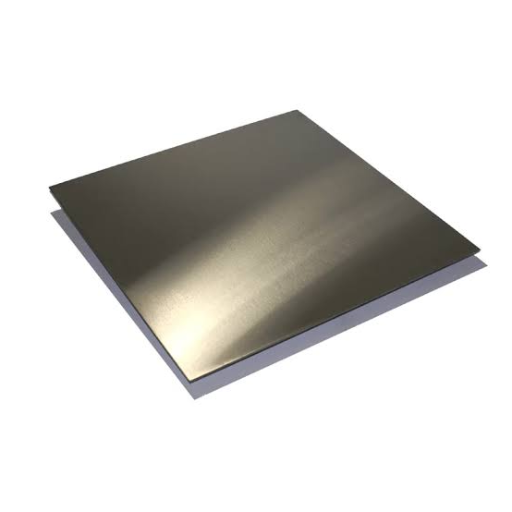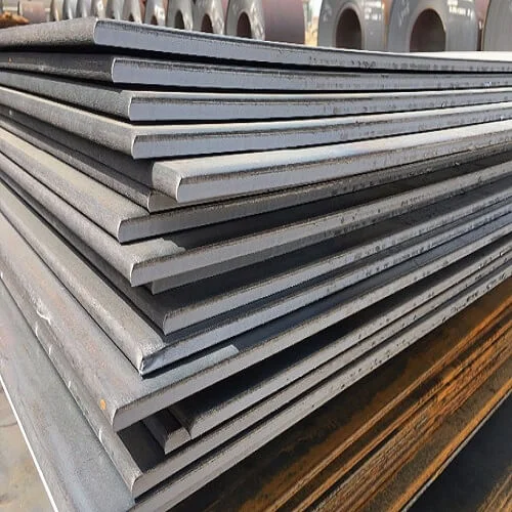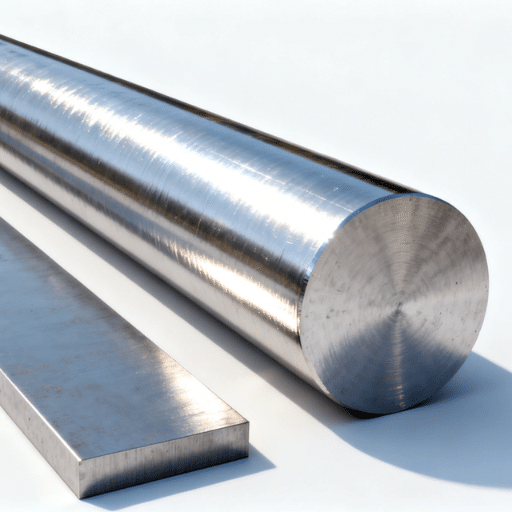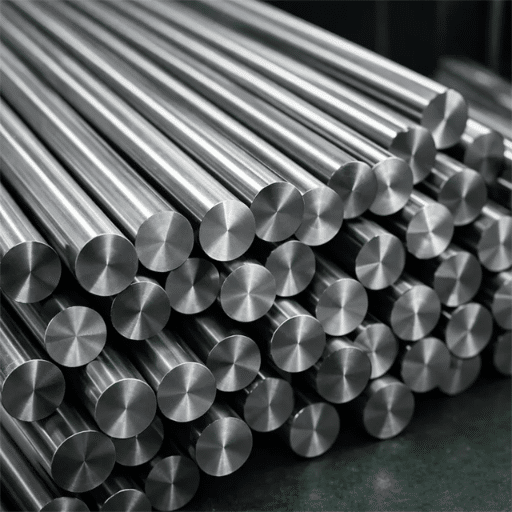
To bend metal successfully, you need the right material, the right temper, and the right bend radius, in that order. Most bending failures are not technique failures. They are material-selection failures, usually a wrong stainless steel grade or a work-hardened temper that cracks along the fold line. This guide covers every practical way to bend metal, from a bench vise to a press brake, plus the engineering rules that decide whether a bend succeeds or snaps.
Picture Dan, a job-shop fabricator who ordered “304 stainless” from a new broker at a discount. The coil arrived labeled as 304, but it was delivered in a half-hard temper because the broker never specified annealed condition. When Dan set up his press brake for a 90-degree bracket, the first part cracked clean across the bend line.
The metal was 304, but it was too hard to form. He lost a day of production and an order. The fix had nothing to do with his bending technique. He needed material ordered to the correct condition.
This guide walks through the methods and the material decisions together. You’ll learn how to bend sheet metal with basic tools or a press brake, how to handle bar and tube, what minimum bend radius to use, and which grade and temper to specify when you order material.
Key Takeaways
- Bending fails most often because of the wrong grade or temper, not the wrong technique. Always specify annealed condition for stainless steel that must be formed.
- The minimum inside bend radius should be at least equal to the material thickness. Annealed 304 stainless bends at 1 to 1.5 times thickness; full-hard stainless may need 4 to 6 times.
- Stainless steel springs back 3 to 5 degrees in air bending, more than aluminum and much more than mild steel. Over-bend to compensate.
- Austenitic stainless steel such as 304 and 316 requires 50 to 60 percent more forming power than low-carbon steel because it work-hardens.
- For production runs or hard-to-bend grades, have a supplier perform custom cutting and forming instead of hand-bending.
How Bending Works: Stress, Strain & the Neutral Axis

Bending is a forming process that applies a moment to a sheet, bar, or tube so the outer fibers stretch in tension and the inner fibers compress. Between them sits the neutral axis, a plane that keeps its original length. Understanding that plane explains most of the rules that follow.
When you bend a piece of metal, the outside of the curve is pulled longer, and the inside is pushed shorter. If the bend radius is too tight relative to the thickness, the outer fibers stretch beyond the material’s ductility and crack. This is why thin annealed sheet bends easily and thick or hardened plate snaps.
The neutral axis also explains bend allowance. Because the material is compressed on the inside and stretched on the outside, a bent part is not exactly the sum of its straight leg lengths. You’ll have to add a little length for each bend, calculated from the neutral axis position. That calculation is covered later in the guide.
For a broader review of how stainless steel grades behave under forming and in service, see our complete stainless steel guide.
How to Bend Sheet Metal: DIY Methods
You don’t need a shop full of machinery to bend light-gauge sheet metal. The methods below show how to bend metal without a brake, and they work well for brackets, enclosures, and one-off parts up to roughly 16 gauge mild steel or 18-gauge stainless.
Method 1: Vise and Mallet
The bench vise is the simplest bending tool. Mark the bend line with a scriber or pencil, then clamp the sheet in the vise so the line sits exactly at the jaw edge. Strike the exposed edge with a rubber or raw-hide mallet, working from one end to the other in light passes rather than one heavy blow. For a radiused bend, clamp the sheet over a piece of pipe or rod of the desired radius and form the metal around it.
The same setup works for a U-shaped part. Clamp the sheet, hammer one side down, then flip and repeat. Keep the blows light. Repeated heavy hammering work-hardens the metal and makes it brittle.
Method 2: Angle-Iron Clamp (No Bender Needed)
This is the most reliable no-tool method. Place the sheet between two pieces of angle iron, align the edge of the angle iron with the bend line, and clamp firmly with C-clamps. Fold the metal over the top angle iron with a rubber mallet, tapping from end to end so the bend stays straight. For a sharper edge, add a third angle iron or a length of solid bar on top and clamp down the sandwich.
This method suits light-gauge sheet and gives a surprisingly clean 90-degree fold. It is the technique most hobbyist guides recommend because the angle iron holds the bend line straight while you form.
Method 3: Bench Edge with a Form Block
For long, straight bends, clamp a block of wood or a length of angle iron over the bend line on a sturdy bench edge, then fold the sheet down. Use the block to protect the surface from hammer dents and to keep the bend line from wandering. Work gradually, bending a little at a time along the full length.
Method 4: Relief-Cut Folding
Laser-cut slots along the bend line let light sheet fold by hand like cardboard. Fabricators use this trick for prototypes because it needs no brake. The tradeoff is that the slots weaken the part and leave a visible pattern, so it is only appropriate for enclosures and cosmetic panels where strength is secondary. The slot width is typically about half the material thickness.
Whichever DIY method you choose, wear leather gloves and safety glasses, and keep the work area clear. If the metal is springy or resists bending, don’t force it. Stop and reconsider the material or the radius, because forcing a bend is how cracks start.
How to Bend Metal with a Press Brake

For production work and thicker material, a press brake is the industry standard for sheet metal bending. It uses a punch and a V-shaped die to form the bend. The three main techniques differ in how far the punch travels and how much force they apply.
Air Bending
Air bending is the most common method because it is flexible and efficient. The punch presses the sheet into the V-die but does not fully seat it, so the material floats. The inside radius forms as a percentage of the die opening, roughly 16 percent of the die width for mild steel. Air bending needs only about a third of the tonnage of bottoming, and you can produce many angles with one set of tooling. The downside is that springback is more pronounced and angles are less precise than with bottoming.
Choose the V-die opening at 6 to 8 times the sheet thickness. A wider die reduces required force but makes the bend harder to control; a narrow die increases force and sharpens the radius.
Bottoming
Bottoming presses the punch fully into the V-die so the sheet takes the exact shape of the tool. It holds tight angle tolerances, around plus or minus 0.5 degrees, but needs up to five times the force of air bending. Use bottoming when angle consistency matters more than tooling flexibility.
Coining
Coining applies extreme pressure, roughly 10 to 20 tons per linear inch, that compresses the material at the bend line and virtually eliminates springback. It is the slowest and most forceful method, suited to high-strength steels and parts that need repeatable dimensions. Because of the high tool loads, coining requires robust dies and careful setup.
For a proper production bend, run a test piece on scrap first. Verify the angle, measure springback, and adjust the punch depth before bending the batch. Our custom processing team can handle cutting and forming to your drawing if you prefer to receive parts ready to use.
Minimum Bend Radius: Chart & Design Rules
The minimum inside bend radius is the tightest radius a material can be formed to without cracking. A practical starting rule is that the inside radius should be at least equal to the material thickness. The table below gives typical minimum radii for common materials in multiples of thickness (T).
| Material | Minimum Inside Radius (Across Grain) | Notes |
|---|---|---|
| Mild steel (low carbon) | 0.8 to 1T | Easiest metal to bend |
| 304 stainless steel (annealed) | 1T to 1.5T | Work-hardens quickly; use 2T for thicker stock |
| 316 stainless steel (annealed) | about 2T | Higher molybdenum, more springback |
| 430 stainless steel (annealed) | 1T to 1.5T | Less springback than austenitic grades |
| Aluminum (5052) | 1T to 1.5T | Avoid sharp radii; cracking risk |
| Copper and brass | 0.8 to 1.2T | Soft and formable |
| Full-hard stainless steel | 4T to 6T | Avoid bending; specify annealed instead |
Grain direction matters as much as the radius. Steel and aluminum sheet have a rolling direction from the mill. Bend across the grain, perpendicular to the rolling direction, and you can use a tighter radius. Bend parallel to the grain and the part is far more likely to crack along the fold line.
Design rules protect the part beyond the bend itself. Add bend reliefs, small notches at the ends of bend lines, so the material does not tear. Keep holes at least 2.5 times the thickness plus the radius away from a bend, and slots at least 4 times the thickness plus the radius. Space successive bends at least three times the thickness apart.
Here is where design catches up with production. Priya designed a control-panel bracket with two mounting holes placed close to the fold line, because the enclosure was tight. The drawing looked fine on screen.
When the fabricator bent the first batch, the holes tore into the bend and the parts went to scrap. The fix was simple: move the holes 2.5 times the thickness plus the radius away from the bend. It cost a day of rework and a print revision.
If you need the thickness values behind these rules, our sheet metal gauge chart converts gauge numbers to millimeters and inches for steel, stainless steel, and aluminum.
Bend Allowance & Flat Blank Calculation
When you bend a part, the flat blank must be longer than the sum of the finished legs because the neutral axis shifts toward the inside of the bend. Bend allowance (BA) is the added length for each bend, calculated with this formula:
BA = angle in degrees x (inside radius + K-factor x thickness) x pi / 180
The K-factor describes where the neutral axis sits within the material thickness. A K-factor of 0.5 means the neutral axis is at the midpoint. Most mild cold-rolled steel uses an average K-factor of about 0.45, while soft materials and sharp bends push the neutral axis lower. The practical range is roughly 0.30 to 0.50.
To lay out a flat blank, add the two straight legs plus the bend allowance for each bend. For example, a 90-degree bend in 2 mm annealed 304 stainless with a 3 mm inside radius and a K-factor of 0.44 gives a bend allowance of about 5.6 mm. Add that to the two leg lengths and you’ll have the flat size to cut.
The full formula, with the conversion factor from degrees to radians, appears in most press brake handbooks. The Fabricator has a clear explanation of bend allowance and springback in air bending that is worth bookmarking.
Springback: Why It Happens & How to Compensate
Springback is the elastic recovery that happens when the punch is released. The metal was bent past its yield point, but part of the deformation is still elastic, so the angle relaxes open slightly. Every metal does this, but not equally.
Stainless steel springs back the most, typically 3 to 5 degrees for 304 in air bending. Aluminum is moderate, and mild steel springs back the least. High-strength and hardened materials can show three times the springback of mild steel.
Compensate by over-bending. To finish at 90 degrees, bend to 88 degrees and let it spring open. You can also reduce springback by using a smaller punch radius, or switch to bottoming or coining, which hold the material against the die and reduce elastic recovery. Always run a test bend and measure the actual springback for your specific material, because the chart values are a starting point, not a guarantee.
Mike learned this the expensive way. He set his air bend for a clean 90 degrees and ran a batch of 304 stainless brackets. When he checked the first parts, they read 93 degrees because stainless springs back about 3 degrees. He re-ran the batch at 87 degrees, confirmed the parts finished at 90, and completed the order the same afternoon.
The austenitic stainless steels also work-harden as they deform. They require 50 to 60 percent more forming power than low-carbon steel, and the metal gets stiffer with each pass. Form stainless in as few strokes as possible and use rigid tooling. The Nickel Institute’s practical guidelines for the fabrication of austenitic stainless steels cover these forming requirements in depth.
For the details on the two most common grades, see our 304 stainless steel guide and 316 stainless steel guide.
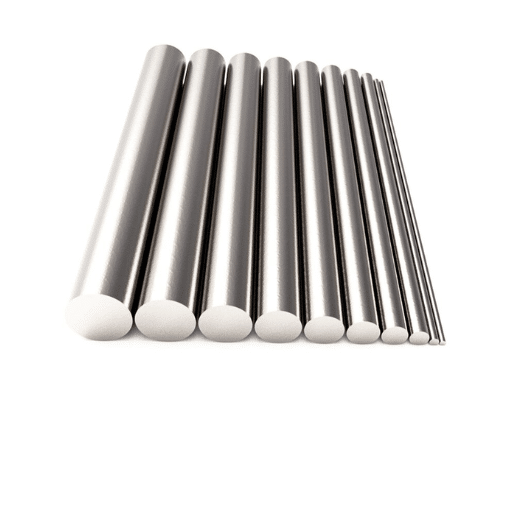
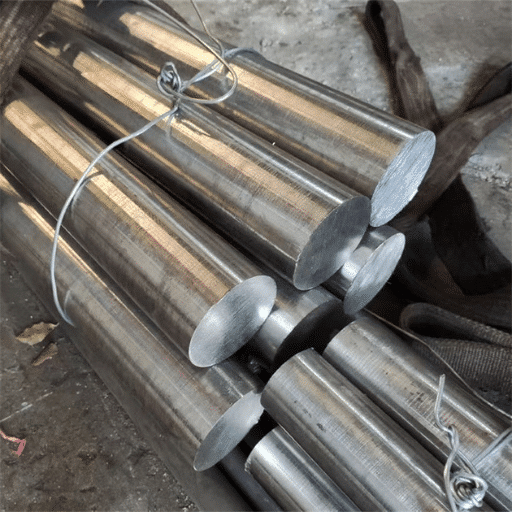
How to Bend Steel Bar, Rod & Wire

Bar and rod follow the same principles as sheet, with the added challenge that solid sections are stiffer and need more force or heat.
Cold Bending
Mild steel flat bar up to about 3/16 inch thick, and round rod under about 3/8 inch diameter, bends cold in a bench vise. Mark the bend point, clamp the bar so the mark sits at the jaw edge, slip a length of pipe over the protruding end, and pull slowly and steadily. Jerking creates kinks instead of smooth bends.
For a radiused bend, clamp the bar over a pipe or rod of the desired radius and form it around that form. To square up a 90 degree bend, re-clamp the piece and tap the outside of the bend against the vise jaw. Leave the bar over-long and trim the ends after bending, which makes the process much easier.
Hot Bending
Past about 3/16 inch thick, cold bending becomes impractical. Heat the bend area with an oxy-acetylene or propane torch until it reaches a dull cherry red, then bend it around your form or in the vise. The metal moves like soft rubber while hot. Mark the bend point with a file notch before heating, and never quench hot metal in water because that makes it brittle. Let it cool naturally.
Hot bending changes the local structure of the metal and leaves scale that must be removed, so use it only where cold bending is not possible.
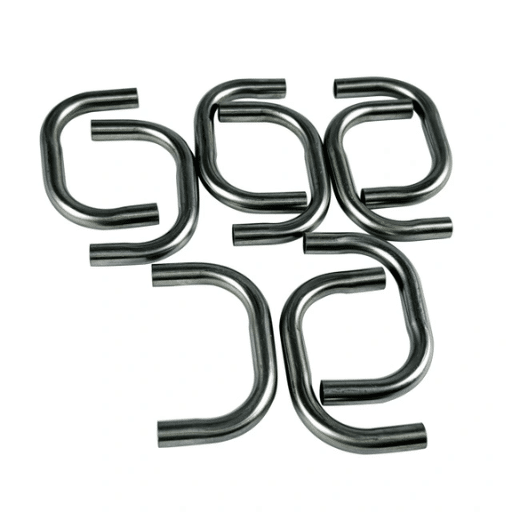
How to Bend Metal Pipe & Tube
Hollow sections add a problem sheet does not have: the walls collapse or kink when you bend too sharply. Supporting the inside of the tube is the key to a clean bend.
The Sand-Packing Method
For a one-off bend without a bender, pack the tube with fine, bone-dry sand. Seal one end, fill it while tapping the tube to settle the sand, then seal the other end. The packed sand acts as an internal mandrel that keeps the tube round while the metal forms.
Bend slowly over a curved form, a wooden block cut to the radius, or even a large pulley. A long cheater pipe gives you the extra pull you need. Cut off the crushed end after bending and pour the sand out.
Never use damp sand. If you apply heat, trapped moisture turns to steam and can burst the tube.
Professional Tube Bending
For production and tight radii, rotary draw bending clamps one end of the tube and draws it around a rotating former. A minimum centerline radius of about two times the tube diameter is the practical limit for stainless steel. For large-radius work, roll bending passes the tube between rollers to form a gradual curve.
Copper tubing is the easiest to bend by hand. Anneal it first by heating to a dull cherry red and letting it cool, then form it gently. Stainless steel tube is the hardest and usually demands a proper bender or a shop. If your project needs bent or cut tube, our stainless steel pipes and tubes can be supplied to length, and custom processing can handle the forming.
Metal Bendability & Material Selection
If you control the material, you control the outcome. The table below ranks common metals by how easily they bend, from easiest to hardest, and notes the key tradeoff.
| Material | Ease of Bending | Key Notes |
|---|---|---|
| Mild steel | Easiest | Lowest cost, least springback, forgiving |
| Copper and brass | Easy | Soft, decorative, work-hardens with repeated bending |
| Aluminum (5052, 3003) | Easy to moderate | Light, but cracks at sharp radii; avoid 7075 for bending |
| 430 stainless steel | Moderate | Cheaper than 304, less springback, less corrosion resistance |
| 304 stainless steel | Moderate | General-purpose, work-hardens fast, needs 50-60% more force |
| 316 stainless steel | Hardest common grade | Best corrosion resistance, most springback, hardest to form |
| Full-hard / spring temper | Do not bend | Cracks immediately; order annealed |
Temper matters more than grade when you learn how to bend stainless steel. A half-hard coil of 304 will crack at a radius that annealed 304 bends cleanly. When you order stainless steel for forming, specify the annealed condition and request a mill test certificate that confirms the tensile strength and temper. ASTM A480, EN 10088, and GB/T 3280 all define acceptable properties for stainless sheet and plate, and your supplier should cite the standard on the certificate.
The British Stainless Steel Association’s guide to forming techniques for stainless steel explains the interaction between temper, bend radius, and springback in practical terms.
The difference between grades shows up in service as well. For a marine or chemical application where the part also faces corrosion, the extra forming effort of 316 pays off. For a dry indoor part, 304 or even 430 may form more easily and cost less. Our stainless steel vs carbon steel comparison and carbon steel products page cover the material trade-offs in more depth.
When to Buy Custom-Bent Instead of DIY
Hand bending is excellent for prototypes, repairs, and small batches. It is a poor fit for production. Hand methods vary part to part, and even a skilled fabricator cannot hold tight angle tolerances across hundreds of pieces.
Outsource the bending when you need any of the following:
- Consistent angles across a production run
- Tight tolerances on critical dimensions
- Thick, hard, or heavy material beyond the capacity of your tooling
- A clean, consistent finish without hammer marks
- Parts that need certified material and traceability
Sourcing pre-processed material is often cheaper than buying raw sheet and building the capability. You specify the grade, temper, dimensions, and finish, and the supplier cuts and forms the parts to your drawing with certified material. This is exactly the role our custom processing service fills, from laser-cut blanks to formed components.
Think about the cost of scrap too. One cracked bend in a high-value stainless part can cost more than the entire forming charge. A supplier who bends hundreds of parts a week has the tooling and experience to get it right the first time.
Frequently Asked Questions
What is the best way to bend metal?
For small, light parts, a bench vise with a mallet or an angle-iron clamp works well. For production and thicker material, air bending on a press brake with a V-die opening of 6 to 8 times the material thickness is the standard method.
How do you bend sheet metal without a brake?
Clamp the sheet between two pieces of angle iron aligned with the bend line, then fold the metal over with a rubber mallet. This no-tool method works well for light-gauge sheet and keeps the bend line straight.
Can you bend stainless steel by hand?
Thin, annealed stainless steel can be bent by hand with a vise and mallet, but it work-hardens quickly and springs back more than mild steel. Heavier gauges and full-hard tempers require a press brake and often cracking occurs if the radius is too tight.
What is the minimum bend radius for stainless steel?
For annealed 304 stainless, use an inside radius of 1 to 1.5 times the material thickness, and about 2 times thickness for 316. Full-hard stainless may require 4 to 6 times thickness, so annealed material is strongly preferred for forming.
How do you calculate bend allowance?
Use the formula BA = angle in degrees x (inside radius + K-factor x thickness) x pi / 180, with a K-factor of about 0.45 for mild steel. Add the bend allowance to the two straight leg lengths to get the flat blank size.
Why does metal spring back after bending?
Part of the deformation is elastic. When the punch is released, the metal relaxes and the angle opens slightly. Stainless steel springs back the most, so bend to a slightly tighter angle to compensate.
Can you bend metal with heat?
Yes. Heating thick steel bar to a dull cherry red makes it form easily, and annealing copper removes work-hardening before bending. Never quench hot metal in water, as that makes it brittle.
How do you bend metal pipe without kinking it?
Pack the tube with dry sand, seal both ends, and bend slowly over a curved form. The sand supports the inside of the tube and keeps the walls round. For production, use rotary draw bending.
Which stainless steel grade is easiest to bend?
Annealed 430 stainless is easier to form than 304 because it springs back less and work-hardens more slowly. For general applications that also need good corrosion resistance, annealed 304 is the practical choice.
Conclusion
Knowing how to bend metal is not a single trick. It is a sequence of decisions, and the material decision comes first. Choose the right grade and temper, respect the minimum bend radius, account for springback, and use the method that matches your volume and tolerance. Get those right and the bend takes care of itself.
The practical checklist: specify annealed stainless steel when you order it, verify the temper on the mill test certificate, bend across the grain, keep the inside radius at or above the material thickness, and over-bend to compensate for springback. For prototypes, a vise and angle-iron clamp is enough. For production, use a press brake or hand the forming to a supplier.
LIANYUNGANG DAPU METAL supplies annealed stainless steel, carbon steel, aluminum, and other metals in sheets, coils, rods, and pipes, with stainless steel sheets and stainless steel coils stocked for forming applications. Our technical consultation team can help you select the right grade and temper, and our custom processing service can cut and form parts to your drawing.
If you are about to order material for a bending job, contact us for a quote. We work with engineers and fabricators to supply the right grade, in the right condition, so the first bend is the good one.