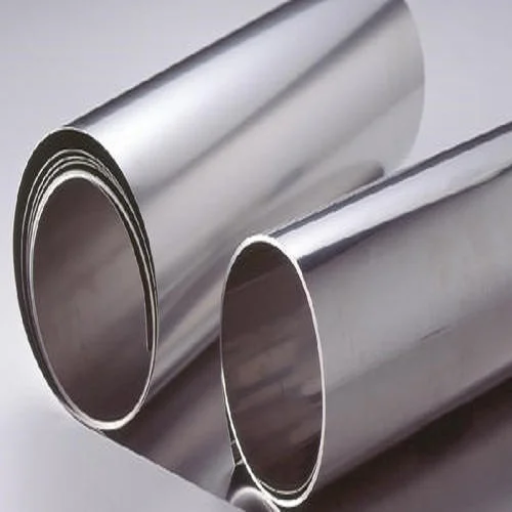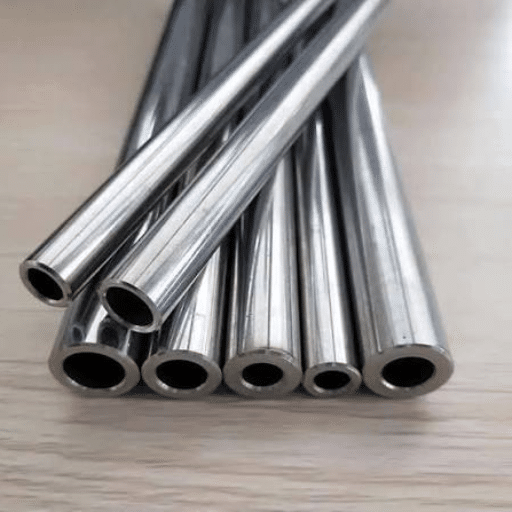
Is 17-4 PH magnetic? Yes. It is a martensitic precipitation-hardening grade, and martensite is ferromagnetic, so it responds to a magnet in Condition A and in every aged condition from H900 through H1150. Annealed 304 and 316 are essentially non-magnetic by comparison.
Priya runs receiving inspection at a pump builder in Pune. Last month two bars arrived from the same heat of 17-4 PH, both Condition A, both with 3.1 certificates.
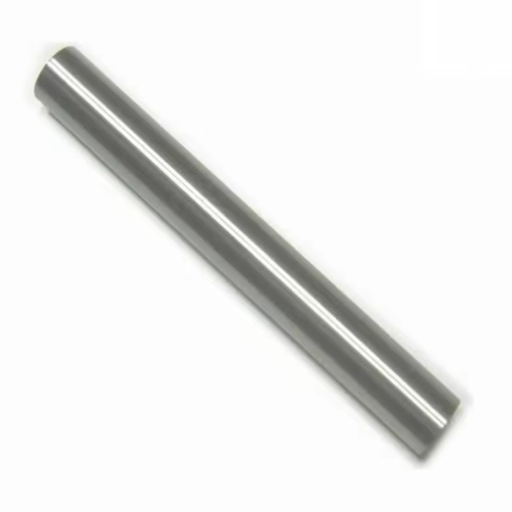
She ran a magnet down each one. The 12 mm bar grabbed hard. The 150 mm forging barely pulled.
She quarantined the forging, and her supplier spent four days proving the material was exactly what the paperwork said.
It was. The two parts had simply cooled at different rates, and that difference shows up on a magnet.
Key Takeaways
- 17-4 PH is ferromagnetic in Condition A and in every H condition, because its structure is martensitic rather than austenitic.
- It can be martensitic because it carries only 3 to 5% nickel, against 8 to 10.5% in 304 and 10 to 14% in 316.
- Magnetic in every condition is not the same as identically magnetic: heavy sections retain austenite and read weaker, and aging state changes coercivity.
- Magnetic particle inspection is routine on this grade, unlike duplex. The practical problem is demagnetizing the part afterwards.
- For magnetic-sensitive equipment the substitute is 316L, not 304, because cold-worked 304 drifts magnetic.
That’s the shape of the whole question. Anyone asking is 17-4 PH magnetic usually has a second question behind it, and the second question is about how much. The answer is one word; the pull is not one number. What follows is why the grade is magnetic, how much, why the reading moves, and what to do about each of those facts.
If magnetism is one of several competing requirements on a specification you’re working through, our technical consultation service exists for that conversation.
Is 17-4 PH Magnetic? The Direct Answer
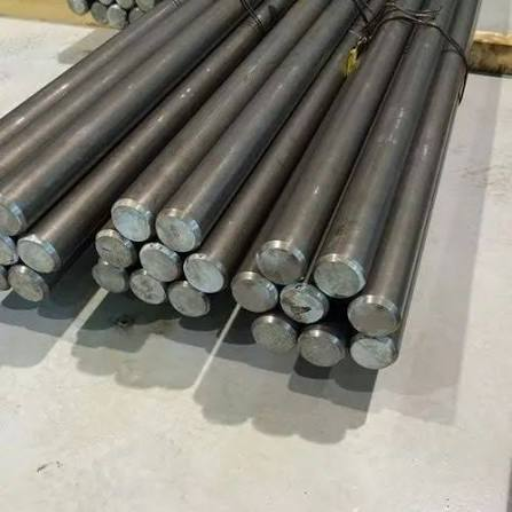
Yes. 17-4 PH (UNS S17400, Type 630, EN 1.4542) is ferromagnetic in every condition it is supplied in. The grade is martensitic as delivered, so Condition A is already magnetic, and each aging treatment from H900 to H1150 leaves it magnetic. Only fully austenitic grades such as annealed 304 and 316 sit near the non-magnetic end.
Why Martensite Is Magnetic and Austenite Is Not
The crystal structure decides it. Martensite is body-centred tetragonal, and its unpaired electron spins align readily under an applied field, which is what ferromagnetism is. Austenite is face-centred cubic and paramagnetic: it responds so weakly that a shop magnet ignores it.
Relative permeability is the scale that separates them. A value near 1.0 means the material behaves like air. Annealed 304 and 316 sit around 1.002 to 1.05. Martensitic 17-4 PH sits two orders of magnitude higher.
Low Nickel Is What Allows the Martensite
Nickel is an austenite stabiliser. 304 carries 8 to 10.5% and 316 carries 10 to 14%, which is enough to hold the face-centred cubic structure at room temperature.
17-4 PH carries 3 to 5%. That’s not enough, and the consequence is the entire answer. On cooling from the solution anneal at roughly 1,040 °C, the austenite transforms to martensite because the martensite start temperature sits above ambient.
Copper at 3 to 5% and niobium at 0.15 to 0.45% do the hardening. Neither changes the magnetic class. You can see how lean this grade is against the others in our stainless steel composition guide.
For the grade picture beyond magnetism, the complete 17-4 PH stainless steel guide covers chemistry, properties and applications.
How Magnetic Is 17-4 PH? Permeability and the Numbers
The magnetic permeability of 17-4 PH is quoted around 95 in datasheet lineage. Technical summaries put the working range at roughly 60 to 100 or higher, depending on condition and on the field it was measured in.
Both can be right, which is the part most pages skip.
Permeability is not a single property. A ferromagnetic material has an initial permeability at very low field, a maximum permeability as domains move most freely, and a differential permeability near saturation. A number quoted without a magnetising field is a label, not a reading.
For orientation, saturation induction in martensitic stainless steels runs roughly 1.2 to 1.6 tesla, and carbon steel reaches about 2 tesla. Treat those as order-of-magnitude comparisons rather than grade data. The standard industry reference on grade-by-grade response is the Atlas Steels technical note on magnetic response.
The Curie Point: Two Published Figures 250 °C Apart
Here the sources disagree. One widely copied vendor table gives a Curie point of 480 °C (900 °F). General references place it at roughly 675 to 760 °C.
The 480 °C figure sits within 2 °C of the H900 aging temperature of 482 °C. That’s the fingerprint of a transcription artefact propagating through datasheet lineages, not a measurement.
So this article does not quote a Curie temperature. What matters in practice is simpler. The service ceiling of 17-4 PH is about 300 °C, and the alloy stays ferromagnetic well above it, so magnetic behaviour is stable across the entire useful range.
Why Two Bars From One Heat Read Differently
Cooling rate is the variable nobody mentions. The solution anneal produces austenite, and that austenite transforms to martensite on cooling. A thin bar sheds heat fast and transforms almost completely.
A heavy forging cools slowly and retains some austenite, which is paramagnetic. Less martensite means a weaker pull. Section size, not grade, explains Priya’s two bars.
Product form follows the same logic. Bar, forging, sheet, strip, casting and wire do not share one magnetic response. That is why our 17-4 PH properties by condition reference keeps the condition attached to every figure.
Is 17-4 PH Magnetic in Every Condition?
The magnetic class never changes across the H-codes. The magnetic signature does, and coercivity is where you see it. The table below sets out 17-4 PH magnetic properties by condition.
| Condition | Aging temperature | Typical hardness | Magnetic response | Why |
|---|---|---|---|---|
| Condition A (solution annealed) | None | 363 HB max | Ferromagnetic, weakest and most variable | Martensitic as supplied; retained austenite possible in heavy sections |
| H900 | 482 °C / 900 °F, 1 h | ~44 HRC | Strongly ferromagnetic, highest coercivity | Fine copper-rich precipitates pin domain walls |
| H925 | 496 °C / 925 °F | ~42 HRC | Strongly ferromagnetic | Slightly coarser precipitates |
| H1025 | 552 °C / 1,025 °F | ~35 HRC | Strongly ferromagnetic | Precipitates coarsening |
| H1075 | 579 °C / 1,075 °F | ~32 HRC | Strongly ferromagnetic | Further coarsening |
| H1150 | 621 °C / 1,150 °F, 4 h | ~28 HRC | Strongly ferromagnetic, lowest coercivity | Overaged; matrix recovered |
| H1150D | Double age | ~28 HRC | As H1150 | NACE MR0175 / ISO 15156 cycle; no magnetic consequence |
Every row is magnetic. None of them is a soft magnetic material in the electrical-steel sense, and none is close to non-magnetic.
The 17-4 PH heat treatment guide owns the full cycle detail and the overaging metallurgy behind these rows.
Is 17-4 PH Magnetic After Aging?
Yes, but not the way most people assume. Aging does not switch ferromagnetism on. It changes how hard the part is to magnetise and demagnetise.
Aging at 482 °C precipitates fine copper-rich particles throughout the martensite. Those particles pin magnetic domain walls, and pinned walls mean higher coercivity: the material resists being magnetised and resists being demagnetised.
Overaging at 621 °C coarsens the precipitates and recovers the matrix. Coercivity falls back.
Bhattacharya and colleagues demonstrated exactly this on 17-4 PH using magnetic Barkhausen noise analysis in NDT&E International in 1993. Their signals tracked the microstructural changes that aging produces.
The consequence is interesting. A magnetic measurement can indicate whether a batch was aged, and roughly to which condition, on a finished part. That is a published research result, not a shop-floor routine, and we don’t offer it as a service. For condition verification, hardness read against ASTM E140 conversion tables remains the accessible route.
17-4 PH vs 304, 316, 430 and Other Steels
The gap is not marginal. It is one to two orders of magnitude.
| Material | Magnetic class | Relative permeability (typical) | Why |
|---|---|---|---|
| 17-4 PH, all conditions | Strongly ferromagnetic | ~60-100+ (sources vary) | Martensitic |
| 15-5 PH | Strongly ferromagnetic | Similar to 17-4 PH | Martensitic |
| 17-7 PH, Condition A | Essentially non-magnetic | ~1.0 | Semi-austenitic; austenitic as supplied |
| 17-7 PH, conditioned and aged | Ferromagnetic | Tens to ~100 | Austenite converted to martensite |
| 304 / 316 / 316L, annealed | Essentially non-magnetic | ~1.002-1.05 | Fully austenitic |
| 304 / 316, heavily cold worked | Weakly to moderately magnetic | Rises with reduction | Strain-induced alpha-prime martensite |
| 430 ferritic | Strongly magnetic | Hundreds | Ferritic |
| Carbon and low-alloy steel | Strongly magnetic | ~1,000+ | Ferritic or pearlitic |
17-4 PH Is More Magnetic Than 304 by Orders of Magnitude
A magnet near annealed 304 tells you almost nothing. A magnet near 17-4 PH tells you the part is there. That is the difference between a permeability near 1 and one in the tens to around 100.
Cold-Worked 304 Becomes Magnetic, and That Is the Trap
Strain-induced martensite forms when austenitic grades are bent, drawn, sheared or thread-rolled. It’s normal and harmless, and it’s the reason “just use 304 instead” fails for a genuinely non-magnetic requirement.
Nitronic 60 makes the point by contrast. Its austenite is far more stable, so it stays below about 1.005 annealed and reaches only roughly 1.05 after heavy cold work. 304 climbs much faster. Our guide on how to tell 304 from 316 stainless steel covers the identification side of the same problem.
15-5 PH and 17-7 PH: The Two Neighbours That Get Confused
15-5 PH is martensitic, like 17-4 PH, and gives the same answer. 17-7 PH does not. It is semi-austenitic, so its Condition A is austenitic and essentially non-magnetic, and it becomes magnetic only after the adjustment treatment converts the austenite.
Anyone who learned “PH stainless is magnetic” from a 17-4 PH page will be wrong about 17-7 PH in Condition A.
Duplex Is Magnetic for a Different Reason
Duplex 2205 is also magnetic, but through a two-phase microstructure rather than a martensitic one, and its response is much weaker. We cover that separately in Is Duplex Stainless Steel Magnetic. The same contrast against a non-magnetic engineering metal sits in titanium magnetic.
Is 17-4 PH Magnetic Enough for Inspection?
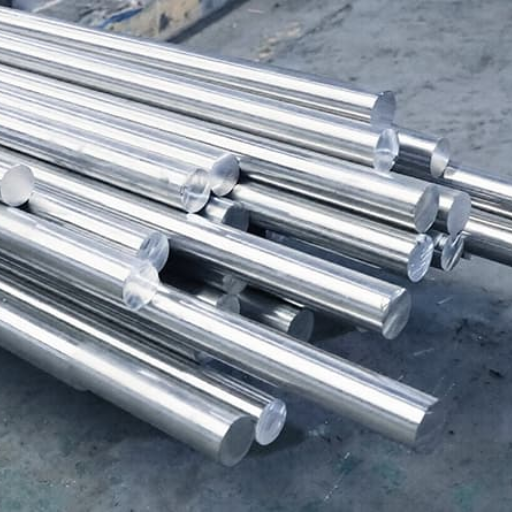
MPI Works on 17-4 PH, and This One Is Not Disputed
17-4 PH magnetic particle inspection is routine. A homogeneous martensitic matrix with high permeability is the easy case for the technique, and standard practice follows ASTM E1444, with ASTM A275/A275M and ASTM A966/A966M governing forgings.
Compare that with duplex, where permeability varies between weld, heat-affected zone and base metal, and inspectors argue about whether the method is valid. On 17-4 PH nobody argues.
The Part Nobody Writes About: Demagnetization
Dennis welds valve bodies in a shop outside Sheffield. A batch came through inspection and went straight to fabrication. His arc wandered for most of a shift before anyone asked whether the parts had been demagnetized. They had not.
Residual magnetism is the consequence. 17-4 PH holds it more stubbornly than an austenitic grade. A magnetised part will:
- attract swarf and chips
- deflect a welding arc
- disturb precision measurement
- contaminate sensor and instrument assemblies
The fix belongs in the specification: a residual field limit in gauss or A/m, plus the method used to verify it. Inspection is not finished when the indications have been read.
Where 17-4 PH Magnetism Is a Disadvantage, and Where It Helps
Magnetic-Sensitive Service: The One Case Where Magnetism Decides
MRI-critical and comparable assemblies require a relative permeability of 1.01 or lower. General low-magnetic duty allows 1.05. 17-4 PH misses both by one to two orders of magnitude.
The same applies to magnetic flowmeter spools, sensor and instrument housings, electron-optics and mass-spectrometry hardware, and precision gyroscopes.
The Substitute Is 316L, Not 304
This is the most common wrong answer in the whole discussion. A buyer needing a non-magnetic part swaps 17-4 PH for 304 to save money, then cold-forms the part, and it arrives weakly magnetic from strain-induced martensite.
316L is the correct choice, and our 316 stainless steel guide covers what it does and does not buy you. Where the part also has to hold strength, that trade-off is the subject of 17-4 PH vs 304 vs 316.
Where Magnetism Is an Advantage
The property cuts both ways, and competitors rarely say so.
Magnetic chucks hold H900 parts firmly for grinding and milling, which solves fixturing on thin, hard or awkward shapes. Magnetic separation and metal detection also respond to martensitic parts in a way they do not respond to austenitic ones. That’s a real functional reason to specify this family in food-grade stainless steel equipment.
That last case needs an honest caveat. 17-4 PH is less corrosion resistant than 316, so the environment has to be checked before the detectability benefit is worth having.
Comparing 17-4 PH against 316L for a magnetic-sensitive assembly? Send us the requirement and we’ll tell you which grade actually meets it. That includes the cases where the answer is neither. Request a technical review.
Can You Use a Magnet to Identify 17-4 PH?
No. A magnet is a screening tool, not a test.
It attracts 17-4 PH, and it also attracts 430, 410, 420, 440C, 15-5 PH, every carbon and low-alloy steel, and cold-worked 304. It separates the magnetic family from the essentially non-magnetic family and stops there.
| Method | What it tells you | What it cannot tell you |
|---|---|---|
| Magnet | Magnetic vs essentially non-magnetic family | Exact grade; chemistry; aging condition |
| Hardness test (ASTM E140 conversion) | Whether the part was aged, roughly which condition | Which grade; chemistry |
| PMI (XRF or OES) | Chemistry, hence grade | Aging condition; mechanical properties |
| Mill test certificate (EN 10204 3.1) | Specified grade, heat and condition as delivered | The individual part’s actual condition |
The substitutions that actually occur are the ones a magnet cannot catch: 304 supplied for 316L, 17-4 PH supplied for 15-5 PH, and Condition A supplied as H900. The ASSDA guidance on grade-confirmation testing says the same thing in industry-body terms.
When Magnetism Should Change Your Material Choice
Anya designs instrument housings in Eindhoven. She had specified 17-4 PH for a bracket because the strength was convenient, and the magnetics engineer caught it in review. The assembly sat next to a sensor that would have read the bracket instead of the signal. The part moved to 316L and the strength problem was solved with thickness.
Three cases, then.
Magnetic-sensitive service is the only one where magnetism alone should decide. High-temperature service is not: above roughly 300 °C the limit is overaging and oxidation, and the alloy stays ferromagnetic across its whole useful range. Corrosion-driven service is not either, because magnetic response has no bearing on corrosion resistance, and the standard technical notes say so plainly.
For most applications magnetism disturbs nothing at all. It becomes a specification question for instruments, a technique question for inspection, and a trap only when someone uses a magnet as a grade test.
Frequently Asked Questions
Is 17-4 PH stainless steel magnetic?
Yes. 17-4 PH is martensitic, and martensite is ferromagnetic, so the grade responds to a magnet in Condition A and in every aged condition from H900 to H1150. Annealed 304 and 316 are essentially non-magnetic by comparison.
Is 17-4 PH magnetic in Condition A?
Yes, but it is the weakest and most variable condition. Condition A is martensitic as supplied, and heavy sections that cool slowly retain some paramagnetic austenite, which lowers the pull.
Why is 17-4 PH magnetic?
Because it is martensitic. Its nickel content of 3 to 5% is too low to hold the non-magnetic austenitic structure that 304 and 316 keep with 8 to 14% nickel.
Is 17-4 PH more magnetic than 304?
By orders of magnitude. Annealed 304 sits near a relative permeability of 1.002 to 1.05, while 17-4 PH is quoted around 60 to 100 or higher depending on condition and measuring field.
Is 15-5 PH magnetic?
Yes. 15-5 PH is also martensitic, so it is magnetic for the same reason and in the same conditions as 17-4 PH.
Is 17-7 PH magnetic?
Only after conditioning. 17-7 PH is semi-austenitic, so its Condition A is austenitic and essentially non-magnetic, and it becomes magnetic once the adjustment treatment converts the austenite to martensite.
What is the relative permeability of 17-4 PH?
Published figures cluster around 60 to 100 or higher, with datasheets commonly quoting about 95. Permeability depends on the magnetising field, so a figure without a stated field is a label rather than a measurement.
What is the Curie temperature of 17-4 PH?
Published values disagree by roughly 250 °C, with one widely copied figure at 480 °C and general references at 675 to 760 °C. Practically, the alloy stays ferromagnetic well above its 300 °C service ceiling.
Does heat treatment change how magnetic 17-4 PH is?
It changes coercivity, not the magnetic class. Fine precipitates after aging at 482 °C pin domain walls and raise coercivity, and overaging at 621 °C coarsens them and lowers it again.
Can 17-4 PH be demagnetized?
Yes, and it should be after magnetic particle inspection. Specify a residual field limit and a verification method, because residual magnetism interferes with welding, measurement and instrument assemblies.
Is 17-4 PH suitable for magnetic particle inspection?
Yes. A homogeneous martensitic matrix is the easy case for the technique, and standard practice follows ASTM E1444 with ASTM A275/A275M for forgings. Unlike duplex, the method is not disputed on this grade.
Can you use a magnet to identify 17-4 PH?
No. A magnet can’t separate 17-4 PH from 430, 15-5 PH, carbon steel or cold-worked 304, and it cannot detect a 304-for-316L or Condition-A-for-H900 substitution. Use PMI and the mill test certificate.
Is 17-4 PH suitable for MRI or magnetic-sensitive equipment?
No. MRI-critical assemblies require a relative permeability of 1.01 or lower and general low-magnetic duty allows 1.05. 17-4 PH misses both by orders of magnitude, so specify 316L instead.
Conclusion
Is 17-4 PH magnetic? Yes, in every condition, and the reason is nickel. The grade is martensitic because 3 to 5% nickel is not enough to hold an austenitic structure, and martensite is ferromagnetic.
The longer answer is that the pull moves. Heavy sections retain austenite and read weaker. Aging state shifts coercivity. Cold work changes the surface response.
None of that changes the magnetic class, and all of it changes what a magnet tells you.
In practice, magnetism is a non-issue for most 17-4 PH service. It’s a specification question for instrumentation, and an inspection and demagnetization question for NDT. It’s a trap only when someone treats a magnet as a grade test.
If you need the grade confirmed rather than assumed, that is a documentation question. LIANYUNGANG DAPU METAL supplies 17-4 PH and 316L with mill test certificates to EN 10204 3.1 and full traceability, plus cutting and custom processing. Send the requirement through our contact page or browse stainless steel products, and we will confirm grade, condition and certification before anything ships.