The composition of stainless steel depends on multiple formulas because it represents a collection of iron alloys that share one essential characteristic. The international standards mandate that stainless steel must contain a minimum of 10.5 percent chromium content. The requirement exists because protection against corrosion through passive layer formation starts to fail below that specified limit.
The 0.04% carbon limit raises questions about L-grade classification, while the price difference between 316 and 304 raises similar concerns for many people. Engineers typically receive material composition requirements, but they lack knowledge about the functions of particular elements and how those elements affect actual performance.
The guide explains stainless steel composition through a systematic analysis of its individual components. The guide explains how different elements, such as chromium, nickel, molybdenum, carbon, and other alloying elements, impact the material’s final properties. The guide provides access to composition tables, which display the most commonly used grades. You will learn how to read specifications with confidence.
If you need help selecting the right grade for your application, our technical consultation team can provide material-specific guidance based on your environment and requirements.
What Makes Stainless Steel “Stainless”?

The 10.5% Chromium Minimum Rule
The definition exists as an exact value that all countries have accepted as their official standard. The three standards ASTM A240, EN 10088, and JIS G4304 establish the same requirement that stainless steel must contain at least 10.5% chromium by weight. This definition establishes stainless steels as a distinct category that includes no other corrosion-resistant metal alloys.
What is the reason for choosing 10.5% as the threshold? Harry Brearley found through his 1910s research that higher concentrations of material provide substantial benefits for corrosion resistance. The surface film remains discontinuous and porous when the 10.5% value exists. A complete protective layer develops across the entire area when the value exceeds that threshold.
How Chromium Creates the Passive Layer
When exposed to oxygen, chromium reacts to form chromium(III) oxide (Cr₂O₃)—a dense, adherent layer approximately 1 to 5 nanometers thick. This passive layer is:
- Self-healing: If scratched, it reforms immediately in the presence of oxygen
- Impermeable: Blocks oxygen, water, and most ions from reaching the underlying iron
- Stable: Maintains integrity across a wide pH range (approximately pH 3 to 12)
The passive layer explains why stainless steel resists corrosion where carbon steel rusts. Carbon steel forms iron oxide (rust)—a porous, flaky compound that exposes fresh metal to continued attack. Chromium oxide remains intact, protecting the substrate indefinitely.
Why Iron Alone Isn’t Enough
Pure iron corrodes rapidly because it lacks this protective mechanism. The iron oxides that form are non-adherent and permeable, allowing corrosion to penetrate continuously. The addition of chromium completely alters the corrosion mechanism because it changes the process from progressive rusting to surface passivation.
The higher chromium content protects against corrosion, but it creates negative effects on other material characteristics. The material loses its ability to be shaped when it reaches 20% chromium because sigma phase formation begins to pose problems during heat treatment. The 16-20% chromium range provides most commercial grades with a balance between resistance to corrosion and ease of fabrication.
For a deeper exploration of how the passive layer functions in different environments, see our stainless steel corrosion resistance guide.
Essential Elements in Stainless Steel Composition
Understanding stainless steel means understanding what each alloying element contributes. Here’s how the major elements function:
Chromium (Cr): 10.5% to 30%
Primary function: Corrosion-resistant foundation
Chromium defines stainless steel. Beyond the 10.5% minimum, increasing chromium content:
- Extends the pH range where the passive layer remains stable
- Improves oxidation resistance at elevated temperatures
- Enhances resistance to oxidizing acids like nitric acid
Typical ranges by grade family:
- Austenitic (304, 316): 16-20%
- Ferritic (430, 409): 16-18%
- Duplex (2205): 22%
- Heat-resistant (310): 24-26%
Nickel (Ni): 0% to 22%
Primary function: Austenite structure stabilization, formability
Nickel is often misunderstood. While it contributes modestly to corrosion resistance, its primary role is metallurgical. Nickel stabilizes the austenitic (face-centered cubic) crystal structure at room temperature.
Austenitic stainless steels (300 series) contain 8-14% nickel. This structure provides:
- Excellent formability: High work hardening rate, good drawability
- Non-magnetic behavior: Austenite is non-ferromagnetic
- Low-temperature toughness: Maintains ductility below -100°C
- Weldability: Austenitic grades weld without phase transformation issues
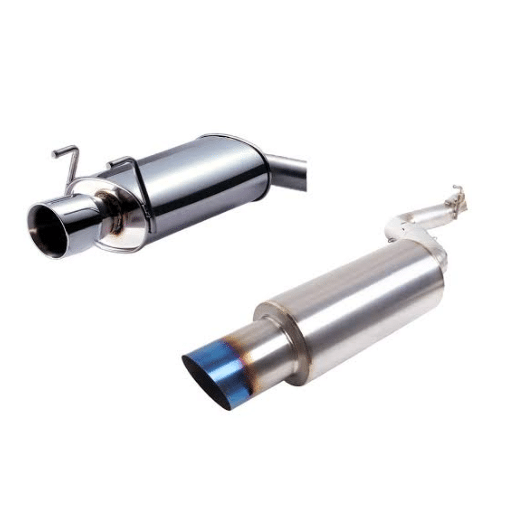
Ferritic grades (430, 409) contain zero nickel. They’re magnetic, less formable, and more economical—making them suitable for automotive exhaust systems and appliances where magnetism isn’t a concern.
Carbon (C): 0.03% to 1.2%
Primary function: Strength (with important trade-offs)
Carbon content creates a fundamental tension in stainless steel design. Higher carbon increases strength and hardness, but it also:
- Promotes chromium carbide precipitation (sensitization) during welding
- Reduces corrosion resistance in the heat-affected zone
- Limits weldability in thicker sections
Standard grades (304, 316) allow up to 0.08% carbon. Low-carbon “L-grades” (304L, 316L) limit carbon to 0.03% maximum—specifically to prevent sensitization in welded structures.
Martensitic grades (410, 420, 440C) use higher carbon (0.15-1.2%) to enable hardening through heat treatment, producing cutlery-grade hardness and wear resistance.
Molybdenum (Mo): 0% to 6%
Primary function: Chloride pitting and crevice corrosion resistance
Molybdenum is the element that separates 316 from 304. The 2-3% molybdenum in 316 stainless steel dramatically improves resistance to chloride attack—making it suitable for marine environments, chemical processing, and coastal applications.
The mechanism: Molybdenum stabilizes the passive layer in chloride-containing environments and slows the propagation of corrosion pits once initiated. The effect is quantified through the PREN formula discussed later.
Higher molybdenum grades include:
- 317: 3-4% Mo
- 904L: 4-5% Mo
- 254 SMO: 6% Mo
Manganese (Mn): 0% to 10%
Primary function: Deoxidizer, nickel substitute in 200 series
Manganese serves multiple roles. In all stainless steels, it acts as a deoxidizer during melting. In 200 series grades (201, 202), manganese substitutes for nickel at approximately half the atomic percentage—reducing cost during periods of high nickel prices.
The substitution isn’t equivalent: 200 series grades have higher work hardening rates and slightly reduced corrosion resistance compared to 300 series. But for many indoor applications, they provide adequate performance at a lower cost.
Nitrogen (N): 0% to 0.25%
Primary function: Strength without magnetic transformation
Nitrogen is increasingly added to modern stainless steels. It:
- Increases strength without reducing formability
- Improves pitting corrosion resistance (included in PREN calculations)
- Stabilizes austenite without adding nickel
Duplex grades like 2205 contain approximately 0.15% nitrogen, contributing to both strength and corrosion resistance. Some high-performance austenitic grades use nitrogen to achieve strength levels approaching duplex steels while maintaining fully non-magnetic properties.
Silicon (Si): 0% to 3%
Primary function: Deoxidation, scaling resistance
Silicon improves resistance to high-temperature oxidation by forming a protective silica layer beneath the chromium oxide. Grades for furnace applications (314, 310) contain 1.5-3% silicon for this reason.
In standard grades, silicon typically runs 0.5-1% as a residual from the deoxidation process.
Titanium (Ti) and Niobium (Nb): Stabilizers
Primary function: Prevent sensitization
Titanium and niobium are added to “stabilized” grades (321 contains Ti, 347 contains Nb). These elements have stronger affinity for carbon than chromium does—forming titanium or niobium carbides instead of chromium carbides during heat treatment.
This prevents chromium depletion at grain boundaries (sensitization) and allows welded components to maintain corrosion resistance without requiring low-carbon L-grades.
Sulfur (S) and Phosphorus (P): Controlled Residuals
Primary function: Machinability (when deliberately added)
Normally minimized to below 0.03% because they reduce corrosion resistance and toughness. However, “free-machining” grades (303, 416) add sulfur to 0.15-0.35% to improve chip breaking during machining—at the cost of reduced weldability and corrosion resistance.
Element Function Reference Table
| Element | Typical Range | Primary Function | Effect on Performance |
|---|---|---|---|
| Chromium (Cr) | 10.5-30% | Corrosion resistance | Forms passive layer; higher = better corrosion resistance |
| Nickel (Ni) | 0-22% | Austenite stabilization | Improves formability; maintains non-magnetic structure |
| Carbon (C) | 0.03-1.2% | Strength | Higher = harder but sensitization risk; L-grades = 0.03% max |
| Molybdenum (Mo) | 0-6% | Chloride resistance | Essential for marine/chemical; 2-3% in 316 grade |
| Manganese (Mn) | 0-10% | Deoxidizer/Ni substitute | 200 series use for cost reduction |
| Nitrogen (N) | 0-0.25% | Strength | Increases strength without magnetism; improves PREN |
| Silicon (Si) | 0-3% | Scaling resistance | Higher Si for high-temperature applications |
| Titanium (Ti) | 0.5% max | Stabilization | Prevents sensitization in 321 grade |
| Niobium (Nb) | 0.5% max | Stabilization | Prevents sensitization in 347 grade |
Stainless Steel Families by Composition
Stainless steels are classified by their metallurgical structure—which is determined primarily by composition. Understanding these families helps predict performance and fabrication behavior.
Austenitic Stainless Steels (300 Series)
Composition: 16-20% Cr, 8-14% Ni, 0.08% C max (0.03% for L-grades)
Austenitic grades dominate the market, representing approximately 56% of all stainless steel production. The nickel content stabilizes the face-centered cubic (FCC) austenite structure at room temperature.
Key characteristics:
- Non-magnetic (unless cold-worked)
- Excellent formability and weldability
- Good toughness at low temperatures
- Cannot be hardened by heat treatment (only by cold working)
Common grades: 304, 316, 321, 347, 310
Ferritic Stainless Steels (400 Series)
Composition: 16-18% Cr, 0% Ni, 0.08-0.12% C
Ferritic grades contain no nickel, making them more economical than austenitic grades. The body-centered cubic (BCC) structure is stable at all temperatures.
Key characteristics:
- Magnetic
- Moderate formability (less than austenitic)
- Good resistance to stress corrosion cracking
- Cannot be hardened by heat treatment
- Lower cost than 300 series
Common grades: 409, 430, 439, 444
Martensitic Stainless Steels
Composition: 12-18% Cr, 0% Ni, 0.15-1.2% C
Martensitic grades use higher carbon content to enable a metallurgical transformation during heat treatment. They can be hardened to high strength levels.
Key characteristics:
- Magnetic
- Hardenable by heat treatment (quenching and tempering)
- High strength and wear resistance
- Moderate corrosion resistance (lower than austenitic)
- Used for cutlery, tools, and wear components
Common grades: 410, 420, 440C
Duplex Stainless Steels
Composition: 22-26% Cr, 4-7% Ni, 2-4% Mo, 0.1-0.3% N
Duplex grades balance austenite and ferrite structures (approximately 50:50). The composition achieves this by reducing nickel while increasing chromium and adding nitrogen.
Key characteristics:
- Magnetic (due to ferrite content)
- Strength approximately double that of 304 or 316
- Superior resistance to stress corrosion cracking
- Excellent pitting and crevice corrosion resistance
- Cost-effective for demanding applications
Common grades: 2205, 2507, 2304
Precipitation Hardening (PH) Stainless Steels
Composition: 15-17% Cr, 4-7% Ni, 0-4% Cu, 0-0.5% Nb
PH grades combine corrosion resistance with high strength through age-hardening. Copper and niobium additions enable precipitation strengthening.
Key characteristics:
- Can reach strength levels of 1700 MPa (250 ksi)
- Good corrosion resistance (approaching 304)
- Dimensional stability during hardening
- Used for aerospace components, shafts, and high-strength fasteners
Common grades: 17-4PH, 15-5PH, 17-7PH
Common Grade Compositions Compared

Understanding the practical differences between common grades helps you select the right material and understand cost variations.
304 vs 316: The Critical Molybdenum Difference
| Grade | Chromium | Nickel | Molybdenum | Carbon |
|---|---|---|---|---|
| 304 | 18-20% | 8-10.5% | 0% | 0.08% max |
| 316 | 16-18% | 10-14% | 2-3% | 0.08% max |
The 2-3% molybdenum in 316 provides chloride resistance that 304 lacks. This makes 316 essential for:
- Marine environments and coastal structures
- Chemical processing with chlorides present
- Pharmaceutical equipment requiring frequent salt-based cleaning
- Food processing with high salt content
For most indoor applications without chloride exposure, 304 provides equivalent performance at lower cost. For more details on these grades, see our 304 stainless steel guide and 316 stainless steel guide.
201 vs 304: Manganese Substitution Economics
| Grade | Chromium | Nickel | Manganese | Carbon |
|---|---|---|---|---|
| 201 | 16-18% | 3.5-5.5% | 5.5-7.5% | 0.15% max |
| 304 | 18-20% | 8-10.5% | 2% max | 0.08% max |
Grade 201 was developed during periods of high nickel prices. The high manganese content partially substitutes for nickel in stabilizing austenite. 201 work hardens more rapidly than 304 and has slightly reduced corrosion resistance.
When 201 makes sense: Indoor applications, decorative trim, and furniture where magnetism isn’t acceptable but extreme corrosion resistance isn’t required.
When to specify 304: Food contact, outdoor exposure, or any chloride-containing environment.
430 vs 304: The Nickel-Free Alternative
| Grade | Chromium | Nickel | Carbon | Structure |
|---|---|---|---|---|
| 430 | 16-18% | 0% | 0.12% max | Ferritic |
| 304 | 18-20% | 8-10.5% | 0.08% max | Austenitic |
Grade 430 contains no nickel, making it significantly less expensive than 304. However, it’s magnetic and less formable. The absence of nickel means it cannot maintain an austenitic structure.
430 excels in: Appliance panels, automotive trim (where magnetic properties don’t matter), and indoor architectural applications.
Specify 304 when: Non-magnetic properties are required, complex forming is needed, or better corrosion resistance is essential.
2205 Duplex: Balanced Composition for Demanding Applications
| Grade | Chromium | Nickel | Molybdenum | Nitrogen |
|---|---|---|---|---|
| 2205 | 22% | 4.5-6.5% | 3-3.5% | 0.14-0.20% |
Duplex 2205 offers a compelling value proposition: strength approximately twice that of 316 with superior stress corrosion cracking resistance and comparable pitting resistance. The lean nickel content (4.5-6.5% vs. 10-14% in 316) helps offset the higher alloy cost.
Applications: Heat exchangers, pressure vessels, chemical process equipment, and marine structures where both strength and corrosion resistance matter.
17-4PH: Precipitation Hardening Chemistry
| Grade | Chromium | Nickel | Copper | Niobium |
|---|---|---|---|---|
| 17-4PH | 15-17.5% | 3-5% | 3-5% | 0.15-0.45% |
The 17-4PH grade achieves high strength through precipitation of copper-rich phases during aging. The niobium addition prevents sensitization during the solution treatment. This martensitic grade offers corrosion resistance approaching 304 with strength exceeding most standard stainless grades.
Composition Tables by Grade
The following tables provide quick-reference composition ranges for major stainless steel grades according to ASTM A240 and A276 specifications.
Austenitic Grades Composition Chart
| Grade | C (max) | Cr | Ni | Mo | Other | Notes |
|---|---|---|---|---|---|---|
| 304 | 0.08 | 18.0-20.0 | 8.0-10.5 | — | — | Most common grade |
| 304L | 0.03 | 18.0-20.0 | 8.0-12.0 | — | — | Low carbon for welding |
| 316 | 0.08 | 16.0-18.0 | 10.0-14.0 | 2.0-3.0 | — | Marine/chemical grade |
| 316L | 0.03 | 16.0-18.0 | 10.0-14.0 | 2.0-3.0 | — | Low carbon 316 |
| 321 | 0.08 | 17.0-19.0 | 9.0-12.0 | — | Ti: 5×C min | Titanium stabilized |
| 347 | 0.08 | 17.0-19.0 | 9.0-13.0 | — | Nb: 10×C min | Niobium stabilized |
| 310 | 0.25 | 24.0-26.0 | 19.0-22.0 | — | — | High temperature |
| 317 | 0.08 | 18.0-20.0 | 11.0-15.0 | 3.0-4.0 | — | Higher Mo than 316 |
| 201 | 0.15 | 16.0-18.0 | 3.5-5.5 | — | Mn: 5.5-7.5 | Low nickel alternative |
| 904L | 0.02 | 19.0-23.0 | 23.0-28.0 | 4.0-5.0 | Cu: 1.0-2.0 | High alloy grade |
Ferritic Grades Composition Chart
| Grade | C (max) | Cr | Ni | Mo | Other | Notes |
|---|---|---|---|---|---|---|
| 409 | 0.08 | 10.5-11.75 | — | — | Ti: 6×C min | Automotive exhaust |
| 430 | 0.12 | 16.0-18.0 | — | — | — | General purpose ferritic |
| 439 | 0.03 | 17.0-19.0 | — | — | Ti: 0.15+ | Stabilized ferritic |
| 444 | 0.025 | 17.5-19.5 | — | 1.75-2.5 | Ti+Nb: 0.20+ | Super ferritic |
| 446 | 0.20 | 23.0-27.0 | — | — | — | High chromium |
Duplex Grades Composition Chart
| Grade | C (max) | Cr | Ni | Mo | N | Notes |
|---|---|---|---|---|---|---|
| 2205 | 0.03 | 22.0-23.0 | 4.5-6.5 | 3.0-3.5 | 0.14-0.20 | Standard duplex |
| 2507 | 0.03 | 24.0-26.0 | 6.0-8.0 | 3.0-5.0 | 0.24-0.32 | Super duplex |
| 2304 | 0.03 | 21.5-24.5 | 3.0-5.5 | 0.05-0.6 | 0.05-0.20 | Lean duplex |
Martensitic Grades Composition Chart
| Grade | C | Cr | Ni | Mo | Notes |
|---|---|---|---|---|---|
| 410 | 0.15 max | 11.5-13.5 | — | — | General purpose hardenable |
| 420 | 0.15 min | 12.0-14.0 | — | — | Higher carbon for hardness |
| 440C | 0.95-1.20 | 16.0-18.0 | — | 0.75 max | High carbon for cutlery |
| 416 | 0.15 max | 12.0-14.0 | — | — | S: 0.15 min |
Precipitation Hardening Grades
| Grade | C (max) | Cr | Ni | Cu | Nb | Notes |
|---|---|---|---|---|---|---|
| 17-4PH | 0.07 | 15.0-17.5 | 3.0-5.0 | 3.0-5.0 | 0.15-0.45 | Most common PH |
| 15-5PH | 0.07 | 14.0-15.5 | 3.5-5.5 | 2.5-4.5 | 0.15-0.45 | Improved toughness |
| 17-7PH | 0.09 | 16.0-18.0 | 6.5-7.75 | — | 0.75-1.50 | Semi-austenitic |
How Composition Affects Performance

Element percentages aren’t abstract—they directly determine how stainless steel performs in service. Understanding these relationships enables informed grade selection.
PREN: Quantifying Pitting Resistance
The Pitting Resistance Equivalent Number (PREN) provides a single value for comparing corrosion resistance:
PREN = %Cr + 3.3 × %Mo + 16 × %N
Higher PREN values indicate better resistance to pitting and crevice corrosion. Typical PREN values:
| Grade | PREN Range | Application Guidance |
|---|---|---|
| 304 | 18-20 | Fresh water, indoor environments |
| 316 | 23-28 | Coastal, mild chemical exposure |
| 2205 | 35-38 | Seawater, aggressive chemicals |
| 2507 | 42-45 | Severe chloride environments |
| 904L | 33-37 | Strong acids with chlorides |
For seawater applications, engineers typically specify grades with PREN ≥ 32.
Mechanical Properties Relationships
Strength: Nitrogen and nickel increase strength. Duplex grades achieve the highest strength levels among standard stainless grades due to their nitrogen content and mixed-phase structure.
Ductility: Higher nickel content improves ductility. Austenitic grades with 8-14% nickel show excellent elongation and formability. Ferritic and martensitic grades are less ductile.
Work Hardening: Austenitic grades (especially those with higher nitrogen or manganese) work harden rapidly. This enables high strength in cold-formed components but makes machining more challenging.
Magnetic Properties and Composition
Magnetism in stainless steel depends entirely on crystal structure, which composition controls:
- Austenitic (high nickel): Non-magnetic at room temperature (may become slightly magnetic when cold-worked)
- Ferritic (no nickel): Magnetic
- Martensitic: Magnetic
- Duplex (reduced nickel): Magnetic due to ferrite content
Applications requiring non-magnetic properties—MRI equipment, certain sensors, magnetic shielding—must use austenitic grades.
Temperature Performance Limits
High-temperature oxidation: Chromium provides oxidation resistance. Grades 309 (23-24% Cr) and 310 (24-26% Cr) withstand continuous exposure to 1000-1150°C. Silicon additions improve scaling resistance.
Low-temperature toughness: Nickel maintains ductility at cryogenic temperatures. Austenitic grades with 8% nickel or more retain toughness below -196°C, making them suitable for LNG and cryogenic equipment.
Carbide precipitation: Carbon content determines the temperature range where chromium carbides form. Higher carbon grades must avoid 450-850°C during welding or heat treatment.
For detailed property information, see our stainless steel properties guide.
Composition’s Impact on Fabrication
Element composition directly affects how stainless steel responds to welding, machining, and forming. Specifying the right grade requires understanding these relationships.
Carbon Content and Sensitization
When austenitic stainless steel heats into the 450-850°C range, carbon diffuses to grain boundaries and forms chromium carbides. This sensitization depletes chromium from the areas adjacent to grain boundaries, destroying the passive layer locally.
The result: intergranular corrosion along grain boundaries in the heat-affected zone of welds. This is why welded 304 sometimes rusts at the joints despite being “stainless.”
Solutions:
- Use L-grades (304L, 316L) with carbon limited to 0.03%—below the threshold for carbide precipitation
- Use stabilized grades (321, 347) where Ti or Nb preferentially forms carbides
- Solution anneal after welding (impractical for most field applications)
James Chen, a fabricator in Houston, learned this lesson on a pressure vessel project. He specified standard 304 for cost savings, then watched rust appear at weld joints during hydrostatic testing. The retrofit to 304L cost three times what specifying the correct grade initially would have. Carbon content matters.
Titanium and Niobium Stabilization
Stabilized grades solve the sensitization problem through chemistry. Titanium (in 321) and niobium (in 347) have stronger carbide-forming affinity than chromium. During heat treatment, they form titanium carbides or niobium carbides instead of chromium carbides—preserving chromium in solution and maintaining corrosion resistance.
Specify 321 or 347 when:
- Operating in the 450-850°C service temperature range
- Post-weld heat treatment isn’t practical
- Carbon must be higher for strength reasons
Machinability Considerations
Free-machining grades add sulfur (303, 416) to improve chip breaking. The sulfur forms manganese sulfide inclusions that act as chip breakers—but also:
- Reduce corrosion resistance
- Cause weld porosity
- Lower toughness
Use free-machining grades only for components that won’t be welded and operate in mild environments. For applications requiring both machinability and corrosion resistance, consider duplex grades, which machine cleanly due to their mixed structure.
Formability and Work Hardening
Nickel content determines formability. Higher nickel means:
- Lower yield strength (easier to start forming)
- Higher work hardening rate (strengthens during forming)
- Better deep drawability
The 200 series grades (201, 202) work harden even more aggressively than 304—useful for applications requiring high strength in the formed condition, but requiring more power during forming.
Heat Treatment Requirements
Austenitic grades: Cannot be hardened by heat treatment. Solution treatment (annealing) at 1010-1120°C dissolves any carbides and restores corrosion resistance after welding or cold working.
Martensitic grades: Require quenching and tempering. Heat to 925-1065°C, air cool or oil quench, then temper at 150-620°C depending on strength requirements.
Precipitation hardening grades: Solution treat, then age at 480-620°C to precipitate strengthening phases. Different aging temperatures produce different strength levels.
If you need guidance on selecting grades for specific fabrication processes, contact our engineering team for application-specific recommendations.
Reading Composition Specifications
Mill certificates and specifications use standardized terminology. Understanding these documents ensures you receive the material you specified.
ASTM A240: Plate, Sheet, and Strip
ASTM A240 specifies composition limits for flat products. Key columns in a mill certificate:
- Heat analysis: The composition of the molten heat, measured before casting
- Product analysis: The composition of the finished product (allows slightly wider tolerances)
- Max/Min ranges: The specification limits
Typical A240 composition table excerpt for 304:
Element    Min    Max
Carbon     —      0.08
Manganese  —      2.00
Phosphorus —      0.045
Sulfur     —      0.030
Silicon    —      1.00
Chromium   18.0   20.0
Nickel     8.0    10.5
The “—” indicates no minimum (or maximum for elements where only minimum is specified).
ASTM A276: Bars and Shapes
A276 covers bars, angles, and structural shapes. Composition limits are generally similar to A240 for the same grade, but tolerances may differ for bar products. Check the specific standard for your product form.
EN 10088: European Standards
European designations use a different system:
- 1.4301: Equivalent to 304
- 1.4404: Equivalent to 316L
- 1.4462: Equivalent to 2205
EN 10088-1 provides the composition tables. The standard uses “X” designations for high-carbon grades and “L” designations for low-carbon grades, similar to ASTM.
JIS G4304/G4305: Japanese Standards
Japanese standards use “SUS” (Steel Use Stainless) designations:
- SUS304: Equivalent to 304
- SUS316L: Equivalent to 316L
Composition limits are generally aligned with ASTM, though minor differences exist. When sourcing from Japanese mills, verify that composition meets your project specifications.
Understanding Tolerance Ranges
Composition specifications show ranges, not single values. A 304 heat with 18.5% chromium and 9.2% nickel is within specification, as is one with 19.8% chromium and 10.1% nickel. Both are “304” but will have slightly different properties.
For critical applications, specify additional requirements:
- Minimum PREN for corrosion-critical service
- Specific carbon range for welding applications
- Ferrite content range for duplex grades
Composition Requirements by Application

Different applications demand specific composition minimums. Here’s what engineers specify for common use cases.
Food Grade Requirements
Food contact requires grades that won’t contaminate products and resist cleaning chemicals. 304 is the minimum for most food contact applications. Requirements include:
- Chromium ≥ 18% for corrosion resistance
- Nickel ≥ 8% for formability (complex equipment shapes)
- Surface finish Ra ≤ 0.8 μm (additional to composition)
For high-salt or acidic foods, 316 is preferred due to molybdenum content. The food industry often specifies 316L for welded equipment to prevent sensitization.
For detailed food grade standards, see our food-grade stainless steel guide.
Marine Environment Minimums
Seawater is among the most aggressive environments for stainless steel. Minimum requirements:
- Coastal atmosphere: 316 (PREN ≥ 23)
- Splash zone: 2205 duplex (PREN ≥ 35)
- Submerged: 2507 super duplex or 904L (PREN ≥ 42)
The molybdenum content is critical—316 contains the minimum 2% Mo for coastal exposure. Lower grades like 304 will pit in salt air within months.
High-Temperature Service
Elevated temperatures require grades that resist oxidation and maintain strength:
- Up to 800°C: 309 (23% Cr, 13% Ni)
- Up to 1150°C: 310 (25% Cr, 20% Ni, Si additions)
- Heat exchangers: 316 or duplex (thermal cycling resistance)
Silicon additions (1.5-3%) improve oxidation resistance by forming a silica sub-layer beneath the chromium oxide.
Medical and Pharmaceutical
Medical applications require biocompatibility, sterilization resistance, and precise mechanical properties:
- Surgical instruments: 420 or 440C (hardenable for edge retention)
- Implants: 316LVM (vacuum melted, ultra-low carbon, maximum cleanliness)
- Equipment: 316L (corrosion resistance, weldability)
Pharmaceutical equipment often specifies 316L with surface finishes meeting ASME BPE standards—composition enables the required corrosion resistance and cleanability.
Automotive Exhaust Systems
Exhaust systems cycle between ambient and 650+°C while exposed to road salt and condensate. The solution: ferritic grades that resist thermal fatigue:
- 409: 11% Cr, lowest cost, moderate corrosion resistance
- 439: Stabilized 18% Cr grade, better corrosion resistance
- 441: 18% Cr with niobium and titanium stabilization
Ferritic grades handle thermal cycling better than austenitic grades and cost significantly less due to zero nickel content.
For comprehensive application guidance, see our stainless steel applications guide.
Emerging Compositional Trends (2025-2030)
Stainless steel composition continues evolving to meet new demands. These trends will shape grade availability and selection in coming years.
Low-Nickel and Nickel-Free Grades
Nickel price volatility drives development of alternatives. The 200 series (high manganese) continues expanding in appliance and automotive applications where corrosion demands are moderate.
New ferritic grades with improved formability challenge austenitic grades in traditional markets. These grades use stabilizing elements and controlled grain size to achieve formability approaching 304 at nickel-free pricing.
High-Nitrogen Austenitic Steels
Nitrogen provides strength without the magnetic transformation risk of martensite or the cost of high nickel. Modern grades use up to 0.25% nitrogen to achieve:
- Strength approaching duplex grades
- Fully austenitic (non-magnetic) structure
- PREN values of 30+ for corrosion resistance
These grades target applications needing high strength with non-magnetic properties— MRI equipment, naval vessels, and precision instruments.
Additive Manufacturing Powder Compositions
3D printing requires powders with specific characteristics:
- Spherical morphology for flowability
- Tight composition control for consistent melting
- Low oxygen content to prevent defects
Powder grades of 316L, 304L, and 17-4PH are now standard. Emerging compositions optimize for the rapid solidification of laser powder bed fusion—different microstructure requirements than wrought products.
Hydrogen Service Grades
The hydrogen economy demands materials resistant to hydrogen embrittlement. Research shows:
- Austenitic grades resist hydrogen embrittlement better than ferritic or martensitic
- Higher nickel content improves hydrogen compatibility
- Controlled sulfur and phosphorus minimize hydrogen trapping sites
316L and 321 are emerging as preferred grades for hydrogen infrastructure. New specifications for hydrogen service are developing composition requirements specifically for this application.
FAQ
What is the minimum chromium content for stainless steel?
10.5% by mass according to ASTM, EN, and ISO standards. Below this threshold, the chromium oxide passive layer cannot form coherently across the surface, and the alloy lacks the self-healing corrosion resistance that defines stainless steel.
Does 304 stainless steel contain nickel?
Yes. 304 contains 8.0-10.5% nickel. This nickel content stabilizes the austenitic crystal structure, providing the non-magnetic properties and excellent formability that make 304 versatile. The “18/8” shorthand for 304 refers to approximately 18% chromium and 8% nickel.
What is the difference between 18/8 and 18/10 stainless steel?
18/8 refers to approximately 18% chromium and 8% nickel (typical of 304). 18/10 refers to 18% chromium and 10% nickel (closer to 316 or higher-nickel 304 variants). The higher nickel in 18/10 improves corrosion resistance slightly and provides better shine for flatware applications.
Is there stainless steel without nickel?
Yes. Ferritic grades (409, 430, 444) contain zero nickel. These grades are magnetic, less expensive, and suitable for automotive exhaust, appliances, and architectural applications where magnetism isn’t a concern. They offer moderate corrosion resistance through chromium content alone.
What grade has the highest chromium content?
446 stainless steel contains 23-27% chromium, the highest among standard grades. It’s used for furnace parts and high-temperature applications where oxidation resistance is critical. Among common grades, 310 contains 24-26% chromium and offers excellent high-temperature performance.
When should I specify 304L instead of 304?
Specify 304L when welding thicker sections or when the material will operate in the 450-850°C range. The 0.03% maximum carbon in 304L prevents chromium carbide precipitation (sensitization) that destroys corrosion resistance in the heat-affected zone of welds.
Why does welded stainless steel sometimes rust?
Welding heats the heat-affected zone into the sensitization temperature range (450-850°C), causing carbon to form chromium carbides at grain boundaries. This depletes chromium locally, destroying the passive layer. Solutions: use 304L/316L, use stabilized grades (321, 347), or solution anneal after welding.
What does PREN mean?
Pitting Resistance Equivalent Number (PREN = %Cr + 3.3×%Mo + 16×%N) quantifies resistance to chloride pitting. Higher PREN values indicate better performance in aggressive environments. 304 has PREN ~19; 316 has PREN ~24; 2205 duplex has PREN ~35.
Conclusion
Stainless steel composition isn’t just chemistry—it’s the blueprint for performance. The 10.5% chromium minimum defines the category. Nickel determines structure and formability. Molybdenum protects against chlorides. Carbon enables strength but creates welding challenges. Understanding these relationships transforms specification from guesswork to engineering.
The key takeaways:
- 10.5% chromium is the defining threshold for stainless steel
- Nickel creates austenitic structure; its absence produces magnetic ferritic grades
- Molybdenum at 2-3% distinguishes 316 from 304 for marine/chemical service
- Carbon above 0.03% risks sensitization in welded austenitic grades—specify L-grades for welded structures
- PREN values quantify corrosion resistance for grade comparison
- Composition tables in ASTM, EN, and JIS standards provide specification guidance
The engineer who appeared at the beginning of our story now requires 304L material to create welded pressure vessels, while he verifies mill certificates to assess carbon content, and he determines PREN values for use in marine environments. The engineer now makes decisions based on material specifications, which explain the differences between 304 and 304L instead of the previous system that created confusion.
Our team provides material certification and grade selection guidance for critical applications that require stainless steel with confirmed composition. We supply certified 304, 316, duplex, and specialty grades with full mill test reports confirming composition compliance.