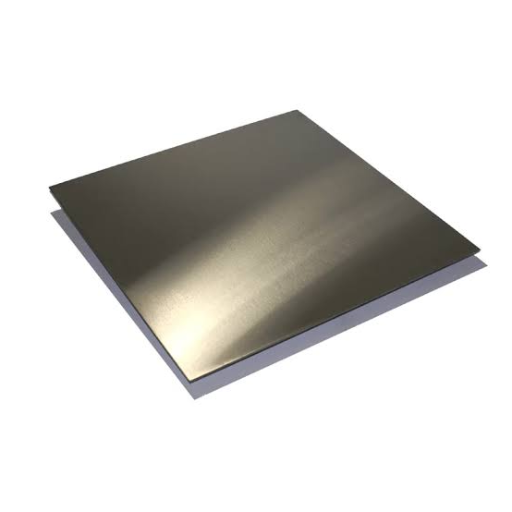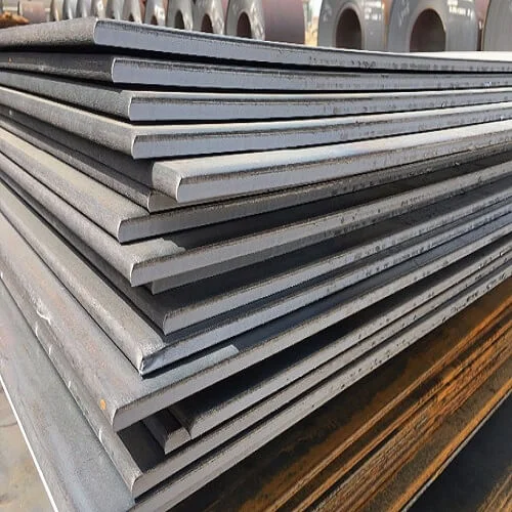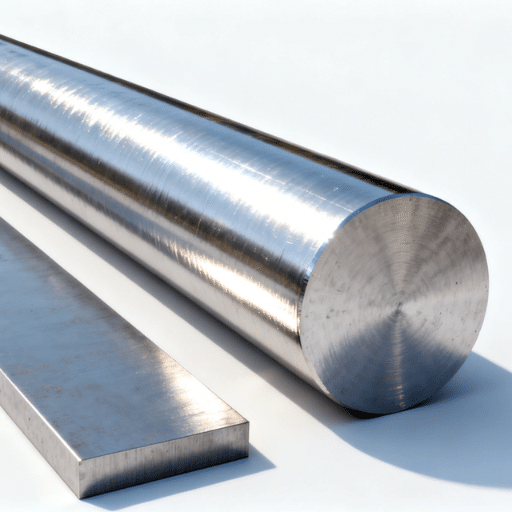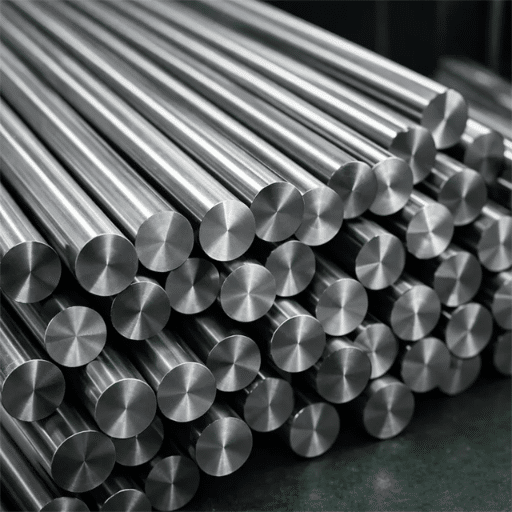
The main distinction between 304 and 316 stainless steel arises from 316 stainless steel, which includes 2 to 3 percent molybdenum as an additional element that enhances its ability to resist chloride-based corrosion. 304 stainless steel protects against atmospheric conditions and low-level chemical exposure, while 316 stainless steel provides necessary protection against marine environments and saltwater and high-chloride industrial use. The price of 316 stainless steel exceeds that of 304 stainless steel by 30 to 40 percent.
A chemical processing facility in Shandong Province installed 304 stainless steel cooling headers for its seawater heat exchange system in the year 2024. The procurement team chose 304 to save approximately 12,000onmaterialcosts. The pipe walls suffered complete chloride pitting, which occurred in less than 18 months. The facility faced approximately 12,000 expenses for the entire process of shutdown, replacement, and hazardous waste management. The pipe walls suffered complete chloride pitting, which occurred in less than 18 months. The facility spent approximately 47,000 for the entire process, which included shutdown, replacement, and hazardous waste disposal. The expected cost savings disappeared, while the material replacement turned out to be 316 stainless steel, as everyone anticipated.
This mistake occurs frequently. The materials 304 and 316 exhibit identical visual appearance, while they possess identical machining properties and share identical tensile strength measurements. The first material maintains performance when exposed to chlorides, while the second material experiences premature failure. Engineers and procurement managers require a specific approach to determine which material they should select.
This guide provides a side-by-side comparison of 304 vs 316 stainless steel. The reader will understand chemical distinctions between the two materials, their corrosion resistance ratings, mechanical characteristics and welding characteristics, cost assessment, and optimal time to use each material grade. The decision framework which you will obtain from this study will provide you with precise guidelines that use technical information and practical case studies for decision-making.
Key Takeaways
- 316 contains 2-3% molybdenum, giving it a PREN of 23-28 compared to 304’s 18-20
- 316 costs 30-40% more than 304, but TCO analysis often favors 316 in chloride environments
- 304L and 316L limit carbon to 0.03%, making them essential for welded fabrications
- Both grades share identical tensile strength (515 MPa) in the annealed condition
- 304 is the smarter choice for indoor, non-chloride environments where 316 provides no added benefit
Need help selecting the right grade for your project? Our material selection team can analyze your corrosion environment, welding requirements, and budget to recommend the most suitable stainless steel grade.
What Is the Difference Between 304 and 316 Stainless Steel?

304 and 316 are both austenitic stainless steels in the 300 series. They share a face-centered cubic crystal structure, excellent formability, and good weldability. The critical difference lies in their chemical composition and how that composition affects corrosion resistance.
Chemical Composition Breakdown
The chemical composition of 304 stainless steel includes 18 to 20 percent chromium and 8 to 10.5 percent nickel. Molybdenum exists in this material because no deliberate addition of it was made. The UNS designation is S30400, and the European equivalent is EN 1.4301.
The composition of 316 stainless steel includes 16 to 18 percent chromium and 10 to 14 percent nickel, together with 2 to 3 percent molybdenum, which serves as its critical element. The UNS designation is S31600, and the European equivalent is EN 1.4401.
Molybdenum functions as the key element that transforms the entire process. Molybdenum improves the durability of passive chromium oxide protection in environments that contain chloride. The passive film gets damaged when chlorides enter through the protective barrier. The protective layer now shows improved resistance against chloride attacks.
For a broader overview of how stainless steel grades are classified, see our complete stainless steel guide.
The Molybdenum Effect on Corrosion Resistance
The Pitting Resistance Equivalent Number (PREN) quantifies this difference. The standard PREN formula is:
PREN = %Cr + 3.3(%Mo) + 16(%N)
304 has a PREN of approximately 18-20. 316 has a PREN of 23-28. That 25-40% improvement translates directly into longer service life in seawater, chemical processing, and any environment where chlorides are present.
In ASTM B117 salt spray testing, 316 demonstrates 3-5 times longer time-to-corrosion than 304. In marine immersion tests, 304 typically shows pitting within 2-5 years, while 316 lasts 10-15 years or more under identical conditions.
304 vs 316 Chemical Composition Comparison
The table below compares the chemical composition of standard 304 and 316 grades.
| Element | 304 (%) | 316 (%) | Why It Matters |
|---|---|---|---|
| Carbon (max) | 0.08 | 0.08 | Affects weldability and sensitization risk |
| Chromium | 18.0-20.0 | 16.0-18.0 | Forms the passive corrosion-resistant layer |
| Nickel | 8.0-10.5 | 10.0-14.0 | Stabilizes austenitic structure, improves toughness |
| Molybdenum | 0 | 2.0-3.0 | Critical for chloride pitting resistance |
| Manganese | 2.0 max | 2.0 max | Improves hot working properties |
| Silicon | 1.0 max | 1.0 max | Deoxidizer during steelmaking |
| Nitrogen | 0.10 max | 0.10 max | Increases strength and pitting resistance |
| Iron | Balance | Balance | Base element of the alloy |
Values are typical ranges per ASTM A240 for plate, sheet, and strip. Actual compositions vary by supplier and product form.
The lower chromium in 316 is balanced by the molybdenum addition. The higher nickel content improves toughness and resistance to stress corrosion cracking. For buyers reviewing Mill Test Certificates, verifying molybdenum content is the simplest way to confirm that the delivered material is actually 316 and not 304.
Corrosion Resistance: 304 vs 316

General Corrosion Resistance
Both 304 and 316 offer excellent resistance to atmospheric corrosion, fresh water, and most organic chemicals. In indoor environments, urban atmospheres, and non-chloride industrial settings, both grades perform identically. The passive chromium oxide layer protects both grades effectively when chlorides are absent.
Chloride and Pitting Resistance (The Critical Difference)
The two grades begin to show their largest differences at this point. Chloride ions attack the passive layer and initiate localized pitting corrosion. The pit develops at a fast rate because the pit chemistry turns into an acid state that maintains itself.
304 material protects chloride compounds until they reach a concentration of 200 ppm in conditions of moderate temperature. Pitting risk starts to increase after reaching this boundary. 304 material becomes unsuitable for submerged applications in seawater, which contains approximately 19,000 ppm of chloride.
316 material protects chloride compounds until they reach a concentration of 1,000 ppm under comparable environmental conditions. The 2-3% molybdenum content changes pitting potential to more positive values which need higher chloride levels or temperatures for attack to start. 316 material serves as the minimum acceptable standard for both seawater and heavy industrial chloride exposure.
A Zhejiang food processing plant learned this lesson with its brining line. The facility used 304 equipment for vegetable fermentation in a 6% salt solution. The plant needed to repair equipment because of seasonal pitting damage, which occurred every three years. The equipment has functioned for eight years without any corrosion-related interruptions since the company switched to 316L. The maintenance costs exceeded the material expenses, but the company saved money during its first maintenance cycle.
Crevice Corrosion and Stress Corrosion Cracking
316 also outperforms 304 in crevice corrosion resistance. Crevices, gasket interfaces, and under-deposit regions create stagnant chemistry that accelerates attack. The molybdenum in 316 improves resistance to this localized failure mode.
Both grades are susceptible to chloride stress corrosion cracking above 60 degrees Celsius. For high-temperature chloride service, duplex stainless steels such as 2205 or high-nickel alloys are required.
High Temperature Oxidation
The 304 and 316 stainless steels show the same maximum operational temperature limit, which they can maintain in air until their breakdown at 870 degrees Celsius and 425 degrees Celsius for continuous operation. The two grades show equal performance in their ability to resist high-temperature oxidation. The preferred materials for operations above 800 degrees Celsius include 321 and 310S stainless steels which contain stabilized chemical compositions and increased chromium and nickel content.
Mechanical Properties Comparison
Tensile and Yield Strength
In the annealed condition, 304 and 316 share identical minimum mechanical properties per ASTM A240:
- Tensile strength: 515 MPa (74,700 PSI)
- Yield strength: 205 MPa (29,700 PSI)
- Elongation: 40%
This means that for structural applications where strength governs design, either grade meets the same specification. The choice between them should be driven by corrosion requirements, not mechanical properties.
Hardness and Ductility
304 typically measures 92 HRB in the annealed condition. 316 measures approximately 95 HRB. The difference is negligible for most applications. Both grades offer excellent ductility, which enables deep drawing, bending, and complex forming operations.
Work Hardening Rates
304 work hardens more rapidly than 316 during cold forming. This means that 316 requires less intermediate annealing during severe forming operations. For deep drawing applications, 316 may offer a processing advantage despite its higher material cost.
Magnetic Properties
Both grades are non-magnetic in the fully annealed condition due to their austenitic crystal structure. However, both can develop slight magnetic permeability after severe cold working. 316 generally retains lower magnetic permeability after cold work compared to 304. For applications where minimal magnetism is critical, 316 may offer a slight advantage.
304L vs 316L: Why the L Matters
The L designation represents low-carbon materials. The maximum carbon content for 304 and 316 standard materials permits 0.08% carbon. The L grades restrict carbon content to a maximum of 0.03% carbon.
The process of welding creates a problem because carbon interacts with chromium to produce chromium carbides, which accumulate along the grain boundaries. Sensitization causes chromium to leave the areas next to grain boundaries, which grow through this process. The heat-affected zone experiences intergranular corrosion because of this condition.
The welding industry prefers 304L and 316L for their welded fabrications. The welding process produces lower carbon material, which prevents carbide precipitation and protects corrosion resistance in the welded state. L grades protect against corrosion for thick sections without requiring post-weld solution annealing.
Standard grades and L grades show a price difference that ranges between 3 to 5 percent. The small premium required for most welded applications protects against sensitization risks that exist in these operations.
Welding and Fabrication Differences
Filler Metal Selection
The welding process for 304 requires ER308 or ER308L as the appropriate filler metal. The welding process for 316 requires ER316 or ER316L as the appropriate filler metal. The required filler metal must match or exceed base metal alloy content because this requirement ensures that the weld will maintain its corrosion-resistant properties.
The process of welding 304 to 316 is possible. The filler metal used for this project should be ER316L. The weld will exhibit 316 corrosion resistance; however, 304 will restrict joint performance due to its specific composition. The system designer needs to accept that 304 limits the total corrosion protection of mixed-grade joints.
Sensitization and Heat-Affected Zones
Standard 304 and 316 can sensitize in the heat-affected zone if heat input is excessive or if the material is held in the sensitization temperature range (450-850 degrees Celsius) for extended periods. This is why L grades are preferred for multi-pass welding or thick sections.
Post-Weld Treatment
For standard grades in critical applications, post-weld solution annealing at 1,050-1,100 degrees Celsius followed by rapid cooling dissolves chromium carbides and restores corrosion resistance. For L grades, this treatment is usually unnecessary.
Pickling and passivation should follow welding for both grades. Pickling removes weld scale and chromium-depleted layers. Passivation in nitric acid restores the passive oxide film.
Formability and Machinability
Both grades of machine are similar and are considered gummy. They produce long chips and work harden rapidly at the tool tip. Carbide-tipped tools, positive rake angles, and adequate coolant are essential. 316 machines slightly more easily than 304 due to its lower work hardening rate.
Cost Comparison: 304 vs 316

Raw Material Price Difference
316 stainless steel costs 30-40% more than 304 on a raw material basis. The premium is driven by molybdenum and nickel content. Molybdenum is a commodity-priced element, and its market price directly affects 316 costs.
Molybdenum supply constraints in 2025-2026 may push the 316 premium toward 40-50% in some markets. Procurement teams should verify current pricing rather than relying on historical cost ratios.
Total Cost of Ownership Analysis
The upfront material cost is only part of the equation. When 304 is specified in a 316 environment, the lifecycle cost typically exceeds the initial savings by a wide margin.
Consider the Shandong chemical plant example. The 12,000materialsavingsfromchoosing304wasoffsetby12,000materialsavingsfromchoosing304wasoffsetby47,000 in replacement costs within 18 months. The true TCO made 304 approximately 4 times more expensive than 316 would have been from the start.
A simple TCO framework for grade selection:
- Upfront material cost difference: 316 costs 30-40% more
- Expected service life in chlorides: 304 = 2-5 years, 316 = 10-15+ years
- Replacement cost: Material + labor + downtime + disposal
- Maintenance cost: Inspections, repairs, coatings
When chlorides exceed 200 ppm, 316 typically wins on TCO within the first replacement cycle.
When 316 Is Over-Specified
Not every application needs 316. The 304 material operates at 30-40% lower expenses while delivering identical performance to 316 in indoor atmospheric environments, fresh water systems and non-chloride chemical service.
A Hebei architectural firm specified 316 for an urban facade project, assuming the marine-grade label meant better performance. The environment had no chloride exposure. After 20 years, both 304 and 316 facades in the same district showed identical corrosion performance. The 316 specification added roughly 35% to the material budget with zero benefit.
The 304 material presents a better financial option for environments that do not experience corrosive damage. The key is understanding your actual operating conditions rather than defaulting to the higher-grade material.
Ready to compare pricing for your specific application? Explore our 304 stainless steel products and 316 stainless steel products for current availability and competitive factory pricing.
Applications: When to Use 304 vs 316
Choose 304 When
- The environment is atmospheric, indoor, or fresh water
- Chloride exposure is below 200 ppm and temperatures are moderate
- Food processing involves pH 5-9 without salt or brine
- The project is budget-constrained and corrosion risk is low
- HVAC, warehousing, general industrial equipment, and decorative applications
- Welding is minimal or post-weld heat treatment is feasible
Choose 316 When
- Marine, coastal, saltwater, or salt spray exposure is present
- Chemical processing involves chlorides, bleach, or unknown fluids
- Medical devices, pharmaceuticals, and surgical instruments require sterilization compatibility
- High-chloride food environments such as brining, salting, or seafood processing
- Pulp and paper mills, textile bleaching, and photographic processing
- Continuous welding is required and post-weld annealing is impractical (use 316L)
Application Comparison Table
| Application / Industry | Recommended Grade | Reasoning |
|---|---|---|
| General indoor equipment | 304 | No chloride exposure, cost optimized |
| Marine hardware and boat fittings | 316 / 316L | Chloride resistance essential |
| Fresh water tanks and piping | 304 | Adequate corrosion resistance |
| Seawater cooling systems | 316 / 316L | High chloride, pitting risk |
| Food processing (non-salty) | 304 / 304L | FDA compliant, cost effective |
| Brining and fermentation | 316L | High salt concentration |
| Chemical storage (mild) | 304 | General chemical resistance |
| Chemical processing (chlorides) | 316L | Chloride and acid resistance |
| Pharmaceutical equipment | 316L | Sterilization compatibility |
| Surgical instruments | 316L | Biocompatibility and corrosion resistance |
| Urban architectural facades | 304 | Atmospheric corrosion only |
| Coastal architectural facades | 316 | Salt spray exposure |
For food industry applications specifically, see our detailed guide on food-grade stainless steel standards and requirements.
How to Identify 304 vs 316 in the Field
Accurate grade identification prevents costly misapplication. Several methods exist, ranging from simple field tests to laboratory analysis.
Chemical Spot Testing (Moly Test)
The molybdenum spot test detects molybdenum through the reaction of oxalic acid and potassium ferricyanide. The color change shows the presence of molybdenum, which confirms 316 stainless steel instead of 304 stainless steel. The test process requires chemical safety measures, although its steps remain straightforward. The test cannot differentiate 316 stainless steel from other molybdenum-containing alloys which include 317 and 2205 stainless steel.
XRF Analysis
Handheld X-ray fluorescence analyzers provide rapid, non-destructive chemical composition analysis. XRF can determine material grade through identification which verifies that delivered materials match purchase order specifications. Many quality departments now use XRF as standard practice for incoming material inspection.
Mill Test Certificates
Every reputable supplier provides a Mill Test Certificate with chemical composition and mechanical properties. The certificate must show that the molybdenum content meets 316 specifications, which require 2-3% molybdenum according to ASTM EN and JIS standards. All shipments of 304 stainless steel and 316 stainless steel from LIANYUNGANG DAPU METAL include complete MTC documents which contain chemical composition details.
Common Misidentification Risks
Some suppliers substitute 201 for 304 to reduce costs. 201 contains less nickel and more manganese which makes it less resistant to corrosion. The most typical risk in 304 vs 316 situations occurs when customers receive 304 instead of 316 during times of elevated molybdenum market prices. Whenever you work with new suppliers, you need to confirm grade information through MTC or XRF testing.
Frequently Asked Questions
What is the main difference between 304 and 316 stainless steel?
The primary distinction between 304 and 316 stainless steel exists because 316 contains 2-3% molybdenum which creates this difference. This addition significantly improves resistance to chloride pitting and crevice corrosion. The two grades belong to the austenitic family while they maintain identical tensile strength and deliver outstanding formability and weldability. The two materials produce identical performance results in all environments except those that contain chloride.
What makes 316 stainless steel a better value than its higher price?
The premium price of 316 becomes justified in environments that contain chloride, such as marine and chemical processing and high-salt food applications. The product creates savings because its initial expense becomes recouped through an extended operational period and the elimination of equipment replacement needs. The extra expense of 316 becomes redundant because the material delivers no advantages in non-chloride settings compared to 304 stainless steel.
Does 304 stainless steel work well for outdoor use?
The material 304 stainless steel demonstrates suitable performance for most outdoor environments that experience normal atmospheric conditions. The material protects against rain and humidity and urban pollution through its effective resistance. The material 316 becomes necessary in coastal regions that exist within 5 to 10 kilometers of saltwater because of salt spray exposure. The use of 316 material becomes necessary in industrial zones that contain high levels of chloride in their atmospheric conditions.
Is 304 or 316 better for food grade?
The two grades, 304 and 316, both qualify as food-grade materials. The food processing industry mainly uses 304 stainless steel because it satisfies FDA standards and protects against corrosion when handling non-salty food products. 316 stainless steel functions better than other materials in environments that contain high levels of salt and operations that involve brining and processes that need chlorine-based disinfecting. The food-grade stainless steel standards page provides complete information about food-grade materials.
What does the L mean in 304L and 316L?
The letter L represents low carbon content within the alloy. The carbon content of both 304L and 316L alloys reaches a maximum limit of 0.03%, while standard grades allow up to 0.08% maximum carbon content. The welding process decreases chromium carbide precipitation because lower carbon content exists, which eliminates intergranular corrosion within the heat-affected zone. The L grades should be used for all welded material constructions.
Can you weld 304 to 316 stainless steel?
Yes. The joint requires ER316L filler metal as the appropriate welding material. The weld metal will have 316-level corrosion resistance, but the 304 base metal side will still be limited to 304-level performance. The design of mixed-grade joints for corrosion-critical applications requires protection of the 304 side from extreme environmental conditions.
Will a magnet stick to 316 stainless steel?
Magnetism does not occur in the material after it has been annealed. Both 304 and 316 are austenitic and non-magnetic. The process of cold working results in the formation of a small amount of martensite which causes minor magnetic permeability changes. 316 stainless steel maintains lower magnetic permeability after cold working than 304 stainless steel. The presence of strong magnetism indicates that the material belongs to the ferritic category which includes 430 instead of the austenitic category.
How do you tell 304 from 316 stainless steel?
Handheld XRF analysis remains the most dependable technique because it instantly reveals the chemical composition of materials. The molybdenum spot test is a simple field method. The Mill Test Certificate serves as the standard practice for quality control checks. The two grades of material appear identical which makes visual inspection insufficient for identification.
How much more expensive is 316 than 304?
The raw material cost for 316 exceeds 304 by 30 to 40 percent. The premium reflects molybdenum and nickel content. The pricing gap between products extends from 40 to 50 percent during times of elevated molybdenum costs. Always verify current pricing for accurate project budgeting.
Can I use 304 in a marine environment?
Material 304 does not suit applications that require marine service with continuous salt spray exposure and underwater immersion. The seawater chloride concentration, which reaches 19000 ppm, exceeds the 304 material resistance limit. The minimum grade required for marine applications is 316. The marine hardware that requires critical performance or extended lifespan needs 316L or duplex grades such as 2205.
Conclusion
The decision between 304 and 316 stainless steel depends on one main question, which investigates whether the material will face exposure to chlorides.
The answer leads to 304 as the correct choice because it provides identical mechanical characteristics and the same resistance to atmospheric corrosion, and the product costs 30 to 40 percent less than the alternative. The specification of 316 for non-chloride conditions results in budget waste because it neither improves performance.
The 2-3% molybdenum content in 316 stainless steel provides essential chloride protection, which 304 stainless steel does not possess. The 316 stainless steel material maintains better service performance and lower lifetime costs from its initial investment in seawater chemical processing and high-salt food production environments.
The specification of 304L or 316L material for welded fabrications protects against the possibility of sensitization. Use ER316L filler material at mixed-grade joints while designing for lower corrosion resistance, which the 304 side possesses.
The key to success requires matching the grade to actual operating conditions. The process of over-specifying materials results in unnecessary expenses. The practice of under-specifying materials results in early equipment breakdowns, which require costly replacements. The guide provides PREN values and chloride thresholds together with the TCO framework to assist you in choosing the best option.
The technical team provides project-specific assistance to help you select suitable stainless steel grades and materials. The technical team provides detailed quotations and Mill Test Certificates, and custom processing services to handle project needs.