To understand the uses of stainless steel, people need to study all the applications of 304 and 316 stainless steel which includes 304 as food grade and 316 as marine grade. The process needs to identify all specific alloy characteristics which must be compared against environmental conditions and mechanical needs and financial limitations. The correct grade selection directly affects project expenses and operational efficiency because the construction industry consumes 36 percent of worldwide output, while the automotive sector expands at a rate of 5.27 percent each year.
The guide shows all the ways different industries use stainless steel through its complete analysis of stainless steel applications throughout various industrial sectors. The program teaches you which grades perform best in different environments while showing you how new technologies create fresh needs and how to prevent the common problem of over-specifying which costs companies millions each year. For help with selecting materials for complicated projects, please reach out to our engineering team who will provide you with specific advice based on your needs.
Why Stainless Steel? Key Properties Enabling Applications

Corrosion Resistance
The defining characteristic of stainless steel is its ability to form a self-healing chromium oxide passive layer. The 1-5 nanometer thick film provides protection to the underlying metal against oxidation. The property has applications in marine environments and chemical processing and coastal construction. The various grades of corrosion resistance show different levels of protection because 304 stainless steel resists atmospheric exposure while 316 stainless steel protects against chloride attack and duplex grades provide defense against extreme environmental conditions.
Mechanical Strength
Stainless steel provides excellent strength-to-weight ratios because precipitation-hardening grades like 17-4PH deliver yield strengths above 1,100 MPa. The construction and aerospace industries use this material property for structural applications. Engineers can improve the strength of austenitic grades through cold working because this process enables strain-hardening capabilities in these materials.
Temperature Performance
Stainless steels maintain their mechanical properties throughout extreme temperature ranges. The austenitic grades maintain their toughness at cryogenic temperatures which reach -196°C. The high-temperature grades 309 and 310 provide oxidation resistance which exceeds 1,000°C for both furnace components and jet engines. The material possesses thermal stability which allows its use in applications that carbon steel and aluminum cannot handle.
Hygienic Surface
The non-porous surface of polished stainless steel creates an unbroken surface which prevents bacteria from sticking while it enables straightforward disinfection. This characteristic exists as a requirement for food processing equipment and for pharmaceutical vessels and for surgical instruments. The electropolished 316L material reaches a surface roughness measurement of 0.5 micrometers which satisfies the highest sanitary requirements.
Sustainability and Recyclability
Stainless steel is 100% recyclable without property degradation. Current production incorporates 60%+ recycled content. The 75+ year service life of structural applications reduces replacement cycles and embodied carbon. These sustainability attributes increasingly drive specification in green building projects.
Stainless Steel in Construction and Architecture

Construction represents the largest stainless steel application segment at 36.47% of global demand. The material’s combination of structural strength, corrosion resistance, and aesthetic versatility explains this dominance.
Structural Applications
Stainless steel rebar in coastal concrete structures prevents chloride-induced corrosion that destroys carbon steel reinforcement. The Moon Shaped Building in Dubai and the Helix Bridge in Singapore demonstrate stainless structural capabilities. Duplex 2205 provides twice the yield strength of carbon steel, enabling lighter structural sections.
Grade selection follows exposure conditions:
- 304: Indoor structural elements, mild urban environments
- 316/316L: Coastal structures, bridges in salt-exposed areas
- 2205 Duplex: High-load structural members requiring strength and corrosion resistance
Lifecycle cost analysis often favors stainless despite higher upfront costs. A 75-year service life with minimal maintenance versus 25-year carbon steel replacement cycles delivers superior ROI.
Architectural Cladding and Facades
Stainless steel facades combine weather resistance with modern aesthetics. The Chrysler Building’s stainless crown has required no maintenance since 1930. Current architectural applications include:
- Rainscreen cladding systems (304, 316)
- Roofing and standing seam panels
- Decorative mesh and screens
- Sculptural elements and public art
Surface finish selection impacts both appearance and performance. Mill finish suits industrial applications while No. 4 brushed and mirror-polished finishes serve visible architectural elements.
Infrastructure and Water Systems
Municipal water systems increasingly specify stainless steel for pipes, fittings, and treatment equipment. Unlike ductile iron or concrete, stainless does not degrade in aggressive soils or convey corrosive water. The India coastal rebar mandate alone is projected to consume 300,000 tons annually by 2027.
Grade 316 dominates water treatment applications where chlorination creates chloride exposure. The material’s inertness prevents contamination of drinking water while resisting disinfectant chemicals.
Interior Applications
Commercial buildings utilize stainless steel for:
- Handrails and guardrails (304 standard, 316 coastal)
- Elevator cabs and door frames
- Escalator components
- Kitchen and food service areas
- Laboratory casework
Stainless steel sheets in various finishes provide designers with aesthetic flexibility while meeting durability requirements.
Stainless Steel in Automotive and Transportation

The automotive sector accounts for 25% of stainless steel consumption and represents the fastest-growing application segment at 5.27% CAGR. The global automotive stainless market reached $131.5 billion in 2025.
Exhaust Systems
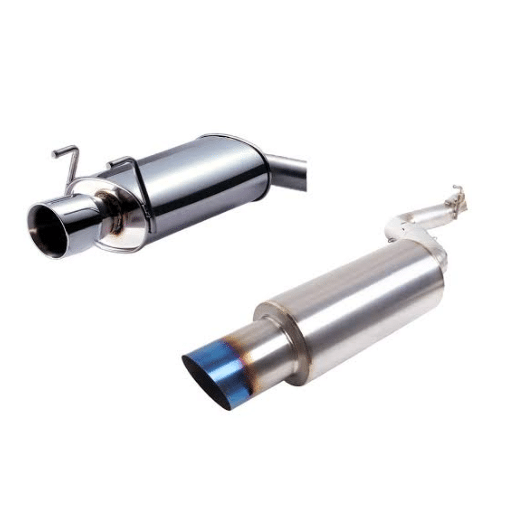
Exhaust applications consume the largest automotive stainless volume. Operating temperatures range from 400°C at the muffler to 900°C+ at the manifold. Grade selection balances heat resistance, corrosion resistance, and cost:
| Component | Grade | Reason |
|---|---|---|
| Manifolds | 409, 441 | Heat resistance, cost-effective |
| Catalytic converters | 409, 304 | High-temperature oxidation resistance |
| Mufflers | 409, 430 | Road salt corrosion resistance |
| Tailpipes | 409, 304 | Appearance and durability |
Ferritic 409 dominates standard exhausts due to excellent thermal fatigue resistance and low cost. The titanium-stabilized composition prevents sensitization during welding.
EV Battery Enclosures
Electric vehicle battery enclosures represent the fastest-growing automotive stainless application. The material provides:
- Crash protection for battery cells
- Thermal management (heat dissipation)
- Fire containment between cells
- Electromagnetic shielding
Grade 304 serves most applications, with 316 specified for vehicles operating in coastal or winter road-salt environments. The global EV transition is driving significant stainless demand—each battery enclosure requires 50-100 kg of material.
Structural Components and Trim
Stainless steel body panels and structural members reduce vehicle weight while maintaining crash resistance. The high strength-to-weight ratio enables thinner sections compared to carbon steel. Applications include:
- Fuel tanks (304, 316)
- Fasteners and springs (302, 304)
- Trim and decorative elements (430)
- Heat shields (409, 304)
Grade 430 serves decorative trim due to good formability and magnetic properties for sensor compatibility. The absence of nickel provides cost stability compared to austenitic grades.
Railway and Marine Transportation
High-speed rail systems specify stainless steel for car bodies, luggage racks, and interior components. The Vande Bharat Express in India uses extensively stainless construction for reduced maintenance and extended service life.
Marine transportation applications include:
- Ship hulls and superstructures (316, 2205)
- Tanker cargo tanks (316L, duplex)
- Ferry components and offshore vessels
- Port infrastructure
For marine-grade materials, 316 stainless steel provides the corrosion resistance required for saltwater exposure.
Stainless Steel in Food Processing and Pharmaceutical

Food and pharmaceutical applications demand hygienic surfaces that resist corrosion while meeting strict regulatory standards. These industries represent high-value segments where material selection directly impacts product safety.
Processing Equipment
Food processing equipment manufacturers specify stainless steel for:
- Mixing tanks and blenders (304, 316)
- Conveyors and transfer systems (304)
- Heat exchangers (316 for salt/acid products)
- Cooking and baking equipment (304)
- Brewing and fermentation vessels (304, 316)
The food-grade stainless steel guide provides detailed regulatory requirements. FDA compliance requires specific surface finishes and alloy compositions that prevent contamination.
Grade selection depends on product chemistry:
- 304: General food processing, dairy, baked goods
- 316: Salt-containing products, acidic foods (pickles, sauces, citrus)
- 316L: Pharmaceutical manufacturing requiring electropolished surfaces
Storage and Transport Systems
Stainless steel storage tanks, silos, and transport containers preserve product quality while enabling cleaning and sterilization. Applications include:
- Dairy storage tanks (304, 316)
- Wine and beer storage (304)
- Edible oil transport (304)
- Pharmaceutical bulk storage (316L)
The smooth surface prevents bacterial harboring and supports clean-in-place (CIP) protocols essential for food safety.
Hygienic Design Requirements
Food equipment design follows principles that maximize cleanability:
- Smooth welded joints (no crevices)
- Sloped surfaces for drainage
- Elimination of dead legs in piping
- Surface roughness below 0.8 micrometers Ra
Electropolished 316L achieves the smoothest surfaces for pharmaceutical applications where sterility is paramount. The passivation layer enhancement from electropolishing improves corrosion resistance while reducing surface area for bacterial attachment.
Pharmaceutical Applications
Pharmaceutical manufacturing requires materials that withstand aggressive cleaning protocols and maintain purity. Applications include:
- Bioreactors and fermenters (316L)
- Purification columns (316L)
- Cleanroom equipment (304, 316)
- Packaging machinery components
Surface finish requirements exceed food-grade standards. ASME BPE (Bioprocessing Equipment) standards specify surface finish, material certification, and weld quality for pharmaceutical systems.
Stainless Steel in Chemical and Industrial Processing

Chemical processing demands materials that withstand aggressive media while maintaining mechanical integrity. Stainless steel grades provide the corrosion resistance and strength required for these demanding environments.
Chemical Storage and Transport
Storage tanks, reactors, and transport containers handle acids, bases, and organic solvents. Grade selection requires matching alloy composition to specific chemical exposures:
- Sulfuric acid: 316 for dilute, 904L for concentrated
- Hydrochloric acid: C-276 or titanium (avoid standard stainless)
- Nitric acid: 304, 304L
- Caustic soda: 304/316 for dilute, nickel alloys for concentrated
- Organic solvents: Generally compatible with all grades
The corrosion resistance guide provides detailed chemical compatibility data.
Heat Exchangers and Pressure Vessels
Heat exchangers in chemical plants require materials that resist both chemical attack and thermal stress. Applications include:
- Shell-and-tube heat exchangers (304, 316, 2205)
- Plate heat exchangers (316, titanium-clad)
- Condensers and reboilers
- Supercritical CO2 systems (316, 304)
Duplex 2205 provides superior stress corrosion cracking resistance for high-chloride cooling water environments. The higher strength enables thinner wall sections, improving heat transfer.
Oil and Gas Applications
Offshore and petrochemical operations require materials that survive aggressive environments:
- Offshore platforms: 2205 duplex for structural components
- Subsea pipelines: 316L, 2205, 2507 super duplex
- Downhole equipment: 17-4PH, 13Cr grades
- Processing equipment: 316, 317, 904L
Super duplex grades (2507) achieve PREN values above 40, providing seawater corrosion resistance essential for offshore installations.
Power Generation
Power plants utilize stainless steel for:
- Boiler tubes and superheaters (304H, 321H, 347H)
- Condenser tubes (304, 316, titanium)
- Flue gas desulfurization systems (317LMN, 904L)
- Nuclear fuel cladding and waste containers
High-temperature grades resist creep and oxidation in boiler applications. The stabilized grades (321, 347) prevent sensitization during welding and long-term service.
Stainless Steel in Medical and Healthcare

Medical applications demand biocompatible materials that withstand repeated sterilization while maintaining precision. Stainless steel serves surgical instruments, implants, and hospital equipment.
Surgical Instruments
Cutting instruments require hardenable martensitic grades:
- 420: Scalpels, forceps, general instruments
- 440C: Premium cutting tools requiring maximum hardness
- 17-4PH: High-strength instrument components
These grades achieve hardness exceeding 50 HRC through heat treatment, maintaining sharp edges through repeated use and sterilization cycles.
Medical Implants
Implantable devices require biocompatible austenitic grades:
- 316L: Orthopedic implants, bone screws, plates
- 316LVM: Vacuum-melted variant for premium implants
- Custom alloys: Cobalt-chrome, titanium for specific applications
The low carbon content of 316L prevents carbide precipitation that could compromise corrosion resistance in bodily fluids. Electropolishing creates the smooth surface finish required for implant acceptance.
Hospital Equipment
Non-implant medical equipment utilizes 304 and 316:
- Sterilization equipment (304, 316)
- Hospital furniture and casework (304)
- Surgical tables and lights (304)
- MRI-compatible equipment (non-magnetic 316)
Equipment must withstand autoclave sterilization (121°C steam) and aggressive chemical disinfectants without degradation.
Laboratory Applications
Medical laboratories use stainless steel for:
- Fume hoods and casework (304, 316)
- Biosafety cabinets (316 for corrosive chemical handling)
- Autoclaves and sterilizers
- Sample storage and handling equipment
The material’s chemical resistance and cleanability support laboratory safety protocols while preventing sample contamination.
Aerospace and Defense Applications

Aerospace applications exploit stainless steel’s high strength-to-weight ratio and temperature resistance. These demanding environments require specialized grades and exacting quality standards.
Aircraft Structural Components
Stainless steel serves critical structural applications:
- Landing gear components (17-4PH, 15-5PH)
- Control rods and actuators (17-7PH)
- Fasteners and hardware (A286, 17-4PH)
- Firewalls and heat shields (309, 310)
Precipitation-hardening grades provide the strength of alloy steels with stainless corrosion resistance. The aerospace grades undergo extensive testing for fatigue, fracture toughness, and stress corrosion resistance.
Engine Systems
Jet engines utilize stainless steel for:
- Exhaust ducts and afterburners (321, 347)
- Combustor liners (310, 253MA)
- Fuel system components (304, 321)
- Bleed air ducts (321, 347)
Stabilized grades (321, 347) resist sensitization from welding and thermal cycling. The titanium or niobium additions prevent chromium carbide formation that would compromise oxidation resistance.
Space Applications
Spacecraft utilize stainless steel for:
- Propulsion system components (316, 321)
- Cryogenic fuel tanks (304, 316)
- Heat shields and thermal protection
- Structural components
Austenitic grades maintain toughness at cryogenic temperatures required for liquid oxygen and hydrogen storage. The material’s vacuum compatibility and low outgassing suit space environments.
Grade Selection by Application Matrix

Proper grade selection balances performance requirements against cost. This matrix provides starting recommendations for common applications.
Selection Criteria Framework
Evaluate these factors in order:
- Corrosion environment: Chloride exposure determines minimum grade
- Temperature range: High or low temperatures require specialized grades
- Mechanical requirements: Strength, hardness, or formability needs
- Magnetic requirements: Non-magnetic applications limit grade families
- Cost constraints: Balance performance against budget
Grade Recommendations by Industry
| Industry | Environment | Recommended Grade | Alternatives |
|---|---|---|---|
| Construction (inland) | Mild atmospheric | 304 | 430 (decorative) |
| Construction (coastal) | Salt spray | 316 | 2205 (structural) |
| Automotive exhaust | High temperature | 409 | 441, 304 |
| Automotive trim | Decorative | 430 | 304 (premium) |
| EV battery enclosures | Crash protection | 304 | 316 (corrosive) |
| Food processing | General food | 304 | 316 (salt/acid) |
| Pharmaceutical | Sterile manufacturing | 316L | Electropolished |
| Chemical (mild) | Dilute acids | 316 | 304 (non-corrosive) |
| Chemical (severe) | Concentrated acids | 904L | C-276 |
| Marine | Seawater | 316 | 2205, 2507 |
| Surgical instruments | Sterilization | 420, 440C | 17-4PH |
| Medical implants | Body contact | 316L | Titanium |
| Aerospace structural | High strength | 17-4PH | 15-5PH, 17-7PH |
| Aerospace exhaust | High temperature | 321, 347 | 310 |
Cost-Benefit Analysis
The 304 grade functions as a “workhorse” material, which engineers use in approximately 70% of projects because it provides moderate cost performance. The operator must spend 20 to 40 percent more material costs when switching from 316 to 316 material but this upgrade doubles service life in environments with chloride exposure.
Over-specification wastes money without benefit. A warehouse in Phoenix specifying 316 for dry indoor racking pays premium prices for corrosion resistance that provides zero value. Ferritic 430 or even carbon steel with paint would perform identically at lower cost.
Under-specification results in high-cost failures. A Florida pool contractor saved 30% specifying 304 instead of 316 for oceanfront handrails, then paid 400% more when complete replacement became necessary after 18 months.
For grade-specific guidance, explore 304 stainless steel for general applications or 316 stainless steel for corrosive environments.
Emerging Applications (2025-2030)
Several emerging technologies are creating new stainless steel demand beyond traditional applications.
Electric Vehicle Components
The EV transition drives stainless demand beyond battery enclosures. Applications include:
- Charging station hardware (316 for outdoor durability)
- Motor housings and components
- Hydrogen fuel cell stack components (316L)
- Thermal management systems
The automotive stainless market is projected to grow 5.27% annually through 2035, with EV-specific applications representing the fastest-growing segment.
Hydrogen Infrastructure
The emerging hydrogen economy requires materials that resist hydrogen embrittlement and high-pressure corrosion:
- Electrolyzer components (316L, 2205)
- Hydrogen storage vessels (316L, 304)
- Pipeline and distribution systems (316L)
- Fueling station hardware
Green hydrogen production initiatives worldwide are projected to consume significant stainless volumes as infrastructure deploys.
Renewable Energy Systems
Renewable energy applications include:
- Solar panel mounting systems (304, 316)
- Wind turbine components (304, 2205)
- Wave and tidal energy systems (2205, 2507)
- Geothermal equipment (316, 904L)
Offshore wind installations particularly favor duplex grades that withstand seawater corrosion while providing the strength for large structural components.
Additive Manufacturing
3D printing with stainless steel enables:
- Complex geometries impossible with conventional manufacturing
- Rapid prototyping for industrial components
- Custom medical implants with porous structures
- Lightweight structures with optimized topology
Powder metallurgy grades (316L, 17-4PH) suit additive processes. Post-printing heat treatment achieves mechanical properties matching wrought material.
FAQ
What are the 5 main uses of stainless steel?
Stainless steel finds its main applications through five different uses which include (1) construction and architecture which makes up 36% of the market by using stainless steel for structural elements and facades and infrastructure work) (2) automotive components which account for 25% of the market through their use in exhaust systems and trim and EV battery enclosures) (3) food processing equipment which includes tanks and conveyors and preparation surfaces) (4) chemical processing equipment which encompasses reactors and heat exchangers and storage vessels) (5) medical devices and surgical instruments which need both sterilization and biocompatibility.
Which industry uses the most stainless steel?
The construction industry represents the main consumer because it accounts for 36.47% of total worldwide demand. The structure includes architectural elements which extend to structural applications and architectural cladding and roofing and water systems and infrastructure systems. The 75+ year service life of stainless in construction justifies higher initial costs through reduced maintenance and replacement cycles.
What grade is best for food processing?
The majority of food processing operations require 304 stainless steel because it delivers satisfactory results at an economical price. Use 316 or 316L when processing salt-containing foods or acidic products which include pickles and citrus and tomatoes or when equipment needs aggressive cleaning. Pharmaceutical manufacturing requires electropolished 316L for maximum surface smoothness and sterility.
Is stainless steel used in electric vehicles?
Stainless steel functions as a vital material for the production of electric vehicles. The fastest-growing application is battery enclosures where stainless steel protects against crashes while managing temperature and containing fires. Electric vehicles use additional applications which include charging stations and motor components and hydrogen fuel cell systems for fuel-cell electric vehicles.
What is the fastest-growing stainless steel application?
The fastest-growing sector of the market is EV battery enclosures which grow because of increasing electric vehicle adoption throughout the world. The broader automotive stainless market grows at 5.27% CAGR. The world decarbonization initiatives create new growth opportunities for hydrogen infrastructure and renewable energy systems.
Conclusion
Stainless steel applications span virtually every industrial sector, from the $135 billion global market’s largest consumer (construction at 36%) to its fastest-growing segment (automotive at 5.27% CAGR). Understanding which grade serves which application separates successful projects from costly failures.
Key principles guide proper specification:
- Match grade to environment — 304 serves most atmospheric applications; 316 is essential for chlorides above 200 ppm
- Avoid over-specification — “Premium” grades waste money when environmental demands don’t justify them
- Consider lifecycle costs — Higher upfront material costs often deliver superior ROI through extended service life
- Account for emerging applications — EVs, hydrogen infrastructure, and renewables are reshaping demand patterns
- Leverage the selection matrix — Systematic evaluation prevents both under- and over-specification
The facility replaced its costly 316 racking system with 430 racking during expansion projects, which resulted in 35 percent material cost savings without reducing performance in their dry warehouse operations. Their coastal operations require 316 and 2205 materials to provide protection against corrosion which results from saltwater exposure.
For your next project requiring stainless steel materials, contact our technical team for application-specific grade recommendations. We offer certified grades that range from 304 to super duplex and nickel alloys, which include mill test certificates and custom processing to meet your precise requirements.