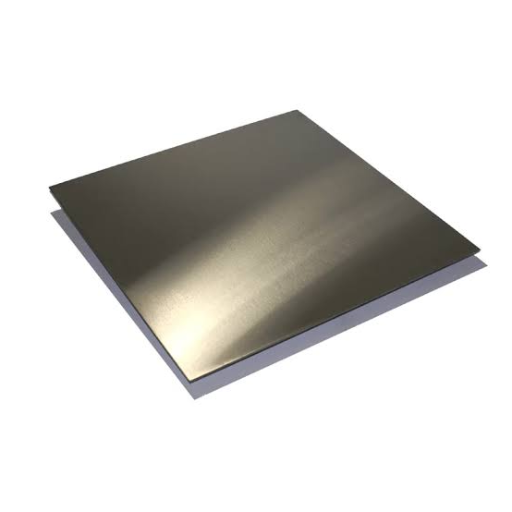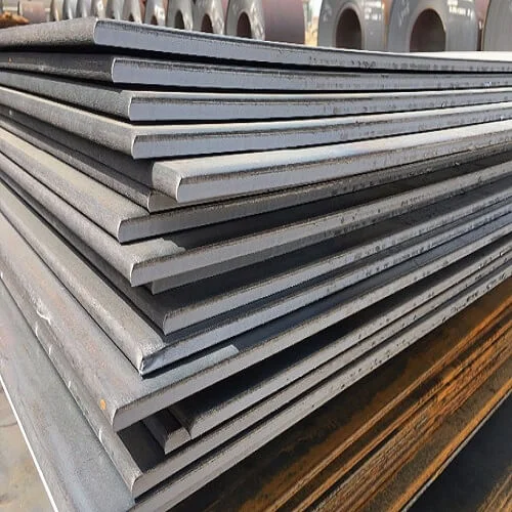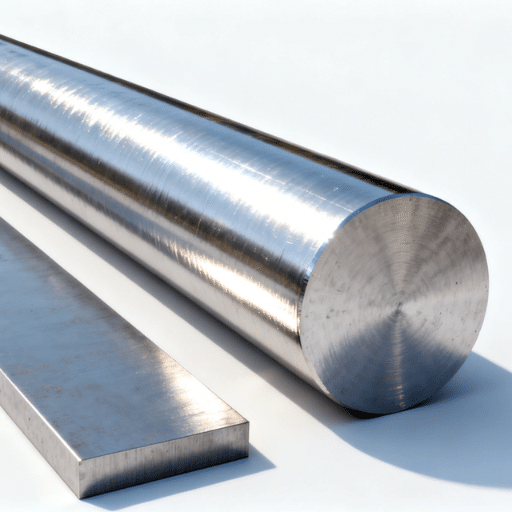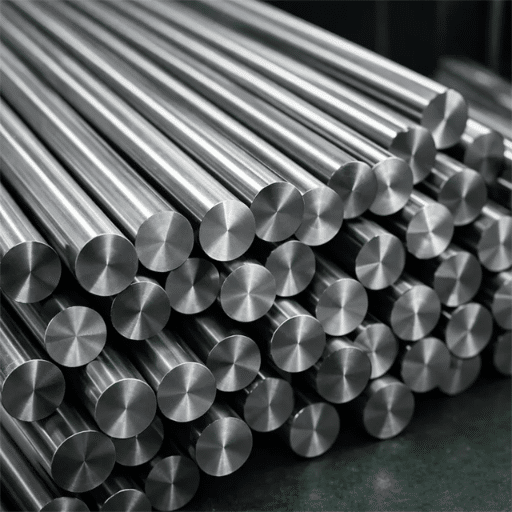
The density of carbon steel is 7,850 kg/m3 (7.85 g/cm3, 0.284 lb/in3). Stainless steel grades range from 7,700 to 8,000 kg/m3 depending on alloy composition, with 304 at 7,930 kg/m3 and 316 at 7,980 kg/m3. These small differences matter for weight calculations, shipping costs, and structural design.
In 2024, a fabrication shop in Jiangsu ordered fifty tons of 316 stainless plate for a chemical vessel project. The project engineer used 7,850 kg/m3, the standard carbon steel density, to calculate crane loads and rigging requirements. When the shipment arrived, it was nearly one percent overweight. The crane capacity was marginal, and the lift team had to recalculate center of gravity and add a larger spreader bar. The delay cost the project a full day. The steel was fine. The density assumption was wrong.
This article gives you accurate steel density values for every major grade, unit conversions for engineering and procurement, and step-by-step weight calculation formulas you can use immediately. You will also learn how temperature affects density and how to verify values on Mill Test Certificates.
Key Takeaways
- Carbon and mild steel have a standard density of 7,850 kg/m3. Stainless steel grades are denser due to nickel and molybdenum content.
- 304 stainless steel is 7,930 kg/m3. 316 stainless steel is 7,980 to 8,000 kg/m3. Duplex 2205 is 7,800 kg/m3.
- Weight equals volume multiplied by density. Use the correct density for your specific grade to avoid ordering and lifting miscalculations.
- Steel density decreases slightly at high temperatures due to thermal expansion. Allow approximately 0.3 percent reduction per 100 degrees Celsius.
- Mill Test Certificates list the actual heat density for critical applications. Nominal handbook values are sufficient for most procurement.
For a broader overview of stainless grades and their properties, see our complete stainless steel guide. For authoritative engineering density data across materials, Engineers Edge maintains a comprehensive metals reference table.
What Is Steel Density?

The density of steel is its mass per unit volume, typically expressed in kilograms per cubic meter (kg/m3) or grams per cubic centimeter (g/cm3). For most structural and engineering calculations, carbon steel and mild steel use a standard density of 7,850 kg/m3. The World Steel Association reports that over 1.8 billion tons of steel are produced annually, making accurate density data critical for global trade and engineering.
This value derives from the iron-carbon lattice structure. Pure iron has a density of approximately 7,874 kg/m3. The addition of carbon, which is lighter than iron, along with small amounts of manganese and silicon, brings the average down slightly to 7,850 kg/m3 for common structural grades such as ASTM A36 and AISI 1018.
Density is not just a physical curiosity. It directly determines how much a steel component weighs, which affects structural load calculations, transportation costs, material ordering quantities, and equipment selection. Using the wrong value can lead to under-specified cranes, overloaded trucks, or incorrect material estimates.
Standard Density Values by Unit System
| Unit System | Carbon Steel | 304 Stainless | 316 Stainless |
|---|---|---|---|
| kg/m3 | 7,850 | 7,930 | 7,980 |
| g/cm3 | 7.85 | 7.93 | 7.98 |
| lb/in3 | 0.284 | 0.286 | 0.288 |
| lb/ft3 | 490 | 495 | 498 |
Engineers in North America often use lb/ft3 or lb/in3 for structural calculations. European and Asian standards typically use kg/m3. Always confirm which unit system your project specification requires before performing calculations.
Steel Density by Grade: Complete Chart
Different steel grades have different densities because alloying elements have different atomic masses and crystal structures. Nickel, for example, is denser than iron. Chromium is slightly less dense. The net effect depends on the specific alloy composition.
The following table lists nominal densities for common engineering grades. For critical applications, verify against the Mill Test Certificate for the specific heat.
| Grade | Family | Density (kg/m3) | Density (g/cm3) | Density (lb/in3) |
|---|---|---|---|---|
| A36 / 1018 / S235 | Carbon / Structural | 7,850 | 7.85 | 0.284 |
| 1020 | Carbon | 7,870 | 7.87 | 0.284 |
| 1045 | Medium Carbon | 7,850 | 7.85 | 0.284 |
| 4140 | Alloy | 7,850 | 7.85 | 0.284 |
| 4340 | Alloy | 7,850 | 7.85 | 0.284 |
| D2 | Tool Steel | 7,700 | 7.70 | 0.278 |
| H13 | Tool Steel | 7,800 | 7.80 | 0.282 |
| O1 | Tool Steel | 7,860 | 7.86 | 0.284 |
Carbon and low-alloy steels cluster tightly around 7,850 kg/m3. Tool steels vary more because of high chromium, vanadium, and tungsten content. For a deeper dive into how alloy composition affects material properties, explore our stainless steel grades resource.
Density of Stainless Steel: Complete Chart by Grade
The density of stainless steel varies more than carbon steel density. The 300-series austenitic grades are denser than carbon steel because of nickel content. The 400-series ferritic and martensitic grades are generally lighter because they contain little or no nickel.
Austenitic Grades (300 Series)
| Grade | Density (kg/m3) | Density (g/cm3) | Notes |
|---|---|---|---|
| 201 | 7,700 | 7.70 | Lower nickel, manganese substituted |
| 304 / 304L | 7,930 | 7.93 | Most common stainless grade |
| 321 | 7,920 | 7.92 | Titanium stabilized |
| 309S / 310S | 7,980 | 7.98 | High chromium and nickel |
| 316 / 316L / 316Ti | 7,980 to 8,000 | 7.98 to 8.00 | Molybdenum adds density |
| 317 / 317L | 7,980 | 7.98 | Higher molybdenum than 316 |
| 904L | 8,000 | 8.00 | High alloy super austenitic |
Ferritic and Martensitic Grades (400 Series)
| Grade | Density (kg/m3) | Density (g/cm3) | Notes |
|---|---|---|---|
| 410 / 410S / 416 | 7,750 | 7.75 | Basic martensitic |
| 420 | 7,730 | 7.73 | Higher carbon for hardness |
| 430 / 430F | 7,700 | 7.70 | Most common ferritic grade |
| 440A / 440C | 7,740 to 7,620 | 7.74 to 7.62 | High carbon, lower density |
Duplex and Super Duplex
| Grade | Density (kg/m3) | Density (g/cm3) | Notes |
|---|---|---|---|
| 2205 / S31803 | 7,800 | 7.80 | Most common duplex grade |
| 2304 | 7,800 | 7.80 | Lean duplex, lower alloy |
| 2507 / S32750 | 7,820 to 7,850 | 7.82 to 7.85 | Super duplex, high strength |
Duplex grades such as 2205 are slightly lighter than austenitic 304 and 316. This is because duplex microstructure contains roughly equal amounts of ferrite and austenite, and the overall nickel content is lower. For marine and chemical applications where weight matters, this 1.6 percent difference can add up across large structures.
For detailed grade comparisons, see our 304 vs 316 comparison or our dedicated guides to 304 stainless steel and 316 stainless steel.
Metal Density Chart: Steel vs Other Metals

Engineers often compare steel density to aluminum, titanium, and cast iron when selecting materials for weight-sensitive applications.
| Material | Density (kg/m3) | Density (g/cm3) | Percentage of Steel Weight |
|---|---|---|---|
| Carbon Steel | 7,850 | 7.85 | 100% |
| Stainless Steel 304 | 7,930 | 7.93 | 101% |
| Gray Cast Iron | 7,150 | 7.15 | 91% |
| Aluminum 6061 | 2,700 | 2.70 | 34% |
| Titanium Grade 2 | 4,510 | 4.51 | 57% |
| Copper C110 | 8,960 | 8.96 | 114% |
| Brass C360 | 8,490 | 8.49 | 108% |
Aluminum is roughly one-third the density of steel, which makes it attractive for aerospace and automotive lightweighting. However, aluminum has significantly lower stiffness and strength per unit volume. Titanium offers a middle ground at roughly 57 percent of steel density, with excellent strength-to-weight ratio and corrosion resistance. Cast iron is about 9 percent lighter than steel due to graphite inclusions, but it is also more brittle.
For a full comparison of steel types, read our guide on stainless steel vs carbon steel.
How to Calculate Steel Weight from Density
The fundamental formula is simple. Weight equals volume multiplied by density. The challenge is calculating volume accurately for different shapes.
The Fundamental Formula
Weight = Volume x Density
For a rectangular block, volume is length times width times thickness. For cylinders and pipes, you need to calculate the cross-sectional area first.
Plate and Sheet Weight Calculation
For flat plate or sheet:
Weight (kg) = Length (m) x Width (m) x Thickness (m) x Density (kg/m3)
Worked example: Calculate the weight of an A36 steel plate measuring 1,220 mm by 2,440 mm by 6 mm.
- Convert dimensions to meters: 1.22 m x 2.44 m x 0.006 m
- Volume = 1.22 x 2.44 x 0.006 = 0.01786 m3
- Weight = 0.01786 x 7,850 = 140.2 kg
For stainless steel sheets, use 7,930 kg/m3 for 304 or 7,980 kg/m3 for 316. The same plate in 304 would weigh 141.6 kg. The difference is small for one plate, but it compounds across large orders.
Round Bar Weight Calculation
For a solid round bar:
Weight (kg) = pi x r2 x Length (m) x Density (kg/m3)
Where r is the radius in meters.
A quick approximation used in fabrication shops is:
Weight (kg/m) = D2 / 162
Where D is the diameter in millimeters.
Worked example: Calculate the weight of a 50 mm diameter 304 stainless steel bar, 3 meters long.
- Using exact formula: Volume = pi x (0.025)2 x 3 = 0.00589 m3
- Weight = 0.00589 x 7,930 = 46.7 kg
- Using quick formula: (50 x 50) / 162 = 15.43 kg/m. For 3 meters: 15.43 x 3 = 46.3 kg
The quick formula gives a close approximation and is useful for field estimates.
Steel Pipe Weight Calculation
For pipe, calculate the cross-sectional wall area and multiply by length.
Weight (kg) = pi/4 x (OD2 – ID2) x Length (m) x Density (kg/m3)
Where OD and ID are in meters. Alternatively, use OD and wall thickness.
Worked example: Calculate the weight of a 2-inch SCH 40 carbon steel pipe, 6 meters long.
- OD = 60.3 mm (0.0603 m), wall thickness = 3.91 mm, ID = 52.48 mm (0.05248 m)
- Cross-sectional area = pi/4 x (0.06032 – 0.052482) = 0.000692 m2
- Volume = 0.000692 x 6 = 0.00415 m3
- Weight = 0.00415 x 7,850 = 32.6 kg
Standard pipe weight tables list this as approximately 5.44 kg/m, so 6 meters equals 32.6 kg. The calculation checks out.
Coil and Strip Weight Calculation
For steel coil, treat it as a long, thin rectangular prism.
Weight (kg) = Width (m) x Thickness (m) x Coil Length (m) x Density (kg/m3)
If you know the coil inner diameter, outer diameter, and width, you can also calculate length first:
Length (m) = pi x (OD2 – ID2) / (4 x Thickness)
Then apply the strip formula above.
Worked example: A 304 stainless coil is 1,000 mm wide, 2 mm thick, and 500 meters long.
- Volume = 1.0 x 0.002 x 500 = 1.0 m3
- Weight = 1.0 x 7,930 = 7,930 kg
For coil procurement, stainless steel coils are often ordered by weight, but some buyers specify by length. Knowing the density lets you convert between the two accurately.
Does Temperature Affect Steel Density?
Yes. Steel expands when heated, and because mass stays constant, density decreases. The effect is small but measurable.
The coefficient of thermal expansion for carbon steel is approximately 12 x 10-6 per degree Celsius. This means a one-meter bar grows by 0.012 mm for every one degree temperature increase. Over a volume, this expansion reduces density.
As a rule of thumb, steel density decreases by approximately 0.3 percent for every 100 degrees Celsius increase in temperature. At 500 degrees Celsius, carbon steel density drops from 7,850 kg/m3 to roughly 7,740 kg/m3.
For most ambient-temperature applications, this change is negligible. For furnace components, boiler tubes, and high-temperature process equipment, engineers should use temperature-corrected density values. ASME Boiler and Pressure Vessel Code Section II provides temperature-dependent material properties for design calculations.
Density in Procurement and Shipping

Steel density directly affects freight costs, crane planning, and material budgeting. A procurement manager who assumes all steel weighs the same per square meter will make costly errors.
In 2024, a procurement team in Ningbo was comparing quotes for 304 and 316 sheet for a marine equipment project. Both quotes were priced per kilogram, and the sheet counts were identical. What the team initially missed was that 316 sheet weighs roughly 0.6 percent more per square meter than 304 sheet. For a forty-ton order, that translated to an extra 240 kilograms. At sea freight rates, the additional weight added approximately $340 to the shipping cost alone. The material itself was correctly priced. The freight estimate was not.
This is why accurate steel density values matter in procurement. When converting from area-based specifications to weight-based orders, use the exact density for the specified grade. Do not assume carbon steel density applies to stainless orders.
For large structural projects, the cumulative effect of density differences can be significant. An offshore platform designer specifying duplex 2205 instead of 304 for corrosion resistance gained a 1.6 percent weight reduction in the steel superstructure. Across thousands of tons, that translated into lower foundation loads, smaller lifting equipment, and reduced transportation costs.
If you need help calculating material weights for your project, our team provides technical consultation for accurate estimates.
How to Verify Density from Mill Test Certificates
Mill Test Certificates (MTCs) document the actual chemical and physical properties of the steel heat. For critical applications, the MTC is the authoritative source.
Most MTCs do not list density directly. Instead, they list chemical composition by percentage. You can estimate density from composition using weighted averages of constituent densities, but this is rarely necessary. For engineering purposes, the nominal values in this article are accurate to within one percent for standard grades.
If your specification requires certified density, request a separate material test report from your supplier. Some specialized applications, such as aerospace and nuclear, require actual measured density rather than nominal handbook values.
Tolerances on density are rarely specified because variations within a grade are typically less than one percent. What matters more is chemical composition tolerance, which ensures the alloy meets the corrosion and mechanical requirements of the specification. ASTM standards such as ASTM A240 for stainless plate and ASTM A36 for structural carbon steel define these composition limits.
For standard industrial procurement, using the nominal steel density values in this article is fully adequate. For carbon steel products, always verify the specific grade on the MTC matches your order.
Frequently Asked Questions
What is the density of steel in kg/m3?
The density of carbon and mild steel is 7,850 kg/m3. Stainless steel grades range from 7,700 kg/m3 for ferritic grades such as 430 to 8,000 kg/m3 for high-alloy grades such as 904L. Always use the specific grade density for accurate calculations.
What is the density of stainless steel?
The density of stainless steel ranges from 7,700 to 8,000 kg/m3 depending on the grade and alloy composition. Austenitic grades such as 304 and 316 are the densest at roughly 7,930 to 8,000 kg/m3. Ferritic grades such as 430 are lighter at around 7,700 kg/m3. Duplex grades fall in between at approximately 7,800 kg/m3.
What is the density of 304 stainless steel?
The density of 304 stainless steel is 7,930 kg/m3 (7.93 g/cm3, 0.286 lb/in3). This is approximately one percent higher than carbon steel due to nickel content. 304L has the same nominal density as 304.
Is 316 stainless steel heavier than 304?
Yes. 316 stainless steel has a density of 7,980 to 8,000 kg/m3, while 304 is 7,930 kg/m3. The 0.6 to 0.9 percent difference comes from molybdenum addition. For large orders, this small difference affects total weight, freight costs, and structural load calculations.
What is the density of steel in lb/in3?
Carbon steel is 0.284 lb/in3. 304 stainless steel is 0.286 lb/in3. 316 stainless steel is 0.288 lb/in3. These values are used in North American structural and fabrication engineering.
Does heat treatment change steel density?
Heat treatment changes microstructure and mechanical properties, but it changes density by less than one percent. For all practical engineering and procurement calculations, use the same nominal density regardless of heat treatment condition.
How do I calculate steel plate weight?
Multiply length by width by thickness to get volume in cubic meters. Then multiply by the steel density in kg/m3. For example, a 2 m by 1 m by 10 mm A36 plate has a volume of 0.02 m3 and weighs 0.02 x 7,850 = 157 kg.
Why is stainless steel denser than carbon steel?
Stainless steel contains nickel, which has a higher atomic mass than iron. Austenitic grades such as 304 and 316 contain 8 to 14 percent nickel, which increases overall density. Ferritic stainless grades such as 430 contain no nickel and have densities closer to carbon steel.
What is the density of mild steel?
Mild steel has a density of 7,850 kg/m3 (7.85 g/cm3). This is the same as standard structural carbon steel because mild steel is simply low-carbon steel with less than 0.25 percent carbon content.
How does temperature affect steel density?
Steel expands when heated, which reduces density. Density decreases by approximately 0.3 percent per 100 degrees Celsius. At 500 degrees Celsius, carbon steel density drops from 7,850 kg/m3 to approximately 7,740 kg/m3.
Where can I find density on a Mill Test Certificate?
Most Mill Test Certificates list chemical composition rather than density directly. For standard grades, use the nominal values in engineering handbooks or this guide. For applications requiring certified density, request a separate material test report from your supplier.
Conclusion
Accurate steel density values are essential for engineering calculations, procurement estimates, and shipping logistics. Carbon steel at 7,850 kg/m3 is the baseline, but stainless grades vary measurably. 304 is 7,930 kg/m3. 316 is 7,980 to 8,000 kg/m3. Duplex 2205 is 7,800 kg/m3. Using the wrong value can lead to crane overloads, freight surprises, and incorrect material orders.
The weight calculation formulas in this article give you the tools to estimate plate, bar, pipe, and coil weights accurately. For high-temperature applications, remember to apply a small temperature correction. And when precision matters, verify against the Mill Test Certificate.
If you need certified steel materials with accurate specifications for your next project, contact us for a quotation. LIANYUNGANG DAPU METAL CO., LTD supplies carbon steel, stainless sheet products, and alloy materials with full Mill Test Certification and global delivery.