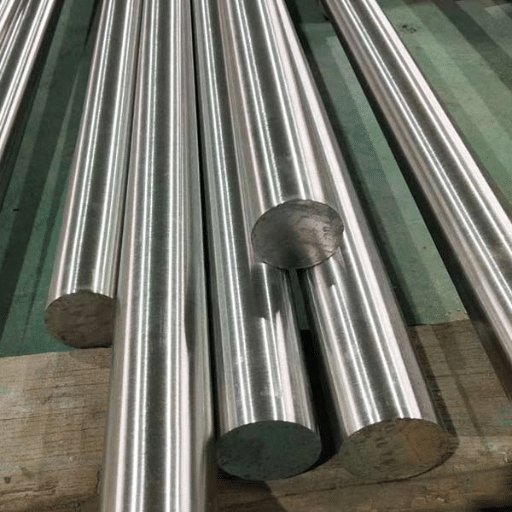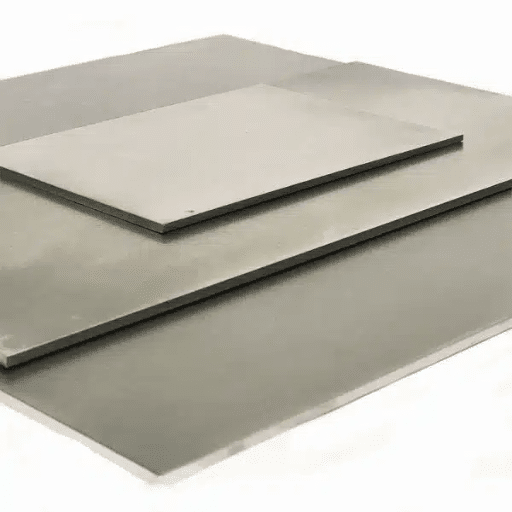
316 stainless steel is the industry-standard marine grade. It contains 2–3% molybdenum. That single alloying addition gives 316 far better resistance to chloride pitting and crevice corrosion than 304. The result is a PREN of roughly 24–26 for 316, compared with 18–20 for 304. Marine environments generally need PREN above 22, so 316 is the safer choice for boat hardware, coastal structures, splash zones, and most saltwater-exposed equipment. “Marine grade” is a marketing term, not a regulated standard. For permanent immersion in warm or polluted seawater, duplex grades such as 2205 are often the better specification.
A boat builder in Zhuhai learned this the expensive way. He sourced 304 deck fittings to cut material costs by 30%. After one South China Sea typhoon season, the cleats and hinge pins showed rust and pitting where saltwater had pooled. Warranty claims and replacement labor erased the original saving within 14 months. This guide explains when 316 stainless steel marine grade hardware is the right specification, when 304 is acceptable, and when you need to move beyond 316 altogether.
Key Takeaways
- 316 stainless steel is called marine grade because its 2–3% molybdenum content resists chloride pitting and crevice corrosion in saltwater.
- Typical PREN: 304 ≈ 18–20; 316 ≈ 24–26. Marine environments generally need PREN above 22.
- 316L is the safer choice for welded marine structures because low carbon reduces sensitization in the heat-affected zone.
- 304 may survive sheltered, freshwater, or decorative coastal use; it is a risk in splash zones and immersion.
- For continuous warm or polluted seawater immersion, duplex 2205 (PREN ~35) usually outperforms 316.
- Always verify chemistry with a Mill Test Certificate or incoming test; “marine grade” labels are not regulated.
What Makes 316 Stainless Steel “Marine Grade”

The term “marine grade” is not an ASTM, EN, or JIS designation. It is a market description for alloys that tolerate saltwater and salt-laden atmospheres better than standard austenitic grades. For buyers, the important detail is composition, not the label.
ASTM A240 specifies the following ranges for 316/316L and 304/304L:
| Element | 304 / 304L | 316 / 316L |
|---|---|---|
| Chromium | 18.0–20.0% | 16.0–18.0% |
| Nickel | 8.0–10.5% | 10.0–14.0% |
| Molybdenum | None | 2.0–3.0% |
| Carbon (max) | 0.08% (0.03% for 304L) | 0.08% (0.03% for 316L) |
Molybdenum is the decisive difference. It does not form the passive chromium oxide film. Instead, it stabilizes the film against chloride attack and slows pit growth once it starts. Nickel also helps, particularly in acidic or reducing conditions. Molybdenum is the primary reason 316 outperforms 304 in seawater, salt spray, and coastal atmospheres.
Because “marine grade” is unregulated, some suppliers apply it loosely. A bracket stamped “marine stainless” may be 304 with a premium price. The only reliable verification is chemistry. Specify UNS S31600 for 316 or UNS S31603 for 316L, and request a Mill Test Certificate that shows actual molybdenum content.
316 vs 304 in Marine Environments
The practical difference between 316 and 304 in marine service is chloride tolerance. Saltwater contains roughly 19,000 ppm chloride. Even coastal air can carry enough salt to damage 304 over time.
PREN and Chloride Thresholds
Engineers compare localized corrosion resistance using the Pitting Resistance Equivalent Number:
PREN = %Cr + 3.3(%Mo) + 16(%N)
| Grade | Typical PREN |
|---|---|
| 304 / 304L | ~18–20 |
| 316 / 316L | ~24–26 |
| 2205 Duplex | ~35 |
Most designers consider PREN above 22 the practical minimum for continuous marine exposure. The 6-point PREN jump from 304 to 316 represents a substantial increase in pitting resistance, which is why 316 is the default marine grade.
Practical chloride limits at ambient temperature tell the same story:
| Grade | Practical Chloride Limit (Cl⁻) | Notes |
|---|---|---|
| 304 / 304L | ~100–200 ppm | Lower if crevices, deposits, or temperatures exceed 50°C |
| 316 / 316L | ~1,000+ ppm | Performance improves with passivation and good drainage |
| 2205 Duplex | ~3,000–5,000+ ppm | Standard for continuous seawater immersion |
Seawater at 19,000 ppm chloride exceeds 304’s safe envelope by two orders of magnitude. Even splash zones and salt spray can concentrate chlorides through evaporation, which is why 316 is the conservative choice for any hardware that sees regular salt.
Service Life Expectations
In direct saltwater, 304 hardware can show pitting or tea staining within 6–12 months. 316 hardware in the same exposure, with reasonable design and rinsing, can last 5–20 years or more depending on the zone. The spread is wide because geometry, surface finish, oxygen access, and maintenance matter as much as the alloy.
A marina contractor in Guangdong replaced 304 handrails with 316 after the lower rails pitted where waves splashed. The replacement rails showed no significant attack after four years. The original 316 specification would have cost less than the combined first purchase plus rework.
Marine Exposure Zones: Where 316 Wins and Where It Struggles
Not all marine exposure is equal. The same grade can last decades in one zone and fail in months in another.
Coastal Atmosphere
Within 1–2 km of the sea, salt-laden air settles on surfaces and absorbs moisture. 316 is preferred for railings, facades, lighting, and architectural trim in these zones. 304 may survive further inland or in sheltered courtyards, but it is likely to show tea staining near the coast unless cleaned frequently.
Splash Zones
Splash zones are among the most aggressive environments. Alternating wetting and drying concentrates chlorides on the surface. 316 or duplex grades are normally specified for splash-exposed hardware. 304 is generally not recommended.
Continuous Seawater Immersion
Here the picture becomes more nuanced. 316 can perform well in flowing, clean, moderate-temperature seawater. The British Stainless Steel Association cautions that stagnant seawater increases risk. Slow flow and horizontal runs where water can stand also raise pitting and crevice corrosion risk in 316. High flow rates and regular washing reduce risk.
For continuous immersion in warm, polluted, or high-velocity seawater, duplex 2205 or super-austenitic grades are usually specified. The World Stainless Organization notes that super-austenitic grades are preferred for the most demanding permanent immersion.
Tidal and Intermittent Exposure
Tidal zones are often less aggressive than splash zones because the surface is regularly washed by the tide. 316 is widely used for tidal hardware, fittings, and anchor systems. Design for drainage remains important.
Common Marine Applications for 316 Stainless Steel

316 stainless steel marine grade hardware appears across the marine and coastal industries:
- Boat deck hardware: railings, stanchions, cleats, winches, hinges, and latches
- Through-hull fittings, seacocks, and valves
- Propeller shafts, pump shafts, and rudder components
- Anchor chains, windlasses, and bow rollers
- Coastal architectural elements: handrails, facades, trims, and lighting poles
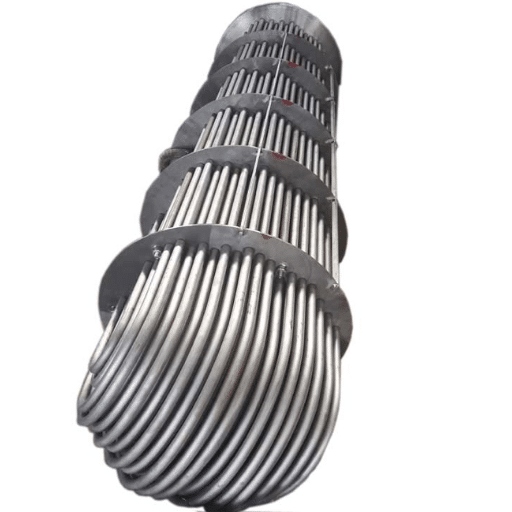
- Desalination plant piping and heat exchangers
- Aquaculture cages, nets, and support frames
- Marine fasteners, bolts, nuts, and washers
- Diving and underwater equipment housings
For each application, the best grade depends on whether the part is welded, continuously immersed, splash-exposed, or merely atmospheric. A 316 bolt in a badly designed lap joint can still fail faster than a 304 bolt in an open, drainable layout.
316L vs 316 for Welded Marine Structures
Welding changes the corrosion risk. The heat-affected zone can sensitize if chromium carbides form at grain boundaries, leaving chromium-depleted zones that corrode preferentially in chloride service.
Standard 316 has a maximum carbon content of 0.08%. 316L keeps carbon at 0.03% or below. That small reduction significantly lowers carbide precipitation during welding and elevated-temperature service. For welded boat frames, railings, tanks, and coastal structures, specify 316L rather than standard 316.
Filler metal selection also matters. Weld 316/316L with ER316L. Post-weld cleaning and passivation restore the passive film. Without passivation, weld scale can become the first corrosion site.
A shipyard in Ningbo switched to 316L for welded tank nozzles after standard 316 nozzles showed crevice attack at the heat-affected zone. The change eliminated the failure mode.
Design and Procurement Rules for Marine 316
Grade selection is only half the battle. Good design and verification matter just as much.
Design Rules
- Avoid water traps. Horizontal tube runs and recessed pockets let seawater stand, which increases pitting risk.
- Design joints to drain and dry. Use drain holes where water can collect.
- Minimize crevices. Lap joints, gasket edges, and bolt threads trap chlorides. Use sealants or continuous welds where possible.
- Specify smooth surface finishes. Rougher surfaces provide more initiation sites for pitting. Passivation after machining or welding restores the passive film.
- Isolate dissimilar metals. Carbon steel, aluminum, and even some copper alloys can create galvanic couples with stainless steel in seawater.
- Consider sacrificial anodes for immersed assemblies. Anodes protect the stainless steel by preferentially corroding.
Procurement Verification
Because labels are not regulated, buyers should verify material chemistry before accepting delivery:
- Request a Mill Test Certificate (MTC) showing actual Cr, Ni, Mo, and C values.
- Verify molybdenum is within 2.0–3.0%.
- Use portable XRF for incoming inspection on high-value or critical parts.
- Use a molybdenum spot test as a quick field check for hardware where XRF is not available.
- Be cautious of unmarked fasteners or hardware sold only as “marine stainless.”
LIANYUNGANG DAPU METAL supplies 316 and 316L stainless steel with Mill Test Certificates and full traceability. Request material certification when placing your order.
When 316 Is Not Enough: Upgrade to Duplex

316 is not corrosion-proof. Under the wrong conditions, it will pit and crevice corrode. Consider moving to duplex or super-austenitic grades when:
- Chloride levels exceed ~1,000–3,000 ppm continuously.
- Service temperature stays above ~50–60°C in chloride water.
- The part is permanently immersed in warm, polluted, or high-velocity seawater.
- Crevices are unavoidable and 316 has failed or is borderline.
- Design life requirements exceed 20 years in aggressive immersion.
Duplex 2205 has a PREN of roughly 35. Super duplex 2507 exceeds 40. These grades cost more upfront, but in aggressive service they can reduce lifecycle cost by avoiding replacement.
When 304 Is Actually Acceptable
316 is not always necessary. In low-chloride environments, 304 delivers identical corrosion performance at lower cost. Specify 304 when:
- The application is indoors or in freshwater.
- The design is open, drainable, and free of crevices.
- The part is decorative, non-structural, and located well inland from salt spray.
- Operating temperature stays below 50°C.
- Cost savings matter and the corrosion risk is negligible.
An architectural consultant in Shanghai specified 316 for an inland office facade because the client assumed it was the premium grade. A 20-year corrosion warranty was available on 304 at 38% lower material cost. The building faced a city street, not the ocean. 304 was the smarter spend.
Selection Matrix: 304, 316, 316L, or Duplex?
Use this matrix to match the grade to the actual environment.
| Environment | Recommended Grade | Why |
|---|---|---|
| Indoor / freshwater | 304 | Low chloride, cost-effective |
| Coastal atmosphere (≤1 km from sea) | 316 | Salt spray and humidity |
| Marine splash zone | 316 / duplex | Concentrated chloride exposure |
| Continuous seawater immersion | 316L / 2205 duplex | High chloride, need PREN ≥ 32 |
| Welded marine hardware | 316L | Low carbon prevents sensitization |
| Warm or polluted seawater | 2205 / 2507 duplex | Beyond 316’s safe envelope |
| Food with salt / acidic brines | 316L | Corrosion plus cleanability |
Frequently Asked Questions
Is 316 stainless steel marine grade?
Yes, 316 is widely called marine grade stainless steel because its 2–3% molybdenum content gives it strong resistance to chloride pitting and crevice corrosion in saltwater and coastal atmospheres. The term is not regulated, so buyers should verify chemistry rather than relying on labels.
Can 304 stainless steel be used in saltwater?
Only in very limited cases. 304 has no molybdenum and a practical chloride limit around 100–200 ppm. Direct saltwater exposure, splash zones, and coastal hardware normally require 316 or a higher grade. 304 may survive occasional salt spray if cleaned and dried regularly.
What is the difference between 316 and 316L marine grade?
316L has lower carbon content (0.03% max vs. 0.08% max for standard 316). The lower carbon reduces chromium carbide precipitation during welding, making 316L the better choice for welded marine structures and heat-affected zones.
Will 316 stainless steel rust in saltwater?
316 can still stain or pit under extreme chloride concentrations, poor surface finish, severe crevices, or galvanic contact with dissimilar metals. The correct term is “stain-less,” not “stain-proof.” Proper design, passivation, and rinsing extend service life.
How long does 316 stainless steel last in saltwater?
With good design and maintenance, 316 can last 5–20+ years in saltwater exposure. Lifespan depends heavily on the exposure zone, surface finish, crevice design, and maintenance. Continuous immersion in warm or polluted seawater may require duplex grades for similar life.
When should I use duplex instead of 316?
Upgrade to duplex 2205 when chloride levels exceed ~1,000–3,000 ppm continuously, service temperature is above 50–60°C in chloride water, the part is permanently immersed in seawater, or crevices are unavoidable. Duplex 2205 has a PREN of ~35 compared with ~24–26 for 316.
How can I tell if my hardware is really 316 stainless steel?
Request a Mill Test Certificate showing actual chemistry, especially molybdenum content. For incoming inspection, use portable XRF or a molybdenum spot test. Unmarked hardware sold only as “marine grade” should be treated with caution.
Is 316 worth the extra cost over 304 for marine use?
Usually yes. 316 typically costs 20–40% more than 304, but in saltwater or coastal service the longer service life and lower replacement cost usually make it the lower total-cost option. For inland, freshwater, or decorative use, 304 is often the smarter spend.
Conclusion
Comparing 316 stainless steel marine grade performance to 304 is not about finding a universal winner. It is about matching the alloy to the actual marine environment. In salt spray, splash zones, and most coastal hardware, 316/316L wins because molybdenum stabilizes the passive film. In low-chloride, indoor, or freshwater applications, 304 delivers the same service life at lower cost. In aggressive continuous immersion, duplex grades often become the safer investment.
Use PREN, chloride thresholds, and exposure-zone logic to move beyond labels. And remember: grade selection is only part of the solution. Good drainage, clean welds, post-weld passivation, and procurement verification with Mill Test Certificates often matter as much as the alloy itself.
LIANYUNGANG DAPU METAL supplies 316 and 316L stainless steel in sheets, plates, coils, pipes, and custom-processed forms with Mill Test Certificates and full traceability. Request a quote or for grade-specific marine guidance.