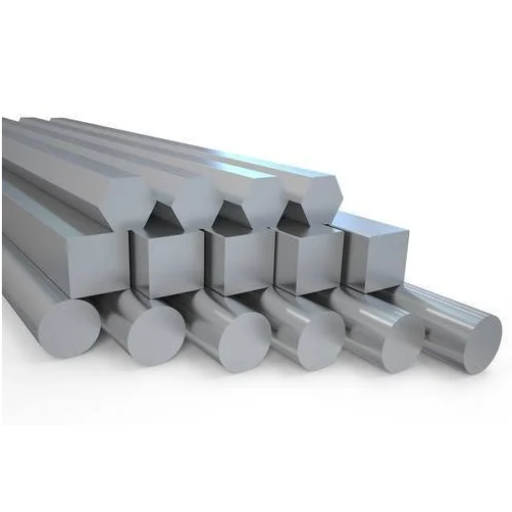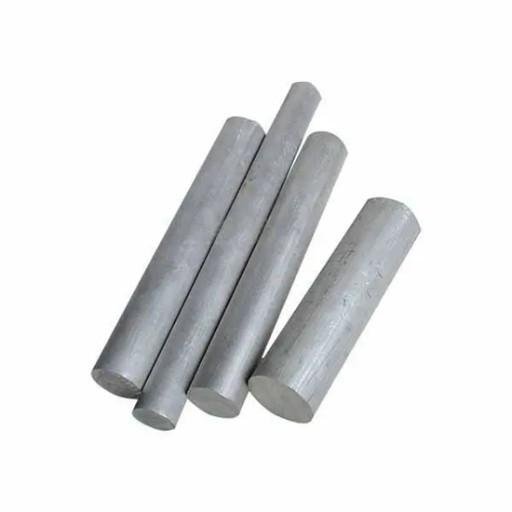
The 6061 aluminum price runs about 3.50to3.50to6.50 per pound for T651 plate at US service centers. The 7075 price for the same form runs 7.00to7.00to14.00 per pound, a premium of 80 to 150 percent in the same published survey. Both numbers are accurate. Neither one tells you what your part will cost, because the alloy is a single line in a quote that has eight moving parts.
Here’s the part that surprises most buyers. The cheapest 6061 quote is often the most expensive decision in the folder. A supplier quoting 3,750 per tonne against a 3,750 per tonne against a 3,750pertonneagainsta4,300 market can hit that number by shipping 1.85 mm plate against a 2.0 mm nominal, or T4 temper against T6.
The price per kilogram looks 13 percent better. The yield strength drops by roughly a third, the parts need rework, and the savings disappear before the first chip is cut.
You already know to compare price per pound. That habit is sound, but it stops too early. This guide shows what each published number includes, how the LME ingot price passes through to a plate quote, why the 7075 premium is quoted five different ways, and how to compare two suppliers on cost per finished part instead of cost per kilogram. If you have a drawing and an annual volume, send both for a same-basis quote, and the comparison starts on equal terms.
Key Takeaways
- Published 6061 plate prices span roughly 2.00to2.00to6.50 per pound because each source measures a different basis: LME ingot, FOB China, US distributor net, or retail service center.
- The 7075 premium is quoted at 20 to 40 percent, 30 to 50 percent, 80 to 150 percent, 1.5 to 2.5 times, and 15 to 60 percent. Each figure is correct for a different comparison.
- LME aluminum was 1.4259 perpound on November 20,2026, and in got is about 75 percent of a 6061 plate price. A1.4259 perpound on November 20,2026, and in got is about 75 percent of a 6061 plate price. A100 per tonne ingot move changes plate by about 75to75to80 per tonne.
- 7075-T6 has about 1.82 times the yield strength of 6061-T6, but it machines 25 to 35 percent slower and wears tools 30 to 50 percent faster. Cost per part can favor either alloy.
- The only fair comparison is a quote normalized to one form, one temper, one thickness tolerance, one quantity, and one delivery term.
6061 Aluminum Price Today: What the Published Numbers Say
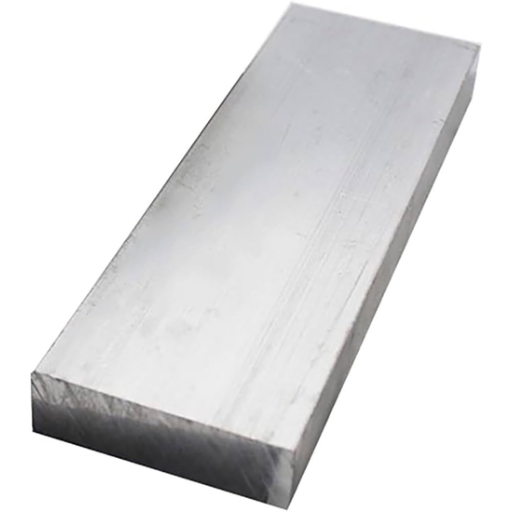
Start with a survey. Every figure below was published between February 2025 and November 2026, and every one has a different basis. Read the basis column before the price column.
| Source | Date | Basis | 6061 price | 7075 price |
|---|---|---|---|---|
| Kitco | Nov 20, 2026 | LME cash, per lb and tonne | 1.4259/lb;1.4259/lb;3,143.50/t | Not quoted |
| Material Price Book | Nov 19, 2026 | US distributor net, 1.5 in T651 plate | $4.80-5.83/lb | About 2x 6061 |
| Haomei | Oct 2026 | FOB China, 6061 plate | 3,900−4,500/t(3,900−4,500/t(3.90-4.50/kg) | Not quoted |
| Worthwill | May 2026 | US service center, T651 plate | $3.50-6.50/lb | $7.00-14.00/lb |
| Da He Precision | Oct 2026 | Raw stock, per lb | $3-5/lb | $6-10/lb |
| IndexBox | Feb 2025 | Per kg, unspecified | $2-4/kg | Not quoted |
Material Price Book’s 1.5-inch 6061-T651 listing is the distributor benchmark behind the fourth row. The spread from 2.00to2.00to6.50 per pound is not a market disagreement. It is a basis disagreement. Convert everything to dollars per kilogram and the picture changes again: 2.00perpoundis2.00perpoundis4.41 per kilogram, 3.50is3.50is7.72, 4.80is4.80is10.58, and 6.50is6.50is14.33. The FOB China range of 3.90to3.90to4.50 per kilogram is 1.77to1.77to2.04 per pound, which sits below every US retail number. Freight, duty, distributor margin, cut-to-size, tolerance, and quantity explain the gap.
Why the numbers disagree
Six mechanisms do most of the work.
- Trading level. LME cash is the metal alone. FOB China adds conversion and export packing. A US distributor adds freight, duty, inventory carrying cost, and margin. A service center adds cut-to-size and next-day availability.
- Form and temper. Plate costs more than sheet, T651 costs more than T6, and O temper costs more than either because it needs a separate anneal.
- Thickness and tolerance. A 2.0 mm nominal sheet rolled to 1.85 mm is 3 to 5 percent cheaper per tonne and more expensive per usable square foot.
- Quantity. Service centers discount 3 to 8 percent at 500 to 999 pounds, 8 to 15 percent at 1,000 to 4,999 pounds, and 20 to 35 percent above 20,000 pounds. Container loads reach 30 to 45 percent below retail.
- Documentation and inspection. A mill certificate, first-article inspection, and dimensional report add cost that a bare quote omits.
- Date. Aluminum moved through a 3,000to3,000to3,780 per tonne range in 2026. A May quote and a November quote are not the same market.
The only comparison that matters
A price per kilogram is an input. The number that decides a job is cost per finished, inspected part. That number includes material yield, machining time, tool wear, scrap rate, finishing, inspection, and freight. Two alloys can trade places once all seven are counted.
If you have a drawing and a quantity, the fastest way to cut through the basis problem is to send both to a supplier and ask for a quote on identical terms. DAPU quotes AA 6061 plate and AA 7075 plate to the same thickness, temper, tolerance, and delivery basis, so the comparison is real. Request a quote with your drawing and annual volume.
How a 6061 Price Is Actually Built
A 6061 aluminum plate quote is a stack, not a single market price. The stack has eight lines, and only the first one is published anywhere.
LME ingot: about 75% of the plate price
The aluminum LME price is the starting point. On November 20, 2026, the London Metal Exchange cash settlement was 1.4259perpound,or1.4259perpound,or3,143.50 per tonne, according to Kitco. Haomei’s October 2026 analysis puts ingot at roughly 75 percent of a 6061 plate price and estimates that a 100pertonnemoveiningotchangesplateby100pertonnemoveiningotchangesplateby75 to $80 per tonne. That pass-through is the single most useful number for timing a purchase.
Conversion and processing fee
The mill turns ingot into plate and charges for it. Haomei’s published ranges put T6 processing at 700to700to950 per tonne for 2 to 10 mm plate and 850to850to1,200 per tonne for cold-rolled 1 to 3 mm. T651 stretching adds 200to200to300 per tonne. Ultra-thin plate under 0.5 mm can carry a 60 percent premium because rolling yields drop.
Temper: T6, T651 and O
T6 is the standard solution-treated and artificially aged temper. T651 adds a controlled stretch before aging to relieve residual stress, which matters for machined parts that would otherwise move. O is annealed and soft, and it costs more than T6 because it needs a separate furnace cycle. Substituting T4 for T6 is a common way to hit a lower quote. Haomei notes that T4 has at least 30 percent lower yield strength, so the part may not meet the drawing.
Form: sheet, plate, bar and extrusion
The same alloy carries different premiums by form. Sheet is rolled thin and sold by the pound. Plate is heavier, flatter, and often sold cut-to-size. Bar and extrusion add die cost and minimum order quantities. A quote for “6061” that does not name the form is not a quote yet.
Quantity, tolerance, finish and freight
Volume breaks are steep. Freight runs 150to150to600 per tonne CIF depending on port. Anodizing adds 20 to 40 percent over bare plate, jig plate adds 50 to 100 percent, and precision machining adds 30 to 60 percent. Value-added services such as cutting, edge milling, and packing add 30to30to300 per tonne.
| Cost line | Typical range | What changes it |
|---|---|---|
| LME ingot | About 75% of plate price | Daily LME cash settlement |
| Conversion, T6 2-10 mm | $700-950/t | Line, width, rolling speed |
| Conversion, cold-rolled 1-3 mm | $850-1,200/t | Thickness, width, surface |
| T651 stretching | +$200-300/t | Stress relief requirement |
| Ultra-thin under 0.5 mm | +60% or more | Rolling yield |
| CIF freight | $150-600/t | Port pair, container load |
| Volume discount | 2-5% above 5 t | Order size, stock status |
| Value-added services | $30-300/t | Cutting, milling, packing |
Mini-story: three quotes, one drawing. A fabricator in Ohio sent the same 6061-T651 plate drawing to three suppliers in September 2026. The quotes came back at 4.20,4.20,5.10, and 6.00 per pound. All three were honest.The6.00perpound. All three were honest.The4.20 quote was FOB China with no freight, no cut-to-size, and a 1.5 mm thickness tolerance. The 6.00 quote was delivered duty paid with cut-to-size, a mill certificate, first-article inspection, and five-day delivery. The fabricator chose the 6.00 quote; it was delivered duty paid with cut-to-size, a mill certificate, first-article inspection, and five-day delivery. The fabricator chose the 5.10 quote, which matched the drawing and the delivery date. The lesson is not that one supplier was cheap. It is that the quote is a scope, and the scope has to match.
7075 vs 6061 Aluminum Price: What the Premium Actually Is
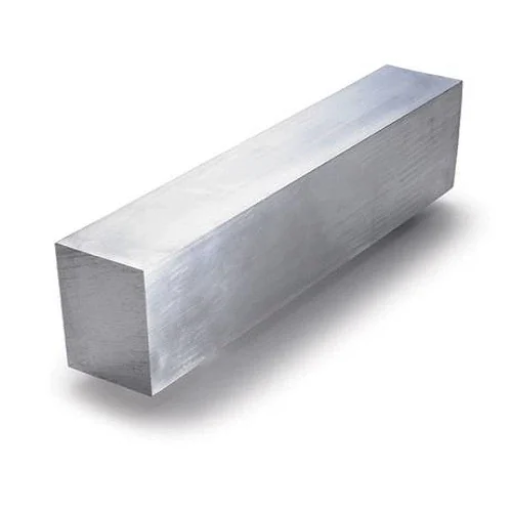
Search for the 7075 premium, and you will find five answers: 20 to 40 percent, 30 to 50 percent, 80 to 150 percent, 1.5 to 2.5 times, and 15 to 60 percent. Every one has a source. Every one is measuring something different.
| Source | Comparison | Premium | Basis |
|---|---|---|---|
| Cymbermetal | Raw material | 20-40% | Per kg, alloy only |
| DAPU technical blog | Raw material | 30-50% | Per kg, alloy only |
| QuickCNC | Raw material | 30-50% | Per kg, alloy only |
| Worthwill | Service-center plate | 80-150% | T651 plate, per lb |
| LXCET | Raw stock | 1.5-2.5x | Per unit weight |
| Da He Precision | Raw stock | 1.5-2.5x | Per unit weight |
| Da He Precision | Finished part | 15-60% | Material plus machining |
| Material Price Book | Distributor plate | About 2x | Per lb |
Why the premium is not one number
The premium grows as you move from ingot to finished part, but not evenly. At the alloy level, 7075 contains zinc, copper, and magnesium in larger amounts than 6061, and those additions cost more than silicon and magnesium. At the plate level, 7075 is harder to roll, harder to flatten, and more likely to carry residual stress, so the conversion premium is larger than the chemistry premium. At the finished-part level, the premium can shrink again, because 7075’s higher strength lets a designer remove material.
The property gap explains the design case. 7075-T6 typically delivers 572 MPa tensile and 503 MPa yield, against 310 and 276 MPa for 6061-T6. That’s about 1.82 times the yield strength.
Density rises only from 2.70 to 2.81 g/cm³, and modulus from 68.9 to 71.7 GPa, about 4 percent. The strength-to-weight ratio is roughly 102 kN·m/kg for 6061 and 180 for 7075. Those figures are consistent across DAPU’s 6061 and 7075 data, LessCAD’s material comparison, and the published datasheets.
Price per kilogram vs cost per part
A kilogram of 7075 does more work than a kilogram of 6061. That is the entire economic argument for the alloy, and it only pays when the design uses the extra strength. If a part is stiffness-limited, 7075 is a waste, because modulus is only 4 percent higher. If the part is strength-limited, 7075 can use a thinner section and cut weight. If the part is corrosion-limited or welded, 7075 is the wrong choice at any price.
That is why the finished-part premium can be 15 percent in one shop and 150 percent in another. The difference is geometry, not alloy.
6061 Aluminum Price vs Cost per Part: Where 7075 Earns Its Premium
The cost-per-part calculation is simple arithmetic that most buyers never run. Take a bracket with a 200 mm by 150 mm footprint, 20 mm thick, 1,000 pieces per year. In 6061-T6, the part weighs about 1.62 kg. In 7075-T6, a strength-based redesign can take the thickness to 14 mm and the weight to about 1.19 kg.
| Line item | 6061-T6 | 7075-T6 |
|---|---|---|
| Raw material, $/kg | $7.70 | $12.50 |
| Part weight, kg | 1.62 | 1.19 |
| Material per part | $12.47 | $14.88 |
| Machining time, min | 18 | 25 |
| Shop rate, $/min | $1.10 | $1.10 |
| Machining per part | $19.80 | $27.50 |
| Tooling per part | $1.10 | $1.55 |
| Scrap and rework, % | 2% | 4% |
| Scrap cost | $0.65 | $1.70 |
| Anodizing per part | $2.10 | $2.50 |
| Cost per part | $36.12 | $48.13 |
The 7075 part costs about 33 percent more per finished piece, even after the weight reduction. The raw-material premium was 62 percent. Machining, tool wear, and scrap absorbed part of the gap, but not all of it. For this bracket, 7075 is not worth the premium unless the load case requires it.
Machinability and cycle time
Published machinability ratings put 6061 around 90 and 7075 around 70 on a 100 scale, though FabDigit rates 7075 slightly better at 78 against 70 for 6061. The disagreement is a reminder that machinability depends on the operation. What most shops agree on is the cutting window: 200 to 300 m/min surface speed for 6061 against 150 to 220 m/min for 7075, and 0.05 to 0.15 mm per tooth against 0.03 to 0.10 mm. Lower speeds and lighter feeds mean longer cycles.
Tool wear, scrap and distortion
7075 wears tools 30 to 50 percent faster in published shop estimates. It also distorts more in plain T6 plate, which is why T651 or T7351 is common for thin walls. T7351 trades about 12 to 14 percent of its strength for better stress-corrosion resistance. That trade can erase the design advantage that justified the alloy in the first place.
When 7075 is cheaper overall
7075 wins when the strength allows a large weight or section reduction, when the part is aerospace or defense and the buy-to-fly ratio matters, and when the alternative is steel. It loses when the part is stiffness-limited, when anodizing appearance matters, and when welding is required. 7075 is not recommended for fusion welding. 6061 welds readily with 4043 or 5356 filler.
Mini-story: the bracket that did not need 7075. An automation integrator specified 7075-T6 for a mounting bracket in early 2026 because “it is the stronger alloy.” A load check showed the bracket saw about 8 MPa of bending stress, far below 6061-T6’s 276 MPa yield. The 6061 version machined in 18 minutes instead of 25, anodized evenly, and cost $12 less per part. The 7075 version solved a problem the part did not have.
How to Compare 6061 Aluminum Price Quotes Without Getting Fooled
Two quotes are only comparable when seven lines match. Print this table and fill it in for each supplier.
| Line | What to record | Why it changes the price |
|---|---|---|
| Alloy and temper | 6061-T6 or T651 | T651 adds $200-300/t |
| Form and thickness | Plate, sheet, bar; nominal and tolerance | 1.85 mm vs 2.0 mm is 3-5% |
| Quantity | Weight and piece count | Breaks start at 500 lb |
| Delivery term | FOB, CIF, or DDP | Freight is $150-600/t |
| Cut and finish | Mill, cut-to-size, anodized | Anodizing adds 20-40% |
| Documentation | Mill cert, FAIR, dimensional report | Inspection is real cost |
| Lead time | Stock or mill rolling | Stock costs more, ships sooner |
Hidden costs: thickness, temper, scrap, freight, documents
Four hidden costs explain most “cheap” quotes.
Thickness tolerance. A 2.0 mm nominal sheet rolled to 1.85 mm is 3 to 5 percent lighter and cheaper per tonne. It is also 7.5 percent thinner, so the buyer gets fewer usable parts per kilogram. The price per kilogram falls; the cost per part rises.
Temper substitution. T4 instead of T6 is the most common swap. Yield strength drops by at least 30 percent. A part that passes a dimensional check can fail a load test.
Freight and duty. An FOB quote excludes ocean freight, insurance, duty, and inland delivery. A DDP quote includes all of it. The difference can be 10 to 20 percent of the landed cost.
Documentation. A mill certificate, first-article inspection, and dimensional report are not free. A quote that omits them is not cheaper; it is incomplete.
Mini-story: the low quote that cost more. A buyer switched to a supplier quoting 3,750 per tonne in July 2026, below the 3,750 per tonne in July 2026, below the 4,300 market. The plate arrived at 1.85 mm nominal 2.0 mm and in T4 instead of T6. The yield strength was at least 30 percent lower; the parts needed rework, and the customer rejected the first lot. The savings were gone before the second delivery.
The RFQ checklist
Send this with every drawing:
- Alloy and temper, with the governing standard.
- Form, thickness, and tolerance.
- Quantity in pieces and in kilograms.
- Delivery term and destination port.
- Cut-to-size and edge condition.
- Surface finish and anodizing specification.
- Documentation: mill certificate, inspection report, and test certificates.
- Required lead time and shipping date.
A supplier who answers all eight is quoting. A supplier who answers three is guessing.
Scrap Value and End of Life
Scrap credit is part of the part cost, and it is often ignored. 6061 scrap trades at a discount to new plate, and the discount widens when chips are mixed with other alloys. Clean, segregated 6061 solids recover more than mixed turnings. If your shop generates 2 tonnes of 6061 scrap a month, the credit can cover a meaningful share of the material bill.
The practical rule is simple. Keep 6061 and 7075 scrap separate, keep chips dry and free of steel, and ask your recycler for a price by alloy and form. The metal weight calculator helps you estimate scrap volume from a drawing before you call.
Frequently Asked Questions
How much does 6061 aluminum cost per pound?
Published US service-center prices for 6061-T651 plate ran 3.50to3.50to6.50 per pound in May 2026. US distributor net pricing for 1.5-inch plate was 4.80to4.80to5.83 per pound in November 2026. The exact number depends on form, temper, thickness, quantity, and delivery term.
How much does 6061 aluminum cost per kilogram?
Convert the per-pound range at 2.20462 pounds per kilogram. 3.50to3.50to6.50 per pound is 7.72to7.72to14.33 per kilogram. FOB China 6061 plate was 3.90to3.90to4.50 per kilogram in October 2026, before freight, duty, and distributor margin.
Why is 6061 aluminum so expensive compared with steel?
Aluminum costs more per kilogram because smelting takes large amounts of electricity and the alloying and rolling steps add cost. The LME cash price was $1.4259 per pound in November 2026, and conversion, temper, and freight add to it. Steel is cheaper per kilogram, but aluminum’s lower density means the gap narrows on a per-part basis.
Is 7075 aluminum worth the extra cost?
It is worth it when the design uses the strength. 7075-T6 has about 1.82 times the yield strength of 6061-T6, so a part can use a thinner section. It is not worth it when the part is stiffness-limited, when it must be welded, or when appearance anodizing matters.
Is 6061 cheaper than 5052 or 6063?
In published service-center pricing, 6061-T651 plate at 3.50to3.50to6.50 per pound sits close to 5052-H32 at 3.00to3.00to5.50 and below 6082-T651 at 4.00to4.00to7.00. 6063 is usually sold as extrusion and priced by the profile. Compare the 5052 vs 6061 and 6061 vs 6063 guides for the property differences.
What is the price of a 4×8 sheet of 6061 plate?
Material Price Book listed a 1.5-inch 6061-T651 plate at about 111.97persquarefootinNovember2026,or111.97persquarefootinNovember2026,or5,449.18 for a 4×12 foot sheet. A 4×8 sheet at the same thickness would be about two-thirds of that area. The price scales with thickness and weight, not with the sheet count.
How does the LME aluminum price affect 6061 plate?
Ingot is about 75 percent of the plate price, and a 100pertonnemoveiningotchangesplatebyabout100pertonnemoveiningotchangesplatebyabout75 to $80 per tonne. The pass-through is not instant. Mills reprice on their own cycle, and distributors may hold inventory at the old cost for weeks.
How do I compare two 6061 quotes?
Normalize both to the same alloy, temper, form, thickness tolerance, quantity, delivery term, and documentation. Then divide the total by the number of good parts, not by the number of kilograms. The lower price per kilogram can lose once yield, machining, and scrap are counted.
The Bottom Line on 6061 vs 7075 Pricing
There is no single 6061 aluminum price. There is a stack: LME ingot, conversion, temper, form, quantity, tolerance, freight, and documentation. The published range from 2.00to2.00to6.50 per pound is a map of those differences, not a market argument. The 7075 premium is equally elastic, from 20 percent at the alloy level to 150 percent at the service-center plate level, and 15 to 60 percent at the finished part.
Use 6061 when the design is stiffness-, corrosion-, or weld-limited. Use 7075 when the load case needs its strength and the weight saving pays for the slower machining. Then compare quotes on one basis, with one tolerance, one quantity, and one delivery term.
DAPU supplies AA 6061 plate, AA 7075 plate, and the full range of aluminum plate, sheet, and coil from its China facility. Send a drawing and an annual volume, and the team will quote both alloys on the same basis so the cost-per-part comparison is honest. Request your quote or read the 6061 vs 7075 alloy guide for the full property comparison.