5052 aluminum is the alloy you bend, weld and leave outdoors. 6061 aluminum is the alloy you machine, load and bolt down. That’s the comparison in two sentences, and almost every debate about these two grades comes down to which of those jobs your part actually has.
Here’s the part most pages skip. The two alloys are asked to do different work, so the useful question isn’t “which is stronger?” It’s “what is the hardest thing that will happen to this part?” A bracket that must survive two 90 degree bends has one answer. A fixture plate that must hold a tolerance after 20 mm of material is removed has another.
This article compares them at the same temper, shows how far published datasheets disagree with each other, and explains why 6061-T6 cracks at a radius that 5052-H32 survives. It ends with the line items to put on a drawing so the mill meets your number, not its own. We supply AA 5052 sheet and AA 6061 plate, so both sides of this order reach our desk. Send the drawing and temper if you want the alloy checked before you buy.
Key Takeaways
- 5052-H32 bends to about 1× thickness and keeps its corrosion performance in salt air. 6061-T6 is 42% stronger in typical yield but needs 1.5× to 3× thickness at a bend.
- Published datasheets disagree by up to 23% on the same alloy and temper: 5052-H32 yield appears from 159 to 195 MPa, 6061-T6 from 241 to 276 MPa.
- Elongation does not predict bendability. 6061-T6 often reports a higher elongation than 5052-H32 and still cracks first.
- Both alloys share a modulus near 69 GPa, so substituting 6061 for 5052 does not fix a part that deflects. It fixes a part that yields.
- Welding removes temper on both sides. 6061-T6 drops to roughly 165 MPa in the heat-affected zone, about 40% below parent yield.
5052 vs 6061 Aluminum: The Short Answer
Pick 5052-H32 when the part is formed, welded, or exposed to salt air, chlorides or wash-down. Pick 6061-T6 or T651 when the part is machined, carries a sustained load, must stay flat after machining, or needs a hard anodized wear surface.
| Decision | 5052 | 6061 |
|---|---|---|
| Alloy system | 5xxx Al-Mg, non-heat-treatable | 6xxx Al-Mg-Si with copper, heat-treatable |
| Common tempers | O, H32, H34, H36, H38 | O, T4, T6, T651, T6511 |
| Strength at common temper | 228 MPa tensile / 193 MPa yield (H32) | 310 MPa tensile / 276 MPa yield (T6) |
| Bend radius | About 1× thickness in thin sheet | 1.5× to 3× thickness, more in heavy gauges |
| Welding | Good; HAZ softens but stays usable | Good; HAZ loses roughly 40% of yield |
| Corrosion in salt air | Excellent, used uncoated | Good; needs coating or isolation in wet chlorides |
| Machining | Gummy, built-up edge, poor finish | Clean chips, tight tolerance, good finish |
| Anodized look | Darker, less even on large panels | Clearer film, uniform on machined parts |
| Typical parts | Tanks, enclosures, panels, ducting | Fixture plates, moulds, brackets, valve bodies |
| Cost basis | Usually lower per kg as thin sheet | Higher per kg as plate; often lower per finished part |
Three conditions override the rule. If the part is bent after T6 aging, temper matters more than alloy, and T4 plus post-form aging is often the answer. If the part is deflection-limited, neither alloy helps. If an anodized assembly must match in colour, keep the visible family in one alloy, because 5052 and 6061 do not anodize to the same tone.
| If the governing requirement is… | Specify | Because |
|---|---|---|
| Multiple bends or a tight radius | 5052-H32 | 1× radius workable; 6061-T6 cracks |
| Welded assembly left unpainted | 5052-H32 | Better chloride performance and a simpler HAZ |
| Machined pocket or tapped load path | 6061-T6 | Clean chips, tight tolerance, higher yield |
| Flatness after heavy machining | 6061-T651 | Stretched plate relieves residual stress |
| Minimum deflection | Either, with a deeper section | Modulus is nearly identical |
| Cosmetic anodized panels that must match | 6061 | More uniform colour across parts |
| Hull, deck or continuous immersion | 5083 or 5086 | 5052 is the splash and tank alloy |
What 5052 and 6061 Actually Are
Both are wrought aluminum alloys, but they gain strength in opposite ways. That single difference explains most of what follows.
5052 is an aluminum-magnesium alloy with chromium for grain control. It can’t be strengthened by heat treatment. The mill rolls and cold-works it, then stabilizes it, which is why the temper starts with H: H32 is strain hardened and stabilized to a quarter-hard condition, H34 is harder, H38 harder still. Heat it and it softens for good; the strength only comes back if the metal is worked again.
6061 is an aluminum-magnesium-silicon alloy with deliberate copper. It responds to solution treatment and artificial aging: T6 means solution treated and peak aged, and T651 adds a stretching pass to relieve residual stress, which is why thick plate cuts flat. Weld or over-age it and the strength falls. Re-solution treating can restore it, but almost nobody does that to a finished fabrication.
| Element (wt%) | 5052 | 6061 |
|---|---|---|
| Silicon | 0.25 max | 0.40 to 0.80 |
| Iron | 0.40 max | 0.70 max |
| Copper | 0.10 max | 0.15 to 0.40 |
| Manganese | 0.10 max | 0.15 max |
| Magnesium | 2.2 to 2.8 | 0.80 to 1.20 |
| Chromium | 0.15 to 0.35 | 0.04 to 0.35 |
| Zinc | 0.10 max | 0.25 max |
| Titanium | not specified | 0.15 max |
Limits follow the published 5052 datasheet from Aircraft Materials and the 6061 datasheet from the same publisher, and match our own product pages.
Read the chemistry for corrosion and machining. Copper makes 6061 machine cleanly, but copper-bearing phases act as cathodes when the oxide film breaks, which is why 6061 sits a step behind 5052 in chloride service. Magnesium at 2.2 to 2.8% is why 5052 resists salt water, and why it is gummy under a cutter.
The temper ladders run like this. On 5052: O, annealed and most formable; H32, general sheet work; H34, H36 and H38, progressively harder for stiffness in flat panels. On 6061: O, T4 naturally aged and formable, T6 peak aged and the default, T651 stretched for thick plate, and T6511 for stretched extruded bar. Higher H numbers mean more cold work and less remaining ductility; T6 versus T4 is the difference between hard and formable.
Strength: 6061 Wins, and Here Is How Much
6061-T6 is stronger at equal temper. The useful question is by how much, because the answer moves with the source.
| Property (typical published values) | 5052-H32 | 6061-T6 | Gap |
|---|---|---|---|
| Tensile strength | 228 to 230 MPa | 310 MPa | 35% to 36% |
| Yield strength (0.2% offset) | 193 to 195 MPa | 276 MPa | 42% |
| Elongation | 12% | 10% to 17% | overlaps |
| Hardness | about 60 HB | about 95 HB | large |
| Density | 2.68 g/cm³ | 2.70 g/cm³ | 0.7% |
| Young’s modulus | 70 GPa | 68.3 GPa | 6061 slightly lower |
Those aren’t standard minimums. They’re published figures from reputable sources, and the sources don’t agree.
| Source | 5052-H32 tensile / yield (MPa) | 6061-T6 tensile / yield (MPa) |
|---|---|---|
| Kaiser typical, via LessCAD | 230 / 195 | 310 / 276 |
| DAPU product pages | 228 / 193 | 310 / 276 |
| Plate guidance citing ASTM B209 practice (QIDAMT) | 228 / 193 | 310 / 276 |
| SSG MFG comparison | 228 / 193 | 310 / 276 |
| Smiths Metal datasheet, approximate H32 | 210 / 175 | not given |
| Aircraft Materials tables | 214 to 262 / 159 | 290 / 241 |
5052-H32 yield spans 159 to 195 MPa, a 23% spread for one alloy in one temper. 6061-T6 yield spans 241 to 276 MPa, a 14% spread. The conclusion never flips, so 6061 is always the stronger alloy. The margin you are buying does: 25% on the 35 versus 28 ksi pair, 42% on the typical-values pair, and 52% if you compare Aircraft Materials’ 6061 figure with its own 5052 figure.
Why the numbers disagree. Five reasons, and a buyer should know all of them. Some tables print typical values in a column labelled “min,” and product form and thickness change the table inside the same standard. ASTM B209, AMS 4027 and EN 485-2 don’t produce identical rows. Yield measured on a round specimen differs from yield on a thin sheet coupon, and elongation in 2 in differs from elongation in 4D. And some distributor sheets are explicitly approximate, as the Smiths sheet is.
The consequence is simple. “5052, 2 mm sheet” names a family, not a strength. “5052-H32, ASTM B209, minimum yield 193 MPa, mill certificate with heat number” specifies a product.
Illustrative scenario. A fabricator quotes a control enclosure as 5052 sheet and buys on price. Two suppliers deliver, both legitimately 5052, one certified near the top of the band and one near the bottom. The cover was designed on the higher figure, and the lower one passes the same drawing because nobody wrote a minimum on it. The fix costs nothing at quotation and a full re-quote after delivery.
Why 6061-T6 Cracks When You Bend It
Every comparison says 6061-T6 cracks at tight radii. Very few explain why, and the explanation corrects a mistake designers make with the datasheet.
The mistake is reading the elongation column. 5052-H32 is often listed at 7% to 12% elongation. 6061-T6 is listed at 10% to 17%. On paper, 6061-T6 looks more ductile. Then it cracks along the outside of a bend that 5052-H32 takes without complaint.
Elongation from a tensile test is uniform strain along a gauge length. A bend isn’t a tensile test. The outer fibre stretches while the inner fibre compresses, and the sheet is constrained across its width, which pushes local strain well past the tensile elongation. Bendability also depends on what happens once the outer surface starts to neck. A precipitation-hardened alloy such as 6061-T6 has little hardening reserve left after aging. A work-hardened alloy such as 5052-H32 still hardens as it deforms, which spreads the strain instead of concentrating it on one line.
That’s why the same elongation number means different things in the two alloys, and why the bend radius, not elongation, is the number to specify.
| Bend condition | 5052-H32 | 6061-T6 |
|---|---|---|
| Minimum inside radius, 90° | about 1× thickness at 0.064 in | 1.5× to 3× thickness (3× to 4× per one supplier) |
| Bend line orientation | Less sensitive | Keep across the rolling direction |
| Springback | Low, predictable | High; a tool set by habit produces a short flange |
| Cracking risk at 1× radius | Low | High |
| If a tight radius is mandatory | Use O temper | Form in T4, or anneal the bend zone, then age |
A bend radius rule of thumb is a starting point for tooling, not a guarantee. If the part is safety-relevant, bend a coupon from the actual lot. The T4 route is real and underused. Form 6061 in T4, then age to T6: it costs a heat-treatment step and some dimensional movement during aging, and it is still cheaper than scrapping a batch.
The logic applies in reverse to 5052. In H32 it forms easily. In H38 it won’t, because most of the ductility has been spent reaching that temper. If a drawing says “5052” and the shop buys H38 because it was in stock, the part may crack in a bend H32 would have taken.
Illustrative scenario. An engineer specifies 6061-T6 for a bracket with two 90° bends at 1.5× thickness, reasoning that 6061 is stronger and the radius looks generous. The first articles crack along the outside of the bend, on the same line every time. The drawing wasn’t wrong about strength. It was wrong about ductility. Switching to 5052-H32 solves the bend, and the bracket still passes because it was stiffness-limited. The alternative, 6061-T4 formed then aged, would have kept the higher strength.
Stiffness: The Number That Settles Most Arguments
Strength gets compared. Stiffness decides the outcome. Young’s modulus for both alloys sits at roughly 68 to 70 GPa, and the difference is under 3%, with 6061 marginally lower.
That has a blunt consequence. If a part deflects too much, switching from 5052 to 6061 won’t fix it. Deflection depends on modulus, span and section, and the modulus barely moves. The fix is a deeper section, a rib, a doubler or a thicker gauge. Buying the stronger alloy only helps if the part is yielding, not if it’s springing.
Weight follows the same logic. In stiffness-limited designs 5052 is lighter per unit of stiffness, because its slightly lower density and slightly higher modulus both help. In strength-limited designs 6061-T6 is about 41% better on strength-to-weight. That’s why a “5052 panel on a 6061 frame” is such a common and sensible assembly. Each alloy is used where its own property wins.
You can check the mass consequence of a gauge change with our metal weight calculator before committing to a section.
Corrosion and Marine Service
5052 is the better alloy in chloride service, and the margin matters. It resists salt water, salt air, splash zones and most industrial atmospheres without a coating. It doesn’t show the intergranular attack that some higher-magnesium 5xxx alloys can develop after prolonged elevated-temperature exposure.
6061 resists atmospheric corrosion well and is acceptable in fresh water. It is more sensitive to chlorides and to galvanic coupling. The copper that makes it machine well becomes a cathode where the oxide film is broken, so pits start at scratches, cut edges and, most often, fasteners.
Three rules cover most failures:
- Isolate dissimilar metals. A stainless screw in an aluminum plate makes the aluminum the anode. Use insulating washers, a sealant at the interface or a plated fastener, and state the fastener material on the drawing.
- Design drainage. Standing water in a crevice defeats either alloy, whatever the datasheet says.
- Choose the alloy for the exposure, not the strength. 6061-T6 in a splash zone under sustained tensile load is a poor combination.
5052 is not the hull alloy. It’s the marine atmosphere, splash and tank alloy. Where the structure is immersed, or where welded strength governs a hull or deck, 5083 and 5086 are the usual choices, and we stock AA 5083 plate alongside 5052. Calling 5052 “marine grade” without that qualification is how boats get built from the wrong sheet. The oxide behaviour behind all of this is covered in our article on whether aluminum rusts.
Illustrative scenario. A builder makes a diesel tank from 5052, the correct alloy, and fixes the sender with stainless screws and no isolation. Two seasons later the pits are all within 20 mm of the fasteners; the tank wall elsewhere is clean. The alloy choice was right and the joint was wrong. A gasket and a sealant at the flange would have prevented it.
Welding: Both Alloys Lose Strength, for Different Reasons
Both alloys weld well with TIG or MIG. Both lose strength in the heat-affected zone. The reasons differ, and so does the size of the loss.
6061-T6 is strengthened by precipitates that dissolve when the weld pool and the surrounding metal are heated. The zone beside the weld is effectively over-aged, and its strength falls toward the annealed condition. Published shop guidance puts the heat-affected yield around 165 MPa, roughly 40% below the 276 MPa parent value. Re-solution treating and re-aging is possible in principle and impractical for most fabrications, so design the joint to as-welded properties.
5052 is strengthened by cold work, and welding anneals that worked structure locally. Its heat-affected zone also softens, toward the annealed strength. The claim that 5052 doesn’t soften in the HAZ, repeated on several comparison sites, is wrong. What’s true is that 5052 has no precipitate structure to over-age and no post-weld treatment to schedule, so the loss is simpler to predict.
| Welding point | 5052 | 6061 |
|---|---|---|
| Filler, strength and anodized match | 5356 (Al-5% Mg) | 5356 for structural welds |
| Filler, crack resistance and fluidity | 4043 sometimes; lower ductility, darker anodized colour | 4043 where cracking is the concern |
| HAZ condition | Softened toward annealed | Over-aged toward annealed |
| Post-weld heat treatment | Not applicable | Possible in principle, rarely practical |
| Design consequence | Design to HAZ strength | Expect about 60% of T6 at the joint |
Welding 5052 to 6061. It can be done and it’s done, but it’s a compromise. Use 5356 filler, qualify the procedure on coupons, and design the joint on the weaker side’s heat-affected properties. If the joint will be anodized and visible, expect a colour difference across the weld. If the load path is short, consider a mechanical joint or a transition piece instead.
Machining and Anodizing: Where the Finish Is Decided
Machining reverses the ranking. 6061-T6 cuts cleanly at high speed with good chip control and holds tight tolerance. 5052 is gummy, forms a built-up edge, smears and produces a poorer surface for the same parameters. If a part is mostly machined, 6061 is usually cheaper even at a higher material price, because machining time dominates the total.
Parts that need both a bend and a machined face are a genuine conflict. Machine 6061 and design the bend out, or form 5052 and confine machining to drilled and tapped holes.
Anodizing is where the alloys look different, and where supplier advice conflicts. 6061 takes a clear film that stays close to the base metal tone and is uniform across machined parts. A finishing-industry answer on 6061 anodizing explains that its higher iron and silicon content gives a matte, silver-grey appearance after etching, and that 6061 is a good machining alloy but not a bright one. 5052 anodizes as well, but the film tends darker and greyer. Colour consistency across lots and large panels is harder to hold, and forming marks show more.
You’ll also find pages claiming 5052’s anodized finish is preferred for marine trim. That’s a different question, not a contradiction. For a functional coating in a chloride environment, 5052 is often the better substrate because the base alloy performs better. For a cosmetic assembly where panels must match, 6061 is easier to control. Specify the coating class and the appearance expectation, and approve a sample before the run.
Ready to compare actual stock? We hold AA 5052 sheet and coil and AA 6061 plate, and the technical team can match the temper to your forming plan before you order. Ask for a two-quote comparison.
Cost and Availability: Per Kilogram or Per Part
Material price and part cost are different numbers, and the comparison flips between them.
Per kilogram, 5052 sheet is usually the lower-cost product in common thin gauges and is more widely stocked. 6061-T6 and T651 plate carry a premium that grows with thickness, because thick plate needs more rolling, more careful heat treatment and, for T651, a stretching pass.
Per finished part, the ranking often reverses. A machined bracket in 5052 can cost more than the same bracket in 6061, because the gummy alloy doubles machining time and shortens tool life. A formed enclosure in 6061 can cost more than the same enclosure in 5052, because cracked first articles and re-bends eat the material saving.
Four line items decide it. Buy-to-fly comes first: plate-based parts waste more than sheet-based parts, and on a large machined component the scrap credit can outweigh the alloy price gap. Then forming operations, since 5052 usually needs fewer hits and less annealing, while 6061-T6 may need T4 plus aging. Machining time is the biggest swing on machined parts, and it favours 6061. Finishing yield matters if the part is anodized cosmetically, because 6061’s more consistent colour reduces rework.
So don’t ask which alloy is cheaper. Ask what the material costs and what the finished part costs including scrap, processing and rework, then request both quotes against the same drawing.
Specifying 5052 vs 6061 Aluminum on a Drawing
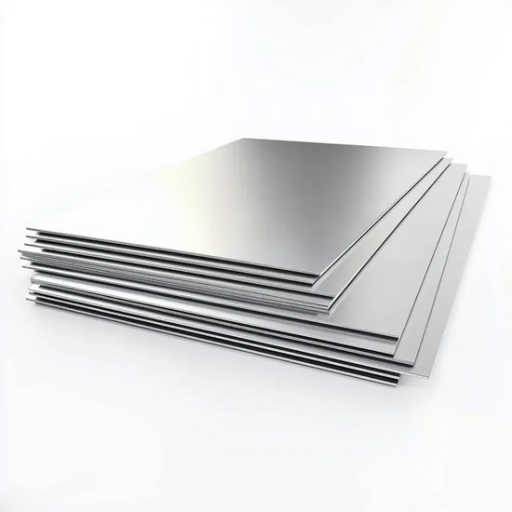
The alloy name is a family, not a specification. Six items make an RFQ unambiguous, and any mill or service centre can quote against them.
- Alloy and temper together: 5052-H32, 6061-T6, or 6061-T651 for thick plate.
- Product form and size: sheet, plate or coil, with thickness and tolerance, and whether thickness is structural or a clearance dimension.
- Standard: ASTM B209 for sheet and plate, EN 485 for European equivalents, AMS 4027 for 6061-T6 sheet and T651 plate.
- Minimum mechanical properties: tensile and yield, by product form and thickness band. This line turns a family into a specification.
- Bend radii and bend lines, so temper can be checked against the forming plan before tooling is cut.
- Certificate and identification: mill certificate with heat number, and temper marking on each piece so the shop can verify what arrived.
Add the surface treatment and its class, the appearance expectation in words rather than implication, the filler for every weld, and the service environment, especially salt exposure and fastener material.
A final CTA, in practical terms. If the drawing is still open, send it with the forming sequence and the environment. We supply AA 5052 sheet and coil, AA 6061 plate and AA 5083 plate, and we will tell you plainly whether 5052 or 6061 is the better buy for that part rather than defaulting to the stronger one. Request a quote.
The video above walks through the practical differences between 6061 and 5052. Treat it as orientation, and use the datasheets and drawing notes here as the specification.
Frequently Asked Questions
Is 5052 or 6061 aluminum stronger?
6061 is stronger at equal temper. 6061-T6 is about 42% higher in yield at typical published values (276 MPa against 193 to 195 MPa) and about 35% higher in tensile. The margin varies from 25% to 52% with the published pair used, but it never reverses.
Can you bend 6061-T6 sheet?
Yes, with a generous radius. Plan on 1.5× to 3× the thickness as a minimum inside radius, more in heavy gauges, and keep the bend line across the rolling direction. For tighter bends, use 5052-H32, or form 6061 in T4 and age it afterward.
Is 5052 aluminum marine grade?
For marine atmosphere, splash zones, tanks and fittings, yes, and it’s the usual choice. For hulls and continuous immersion, 5083 and 5086 are the correct alloys. Calling 5052 marine grade without that distinction puts the wrong sheet on immersed structure.
Can 5052 and 6061 aluminum be welded together?
They can, with care. Use 5356 filler and a qualified procedure, and design the joint on the weaker heat-affected properties. Expect a colour difference across the weld if the assembly is anodized.
Which anodizes better, 5052 or 6061?
6061 gives a clearer, more uniform film on machined parts and is easier to match across an assembly. 5052 anodizes darker and greyer and is harder to hold consistent on large panels, though it is often the better base alloy for a functional coating in salt service. Specify the coating class and approve a sample.
Which is cheaper, 5052 or 6061 aluminum?
Per kilogram, 5052 sheet is usually lower in common thin gauges. Per finished part, it depends on the process: machined parts usually favour 6061 because machining time dominates, and formed parts usually favour 5052 because forming yield dominates. Request both quotes against the same drawing.
Can 5052 aluminum be heat treated?
No. It’s non-heat-treatable, and strength comes only from cold work, so the temper is set at the mill. Heating it, including welding, softens it permanently in the affected zone. Harder tempers such as H34 add strength through more cold work, at some cost in formability.
How do you tell 5052 from 6061 aluminum?
The reliable method is the mill certificate, the heat number and the temper marking. Physical tests help but aren’t definitive: 6061 is harder, anodizes differently, and cuts with cleaner chips. A bend test on a coupon separates them quickly, since 5052-H32 takes a radius 6061-T6 won’t. Don’t rely on appearance, and never cut a plate whose marking doesn’t match its certificate.
Conclusion
5052 and 6061 aren’t two grades of one product. They’re two answers to two questions: can this be formed and left outdoors, or can it hold a load and be machined flat.
In the 5052 vs 6061 aluminum decision, choose 5052-H32 when the part is bent, welded, or lives in salt air. Choose 6061-T6 or T651 when the part is machined, loaded, or must stay flat after machining. When the part has to do both, split it, or pick the alloy for the operation that can’t be redesigned.
Whatever you choose, write the temper, the standard and the minimum properties on the drawing. The datasheets here disagree by up to 23% on the same alloy and temper, and only a specification the mill has to meet closes that gap. Send us the drawing for an alloy recommendation against your actual forming and service conditions.
That’s the 5052 vs 6061 aluminum decision in practice. If this part is an extrusion rather than sheet or plate, the related comparison is 6061 vs 6063 aluminum. If the design is strength-limited at minimum weight, read 6061 vs 7075 aluminum. And if the flat-rolled 6061 tolerance question is next, the 6061 aluminum sheet guide covers thickness and temper.