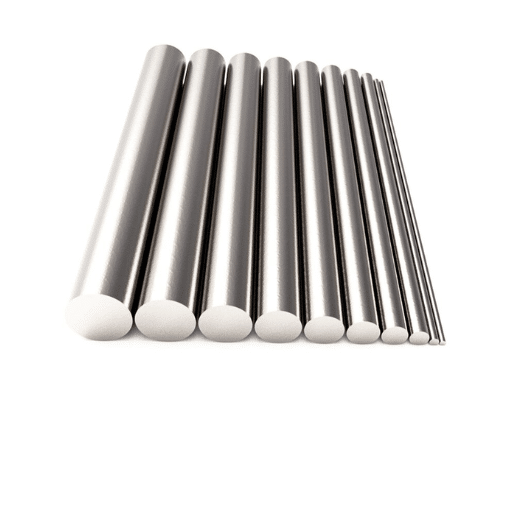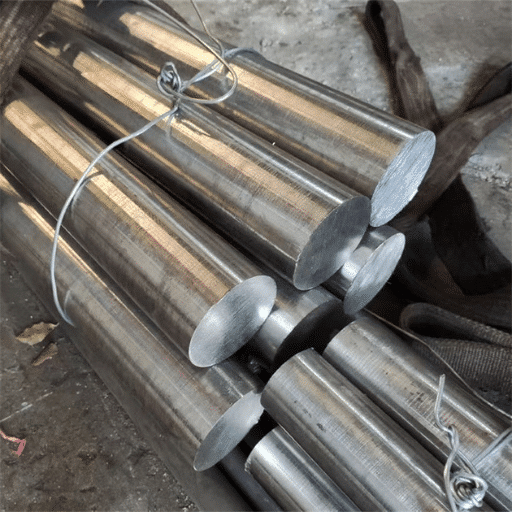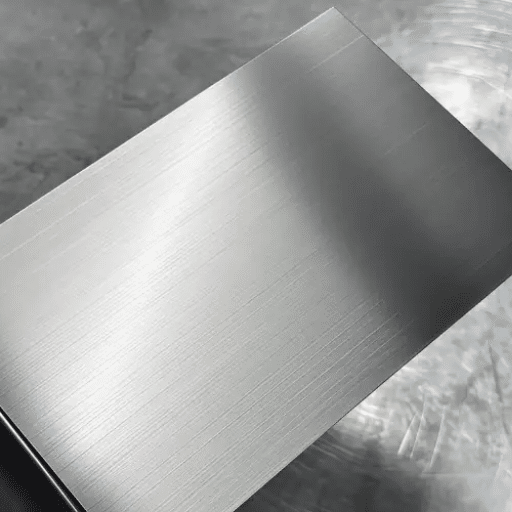
The classification of stainless steel grades into five families involves numbering systems that depend on the grades’ crystal structures and their content of alloying materials. The most common grades include 304 for general-purpose applications, 316 for corrosive environments, and 430 for cost-sensitive magnetic applications.
In 2023, a food processing plant in Jiangsu Province specified 201 stainless steel for a new dairy pasteurization line to save on material costs. The heat exchanger plates experienced chloride pitting corrosion within 14 months, which led to equipment failure and contaminated a production batch. The mistake cost approximately $47,000, which exceeded the initial savings from choosing the cheaper grade.
This situation occurs frequently. Engineers and procurement managers struggle to select the correct stainless steel grade that matches their operational requirements. The selection of incorrect material results in two outcomes for maintenance costs and three outcomes that lead to excessive spending between the three different outcomes.
The stainless steel guide shows all available grades together with their different types and their various material characteristics. The five families of stainless steel exist as five distinct groups which contain 304 and 2205 as common grades, plus their mechanical specifications, corrosion resistance ratings, and manufacturing methods, plus their total costs. The framework enables you to choose appropriate industrial grades that match your specific requirements.
Key Takeaways
- 304 is the most common grade, representing roughly 50% of global stainless steel production
- 316 adds 2-3% molybdenum for superior chloride corrosion resistance over standard 304
- 430 ferritic stainless steel costs 30-40% less than 304 but offers lower corrosion resistance and is magnetic
- PREN values quantify pitting resistance and help engineers compare grades objectively
- The five families (austenitic, ferritic, martensitic, duplex, precipitation hardening) determine magnetic properties, weldability, and hardenability
Need help identifying the right grade for your project? Our material selection team can analyze your corrosion environment, strength requirements, and budget to recommend the most suitable stainless steel grade.
What Is Stainless Steel?
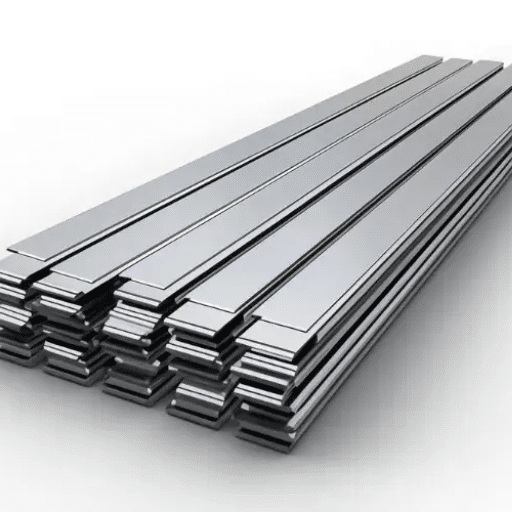
Stainless steel is an iron alloy containing a minimum of 10.5% chromium by mass. The steel surface develops a passive layer, which exists as a thin transparent oxide layer because of the chromium content. The passive layer, which consists mainly of chromium oxide (Cr2O3), stops oxygen and moisture from reaching the underlying iron, which prevents rust formation.
Stainless steel preserves its ability to resist corrosion even after its surface gets scratched, whereas carbon steel loses this property. The passive layer has the ability to repair itself. The protective barrier reforms when chromium oxidizes through its interaction with oxygen after the material sustains damage. This characteristic makes stainless steel ideal for harsh industrial environments.
Stainless steel properties undergo modification through additional alloying elements. Nickel improves corrosion resistance and stabilizes the austenitic crystal structure. Molybdenum enhances resistance to chloride pitting. Nitrogen increases strength and corrosion resistance. The carbon content in a material determines its hardness and welding capacity. Manganese can act as a nickel substitute in lower-cost grades.
For a broader overview of stainless steel materials and their fundamental characteristics, see our complete stainless steel guide.
The Five Families of Stainless Steel
Stainless steel grades fall into five families based on their crystal structure and metallurgical behavior. Understanding these families is the first step in selecting the right grade.
Austenitic Stainless Steels
Austenitic stainless steels exhibit their crystal structure through face-centered cubic (FCC) arrangement. The material shows non-magnetic properties after annealing while simultaneously providing excellent protection against corrosion and high capacity for shaping. The 200 and 300 series belong to this family. These grades cannot be hardened by heat treatment, but they work harden rapidly during cold forming.
Ferritic Stainless Steels
Ferritic stainless steels exhibit their crystal structure through body-centered cubic (BCC) arrangement. The material shows magnetic properties while being less costly than austenitic materials. The 400 series includes ferritic grades such as 430 and 409. These grades offer moderate corrosion resistance and good resistance to stress corrosion cracking.
Martensitic Stainless Steels
Martensitic stainless steels can be hardened by heat treatment, much like carbon steels. The materials exhibit a body-centered tetragonal (BCT) structure which provides them with both high strength and wear resistance. The family includes 410, 420, and 440 grades. The materials display magnetic properties which make them suitable for manufacturing cutlery and surgical instruments and industrial blades.
Duplex Stainless Steels
Duplex stainless steels combine roughly equal amounts of austenitic and ferritic phases. This mixed structure delivers approximately twice the yield strength of standard austenitic grades while providing superior resistance to chloride stress corrosion cracking. The common grades used in this material include 2205 and 2507.
Precipitation Hardening Stainless Steels
Precipitation hardening (PH) stainless steels achieve very high strengths through aging heat treatments. The material combines austenitic or martensitic grades corrosion resistance with mechanical strength that approaches low-alloy steel strength. The most common grade is 17-4 PH.
Stainless Steel Grade Numbering System
The AISI numbering system organizes stainless steel grades into series based on alloy composition and crystal structure.
The 200 series developed manganese-nickel austenitic grades as more affordable solutions than the existing 300 series. The main grades used in this system are 201 and 202. The grades use manganese and nitrogen to replace some nickel content.
The 300 series contains austenitic grades that use chromium and nickel as their base components. The series contains the most common stainless steel grades, which are used throughout the world. The industrial sector uses 304 and 316 for most applications, while 321 and 347 provide better performance at high temperatures.
The 400 series contains chromium-based grades that exist in both ferritic and martensitic forms. The 430 grade used for automotive trim and architectural applications exists as a ferritic material. The 410 and 420 grades exist as martensitic materials, which the industry uses for cutlery and tools.
The 500 series contains chromium alloys that can withstand heat at lower chromium levels than 400 series alloys. The current industrial landscape uses these grades only in restricted ways.
The 600 series contains martensitic grades that achieve hardness through precipitation. These materials provide aerospace applications and high-performance needs with their combination of high strength and limited corrosion resistance.
The Unified Numbering System (UNS) provides a more comprehensive designation. The code 304 transforms into S30400 while 316 becomes S31600 and 2205 changes into S32205. The UNS system helps engineers and buyers identify exact alloy specifications across international standards.
Common Stainless Steel Grades Explained
304 / 304L Stainless Steel
304 is the most widely used austenitic stainless steel grade. It contains approximately 18% chromium and 8% nickel, giving it excellent corrosion resistance in most atmospheric and chemical environments. 304L is the low-carbon variant, with carbon content limited to 0.03% maximum to reduce the risk of intergranular corrosion after welding.
304 is specified for food processing equipment, architectural trim, chemical containers, and general industrial piping. For detailed specifications, see our 304 stainless steel guide.
316 / 316L Stainless Steel
316 adds 2-3% molybdenum to the 304 base composition. This addition significantly improves resistance to chloride pitting and crevice corrosion. 316L uses the same low-carbon approach as 304L to maintain weldability.
316 is the standard choice for marine environments, chemical processing, pharmaceutical equipment, and any application involving exposure to saltwater or chlorides. For marine and chemical applications, our 316 stainless steel guide provides additional detail.
201 Stainless Steel
201 is an austenitic grade that replaces most of the nickel with manganese and nitrogen. It offers similar corrosion resistance to 304 in mild environments but at a lower cost. However, 201 is more susceptible to pitting in chloride environments and work hardens more rapidly during forming.
201 is commonly used for decorative trim, household appliances, and cost-sensitive structural applications. For a direct comparison with 304, see our 201 vs 304 stainless steel analysis.
430 Stainless Steel
430 is a ferritic grade containing approximately 16-18% chromium and no nickel. It is magnetic and offers moderate corrosion resistance at a significantly lower cost than austenitic grades. 430 cannot be hardened by heat treatment and has lower ductility than 304.
430 works well for automotive trim, architectural panels in non-corrosive environments, and appliance components where magnetic properties are acceptable.
410 Stainless Steel
The martensitic grade 410 contains 11.5-13.5% chromium. The material achieves its maximum hardness together with its highest wear resistance through heat treatment. Material 410 provides better corrosion protection than austenitic grades, but its strength and hardness properties make it appropriate for cutlery and valve parts and pump shafts.
2205 Duplex Stainless Steel
2205 contains approximately 22% chromium, and 5% nickel, and 3% molybdenum. The duplex structure of the material delivers twice the yield strength of 304 and 316, while it exhibits better resistance to chloride stress corrosion cracking. The oil and gas industry, together with chemical processing and desalination facilities, uses 2205 as a common material.
17-4 PH Stainless Steel
The composition of 17-4 PH metal includes 17 percent chromium and 4 percent nickel, together with added copper and niobium elements. The material reaches a maximum tensile strength of 190000 PSI after undergoing precipitation hardening through heat treatment. The material provides moderate protection against corrosion while delivering outstanding mechanical strength, which makes it suitable for aerospace, nuclear, and high-performance industrial uses.
Stainless Steel Grades Comparison Chart

The table below compares the most common stainless steel grades used in industrial applications.
| Grade | UNS | EN | Type | Cr% | Ni% | Mo% | PREN | Magnetic | Relative Cost |
|---|---|---|---|---|---|---|---|---|---|
| 304 | S30400 | 1.4301 | Austenitic | 18-20 | 8-10.5 | 0 | 18-20 | No | 100 (baseline) |
| 304L | S30403 | 1.4307 | Austenitic | 18-20 | 8-12 | 0 | 18-20 | No | 105 |
| 316 | S31600 | 1.4401 | Austenitic | 16-18 | 10-14 | 2-3 | 23-28 | No | 140-160 |
| 316L | S31603 | 1.4404 | Austenitic | 16-18 | 10-14 | 2-3 | 23-28 | No | 145-165 |
| 201 | S20100 | 1.4372 | Austenitic | 16-18 | 3.5-5.5 | 0 | 12-15 | No | 50-60 |
| 430 | S43000 | 1.4016 | Ferritic | 16-18 | 0 | 0 | 16-18 | Yes | 60-70 |
| 410 | S41000 | 1.4006 | Martensitic | 11.5-13.5 | 0.75 max | 0 | 11-13 | Yes | 70-80 |
| 2205 | S32205 | 1.4462 | Duplex | 22 | 5.5 | 3 | 35-38 | Yes | 180-220 |
| 17-4 PH | S17400 | 1.4542 | Precipitation Hardening | 15-17.5 | 3-5 | 0 | 15-17 | Yes | 200-250 |
PREN = Pitting Resistance Equivalent Number. Cost index relative to 304 = 100. Values are approximate and vary by supplier and market conditions.
This chart provides a quick reference for comparing grades. For procurement decisions, always verify current chemical composition and mechanical properties against the relevant material certification.
Ready to source a specific grade? Explore our 304 stainless steel products and 316 stainless steel products for immediate availability and competitive pricing.
Mechanical Properties by Grade
Mechanical properties vary significantly across stainless steel families. The table below summarizes typical values for common grades in the annealed condition.
| Grade | Tensile Strength (MPa) | Yield Strength (MPa) | Hardness (HB) | Elongation (%) |
|---|---|---|---|---|
| 304 | 515 | 205 | 201 | 40 |
| 316 | 515 | 205 | 217 | 40 |
| 201 | 515 | 260 | 241 | 40 |
| 430 | 450 | 205 | 183 | 22 |
| 410 | 480 | 275 | 217 | 20 |
| 2205 | 620 | 450 | 293 | 25 |
| 17-4 PH (H900) | 1,310 | 1,170 | 388 | 10 |
Values are typical for annealed or standard heat-treated conditions per ASTM A240 or A276. Actual values may vary by product form and processing history.
The strongest corrosion-resistant stainless steel exists in duplex grade 2205, which surpasses all other stainless steel grades. 17-4PH precipitation hardening grade achieves outstanding strength but its ductility and corrosion resistance capabilities become compromised. The austenitic grades deliver optimal ductility and corrosion resistance performance needed for forming applications.
Corrosion Resistance Comparison
PREN: The Objective Measure
The Pitting Resistance Equivalent Number (PREN) provides a quantitative way to compare the chloride pitting resistance of stainless steel grades. The most common formula is:
PREN = %Cr + 3.3(%Mo) + 16(%N)
Higher PREN values indicate better resistance to chloride pitting and crevice corrosion. Engineers use PREN to select grades for seawater, chemical processing, and other chloride-rich environments.
PREN Values by Grade
- 201: PREN 12-15 (moderate, not suitable for chlorides)
- 430: PREN 16-18 (moderate, limited chloride exposure)
- 304/304L: PREN 18-20 (good for atmospheric and mild chemical)
- 316/316L: PREN 23-28 (excellent for marine and chemical processing)
- 2205: PREN 35-38 (superior for oil and gas, desalination)
- 904L: PREN 45-47 (extreme chloride environments)
General Corrosion Resistance
All stainless steel grades resist general atmospheric corrosion. Atmospheric corrosion resistance exists for all stainless steel grades. The materials show different performance outcomes for acidic environments, basic environments, and saltwater environments. The austenitic 300 series grades protect against most organic acids, and they protect against mild inorganic acids. Ferritic 430 protects against atmospheric corrosion, but it fails to protect in acidic chloride environments. Martensitic 410 provides only basic protection against corrosion.
Stress Corrosion Cracking
Austenitic grades such as 304 and 316 become vulnerable to chloride stress corrosion cracking above 60°C. Duplex grades such as 2205 provide significantly better resistance to this failure mode. For high-temperature chloride service, users should select between duplex alloys and high-nickel alloys as their primary options.
Processing and Fabrication Considerations
Machinability
The machining process causes 304 and 316 Austenitic grades to develop work-hardening characteristics at a fast rate. The work hardening process needs tools with sharp edges and positive rake angles, together with sufficient coolant for cutting to be effective. The machining process becomes simpler with ferritic grades that include 430 as a base material. Free-machining variants such as 303 contain sulfur additions to improve chip breaking.
Weldability
Austenitic grades offer excellent weldability with all common processes. Standard 304 and 316 require special attention to heat input controls because they lead to sensitization, which makes 304L and 316L become the preferred choice for welded fabrications. Ferritic grades such as 430 are weldable but may suffer grain coarsement in the heat-affected zone. The martensitic grades need both preheating and post-weld heat treatment processes to protect against cracking.
Formability
Austenitic grades provide the best formability because of their FCC crystal structure, which enables high ductility. 304 can be deep drawn into complex shapes for sinks, cookware, and automotive components. The bending process becomes easier for ferritic grades because their lower ductility makes it better for simple bending operations. The higher forming forces required for duplex grades result from their increased strength.
Heat Treatment
Only martensitic and precipitation hardening grades respond to heat treatment for hardening. The quenching and tempering process does not enable austenitic grades to achieve hardening. The process of cold working enables them to gain strength. The proper phase balance needs solution annealing for duplex grades after welding.
Cost Comparison and Availability
Stainless steel grade selection directly impacts material cost. The relative cost index below uses 304 as the baseline.
| Grade | Relative Cost Index | Key Cost Driver |
|---|---|---|
| 201 | 50-60 | Low nickel content |
| 430 | 60-70 | No nickel |
| 410 | 70-80 | Low alloy content |
| 304 | 100 | Baseline |
| 316 | 140-160 | 2-3% molybdenum |
| 2205 | 180-220 | High alloy content |
| 17-4 PH | 200-250 | Complex processing |
Indices are approximate and fluctuate with nickel and molybdenum market prices.
The 300 series production costs depend primarily on nickel market prices. The price difference between 304 stainless steel and 430 stainless steel increases when nickel prices increase. Some manufacturers switch to 201 or 430 during high nickel price periods. The replacement needs to meet corrosion standards before it can be executed.
The chemical plant located on the coast of Zhejiang designated 304 stainless steel as the material for its seawater cooling headers. Within 18 months, chloride pitting started to develop. The engineering team upgraded to 2205 duplex stainless steel for replacement sections. The 2205 sections, which cost 90% more than other materials, have reached eight years of operation without corrosion, thus eliminating both replacement needs and maintenance expenses.
How to Choose the Right Stainless Steel Grade

Selecting the optimal stainless steel grade requires systematic evaluation of operating conditions and project constraints.
Step 1: Define the corrosion environment. Identify exposure to chlorides, acids, bases, and temperature extremes. Use PREN values to shortlist grades for chloride service.
Step 2: Determine mechanical requirements. Specify minimum yield strength, hardness, and impact resistance. For high-strength applications, consider duplex or precipitation hardening grades.
Step 3: Evaluate magnetic requirements. If non-magnetic properties are essential, select austenitic 300 series grades. If magnetic properties are acceptable or desired, ferritic or martensitic grades may reduce costs.
Step 4: Assess processing needs. For heavy welding, specify low-carbon L grades. For deep drawing or complex forming, choose austenitic grades with high ductility. For machining, consider free-machining variants or ferritic grades.
Step 5: Set budget constraints. Match the lowest-cost grade that meets all technical requirements. Avoid over-specifying 316 when 304 performs adequately.
Step 6: Verify code and standard requirements. Food contact applications may require specific grades. Medical devices often mandate 316L. Marine codes may specify minimum PREN values.
For complex material selection decisions, our technical consultation team can analyze your specific requirements and recommend the most cost-effective grade.
Stainless Steel Grades by Industry Application
The matrix below matches common industries to recommended grades.
| Industry | Recommended Grades | Reasoning |
|---|---|---|
| Food & Beverage | 304, 316L | Hygiene, corrosion resistance, FDA compliance |
| Marine | 316, 2205 | Chloride resistance, PREN requirements |
| Chemical Processing | 316L, 2205, 904L | Acid and chloride resistance |
| Automotive | 409, 430, 304 | Exhaust systems, trim, structural |
| Architecture | 304, 316, 430 | Aesthetics, atmospheric corrosion resistance |
| Medical / Surgical | 316L, 17-4 PH | Biocompatibility, sterilization compatibility |
| Oil & Gas | 2205, 2507, 904L | H2S, chloride, high-pressure resistance |
| Aerospace | 17-4 PH, 15-5 PH | High strength-to-weight ratio |
For food industry applications specifically, see our detailed guide on food-grade stainless steel standards and requirements.
How to Identify Stainless Steel Grade
Accurate grade identification prevents costly misapplication. Several methods exist, ranging from simple tests to laboratory analysis.
The spark testing procedure shows that different grinding methods create distinct spark patterns, which correspond to each material grade. Inspectors with extensive experience can identify carbon steel and stainless steel while recognizing multiple common grades. Spark testing fails to provide reliable results because it cannot distinguish similar 304 and 316 grades.
The molybdenum spot test detects molybdenum content through oxalic acid and potassium ferricyanide. The test result shows 316 instead of 304. The test requires careful handling of chemicals despite its straightforward nature.
Handheld X-ray fluorescence analyzers enable fast non-destructive testing of material chemical composition. XRF confirms grade identification while testing delivery materials to ensure they meet requirements. XRF has become a standard testing method used by many quality departments.
The Mill Test Certificate (MTC) serves as the document that every trustworthy supplier must provide, together with their Mill Test Certificate. The MTC must be checked to ensure it matches both your purchase order specification and the applicable ASTM, EN, and JIS standards.
The Common Misidentification Risk occurs because some suppliers use 201 as a cheaper substitute for 304. The 201 alloy contains lower nickel content combined with higher manganese content which results in decreased corrosion resistance. Always verify grade through MTC or XRF analysis when sourcing from unfamiliar suppliers.
Frequently Asked Questions
What are the different grades of stainless steel?
The stainless steel grades system consists of five basic groups which include austenitic stainless steels from the 200 and 300 series and ferritic stainless steels from the 400 series and martensitic stainless steels from the 400 and 500 series and duplex stainless steels from the 2205 and 2507 series and precipitation hardening stainless steels from the 17-4 PH series. Each family possesses unique crystal structures together with distinct magnetic characteristics and different levels of corrosion protection.
What is the best grade of stainless steel?
There is no single best grade. 304 serves as the most adaptable option, which can be used in multiple common situations. 316 provides optimal performance in both marine and chemical environments. 2205 duplex provides optimal performance in applications that demand both high chloride exposure and high strength requirements. The best grade depends entirely on operating conditions, mechanical requirements, and budget.
Is 304 or 316 stainless steel better?
316 stainless steel provides superior performance to 304 stainless steel because its molybdenum content of 2-3% significantly enhances its ability to resist pitting in chloride-rich environments. 304 stainless steel costs 30-40% less than 316 stainless steel and it performs well in most outdoor environments and mild chemical exposure situations. For non-chloride applications, 304 is usually the more economical choice.
What is the cheapest grade of stainless steel?
The least expensive type of stainless steel is the most affordable stainless steel grade. 201 and 430 are typically the lowest-cost stainless steel grades. The austenitic grade 201 contains less nickel than typical austenitic grades. The ferritic grade 430 contains no nickel. Both materials provide inferior protection against corrosion when compared to 304 stainless steel because they can only withstand mild environmental conditions.
Is 430 stainless steel food grade?
In food contact applications, 430 material provides safe contact for foods that do not require complete protection against corrosion. The standard food-grade materials 304 and 316L provide better corrosion protection while meeting FDA regulations for food contact. For food processing equipment, 304 or 316L is strongly recommended.
What is the strongest stainless steel grade?
The highest tensile strength of common stainless steel grades is found in 17-4 PH which reaches 1,310 MPa (190,000 PSI) in the H900 condition. The highest yield strength among corrosion-resistant grades is 2205 duplex which reaches approximately 450 MPa (65,000 PSI).
Is all stainless steel food safe?
Stainless steel can be used for food contact when specific grades meet food contact regulations. The most common food-safe grades are 304 and 316L. All grades which contain high sulfur content (303) and poor corrosion resistance will release harmful substances and corrode when used in food environments.
What does the L mean in 304L and 316L?
The L stands for low carbon. 304L and 316L contain maximum 0.03% carbon compared to 0.08% maximum in standard 304 and 316. The welding process becomes safer because of lower carbon content which prevents chromium carbide precipitation and intergranular corrosion in the heat-affected zone.
How can you tell the grade of stainless steel?
The most reliable methods are XRF chemical analysis and reviewing the Mill Test Certificate. The molybdenum spot test enables field testing, which distinguishes between 316 and 304, while magnetic testing detects ferritic and martensitic grades. Spark testing can differentiate stainless steel from carbon steel but is less reliable for grade identification.
Can you weld different grades of stainless steel together?
Yes, but with caution. The correct filler metals permit dissimilar stainless steel grades to be welded together. The welded joint will have corrosion resistance limited by the weaker grade. The proper filler metal must be selected when combining austenitic and ferritic grades to prevent brittle phases in the weld metal. Dissimilar grade joints require consultation with a welding engineer.
Conclusion
People need to learn about stainless steel grades because this knowledge helps them choose the right materials for their projects. The five families of materials, which include different crystal structures and distinct material properties, provide users with two options: economical ferritic grades and ultra-high-strength precipitation hardening alloys.
For most general-purpose applications, 304 remains the right choice. 316 provides superior chloride resistance for marine and chemical environments. The duplex grade 2205 provides the oil and gas industries with exceptional strength and corrosion resistance. The ferritic grade 430 provides users with cost savings when their corrosion protection needs remain at moderate levels.
Your operating conditions determine the correct grade for your needs. The process of over-specifying leads to additional expenses that companies must pay. The process of under-specifying results in equipment breakdowns, which require costly replacements. The guide provides PREN values, mechanical properties, and cost comparisons, which users can use to identify the best grade for their needs.
Our technical team provides project-specific assistance to clients who need help with selecting stainless steel grades and material options through the provision of detailed quotations, Mill Test Certificates, and custom processing services.