What Is the Strongest Metal on Earth?

Short brief: Searchers asking “strongest metal on earth” expect a practical comparison—tensile, yield, hardness, toughness, and high-temperature strength—and an honest answer that ties the right metric to their load case. No single pure metal dominates every strength chart, so engineers pair the most relevant alloy with heat treatment, coatings, or composites to hit the target.
Strength metrics that influence the answer
- Tensile strength: The maximum pull stress before failure, critical for cables, pressure vessels, and load-bearing beams.
- Yield strength: The stress at which permanent deformation begins; the higher it is, the more load the structure carries without bending.
- Hardness: Quantifies scratch and wear resistance (Rockwell, Brinell, Vickers); hard metals resist abrasion but can trade off toughness.
- Impact toughness: Measures how much sudden energy a metal absorbs without fracturing—essential for armor, ballistic, and offshore hardware.
| Metric focus | Why it matters | Metals or systems that win |
|---|---|---|
| Ultimate tensile loads | Maximum tension before break | Maraging steels, HEAs, heat-treated stainless |
| Wear and abrasion | Tool life and surface durability | Tungsten carbide, high-hardness stainless, carbide composites |
| Elevated temperature & creep | Stability under >1,000 °C | Tungsten alloys, molybdenum, nickel superalloys |
| Impact toughness | Resist shattering under sudden loads | Maraging steels, titanium alloys, ductile stainless grades |
Top contenders for “strongest metal on earth”

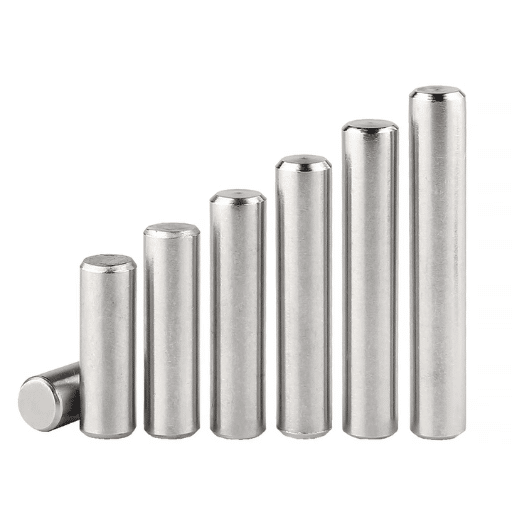
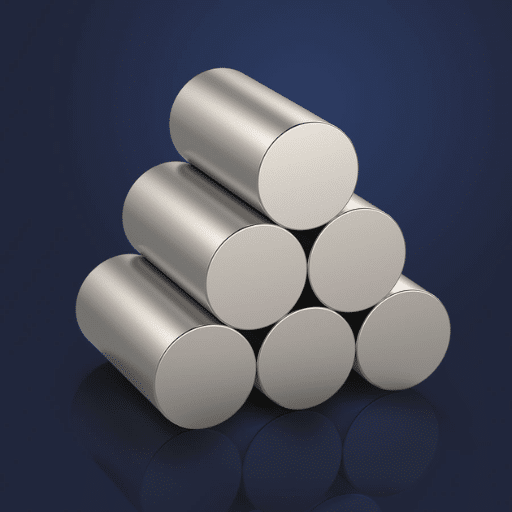
- Tungsten (W) – With the highest melting point (3,422 °C) and one of the highest tensile strengths among pure metals (≈550 MPa annealed, >1,000 MPa cold-worked), tungsten performs where heat would melt other metals. Its density and stiffness suit counterweights, radiation shielding, and penetrators, though pure tungsten is brittle.
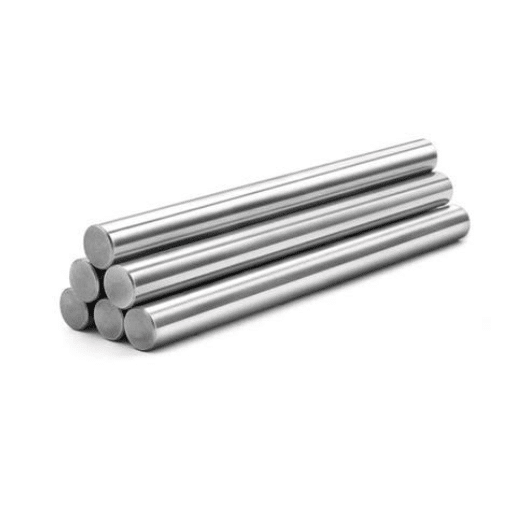
- Maraging steels (e.g., 250, 300, 350) – Nickel-based steels engineered through martensitic aging; tensile strengths exceed 2,000 MPa while keeping excellent toughness. They power missile bodies, landing gear, and precision tooling.
- Tungsten carbide – A hard metal-matrix composite rather than a pure element, but its hardness and compressive strength dwarf steel, making it the go-to for cutting tools, dies, and wear parts.
- Titanium alloys (Ti-6Al-4V) – Outstanding strength-to-weight ratio (tensile ~1,000 MPa), toughness, and corrosion resistance make them “strong” for aerospace, medical implants, and marine structures.
- High-entropy alloys (HEAs) – Multi-element blends such as CoCrFeMnNi that exceed conventional limits; some demonstrate >1,400 MPa tensile strength with good ductility, suggesting future “strongest metal” headlines may come from engineered mixes.
- Chromium-rich stainless steels (AISI 440C, PH grades) – Heat-treated martensitic stainless steels reach 1,400–2,200 MPa tensile strength while balancing corrosion resistance, explaining their use in knives, bearings, and surgical instruments.
- Graphene-coated or nano-structured metals – Surface-engineered systems show ultra-high hardness and fatigue resistance; still maturing, but they prove coatings and composites can surpass elemental limits.
Match the metal to your application

- Ultimate tensile loads (bridges, cranes): Pick maraging or heat-treated stainless steels; they offer predictable deformation and easy inspection.
- High-temperature service (rockets, nuclear): Tungsten or tungsten alloys carry loads above 3,000 °C even when other metals would melt.
- Armor and ballistic protection: Combine high-hardness materials (maraging, tungsten-faced composites) with ductile backings to stop projectiles without shattering.
- Strength-to-weight priority (aerospace, robotics): Titanium alloys or aluminum-lithium blends win, even though their absolute strength is lower than maraging steel; the system-level strength is superior.
Strength is a design decision
Materials engineers rarely chase “the single strongest metal.” Instead, they define the failure mode—tensile, shear, fatigue, creep—and choose or engineer a metal system tailored to that mode. Combinations of metals, heat treatment, surface coatings, or composites can multiply strength beyond what any element offers alone, so the “strongest metal on earth” is often the most thoughtfully engineered metal system.
FAQ
- What is the strongest metal in the world? It depends on the metric: maraging steels top tensile charts, tungsten or refractory metals survive heat, while tungsten carbide or carbide composites dominate wear resistance.
- Is tungsten stronger than steel? Tungsten handles heat and tensile load better than most steels but is brittle; maraging and heat-treated stainless steels offer more toughness and predictable deformation.
- Do alloys beat pure metals for strength? Yes—engineered alloys (maraging, HEAs, duplex stainless) and composites (tungsten carbide, graphene-coated metals) combine elemental strengths to surpass what a single pure metal can offer.