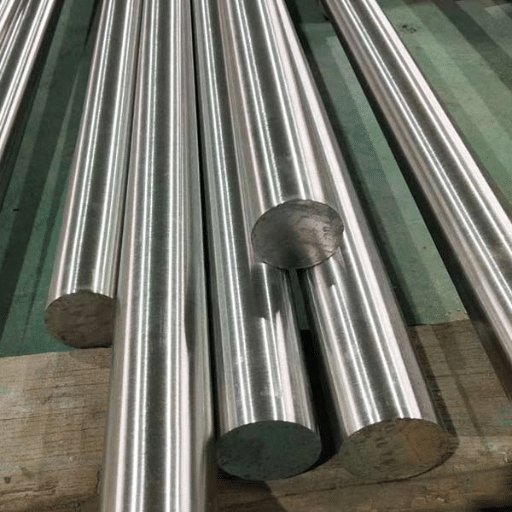
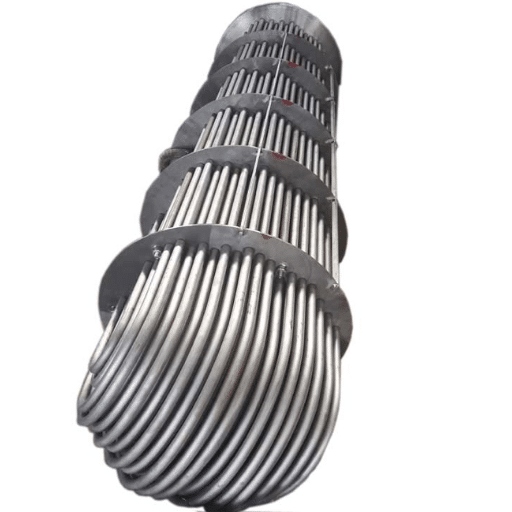
Seamless pipes deliver stronger performance because they lack welded seams, yet welded pipes remain more affordable with a 20 to 50 percent lower price while meeting most requirements for low to medium pressure situations. The optimal selection requires evaluation of your operational environment and code needs and financial resources, instead of assuming seamless pipes provide superior value.
A project engineer we worked with recently specified seamless pipe for an entire utility distribution system. The procurement team obtained the item because the specification required it. The engineering team concluded after their assessment that only high-pressure boiler feed lines needed seamless design. Water transfer and HVAC and general utilities systems could operate with welded pipes which required only non-destructive testing (NDT) while costing approximately 50 percent of the material expenses. The project achieved a cost reduction exceeding 30 percent for pipe acquisition because of one specification change, which maintained all safety and operational standards.
This article explains the actual distinctions between seamless pipe and welded pipe. The article describes the manufacturing processes for each pipe type, and their strength and cost differences, and their appropriate usage situations. You will receive a practical decision framework which you can apply to your upcoming project.
Key Takeaways
- Seamless pipe has no weld seam, giving it higher uniform strength and better performance in high-pressure, high-temperature, and corrosive environments.
- Welded pipe is manufactured by rolling steel plate or coil and joining the edges, making it more economical and available in larger diameters.
- Under ASME B31.3, seamless pipe carries a joint efficiency factor of E = 1.00, while ERW welded pipe carries E = 0.85 — meaning welded pipe needs a thicker wall for the same pressure rating.
- Modern welded pipe with 100% X-ray or ultrasonic seam inspection is increasingly accepted for services that previously required seamless pipe.
- The choice is usually driven by piping codes, operating conditions, and project budget — not by pipe type alone.
What Is the Difference Between Seamless and Welded Pipe?

The fundamental difference is simple. Seamless pipe is manufactured from a solid steel billet without any welded joint. Welded pipe is manufactured by forming steel plate or strip into a cylindrical shape and joining the edges with a weld.
That difference in manufacturing creates a cascade of effects on strength, cost, availability, and dimensional consistency.
How Seamless Pipe Is Manufactured
The manufacturing process of seamless pipe begins with the use of a solid round steel billet as its initial material. The billet undergoes heating until it reaches a temperature of approximately 1,200°C. The heating process prepares the billet for the Mannesmann process when the rotary piercing mill creates a central hole through the material. Technicians roll and stretch the pierced billet until they achieve the required outer diameter and wall thickness.
The pipe construction process uses one steel piece which results in the elimination of any longitudinal weld seam. The complete grain structure of seamless pipe maintains its continuous pattern throughout its entire circumference which results in the material displaying consistent mechanical characteristics.
The method requires a substantial energy input while it achieves lower material output. A seamless pipe mill typically converts only 65-75% of the billet mass into finished pipe. The process results in scale and trim and process scrap as the remaining materials. Seamless pipe production costs increase because of the low yield rate for the manufacturing process.
The market offers limited options for various sizes. Most seamless pipe mills have the capability to manufacture pipes with outer diameters that reach up to 24 inches (610 mm). The production of larger sizes becomes unfeasible because of the limitations imposed by billet size and the maximum force that can be applied during piercing.
How Welded Pipe Is Manufactured
Welded pipe begins as steel plate, strip, or coil. The material is rolled into a cylindrical shape, and the longitudinal edges are joined by welding.
Three main welding methods are used:
- ERW (Electric Resistance Welded): High-frequency electric current heats the edges of a steel strip, which are then pressed together. ERW is the most common method for pipe diameters up to 24 inches.
- LSAW (Longitudinal Submerged Arc Welded): A steel plate is formed into a cylinder, and the longitudinal seam is welded using submerged arc welding. LSAW is used for large-diameter pipe, typically 16 to 60 inches.
- SSAW (Spiral Submerged Arc Welded): A steel coil is formed into a spiral, and the spiral seam is welded continuously. SSAW is used for very large diameters and long-distance pipelines.
Welded pipe manufacturing achieves much higher material utilization. A welded pipe mill produces finished pipe through the conversion of more than 90 percent of coil or plate mass into finished products. The process operates with increased speed while consuming less energy. The economic advantages of welded pipe manufacturing result from these particular characteristics.
The system provides users with the ability to produce pipes in different sizes. Welded pipe manufacturing starts with plate or coil materials which enable production of pipes with diameters exceeding 100 inches that remain impossible to create through seamless pipe manufacturing methods.
Seamless vs Welded Pipe: Side-by-Side Comparison
| Factor | Seamless Pipe | Welded Pipe |
|---|---|---|
| Manufacturing | Hot rotary piercing from solid billet | Rolling and welding plate, strip, or coil |
| Weld Seam | None | Longitudinal seam (ERW, LSAW) or spiral seam (SSAW) |
| Strength | Higher uniform strength; isotropic properties | Good strength; seam is a potential weak point |
| Pressure Rating | Excellent for high pressure and high temperature | Suitable for low-to-medium pressure |
| Joint Efficiency (ASME B31.3) | E = 1.00 | E = 0.85 (ERW) |
| Corrosion Resistance | Superior; no seam to attack | Weld seam and HAZ can be vulnerable |
| Cost | 20-50% more expensive than welded | More economical |
| Size Range | Typically up to ~24″ (610 mm) OD | Highly flexible; 100″+ diameter possible |
| Wall Thickness Tolerance | Can vary due to eccentricity in piercing | More uniform; controlled by plate thickness |
| Material Yield | 65-75% of billet mass | >90% of coil or plate mass |
| Lead Time | Longer (billet availability, complex process) | Shorter (coil stock widely available) |
| Best Applications | High-pressure lines, boilers, chemical processing, nuclear | Structural, water systems, HVAC, large-diameter pipelines |
The table shows the main differences between two things, but the actual numbers need explanation.
Welded pipe outperforms other categories because its wall thickness range effectively meets operational needs. Seamless pipe can suffer from eccentricity — variation in wall thickness around the circumference — because the piercing process is difficult to control perfectly. The welded pipe establishes its wall thickness through the controlled thickness of its rolled plate or strip materials. This aspect becomes crucial when products need to maintain specific wall thickness measurements.
Seamless pipe provides a better solution than welded pipe because it possesses no weld seam which removes all weaknesses that appear during cyclic loading and in corrosive conditions. The welded pipe seam produces a heat-affected zone (HAZ) which results in changes to the microstructural composition. The HAZ region becomes the first location where cracks start to form under cyclic stress or in sour service conditions that contain hydrogen sulfide (H₂S).
Strength and Pressure Rating: Do Seamless Pipes Perform Better?

Seamless pipe generally offers higher tensile strength and better pressure capacity because there is no weld seam to act as a potential failure point. Under the ASME B31.3 Process Piping Code, seamless pipe is assigned a joint efficiency factor of E = 1.00, while ERW welded pipe is assigned E = 0.85.
What does that mean in practice? A welded pipe requires a wall thickness which exceeds seamless pipe requirements by 18% for safe operation at its design pressure. The seamless pipe can withstand approximately 15-20% more pressure than its welded counterpart which has the same wall thickness.
The performance gap between the two products has decreased since then.
The combination of modern high-frequency ERW (HFI) welding technology and 100% ultrasonic or radiographic inspection of the weld seam enables the creation of welded pipe which functions effectively in various applications that used to need seamless pipe. Several engineering firms have updated their specifications to accept welded pipe with full seam NDT for Category D fluid services under ASME B31.3 — non-flammable, non-toxic fluids at moderate temperatures and pressures.
The key to success requires proper selection of pipes for their intended applications. The building codes require seamless pipe as the standard piping option for high-pressure hydrocarbon transmission, boiler tubes, nuclear applications, and cryogenic service applications. Modern welded pipe which undergoes proper inspection procedures meets all requirements for water distribution, structural supports, HVAC systems, and general utility piping systems.
The seamless pipe system still experiences the possibility of defects developing within its structure. The piercing process can produce internal laminations, inclusions, and eccentricity defects. Proper inspection — hydrostatic testing, ultrasonic testing, and eddy current inspection — is essential regardless of pipe type.
Cost Comparison: Why Seamless Pipe Costs More
Seamless pipe typically costs 20-50% more than welded pipe of equivalent nominal size, grade, and schedule. In some specialty alloys and large diameters, the premium can be even higher.
Several factors drive this cost difference:
- Raw material efficiency: Seamless production converts only 65-75% of the billet into finished pipe. Welded production converts over 90% of the coil or plate.
- Energy consumption: Heating a solid billet to piercing temperature and maintaining rolling temperatures requires significantly more energy than forming and welding cold or warm-rolled strip.
- Production rate: Welded pipe mills run at higher speeds and produce more linear meters per hour.
- Billet availability: High-quality seamless pipe requires clean, low-inclusion billets. Billet supply can be constrained, especially for specialty alloys.
- Size premiums: Large-diameter seamless pipe is scarce and expensive because few mills can produce it.
However, unit price is not the whole story.
The total cost of ownership assessment for critical applications shows that seamless pipe offers economic advantages. The expenses from shutting down a high-pressure process line to replace a welded pipe which failed at the seam exceed all material savings. The corrosion resistance benefits of seamless pipe in sour service and marine environments lead to extended operational life and reduced maintenance expenses.
The economic advantages of welded pipe present a strong case for applications which do not require critical performance. The water treatment plant and commercial HVAC system operate without needing the pressure capacity and corrosion protection of seamless pipe. The services require seamless specification which leads to unnecessary budget expenditures.
Corrosion Resistance and the Weld Seam Factor
The existence of a weld seam brings about a distinct impact on the study of corrosion behavior.
The welding process establishes a heat-affected zone (HAZ) which forms next to the weld seam in welded pipe. The HAZ exhibits a microstructure that differs from the properties of the base metal. The minor differences between carbon steel and its base metal properties lead to reduced corrosion resistance in neutral pH conditions.
The situation becomes more complicated when examining stainless steel pipe. The high temperatures during welding can cause chromium carbide precipitation at the grain boundaries in the HAZ. The presence of carbides results in chromium depletion from nearby regions, which leads to a decrease in corrosion resistance. The phenomenon is known as sensitization.
Weld seams and HAZ areas become more vulnerable to intergranular corrosion through the process of sensitization. The standard solution is post-weld heat treatment (PWHT), also called solution annealing, which redissolves the chromium carbides and restores uniform corrosion resistance. The specification of PWHT applies to critical stainless steel applications.
In sour service — environments containing hydrogen sulfide (H₂S) — the HAZ in welded pipe can be more susceptible to sulfide stress cracking. This is why many oil and gas specifications require seamless pipe for sour service lines, or welded pipe with strict HAZ hardness limits and full NDT. The AMPP (formerly NACE) publishes standards such as MR0175/ISO 15156 that define material requirements for sour service.
For general water service, atmospheric exposure, and neutral chemical environments, the corrosion difference between seamless and welded pipe is negligible. Both perform well when specified in the correct grade for the environment.
Applications: Where Seamless and Welded Pipe Excel

Best Applications for Seamless Pipe
Seamless pipe is the right choice when reliability under extreme conditions is non-negotiable:
- High-pressure oil and gas transmission: Pipeline sections operating above standard distribution pressures, especially in sour service.
- Boiler and heat exchanger tubes: High temperatures and pressures demand uniform wall thickness and no seam weak points.
- Chemical and petrochemical processing: Corrosive media at elevated temperatures require consistent material properties.
- Nuclear power applications: ASME Section III codes often mandate seamless pipe for safety-critical systems.
- Aerospace and cryogenic service: Extreme temperature cycling and low-temperature embrittlement concerns favor seamless construction.
- Hydraulic and instrument tubing: Small-diameter, high-pressure lines where wall thickness uniformity is critical.
For stainless steel applications, seamless pipe is often preferred in:
- 316 stainless steel marine and chloride-exposed environments
- 2205 duplex stainless steel oil and gas processing
- Nickel alloy high-temperature and corrosive services
Best Applications for Welded Pipe
Welded pipe is the practical and economical choice for the majority of industrial applications:
- Structural and construction: Building frames, piling, and supports where load-bearing capacity is well within welded pipe limits.
- Water and sewage systems: Municipal water distribution, wastewater transport, and drainage at low to moderate pressures.
- Low-to-medium pressure fluid transport: Process utilities, cooling water, and non-critical process lines.
- Large-diameter pipelines: Oil and gas gathering lines, water transmission mains, and slurry pipelines where diameters exceed seamless capability.
- HVAC systems: Chilled water, heating hot water, and condensate lines.
- Architectural and general fabrication: Handrails, fencing, and mechanical supports.
For stainless steel applications, welded pipe is commonly used in:
- 304 stainless steel food processing, dairy, and sanitary piping
- 316 stainless steel general chemical and pharmaceutical service
- Large-diameter stainless ducting and exhaust systems
How to Choose: A Practical Decision Framework

Most articles describe the differences between seamless and welded pipe. Few tell you how to actually choose. Here is a practical framework you can use.
Start with these five questions:
- What does your piping code require?
Check ASME B31.3, API 5L, or your client’s engineering specification. If the code mandates seamless for your service class, that is your answer. For example, ASME B31.3 Category M (toxic fluids) and many high-pressure hydrocarbon specs require seamless or impose strict limits on welded pipe. - What are your operating pressure and temperature?
- Above 1,000 psi (69 bar) or above 750°F (400°C): strongly consider seamless.
- Below 300 psi (21 bar) and below 400°F (200°C): welded pipe with proper inspection is usually sufficient.
- In between: evaluate based on safety factors, consequences of failure, and code requirements.
- What is the corrosion exposure?
- Sour service (H₂S), chloride-rich environments, or cyclic wet-dry exposure: seamless or welded with PWHT and full NDT.
- Neutral water, atmospheric exposure, or benign chemicals: welded pipe is adequate.
- What diameter do you need?
- Above 24 inches (610 mm): welded pipe is your only practical option.
- Below 2 inches (50 mm): seamless pipe is readily available and often competitively priced.
- In between: both are options; let pressure and corrosion drive the decision.
- What is your budget?
- If seamless costs 40% more but your safety margin requires it, the cost is justified.
- If welded pipe with full NDT meets all technical requirements, the savings belong in your budget.
The chemical processing facility procurement manager utilized this checklist during the recent expansion project. The original spec called for seamless 316 pipe throughout. The team decided after their assessment that only reactor feed lines and high-pressure steam lines needed to be built with seamless construction. The cooling water and nitrogen and utility lines were changed to welded 316 pipe which underwent complete X-ray examination. The revision saved approximately 180000ona180000ona2.1 million pipe package with no reduction in system reliability.
Our technical team will analyze your specifications and operating conditions to help you find the best and most affordable pipe type for your application when you are unsure about which pipe type to choose.
Standards and Specifications to Know
Pipe standards define manufacturing requirements, chemical composition, mechanical properties, and testing protocols. Knowing which standard applies to which pipe type is essential for proper specification. These standards are maintained by organizations such as ASTM International and the American Society of Mechanical Engineers.
Common standards for seamless pipe:
- ASTM A106: Seamless carbon steel pipe for high-temperature service
- ASTM A312: Seamless and welded austenitic stainless steel pipe
- ASTM A790: Seamless and welded duplex stainless steel pipe
- ASTM A335: Seamless ferritic alloy steel pipe for high-temperature service
- EN 10216: Seamless steel tubes for pressure purposes
- JIS G3454: Carbon steel pipes for pressure service
- JIS G3459: Stainless steel pipes for pressure service
Common standards for welded pipe:
- ASTM A53: Welded and seamless carbon steel pipe — general service and pressure
- ASTM A671 / A672: Electric-fusion-welded steel pipe for atmospheric and low temperatures
- API 5L: Line pipe for oil and gas transmission (covers both seamless and welded)
- EN 10217: Welded steel tubes for pressure purposes
- JIS G3457: Arc-welded carbon steel pipes
Note that some standards, such as ASTM A53 and API 5L, cover both seamless and welded pipe. The standard specifies different manufacturing, testing, and acceptance criteria for each type. Always verify whether the seamless or welded version of a dual-standard specification is required for your application.
Supply and Sourcing Considerations
The decision between using seamless pipes and welded pipes extends beyond technical performance because it depends on practical supply factors.
The time required for production differs between two methods. The production of seamless pipe needs billet material which must be heated before the pipe undergoes piercing and finishing processes. The typical lead time for standard grades ranges between 8 and 16 weeks while specialty alloys require 20 weeks or longer to produce. Welded pipe production begins with coil or plate stock material which distributors keep in their inventory. The industry maintains standard sizes in stock while custom orders usually require 4 to 8 weeks for delivery.
The minimum order quantity requirements make welded pipe more suitable than seamless pipe for small scale projects. Seamless pipe manufacturing facilities demand customers to order minimum quantities based on their required pipe size and material grade. The only feasible option for the project which requires several hundred meters of piping is to use welded pipe which distributors keep in their inventory.
Welded pipe provides better accessibility to custom sizes than other pipe types. Welded pipe manufacturing enables the creation of non-standard diameter and wall thickness pipes by changing the forming rolls and selecting specific plate gauge materials. Seamless pipe custom sizes require dedicated billet procurement and die changes thus making small custom runs economically unfeasible.
Different regions throughout the world provide different levels of product accessibility. The World Steel Association reports that the Asia Pacific region maintains a leading position in the production of seamless pipe which operates major manufacturing facilities in China, Japan, and India. The international market for seamless pipe from these regions offers competitive pricing but requires verification of quality and certification from the manufacturers.
At LIANYUNGANG DAPU METAL CO., LTD, we supply both seamless and welded steel pipe in carbon steel, stainless steel, and alloy grades. Our inventory includes standard sizes ready for global shipment, and we support custom specifications for project-specific requirements.
Frequently Asked Questions
Can welded pipe be used for high-pressure applications?
Yes, in many cases. Modern ERW pipe with 100% ultrasonic or radiographic inspection of the weld seam is increasingly accepted for high-pressure services that previously required seamless pipe. ASME B31.3 establishes welded ERW pipe joint efficiency at E = 0.85 while seamless pipes receive E = 1.00 joint efficiency rating. This means welded pipe needs a thicker wall for the same design pressure. Seamless pipe is the preferred option for operating at extreme pressure levels and for protecting critical safety systems.
How can you tell if a pipe is seamless or welded?
Visual inspection is the simplest method. Welded pipe displays a weld bead or reinforcement which creates a visible seam that extends along its longitudinal joint. Seamless pipe has a smooth, continuous surface with no weld line. Non-destructive testing methods such as eddy current inspection or magnetic particle testing can detect the seam when the weld bead has been ground flush. Wall thickness variation can also be a clue — seamless pipe may show slight eccentricity, while welded pipe wall thickness is typically more uniform.
Can seamless pipes and welded pipes be used as replacements for each other?
The two types of pipes can be used as substitutes in low-pressure systems that do not require special protection but they do not function as complete replacements. The two pipe types exhibit different performance characteristics which affect their safety and operational lifespan during high-pressure and high-temperature and corrosive and cyclic-load applications. The ultimate decision-making process requires evaluation of relevant piping codes together with client requirements and engineering assessment of particular operational conditions.
What is the reason for some specifications to demand seamless pipe instead of approved welded pipe?
The specifications which exist today developed from standards which engineers created during a time when welding technology had not yet reached its current state. The welding process for HFI-ERW combined with automated NDT has resulted in substantial improvements to welded pipe production. The industry needs to update specifications at a faster rate because clients and codes continue to prefer seamless products for their safeguarded approach. The specification shows a real technical necessity because sour service and cryogenic temperatures and extreme cyclic loading require seamless pipe advantages. An engineering analysis shows that current welded pipe production with complete inspection can fulfill all specifications at a lower expense.
Which is better for stainless steel: seamless or welded?
It depends on the application. For high-pressure, high-temperature, or corrosive service in 316 or duplex stainless steel, seamless pipe avoids weld seam sensitization and HAZ corrosion concerns. For food processing, general chemical service, and structural applications in 304 stainless steel, welded pipe is widely used and performs well. If corrosion resistance at the weld seam is a concern, specify welded pipe with post-weld heat treatment (solution annealing) to restore uniform corrosion resistance.
Conclusion
The debate between seamless and welded pipes has no definitive victor. Seamless pipes provide superior strength, increased pressure limits, and better protection against corrosion in extreme conditions. Welded pipe delivers substantial cost advantages, allows for larger pipe dimensions, and provides immediate access to pipes which makes it suitable for most industrial needs.
The best option selects itself through three criteria which include your current operating situations and your piping code requirements and your available project funds. The use of seamless pipe becomes justified through its higher costs when dealing with vital high-pressure and high-temperature systems. Modern welded pipe together with its appropriate inspection processes serves as the most economical option for utilities and structural projects and general fluid transportation needs.
If you need help selecting the right pipe type for your project, contact our technical team. LIANYUNGANG DAPU METAL CO., LTD supplies seamless and welded steel pipe in carbon steel, stainless steel, and alloy grades with full certification and global delivery.
Request a quote for your next project, or explore our available pipe specifications to find the right material for your application.