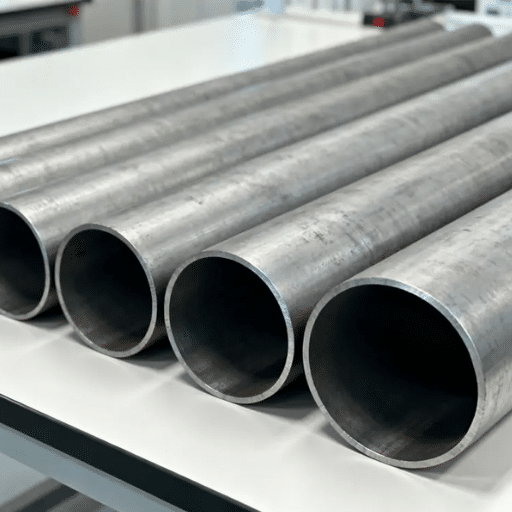
The pipe schedule definition establishes a standardized wall thickness system that does not function as a pressure measurement system and does not provide actual physical dimensions. The wall thickness increases with higher schedule numbers for identical nominal pipe sizes, yet the schedule number fails to provide direct information about wall thickness. You need a pipe schedule chart to translate the number into inches or millimeters.
Even experienced buyers stumble over that distinction. Engineers sometimes assume Schedule 80 handles exactly twice the pressure of Schedule 40 because the number is doubled. The statement above is incorrect. The ASME B36.10M standard establishes a standard relationship between schedule number and wall thickness for carbon steel, while the ASME B36.19 standard establishes the same relationship for stainless steel. Your brain cannot process the calculation of this formula because it requires more complex thought than simple mental math.
The article explains the meaning of pipe schedule, the origins of its numerical system, and the method for selecting the appropriate schedule for your project needs. The document contains three elements, which include a complete pipe schedule chart, a field identification guide, and a practical decision framework.
Key Takeaways
- Pipe schedule meaning is simple: it designates wall thickness. It does not indicate pressure rating, inside diameter, or material grade.
- Schedule numbers historically derived from Barlow’s formula, but today they are fixed standard designations, not calculated values.
- ASME B36.10M lists 11 standard schedules for carbon steel (5 through 160 plus XXS); ASME B36.19 uses S-suffix schedules for stainless steel.
- A pipe schedule chart is essential because the wall thickness for a given schedule varies by nominal pipe size.
- The system pressure rating is limited by the lowest-schedule component in the line, regardless of what other components carry.
What Is Pipe Schedule?

The following explanation defines pipe schedule, which you have been curious about. Pipe schedule establishes a standardized system that ASME B36.10M uses to define pipe wall thickness for carbon steel and alloy steel pipes and ASME B36.19 implements for stainless steel piping. The schedule establishes wall thickness specifications for each nominal pipe size. The pipe maintains its original outside diameter. The pipe design changes only its internal diameter and outer wall thickness.
The pipe schedule meaning is best understood as a label. The standardized pipe wall thickness schedule table uses Schedule 40, Schedule 80, and Schedule 160 as labels which correspond to specific wall thickness values. The number does not provide enough information to estimate wall thickness. A Schedule 40 pipe has a 0.133-inch wall at NPS 1 but a 0.406-inch wall at NPS 12. The label remains unchanged. The wall thickness is not.
This is why pipe schedule and nominal pipe size work as a pair. NPS sets the outside diameter. Schedule sets the wall thickness. Together, they determine the inside diameter, flow capacity, weight per foot, and pressure rating. For a deeper look at how NPS works, see our nominal pipe size guide.
A common misconception exists that states that pipe schedule provides no information about pressure class. A Schedule 40 pipe might handle 3,000 PSI in carbon steel at room temperature but only 1,500 PSI in stainless steel at 600°F. The schedule number stayed the same. The pressure capacity changed because the material and temperature changed. The user must check pressure ratings according to the material grade and operating temperature.
The History Behind Pipe Schedule Numbers
The beginning of pipe schedule number comprehension requires knowledge of its historical background. The schedule numbering system dates back to the early 20th century. American engineers needed a simple way to specify wall thickness for pipes used in boilers and pressure vessels. They turned to Barlow’s formula, a well-known pressure vessel calculation.
Barlow’s formula relates internal pressure, pipe diameter, wall thickness, and material allowable stress. Engineers rearranged the formula to solve for a dimensionless ratio: schedule number equals 1,000 times the design pressure divided by the allowable stress. The system assigned higher schedule numbers to pipes designed for higher pressure. The number system exists because we have 10, 40, 80, and 160. The numbers originally had engineering meaning.
The pipe manufacturing standards changed. The manufacturing process achieved better material performance. The requirements of code regulations underwent modifications. The ASME tables currently define schedule numbers as predetermined designations. The system no longer applies Barlow’s formula as its direct calculation method. The standard defines a Schedule 40 pipe as its designation through the existing standard. The historical origin explains the numbering, but it does not help you calculate anything.
James Okafor, a procurement officer at a Nigerian oil services firm, learned this lesson the expensive way. In 2023, his team needed a replacement pipe for a low-pressure water injection line. The specification called for “Schedule 40 equivalent per Barlow.” James assumed he could calculate the required wall thickness himself using the old formula. He ordered a pipe with a calculated wall of 0.180 inches for NPS 3. The standard Schedule 40 measurement for NPS 3 equals 0.216 inches. The pipe he ordered did not meet code minimum requirements because it measured 0.036 inches below the standard. The entire shipment failed inspection. The rejection cost his company 200 in return freight and a three-week project delay. A single check of the ASME B36.10M table would have prevented the error.
Complete Pipe Schedule Chart
The pipe schedule chart is the only authoritative way to know the wall thickness for a given schedule and nominal size. Below is a standard pipe schedule table showing the most commonly specified schedules for carbon steel pipe under ASME B36.10M.
Standard Carbon Steel Pipe Schedules (Wall Thickness in Inches)
| NPS | Sch 5 | Sch 10 | Sch 40 | Sch 80 | Sch 160 | XXS |
|---|---|---|---|---|---|---|
| 1/2″ | — | 0.083 | 0.109 | 0.147 | 0.188 | 0.294 |
| 3/4″ | — | 0.083 | 0.113 | 0.154 | 0.219 | 0.308 |
| 1″ | — | 0.109 | 0.133 | 0.179 | 0.250 | 0.358 |
| 1-1/2″ | — | 0.109 | 0.145 | 0.200 | 0.281 | 0.400 |
| 2″ | — | 0.109 | 0.154 | 0.218 | 0.344 | 0.436 |
| 3″ | — | 0.120 | 0.216 | 0.300 | 0.438 | 0.600 |
| 4″ | — | 0.120 | 0.237 | 0.337 | 0.531 | 0.674 |
| 6″ | — | 0.134 | 0.280 | 0.432 | 0.719 | 0.864 |
| 8″ | — | 0.148 | 0.322 | 0.500 | 0.906 | 0.875 |
| 10″ | — | 0.165 | 0.365 | 0.594 | 1.125 | 1.000 |
| 12″ | — | 0.180 | 0.406 | 0.688 | 1.312 | 1.000 |
The pipe schedule chart displays two main patterns. First, wall thickness increases with schedule number for the same NPS. Second, wall thickness increases with NPS for the same schedule number. A Schedule 40 pipe is not have a fixed wall thickness. It is a fixed position in the standard table.
Light-wall schedules 5 and 10 enable structural applications and low-pressure systems, which require weight reductions. Distributors do not stock Schedules 20 and 30, but customers can order them through a mill order. Schedule 40 is the industrial default. Schedule 80 handles higher pressure and provides better mechanical protection. Schedules 100 through 160 are heavy-wall options for critical process lines. XXS (double extra strong) is the thickest standard wall for most sizes.
Stainless Steel Schedules (ASME B36.19)
Stainless steel pipe uses a slightly different schedule system under ASME B36.19. The S-suffix schedules are thinner than their B36.10M counterparts for larger sizes.
| NPS | Sch 5S | Sch 10S | Sch 40S | Sch 80S |
|---|---|---|---|---|
| 1/2″ | 0.065 | 0.083 | 0.109 | 0.147 |
| 1″ | 0.065 | 0.109 | 0.133 | 0.179 |
| 2″ | 0.065 | 0.109 | 0.154 | 0.218 |
| 4″ | 0.083 | 0.120 | 0.237 | 0.337 |
| 6″ | 0.109 | 0.134 | 0.280 | 0.432 |
| 8″ | 0.109 | 0.148 | 0.322 | 0.500 |
| 12″ | 0.156 | 0.180 | 0.375 | 0.688 |
Notice that Schedule 40S matches Schedule 40 wall thickness for smaller sizes but deviates above NPS 8. For NPS 12, Schedule 40S is 0.375 inches while Schedule 40 under B36.10M is 0.406 inches. Always verify which standard your specification references before ordering.
Want to see how the schedule translates into real pressure capacity? Our Schedule 40 pipe pressure rating guide includes complete PSI tables and temperature derating data.
How to Read Pipe Schedule Markings in the Field

Standard pipe markings follow a set format that tells you everything you need to know. A typical stencil reads: NPS 4 SCH 40 ASTM A53 GR B SEAMLESS. From left to right, this gives you the nominal pipe size, schedule, material specification, grade, and manufacturing method.
Common abbreviations you will encounter:
- SCH = Schedule
- S = Standard (same as Schedule 40 for NPS 1/8 through 10)
- XS = Extra Strong (same as Schedule 80 for NPS 1/8 through 8)
- XXS = Double Extra Strong
- SMLS or SEAMLESS = Seamless construction
- ERW = Electric resistance welded
When markings are worn or painted over, you can identify the schedule by measuring the wall thickness with an ultrasonic gauge and matching the reading to the pipe schedule chart. A pipe with 4.500-inch outer diameter and 0.237-inch wall thickness operates as NPS 4 under Schedule 40. The same OD with 0.337-inch wall is NPS 4, Schedule 80.
Chen Wei, a field inspector at a petrochemical plant in Singapore, faced this exact situation during a 2024 turnaround. A section of the process line needed replacement, but the original stencil had been blasted away during surface preparation. Chen measured the OD at 6.625 inches and the wall at 0.280 inches. He cross-referenced the values against the standard pipe schedule chart and confirmed the specification: NPS 6, Schedule 40, ASTM A53 Grade B. The replacement pipe arrived within 48 hours and matched the existing system perfectly. Without the measurement technique, the crew might have guessed Schedule 80. That mistake would have cost thousands in unnecessary material and created fit-up problems with the existing flanges.
Pipe Schedule vs Pressure Class: Clearing the Confusion
One of the most expensive misunderstandings in industrial procurement is confusing pipe schedule with pressure class. They are not the same thing.
Pipe schedule is a wall thickness designation. It is fixed by ASME standards and does not change with pressure, temperature, or material.
Pressure class (also called PN rating or pressure rating) is a calculated maximum allowable working pressure. It depends on wall thickness, outside diameter, material yield strength, temperature, and joint efficiency.
Two pipes with the same schedule can have wildly different pressure ratings. Consider two NPS 2 pipes, both Schedule 40:
- Carbon steel ASTM A53 Grade B at 100°F: ~3,180 PSI
- Stainless steel 304 at 100°F: ~3,800 PSI (higher yield strength)
- Carbon steel ASTM A53 Grade B at 600°F: ~2,010 PSI (temperature derating)
The schedule never changed. The pressure class did.
The project specifications require the use of Schedule 40, 1,000 PSI minimum materials. The material functions properly at room temperature for carbon steel. The material functions properly at room temperature for stainless steel. The use of aluminum or lower-strength alloys will make Schedule 40 no longer suitable for the 1,000 PSI requirement. The pressure class needs to be checked through separate testing, not related to the schedule number.
Choosing the Right Pipe Schedule: A Decision Framework
Selecting the correct schedule requires matching wall thickness to the actual service conditions. Use this framework:
Low-pressure, non-critical systems — water distribution, HVAC, drainage, structural supports:
- Schedule 10 or Schedule 40
- Schedule 10 saves weight and cost for large-diameter lines with no pressure concerns
- Schedule 40 is the conservative default when specification uncertainty exists
Medium-pressure systems — compressed air, low-pressure steam, utility piping up to 300 PSI:
- Schedule 40 is almost always sufficient
- Verify the temperature-derated rating if operating above 200°F
High-pressure systems — process lines above 1,000 PSI, boiler feedwater, high-pressure hydraulics:
- Schedule 80 or Schedule 160
- Some piping codes mandate Schedule 80 regardless of calculated requirements
Corrosive environments — chemical processing, marine, offshore:
- Schedule alone cannot solve corrosion. Consider material grade first
- In mildly corrosive service, Schedule 40 in stainless steel may outperform Schedule 80 in carbon steel
- For highly corrosive service, upgrade to stainless steel pipe or nickel alloys rather than thicker carbon steel
Mechanical protection — traffic areas, vibration zones, seismic regions:
- Schedule 80 provides better impact resistance and longer fatigue life
- The thicker wall also offers additional corrosion allowance over time
Fitting compatibility reminder: The system schedule is limited by the lowest-schedule component. The connection of Schedule 80 pipe to Schedule 40 fittings results in a Schedule 40 system. The system will reach its maximum pressure capacity when all fittings and flanges, and valves match or exceed the required schedule.
The technical consultation team will evaluate your specifications to help you select the appropriate schedule for your pressure, temperature, and corrosion requirements.
Common Pipe Schedules and Their Applications

Schedule 5 and Schedule 10
Light-wall schedules used for structural applications, handrails, and low-pressure systems where weight matters. Schedule 10 is common in large-diameter water lines and fire protection systems where pressure is low but flow capacity is important.
Schedule 40
The most common pipe schedule in industrial and commercial service. It is the default for water distribution, HVAC, low-pressure steam, fire protection, and general utilities. Roughly 60% of carbon steel pipe sold in North America and Asian export markets is Schedule 40. For a detailed schedule 40 vs schedule 80 pressure comparison, see our Schedule 40 pipe pressure rating chart.
Schedule 80
Used for high-pressure process lines, boiler systems, and applications requiring mechanical protection. It weighs 40-70% more than Schedule 40 for the same NPS. The extra wall thickness provides higher pressure capacity and better resistance to external damage.
Schedule 160 and XXS
Heavy-wall schedules for extreme-pressure applications. Schedule 160 is specified for critical process lines in refineries and power plants. XXS is the thickest standard wall available and is typically used for high-pressure hydraulic systems and specialty applications.
Stainless Steel Schedules (5S, 10S, 40S, 80S)
The ASME B36.19 standards establish pipe dimension requirements for stainless steel and other materials that resist corrosion. The S-suffix shows a different wall thickness series that manufacturers and welders use to work with stainless materials. The B36.19 table serves as the official source to determine the precise wall thickness needed for stainless steel pipe specifications.
You can source pipe in any standard schedule in both seamless and welded construction. Seamless pipes provide the highest capacity to withstand pressure. Welded ERW pipe costs less and is widely available in Schedule 40 and Schedule 80.
Frequently Asked Questions About Pipe Schedule Meaning
What does Schedule 40 mean on a pipe?
Schedule 40 establishes a standardized measurement for pipe wall thickness. The pipe shows its wall thickness through ASME B36.10M and B36.19 standards which define the wall thickness according to its nominal pipe size. NPS 2 Schedule 40 has a 0.154-inch wall. NPS 6 Schedule 40 has a 0.280-inch wall. The “40” is a label, not a measurement.
How is pipe schedule calculated?
Pipe schedule is not calculated today. The numbers originated from Barlow’s formula in the early 1900s, but modern schedules are fixed standard values listed in ASME tables. Engineers select schedule from the standard chart based on pressure, temperature, and mechanical requirements.
What is the difference between Schedule 40 and Schedule 80?
Schedule 80 has a thicker wall than Schedule 40 for the same nominal pipe size. The outside diameter stays the same. The inside diameter is smaller. Schedule 80 handles higher pressure and provides better mechanical protection, but weighs more and costs more.
What does the term XXS pipe schedule refer to?
XXS stands for Double Extra Strong. The ASME B36.10M standard lists it as the thickest wall schedule which applies to most pipe sizes. The wall thickness of XXS exceeds Schedule 160 for certain smaller pipe sizes. The material functions in applications where operators experience extreme pressure and high-stress conditions.
Does the pipe schedule indicate pressure rating?
The pipe schedule system only provides information about the wall thickness of pipes. The pressure rating depends on wall thickness, material grade, outside diameter, temperature, and joint efficiency. Two pipes with the same schedule can have different pressure ratings if they use different materials or operate at different temperatures.
Conclusion
The meaning of pipe schedule becomes clear because it functions as a wall thickness measurement, which does not serve as a pressure rating or direct measurement. The schedule number establishes its origins in Barlow’s formula but now functions as a permanent standard used in ASME table designations. A Schedule 40 pipe has one wall thickness at NPS 2 and a different wall thickness at NPS 12. The label is the same. The dimension is not.
The key to using pipe schedules correctly is to always consult the pipe schedule chart. Never guess wall thickness from the number. The pressure capacity of a system does not increase when the schedule number reaches twice its original value. The system rating of a pipeline network depends on its lowest-schedule component throughout the entire system.
Before your next procurement cycle, verify three things: the nominal pipe size, the schedule number, and the applicable ASME standard. The three checks require less than one minute to complete, but they will protect against specific specification errors, which cost James Okafor 200 during three weeks.
Request a quote for pipe in carbon steel, stainless steel, or alloy grades. LIANYUNGANG DAPU METAL CO., LTD supplies standard and custom pipe schedules with full mill certifications, custom cutting, and global delivery to your project site.