The correct choice of welding rod represents a critical choice that impacts every aspect of stainless steel work. The incorrect choice of electrode results in increased welding defects which lead to decreased corrosion protection and create cracks that weaken weld strength throughout its entire lifetime. The guide provides complete information about all stainless steel welding rod options which include their chemical makeup and which specific applications they are suitable for and which step-by-step welding methods and safety procedures and common welding problems they will help solve. The following information provides you with professional-grade decision-making tools which you can use for precision fabrication or heavy-duty industrial repair work.
Overview of Stainless Steel Welding Rods

Types of Stainless Steel Welding Rods
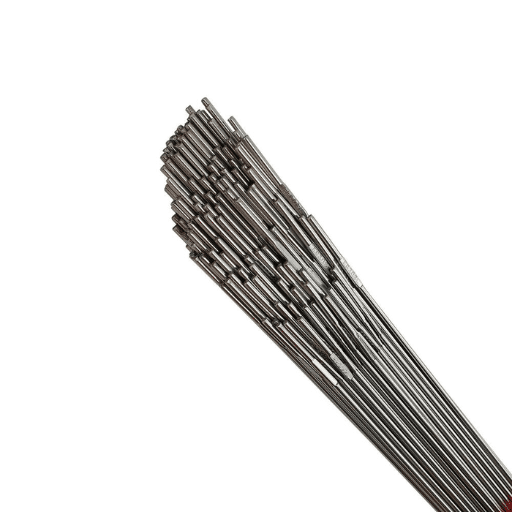
Stainless steel welding rods exist to provide specific metallurgical solutions needed for stainless steel materials. Each rod type is engineered with a distinct chemical composition and set of mechanical properties to serve particular base materials and service environments. The primary types include:
/308L
One of the most widely used electrodes, designed for welding 304 and 304L stainless steel. The low carbon content actively prevents carbide precipitation during welding, significantly mitigating sensitization and intergranular corrosion risk.
/309L
The preferred choice for welding 309 grade stainless or for joining dissimilar metals such as stainless to carbon steel. The elevated alloy content delivers superior oxidation protection and reliable performance in high-temperature environments.
/316L
Used for welding 316 and 316L stainless steels, these rods provide enhanced resistance to acidic and chloride-containing environments. Standard specification for chemical processing, marine, and food production applications.
Stabilized with niobium or tantalum, E347 rods guard against weld decay and provide strong resistance to intergranular corrosion in heat-affected zones. The optimal choice for continuous high-temperature service.
Composition and Properties
Stainless steel welding rods have their primary metal content made up of iron and chromium and nickel which they combine with molybdenum and manganese and silicon and nitrogen and other elements. The defining characteristic is a minimum chromium content of 10.5%, which forms a passive chromium oxide layer on the weld surface — the foundation of stainless steel’s corrosion resistance. Nickel contributes ductility and toughness which molybdenum delivers vital defense against chloride-based pitting. The addition of nitrogen improves both strength and corrosion resistance.
Grade Properties at a Glance
ER308L vs. E309L-16 Electrode — Direct Comparison
These two electrodes are among the most frequently specified in stainless steel welding, yet they serve distinctly different purposes. Understanding the operational boundaries of each prevents costly specification errors.
| Attribute | ER308L | E309L-16 |
|---|---|---|
| Primary Application | Welding 304 and 304L stainless steel | Dissimilar metal joining; stainless to carbon steel |
| Carbon Content | Low — minimizes carbide precipitation | Low (L-grade) with low hydrogen characteristics |
| Cr/Ni Content | Standard austenitic range | Higher Cr and Ni — for structural demands |
| Temperature Performance | Moderate service conditions | Elevated — furnace components, petrochemical |
| Ideal Use Case | Food processing equipment, chemical tanks | High-strength, temperature-critical structures |
| Joint Type | Homogeneous (same-metal) joints | Mixed-metal and structurally demanding joints |
Applications of Stainless Steel Welding Rods

Construction
Welding work on bridge construction and high-rise building development and industrial facility construction projects requires stainless steel electrodes because welds must survive conditions which include humidity and salinity and thermal cycling during their entire operational lifetime. The two factors of durability and accurate size maintenance must be treated as equally essential requirements in these work environments.
Automotive
Chassis components and exhaust systems and structural members need materials which provide both high tensile strength and resistance to damage from road salt and moisture. The market now demands specialized welding solutions which engineers can use to build electric vehicle battery enclosures and lightweight alloy components.
Aerospace & Manufacturing
Friction stir welding and laser beam welding serve as advanced processes which create precise connections between lightweight materials that differ from each other. These methods provide structural support for flight-critical components while maintaining the required manufacturing efficiency that needs to be achieved during mass production.
Best Practices for Using Stainless Steel Welding Rods

Step-by-Step Welding Process
- 01
Preparation and Material SelectionYou need to use a stainless steel wire brush or an appropriate solvent for cleaning the stainless steel surface because these methods will remove all contaminants from the surface. You need to choose a welding rod which matches the grade of your base material for your welding process. For 304 stainless steel, the correct choice is typically a 308, 309, or 316 rod depending on the specific service environment.
- 02
Setting Up the Welding EquipmentYou need to set up your equipment for your chosen TIG welding process because TIG welding achieves the best welding precision with the least amount of material contamination. The operator should adjust the welding amperage according to the specific material thickness which requires lower settings for thin materials to avoid warping and higher settings for thicker materials.
- 03
Pre-Weld Tack PositioningThe tack welds need to be placed along the joint at regular distances to maintain proper alignment which will help reduce the distortion that occurs because of stainless steel’s high thermal expansion coefficient. The main weld pass work requires all components to be properly positioned before work can begin.
- 04
Executing the WeldTo produce an even bead movement must be maintained at a steady pace which goes in one straight direction. The tungsten electrode creates an arc in TIG welding which operators use to feed stainless steel wire into the metal joint. The operator must maintain a narrow arc gap while monitoring heat input because excessive heat results in warping and carbide precipitation which decreases corrosion resistance.
- 05
Post-Weld Cleaning and InspectionAllow the weld to cool naturally, then clean the surface with pickling paste and a dedicated stainless steel brush to remove slag and heat discoloration. The process restores the essential chromium oxide layer which functions as a protective barrier against corrosion. The weld requires inspection to detect any defects which include porosity, cracking and incomplete fusion.
Safety Precautions During Welding
Safety Protocol Checklist
Personal Protective Equipment
A welding helmet with the correct shade filter, flame-resistant gloves, and a fire-resistant jacket are non-negotiable. Approved safety glasses (ANSI Z87.1-compliant) must be worn beneath the helmet to guard against debris during shield lifting.
Ventilation and Fume Control
Welding fumes present serious respiratory hazards. Ensure the workspace is adequately ventilated and implement local exhaust systems wherever possible. In confined spaces, NIOSH-approved respiratory protection is required to eliminate dangerous particulates from the breathing zone.
Fire Hazard Prevention
Clear all flammable materials from the work area before beginning. Keep a fire extinguisher accessible at all times. Use fire-resistant curtains and shields to contain sparks and molten spatter from spreading to adjacent surfaces or equipment.
Electrical Safety
Inspect all cables and connectors for wear or damage before each session. Never touch live circuits with bare hands or wet gloves. Confirm that all equipment is properly grounded before initiating any welding operation.
Equipment Maintenance
Schedule regular inspections of all welding machines, cables, and attachments. Faulty equipment is a dual liability — it degrades weld quality and introduces serious safety hazards to the operator and the surrounding environment.
Techniques for Optimal Welding Results
Material Preparation
The surface needs to be cleaned for defect-free welding because all oil and rust and debris must be removed. The cleaning method should be selected according to the base material type and the specific contamination type that exists.
Correct Technique Selection
TIG welding provides superior control and is the preferred method for thin materials and detail-critical applications. MIG welding allows for rapid material processing in heavy applications which do not require high precision work. The process must be matched to the application instead of selecting what is most convenient.
Heat Input Control
Excessive heat creates warping problems and causes carbide precipitation which leads to structural integrity failure. The system requires proper heat management that uses calibrated amperage and voltage and travel speed settings. The interpass temperature limits need to be monitored and strictly followed for important applications.
Filler Material Compatibility
Filler metals must be selected based on their certification which proves they comply with industry standards (AWS A5.4 for stainless steel consumables). Filler materials which do not match create cracking and porosity problems because they define poor metallurgical bonding between operator and equipment.
Torch Positioning
Welders should maintain their MIG torch at a 10–15 degree angle from vertical while moving their torch at a defined controlled speed. Welders most often create uneven welding results because they either move their equipment unpredictably or they fail to maintain proper torch angles.
Environment Management
Weld quality gets affected by wind and humidity and airborne pollutants. The welding screens should be used together with ventilation system adjustments to establish controlled environments. Environmental factors which people tend to forget about will affect weld integrity in measurable ways.
Selecting the Right Welding Rod

Factors to Consider for Material Compatibility
The filler rod composition must match the base metal grade to prevent joint weaknesses and cracking and early corrosion. The rod carbon content needs to match the base material in carbon steel applications. For non-ferrous materials such as aluminum or titanium, purpose-alloyed rods are required to preserve their distinctive mechanical properties. The selection process needs to consider three operating conditions which include temperature extremes and mechanical loads and chemical exposure. The most accurate application match exists when using AWS compatibility charts together with current material databases.
Key Selection Factors
- ▸ Base metal grade and carbon content alignment
- ▸ Service temperature range and thermal cycling exposure
- ▸ Chemical environment — chlorides, acids, marine exposure
- ▸ Mechanical load requirements and joint configuration
- ▸ Welding process compatibility (TIG, MIG, Stick)
- ▸ Compliance with applicable AWS standards (e.g., A5.4 for stainless consumables)
TIG vs. Stick Welding Rods — When to Use Each
| Factor | TIG Welding Rods | Stick Welding Rods |
|---|---|---|
| Material Suitability | Thin materials: aluminum, stainless, magnesium | Thicker materials; structural and pipeline steel |
| Weld Quality | Superior — minimal spatter, precise bead control | Good — suited to structural rather than finish-critical welds |
| Environmental Tolerance | Requires controlled, low-contamination environment | Functions effectively outdoors in wind and moisture |
| Heat Input Control | Highly precise — reduces distortion and carbide risk | Less precise; requires careful parameter management |
| Portability | Less portable; requires shielding gas supply | Highly portable — preferred for field repairs |
| Best Use Case | Precision fabrication, critical or visible joints | Heavy-duty construction, pipeline, field repair work |
Common Challenges in Stainless Steel Welding

Frequently Asked Questions
Reference Sources
- ▸The Effects of TIG Welding Rod Compositions on Microstructural and Mechanical Properties of Dissimilar AISI 304L and 420 Stainless Steel Welds Examines compositional impact on weld structure and mechanical performance across dissimilar stainless grades.
- ▸Unsymmetric Rod to Plate Rotary Friction Welding of Dissimilar Martensitic Stainless Steel and Low Carbon Steel. Investigates rotary friction welding techniques for dissimilar material joining with focus on joint integrity.
- ▸Experimental Behaviour of Wire-and-Arc Additively Manufactured Stainless Steel Rods. Explores mechanical properties and structural characteristics of stainless steel rods produced via wire-and-arc additive manufacturing.