
304L Stainless Steel
UNS S30403 / 1.4307
The superior choice for welded structures. With carbon content restricted to 0.03%, our 304L plates eliminate intergranular corrosion risks without post-weld annealing.
- Immune to Weld Decay: No carbide precipitation in heat-affected zones.
- Dual Certified Stock: Meets both 304 Strength & 304L Chemistry.
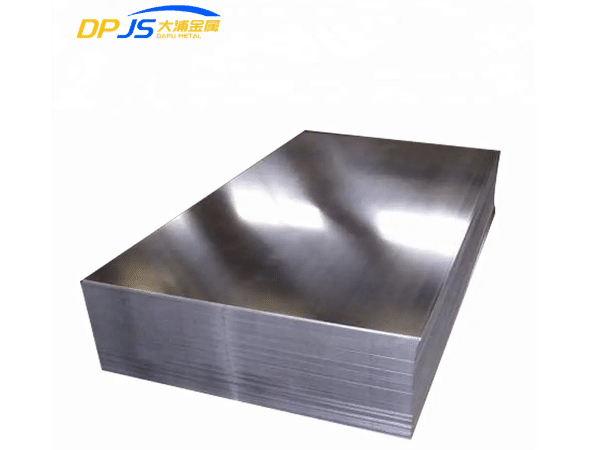
- Heavy Plate Specialist: Stocking thickness from 3mm up to 100mm.
Dual Certified
ASME SA240 304 / 304LThe "L" Advantage: Preventing Weld Decay
Why choose 304L? It all comes down to what happens to the metal microstructure when you apply heat during welding.

The Problem: Sensitization.
When 304 is heated between 425°C - 860°C (Weld HAZ), Carbon (>0.03%) combines with Chromium to form carbides at the grain boundaries. This depletes Chromium, causing Intergranular Corrosion and weld failure.

The Solution: Stability.
By limiting Carbon to max 0.030%, there isn't enough carbon to form harmful precipitates. Chromium remains distributed evenly, ensuring the weld area maintains full corrosion resistance without annealing.
What is "Dual Certified"?
Historically, 304L was weaker than 304. However, modern steelmaking technology allows us to produce 304L with nitrogen additions that boost strength.
Our inventory is Dual Certified 304/304L. This means you get the Low Carbon of 304L AND the High Strength of 304 in a single plate.
Certification Snapshot
| Carbon (C) | ≤ 0.030% (Safe) |
| Yield Str. | ≥ 205 MPa (Strong) |
| Tensile Str. | ≥ 515 MPa |
| Standard | ASME SA240 / ASTM A240 |
Supply Specifications & Inventory
We stock fully traceable, prime material according to ASTM A240 / ASME SA240 standards.
Hot Rolled Plate (Heavy)
- Thickness Range: 3.0mm - 100mm
- Standard Widths: 1500 / 2000 / 2500 mm
- Max Length: Up to 12,000 mm
- Surface Finish: No.1 (Industrial Finish)
Cold Rolled Sheet
- Thickness Range: 0.5mm - 6.0mm
- Standard Widths: 1000 / 1219 / 1500 mm
- Surface Finish: 2B (Matte) / BA (Bright)
- Protection: PVC / Laser Film Available
| Element | 304L Limit | 304 (Ref) |
|---|---|---|
| Carbon (C) | 0.030 max | 0.080 max |
| Chromium (Cr) | 18.0 - 20.0 | 18.0 - 20.0 |
| Nickel (Ni) | 8.0 - 12.0 | 8.0 - 10.5 |
| Manganese (Mn) | 2.00 max | 2.00 max |
| Nitrogen (N) | 0.10 max | 0.10 max |
| Yield Strength (0.2%) | 205 MPa (30 ksi) *Meets 304 requirement |
|---|---|
| Tensile Strength | 515 MPa (75 ksi) |
| Elongation | 40% |
| Hardness (Brinell) | 201 HB max |
Ready-to-Weld Fabrication Services
Don't waste time on site prep. Receive your 304L plates cut to size and beveled for immediate welding.

Plasma & Laser Cutting
High-definition cutting for tight tolerances. We choose the method based on your thickness to minimize the Heat Affected Zone (HAZ).
- Laser: Up to 20mm (Precision)
- Plasma: Up to 100mm (Heavy Plate)
- Tolerance: +/- 0.5mm

Edge Beveling
Essential for full penetration welds on thick plates. We machine edges to your specific weld joint design.

Rolling & Forming
Fabricating tanks or pressure vessels? We can roll plates into cylinders or partial shells, ready for your seam welding.
- Max Thickness: 50mm
- Max Width: 3000mm
- Output: Full Cylinder or Segments
Industries Relying on 304L Welded Structures
From ASME pressure vessels to hygienic food tanks, 304L is the standard where welding and corrosion resistance meet.

Pressure Vessels & Tanks
Used for manufacturing chemical storage tanks and reactor vessels. Complies with ASME Boiler and Pressure Vessel Code (BPVC) for welded construction.

Food & Beverage
Ideal for brewing tanks, dairy silos, and food processing equipment. The low carbon content ensures smooth welds that are easy to clean and sanitize.

Water Treatment
Specifed for piping, sluice gates, and filtration systems in municipal water and wastewater treatment plants due to general corrosion resistance.

Mining & Heavy Industry
Used in wear plates, screens, and chutes where moderate corrosion resistance and good weldability for on-site repairs are required.
Frequently Asked Questions about 304L
Common questions regarding strength, magnetism, and welding properties.