Steel production worldwide uses 304 stainless steel because it constitutes more than half of all stainless steel produced. The industrial sector primarily uses this austenitic grade which provides superior corrosion protection and material shaping capabilities while remaining affordable.
Material verification remains a persistent problem which engineers and procurement managers must solve because the materials they choose must meet 304 grade specifications. The selection of correct specifications requires more than basic analysis of datasheet information because counterfeit materials exist in international markets and the three 304 variants contain hidden differences.
The guide offers detailed technical information about 304 stainless steel which includes chemical makeup and mechanical characteristics and international standards and application recommendations. The data provides you with essential information which helps you make procurement choices whether you need materials for a new project or need to check supplier certification.
What Is 304 Stainless Steel?

304 stainless steel is an austenitic chromium-nickel alloy containing approximately 18% chromium and 8% nickel which people usually refer to as “18/8 stainless steel.” The most commonly used stainless steel grade throughout the world provides a perfect combination of protection against corrosion and the ability to shape metal and the ability to join metal parts through welding and its affordable price.
The grade belongs to the 300 series of austenitic stainless steels, which feature a crystal structure that has face-centered cubic (FCC) characteristics. The material demonstrates high ductility and toughness properties, which remain intact from cryogenic temperatures to 870°C (1600°F) in intermittent service conditions.
Why 304 Dominates the Market
Several factors contribute to 304’s market dominance:
- Versatile corrosion resistance – The chromium-rich passive layer withstands atmospheric exposure, most food processing environments, and fresh water
- Superior formability – Can be deep-drawn, spun, and formed into complex shapes without cracking
- Excellent weldability – Suitable for all standard welding processes, though 304L is preferred for heavy welded sections
- Cost efficiency – Lower nickel content than 316 makes it more economical for applications not requiring molybdenum-enhanced corrosion resistance
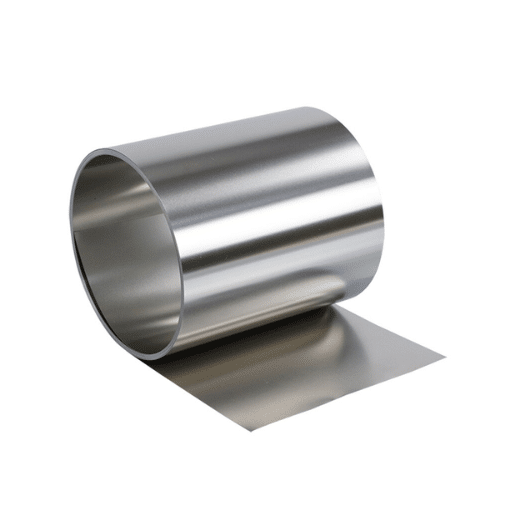
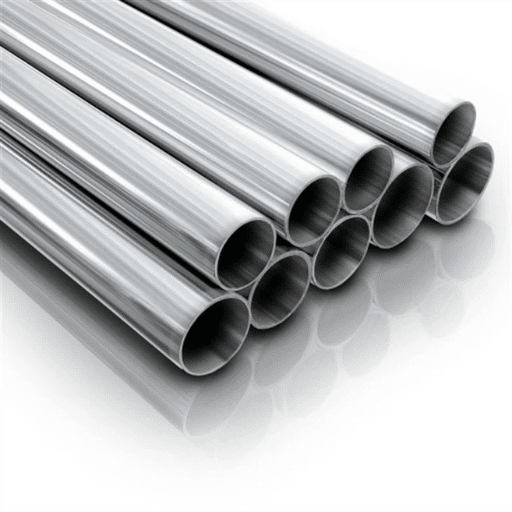
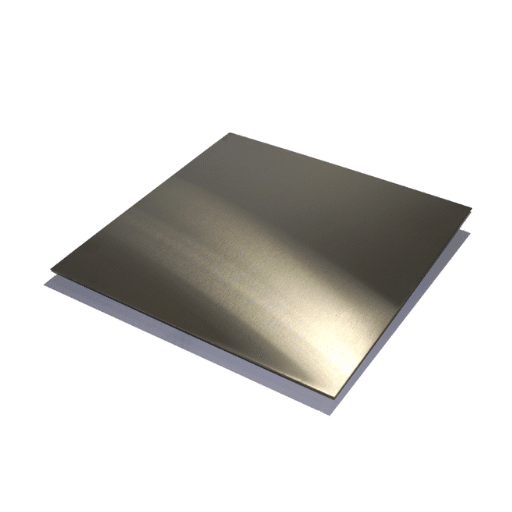
- Wide availability – Produced globally in all standard forms: sheet, plate, coil, pipe, bar, and wire
304 Stainless Steel Grade Designations
Depending on your location and industry, you may encounter 304 stainless steel under different designations:
| Standard System | Grade Designation |
|---|---|
| AISI/SAE | 304 |
| UNS | S30400 |
| EN | 1.4301 |
| JIS | SUS304 |
| GB/T | 0Cr18Ni9 (or 06Cr19Ni10 for newer standards) |
| BS | 304S15 |
| ISO | 4301-304-00-I |
Note: AISI 304 and UNS S30400 are the most common references in North American and international specifications.
Understanding these equivalents ensures you can source material from global suppliers while maintaining specification compliance. When procuring from Chinese manufacturers, you’ll typically see 06Cr19Ni10 as the GB/T designation, which corresponds exactly to AISI 304 chemistry requirements.
304 Stainless Steel Chemical Composition

The performance characteristics of 304 stainless steel derive directly from its carefully balanced chemical composition. ASTM A240 specifies the following ranges:
Chemical Composition Table (ASTM A240)
| Element | Content (% by weight) | Role in Alloy |
|---|---|---|
| Chromium (Cr) | 18.0 – 20.0 | Forms passive oxide layer; provides corrosion resistance |
| Nickel (Ni) | 8.0 – 10.5 | Stabilizes austenitic structure; improves toughness and formability |
| Carbon (C) | ≤ 0.08 | Provides strength; limited to prevent carbide precipitation |
| Manganese (Mn) | ≤ 2.00 | Deoxidizer; improves hot working properties |
| Silicon (Si) | ≤ 1.00 | Deoxidizer; improves oxidation resistance |
| Phosphorus (P) | ≤ 0.045 | Trace impurity (kept low) |
| Sulfur (S) | ≤ 0.030 | Trace impurity (kept low; higher in free-machining variants) |
| Nitrogen (N) | ≤ 0.10 | Strengthens austenite; can partially substitute nickel |
| Iron (Fe) | Balance | Base metal |
The Role of Key Elements
Chromium (18-20%): The essential element that makes stainless steel “stainless.”The chromium oxide (Cr₂O₃) passive layer which chromium creates develops into a self-repairing protective barrier that reaches a thickness of 5 nanometers. The transparent layer blocks oxygen and moisture from accessing the inner iron material which prevents rust from developing. The 18% minimum requirement guarantees that enough chromium will stay dissolved to protect the passive layer from damage during welding and thermal cycling.
Nickel (8-10.5%): stabilizes the austenitic crystal structure at room temperature. The alloy needs nickel because its absence would result in a combination of austenite and ferrite which decreases both formability and corrosion resistance. Nickel enhances toughness at cryogenic temperatures while providing better protection against stress corrosion cracking.
Carbon (≤0.08%): The element provides strength to materials but requires proper management. The process of sensitization occurs when carbon at temperatures between 450 and 850 degrees Celsius 450 and 850 degrees Celsius combines with chromium to produce chromium carbides at grain boundaries. The process results in chromium depletion from surrounding areas which leads to decreased corrosion protection. The 0.08% maximum limits this risk in most applications.
304L vs 304 vs 304H: Variant Comparison
Three variants exist within the 304 family, differentiated primarily by carbon content:
| Variant | UNS Number | Carbon Content | Primary Application |
|---|---|---|---|
| 304 | S30400 | ≤ 0.08% | General purpose, formed applications |
| 304L | S30403 | ≤ 0.03% | Welded structures, heavy gauge components |
| 304H | S30409 | 0.04 – 0.10% | High-temperature service (≥550°C) |
304L (Low Carbon): The reduced carbon content minimizes carbide precipitation during welding, making it ideal for heavy-walled components, structural welding, and applications requiring post-weld annealing. Specify 304L when welded sections will operate in corrosive environments or when heavy cold forming precedes welding.
304H (High Carbon): The controlled higher carbon content provides improved elevated-temperature strength. Used in pressure vessels, heat exchangers, and structural components operating above 550°C. The carbon content range ensures adequate strength while maintaining reasonable weldability.
304 Stainless Steel Mechanical Properties

304 stainless steel exhibits excellent mechanical properties in the annealed condition, with significant strengthening possible through cold working. The following data represents ASTM A240 minimum requirements:
Mechanical Properties (Annealed Condition)
| Property | Metric Value | Imperial Value |
|---|---|---|
| Tensile Strength | ≥ 515 MPa | ≥ 75,000 psi |
| Yield Strength (0.2% offset) | ≥ 205 MPa | ≥ 30,000 psi |
| Elongation | ≥ 40% (in 50mm) | ≥ 40% (in 2 inches) |
| Hardness (Rockwell B) | ≤ 92 | ≤ 92 |
| Hardness (Brinell) | ≤ 201 HBW | ≤ 201 HBW |
Effect of Cold Working on Properties
One of 304’s valuable characteristics is its response to cold working. As deformation increases, strength rises significantly while ductility decreases:
| Cold Work (%) | Tensile Strength (MPa) | Yield Strength (MPa) | Elongation (%) |
|---|---|---|---|
| 0% (Annealed) | 515-750 | 205-260 | 40-60 |
| 20% | 750-900 | 550-700 | 25-35 |
| 40% | 950-1150 | 850-1000 | 15-25 |
| 60% | 1150-1350 | 1050-1250 | 8-15 |
This work-hardening behavior makes 304 suitable for spring applications, fasteners, and structural components requiring higher strength than the annealed condition provides. However, cold-worked material cannot be welded without losing the strength increase in the heat-affected zone.
Physical Properties
| Property | Value | Notes |
|---|---|---|
| Density | 7.93 g/cm³ (7930 kg/m³) | Standard for austenitic grades |
| Melting Point | 1399 – 1421°C (2550 – 2590°F) | Solidus-liquidus range |
| Thermal Conductivity | 16.2 W/m·K (at 100°C) | Lower than carbon steel |
| Thermal Expansion | 17.8 × 10⁻⁶ /°C (0-100°C) | Higher than carbon steel—design consideration |
| Specific Heat | 500 J/kg·K | Energy absorption capacity |
| Electrical Resistivity | 7.2 × 10⁻⁷ Ω·m | Non-magnetic in annealed condition |
| Modulus of Elasticity | 193 GPa (28 × 10⁶ psi) | Slightly lower than carbon steel |
Magnetic Properties: 304 stainless steel maintains its non-magnetic state after complete annealing because of its austenitic structure. The process of cold working electrical steel creates minor magnetic characteristics because it partially transforms the material into martensite. The effect shows greater intensity in 301 stainless steel compared to 304 which has undergone extensive cold working. To maintain non-magnetic characteristics, you should select 304L while avoiding heavy cold working or you should use 316 because it resists martensitic transformation better.
Corrosion Resistance of 304 Stainless Steel

The corrosion resistance of 304 stainless steel stems from its chromium-rich passive layer. Understanding where this grade performs well—and where it doesn’t—ensures proper material selection.
The Passive Layer Mechanism
When exposed to oxygen, chromium at the surface forms a transparent, adherent chromium oxide (Cr₂O₃) layer approximately 5 nanometers thick. This layer:
- Blocks oxygen and moisture from reaching the underlying iron
- Is self-healing—if scratched, it reforms within seconds in oxygen-containing environments
- Requires minimum 10.5% chromium to form; 304’s 18-20% provides a substantial safety margin
Atmospheric and Environmental Performance
Excellent Resistance:
- Rural and urban atmospheres
- Fresh water (potable and process)
- Food acids (citric, acetic, lactic) at moderate concentrations
- Mild chemicals and cleaning solutions
- Oxidizing environments
Good Resistance:
- Marine atmospheres (with regular cleaning)
- Neutral salts at moderate concentrations
- Organic compounds and solvents
Limited/Poor Resistance:
- Chloride environments (seawater, de-icing salts, coastal exposure)
- Hydrochloric acid (all concentrations)
- Sulfuric acid at moderate-to-high concentrations
- Chlorinated solvents
- Crevice conditions in salt-containing environments
When to Upgrade to 316
The decision to specify 316 instead of 304 typically hinges on chloride exposure. The following table provides guidance:
| Environment | 304 Performance | Recommendation |
|---|---|---|
| Indoor, low humidity | Excellent | 304 suitable |
| Urban atmosphere | Excellent | 304 suitable |
| Coastal atmosphere | Fair—requires maintenance | 316 preferred within 5km of coast |
| Seawater immersion | Poor | 316 minimum; consider 2205 duplex |
| Swimming pool areas | Fair | 316 for chlorinated environments |
| Chemical processing | Variable | Case-by-case evaluation |
| Food processing | Excellent | 304 standard for most applications |
Pitting Resistance Equivalent Number (PREN): A useful metric for comparing stainless steel grades. The formula is:
PREN = %Cr + 3.3(%Mo) + 16(%N)
| Grade | PREN | Relative Resistance |
|---|---|---|
| 304 | 18-19 | Baseline |
| 316 | 23-24 | ~25% better pitting resistance |
| 2205 | 35 | ~85% better pitting resistance |
304’s PREN of approximately 18-19 provides good resistance in mild environments but explains why it struggles in chloride-rich conditions where 316 (with 2-3% molybdenum) performs significantly better.
304 vs 316 Stainless Steel: Key Differences

The 304 versus 316 debate represents one of the most common material selection decisions in stainless steel procurement. Understanding the specific differences enables cost-effective specification without compromising performance.
Chemical Composition Comparison
| Element | 304 Stainless Steel | 316 Stainless Steel |
|---|---|---|
| Chromium (Cr) | 18.0 – 20.0% | 16.0 – 18.0% |
| Nickel (Ni) | 8.0 – 10.5% | 10.0 – 14.0% |
| Molybdenum (Mo) | — | 2.0 – 3.0% |
| Carbon (C) | ≤ 0.08% | ≤ 0.08% |
| Iron (Fe) | Balance | Balance |
The critical difference is molybdenum. This element dramatically enhances corrosion resistance in chloride environments, making 316 the preferred choice for marine, chemical, and salt-exposure applications.
Performance Comparison
| Property | 304 | 316 | Winner |
|---|---|---|---|
| General corrosion resistance | Excellent | Excellent | Tie |
| Chloride/pitting resistance | Moderate | Excellent | 316 |
| High-temperature strength | Good | Better | 316 |
| Formability | Excellent | Good | 304 |
| Weldability | Excellent | Good | 304 (slightly) |
| Magnetic properties | Non-magnetic | Non-magnetic | Tie |
| Cost | Lower | Higher (20-35%) | 304 |
Cost Considerations
316 stainless steel costs 20-35% more than 304 on average, depending on nickel and molybdenum market prices. This premium reflects:
- Higher nickel content (10-14% vs 8-10.5%)
- Addition of molybdenum (2-3%)
- Lower production volumes compared to 304
For large projects, this cost differential can be substantial. However, specifying 304 in environments requiring 316’s corrosion resistance leads to premature failure, negating any initial savings.
Selection Guidelines by Application
Specify 304 When:
- Indoor applications with no chloride exposure
- Food processing equipment (non-salt environments)
- Architectural applications inland from coastal areas
- Fresh water systems
- Mild chemical environments
- Cost is a primary consideration and environment permits
Specify 316 When:
- Within 5km of coastal saltwater
- Marine equipment and boat fittings
- Chemical processing with chlorides present
- Pharmaceutical manufacturing requiring maximum cleanliness
- Medical implants and surgical instruments
- Swimming pool structures
- Industrial equipment with salt exposure
The Bottom Line: For approximately 70% of stainless steel applications, 304 provides adequate corrosion resistance at lower cost. The 30% requiring 316 are typically marine, chemical, or high-chloride environments where molybdenum’s protection justifies the premium.
Industrial Applications of 304 Stainless Steel

304 stainless steel serves diverse industries where its combination of properties delivers optimal value. The following sectors represent the primary application areas.
Food Processing & Beverage Industry
304 is the dominant stainless steel grade in food processing, approved by FDA, NSF, and European food contact regulations.
Typical Applications:
- Storage tanks and silos for ingredients
- Processing equipment (mixers, blenders, conveyors)
- Heat exchangers for pasteurization
- Bottling and packaging machinery
- Brewing equipment (fermenters, kegs, piping)
- Dairy processing (milk tanks, cheese vats)
- Commercial kitchen equipment
Why 304 Excels: The grade resists food acids (citric, acetic, lactic) and cleaning sanitizers while providing the smooth surface finish required for hygienic operations. For salt-rich food processing (pickling, brining, seafood), 316 may be specified, but 304 handles the majority of food industry requirements at lower cost.
Surface Finish Requirements: Food-grade applications typically require No. 4 brushed finish (Ra ≤ 0.8 μm) or better, with 2B acceptable for non-contact surfaces. Electropolishing provides the smoothest finish for pharmaceutical-grade applications.
Chemical & Pharmaceutical Equipment
While 316 dominates aggressive chemical environments, 304 serves extensively in pharmaceutical manufacturing and mild chemical processing.
Typical Applications:
- Pharmaceutical processing vessels
- Cleanroom equipment and furniture
- Laboratory benches and fume hoods
- Water purification systems
- Mild chemical storage tanks
- Cosmetic manufacturing equipment
Why 304 Excels: The grade meets stringent cleanliness requirements while offering cost savings over 316. For pharmaceutical applications, the material must meet ASME BPE (Bioprocessing Equipment) standards with full traceability and surface finish documentation.
Architectural & Construction
304 stainless steel enhances building aesthetics while providing decades of maintenance-free service in appropriate environments.
Typical Applications:
- Building facades and curtain walls
- Interior decorative panels
- Handrails and balustrades
- Elevator doors and interiors
- Entryways and column covers
- Signage and wayfinding
- Roof and wall cladding
Specification Considerations: For architectural applications within 5km of coastlines, 316 is typically specified despite higher cost. Inland urban environments suit 304 perfectly. The grade’s excellent formability enables complex panel shapes and textured surfaces.
Finish Options: Architectural applications exploit 304’s ability to take various surface finishes—from matte 2B to mirror-polished 8K, hairline (HL), and patterned embossing.
Industrial Manufacturing
Beyond the specialized sectors above, 304 serves general industrial applications requiring corrosion resistance and moderate strength.
Typical Applications:
- Heat exchangers (shell and tube, plate type)
- Pressure vessels (ASME code compliant)
- Fasteners, fittings, and flanges
- Pump and valve components
- Automotive trim and exhaust system components
- Springs and wire forms (cold-worked condition)
- Cryogenic equipment (excellent low-temperature toughness)
304 Stainless Steel Forms and Specifications

Understanding available forms and specifications ensures you source the right product for your application.
Available Product Forms
304 stainless steel is produced in all standard mill forms:
| Form | Typical Dimensions | Common Applications |
|---|---|---|
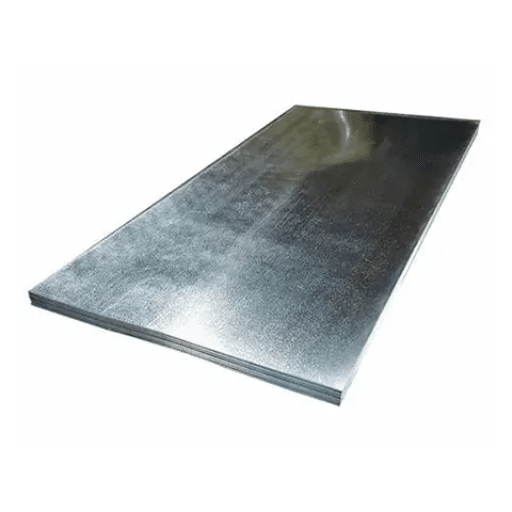
| Sheet | 0.4 – 6.0mm thickness | Panels, enclosures, tanks |
| Plate | 6.0 – 100mm+ thickness | Pressure vessels, structural |
| Coil/Strip | 0.1 – 3.0mm thickness | Stampings, roll-formed sections |
| Pipe (Welded) | 6 – 2000mm diameter | Piping systems, structural |
| Pipe (Seamless) | 6 – 406mm diameter | High-pressure, critical service |
| Bar (Round) | 3 – 300mm diameter | Shafts, fasteners, machining |
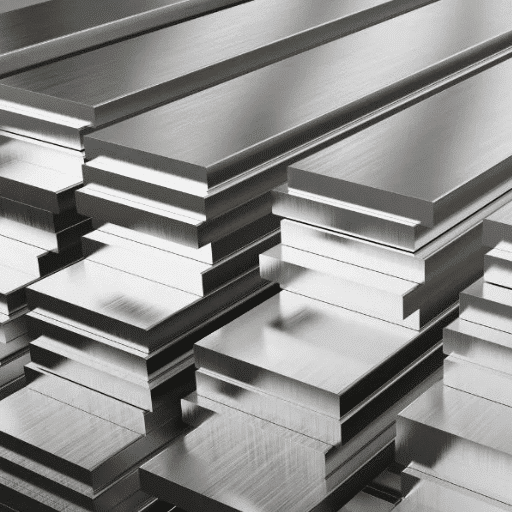
| Bar (Flat/Angle) | Various profiles | Structural, architectural |
| Wire | 0.1 – 12mm diameter | Springs, mesh, fasteners |
Surface Finish Options
304 stainless steel is available with various surface finishes, each suited to specific applications:
| Finish Designation | Description | Typical Applications |
|---|---|---|
| No. 1 | Hot-rolled, annealed, pickled | Industrial tanks, vessels, structural |
| 2D | Cold-rolled, annealed, pickled | Deep drawing, formed components |
| 2B | Cold-rolled, annealed, pickled, skin-passed | General purpose, further finishing |
| BA | Bright annealed (mirror-like) | Reflectors, decorative, electrical |
| No. 3 | Ground finish, 80-120 grit | Kitchen equipment, food processing |
| No. 4 | Brushed finish, 120-320 grit | Architectural, decorative, food-grade |
| HL | Hairline (long continuous polish) | Elevators, architectural trim |
| No. 8 | Mirror polish (8K) | Decorative, ornamental, reflectors |
2B Finish is the most common general-purpose finish, providing a smooth, moderately reflective surface suitable for further processing or direct use in industrial applications.
No. 4 Finish is the architectural standard—brushed to a uniform appearance that hides scratches while maintaining aesthetic appeal.
International Standards
When procuring 304 stainless steel internationally, reference these standards:
| Standard | Scope |
|---|---|
| ASTM A240/A240M | Chromium and chromium-nickel stainless steel plate, sheet, and strip for pressure vessels (USA) |
| ASTM A276 | Stainless steel bars and shapes (USA) |
| ASTM A312 | Seamless, welded, and heavily cold-worked austenitic stainless steel pipes (USA) |
| EN 10088-2 | Stainless steels—Technical delivery conditions for sheet/plate and strip of corrosion-resisting steels (Europe) |
| JIS G4304 | Hot-rolled stainless steel plate, sheet, and strip (Japan) |
| JIS G4305 | Cold-rolled stainless steel plate, sheet, and strip (Japan) |
| GB/T 24511 | Stainless steel plate, sheet, and strip for pressure equipment (China) |
| GB/T 3280 | Cold-rolled stainless steel plate, sheet, and strip (China) |
Mill Test Certificates (MTC): When ordering 304 stainless steel for critical applications, always request a mill test certificate (also called a material test report or MTR). This document certifies:
- Chemical composition analysis
- Mechanical test results
- Heat number for traceability
- Compliance with specified standards
- Third-party inspection verification (when applicable)
Fabrication and Processing of 304 Stainless Steel

304’s excellent fabricability contributes significantly to its popularity. Understanding processing characteristics ensures successful manufacturing.
Welding Considerations
304 stainless steel can be welded using all standard processes:
Recommended Welding Processes:
- TIG (GTAW) – Preferred for thin sections and high-quality finishes
- MIG (GMAW) – Efficient for thicker sections and production welding
- Resistance welding – Spot and seam welding for sheet applications
- Plasma arc welding – Deep penetration for thick sections
Welding Best Practices:
- Use 308L or 308LSi filler metal for 304 base metal
- For 304L base metal, use 308L filler to maintain low carbon content
- Control heat input to minimize distortion (304 has high thermal expansion)
- Clean welds thoroughly to remove heat tint and restore corrosion resistance
- Consider post-weld passivation for critical corrosion applications
When to Specify 304L for Welding: For welded structures that will operate in corrosive environments, or when heavy-section welding creates extended time in the sensitization temperature range (450-850°C), specify 304L to minimize carbide precipitation risk.
Machining and Forming
Cold Forming: 304 exhibits excellent formability, enabling:
- Deep drawing (sink bowls, automotive components)
- Bending (tight radius bends possible with proper technique)
- Roll forming (architectural sections, trim)
- Stamping and pressing
Springback: Due to 304’s high work-hardening rate and lower modulus of elasticity compared to carbon steel, springback during bending is more pronounced. Compensate with over-bending or use bottoming/coining techniques.
Machining: 304 is more difficult to machine than carbon steel due to its toughness and work-hardening tendency. Best practices include:
- Sharp cutting tools with positive rake angles
- Adequate feed rates to work below the work-hardened layer
- Sulfurized or chlorinated cutting fluids
- Rigid setups to minimize vibration
Free-Machining Alternative: 303 stainless steel contains added sulfur and phosphorus for improved machinability, but with reduced corrosion resistance and weldability. Specify 303 only when machining is the primary operation and corrosion requirements are moderate.
Quality Assurance and Certification
When procuring 304 stainless steel, proper quality assurance ensures you receive material meeting your specifications.
Mill Test Certificates (MTC)
A mill test certificate provides documented proof that the material meets specified standards. Standard MTCs include:
- Chemical composition – Elemental analysis by spectrometry
- Mechanical properties – Tensile test, hardness test results
- Heat number – Unique identifier for traceability
- Dimensional verification – Thickness, width, length measurements
- Standard compliance – Statement of conformance to ASTM/EN/JIS/GB standards
MTC Types (per EN 10204):
- 2.1 – Certificate of compliance (no test results)
- 2.2 – Certificate of compliance with test results (manufacturer’s own tests)
- 3.1 – Inspection certificate with test results (manufacturer’s tests, witnessed by authorized inspector)
- 3.2 – Inspection certificate with test results (independent third-party witness)
For critical applications, specify 3.1 or 3.2 certificates.
Third-Party Inspection
Reputable suppliers offer third-party inspection by recognized organizations:
- SGS – Comprehensive inspection and testing services
- Bureau Veritas (BV) – Material verification and witness testing
- TÜV – European certification and inspection
- Lloyd’s Register – Marine and industrial inspection
Third-party inspection provides independent verification of material quality, particularly important when sourcing from new suppliers or for critical applications.
Quality System Certifications
Look for suppliers maintaining these quality management systems:
- ISO 9001 – Quality management system certification
- ISO 14001 – Environmental management (sustainability commitment)
- PED 2014/68/EU – Pressure Equipment Directive (for pressure applications)
- ASME certification – For ASME code applications
Conclusion
304 stainless steel delivers an unmatched combination of corrosion resistance, formability, weldability, and cost-effectiveness—explaining its dominance in global stainless steel production. With its 18% chromium and 8% nickel composition, this austenitic grade handles the majority of industrial applications from food processing to architectural facades.
Key specifications to remember when procuring 304:
- Chemical: 18-20% Cr, 8-10.5% Ni, ≤0.08% C (standard 304)
- Mechanical: ≥515 MPa tensile strength, ≥205 MPa yield strength, ≥40% elongation
- Physical: 7.93 g/cm³ density, non-magnetic when annealed
- Standards: ASTM A240, EN 1.4301, JIS SUS304, GB/T 06Cr19Ni10
For welded structures, consider 304L with its lower carbon content. For elevated temperature service above 550°C, 304H provides enhanced strength. When chloride exposure is significant, evaluate whether 316’s molybdenum addition justifies the 20-35% cost premium.
Frequently Asked Questions
Is 304 stainless steel food grade?
Yes,304 stainless steel is food grade material which meets FDA NSF and European food contact standards. The grade resists food acids and cleaning chemicals while providing the hygienic surface finish required for food processing. The food industry mostly uses 304 stainless steel but 316 stainless steel works better for salt-heavy environments which includes pickling and brining.
Can 304 stainless steel rust?
304 stainless steel can rust under specific conditions, despite its name. Causes include:
- Exposure to chlorides (seawater, de-icing salts) causing pitting corrosion
- Contact with carbon steel (contamination)
- Surface deposits preventing oxygen access to the passive layer
- Crevice corrosion in tight gaps with moisture
Proper maintenance and appropriate grade selection for the environment prevent rusting in most applications.
What is the density of 304 stainless steel?
The density of 304 stainless steel is 7.93 g/cm³ (7930 kg/m³ or 0.286 lb/in³). This value is standard across all austenitic stainless steel grades including 304, 304L, 316, and 316L. Engineers use this density for weight calculations in structural and transportation applications.
How can you tell if stainless steel is 304 or 316?
Several methods distinguish 304 from 316:
- Chemical spot test – Molybdenum detection reagent turns 316 dark (304 stays unchanged)
- XRF analyzer – Handheld X-ray fluorescence identifies elemental composition
- Spark test – 316 produces shorter, redder sparks than 304 (requires experience)
- Laboratory analysis – Spectrometry provides definitive composition
For procurement verification, always request mill test certificates rather than relying on visual identification.
Is 304 stainless steel magnetic?
304 stainless steel exists as a non-magnetic material that maintains this property throughout its complete annealed state because of its austenitic crystal structure. The process of cold working, which includes bending and forming, and machining operations, will produce minor magnetic properties because of its transformation to martensite. The requirement of non-magnetic properties mandates the use of fully annealed materials while prohibiting the practice of heavy cold working.
What is the price difference between 304 and 316 stainless steel?
316 stainless steel costs 20-35% more than 304. The price difference between the two grades depends on current market prices for nickel and molybdenum. The price difference exists because 316 contains more nickel at 10-14% than 8-10.5% and it includes 2-3% molybdenum. The substantial price difference between the two grades makes it essential to choose the proper grade for projects where 304 provides sufficient corrosion protection.
What temperature can 304 stainless steel withstand?
304 stainless steel handles:
- Cryogenic temperatures – Excellent toughness down to -196°C (-320°F)
- Continuous service – Up to 830°C (1526°F)
- Intermittent service – Up to 870°C (1600°F)
Above 550°C, carbon content becomes important—specify 304H for enhanced high-temperature strength. Sensitization occurs between 450-850°C during welding or thermal cycling.